
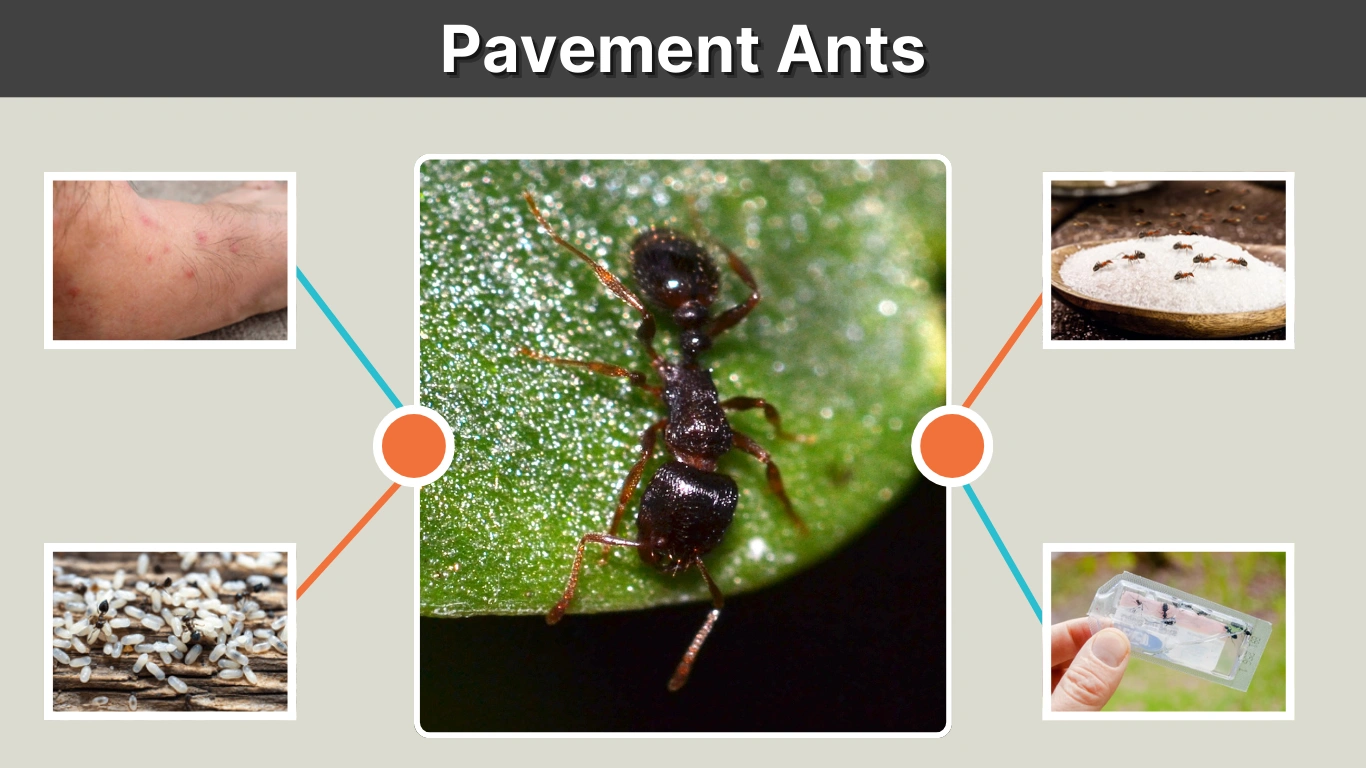
Pavement ants are among the most common household ants, often seen trailing along sidewalks, driveways, or inside kitchens. They get their name from their nesting habits—frequently building colonies under pavement, stones, or building foundations. While small, their ability to form large colonies makes them a persistent nuisance for homeowners. To control them effectively, it’s important to understand their appearance, nesting behavior, and life cycle.
What Is a Pavement Ant?
The pavement ant (Tetramorium immigrans), also known as the immigrant pavement ant, is a dark brown to black species originally from Europe that spread to North America through shipping and trade. Today, it is widespread across the United States and Canada, especially in urban and suburban environments.
These ants prefer to nest in soil beneath pavement, sidewalks, or concrete slabs, pushing out small mounds of dirt through cracks. Indoors, they invade kitchens and bathrooms in search of food, especially sweets, grease, and proteins.
Pavement Ant Identification
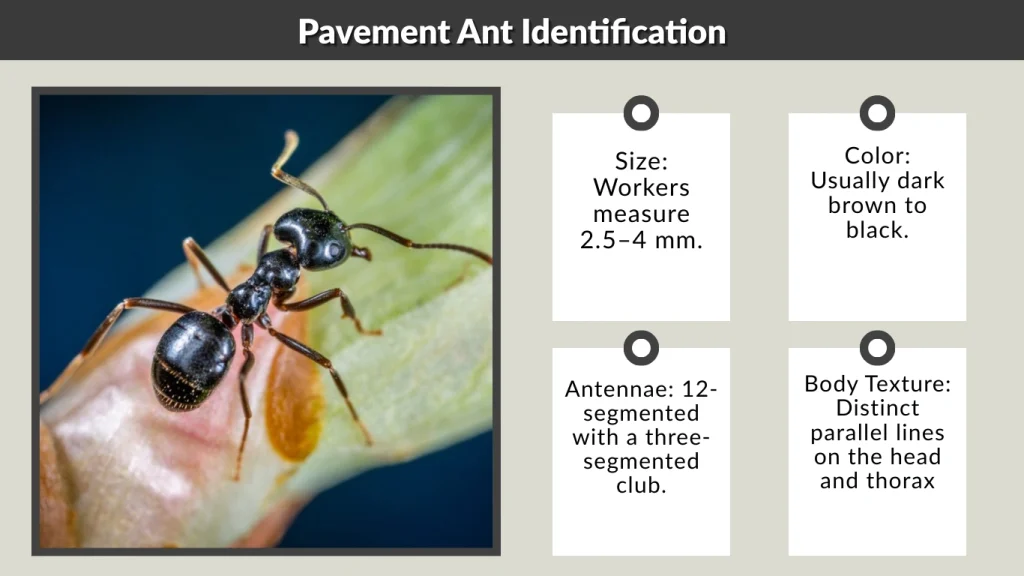
Pavement ants are often mistaken for other small household ants. Key traits include:
- Size: Workers measure 2.5–4 mm, making them small but noticeable when in trails.
- Color: Usually dark brown to black, though some populations may appear reddish.
- Antennae: 12-segmented with a three-segmented club.
- Body Texture: Distinct parallel lines on the head and thorax, a helpful identifier.
- Waist: Two-segmented pedicel (the “waist” between thorax and abdomen).
- Wings: Reproductive ants (alates) have two pairs of wings, with the forewings slightly larger.
Compared to carpenter ants, pavement ants are much smaller, and unlike odorous house ants, they do not emit a strong smell when crushed.
Pavement Ant Queen
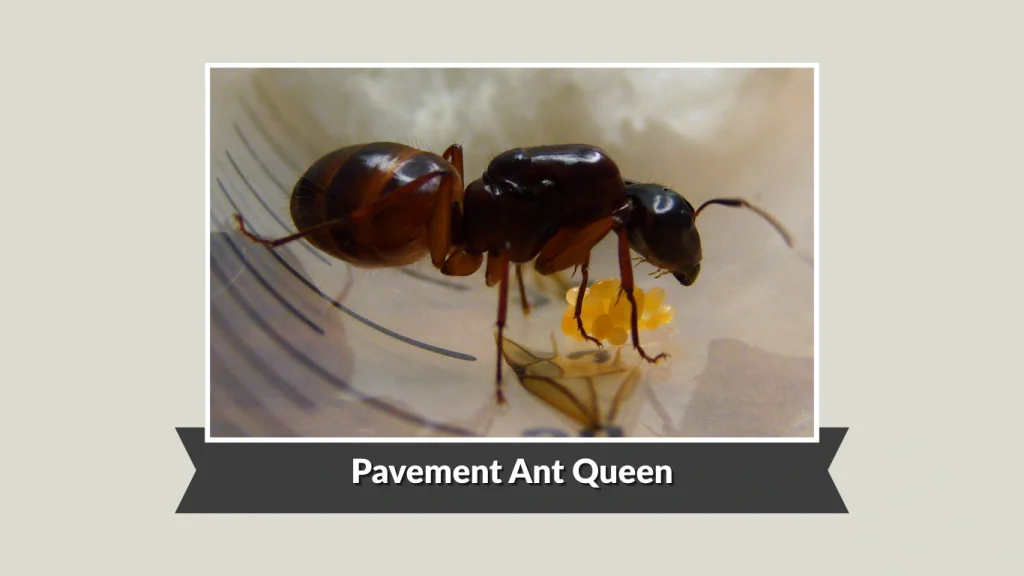
The queen pavement ant is larger than the workers, usually 7–8 mm long, with wings until she mates and establishes a colony. She is the sole reproductive center of the colony, capable of laying hundreds of eggs per year.
- Lifespan: Queens can live for several years, ensuring colony stability.
- Appearance: Similar in color to workers but bulkier, with a more prominent thorax.
- For Sale: In ant-keeping communities, pavement ant queens are sometimes sold to enthusiasts raising colonies in artificial nests.
Without a queen, a colony eventually collapses, which is why exterminators often target her during treatments.
Pavement Ant Colony and Nesting Habits
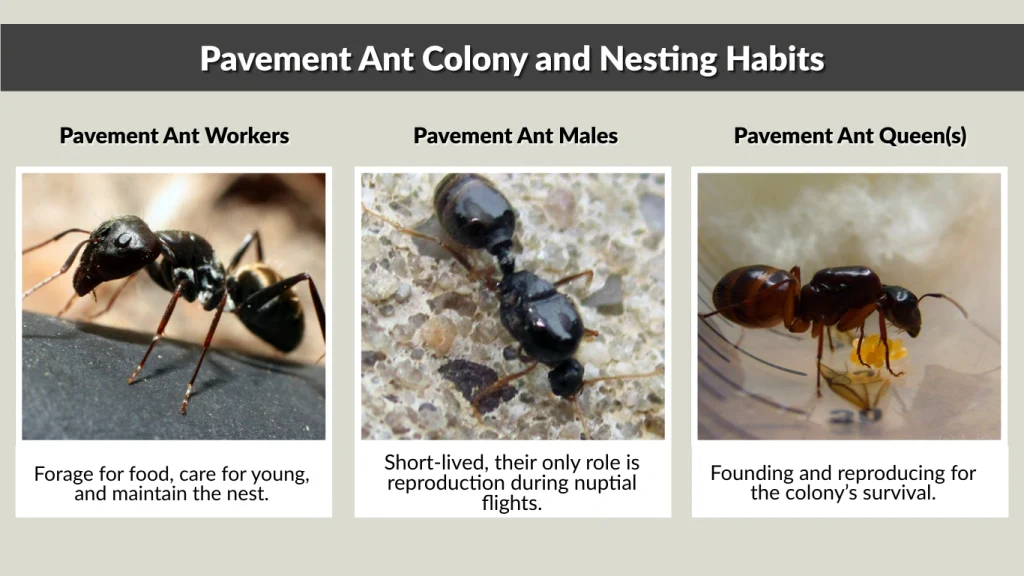
Pavement ants live in large, organized colonies that may contain several thousand workers. Colonies are divided into castes:
- Workers: Forage for food, care for young, and maintain the nest.
- Males: Short-lived, their only role is reproduction during nuptial flights.
- Queen(s): Founding and reproducing for the colony’s survival.
Nesting Habits
- Pavement ants prefer soil beneath concrete slabs, sidewalks, and stones, where they create intricate tunnel systems.
- Their nests are often marked by small mounds or hills of displaced soil, particularly visible in cracks of sidewalks or driveways.
- Inside homes, nests may be found near walls, in insulation, or under floors if there are gaps leading to soil access.
These colonies can persist for years and expand rapidly when conditions are favorable.
Pavement Ant Life Cycle
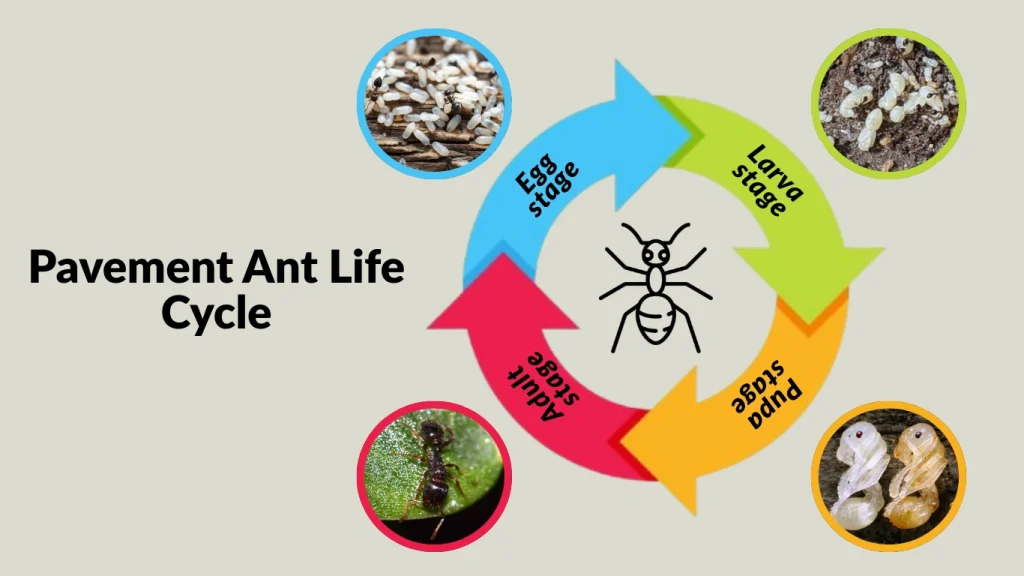
Like other ants, pavement ants undergo a complete metamorphosis:
- Egg Stage: Tiny white eggs are laid by the queen.
- Larval Stage: Legless larvae fed by worker ants.
- Pupal Stage: Larvae spin cocoons and transform into pupae.
- Adult Stage: Emergence of workers, males, or new queens.
- Workers’ lifespan: Several months.
- Queens’ lifespan: Multiple years.
- Colony Size: Can grow to 10,000+ ants, making infestations difficult to control.
Pavement Ant Swarms
Pavement ants reproduce through nuptial flights, when winged males and queens leave the nest to mate. These swarms typically occur in spring or early summer, especially during warm, calm evenings.
- Swarmers: Winged males and queens (often mistaken for flying termites or carpenter ants).
- Purpose: Mating, followed by queens establishing new colonies.
- Schedule: Varies by climate but generally once per year.
- After Flight: Males die shortly after mating, while queens shed their wings and search for nesting sites.
This behavior explains sudden appearances of winged ants in homes, which often alarm homeowners.
Pavement Ant Bites and Stings
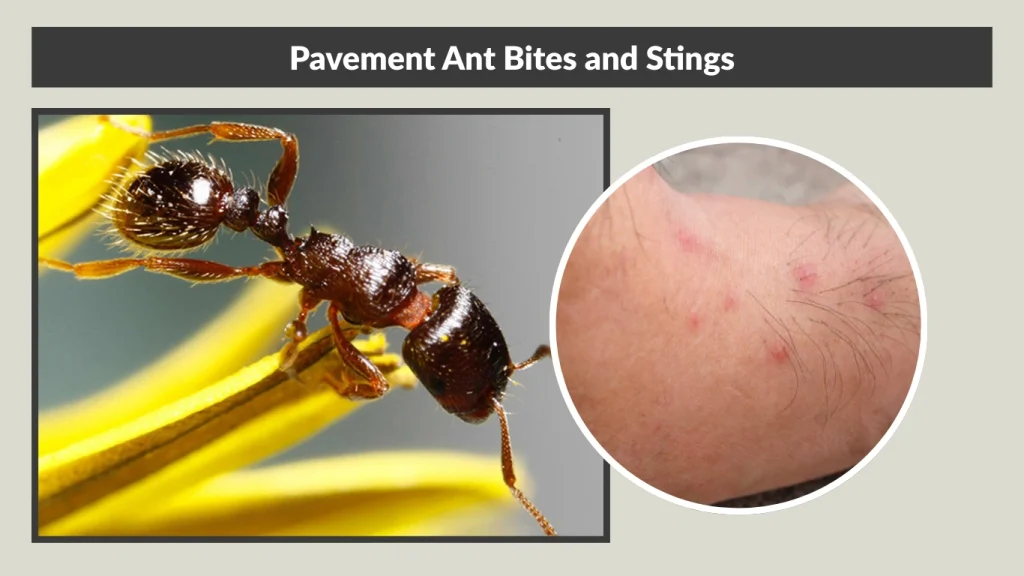
Pavement ants are capable of both biting and stinging, though they rarely pose a serious health risk to humans.
- Bites: Workers may bite if provoked. The bite is usually mild, causing slight discomfort or redness.
- Stings: They have a stinger and can inject a small amount of venom, but it is not dangerous to humans.
- Symptoms: Red bumps, itching, or minor swelling at the bite site.
- Red Pavement Ant Bites: These are sometimes confused with fire ant stings, but pavement ants cause much milder reactions.
- Treatment: Wash the area with soap and water, apply a cold compress, and use over-the-counter anti-itch creams if needed.
Unlike fire ants, pavement ants do not swarm aggressively to sting, so their bites are mostly a nuisance.
Pavement Ant Infestations in Homes
Infestations often go unnoticed until ants begin appearing indoors. Common signs include:
- Foraging Trails: Lines of ants moving to and from kitchens or pantries.
- Small Mounds: Soil pushed up through cracks in concrete floors or foundations.
- Nests in Walls: Colonies sometimes move indoors, especially during winter.
- Persistent Numbers: Despite cleaning, ants reappear daily, indicating a nearby nest.
Pavement ants enter homes through foundation cracks, gaps in siding, or basement windows. They are especially active in kitchens, bathrooms, and basements, where moisture and food are readily available.
Pavement Ant Control and Treatment
DIY Methods
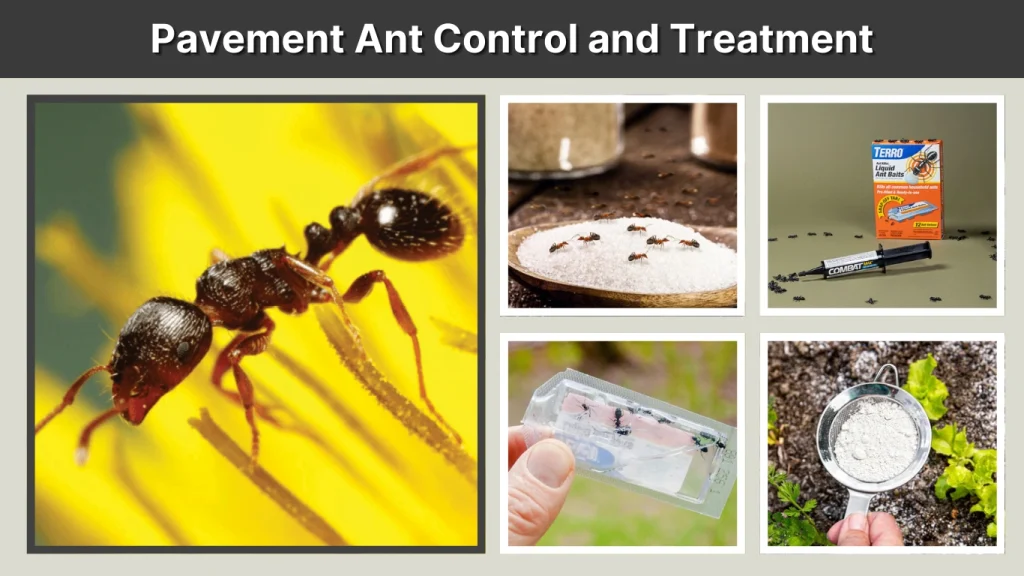
Homeowners can attempt several solutions:
- Pavement Ant Bait: Sugar- or protein-based baits work best, as ants carry the poison back to the colony.
- Best Pavement Ant Killer: Gel baits and slow-acting insecticides are most effective.
- Sprays and Traps: Useful for visible ants but less effective against colonies.
- Natural Remedies: Vinegar, boiling water, and diatomaceous earth can reduce populations temporarily.
Professional Extermination
Severe infestations often require experts:
- Inspection: Locating both indoor and outdoor nests.
- Baiting Programs: Commercial-grade baits applied strategically.
- Perimeter Sprays: Barrier treatments to prevent reentry.
- Costs: Professional extermination typically ranges from $200–$500, depending on the infestation size.
Regional Examples
- Kansas City Pavement Ant Exterminators – Common service for midwestern infestations.
- Toronto & Vaughan, Canada – Urban pest control companies offer specialized pavement ant removal.
- Vancouver – Local pest services provide perimeter spraying for pavement ants.
- Waukesha, Wisconsin – Pavement ant control is often advertised due to heavy local infestations.
Pavement Ant Facts
Pavement ants have some fascinating traits:
- Immigrant Pavement Ant: Their common name reflects their European origin.
- Colony Size: Can exceed 10,000 ants, making infestations hard to eradicate.
- Diet: Omnivorous, feeding on sweets, proteins, seeds, and other insects.
- Pavement Ant Battles: Colonies often fight each other in large “wars” on sidewalks, a behavior that can involve hundreds of ants clashing over territory.
- Lifespan: Workers live a few months, while queens may survive for years.
Pavement Ant Comparisons
Pavement Ant vs Carpenter Ant
- Size: Carpenter ants are much larger (up to ½ inch).
- Nests: Carpenter ants excavate wood, while pavement ants nest in soil and under concrete.
- Damage: Pavement ants are nuisances, while carpenter ants can cause structural damage.
Pavement Ant vs Fire Ant
- Sting: Fire ants have painful, venomous stings, while pavement ants are mild.
- Color: Fire ants are reddish, pavement ants are darker.
- Aggression: Fire ants swarm aggressively; pavement ants are less confrontational.
Pavement Ant vs Odorous House Ant
- Odor: Odorous house ants emit a rotten smell when crushed; pavement ants do not.
- Nesting: Odorous house ants often nest indoors, pavement ants prefer soil outdoors.
Pavement Ant Images and Identification in the Field
Pavement ants are most noticeable by:
- Small dirt mounds on sidewalks, driveways, and near building foundations.
- Long foraging trails into kitchens and garbage areas.
- Tiny, dark-colored ants with visible grooves on their bodies.
- Winged swarmers in spring, often mistaken for termites.
These features make them one of the easiest household ants to identify.
FAQs
What does a pavement ant look like?
Pavement ants are small (2.5–4 mm), dark brown to black ants with fine grooves on their bodies and two-segmented waists.
Do pavement ants bite or sting?
Yes, pavement ants can both bite and sting, but their effects are mild, usually limited to redness and itching.
How big is a pavement ant queen?
Queens measure 7–8 mm, making them twice the size of workers.
What is the best way to remove a pavement ant infestation?
Baiting with slow-acting insecticides is most effective, as it targets the entire colony rather than just the visible ants.
Are pavement ants dangerous to humans?
No, they are nuisance pests. Their bites are mild, and they do not spread disease, but infestations can become persistent indoors.
