
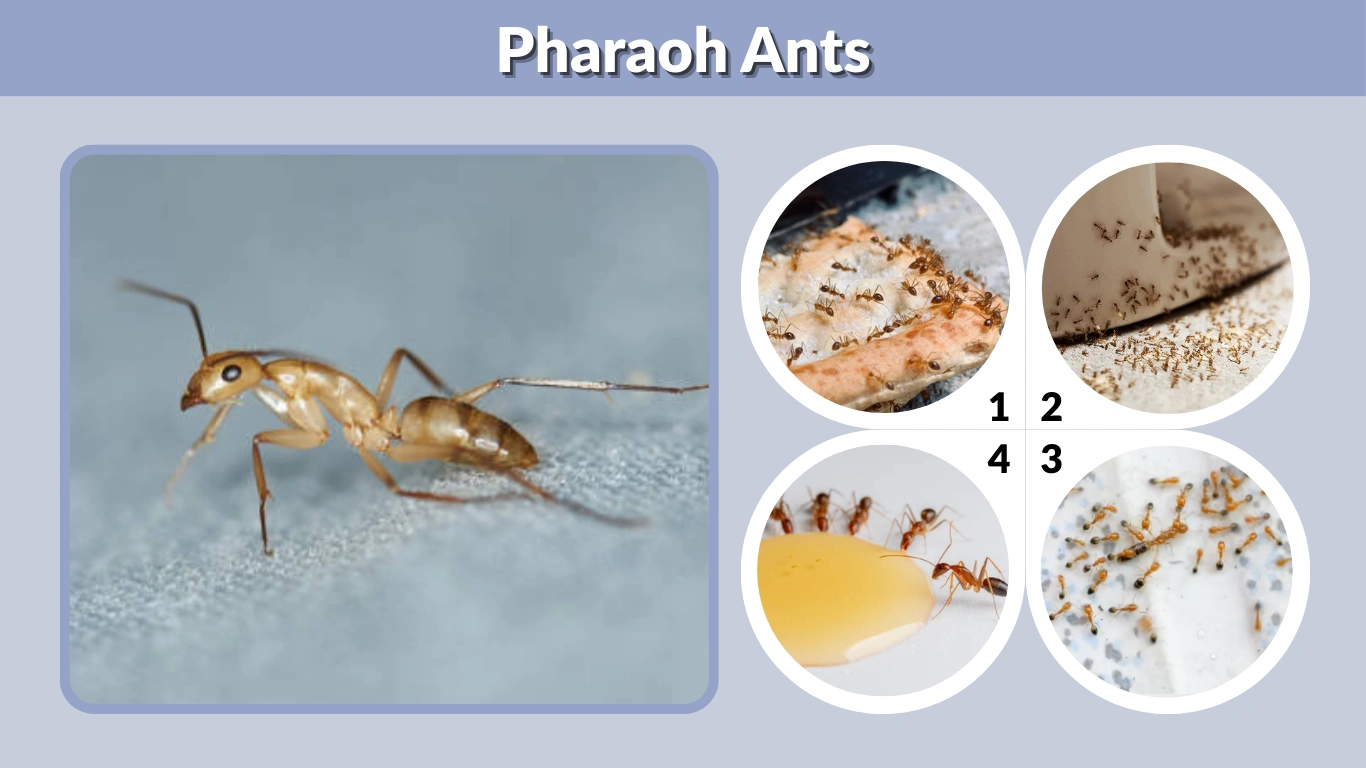
Pharaoh ants (Monomorium pharaonis) are small, light-colored invasive ants that have become a major pest in homes, apartments, hospitals, and commercial buildings. They are notoriously difficult to control because of their small size, multiple-queen colonies, and tendency to form satellite nests. In Florida and other warm climates, these ants thrive in indoor environments year-round, contaminating food, spreading bacteria, and causing frustration for homeowners. Understanding their identification, behavior, and control methods is essential for preventing infestations.
What Are Pharaoh Ants?
Pharaoh ants are tiny, measuring only 1.5–2 mm in length. Their bodies are yellow to light brown, with a darker abdomen, and they have three distinct body segments: head, thorax, and abdomen. These ants are highly social, living in colonies that often contain multiple queens, which allows rapid population growth and resilience to treatment. Originally from Africa, pharaoh ants have spread worldwide, establishing colonies in warm indoor environments.
Pharaoh Ant Identification
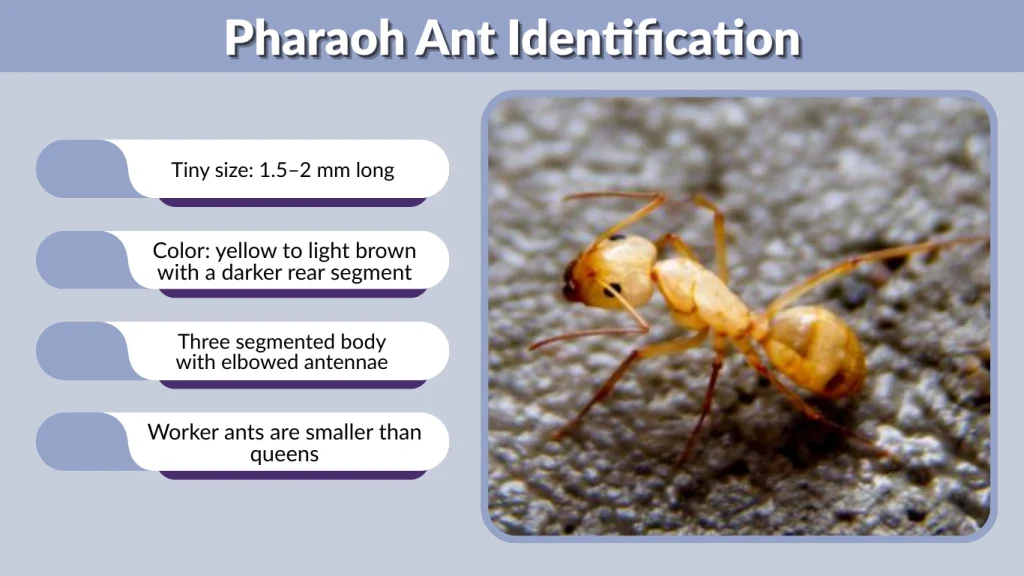
Correct identification is the first step in managing an infestation.
Physical Characteristics
- Tiny size: 1.5–2 mm long
- Color: yellow to light brown with a darker rear segment
- Three segmented body with elbowed antennae
- Worker ants are smaller than queens; males are winged and appear mainly during mating flights
Pharaoh Ant vs Thief Ant
Pharaoh ants are often confused with thief ants (Solenopsis molesta). Key differences include:
- Thief ants are slightly smaller and darker in color
- Pharaoh ants form large, polygynous colonies, while thief ants tend to nest near other ants and are less aggressive
- Nesting behavior: Pharaoh ants prefer warm indoor environments, whereas thief ants may nest in soil or in proximity to other colonies
Understanding these differences ensures correct control strategies, as treatment methods vary depending on species.
Pharaoh Ant Habitat
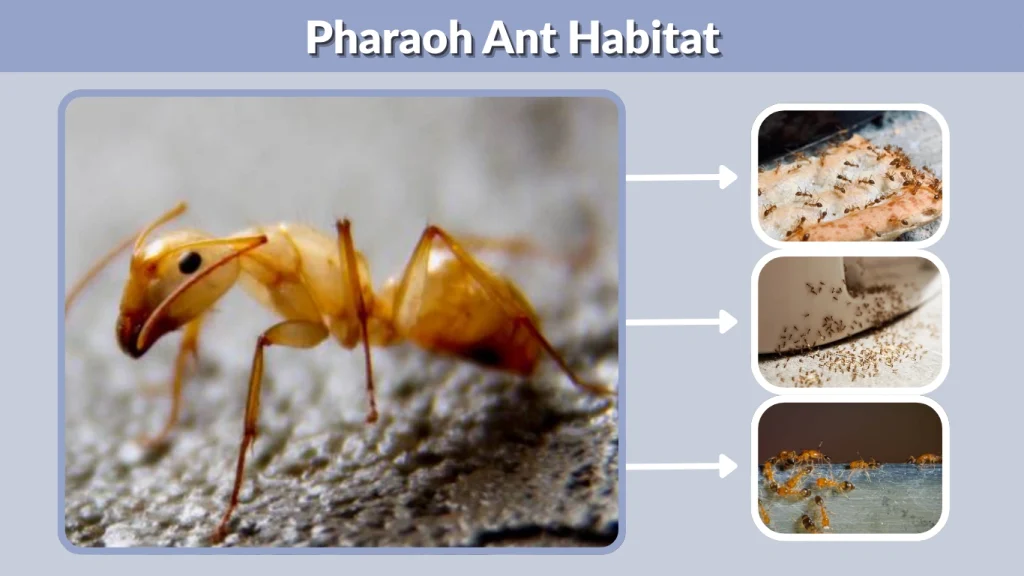
Indoor Environments
Pharaoh ants are primarily indoor pests, thriving in warm, humid areas. They commonly nest in:
- Kitchens and pantries near food sources
- Bathrooms with leaks or high humidity
- Wall voids and behind baseboards
- Electrical appliances and heating vents
They prefer hidden locations that provide safety, warmth, and consistent access to food. Even clean homes can harbor colonies if moisture and warmth are available.
Geographic Distribution
Pharaoh ants are common in Florida, as well as other parts of the southern United States, Europe, and Asia. They are particularly problematic in hospitals because they can spread pathogens to patients. Their small size and cryptic nesting habits make them difficult to detect and eliminate.
What Do Pharaoh Ants Eat?
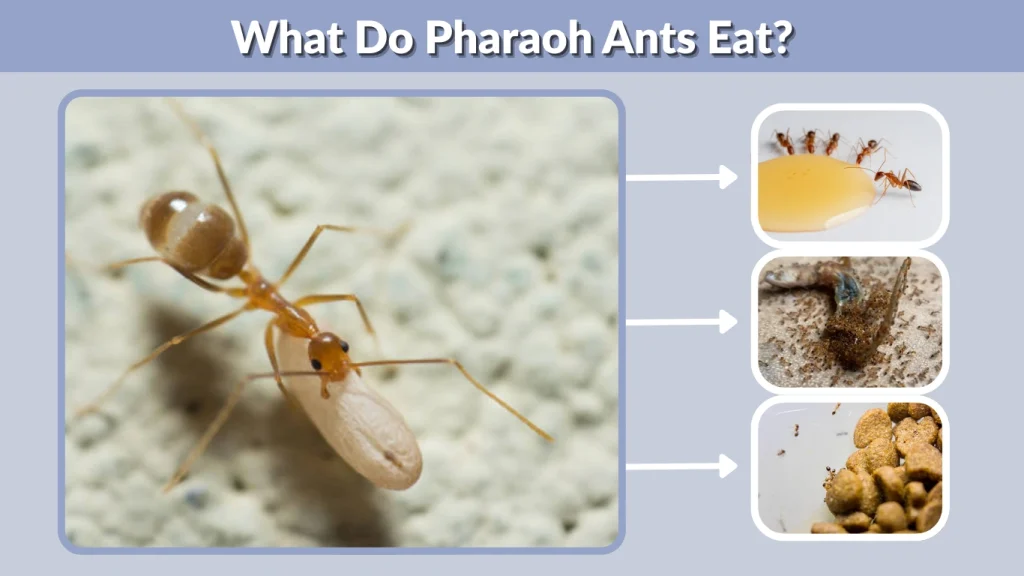
Pharaoh ants are omnivorous and opportunistic feeders. Their diet includes:
- Sugary substances: honey, syrup, and fruit juices
- Grease and protein: dead insects, meat, and pet food
- Plant material: seeds and grains in kitchens or pantries
The colony’s diet changes based on nutritional needs. Workers will forage for proteins when the colony is growing rapidly and sugars when energy is needed. This flexible diet allows them to thrive indoors and increases the risk of contamination in homes and commercial facilities.
Pharaoh Ant Behavior
Pharaoh ants are highly social and live in complex colonies with multiple queens, workers, and males.
Colony Structure
- Queens: Lay eggs continuously, supporting colony growth
- Workers: Forage, defend the nest, and care for young
- Males: Winged ants responsible for mating, die shortly afterward
Reproduction and Nesting
Colonies can contain multiple queens, which makes eradication difficult. When disturbed, pharaoh ants may split into satellite colonies, spreading to other areas of the building. This behavior explains why spraying contact insecticides often worsens infestations, as it triggers colony fragmentation.
Foraging and Trails
Workers establish organized trails from food sources back to the nest. They communicate using pheromones, allowing rapid recruitment to new food sources or danger signals. These trails are often visible along baseboards, cabinets, and countertops in infested homes.
Early Signs of Pharaoh Ant Infestation
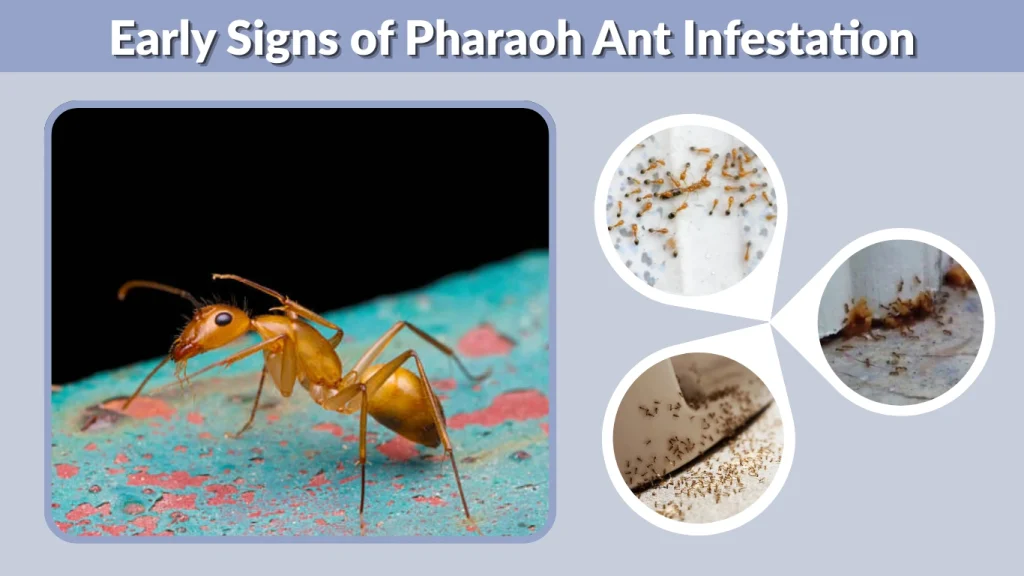
Detecting pharaoh ants early can prevent large infestations. Common indicators include:
- Small, light-colored ants seen trailing along walls or floors
- Visible nests in wall voids, behind appliances, or under baseboards
- Food contamination or ants in stored pantry items
- Multiple satellite colonies appearing after attempts to spray the main nest
Because of their small size and hidden nests, many infestations go unnoticed until workers become highly visible.
How to Get Rid of Pharaoh Ants Indoors
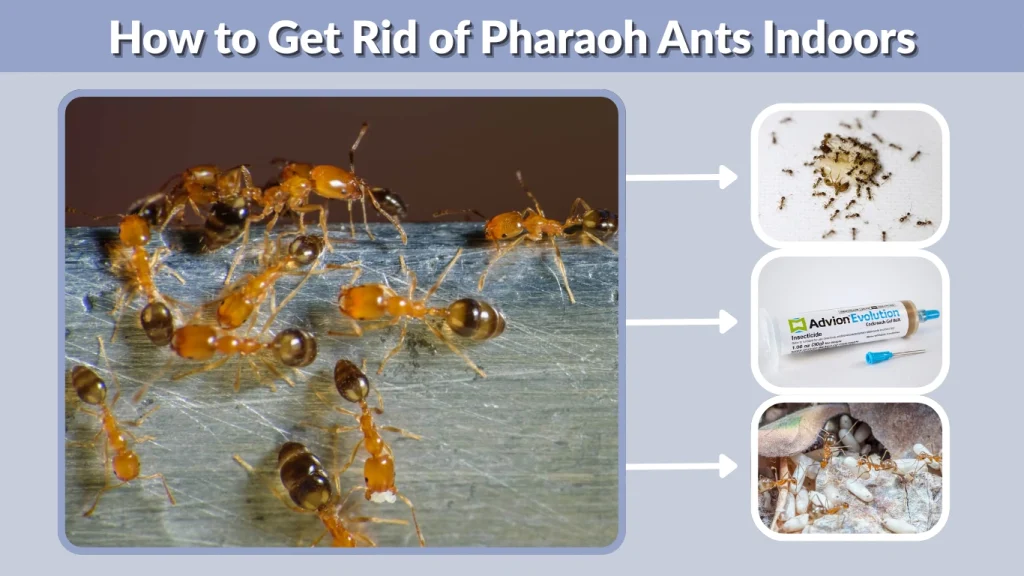
Pharaoh ants are notoriously difficult to eliminate because of their multiple-queen colonies and tendency to form satellite nests. Traditional sprays often worsen infestations by causing colonies to fragment and spread. Effective control focuses on targeted baiting, environmental management, and professional intervention.
Baiting Strategies
- Use protein-based or sugar-based baits, depending on colony nutritional needs.
- Gel baits are ideal for indoor use and can be applied along trails, near food sources, and inside wall voids.
- Workers carry bait back to the colony, eventually reaching queens and larvae.
- Avoid contact insecticides as they disrupt colony structure and can make the problem worse.
Environmental Management
- Keep food sealed and remove crumbs or spills promptly.
- Fix leaks and reduce moisture in kitchens, bathrooms, and laundry areas.
- Declutter storage spaces and seal cracks or gaps in walls to limit nesting sites.
Professional Pest Control
- Large infestations may require a licensed exterminator.
- Professionals use baiting, monitoring, and strategic placement to target multiple satellite nests.
- Regular follow-up treatments ensure colonies are fully eliminated.
Pharaoh Ant Treatment
Treatment success relies on combining chemical and non-chemical approaches.
- Chemical baits: Gel or granular baits that target both workers and queens.
- Environmental modification: Remove food sources, reduce moisture, and seal nesting sites.
- Monitoring: Sticky traps help track colony activity and determine if further treatment is needed.
Avoid spraying contact insecticides indoors, as pharaoh ants will simply split into multiple colonies, worsening the infestation.
Pharaoh Ant Control Tips
- Regularly inspect kitchens, bathrooms, and hidden wall voids for signs of activity.
- Maintain proper sanitation and store food in sealed containers.
- Place baits in areas inaccessible to pets or children.
- Monitor for new trails or satellite nests after initial treatment.
- Educate household members about not disturbing the nest or spraying ants directly.
Are Pharaoh Ants Dangerous?
While pharaoh ants do not bite aggressively, they can pose health risks:
- Contaminate food and surfaces with bacteria.
- Spread pathogens in hospitals and food preparation areas.
- Stings are rare but possible if the ant is handled or trapped against skin.
Infestations in medical facilities are particularly concerning because pharaoh ants can transport bacteria between patients and surfaces.
Interesting Facts About Pharaoh Ants
- One of the smallest invasive ant species, measuring only 1.5–2 mm.
- Colonies can contain multiple queens, allowing rapid expansion.
- Can survive in hidden wall voids, appliances, and ceilings, making them hard to detect.
- Highly adaptable to indoor environments, thriving in warm, humid climates like Florida.
- Often confused with thief ants, but pharaoh ants form larger, more aggressive colonies.
FAQs
What do pharaoh ants look like?
Pharaoh ants are tiny, yellow to light brown ants with darker abdomens, elbowed antennae, and three body segments. Workers are small, while queens are larger and more robust.
Are pharaoh ants dangerous to humans?
They are not aggressive biters, but they can contaminate food and spread bacteria. Infestations in hospitals can pose serious health risks.
How do I get rid of pharaoh ants indoors?
Use baiting strategies targeting workers and queens, maintain proper sanitation, seal cracks, reduce moisture, and avoid spraying ants directly.
What is the scientific name of pharaoh ants?
The scientific name is Monomorium pharaonis.
How are pharaoh ants different from thief ants?
Thief ants are smaller, darker, and usually nest near other colonies, while pharaoh ants form large, multi-queen colonies in warm indoor environments.
