

Red and black wasps are among the most visually striking insects found across the United States. Their vivid coloration, blending bright red with jet black or occasionally yellow accents, often causes confusion with hornets, velvet ants, and other wasp species. These wasps are commonly seen in warmer regions such as Texas, Florida, and Georgia, but can also appear in northern states like Ohio and Michigan during summer. While their appearance may seem intimidating, understanding their characteristics, habits, and sting risk helps people distinguish harmless varieties from those that require caution.
Species Overview of Red and Black Wasps
Red and black wasps belong to several different groups rather than one single species. The most recognized is the Red and Black Mason Wasp (Pachodynerus erynnis), known for its smooth, shiny black body and bright red thorax. Others include paper wasps, ground wasps, and even velvet ants—often mistaken for wingless wasps.
These wasps generally measure between 0.5 to 1 inch in length, with narrow waists and long, transparent wings. They are mostly solitary insects, unlike yellowjackets or hornets, which live in colonies. Mason and paper wasps are especially beneficial to the ecosystem because they help control pest populations and assist with pollination.
Physical Appearance and Identification
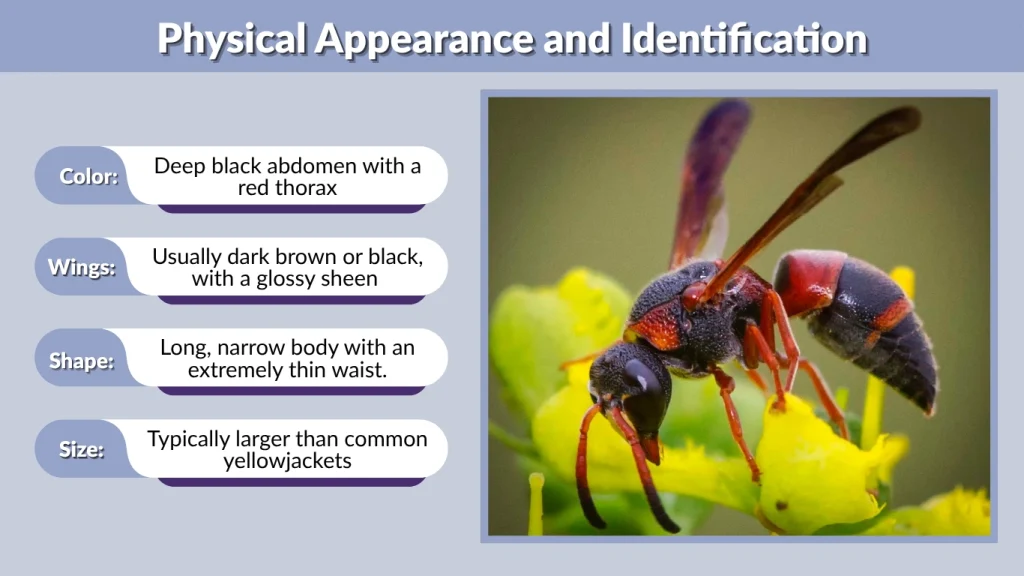
The appearance of red and black wasps varies by region and species. However, there are a few consistent traits to identify them:
- Body color: Deep black abdomen with a red thorax or the reverse pattern.
- Wings: Usually dark brown or black, with a glossy sheen under sunlight.
- Shape: Long, narrow body with an extremely thin waist.
- Size: Typically larger than common yellowjackets but smaller than hornets.
Some species also display yellow markings or striped patterns, which can cause confusion with other wasps. For example, a “red and black striped wasp” may refer to either a paper wasp or a ground wasp, depending on its nesting behavior.
Common Types of Red and Black Wasps

There are several wasp species that fit the red and black color pattern, each with its own behavior and nesting habit:
- Red and Black Mason Wasp (Pachodynerus erynnis): Recognized for its bright red thorax and solid black abdomen. It is a solitary species that builds small mud nests in cavities, walls, or old wood.
- Red and Black Paper Wasp: Slightly social species that construct umbrella-shaped nests under eaves and tree branches. Their stings are painful, but they are not naturally aggressive.
- Velvet Ant (Cow Killer Wasp): Technically a wingless wasp, known for its furry red and black body. The females deliver a potent sting, earning the name “cow killer.”
- Red and Black Ground Wasp: Builds nests in soil, often mistaken for ants or beetles. Usually non-aggressive unless disturbed.
Regional Distribution
Found in Southern States
In the southern U.S., especially Texas, Florida, and Louisiana, red and black wasps thrive in warm, humid environments. The red and black mason wasp is especially common in gardens and around wooden structures. In Texas, larger species such as the giant red and black wasp are often reported during late summer.
Northern and Midwestern Presence
While less common in colder areas, red and black wasps have been observed in states like Ohio, Michigan, and North Carolina during the warmer months. These regions typically see smaller populations, as many species prefer tropical or subtropical climates.
Behavior and Nesting Habits
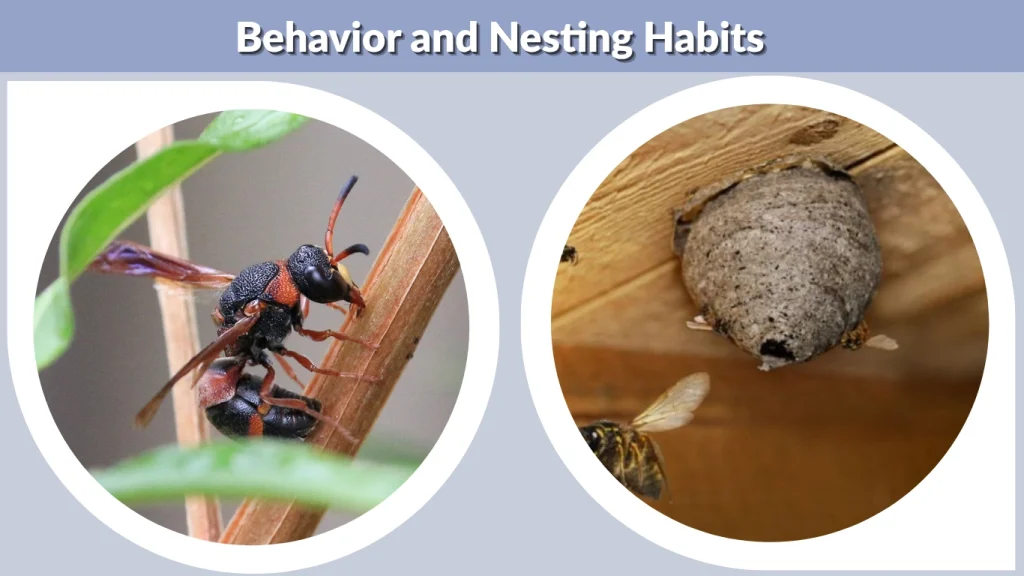
Red and black wasps are primarily solitary builders, unlike social hornets. Mason wasps create nests using mud, which they form into small cylindrical cells attached to walls, tree bark, or even outdoor furniture. Paper wasps, on the other hand, use chewed plant fibers mixed with saliva to create papery nests.
Each cell usually contains a paralyzed caterpillar or beetle larva that serves as food for the developing wasp larva. These wasps are not naturally aggressive and typically sting only when provoked or when their nest is disturbed.
Diet and Ecological Role
Red and black wasps play a crucial role in maintaining ecological balance. Their diet mainly consists of caterpillars, beetle larvae, and small insects that are considered garden pests. This makes them natural pest controllers. Adult wasps also feed on nectar and pollen, contributing to pollination while hunting for prey.
In gardens, these wasps can often be seen hovering near flowers or inspecting crevices for insect larvae. Their dual role as pollinators and predators makes them highly beneficial to both plants and farmers.
Sting and Danger Level
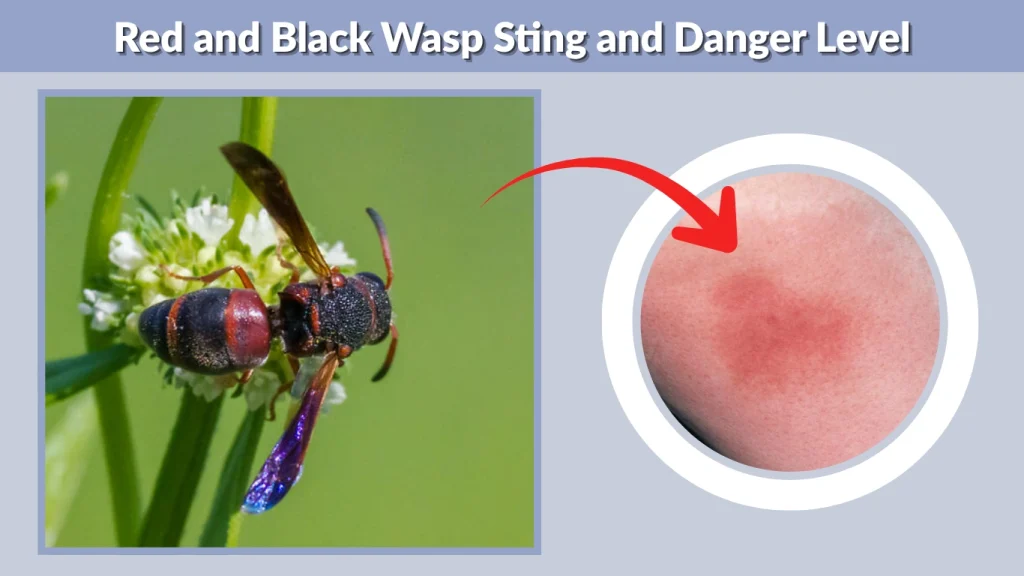
The sting of a red and black wasp can vary depending on the species. Mason wasps and paper wasps can deliver painful stings but are not aggressive unless threatened. Their venom causes sharp pain, redness, and mild swelling in most people, similar to a bee sting. However, for individuals allergic to insect venom, even a single sting can trigger serious reactions such as difficulty breathing or dizziness.
Despite their intimidating appearance, these wasps are not considered deadly. The red and black mason wasp, in particular, is quite calm and rarely attacks humans. Their sting serves primarily as a defense mechanism to protect their nests and larvae.
Comparison with Other Wasps
Red vs. Black Wasp Behavior
Red wasps are slightly more social, often seen building paper nests in groups, while black wasps, including mason types, are solitary hunters. Red wasps are more likely to defend their nests aggressively, whereas black species tend to avoid confrontation.
Mason vs. Paper Wasp
Mason wasps construct mud nests in cavities, using natural materials to create durable chambers for their offspring. Paper wasps, conversely, create delicate paper nests that hang under eaves or branches. Mason wasps are beneficial for pest control, while paper wasps are better known for pollination and colony defense.
Red and Black Wasp Mimics
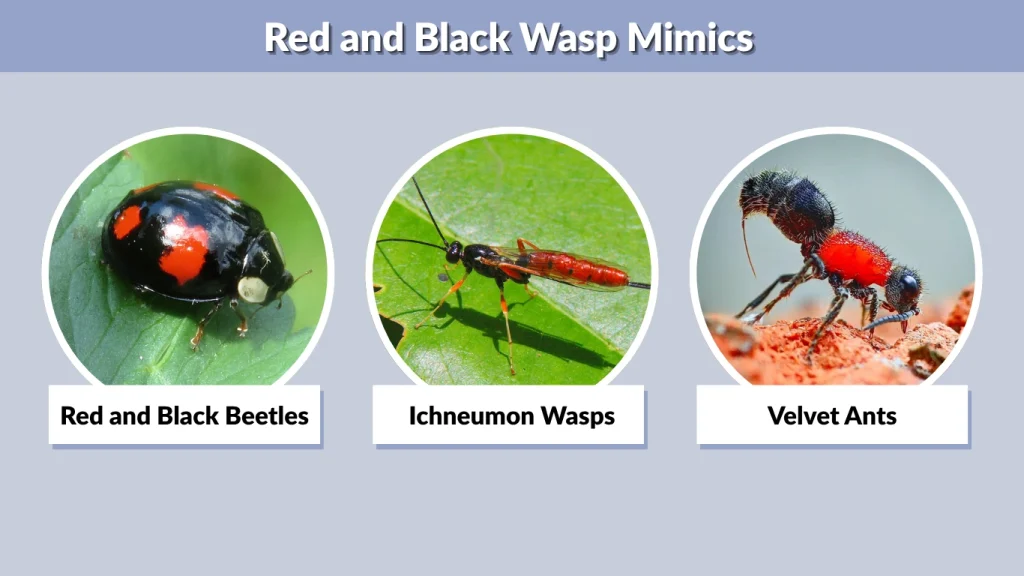
Many insects mimic the bold coloration of red and black wasps as a defense strategy, even though they lack stingers.
- Red and Black Beetles: Often seen on flowers, harmless but visually similar.
- Ichneumon Wasps: Slender and parasitic, often misidentified due to their long ovipositors.
- Velvet Ants (Wingless Females): Their bright red and black fur warns predators of their painful sting.
These mimics demonstrate how nature uses warning colors to keep predators away, a phenomenon known as Batesian mimicry.
Safety Tips and Prevention
Red and black wasps rarely seek out conflict, but prevention helps minimize encounters:
- Avoid disturbing nests: Never attempt to remove a nest without proper gear.
- Seal outdoor gaps: Close cracks and holes in wood or masonry to prevent nesting.
- Avoid bright clothing and perfumes: These can attract wasps searching for nectar.
- Stay calm when approached: Swatting or sudden movement provokes defensive stings.
- Professional removal: If nests form near living spaces, contact pest control experts for safe removal.
By understanding their behavior and maintaining calm, people can coexist with these insects safely, appreciating their ecological benefits.
FAQs
Are red and black mason wasps dangerous?
No, red and black mason wasps are not dangerous to humans unless provoked. They are solitary and non-aggressive, stinging only when handled or threatened. Their venom is mild, though allergic individuals should take precautions after any sting incident.
Do red and black wasps sting multiple times?
Unlike bees, red and black wasps can sting more than once because they don’t lose their stingers. However, they rarely do unless they feel their nest or young are under attack. Calmly walking away from them helps prevent stings.
What should I do if stung by a red and black wasp?
Immediately clean the sting area with soap and water, then apply ice to reduce swelling. Over-the-counter antihistamines or hydrocortisone creams relieve itching. If you notice breathing difficulty or swelling in the face or throat, seek medical help right away.
Where are red and black wasps most commonly found?
They thrive in warm climates, particularly in the southern United States such as Texas, Florida, and Georgia. However, they also appear during summer in northern states like Ohio and Michigan, often nesting near wood structures or garden plants.
Are red and black wasps beneficial to the environment?
Yes. They are valuable for natural pest control and pollination. By feeding on caterpillars and insect larvae, red and black wasps help maintain a healthy garden ecosystem while pollinating flowers as they collect nectar.
