

The red harvester ant (Pogonomyrmex barbatus) is one of the most fascinating yet feared ant species in North America. Known for their seed-collecting habits, large colonies, and painfully strong sting, these ants play an important role in the ecosystem while often clashing with humans. From their distinctive reddish appearance and massive underground mounds to their unique foraging behaviors and venomous sting, red harvester ants offer a world of study for scientists, pest control experts, and nature enthusiasts alike.
What is a Red Harvester Ant?
The red harvester ant belongs to the genus Pogonomyrmex, with Pogonomyrmex barbatus being the most well-known species in the United States. They are part of the Formicidae family, under the order Hymenoptera, which also includes bees and wasps. The name “harvester” comes from their seed-collecting behavior, which sets them apart from many other ant species.
General Characteristics
Red harvester ants are medium-to-large ants, usually measuring 4.5–7 mm in length, with queens being significantly larger. Their reddish to dark brown coloration makes them easy to identify in open, sandy, or arid landscapes. Unlike fire ants, they are less aggressive unless disturbed, but their sting is among the most painful in the insect world.
Difference Between Harvester Ants and Other Ants
Unlike carpenter ants that chew wood or sugar ants that scavenge sweet foods, harvester ants primarily gather seeds and vegetation. They construct noticeable bare mounds of soil, often with a clear area around the nest entrance, a feature not common in many other ant species. Their unique foraging trails and tendency to strip vegetation around the mound also distinguish them from others.
Identification of Red Harvester Ants

Red harvester ants have a robust body with a square-shaped head, strong mandibles, and a pair of elbowed antennae. Their reddish-brown coloration helps them stand out from darker ant species. They also lack spines on the thorax, unlike some other ants, making their body appear smoother.
Size Range of Workers and Queens
Workers typically measure between 4.5 and 7 mm in length, while queens can grow up to 12–13 mm, making them easy to identify in a colony. Male ants are smaller and more delicate, with wings that they use during nuptial flights.
Red vs Black Harvester Ants
While red harvester ants are the most recognized, there are also black harvester ants (Pogonomyrmex rugosus). The primary difference lies in their coloration and slight variation in habitat preference. Both species share similar behaviors, but the red harvester ant is more widespread in the southern United States.
What Does a Red Harvester Ant Look Like?
A red harvester ant can be identified by its reddish-brown body, large square head, and powerful jaws. Their eyes are relatively small compared to body size, and their antennae are distinctly bent in the middle. When observed around a mound, they are often seen carrying seeds back to the nest.
Geographic Range and Habitat

Red Harvester Ant Range
Red harvester ants are mainly found in the southern and southwestern United States, with the highest populations in Texas, Arizona, New Mexico, and parts of Mexico. Their range extends into open grasslands, prairies, and desert habitats where seeds are abundant.
Texas Red Harvester Ants
Texas is home to some of the largest populations of red harvester ants. Once widespread across the state, their numbers have declined in certain areas due to competition with invasive fire ants. However, they remain an iconic species in rural Texas landscapes.
Arizona and Western Harvester Ants
Arizona deserts and western states such as New Mexico and Utah also host strong populations of harvester ants. These regions provide the dry, sandy soils the ants prefer for building their nests and wide-open foraging areas.
Florida Harvester Ants
Although less common, harvester ants are found in northern and central Florida. They typically prefer drier sandy soils, often in pine forests or open fields.
California Harvester Ants
California harvester ants thrive in grasslands and desert-like areas of southern California. They are commonly seen in open fields where they construct large, cleared mounds surrounded by vegetation-free zones.
African and European Harvester Ants
Outside North America, there are larger and more aggressive harvester ant species. For example, giant African harvester ants are known for their size and strong stings, while certain European species prefer dry, rocky habitats. These species, while different, share the same seed-collecting behavior.
Desert vs Grassland Habitats
Red harvester ants adapt well to both arid deserts and grassy plains. In deserts, they build deep nests to avoid extreme heat, while in grasslands they forage over wide areas. The cleared circles around their mounds are not only a defense strategy but also reduce plant competition near nest entrances.
Life Cycle and Colony Structure

Stages of Development
Like all ants, red harvester ants undergo complete metamorphosis. Their life cycle includes four stages: egg, larva, pupa, and adult. Eggs hatch into larvae that are fed by worker ants, then develop into pupae, and finally emerge as adults to serve specific roles within the colony.
Queen Harvester Ant
The queen is the foundation of the colony. After a nuptial flight, she sheds her wings and begins laying eggs underground. A single queen can live up to 15–20 years, producing thousands of workers during her lifetime. Colonies with an established queen can reach tens of thousands of ants.
Worker and Soldier Castes
Workers are responsible for foraging, nest maintenance, and caring for brood, while soldier ants defend the colony. Soldiers are larger than regular workers, with stronger mandibles designed to protect against predators or rival colonies.
Male Ants and Reproduction
Males are short-lived and exist primarily to mate with virgin queens during nuptial flights. After mating, males die, while queens disperse to start new colonies.
Lifespan of Red Harvester Ants
Workers typically live for several months, while soldiers may survive slightly longer. Queens, however, enjoy the longest lifespan, making them essential to the continuity of the colony.
Nest and Mound Architecture
Harvester Ant Mounds and Hills
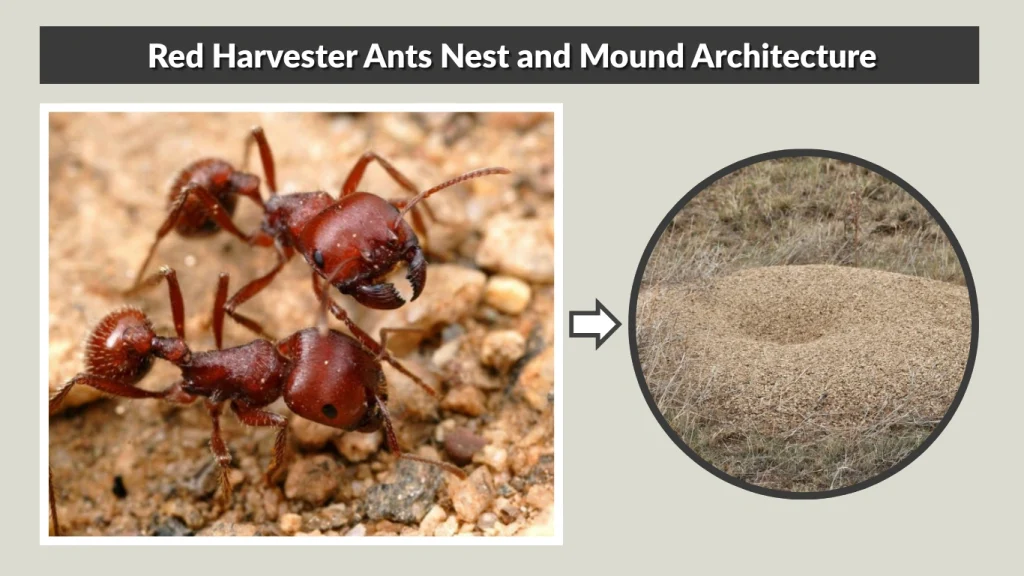
Red harvester ants are famous for their distinctive soil mounds, which can measure up to 3 feet in diameter. These mounds are usually bare of vegetation because the ants clear the surrounding area to reduce cover for predators and improve visibility of foraging trails.
Nest Entrances and Chambers
The mound typically has multiple entrances leading into a vast underground system. Beneath the surface, the ants create chambers for storing seeds, nurseries for developing larvae, and resting areas for workers and soldiers.
Underground Tunnel Systems
The nests may extend several feet underground with complex tunnel systems. These tunnels regulate temperature and humidity, ensuring survival during hot summers and cold winters. Seed storage chambers are carefully organized, preventing mold and decay.
How Colonies Expand
As the colony grows, ants expand the nest by creating new chambers and widening tunnels. Over time, the mound becomes larger and more noticeable on the surface. In mature colonies, expansion may even lead to multiple satellite mounds connected underground.
Diet and Food Sources

Seeds as Primary Diet
Seeds make up the bulk of the red harvester ant’s diet. They gather grass seeds, grains, and small plant seeds, which are carried to underground storage chambers. These seeds are vital for sustaining the colony, especially during dry seasons when fresh vegetation is scarce.
Insects and Occasional Protein Sources
Although primarily seed collectors, red harvester ants also eat insects and carrion. They may consume small beetles, caterpillars, or dead arthropods to gain essential proteins and fats that seeds alone cannot provide.
Red Harvester Ant Food Preferences
Different colonies may prefer specific types of seeds depending on availability in their habitat. Some prefer grass seeds, while others focus on shrub or desert plant seeds. This adaptability ensures their survival in varied environments.
Role in Ecosystem (Seed Dispersal)
Red harvester ants play a critical ecological role as seed dispersers. By collecting and burying seeds, they promote plant growth and maintain ecosystem balance. Their activity improves soil fertility and supports biodiversity in grasslands and deserts.
Sting and Venom

Red Harvester Ant Sting Pain (Schmidt Pain Index Ranking)
The sting of a red harvester ant is notorious for its intensity. On the Schmidt Sting Pain Index, it is rated as extremely painful—sharp, burning, and long-lasting compared to many other ants and wasps. Some researchers describe it as a “bold and relentless pain.”
Harvester Ant Bite vs Sting (Difference)
Although people often say “harvester ant bite,” the real threat comes from their sting. While their strong mandibles can pinch the skin, the venom is injected through the stinger at the tip of the abdomen, which causes pain, swelling, and redness.
Symptoms of Harvester Ant Bites/Stings
- Intense burning pain at the sting site
- Redness and swelling that may last hours or even days
- Itching or a warm sensation around the affected area
- In severe cases, allergic reactions including hives, dizziness, or difficulty breathing
Red Harvester Ant Bite Pictures and Reactions
Photos of harvester ant stings often show red, swollen welts, sometimes with a raised center. Multiple stings can lead to larger inflamed areas, especially if the victim is allergic.
Venom Composition and Toxicity
Harvester ant venom contains alkaloids and proteins that cause pain and immune reactions. Though rarely fatal, the venom is considered one of the most toxic among ant species, gram for gram, due to its potency.
Famous Cases – Kings of Pain & Brave Wilderness Encounters
TV shows like Kings of Pain and Brave Wilderness have highlighted the sting of the harvester ant. Presenters described the pain as unbearable, reinforcing the species’ reputation as one of the most painful stinging ants in the world.
Harvester Ant vs Fire Ant

Physical Differences
Red harvester ants are larger, with robust bodies and reddish coloration, while fire ants are smaller (2–6 mm) and range from reddish-brown to black. Harvester ants usually have a bare circular mound, whereas fire ants build dome-shaped nests without cleared areas.
Nesting Behavior
Harvester ants construct wide, open mounds with vegetation cleared around them. Fire ants build underground colonies with raised soil domes and no cleared zones. Fire ant colonies grow much faster and often contain multiple queens, unlike the single-queen structure of most harvester ant colonies.
Sting Pain and Aggressiveness
While harvester ant stings are more painful, they sting only when provoked. Fire ants, on the other hand, are extremely aggressive—attacking in large numbers and delivering multiple stings at once. Fire ant stings cause itchy pustules, whereas harvester ant stings cause deep, burning pain.
Fire Ant vs Harvester Ant Bite Effects
- Fire ant stings: Multiple pustules, itching, allergic reactions
- Harvester ant stings: Intense localized burning, swelling, prolonged pain
Overall, fire ants are a greater public health problem due to their aggressiveness and numbers, even though harvester ants pack a stronger individual sting.
Red Harvester Ant vs Fire Ant in Texas
In Texas, the spread of invasive fire ants has contributed to a decline in red harvester ant populations. Fire ants outcompete harvester ants for resources and space, leading to reduced numbers of native colonies. Despite this, red harvester ants remain an important ecological species in rural Texas regions.
Interaction with Humans
Harvester Ant Bite Allergic Reactions
Most people experience localized pain and swelling after a harvester ant sting, but individuals with allergies may suffer from more severe reactions such as hives, dizziness, or difficulty breathing. In rare cases, anaphylaxis can occur, requiring immediate medical attention.
Treatment for Harvester Ant Bites/Stings
Basic first aid includes washing the sting area with soap and water, applying a cold compress to reduce swelling, and using over-the-counter pain relievers or antihistamines. Calamine lotion or hydrocortisone cream can help with itching.
Harvester Ant Bite Remedies at Home
- Baking soda paste to neutralize venom
- Aloe vera gel for soothing skin
- Apple cider vinegar to reduce burning
- Ice packs to numb pain and minimize swelling
Medical Treatment and Prevention Tips
Severe reactions should be treated by a healthcare professional. Epinephrine injections are prescribed for those with known allergies. To avoid stings, wear closed shoes outdoors, avoid sitting near visible mounds, and shake out clothing before wearing.
Harvester Ant Care (in Farms or as Pets)
Red harvester ants are sometimes kept in educational ant farms. While fascinating to observe, their painful stings and specialized needs make them challenging to care for. They require a steady supply of seeds and a controlled environment to thrive.
Control and Management

Signs of Infestation
Harvester ant infestations are often identified by their large, vegetation-free soil mounds. The cleared area around the nest entrance, combined with visible foraging trails, is a clear indicator of their presence.
Harvester Ant Killer Options (Natural vs Chemical)
- Natural methods: Boiling water, diatomaceous earth, and vinegar solutions can reduce small colonies but may not fully eliminate them.
- Chemical methods: Insecticides and ant baits designed for outdoor use can target colonies more effectively.
Best Baits for Harvester Ants
Harvester ants are attracted to seeds and grains, making seed-based baits highly effective. Products with slow-acting insecticides allow workers to carry poisoned seeds back to the nest, eventually reaching the queen.
Red Harvester Ant Control Methods in Yards and Farms
For homeowners, regular monitoring and mound removal can help manage colonies. On farms, infestations are controlled using targeted pesticides that minimize harm to non-target species. Controlling fire ants also indirectly helps red harvester ant populations since they are natural competitors.
Pesticide and Poison Use – Risks and Precautions
Overuse of chemicals can harm beneficial insects, pets, and even humans. It is essential to follow product instructions carefully and avoid applying pesticides near crops, gardens, or water sources. Integrated pest management (IPM) techniques are often recommended for long-term control.
Fun and Surprising Facts
Giant African Harvester Ants
While the red harvester ant is well-known in the United States, Africa is home to even larger harvester ant species. Some of these giants are stronger and more aggressive, with powerful stings that rival or surpass their American relatives.
Harvester Ant Bread in Native Traditions
Certain indigenous cultures observed the way harvester ants store and chew seeds, sometimes comparing it to “ant bread.” These behaviors fascinated early naturalists and became part of folklore and ecological studies.
Unusual Behaviors (Nest Wars and Food Hoarding)
Red harvester ants are highly territorial. Colonies may engage in large-scale battles with neighboring nests, often resulting in heavy casualties. They also hoard seeds in underground chambers, which not only sustain their colonies but occasionally sprout, unintentionally planting new vegetation around their habitats.
FAQs
What makes red harvester ants different from fire ants?
Red harvester ants are larger, less aggressive, and primarily harvest seeds, while fire ants are smaller, more aggressive, and attack in large numbers. Harvester ants have a stronger sting per individual, but fire ants pose a bigger threat due to their swarming behavior.
How painful is a red harvester ant sting compared to other insects?
The sting of a red harvester ant is considered one of the most painful of any insect, ranking high on the Schmidt Sting Pain Index. Victims describe it as burning, sharp, and long-lasting—often more intense than wasp or bee stings.
Can you keep red harvester ants in an ant farm?
Yes, red harvester ants are often used in educational ant farms because of their seed-collecting behavior. However, without a queen, colonies are temporary. Keeping a queen is usually restricted by law, so most farms contain only workers.
How long do red harvester ant queens live?
Queens can live up to 15–20 years in the wild, continuously producing thousands of workers during their lifetime. This long lifespan ensures the survival and growth of colonies over decades.
What is the best way to get rid of harvester ant colonies?
The most effective methods include using seed-based ant baits with slow-acting insecticides. Natural remedies like boiling water or diatomaceous earth can help reduce smaller colonies. For large infestations, professional pest control is recommended.
