

A red paper wasp sting is known for its sudden, fiery pain and fast-developing redness. Found mostly in warm regions like the southern United States, the red paper wasp (Polistes carolina) uses its sting to defend its nest rather than to hunt. While most stings cause only temporary discomfort, some can trigger allergic reactions that require prompt medical care. Knowing the symptoms, treatment methods, and pain level helps manage a sting safely and effectively.
Do Red Paper Wasps Sting?
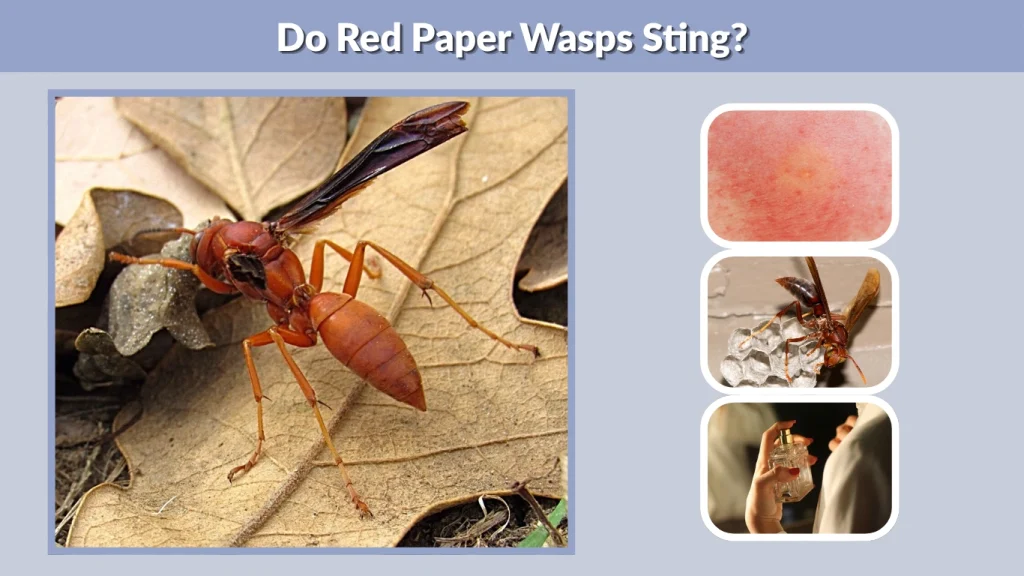
Why and When They Sting
Red paper wasps generally avoid humans but will sting when they feel threatened. The most common situations include:
- Disturbing their nest accidentally
- Making sudden movements near their colony
- Wearing strong perfumes or bright clothing that attract attention
Unlike honeybees, red paper wasps can sting multiple times because their stinger does not detach. This makes them more persistent defenders, especially during late summer when their colonies are largest.
Are Red Paper Wasp Stings Dangerous?
Most stings are mild, causing temporary pain, redness, and swelling. However, people allergic to wasp venom may develop serious reactions like hives, throat swelling, or difficulty breathing. In such cases, immediate medical treatment is essential. Multiple stings can also lead to more intense pain or dizziness due to higher venom exposure.
Pain Index: How Bad Is a Red Paper Wasp Sting?
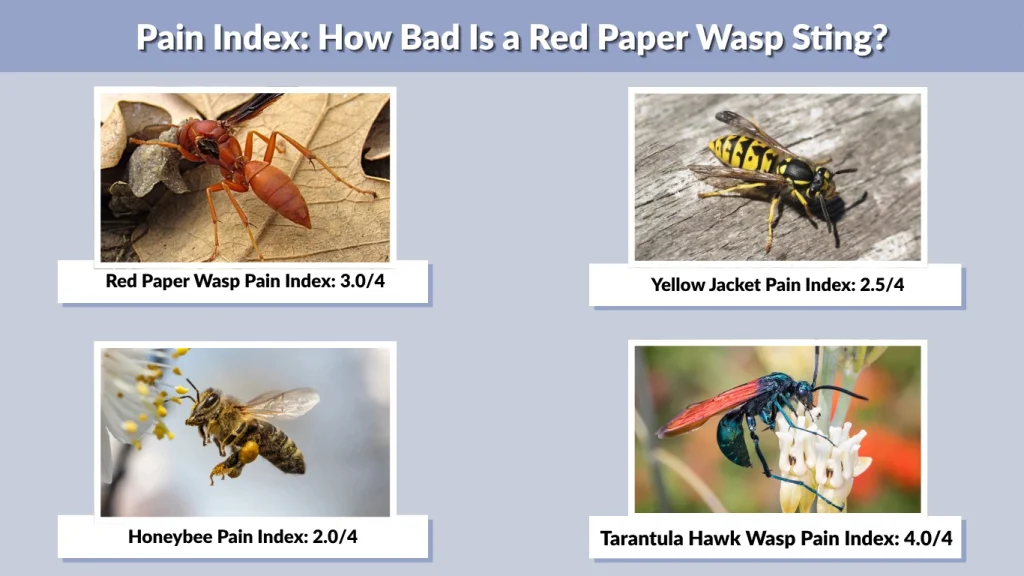
Schmidt Pain Index Rating
On the Schmidt Pain Index, a red paper wasp sting ranks 3.0 out of 4.0, indicating severe but short-lived pain. Entomologist Justin Schmidt described it as “burning and electric, as if someone pressed a hot needle into your skin.” The initial shock lasts for several minutes, followed by lingering soreness for up to an hour.
Pain Scale Comparison
| Insect | Pain Index | Description |
| Red Paper Wasp | 3.0 / 4 | Fiery, sharp, electric pain |
| Yellow Jacket | 2.5 / 4 | Hot, throbbing, slightly longer pain |
| Honeybee | 2.0 / 4 | Sharp, short sting with lingering itch |
| Tarantula Hawk Wasp | 4.0 / 4 | Blinding, excruciating pain lasting minutes |
The red paper wasp’s sting ranks among the most painful insect stings in North America but is typically less severe than hornet or tarantula hawk stings.
Symptoms and Reactions
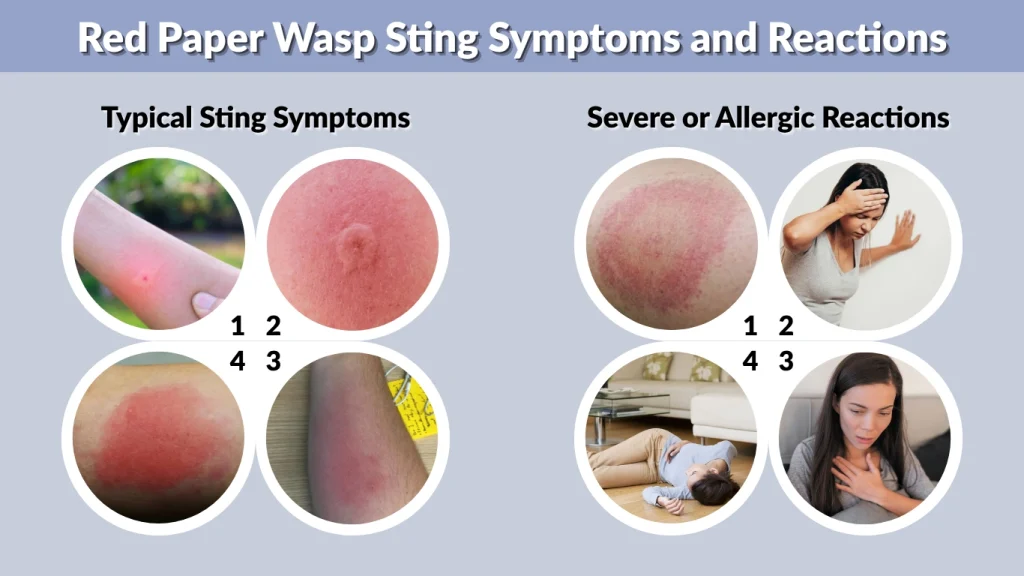
Typical Sting Symptoms
After a red paper wasp sting, you may experience:
- Intense burning pain at the sting site
- Redness and mild swelling that develop within minutes
- Warmth or itching around the affected area
- Localized tenderness lasting several hours
These reactions are normal and usually subside within two or three days.
Severe or Allergic Reactions
Some people may have stronger responses to the venom, including:
- Large red swelling extending beyond the sting area
- Dizziness, nausea, or shortness of breath
- Hives or throat tightness
- Red lines spreading from the sting site — possible infection or lymphatic inflammation
These symptoms can signal an allergic or systemic reaction and need immediate medical care.
Red Paper Wasp Sting on Dogs

Symptoms in Pets
Dogs that encounter red paper wasps often yelp suddenly and may lick or paw at the sting site. Signs of a sting include:
- Local swelling or redness
- Whimpering and licking the affected area
- Mild hives or lumps under the skin
Treatment for Dogs
- Apply a cold compress wrapped in a towel to reduce swelling.
- Keep your pet calm and prevent scratching or licking.
- Contact your veterinarian before giving any antihistamine or medication.
- Seek emergency care if your dog shows breathing difficulty or facial swelling — signs of an allergic reaction.
Most dog stings heal within a day or two, though sensitive breeds may react more strongly to wasp venom.
Treatment and First Aid for Humans

Immediate Steps
- Move away from the wasp nest to avoid additional stings.
- Wash the area thoroughly with soap and cool water to remove venom residue.
- Apply ice or a cold compress for 10–15 minutes to reduce pain and swelling.
- Take an oral antihistamine like Benadryl to minimize itching.
- Apply hydrocortisone cream or calamine lotion for further relief.
Avoid scratching the sting site — this can worsen irritation and increase infection risk. If multiple stings occur, lie down and remain still while seeking medical assistance.
Home Remedies and Relief Options
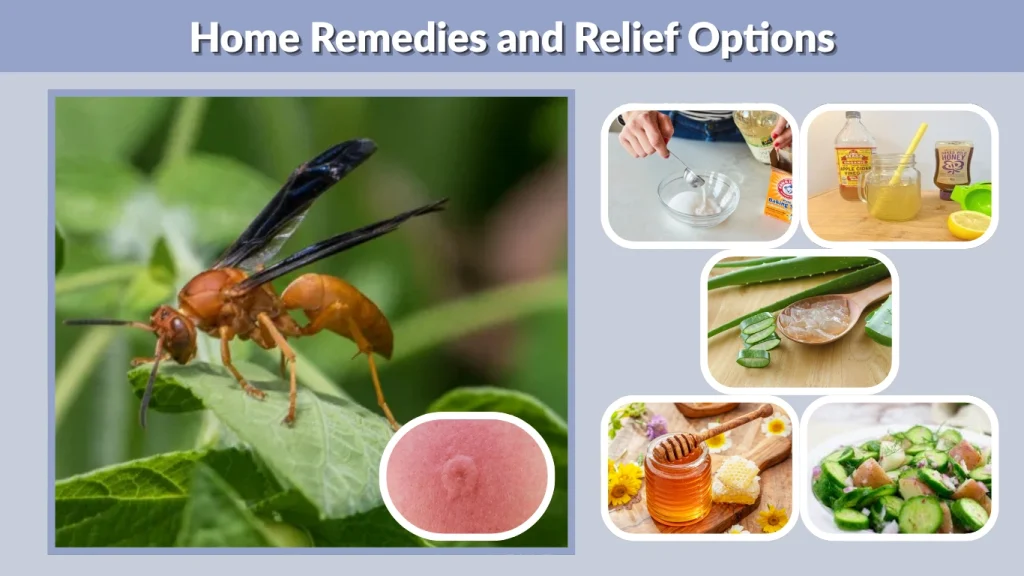
Natural Treatments
Several home remedies can ease pain, swelling, and itching after a red paper wasp sting. These are safe, affordable, and effective for mild to moderate reactions:
- Baking soda paste: Mix one tablespoon of baking soda with water to create a thick paste. Apply it directly to the sting site for 10–15 minutes to neutralize venom acidity.
- Apple cider vinegar or lemon juice: The mild acid helps break down venom proteins and reduces inflammation.
- Aloe vera gel: Naturally cools and soothes the skin, minimizing burning sensations.
- Honey: Works as a gentle antiseptic and moisturizer, helping prevent infection and calm irritation.
- Cucumber or potato slices: The natural moisture provides a cooling effect and reduces itching.
These natural treatments should be used after proper cleaning of the sting area. If swelling or pain worsens, switch to medical-grade creams or consult a healthcare professional.
Red Paper Wasp Stinger Facts
The red paper wasp stinger is smooth and designed for multiple uses, unlike the barbed stingers of honeybees. This allows the wasp to sting repeatedly without dying afterward.
Their venom contains a complex mix of proteins, peptides, and histamines, which are responsible for the burning pain and swelling.
Key Stinger Facts
- The stinger measures about 2–3 millimeters long.
- It injects small doses of venom each time.
- Red paper wasps use their sting for defense only, not hunting.
- They target soft tissue, like skin, making the sting more painful.
Even after being removed, the venom’s effects continue for a few minutes as it spreads into the surrounding tissue.
Side Effects and Aftercare
Short-Term Effects
Most people experience symptoms that resolve within 1–3 days, including:
- Mild swelling or redness
- Tenderness and warmth around the sting
- Minor itching or irritation
Keeping the sting area clean and cool helps prevent infection and reduces discomfort.
Possible Complications
In rare cases, complications may arise, such as:
- Infection – If the site becomes hot, red, or filled with pus
- Large local reaction – Extended swelling that lasts several days
- Allergic response – Hives, dizziness, or trouble breathing
Seek medical help if symptoms spread or persist. Doctors may prescribe oral steroids or antibiotics for more severe cases.
Aftercare Tips
- Apply calamine lotion or hydrocortisone cream to soothe itching.
- Avoid heat or hot water, which can worsen inflammation.
- Drink plenty of fluids to help the body flush out toxins.
- Keep fingernails short to prevent scratching and bacterial infection.
Prevention Tips
The best way to avoid red paper wasp stings is by minimizing encounters around nesting areas. Follow these simple prevention habits:
- Inspect your home regularly during spring and summer for new nests.
- Seal small openings around eaves, vents, and roof edges.
- Avoid bright clothing and sweet perfumes, which attract wasps.
- Cover food and drinks when eating outdoors.
- Use natural repellents like peppermint oil or citronella spray.
- Remove old nests in winter before new queens return in spring.
Maintaining awareness and proper outdoor hygiene can greatly reduce the risk of being stung.
FAQs
How bad is a red paper wasp sting?
It rates about 3.0 on the Schmidt Pain Index, producing a fiery, electric pain that can last several minutes. While painful, most stings heal within a few days without serious complications.
How can I treat a red paper wasp sting at home?
Clean the area with soap and water, apply ice, and use baking soda paste or aloe vera gel for relief. Take antihistamines for itching, and use hydrocortisone cream to reduce swelling.
Do red paper wasps sting more than once?
Yes. Their stingers are smooth, allowing them to sting multiple times. Unlike honeybees, they survive after stinging and can continue to defend their nest aggressively if provoked.
What are the side effects of a red paper wasp sting?
Common effects include redness, itching, and mild swelling. Severe allergic reactions can cause hives, dizziness, or difficulty breathing, which require immediate medical attention.
What should I do if the redness or swelling spreads?
If the sting area becomes hot, painful, or forms red lines, it could signal infection or allergic inflammation. Apply a warm compress and seek medical care promptly for further treatment.
