
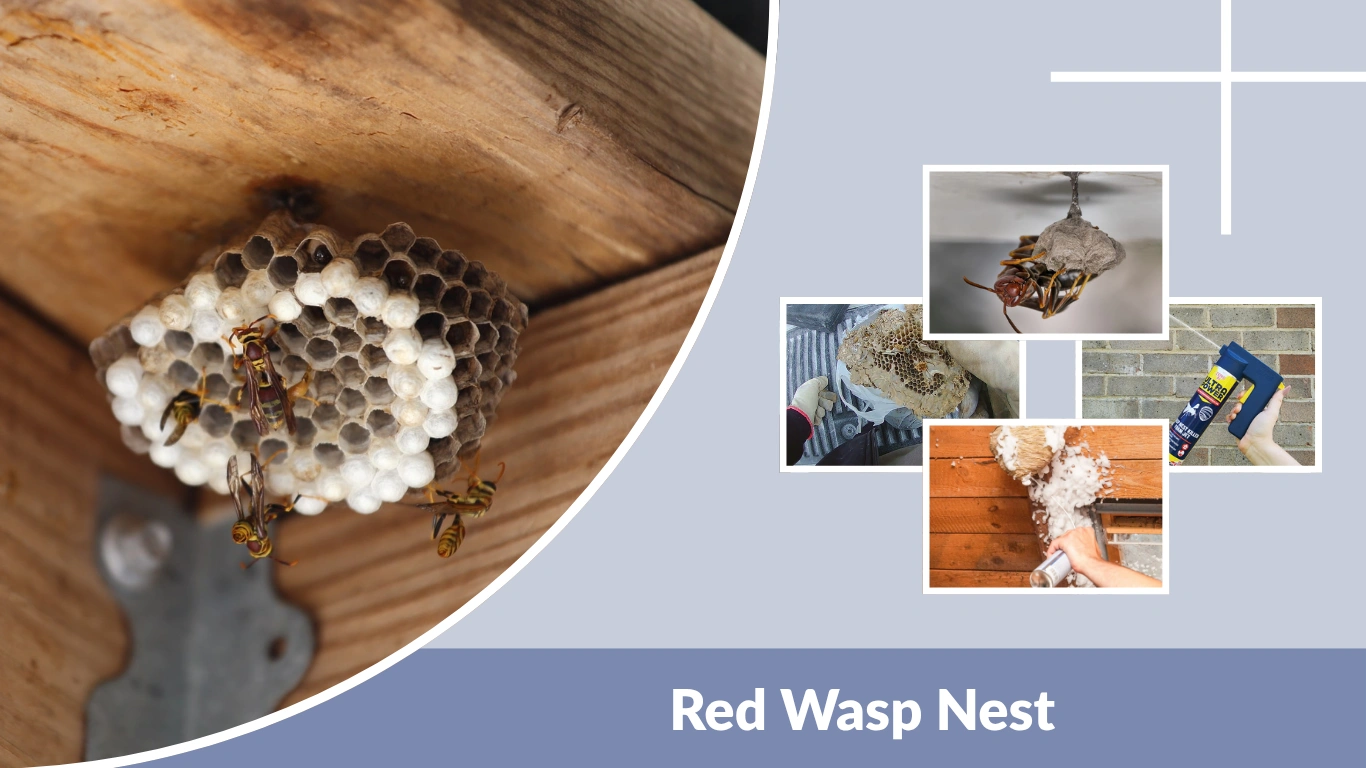
A red wasp nest can be both fascinating and frightening, especially when found close to your home. These intricate papery structures are built by red paper wasps (Polistes carolina) and similar species across the southern United States. Found abundantly in Texas, Georgia, Alabama, and Tennessee, red wasps play an essential ecological role but can become a hazard when nesting near humans. Understanding how to identify, locate, and safely remove a red wasp nest is crucial for keeping your surroundings safe while preserving nature’s balance.
Identifying a Red Wasp Nest
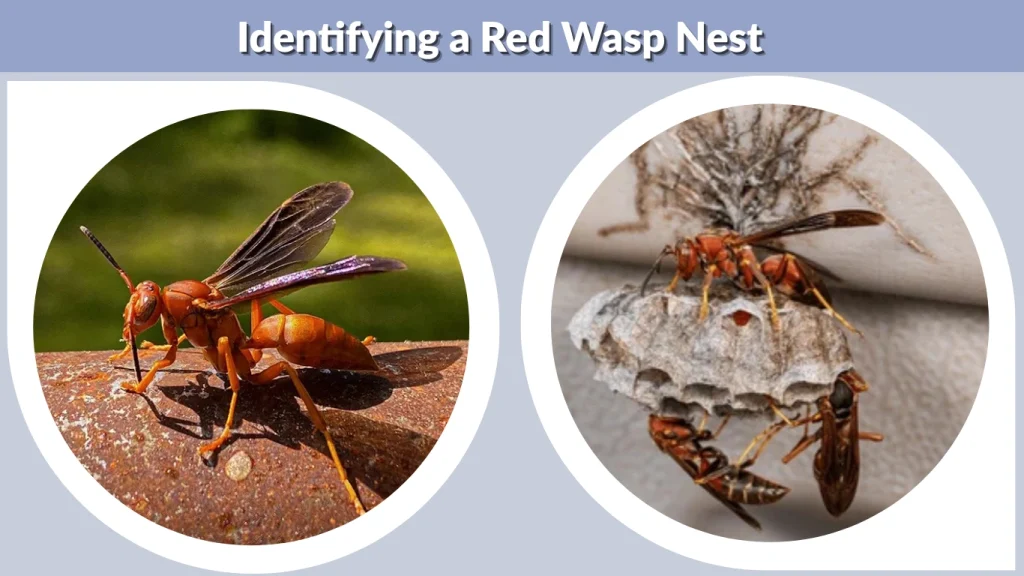
What Does a Red Wasp Nest Look Like?
A red wasp nest is one of the easiest to recognize among social wasps. It has an open, umbrella-shaped design made from chewed wood fibers mixed with saliva, giving it a paper-like texture. The surface appears grayish-brown with visible hexagonal cells, each holding eggs, larvae, or pupae.
The average nest measures 6 to 10 inches wide, though large colonies may exceed 12 inches. They are usually suspended from a single thin stalk under eaves, porch ceilings, or branches. These nests remain uncovered, allowing you to see adult wasps tending to the open cells.
Red Paper Wasp Nest Characteristics
The red paper wasp, especially the Polistes carolina and Polistes rubiginosus species, is known for crafting durable, lightweight nests. Unlike hornets or yellow jackets, which build enclosed nests, red paper wasps leave their combs exposed. Each nest cell supports one wasp offspring, and the queen continually expands the structure through the summer months.
Inside the nest, you can often observe:
- Eggs and larvae in early stages of development
- Workers guarding and maintaining the outer layer
- Adult wasps clustering along the edges, especially during heat
Where Do Red Wasps Build Their Nests?
Common Nesting Locations
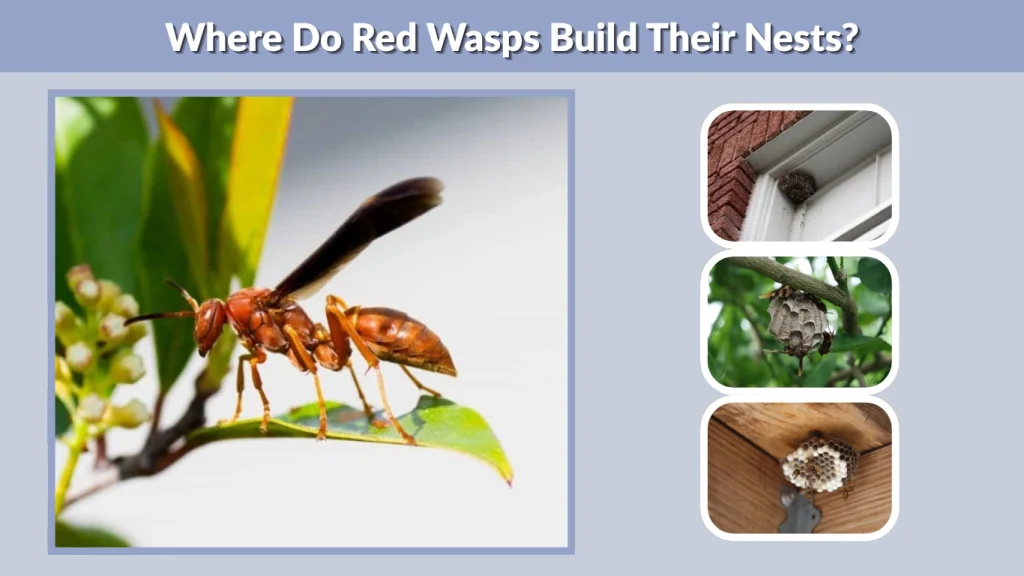
Red wasps prefer dry, sheltered areas with access to food and building materials. Their most common nesting spots include:
- House eaves, attics, and porch ceilings
- Tree branches, shrubs, and fences
- Sheds, barns, and garages
- Outdoor light fixtures, grills, and mailboxes
Because they are drawn to human structures for shelter, it’s common to find red wasp nests under rooflines or in corners of quiet outdoor areas.
Do Red Wasps Nest in the Ground?
While most red paper wasps build above-ground nests, a few solitary species, like the red mud wasp, occasionally nest in soil or decayed wood. True red paper wasps (Polistes) rarely nest underground. Ground nests, when found, are usually the work of red-and-black mason wasps or mud daubers, not paper wasps.
If you see red wasps entering holes in the ground or firewood, they may be using existing cavities to create small, hidden colonies.
Regional Nesting Behavior
Texas
In Texas, red wasps are active from March through late October, building nests in barns, attics, and roof overhangs. They thrive in the state’s warm, humid climate, often creating multiple nests around one property.
Southeastern States
In Alabama, Georgia, and Tennessee, red wasp nests are commonly found under porches, tree limbs, and fences. They favor rural and wooded areas but also adapt to suburban neighborhoods.
Northern and Central Regions
In cooler states like New Jersey or New England, red wasps appear mainly in summer, nesting in sheltered garden corners or old sheds.
How Big Can a Red Wasp Nest Get?

Nest Growth and Population
Red wasp nests begin small in early spring when a queen starts building the first few cells. As eggs hatch and larvae develop into workers, the nest expands rapidly. By mid to late summer, a mature nest can:
- Reach 12 to 18 inches across
- Contain 100–150 cells
- House 20 to 40 adult wasps at a time
Each wasp colony lasts one season, as only new queens survive winter to build fresh nests in spring.
Factors That Affect Nest Size
- Climate: Warmer regions produce larger colonies.
- Food availability: Access to caterpillars and insects encourages faster expansion.
- Shelter: Well-protected areas allow nests to survive longer.
- Queen strength: Productive queens build larger nests before fall.
How Red Wasps Build Their Nests
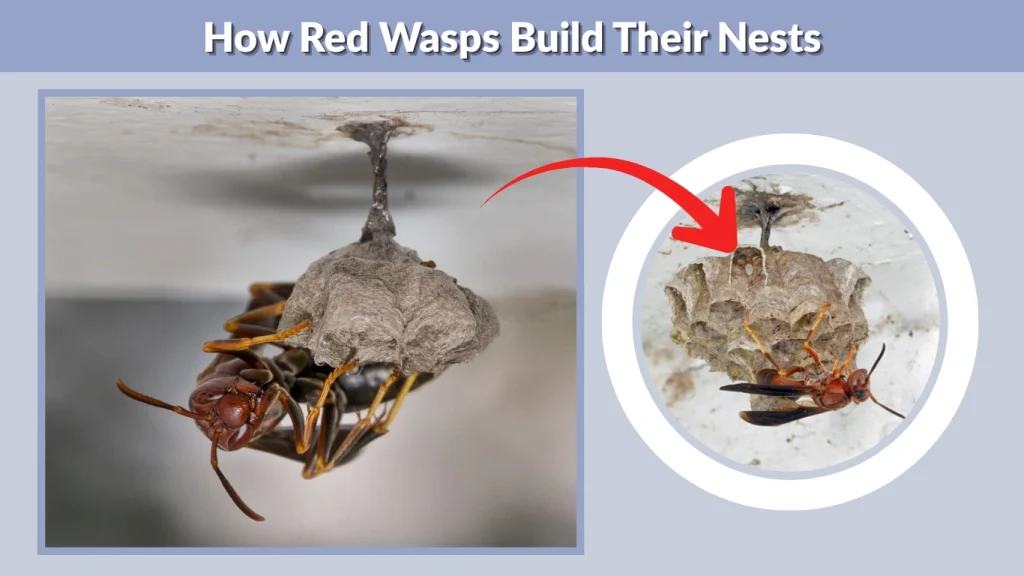
Red wasps are skilled builders. The queen begins by chewing wood fibers from fences, tree bark, or paper, mixing them with saliva to form a soft pulp. This pulp is molded into thin sheets that dry into a sturdy paper-like material.
Steps of nest construction:
- The Queen selects a location — usually a high, sheltered surface.
- She builds a small stalk and a few starter cells.
- Eggs are laid, and larvae hatch within days.
- As workers mature, they take over construction, expanding the comb by adding more layers of cells.
Within 2–3 days, a small base nest appears, but full colonies take several weeks to develop.
How to Find a Red Wasp Nest
Finding a red wasp nest can be tricky, especially when they build in hidden or hard-to-reach areas. Use these tips to locate one safely and efficiently:
- Follow flight paths: Red wasps often fly directly between their nest and a food source, such as flowers or insects.
- Check shaded areas: Look under roof eaves, porch beams, gutters, and attic corners.
- Listen closely: Wasps produce a faint crackling or buzzing noise when working inside their nests.
- Inspect at dusk: Wasps return to the nest in the evening, making it easier to observe their movement.
- Avoid bright flashlights: Strong light can agitate wasps—use a red or dim beam when inspecting at night.
If you notice many red wasps but no visible nest, it could be hidden behind a wall, under shingles, or inside a vent. Always observe from a safe distance to avoid provoking them.
How to Safely Remove a Red Wasp Nest
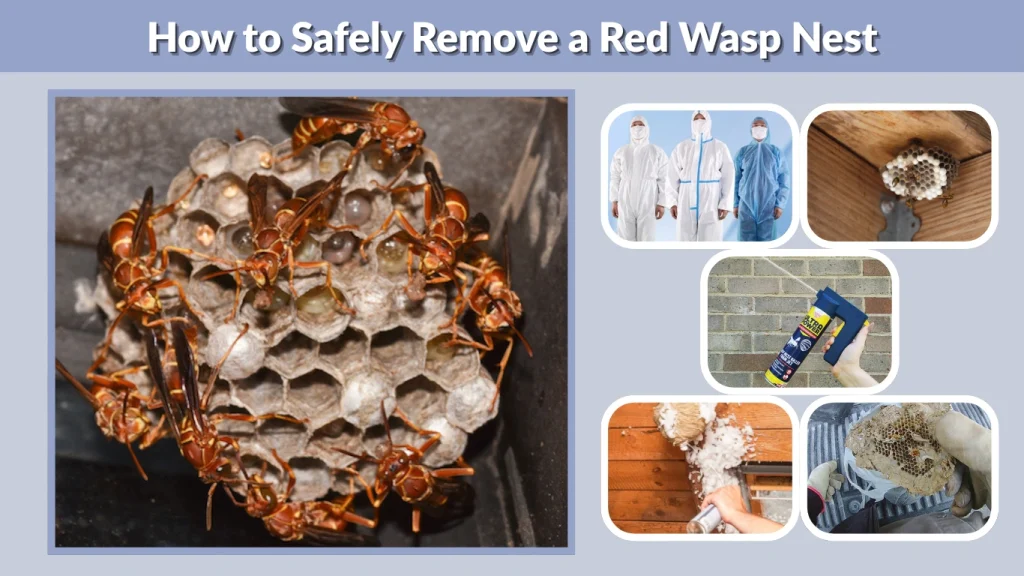
Best Time for Removal
The safest times to remove or spray a nest are early morning or late evening, when temperatures are cooler, and wasps are less active. Most of the colony will be inside, reducing the chance of stings.
DIY Removal Steps
- Wear protective clothing — long sleeves, gloves, goggles, and closed shoes.
- Stand 10–15 feet away from the nest and ensure a clear retreat path.
- Use a pressurized wasp spray designed for long-range application.
- Spray directly into the nest entrance and surrounding area.
- Wait 24 hours before checking if activity has stopped.
- Once inactive, remove and dispose of the nest carefully using a stick or long tool.
If the nest is large or located inside your attic or wall, hire a licensed pest control service. Attempting to remove such nests alone can result in multiple stings.
What Not to Do
- Don’t burn or hose down the nest — this can scatter angry wasps.
- Don’t knock it down during the day — active wasps will swarm aggressively.
- Don’t stand directly underneath — nests can release debris and venom residue when sprayed.
Preventing Red Wasps from Building Nests
Once you’ve removed a nest, prevention becomes key. Follow these steps to discourage future colonies:
- Inspect your property every few weeks during spring.
- Seal cracks, vents, and attic openings to block entry points.
- Remove old or abandoned nests, as returning queens may rebuild on the same spot.
- Hang decoy nests — red wasps are territorial and avoid competing colonies.
- Spray natural deterrents such as peppermint, clove, or citronella oil around eaves and patios.
- Keep trash sealed and food covered outdoors to reduce attraction.
Preventive action in early spring is the most effective way to avoid mid-summer infestations.
Ecological Role of Red Wasps
Despite their reputation, red wasps are highly beneficial to the environment.
- They control pest populations by hunting caterpillars, beetles, and flies.
- They help with pollination while feeding on nectar.
- Their nests serve as educational examples of insect architecture.
While they can become a nuisance near human spaces, red wasps are valuable allies in maintaining ecological balance.
FAQs
What does a red wasp nest look like?
A red wasp nest is grayish-brown, shaped like an upside-down umbrella, and made of paper-like material. It has open hexagonal cells where wasps raise their young.
How many red wasps live in a nest?
On average, a mature nest contains 20–40 adult wasps and over 100 brood cells. Larger nests may host more during peak summer months.
Do red wasps build nests in the ground?
Not typically. Red paper wasps prefer elevated, open spaces, though mud daubers and mason wasps sometimes nest in soil or decaying wood.
How can I get rid of a red wasp nest safely?
Use a long-range wasp spray at night, or contact pest control for large infestations. Never attempt removal during the day when wasps are most active.
How can I keep red wasps from nesting near my home?
Apply natural repellents, eliminate old nests, and hang decoy nests in early spring. Regular inspection and sealing of small openings can keep them away permanently.
