

Spotting strange black specks or smears around your kitchen, pantry, or baseboards can be alarming — and in many cases, they turn out to be roach droppings. These tiny but telling signs are one of the clearest indicators of a cockroach problem. Not only are they unpleasant to look at, but they also carry bacteria, allergens, and other harmful particles that can pose health risks to your family.
Knowing how to identify roach droppings, tell them apart from mouse or rat feces, and clean them safely is essential for both pest control and maintaining a healthy home. In this guide, we’ll walk you through what roach droppings look like, species-specific differences, how to distinguish them from other pests’ droppings, and the best methods to clean and prevent them.
What Are Roach Droppings?
Roach droppings are the fecal waste left behind by cockroaches as they move through your home. Like all animals, roaches excrete waste regularly, and the size and shape of their droppings depend on the species and the size of the insect. These droppings not only mark the places roaches have been but also act as scent signals for other roaches, encouraging them to gather in the same spots.
More than just an unsightly mess, roach feces can contain harmful bacteria like Salmonella and E. coli, as well as proteins that trigger allergies and asthma. This means that droppings are not just a sign of a pest problem — they’re also a direct health hazard, making it essential to identify and clean them promptly.
What Do Roach Droppings Look Like?

Roach droppings vary in size, shape, and texture depending on the type of roach and its age. Understanding these differences can help you confirm whether you’re dealing with roaches and determine the likely species.
General Appearance
- Small Roaches (e.g., German roaches): Droppings look like black pepper, coffee grounds, or finely ground dirt.
- Large Roaches (e.g., American roaches): Droppings are cylindrical, similar to small rice grains, often with ridges running along the sides.
- Fresh Droppings: Slightly moist, dark, and soft to the touch.
- Old Droppings: Hardened, brittle, and sometimes faded in color.
Color
Most roach droppings are dark brown to black, with little color variation between species. The darkness comes from digested food and waste materials.
Texture
- Fresh: Moist and sticky enough to cling to surfaces.
- Old: Dry, crumbly, and more difficult to clean off porous surfaces.
Common Identification Points
- Small, irregularly shaped specks for small species.
- Cylindrical pellets with blunt ends for larger species.
- Often found near food, water, or hiding spots.
- Can be scattered or clustered, depending on the roach’s movement patterns.
Roach Droppings on Walls
When roaches walk along vertical surfaces, their droppings can appear as small dark smears or streaks. These marks are often near corners, along baseboards, or behind hanging objects. Smears happen when the droppings are soft and get dragged across the surface by the roach’s movement.
Species-Specific Roach Droppings

Different roach species leave behind droppings with distinct sizes, shapes, and locations. Recognizing these differences can help you pinpoint the exact type of roach you’re dealing with, which is useful for targeted treatment.
German Roach Droppings
German cockroach droppings are tiny, resembling black pepper flakes or finely ground coffee. They lack any defined shape and often appear in clusters near harborage areas such as cabinet hinges, drawer corners, or under sinks. Because German roaches are small and fast-breeding, their droppings can accumulate quickly in concentrated spots.
American Roach Droppings
American cockroach droppings are much larger, averaging 1–3 mm in length. They are cylindrical with ridged sides and blunt ends, sometimes mistaken for mouse droppings. You’ll often find them in basements, boiler rooms, and other warm, damp areas. They can also appear under large kitchen appliances.
Other Roach Species
Oriental roaches leave droppings that are similar in size to American roaches but are slightly more tapered at the ends. Brown-banded roach droppings are small like German roaches but are more likely to be found in drier, higher locations such as inside furniture, electronics, or wall-mounted cabinets.
Do Roaches Leave Droppings?

Yes — all roaches leave droppings as part of their normal digestion process, and the amount they produce depends on the size of the population and their access to food. Since roaches tend to move along the same paths repeatedly, their droppings often accumulate in concentrated “trail” areas.
These droppings are more than just waste — they also contain pheromones that signal to other roaches that the area is safe and has resources. This is why you might see droppings in the same spots over and over. If you’re finding fresh droppings regularly, it’s a sign of an active infestation that requires immediate attention.
Roach Droppings Identification Tips
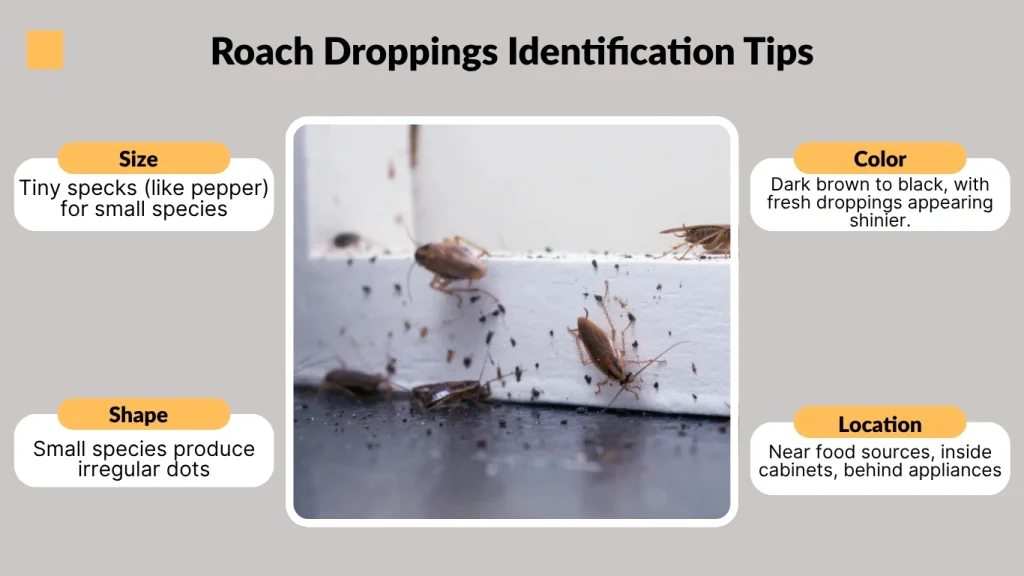
When trying to confirm if droppings belong to roaches, look for these distinguishing traits:
- Size: Tiny specks (like pepper) for small species; cylindrical pellets for large species.
- Shape: Small species produce irregular dots; large species produce blunt-ended pellets with possible ridges.
- Color: Dark brown to black, with fresh droppings appearing shinier.
- Location: Near food sources, inside cabinets, behind appliances, along baseboards, or inside drawers.
- Pattern: Scattered for roaming individuals, clustered in harborage areas.
- Smell: In large amounts, droppings may contribute to a musty, oily odor in the room.
Roach Droppings vs Mouse Droppings
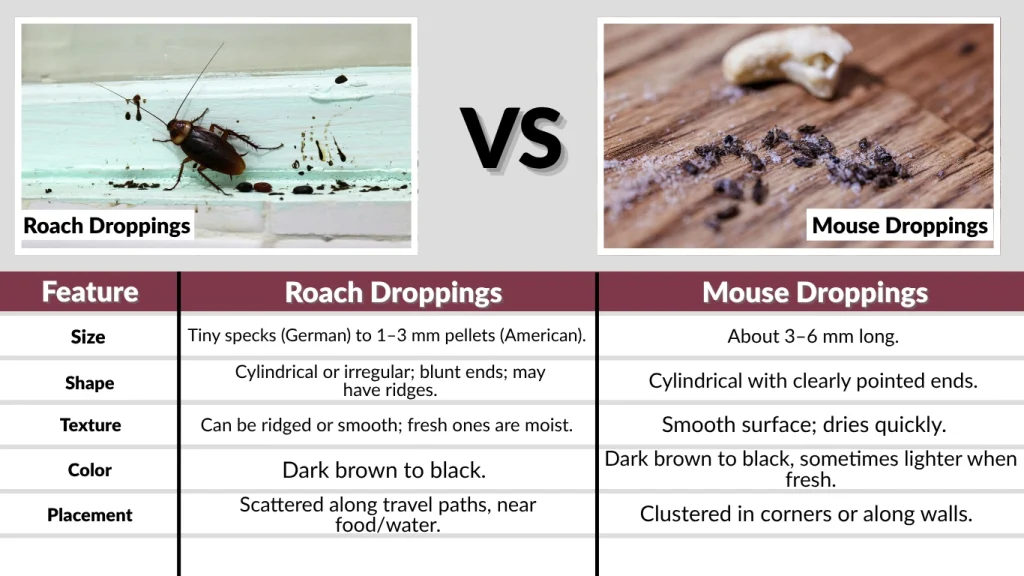
Telling roach droppings apart from mouse droppings is important because the treatment methods for each pest are very different. At first glance, they can seem similar, especially when dealing with large roaches like the American species. However, there are key differences in shape, texture, and placement that make them distinguishable.
Comparison Table
| Feature | Roach Droppings | Mouse Droppings |
| Size | Tiny specks (German) to 1–3 mm pellets (American). | About 3–6 mm long. |
| Shape | Cylindrical or irregular; blunt ends; may have ridges. | Cylindrical with clearly pointed ends. |
| Texture | Can be ridged or smooth; fresh ones are moist. | Smooth surface; dries quickly. |
| Color | Dark brown to black. | Dark brown to black, sometimes lighter when fresh. |
| Placement | Scattered along travel paths, near food/water. | Clustered in corners or along walls. |
Rat Droppings vs Roach Droppings

While both rat and roach droppings signal a pest problem, they differ greatly in size, texture, and location. Rat droppings are much larger — typically 12–19 mm long — and are easy to spot even from a distance. They are shaped like large grains of rice with pointed ends and have a firm, solid texture once dry.
Roach droppings, in contrast, are significantly smaller. Even the largest species produce pellets far smaller than rat feces. They may be scattered across surfaces or concentrated in hidden areas like behind appliances or inside cabinets. Another key difference is that roach droppings sometimes appear as smears or pepper-like specks, especially for smaller species, while rat droppings are always solid pellets.
Identifying the correct type of droppings is crucial because it determines the right pest control approach — rodent treatments differ significantly from cockroach treatments.
Roach Droppings on Walls
Roach droppings on walls often appear as small, dark smears or streaks rather than solid pellets. This happens when roaches excrete while climbing vertical surfaces, and the feces get dragged across the wall by their legs or body. These marks are most common near corners, behind appliances, along baseboards, or around wall fixtures. Over time, the oily, protein-rich content in the droppings can stain paint or wallpaper, making removal more difficult if not addressed promptly.
How to Clean Roach Droppings

Cleaning roach droppings requires both removing the physical waste and disinfecting the surface to eliminate bacteria and allergens.
Step 1: Wear Protective Gear
Use disposable gloves, a mask, and (if possible) safety goggles to avoid skin contact or inhalation of particles.
Step 2: Vacuum the Area
A vacuum with a HEPA filter helps collect loose droppings and minimizes the spread of airborne allergens.
Step 3: Wash Surfaces
Use warm, soapy water to scrub the affected areas, loosening dried droppings and removing surface residue.
Step 4: Disinfect Thoroughly
Apply a disinfectant spray or a diluted bleach solution (1 part bleach to 9 parts water) to kill bacteria. Let it sit for a few minutes before wiping dry.
Step 5: Dispose of Materials Safely
Seal vacuum bags, gloves, and any disposable cleaning cloths in a plastic bag before discarding.
Prevention After Cleaning
- Eliminate Food Sources: Store food in airtight containers, clean crumbs, and avoid leaving pet food out overnight.
- Remove Water Sources: Repair leaky pipes, dry out sinks, and empty pet water bowls before bed.
- Seal Entry Points: Caulk cracks, install door sweeps, and add mesh to vents.
- Declutter: Get rid of cardboard boxes and unused stacks of paper where roaches can hide.
- Regular Inspections: Check behind appliances, inside cabinets, and in dark corners for new signs of droppings.
FAQs About Roach Droppings
Can roach droppings cause illness?
Yes. They can carry bacteria such as Salmonella and E. coli, which can contaminate food and surfaces, leading to food poisoning or other illnesses.
How long can droppings remain dangerous?
Even old, dried droppings can harbor allergens and bacteria. They should be removed promptly, and surfaces disinfected.
Do droppings mean the infestation is active?
Fresh droppings indicate active roach movement in the area, while old, dry droppings suggest past activity but could still mean roaches are nearby.
Will roaches return to the same droppings area?
Yes — roach feces contain pheromones that attract other roaches to the same location, making it a hotspot for activity.
