
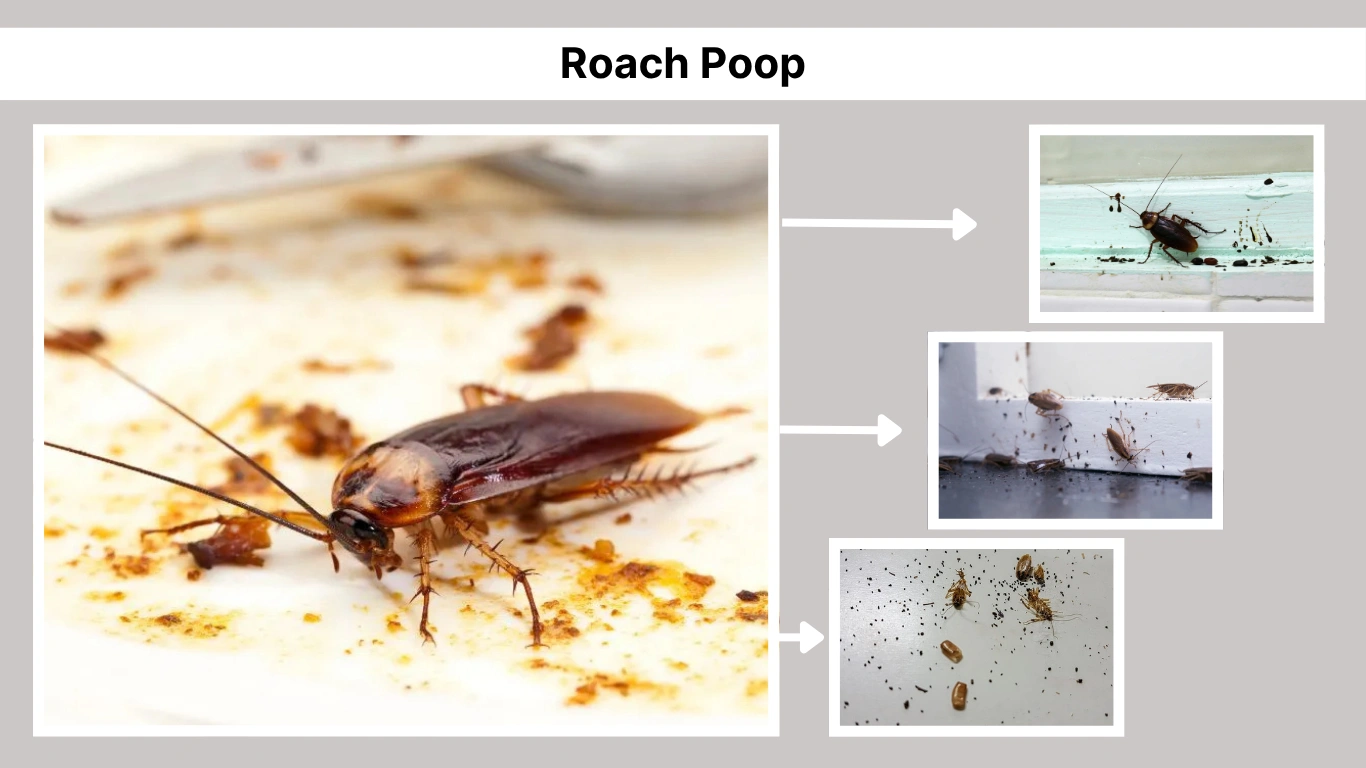
If you’ve noticed mysterious black specks or dark smears in your kitchen cabinets, along baseboards, or under appliances, there’s a good chance you’ve stumbled upon roach droppings. These droppings are one of the most common and telling signs of a cockroach infestation. Recognizing them early can help you confirm the presence of roaches, take quick action, and avoid a full-blown infestation.
In this guide, we’ll cover how to identify roach poop with clear descriptions, where you’re most likely to find it, why it’s dangerous, and the safest, most effective way to clean it up.
Why Roach Poop Matters

Roach droppings are more than just unsightly — they are a health hazard. These droppings contain allergens, bacteria, and sometimes parasitic organisms that can contaminate your food and living spaces.
Some key dangers include:
- Triggering allergies and asthma – Roach feces contain proteins that can worsen symptoms in sensitive individuals.
- Spreading bacteria – Salmonella, E. coli, and other harmful microorganisms can be present.
- Signaling infestation size – The amount of droppings can indicate the severity of the problem.
How to Identify Roach Poop
Although pictures are the best way to confirm, understanding the appearance of roach droppings will help you spot them quickly.
Appearance
- Small roaches (like German cockroaches) – Droppings look like ground black pepper or coffee grounds, with tiny dark specks that are irregular in shape.
- Large roaches (like American cockroaches) – Droppings are more cylindrical, resembling small brown or black rice grains, with ridged edges.
Color
Usually dark brown to black, though very fresh droppings may appear slightly softer and darker.
Texture
When fresh, droppings are moist and soft. Over time, they dry out and harden.
Roach Poop vs. Mouse Poop

While both roach and mouse droppings are signs of a pest problem, they have distinct differences in shape, size, and texture. Being able to tell them apart helps you identify which pest you’re dealing with and choose the right control method.
| Feature | Roach Poop | Mouse Poop |
| Size | Small; varies by species. Tiny roaches leave droppings like coffee grounds, while large roaches leave rice-grain-sized feces. | Larger, about 3–6 mm long. |
| Shape | Cylindrical or irregular; smaller droppings resemble pepper flakes. | Cylindrical with clearly pointed ends. |
| Texture | Can be ridged or smooth; fresh droppings are moist and soft. | Smooth surface; dries and hardens quickly. |
| Color | Dark brown to black. | Dark brown to black, slightly lighter when fresh. |
| Appearance | Scattered specks for small roaches; larger clumps for bigger species. | More uniform in size and shape, often found in clusters. |
Common Places to Find Roach Poop
Knowing where to look will help you locate and confirm a roach problem.
Kitchens
- Under sinks
- Behind refrigerators and stoves
- Inside cabinets and pantry shelves
- Around trash bins
Bathrooms
- Behind toilets
- Under sinks and pipes
- Inside bathroom cabinets
Hidden and Warm Spaces
- Inside drawers
- Under furniture
- Around electrical appliances like microwaves and coffee makers
Health Risks of Roach Droppings

Cockroach feces are a direct health risk due to the pathogens they can carry. Here are the main concerns:
- Disease Spread – They can contaminate food and surfaces with bacteria like Salmonella, which causes food poisoning.
- Allergic Reactions – Proteins in the droppings can cause rashes, watery eyes, sneezing, and even skin irritation.
- Asthma Triggers – Inhaling particles from dried droppings can trigger asthma attacks, especially in children.
Cleaning Process: How to Safely Remove Roach Poop
Cleaning roach droppings requires more than just wiping them away — you need to ensure that bacteria and allergens are fully removed.
Step 1: Wear Protective Gear
Before you start, wear gloves, a mask, and, if possible, safety glasses. This prevents direct contact and inhalation of harmful particles.
Step 2: Vacuum the Area
Use a vacuum with a HEPA filter to remove loose droppings. The HEPA filter will trap allergens and prevent them from recirculating into the air. Dispose of the vacuum bag immediately in an outdoor trash bin.
Step 3: Wash with Soapy Water
Mix warm water with dish soap and scrub the affected surfaces using a disposable sponge or cloth. Soap helps break down residue and reduces bacterial load.
Step 4: Disinfect
After washing, apply a disinfectant spray or a solution of 1 part bleach to 9 parts water. This will kill remaining bacteria. Allow it to sit for a few minutes before wiping it off.
Step 5: Dispose of Cleaning Materials
Throw away any sponges, cloths, or disposable gloves used during cleaning to prevent recontamination.
How to Prevent Future Roach Poop Build-Up
Once cleaned, prevention is key to keeping your space roach- and droppings-free.
Seal Entry Points
Caulk cracks and gaps around doors, windows, pipes, and vents to keep roaches out.
Maintain Kitchen Hygiene
Wipe down counters daily, clean up crumbs, and avoid leaving dirty dishes overnight.
Store Food Properly
Keep food in sealed containers, including pet food.
Fix Moisture Problems
Repair leaky pipes and faucets, and use a dehumidifier in damp areas.
When to Call a Professional
If you keep finding fresh droppings after cleaning, you likely have an active infestation. A pest control professional can locate hidden nests, treat the problem effectively, and help you maintain a roach-free home.
Signs you need professional help:
- Droppings appear daily even after cleaning
- Multiple rooms show signs of activity
- You’ve seen live roaches during the day (indicating a large infestation)
FAQs
Can roach poop be dangerous to touch?
Roach droppings can carry harmful bacteria and pathogens that may cause illness if they come into contact with your skin. Always wear disposable gloves when cleaning and avoid touching your face until you’ve washed your hands thoroughly with soap and water.
How do I know if roach poop is fresh?
Fresh roach droppings are darker in color, slightly moist, and soft when pressed. Over time, they dry out, harden, and may lose some of their dark shade. It’s important to avoid touching them directly and to clean them up promptly to prevent health risks.
Can roach poop cause allergies?
Yes — the proteins found in cockroach feces can trigger allergic reactions, including sneezing, coughing, skin irritation, and asthma attacks. Children, the elderly, and individuals with respiratory conditions are especially vulnerable to these allergens, making proper cleanup essential.
Does roach poop smell?
Cockroach droppings have a strong, unpleasant, musty odor that intensifies with the size of the infestation. This smell comes from chemicals in the feces and can linger on surfaces. Eliminating droppings and sanitizing the area helps reduce the odor.
Will bleach alone remove roach droppings?
Bleach is effective at killing bacteria and sanitizing surfaces, but it does not physically remove dried roach droppings. You should first scrub the area with soapy water to loosen and remove the feces, then follow up with a bleach solution to disinfect.
Final Thoughts
Roach poop is one of the clearest indicators of a cockroach problem, and spotting it early is crucial for preventing a full infestation. By learning how to identify it, understanding the health risks, and following a thorough cleaning process, you can protect your home and health.
However, remember that cleaning the droppings alone won’t solve the problem — you need to eliminate the roaches themselves and take steps to prevent their return. With consistent cleaning, sealing entry points, and proper food storage, you can keep your home roach-free and safe.
