

Carpenter ants are among the most destructive household pests, often mistaken for termites due to their ability to weaken wooden structures. Unlike termites, they don’t consume wood but carve out smooth tunnels and galleries to build their nests. This hidden activity can go unnoticed for months, leading to costly structural damage. Learning the warning signs of carpenter ant damage helps you detect infestations early and protect your home before it’s too late.
1. Presence of Large Black Ants Indoors
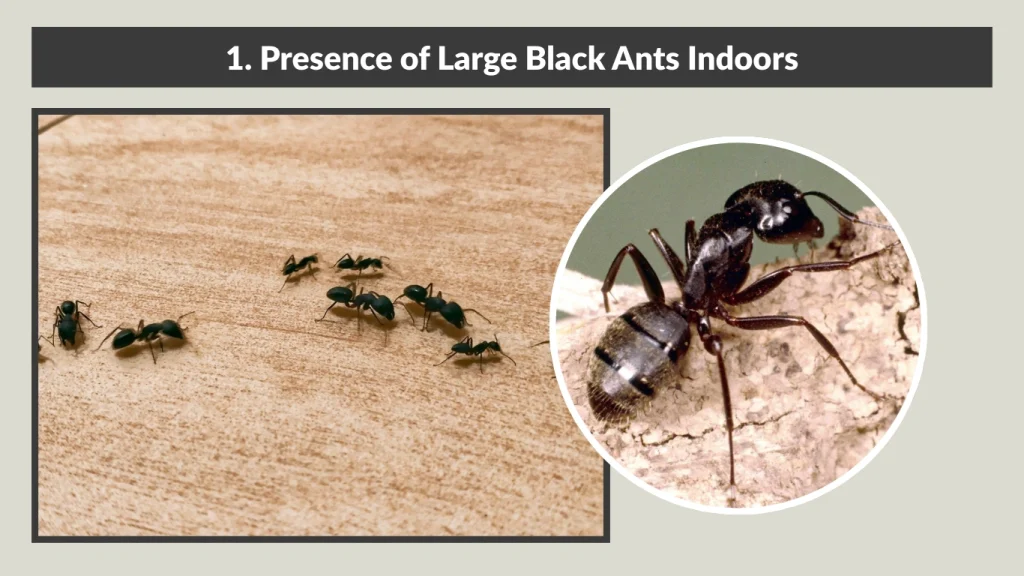
Carpenter ants are one of the first visible warning signs of an infestation. These ants are larger than most household ants, usually measuring between ¼ to ½ inch in length. They are typically black or dark brown, although some species may appear reddish-black.
Identifying Carpenter Ants
- Size: Larger than common ants, ranging from 6–12 mm.
- Color: Mostly black, but can have reddish or yellowish hues.
- Shape: Noticeable heart-shaped head and a narrow waist.
Where You May Spot Them
Carpenter ants often wander indoors searching for food and water. You may notice them in kitchens, bathrooms, basements, or near leaky windows and doors. Their presence indoors, especially during warmer months, is a strong sign of a nearby nest.
Night Activity
These ants are nocturnal foragers, meaning you’re more likely to see them at night. If you notice several large ants crawling across countertops or walls after dark, it’s an early red flag that they may be nesting within your home.
2. Sawdust or Frass Piles Around Wood

Carpenter ants don’t actually eat wood like termites. Instead, they chew through it to create tunnels and galleries for their nests. As they excavate, they push out frass—a mixture of fine wood shavings, soil, and insect body parts. This byproduct looks very much like sawdust and is one of the clearest indicators of carpenter ant activity.
What Carpenter Ant Frass Looks Like
Frass is powdery, shredded wood debris that can sometimes include dead ant parts or pieces of insulation. Unlike normal household dust, frass is usually found in small piles that appear suddenly and reoccur in the same spot.
Typical Locations
You’ll often find frass in:
- Baseboards and floor edges
- Windowsills and door frames
- Attics, crawlspaces, and basements
- Around wooden furniture or beams
Difference from Termite Droppings
Termite frass appears as tiny, pellet-like droppings, while carpenter ant frass is more like shredded sawdust or coarse wood particles. Spotting the difference can help you identify whether your problem is termites or carpenter ants.
3. Rustling Noises Inside Walls

Another early warning sign of carpenter ant damage is the faint rustling or crackling sounds they make while tunneling through wood. These noises are often subtle, but in a quiet room, especially at night, you may notice them coming from inside walls, ceilings, or wooden beams.
Sounds of Movement
Carpenter ants produce soft noises as they:
- Chew through wood to expand galleries
- Move debris and frass out of tunnels
- Travel in groups inside wall voids
This activity creates a sound similar to paper crinkling or a light scratching.
When It Happens
The noises are more noticeable at night when the colony is most active and the house is quiet. Homeowners often discover infestations by following these faint sounds to a damaged wooden structure.
4. Hollow-Sounding Wood
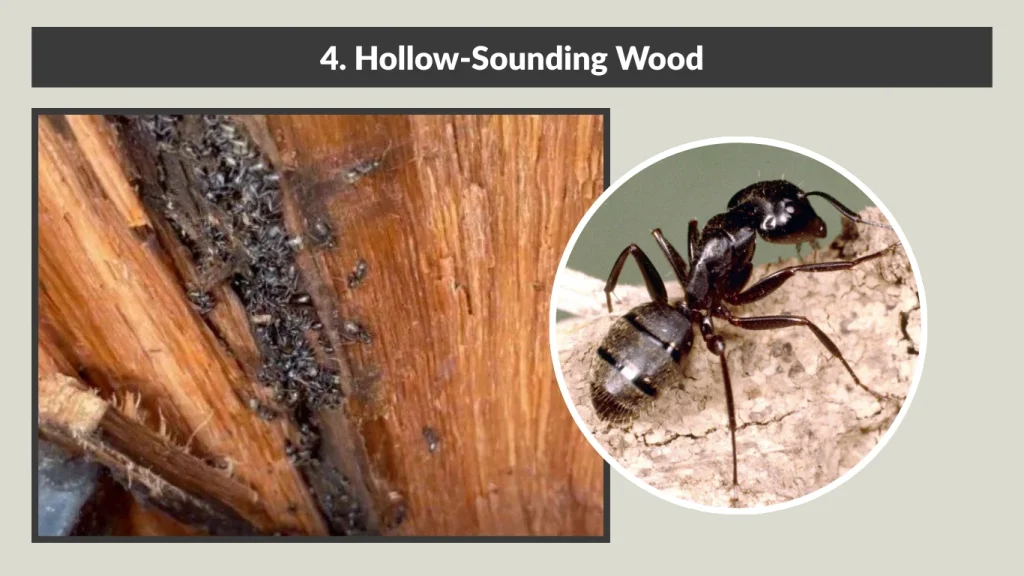
Carpenter ants weaken wood by creating smooth, hollow galleries inside beams, furniture, and structural supports. Unlike termites, they don’t consume the wood, but their excavation can leave it fragile and empty within.
How to Test
Tap gently on wooden surfaces such as baseboards, door frames, or support beams. If the wood sounds hollow or papery, it may be a sign that carpenter ants have tunneled through it. In advanced cases, a thin outer layer of wood may even collapse under light pressure.
Why It Happens
Carpenter ants carve long, clean tunnels that follow the grain of the wood. Over time, these galleries spread, leaving behind large hollow spaces. This not only weakens the structure but also provides clues for locating hidden nests.
5. Damaged or Warped Wooden Structures

As carpenter ants expand their colonies, the wood they tunnel through begins to weaken, sag, or warp. This kind of damage often appears gradually but can become serious if left untreated.
Signs in Furniture and Beams
Carpenter ants frequently target wooden beams, flooring, and furniture. Over time, these structures may show:
- Cracks or splits along the grain
- Weak joints that loosen easily
- Sagging or uneven surfaces
Door and Window Frames
One of the most noticeable effects is on doors and windows. Infested frames may swell, warp, or shift, making it harder to open and close them smoothly. This is often mistaken for normal aging of the house but can actually be a sign of carpenter ant activity.
6. Discarded Wings Indoors
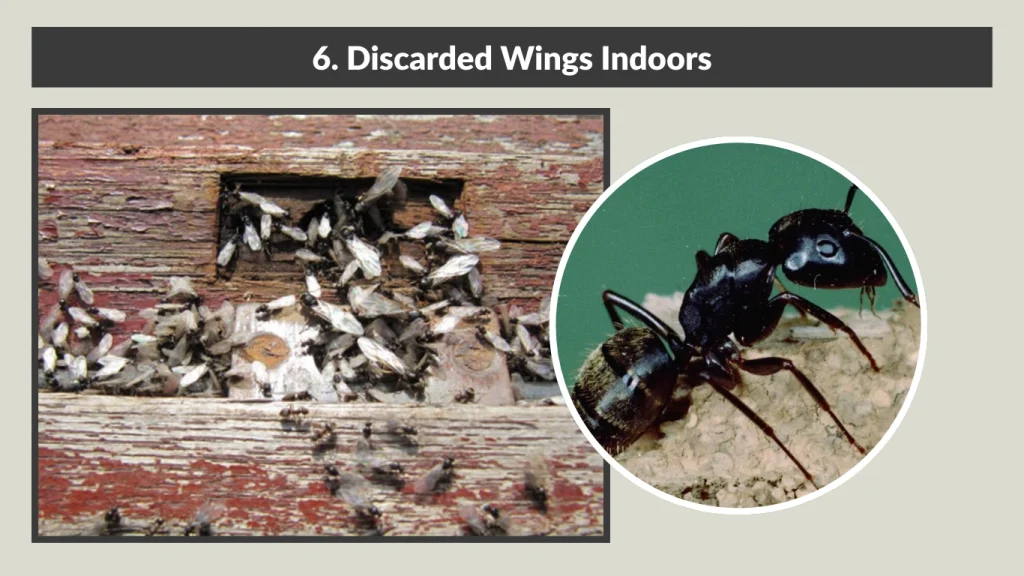
Carpenter ants reproduce through swarming, when winged males and females (called swarmers) leave the colony to mate and establish new nests. After mating, the females shed their wings, leaving them scattered around the home.
Swarmers Explained
Swarmers are larger than worker ants and have two pairs of wings, with the front pair slightly longer. Spotting these flying ants indoors, especially during spring and early summer, is a strong indicator of an infestation.
Where You’ll Find Them
Discarded wings often collect in places like:
- Window sills and sliding doors
- Basements and attics
- Near light fixtures (since swarmers are attracted to light)
Why This Matters
Finding shed wings indoors means that a mature carpenter ant colony is nearby, and they may already be nesting inside your home. This is usually a sign of a more advanced problem.
7. Moisture-Damaged Areas Attracting Ants
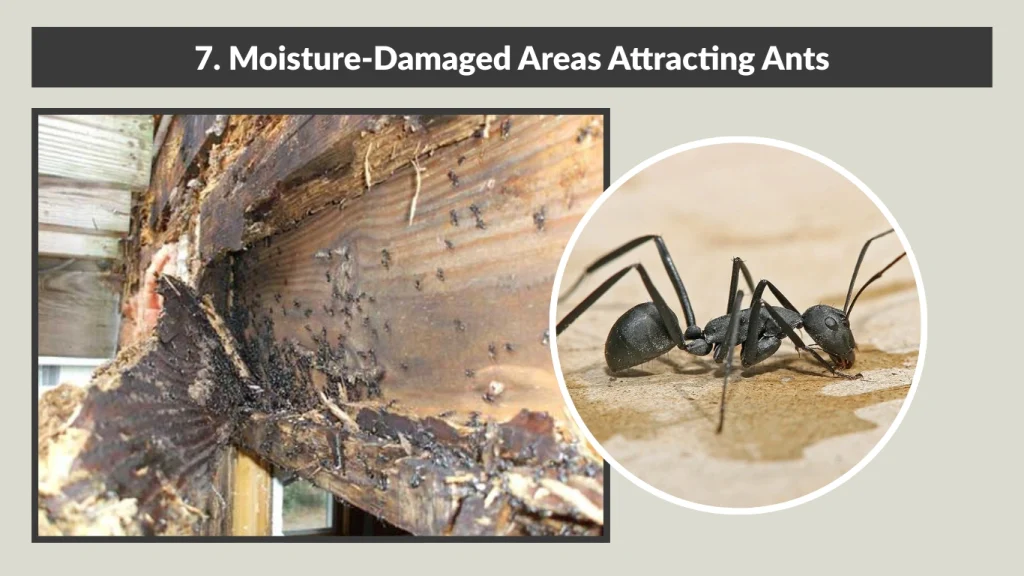
Carpenter ants prefer to establish their nests in damp, decayed, or softened wood, since it’s easier to chew through. This makes areas with moisture problems highly vulnerable to infestations.
Carpenter Ants and Moisture
Leaky pipes, poor ventilation, and roof leaks create ideal nesting sites. Carpenter ants often start colonies in these spots and later expand into dry wood as the colony grows.
Common Risk Spots
You’re most likely to find carpenter ants near:
- Bathrooms and kitchens with plumbing leaks
- Basements and crawlspaces with high humidity
- Rooflines, gutters, and attics affected by water intrusion
Why This Matters
If carpenter ants are present, it often points to an underlying moisture issue. Fixing the water source is just as important as removing the ants to prevent recurring damage.
8. Multiple Nesting Sites
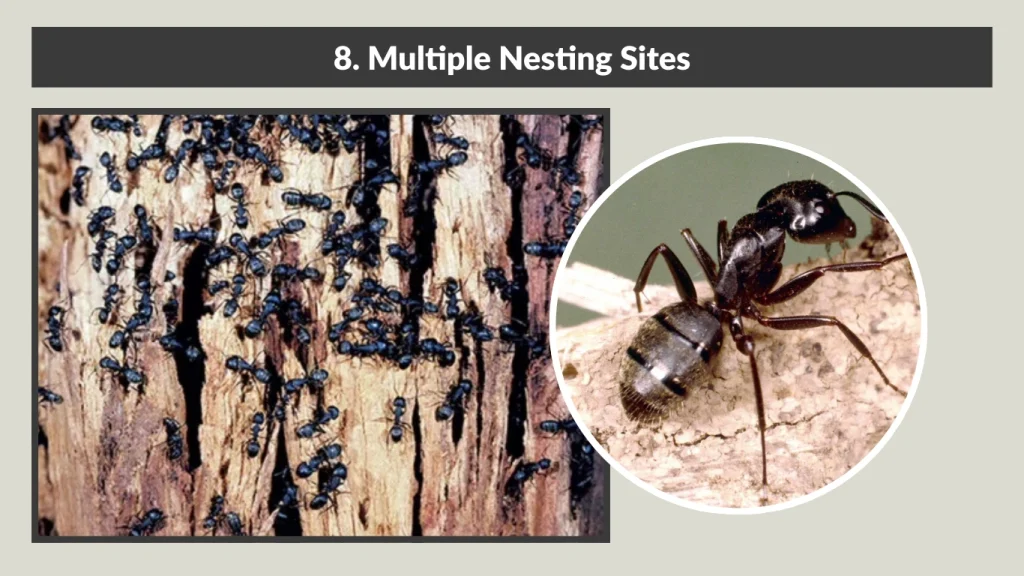
Carpenter ant colonies often establish more than one nest. They maintain a primary nest, usually outdoors in decayed wood like tree stumps or logs, and then build satellite nests indoors when they find favorable conditions.
Parent vs. Satellite Colonies
- Parent Nest: Houses the queen, eggs, and young larvae. Typically located in moist, rotting wood outdoors.
- Satellite Nest: Contains workers, pupae, and older larvae. Often set up inside homes, especially in walls, attics, or furniture.
What This Means for Homeowners
Finding ants indoors doesn’t always mean the main nest is inside. However, the presence of satellite colonies indicates the infestation is spreading, making it harder to control without professional help. Multiple nesting sites often lead to larger, long-term damage.
9. Ant Trails Indoors and Outdoors
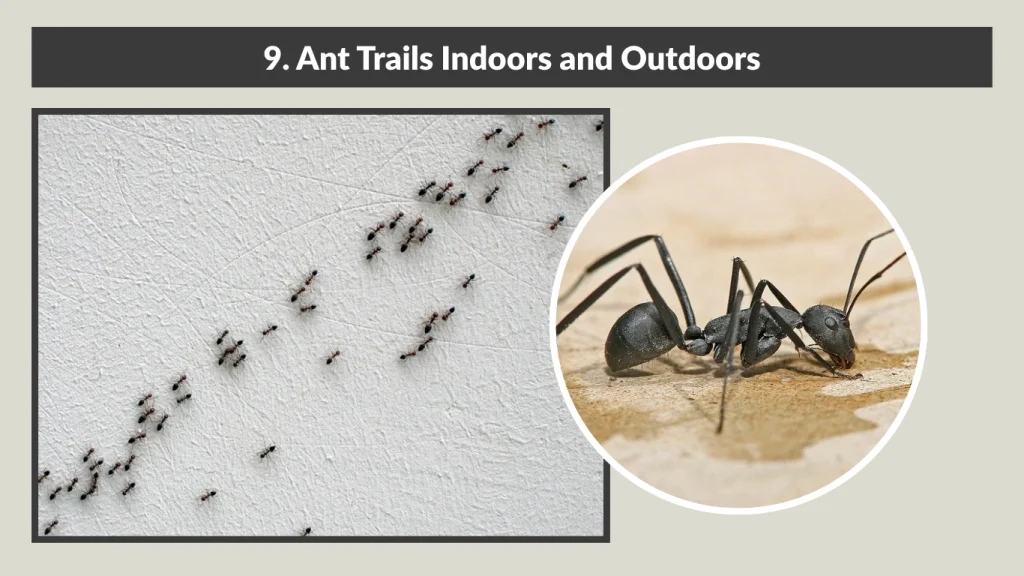
Carpenter ants are efficient foragers, and one of the most noticeable signs of an infestation is the presence of long, organized ant trails. These trails usually connect food and water sources to their nests, both inside and outside the home.
Foraging Behavior
Carpenter ants travel in well-defined lines, often along walls, baseboards, plumbing pipes, or electrical wires. Outdoors, trails may extend from trees, firewood, or garden mulch directly into your house.
Seasonal Activity
Ant trails are most visible during spring and summer, when colonies are actively foraging. Indoors, they’re especially noticeable at night, as carpenter ants are nocturnal feeders.
Why It Matters
Consistent ant trails suggest that a colony is well-established and using your home as a food source or nesting area. Tracking these trails can help locate entry points and potential nests.
10. Structural Weakness Over Time

If left untreated, carpenter ant infestations can cause serious structural problems. Their tunneling weakens wood from the inside, making beams, walls, and floors lose strength and stability.
Signs of Severe Damage
- Buckling walls or ceilings where ants have hollowed out supports
- Sagging floors or stairs caused by weakened beams
- Cracked or splitting wood that crumbles under pressure
Comparison with Termite Damage
While both pests can cause structural damage, their patterns differ:
- Carpenter ant galleries are smooth and clean, following the wood grain.
- Termite tunnels are rough and filled with mud or soil.
Why It’s Dangerous
Structural weakness often develops slowly, but by the time it’s visible, the colony has likely been active for years. At this stage, professional intervention is critical to prevent costly repairs and safety hazards.
Preventing and Addressing Carpenter Ant Damage
Carpenter ant infestations can escalate quickly, but the good news is that prevention and timely action can save your home from costly repairs. Taking the right steps not only eliminates current colonies but also reduces the chances of future problems.
Regular Inspections
Inspect vulnerable areas like basements, attics, crawlspaces, and wooden beams regularly. Look for frass piles, hollow-sounding wood, or moisture damage. Early detection allows you to deal with carpenter ants before major damage occurs.
Moisture Control
Since carpenter ants thrive in damp wood, fixing water issues is crucial.
- Repair leaky pipes, roofs, and gutters.
- Improve ventilation in attics and basements.
- Use dehumidifiers in high-humidity areas.
Seal Entry Points
Carpenter ants often enter through small cracks and gaps. Seal windows, doors, foundation cracks, and utility openings to block easy access.
Remove Attractants
Keep firewood, lumber, and tree stumps away from the house foundation. Trim branches that touch your home since they provide bridges for ants to enter.
Professional Treatment
If you notice multiple signs of damage, call a licensed pest control professional. They can locate the parent and satellite colonies, apply targeted treatments, and prevent reinfestation.
FAQs
What is the main difference between carpenter ants and termites?
Carpenter ants don’t eat wood; they excavate it to build tunnels, leaving behind smooth galleries. Termites consume wood as food, and their tunnels are rough and filled with soil. This difference in behavior is key to proper identification.
How long does it take for carpenter ants to cause serious damage?
Damage usually develops over months or even years. While carpenter ants work more slowly than termites, a large, established colony can still compromise the structural integrity of beams, floors, and walls if ignored.
Can carpenter ants bite humans?
Yes, carpenter ants can bite if threatened, but they rarely do. Their bites are not venomous and usually cause only mild discomfort or a small red mark. They are more dangerous to property than to people.
What attracts carpenter ants into homes?
Moisture-damaged wood, food crumbs, sugary substances, and easy entry points attract carpenter ants. Leaky roofs, damp basements, or untreated wood provide perfect conditions for colonies to thrive.
How can I permanently get rid of carpenter ants?
DIY sprays may control small infestations, but eliminating large colonies requires professional pest control. Experts locate both the parent and satellite nests and apply treatments to fully eradicate the problem while advising on moisture and entry-point prevention.
