
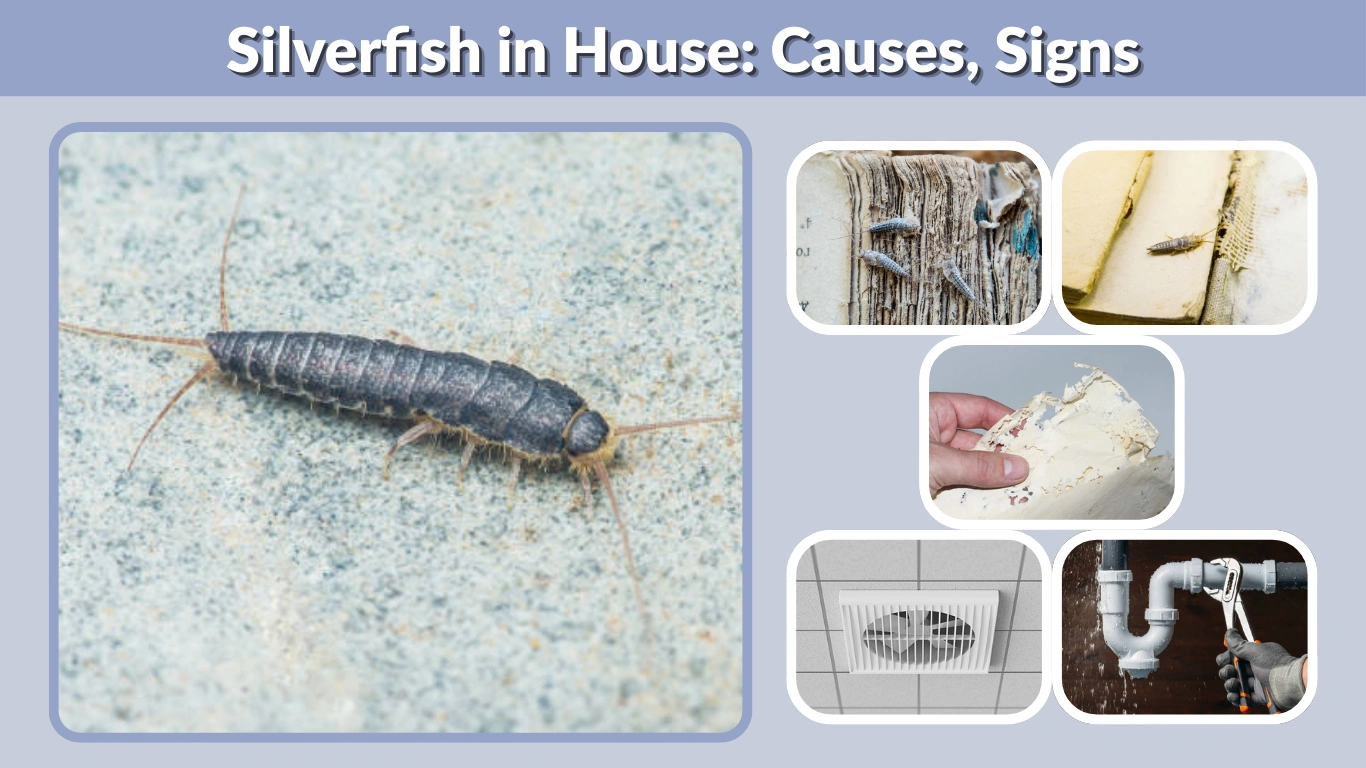
Finding small, silvery insects crawling across the floor at night can be alarming for many homeowners. These pests are commonly known as silverfish, and they often appear in damp or humid areas of the house. While they are not dangerous to humans, silverfish can damage books, wallpaper, clothing, and other household items. Because they hide in dark places and reproduce slowly, infestations may go unnoticed for a long time. Understanding why silverfish appear in homes and how to control them is the first step toward keeping your house pest-free.
What Are Silverfish?
Silverfish are small, wingless insects that belong to the order Zygentoma. They have existed for hundreds of millions of years and are known for their distinctive appearance and quick movements. These insects are commonly found in homes because they prefer warm, humid environments with plenty of hiding places.
Physical Appearance
Silverfish are easy to recognize once you know what to look for. They have a silvery-gray color and a slender, teardrop-shaped body that resembles a fish, which is how they got their name. Most adult silverfish grow to about ½ inch (12–15 mm) long.
They also have long antennae at the front of their bodies and three bristle-like appendages at the back. One of their most noticeable features is the way they move. Silverfish move in a wriggling, fish-like motion, especially when they are disturbed.
Because they are nocturnal insects, silverfish are usually seen at night, quickly running across floors, sinks, or walls when lights are turned on.
Silverfish Life Cycle
The life cycle of a silverfish is relatively slow compared to many other household insects. Female silverfish lay tiny eggs in hidden places such as cracks, crevices, and behind baseboards. These eggs hatch into nymphs, which look like smaller versions of adult silverfish.
Unlike many insects, silverfish do not undergo a major transformation during development. Instead, the nymphs gradually grow larger through a series of molts until they reach adulthood.
Another interesting fact about silverfish is their lifespan. Under favorable conditions, they can live two to eight years, which means they can remain in homes for long periods if the environment is suitable.
Why Are There Silverfish in My House?
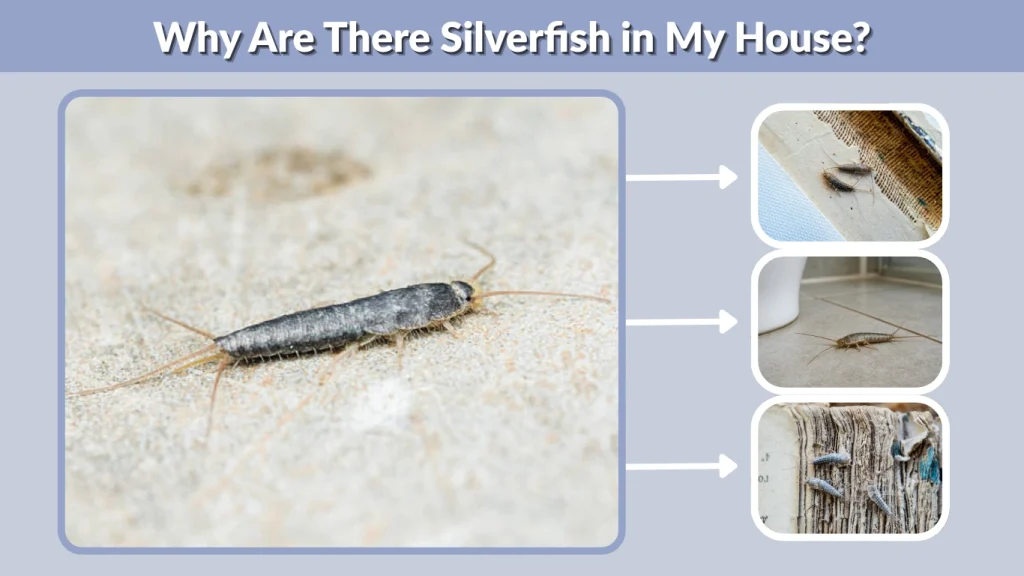
Many homeowners wonder why silverfish suddenly appear in their homes. In most cases, these insects are attracted by environmental conditions that provide moisture, food, and shelter. Understanding these factors can help you identify the root cause of the problem.
High Humidity and Moisture
One of the biggest reasons silverfish enter homes is high humidity. These insects thrive in moist environments because they lose water quickly through their bodies. Areas with damp conditions provide the perfect habitat for them to survive and reproduce.
Common places where silverfish are found include:
- Bathrooms
- Kitchens
- Basements
- Laundry rooms
- Under sinks
Leaky pipes, poor ventilation, or excess condensation can increase humidity levels in these areas. When moisture builds up, it creates an ideal environment for silverfish to settle and multiply.
Availability of Food Sources
Silverfish are also attracted to homes because of the wide variety of food sources available indoors. Unlike many pests, silverfish feed on materials that contain carbohydrates and starch.
Some of their common food sources include:
- Paper and books
- Glue and wallpaper paste
- Cardboard boxes
- Natural fabrics such as cotton and linen
- Pantry items like flour, cereal, or grains
They are especially attracted to old books, stored papers, and wallpaper, where adhesives and starch-based materials are present. Because many homes contain these materials, silverfish can easily find something to feed on.
Dark and Hidden Spaces
Silverfish prefer to live in dark, undisturbed areas where they can hide during the day. Homes offer many such hiding places, which makes them an attractive habitat.
Typical hiding spots include:
- Behind baseboards
- Inside cracks in walls or floors
- Under appliances
- Behind furniture
- Inside storage boxes or closets
Since they avoid light and human activity, silverfish often remain hidden for long periods. Many homeowners only notice them when they accidentally turn on the lights at night and see the insects quickly running away.
Common Signs of Silverfish in the House
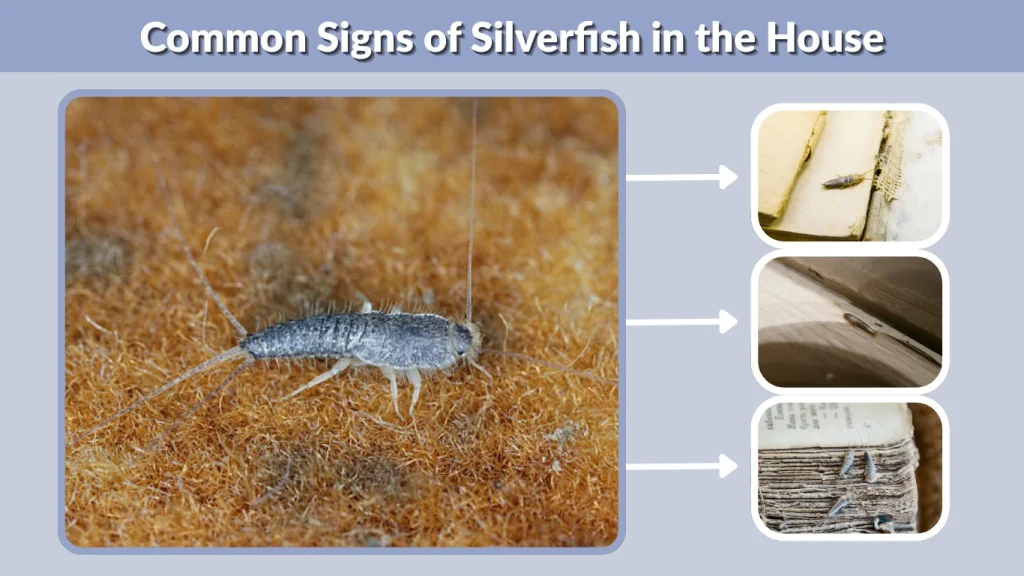
Because silverfish are secretive and nocturnal, it can be difficult to detect an infestation early. However, there are several signs that may indicate their presence in your home.
Spotting Silverfish at Night
One of the most obvious signs is seeing the insects themselves. Silverfish usually come out at night to search for food. If you turn on the lights in a bathroom or kitchen and see small silvery insects quickly running away, it is a strong indication that silverfish are present.
They are particularly active in areas with moisture, so they are often spotted near sinks, bathtubs, or damp floors.
Damage to Household Items
Another common sign of silverfish is damage to paper-based materials. Because these insects feed on starches and adhesives, they often chew small holes or irregular patterns into items such as:
- Books
- Magazines
- Documents
- Wallpaper
- Cardboard boxes
Over time, this feeding activity can cause noticeable damage, especially in areas where papers or books are stored for long periods.
Yellow Stains and Droppings
Silverfish can also leave behind small yellow stains and tiny droppings. Their droppings often look like tiny black pepper grains and may appear near paper, fabrics, or stored items they feed on. These droppings are usually found in hidden areas such as bookshelves, closets, or storage boxes.
In addition to droppings, silverfish may leave behind shed skins as they grow and molt throughout their lives. Finding these thin, transparent skins in corners or near paper materials can also be a sign that silverfish are living nearby.
Are Silverfish Harmful?
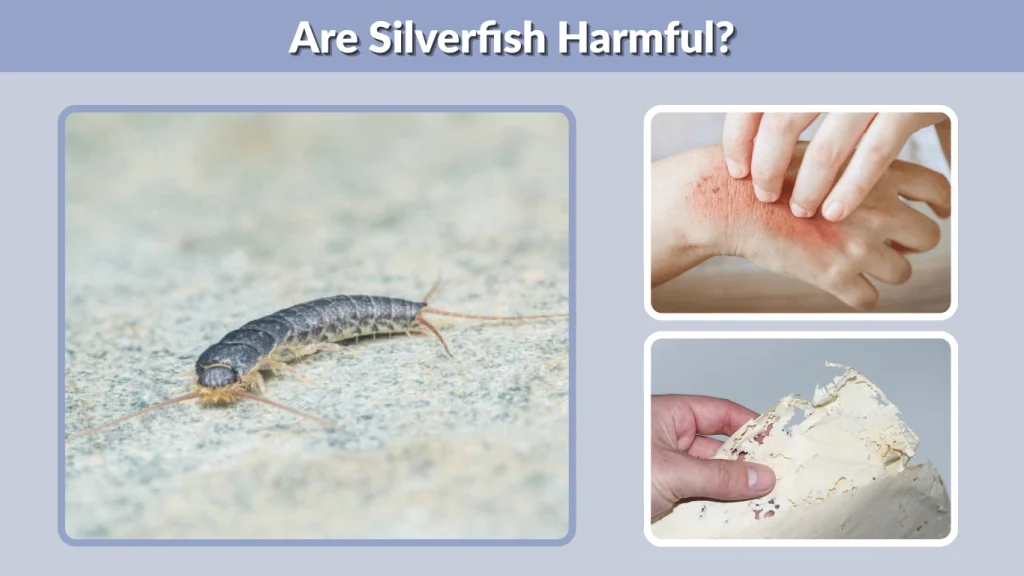
Many people worry when they see insects inside their homes, but silverfish are generally considered more of a nuisance pest than a health threat. However, they can still cause problems if left unchecked.
Health Risks
The good news is that silverfish do not bite humans and are not known to spread diseases. Unlike some pests, they do not transmit bacteria or viruses that can harm people.
However, their presence can sometimes trigger allergies in sensitive individuals, especially when large infestations occur. Their shed skins and droppings may contribute to indoor allergens in rare cases.
Damage to Property
Although silverfish are not dangerous to humans, they can cause damage to household belongings. Because they feed on starchy materials, they may harm items such as:
- Books and important documents
- Photographs and paper materials
- Wallpaper and wallpaper glue
- Clothing made from natural fibers
Over time, their feeding can weaken these materials and leave small holes or stains. This is why it is important to address silverfish problems before they become widespread.
How to Get Rid of Silverfish in the House
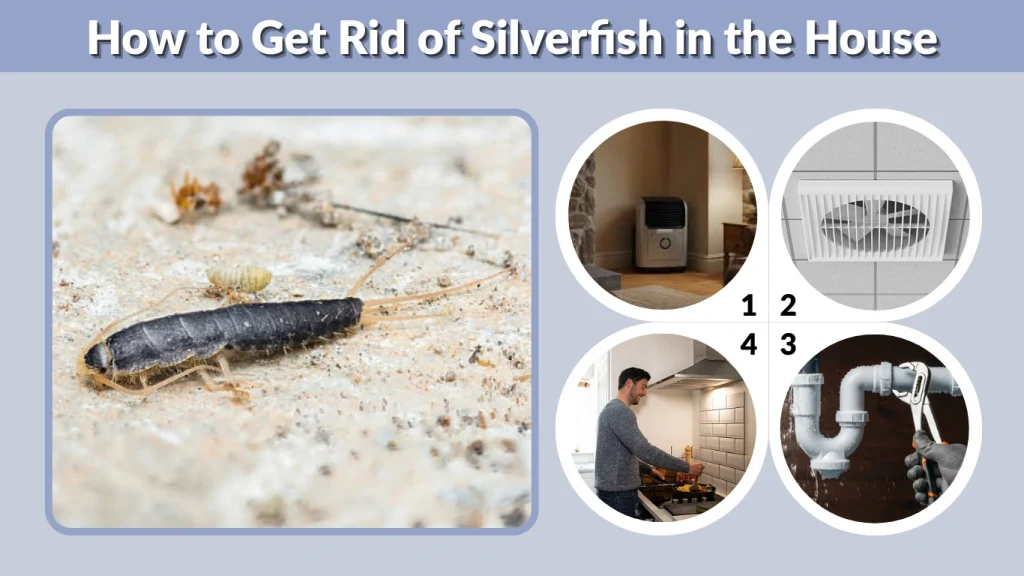
If you have noticed signs of silverfish in your home, there are several steps you can take to control and eliminate them. The key is to remove the conditions that allow them to survive.
Reduce Moisture Levels
Since silverfish thrive in humid environments, lowering indoor humidity is one of the most effective solutions. You can do this by:
- Using a dehumidifier in damp rooms
- Improving ventilation in bathrooms and kitchens
- Fixing leaky pipes and plumbing problems
- Using exhaust fans when showering or cooking
Reducing moisture makes the environment less comfortable for silverfish and discourages them from staying.
Keep the House Clean
A clean home also makes it harder for silverfish to find food. Regular cleaning can help reduce the materials they rely on for survival.
Some helpful habits include:
- Vacuuming floors, corners, and baseboards regularly
- Removing unnecessary paper clutter
- Storing books and documents in dry areas
- Keeping pantry items in sealed containers
These steps limit the availability of food and hiding places.
Natural Remedies
Many homeowners prefer to try natural pest control methods before using chemicals. Some popular natural solutions include:
- Diatomaceous earth – A natural powder that damages the outer layer of insects
- Boric acid – Effective at killing silverfish when applied in cracks and crevices
- Cedar oil or essential oils – Certain scents may repel silverfish
These remedies can be placed in areas where silverfish are commonly seen.
Silverfish Traps and Chemical Treatments
Another way to control silverfish is by using sticky traps or insecticides designed for household pests. Sticky traps can help monitor activity and capture insects moving around at night.
If the infestation is severe, store-bought insecticides or professional pest treatments may be necessary. Pest control experts can locate hidden colonies and apply treatments safely.
How to Prevent Silverfish from Coming Back
Once silverfish are removed, prevention becomes the most important step. Making your home less attractive to these insects will help stop future infestations.
Seal Cracks and Entry Points
Silverfish often enter homes through small openings. Sealing these entry points can reduce the chances of them getting inside.
You can do this by:
- Filling cracks in walls and floors
- Sealing gaps around baseboards
- Repairing damaged wallpaper
- Closing openings around pipes and wiring
These small repairs can make a big difference in pest prevention.
Control Indoor Humidity
Keeping humidity levels low is one of the best long-term solutions. Proper ventilation and moisture control make your home less suitable for silverfish.
Consider installing ventilation fans, using dehumidifiers, and ensuring good airflow in damp areas like basements and bathrooms.
Store Items Properly
Proper storage also protects your belongings from damage. Store important items in airtight plastic containers instead of cardboard boxes. This helps keep silverfish away from paper, clothing, and food.
Regularly checking storage areas can also help you spot early signs of pests before they become a larger problem.
When to Call a Pest Control Professional
In some situations, silverfish infestations can become difficult to control without professional help. If you notice large numbers of silverfish or repeated infestations despite prevention efforts, it may be time to contact a pest control expert.
Professionals have the tools and experience to identify hidden nesting areas and apply treatments that eliminate the pests effectively. This is especially useful for infestations inside walls, basements, or other hard-to-reach areas.
Conclusion
Silverfish are common household pests that thrive in dark, humid environments. While they are not dangerous to humans, they can damage books, clothing, wallpaper, and other valuable items in the home. Understanding why silverfish appear—such as high humidity, available food sources, and hidden spaces—can help homeowners take the right steps to control them.
By reducing moisture, keeping living spaces clean, sealing cracks, and storing items properly, you can greatly reduce the chances of a silverfish infestation. Acting early and maintaining good home maintenance habits will help keep your house comfortable and pest-free.
