
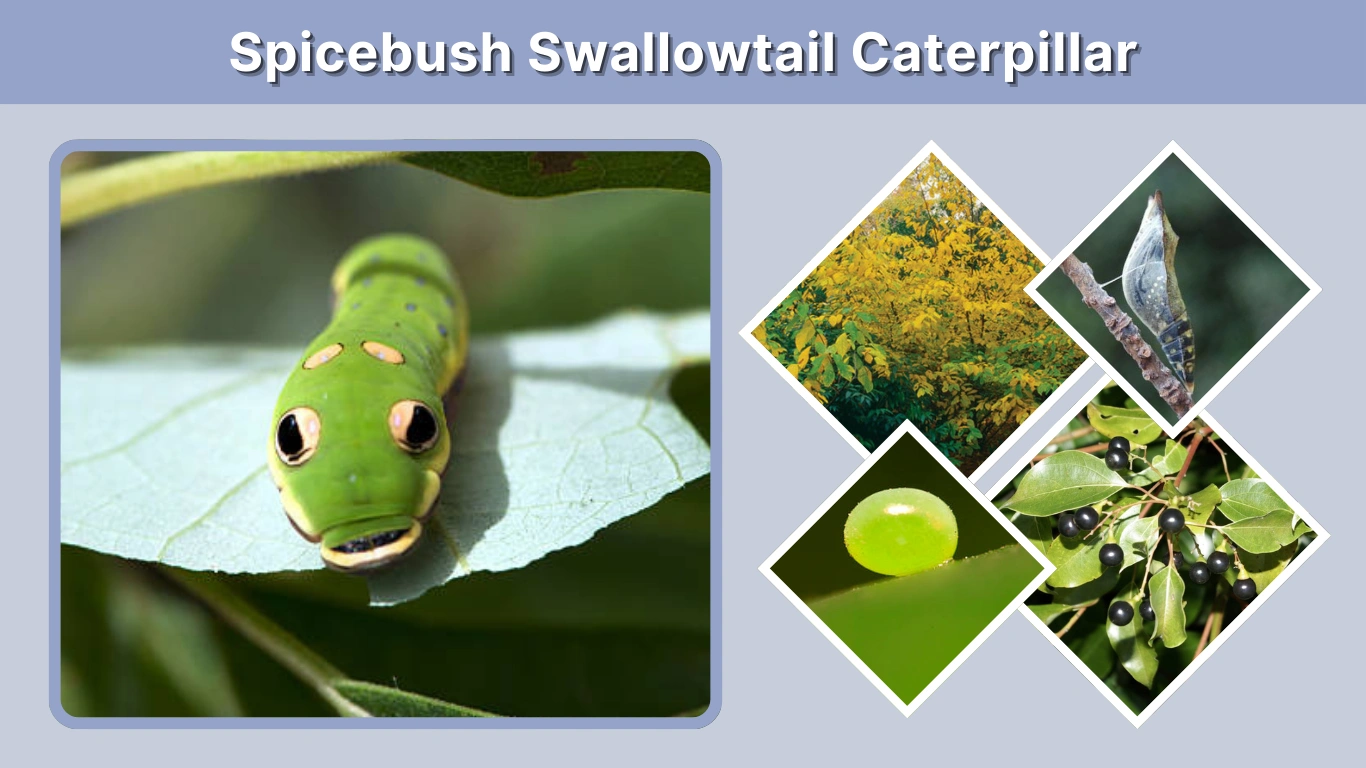
The spicebush swallowtail caterpillar is one of the most fascinating caterpillars found in eastern North America. Known for its bright green body and dramatic snake-like eyespots, this caterpillar often surprises gardeners when it peers out from a curled leaf. It is the larval stage of the spicebush swallowtail butterfly and plays an important role in forest and garden ecosystems. Understanding how to identify it, where it lives, and how it develops helps people protect this unique and beneficial insect.
What Is a Spicebush Swallowtail Caterpillar?
The spicebush swallowtail caterpillar is the immature stage of the spicebush swallowtail butterfly (Papilio troilus). It belongs to the swallowtail family, a group known for large, elegant butterflies and highly specialized caterpillars. This species is named after its primary host plant, spicebush, although it also feeds on other members of the laurel family.
Unlike many plain green caterpillars, the spicebush swallowtail is famous for its bold defensive appearance. Its swollen front segments and oversized eye spots make it look like a small snake, a trick that helps scare away birds and lizards. Throughout its life, the caterpillar goes through several growth stages, changing color and behavior as it prepares for metamorphosis.
How to Identify a Spicebush Swallowtail Caterpillar
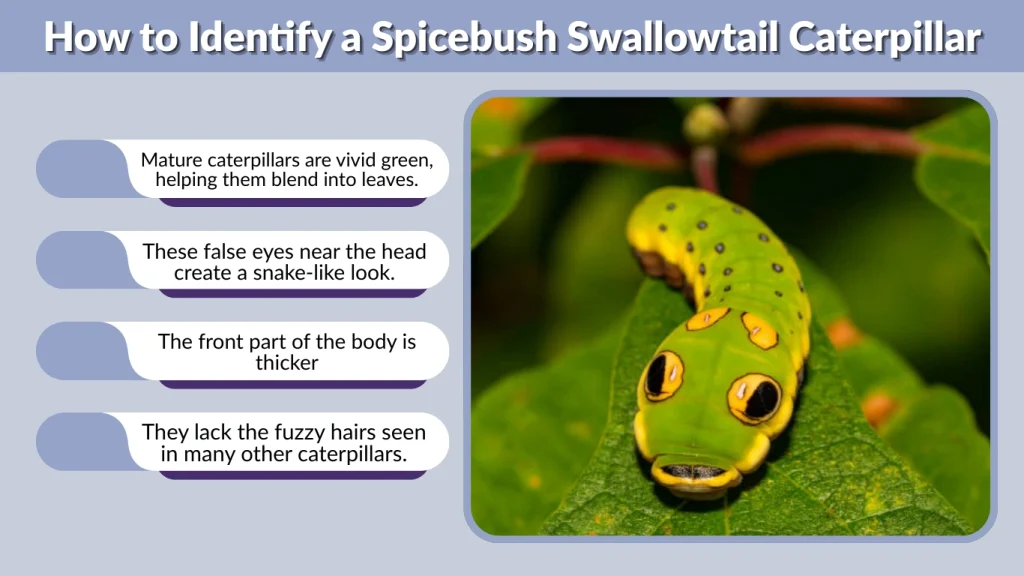
Spicebush swallowtail caterpillars are easy to recognize once their key features are known. Their appearance changes as they grow, but several traits remain consistent.
- Bright green body color: Mature caterpillars are vivid green, helping them blend into leaves.
- Large yellow-rimmed black eye spots: These false eyes near the head create a snake-like look.
- Swollen thorax: The front part of the body is thicker, enhancing the illusion of a head.
- Smooth, slug-like skin texture: They lack the fuzzy hairs seen in many other caterpillars.
- Orange osmeterium: When threatened, they extend a bright orange, forked organ that releases a strong odor.
- Young vs mature differences: Young larvae resemble bird droppings, while older ones become bright green and highly visible.
These features make spicebush swallowtail caterpillars among the most visually distinctive caterpillars in North America.
Spicebush Swallowtail Caterpillar Lifecycle
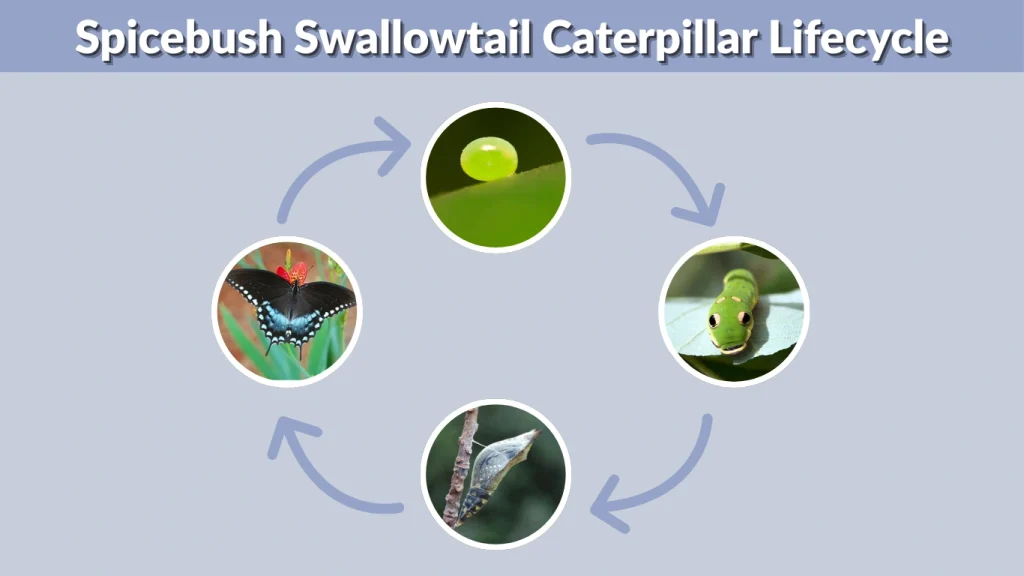
Egg Stage
Female spicebush swallowtail butterflies lay their eggs singly on the leaves of host plants. The eggs are small, pale green, and nearly spherical, blending well with the foliage. Placing eggs one at a time reduces competition and lowers the risk of predators finding multiple larvae together. Depending on temperature, eggs typically hatch within three to seven days.
Caterpillar Stage
After hatching, the young caterpillar is dark brown with white patches, closely resembling bird droppings. This disguise protects it during its most vulnerable stage. As it grows and molts through several instars, it gradually changes into the bright green form with dramatic eyespots.
One of the most unique behaviors of this caterpillar is leaf-rolling. It cuts and folds the edges of a leaf, securing it with silk to create a sheltered hiding place. The caterpillar rests inside this leafy “tent” when not feeding, emerging mainly to eat and then returning for protection. When disturbed, it may inflate its body and reveal its orange osmeterium, releasing a strong scent that repels predators.
Chrysalis Stage
When fully grown, the caterpillar leaves its host plant and attaches itself to a twig, stem, or other firm surface. It spins a small silk pad and a supporting thread, then transforms into a chrysalis. The chrysalis may be green or brown, depending on the surrounding environment, helping it blend into leaves or bark.
Inside the chrysalis, the caterpillar’s body reorganizes into that of a butterfly. In warm months, this stage usually lasts about 10 to 14 days. In late summer or fall, the chrysalis often overwinters and the adult butterfly emerges the following spring.
Adult Butterfly Stage
The adult spicebush swallowtail butterfly emerges with soft, crumpled wings. Within a few hours, the wings expand and harden, revealing dark brown to black coloring with pale blue and green markings. Adults feed on nectar from flowers, mate, and females search for host plants to lay eggs, beginning the lifecycle again.
Host Plants and What They Eat
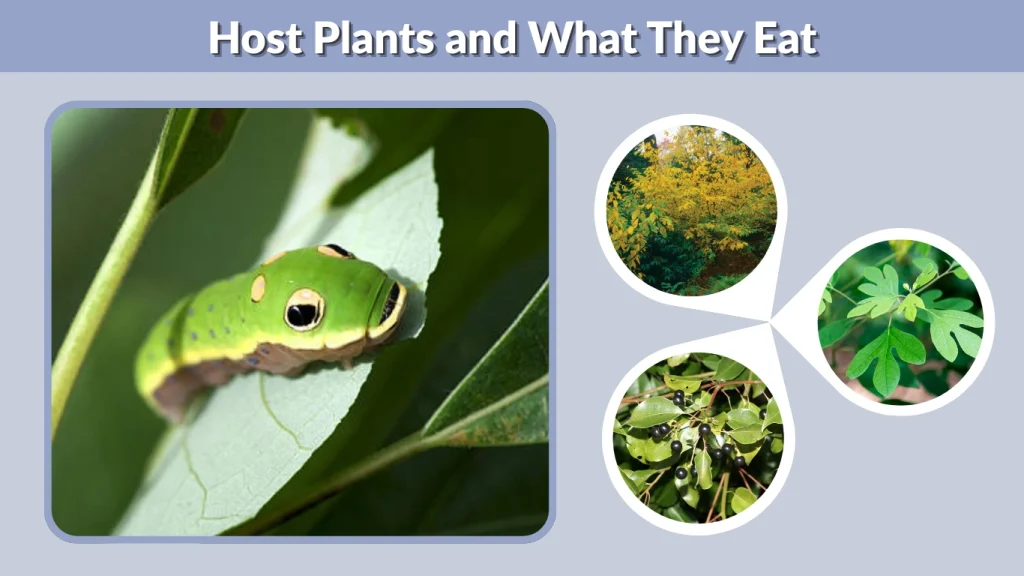
Spicebush swallowtail caterpillars feed almost exclusively on plants from the laurel family. These plants provide both nutrition and chemical compounds that help protect the caterpillars from predators.
- Spicebush (Lindera benzoin)
- Sassafras
- Camphor tree
- Sweet bay
- Red bay
Females carefully choose these plants when laying eggs because the caterpillars cannot survive on most other vegetation.
Habitat and Geographic Range
Spicebush swallowtail caterpillars are found throughout eastern North America, from southern Canada through the eastern United States and into parts of the Gulf Coast. They are most common in moist woodlands, forest understories, wetlands, and shaded stream edges where spicebush and sassafras naturally grow.
They also appear in gardens that include native shrubs and small trees. Activity is highest from late spring through early fall, with one to three generations each year depending on climate.
Behavior and Defense Mechanisms
Leaf-Rolling and Feeding Behavior
Spicebush swallowtail caterpillars are well known for their leaf-rolling behavior. They use silk to fold or curl the edges of leaves, creating a hidden shelter where they rest between feeding periods. These leaf shelters protect them from birds, wind, and heavy rain. Younger caterpillars often stay within one rolled leaf, while older ones may abandon smaller shelters and build larger ones as they grow.
Feeding usually happens along the edges of host leaves, often at night or during quiet daylight hours. The caterpillar may leave its shelter to eat and then return inside, reducing its exposure to predators.
Defense Strategies
This species uses multiple layers of defense. The most striking is visual intimidation. When disturbed, the caterpillar inflates the front of its body, making the large eyespots appear even bigger, closely resembling a small green snake. This sudden display can startle birds and lizards long enough for the caterpillar to avoid attack.
If intimidation fails, the caterpillar extends its orange, forked osmeterium from behind the head. This organ releases a strong, unpleasant smell derived from plant chemicals, discouraging many predators. Camouflage also plays a role, especially in young caterpillars that blend in as bird droppings.
Spicebush Swallowtail Caterpillar vs Eastern Tiger Swallowtail Caterpillar

| Feature | Spicebush Swallowtail Caterpillar | Eastern Tiger Swallowtail Caterpillar |
| Body color | Bright green when mature | Green when mature |
| Eye spots | Very large, snake-like | Large but less dramatic |
| Host plants | Spicebush, sassafras, laurels | Cherry, tulip tree, birch, willow |
| Shelter behavior | Rolls and folds leaves | Does not make leaf shelters |
| Defense display | Inflates body, strong eye mimicry | Eye spots plus osmeterium |
Although both belong to the swallowtail family, the spicebush swallowtail caterpillar is especially famous for its dramatic snake mimicry and leaf-rolling habit.
Is the Spicebush Swallowtail Caterpillar Harmful or Poisonous?
Spicebush swallowtail caterpillars are harmless to humans and pets. They do not bite, sting, or produce toxins that irritate skin. Their defensive odor may be unpleasant, but it is not dangerous.
Their protection is mainly directed at natural predators. By feeding on laurel family plants, they store chemicals that make them taste bad to birds. Combined with their intimidating appearance, these chemical defenses greatly increase their chances of survival in the wild.
How to Attract and Raise Spicebush Swallowtail Caterpillars
Gardeners who want to support this species can create suitable habitat and even raise caterpillars successfully.
- Plant native host plants: Spicebush and sassafras are the most reliable choices.
- Look for eggs and leaf shelters: Check the undersides of leaves and rolled leaf tips.
- Provide proper housing: Use a ventilated container with fresh host leaves and small sticks.
- Feed and clean daily: Replace wilted leaves and remove droppings to prevent mold.
- Support pupation: Add twigs so the caterpillar can attach and form a chrysalis.
- Release adults outdoors: After the butterfly emerges and wings harden, release it near flowers.
Raising spicebush swallowtails provides a close view of metamorphosis while helping maintain local butterfly populations.
Importance in Ecosystems and Gardens
Spicebush swallowtails contribute to ecosystems at multiple levels. Caterpillars help regulate plant growth and serve as prey for specialized predators. Adult butterflies visit a wide variety of flowers, transferring pollen and supporting plant reproduction.
Their dependence on native shrubs links them closely to forest health. When spicebush swallowtails are present, it often indicates a balanced habitat with native plants, clean water, and minimal pesticide use. Protecting them benefits many other insects and pollinators.
FAQs
What does a spicebush swallowtail caterpillar turn into?
A spicebush swallowtail caterpillar transforms into a spicebush swallowtail butterfly. The adult is dark brown to black with pale greenish-blue markings on the hindwings. After emerging from the chrysalis, the butterfly feeds on nectar, mates, and begins laying eggs on host plants.
Why does the spicebush swallowtail caterpillar look like a snake?
Its large eye spots and swollen front segments mimic the head of a small snake. When threatened, the caterpillar inflates its body and displays these markings, startling predators. This form of mimicry is highly effective against birds and small reptiles.
What plants attract spicebush swallowtail caterpillars?
They are attracted mainly to spicebush and sassafras, along with other laurel family plants such as sweet bay and red bay. Planting these native shrubs and trees is the best way to encourage spicebush swallowtails to lay eggs in your garden.
How long does a spicebush swallowtail caterpillar stay a caterpillar?
The caterpillar stage usually lasts about two to four weeks, depending on temperature and food quality. After reaching full size, it forms a chrysalis. Some chrysalises produce butterflies within two weeks, while others overwinter until spring.
Can you raise spicebush swallowtail caterpillars at home?
Yes. With fresh host leaves, clean housing, and proper ventilation, spicebush swallowtail caterpillars can be raised successfully. Once the adult butterfly emerges and its wings harden, it should be released outdoors near suitable flowers and shrubs.
