
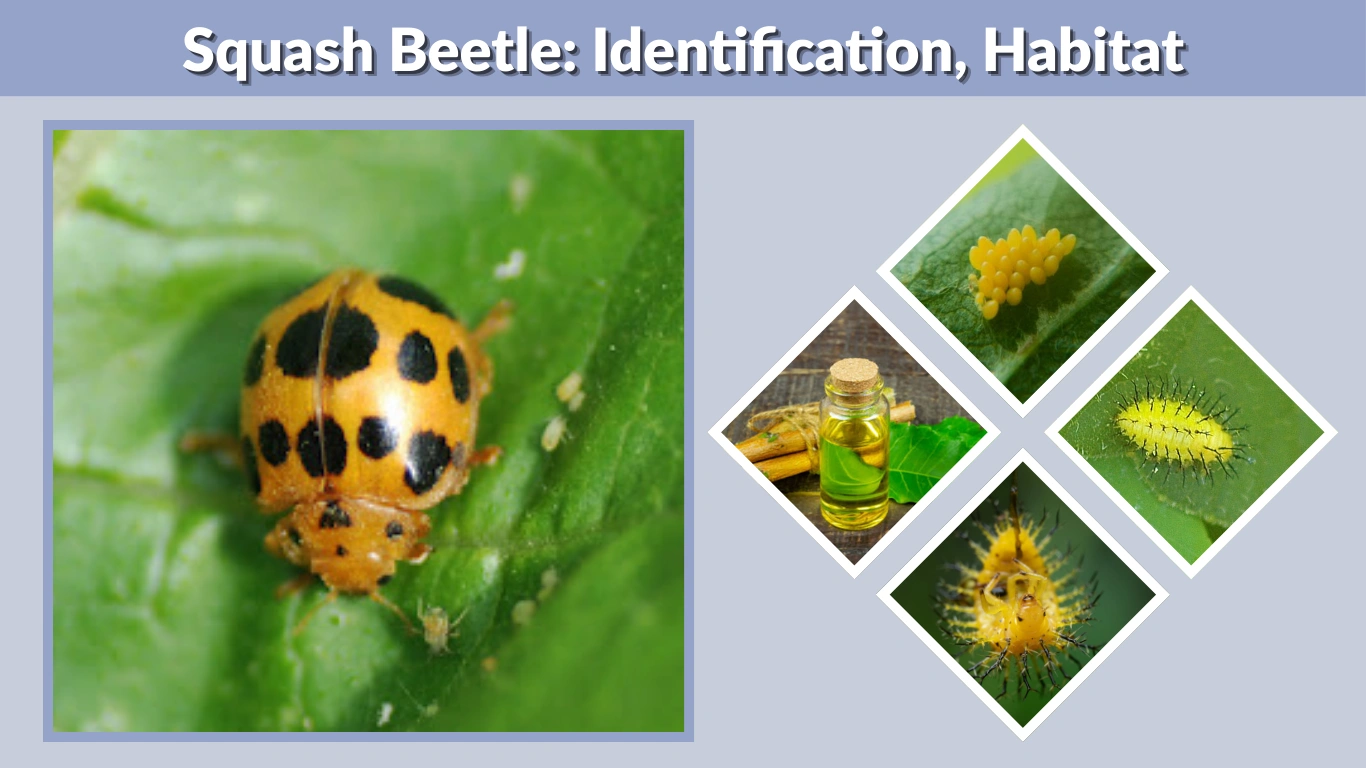
Squash beetles are plant-feeding insects commonly found in gardens and farms where squash and other cucurbit plants grow. They belong to the lady beetle family (Coccinellidae) but differ from most lady beetles because they feed on plants rather than other insects. Squash beetles are considered pests since they can damage leaves and reduce crop production. Understanding their identification, habitat, diet, and life cycle can help gardeners recognize these insects and manage their presence effectively.
Squash Beetle Identification
Physical Characteristics
Squash beetles are small, oval-shaped insects with a rounded body. They usually have a yellow to orange coloration with several black spots on their wing covers. Their body shape is similar to that of lady beetles, which is why they are sometimes confused with beneficial garden insects.
Most adult squash beetles measure about 6–8 millimeters in length. Their bodies are slightly hairy, which gives them a fuzzy appearance when viewed closely. The wing covers are smooth and rounded, protecting the delicate wings underneath.
Their legs and antennae are relatively short but strong enough to help them move easily across plant leaves while feeding.
Distinguishing Features
Although squash beetles resemble lady beetles, they have several features that help identify them. One noticeable difference is their hairy body surface, which most lady beetles do not have. Their coloration is usually a duller orange or yellow compared to the bright red color seen in many beneficial ladybugs.
Other identifying characteristics include:
- Oval and slightly flattened body
- Yellow or orange color with black spots
- Hairy appearance on the body and wing covers
- Slow movement on plant leaves
Because of these traits, squash beetles can usually be recognized when they are seen feeding on squash or pumpkin plants.
Difference Between Squash Beetle and Lady Beetle
Squash beetles are often mistaken for lady beetles because of their similar shape and spotted appearance. However, their behavior and diet are very different.
Most lady beetles are beneficial insects that feed on pests such as aphids and mites. Squash beetles, on the other hand, feed directly on plant tissues. This feeding habit makes them harmful to crops, especially cucurbit plants.
Another difference is their body texture. Squash beetles appear slightly fuzzy due to the small hairs covering their body, while most lady beetles have a smooth and shiny surface.
Squash Beetle Habitat
Natural Habitat
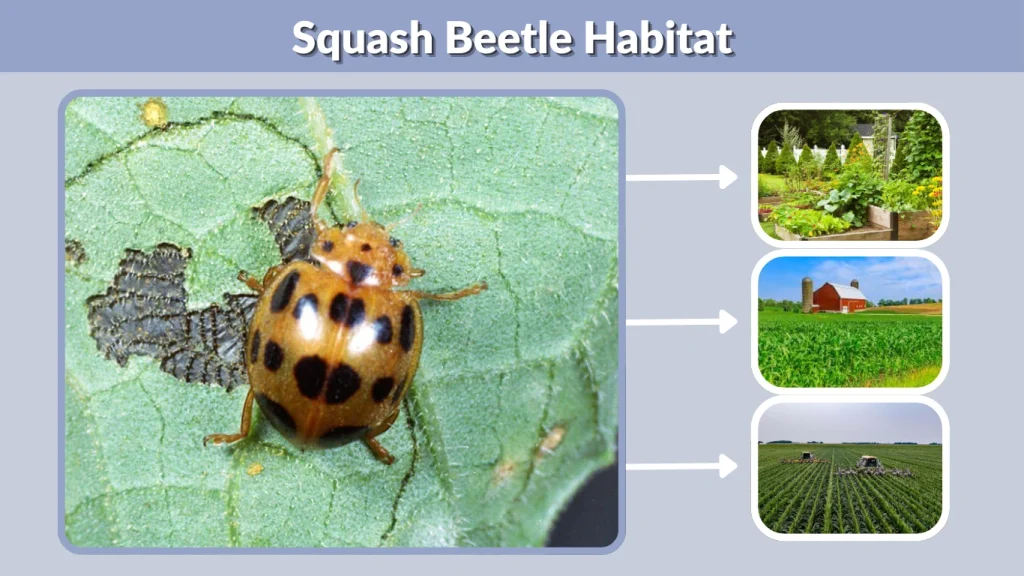
Squash beetles are commonly found in vegetable gardens, farms, and agricultural fields where cucurbit plants grow. These environments provide both food and shelter for the insects.
They prefer warm regions where squash, pumpkins, and similar plants are cultivated. Because these beetles depend heavily on these plants for survival, they are rarely found far from their host plants.
In natural environments, squash beetles may also live in areas with dense vegetation where suitable host plants are available.
Host Plants
Squash beetles mainly feed on plants belonging to the cucurbit family. These plants include several common vegetables grown in home gardens and farms.
Typical host plants include:
- Squash
- Pumpkin
- Zucchini
- Gourds
- Other cucurbit plants
These plants provide the leaves and plant tissues that squash beetles need for feeding and reproduction.
Environmental Conditions
Squash beetles thrive in warm and moderately humid environments. They are most active during the growing season when cucurbit plants produce fresh leaves and flowers.
Gardens with dense foliage and plenty of plant cover provide ideal conditions for squash beetles to hide, feed, and reproduce.
Squash Beetle Diet

Adult Diet
Adult squash beetles primarily feed on the leaves of squash plants and other cucurbits. They chew on the surface of leaves, removing plant tissue and creating irregular holes.
In addition to leaves, they may also feed on flower parts and tender plant stems. Continuous feeding by large numbers of beetles can weaken plants and reduce their ability to produce healthy fruit.
Because they feed directly on plant tissues, squash beetles are considered destructive pests in vegetable gardens.
Larval Diet
The larvae of squash beetles also feed on plant material. After hatching, the larvae begin feeding on the surfaces of leaves, often causing a type of damage known as leaf skeletonization.
During this process, the larvae eat the soft tissue of the leaf while leaving behind the veins. This damage reduces the plant’s ability to perform photosynthesis, which can weaken the plant over time.
As the larvae grow, their feeding activity increases, causing greater damage to squash plants and other cucurbit crops.
Squash Beetle Life Cycle
Egg Stage
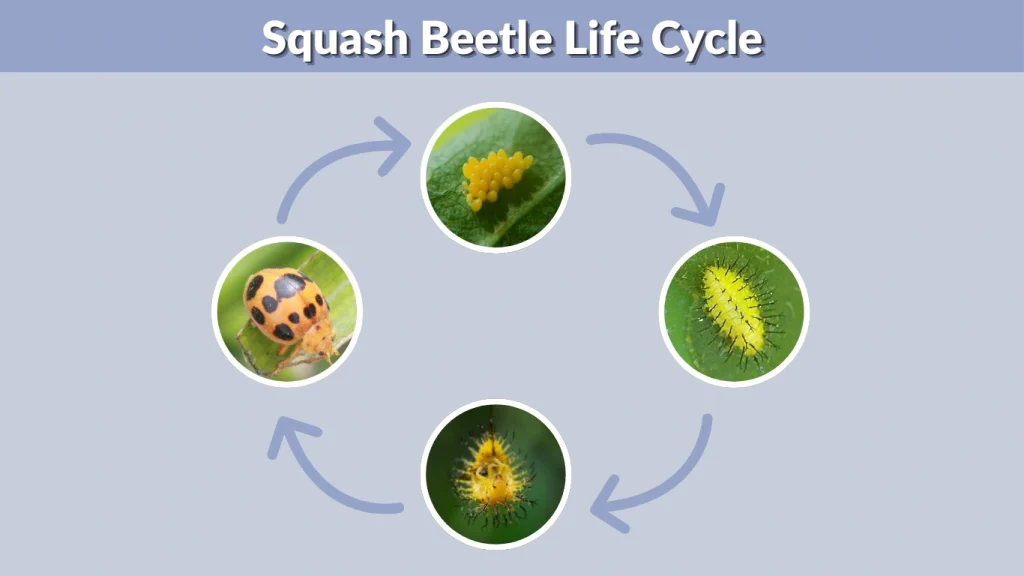
The life cycle of the squash beetle begins when the female lays clusters of small yellow eggs on the underside of squash or pumpkin leaves. Placing the eggs under the leaves helps protect them from predators and harsh environmental conditions.
The eggs are usually laid in groups and remain attached to the leaf surface. Depending on temperature and environmental conditions, the eggs hatch within several days. Warmer weather often speeds up the hatching process.
Larval Stage
After the eggs hatch, the larvae emerge and begin feeding on the plant leaves. Squash beetle larvae are yellowish in color with small spiny projections on their bodies, which help protect them from predators.
During this stage, the larvae actively feed on leaf tissue. Their feeding often results in skeletonized leaves, where the soft parts of the leaf are eaten while the veins remain intact.
The larval stage lasts for several days to a few weeks. As the larvae grow, they shed their skin several times before reaching their full size.
Pupal Stage
Once the larvae are fully developed, they attach themselves to plant surfaces and enter the pupal stage. During this stage, the insect undergoes a transformation inside the pupa.
The body gradually changes from the larval form into an adult beetle with wings, legs, and antennae. This stage usually lasts about a week depending on temperature and environmental conditions.
Adult Stage
After completing the pupal stage, the adult squash beetle emerges. Adult beetles begin feeding on plant leaves and quickly start searching for mates.
Female beetles soon begin laying eggs on suitable host plants, continuing the life cycle. In warm climates, several generations of squash beetles may develop during a single growing season.
Squash Beetle Damage to Plants
Types of Plant Damage
Squash beetles cause damage mainly by feeding on plant leaves. Their chewing activity creates holes and damaged patches on the leaf surface. When large numbers of beetles feed on a plant, the leaves may become heavily damaged.
In severe cases, the feeding activity of both adults and larvae can leave leaves with only their veins remaining.
Effects on Crops
Heavy infestations of squash beetles can weaken plants by reducing their ability to produce energy through photosynthesis. Damaged leaves cannot perform this process efficiently.
As a result, plants may grow more slowly and produce fewer fruits. In vegetable gardens and farms, this damage can lead to reduced crop yields and unhealthy plants.
Squash Beetle Control Methods

Natural Control
One of the simplest ways to control squash beetles is manual removal. Gardeners can pick the beetles and larvae off the plants and remove egg clusters found under leaves.
Encouraging natural predators such as birds and beneficial insects can also help reduce squash beetle populations.
Organic Control Methods
Several organic methods can help manage squash beetles without using harsh chemicals. These methods include:
- Applying neem oil to affected plants
- Using insecticidal soap sprays
- Planting companion plants that discourage pests
These methods help control beetle populations while protecting beneficial insects in the garden.
Preventive Measures
Preventing squash beetle infestations is often easier than controlling them later. Gardeners can reduce pest problems by:
- Rotating crops each season
- Removing plant debris after harvest
- Regularly inspecting plants for eggs and larvae
These practices help break the life cycle of the squash beetle and keep gardens healthier.
Interesting Squash Beetle Facts
Squash beetles belong to the lady beetle family, which is surprising because most members of this family are beneficial predators. Unlike their relatives, squash beetles feed on plant leaves.
Their larvae have distinctive spiny bodies, which help protect them from predators. These insects are most active during warm growing seasons when squash plants are abundant.
Although they are considered pests in gardens, squash beetles also play a role in natural food chains, serving as prey for birds and other insects.
Conclusion
Squash beetles are plant-feeding insects that can cause significant damage to squash and other cucurbit crops. Their ability to feed on leaves during both the larval and adult stages makes them a common concern for gardeners and farmers.
Understanding their identification, habitat, diet, and life cycle helps gardeners detect infestations early and apply effective control methods. With proper monitoring and preventive practices, the impact of squash beetles on vegetable crops can be reduced, helping maintain healthy and productive gardens.
