
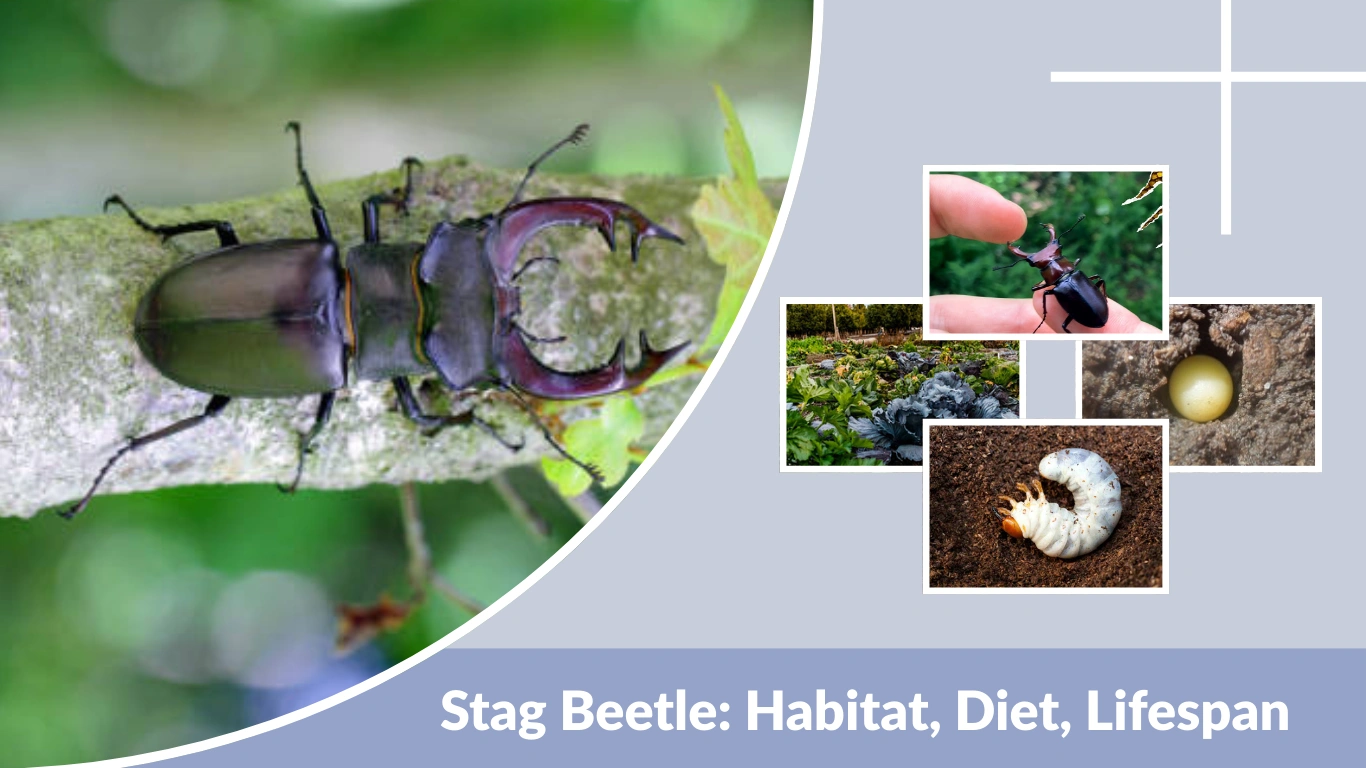
The stag beetle is one of the most striking and easily recognizable insects in the world. Known for its impressive antler-like jaws and robust body, this beetle has fascinated scientists, nature enthusiasts, and cultures for centuries. Despite its fierce appearance, the stag beetle is generally harmless and plays an important role in maintaining healthy ecosystems. Found mainly in woodland environments, stag beetles depend heavily on dead and decaying wood for survival, making them a key indicator of environmental quality.
In recent years, stag beetles have gained attention due to declining populations in many regions. Habitat loss, urban development, and the removal of deadwood have significantly affected their numbers. Understanding the stag beetle’s biology, behavior, and ecological importance is essential for appreciating why this remarkable insect deserves protection.
What Is a Stag Beetle?
A stag beetle is a member of the beetle family Lucanidae, a group known for large-bodied insects with strong mandibles. The name “stag beetle” comes from the enlarged jaws of the male, which resemble the antlers of a stag. These beetles are among the largest beetles found in Europe and parts of Asia, with some species growing several centimeters long.
Stag beetles undergo complete metamorphosis, meaning they pass through four life stages: egg, larva, pupa, and adult. While the adult beetle’s life is relatively short, the larval stage can last several years, hidden underground within decaying wood.
Physical Characteristics of Stag Beetles

- Large, robust body with a hard exoskeleton
- Body length typically ranges from 5 to 8 cm
- Dark brown, reddish-brown, or black coloration
- Six strong legs adapted for climbing and gripping surfaces
- Hardened forewings (elytra) that protect the flying wings
- Capable of flight despite their heavy appearance
- Males have large, antler-like mandibles
- Females have smaller, stronger jaws for defense and digging
- Distinct head, thorax, and abdomen segments
Types and Species of Stag Beetles
Common Stag Beetle Species
There are over a thousand species of stag beetles worldwide. One of the most well-known is the European stag beetle (Lucanus cervus), which is the largest land beetle in Europe. Other notable species include the giant stag beetles of Southeast Asia and Japan, some of which are highly valued by collectors.
Each species varies slightly in size, coloration, and mandible shape, but all share similar life cycles and ecological roles.
Male vs Female Differences
Sexual dimorphism is very noticeable in stag beetles. Males are usually larger and have dramatically enlarged mandibles, while females are smaller with stronger, more compact jaws. Females tend to be more active on the ground, especially when searching for suitable places to lay eggs.
Stag Beetle Habitat and Distribution

Natural Habitat
Stag beetles thrive in environments rich in dead or decaying wood. They are commonly found in forests, woodlands, old parks, gardens, and hedgerows. Rotting tree stumps, buried roots, and fallen logs are essential for their survival, particularly during the larval stage.
Because of their dependence on deadwood, stag beetles are highly sensitive to changes in land management and habitat destruction.
Geographic Distribution
Stag beetles are widely distributed across Europe, Asia, and parts of North America. The European stag beetle is most commonly found in southern and central Europe, while Asian species are especially diverse in Japan, China, and Southeast Asia.
Life Cycle of a Stag Beetle

The life cycle of a stag beetle is long and complex. Females lay their eggs in soil near decaying wood. After hatching, the larvae burrow into rotting wood, where they remain for several years, feeding and growing slowly. This larval stage is the longest and most critical part of the stag beetle’s life.
Eventually, the larva forms a pupa underground, transforming into an adult beetle. Adult stag beetles usually emerge in late spring or early summer, living only a few months—just long enough to mate and continue the cycle.
What Do Stag Beetles Eat?
Stag beetles have very different diets depending on their stage of life. During the larval stage, which can last anywhere from three to seven years, stag beetle larvae feed almost exclusively on decaying wood. They consume the soft, rotting material found in old tree roots, stumps, and fallen logs. This diet provides the nutrients needed for slow but steady growth and plays a crucial role in breaking down dead wood within forest ecosystems.
Adult stag beetles eat very little compared to their larval stage. Instead of solid food, they mainly feed on tree sap, nectar, and juices from overripe or fallen fruit. Some adults may not feed at all and survive on energy reserves stored during their long larval development.
Behavior and Lifestyle
Stag beetles are primarily nocturnal insects, becoming most active during warm summer evenings. Males are often seen flying at dusk in search of females, while females usually stay closer to the ground. Although their flight may appear clumsy, stag beetles are capable of covering short distances efficiently.
Mating behavior often involves dramatic displays of strength. Male stag beetles use their large mandibles to wrestle rival males, attempting to lift and throw them away from a potential mate. These contests rarely cause injury and are more about dominance than aggression. Outside the breeding season, stag beetles live quietly and avoid confrontation.
Are Stag Beetles Dangerous to Humans?

Despite their fearsome appearance, stag beetles pose little danger to humans. They are not venomous and do not actively attack people. If handled roughly, a stag beetle may attempt to pinch with its mandibles, but male mandibles are usually too blunt to cause pain. Female mandibles are smaller but sharper and can give a mild pinch if threatened.
In general, stag beetles are best admired from a distance or gently relocated if found in an unsafe area.
Importance of Stag Beetles in the Ecosystem
Stag beetles play an essential role in maintaining healthy ecosystems. Their larvae help decompose dead and decaying wood, recycling nutrients back into the soil. This process supports plant growth and benefits a wide range of other organisms, including fungi, microbes, and smaller insects.
Because stag beetles rely on old trees and deadwood, their presence is often an indicator of a well-balanced and mature ecosystem. A decline in stag beetle populations can signal broader environmental problems affecting woodland habitats.
Conservation Status and Threats
Why Stag Beetle Numbers Are Declining
In many parts of the world, stag beetle populations are declining due to habitat loss. Urban expansion, modern forestry practices, and the removal of deadwood from gardens and parks have significantly reduced suitable breeding sites. Road traffic also poses a threat, especially during the summer when adult beetles are most active.
Climate change may further affect stag beetles by altering the availability of suitable habitats and disrupting their life cycles.
How Humans Can Help Protect Stag Beetles
There are several simple actions people can take to help protect stag beetles. Leaving fallen logs, tree stumps, and buried wood in gardens provides valuable habitat for larvae. Creating “log piles” or beetle banks can offer safe breeding areas, even in urban environments.
Supporting conservation organizations and raising awareness about the importance of deadwood habitats can also make a significant difference in protecting stag beetle populations.
Interesting Facts About Stag Beetles
Stag beetles are among the largest beetles in Europe and have one of the longest larval stages of any insect. Although their mandibles look powerful, adults cannot chew solid food. In some cultures, especially in Japan, stag beetles are admired and kept as pets due to their impressive appearance and gentle nature.
Conclusion
The stag beetle is a remarkable insect that combines striking physical features with an important ecological role. From its long underground larval development to its brief but dramatic adult life, every stage of the stag beetle’s life cycle contributes to forest health and biodiversity. Unfortunately, habitat loss continues to threaten many stag beetle species.
