

Horse fly bites are among the most painful insect bites you can experience. Unlike mosquitoes, which pierce the skin with a needle-like mouthpart, horse flies use sharp cutting blades that slice through the skin to access blood. This action causes intense pain, immediate swelling, and sometimes bleeding. If left untreated, the bite may lead to infection or allergic reactions. Understanding the stages of a horse fly bite can help you recognize symptoms early and take the right steps toward treatment and prevention.
What Happens When a Horse Fly Bites?
When a horse fly bites, it doesn’t inject anesthetic like mosquitoes do. Instead, the sharp mandibles tear through the skin, leaving a small wound. As the fly feeds on blood, saliva containing enzymes enters the bite site, which triggers the body’s immune system. This reaction leads to inflammation, redness, and itching. Because of this unique biting style, the wound is usually larger, more painful, and slower to heal compared to other insect bites.
Stages of Horse Fly Bite
Stage 1 – Initial Bite (Minutes After Bite)
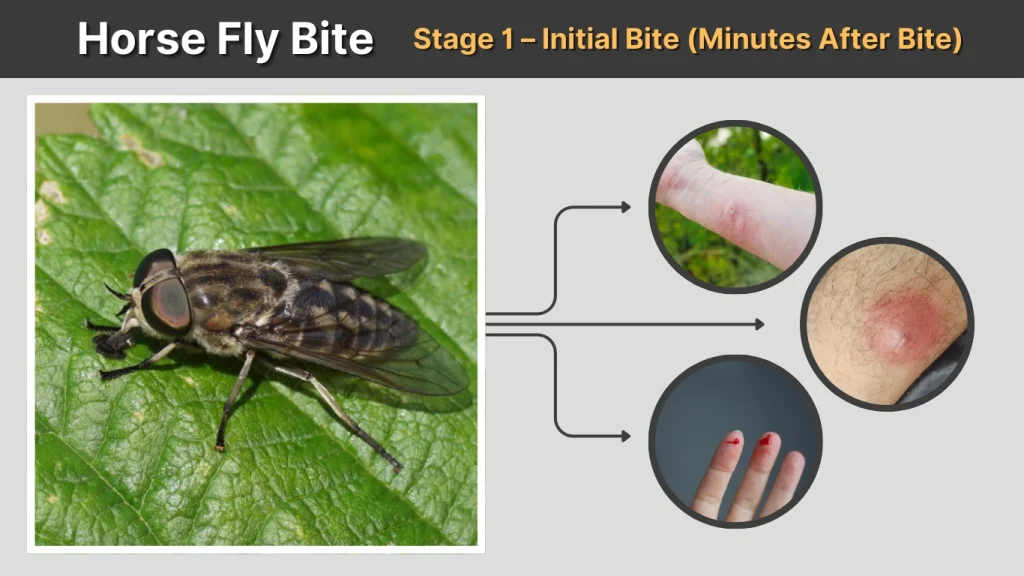
The first stage begins immediately after the fly bites.
- Identification:
- Sharp, burning pain at the bite site.
- A visible red spot or small cut in the skin.
- In some cases, slight bleeding occurs due to the slicing action.
- Sharp, burning pain at the bite site.
The bite is often noticed right away because horse flies are aggressive and their bite is painful. At this stage, cleaning the wound is crucial to prevent infection.
Stage 2 – Early Skin Reaction (First Few Hours)
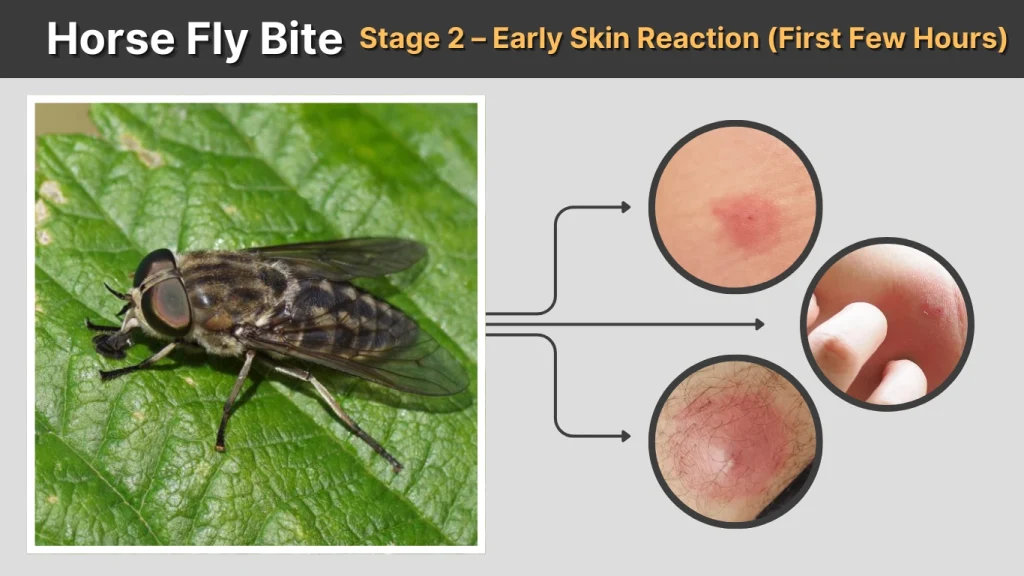
Within a few hours, the body responds to the fly’s saliva and the small injury.
- Redness begins to spread around the bite.
- The area becomes itchy and tender.
- Swelling starts to develop, forming a welt-like bump.
This stage is often mistaken for a bee or mosquito sting, but horse fly bites are generally more inflamed and sore. Applying a cold compress early can reduce swelling and ease discomfort.
Stage 3 – Progressive Inflammation (24–48 Hours)
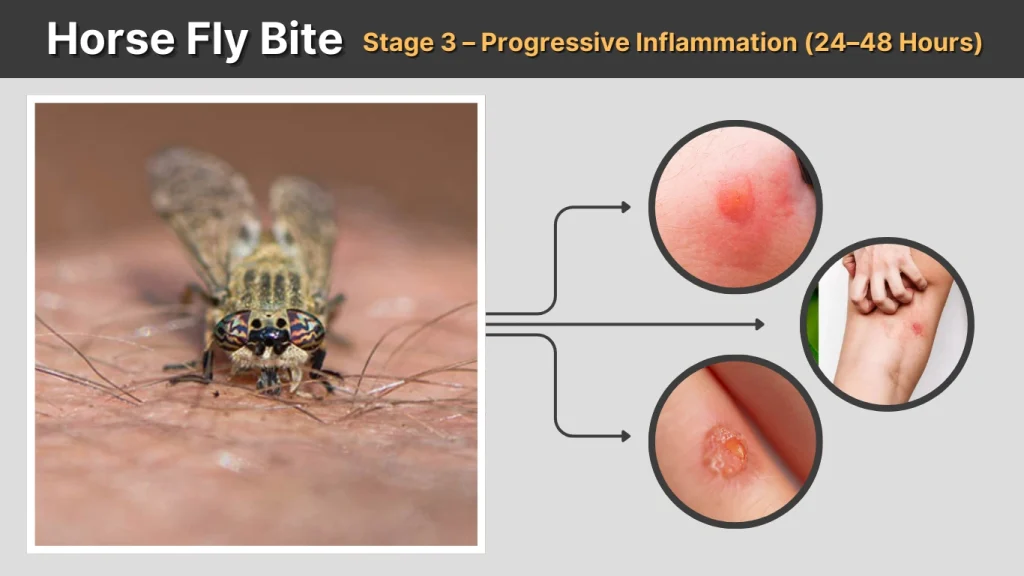
Over the next one to two days, symptoms intensify as the immune system continues reacting.
- Swelling may expand beyond the initial bite.
- The area becomes warmer and more painful to touch.
- In some people, blisters or fluid-filled bumps may form.
- Itching becomes more severe and scratching can worsen skin damage.
This stage is the most uncomfortable and poses the highest risk of secondary infection, especially if the skin is broken from scratching. Using anti-itch creams or antihistamines is recommended to avoid further irritation.
Stage 4 – Secondary Reactions (2–5 Days After Bite)

By this stage, the body either begins healing or complications may develop.
- Normal healing: swelling starts to reduce and redness slowly fades.
- Infections: scratching introduces bacteria, causing pus, warmth, and spreading redness.
- Allergic reactions: some individuals develop widespread hives, intense swelling, or even systemic symptoms like dizziness and breathing difficulties.
This is the stage where medical attention may be required, particularly if symptoms worsen instead of improving.
Pictures of Horse Fly Bite Stages
Although pictures vary depending on individual reactions, most horse fly bites follow a similar visual progression:
- Fresh bite (Stage 1): a small red dot or cut with immediate swelling.
- Swelling stage (Stage 2–3): a raised, inflamed welt that may blister.
- Infected stage (Stage 4): pus-filled or spreading red patches.
- Healing stage (Stage 5): scabbing, fading redness, and eventual skin recovery.
Pictures are helpful for comparing your own bite to typical progressions. However, if your bite looks significantly worse—especially with spreading redness or blistering—it may indicate infection or an allergic reaction that requires professional care.
Symptoms of Horse Fly Bite at Different Stages
Each stage of a horse fly bite brings distinct symptoms. Recognizing these helps determine whether the reaction is normal or requires medical help.
- Pain and swelling: Sharp pain at first, followed by throbbing or burning.
- Itching: Common during Stage 2 and 3, sometimes severe.
- Blisters: Some people develop fluid-filled bumps within 48 hours.
- Systemic symptoms: In rare cases, dizziness, headache, or breathing problems occur due to allergic reactions.
Unlike mild mosquito bites, horse fly bites often remain sore for several days, making them harder to ignore.
Complications of Horse Fly Bites
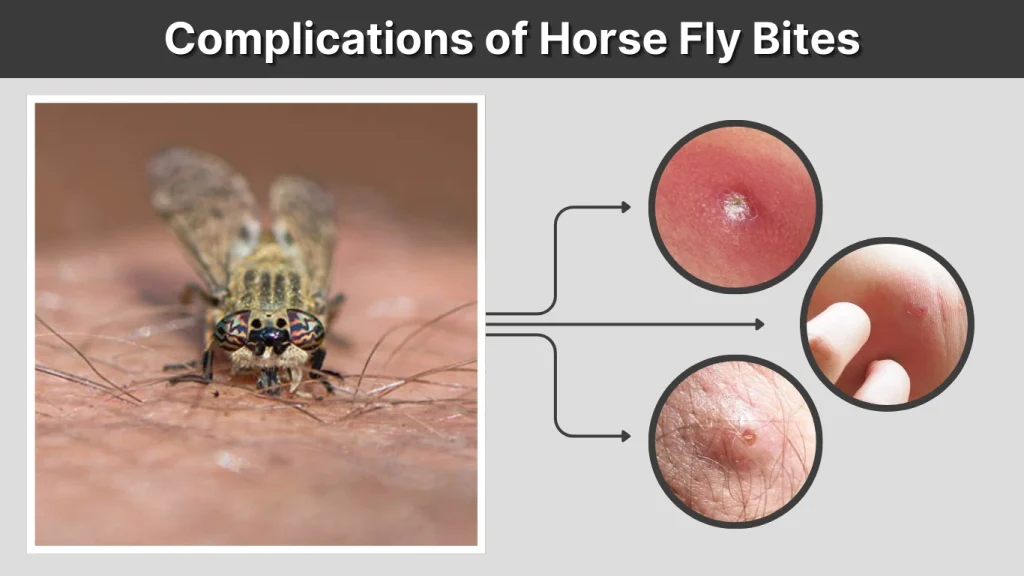
Infections
Scratching the bite is the most common reason for complications. When bacteria enter the wound, the bite site may become filled with pus, feel hot, and spread redness outward. Left untreated, infections can lead to more serious skin conditions like cellulitis.
Allergic Reactions
Some individuals experience allergic responses to the saliva of horse flies. Reactions can range from large local swelling to severe hives. Rarely, a dangerous reaction called anaphylaxis may occur, leading to difficulty breathing, swelling of the throat, and dizziness. Immediate medical attention is required in such cases.
Prolonged Swelling or Skin Damage
In sensitive individuals, swelling may last over a week. Constant itching and scratching can cause open wounds, leading to scarring or skin discoloration even after the bite heals.
Stage 5 – Healing Stage (1–2 Weeks)
If no infection or severe allergic reaction develops, the bite gradually enters its healing phase.
- Day 5–7: swelling begins to subside, redness fades.
- Day 7–14: the bite dries, may form a small scab, and the itching lessens.
- Some individuals notice lingering dark spots (post-inflammatory hyperpigmentation) that can last several weeks.
- Rarely, scars form if the wound was scratched aggressively.
Patience is important during this stage. Applying healing ointments or moisturizers can help restore the skin and reduce dryness or scarring.
Treatment for Horse Fly Bites
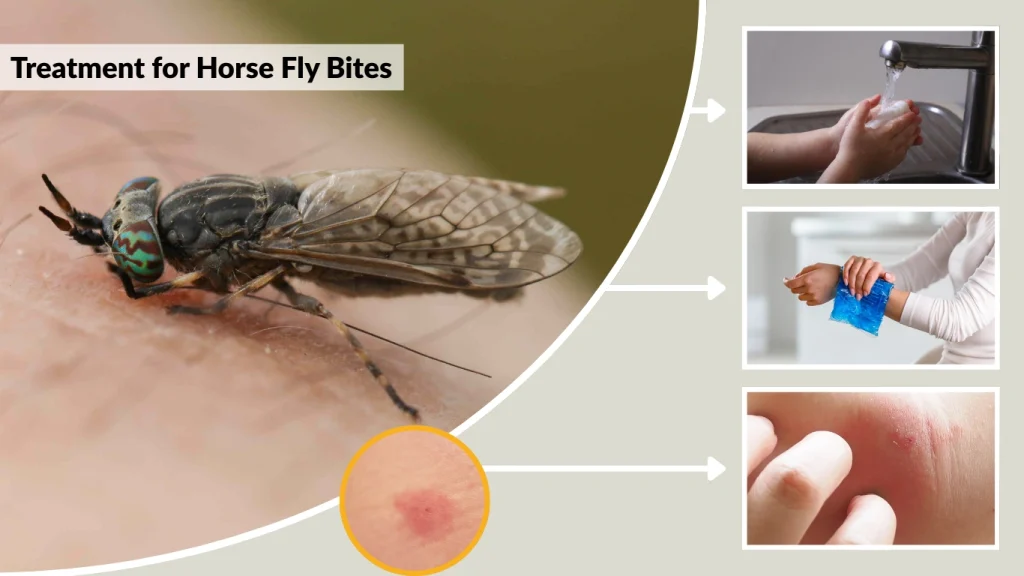
Immediate Care (Stage 1–2)
The first few minutes after a bite are critical in preventing complications.
- Wash the wound with mild soap and water to remove bacteria.
- Apply ice packs to reduce swelling and pain.
- Avoid scratching to keep the bite clean and intact.
These simple steps often determine whether the bite heals smoothly or becomes infected.
Relief for Itching & Swelling (Stage 2–4)
Managing discomfort is key once the swelling sets in.
- Over-the-counter antihistamines: Reduce itching and swelling (e.g., cetirizine, loratadine).
- Hydrocortisone cream: Helps with redness, itching, and inflammation.
- Pain relievers: Ibuprofen or acetaminophen can ease soreness.
- Natural remedies:
- Aloe vera gel: Soothes and cools the skin.
- Honey: Natural antibacterial properties.
- Cold compress with baking soda paste: Relieves itching and irritation.
- Aloe vera gel: Soothes and cools the skin.
If you have sensitive skin, test natural remedies on a small area first.
When to Seek Medical Help
Although most horse fly bites heal without medical treatment, professional care is necessary in certain cases:
- Signs of infection: spreading redness, pus, or fever.
- Severe allergic reaction: dizziness, difficulty breathing, swelling of lips or throat.
- Excessive swelling: when the bite affects movement (e.g., near the eyes or joints).
- Persistent symptoms: if the bite hasn’t improved after 10–14 days.
Doctors may prescribe stronger antihistamines, corticosteroids, or antibiotics if needed.
Prevention of Horse Fly Bites
Horse flies are most active in summer and near water bodies, farms, or livestock areas. While completely avoiding them may be impossible, these steps can help reduce your risk:
- Wear protective clothing: long sleeves, pants, and light-colored fabrics.
- Use insect repellents: products containing DEET or picaridin are effective.
- Avoid high-risk areas: wetlands, rivers, or farms during hot, humid days.
- Keep moving: horse flies prefer stationary targets; constant movement makes it harder for them to bite.
- Protect animals: if you have horses or livestock, use fly repellents and protective gear to reduce bites on them as well.
FAQs
How long does it take for a horse fly bite to heal?
Most bites heal within 7–14 days. However, healing may take longer if the bite gets infected or if the person has sensitive skin.
Can horse fly bites cause blisters?
Yes, some people develop fluid-filled blisters within 24–48 hours. These are a reaction to the fly’s saliva and skin inflammation.
What should I do if my horse fly bite gets infected?
Clean the area thoroughly, apply an antibiotic ointment, and keep it covered. If redness or pus spreads, consult a doctor for oral antibiotics.
Are horse fly bites dangerous?
Usually, they are not life-threatening. However, they can cause severe allergic reactions or infections if untreated, which makes proper care important.
Do horse flies bite through clothing?
Yes, horse flies can bite through thin fabrics like t-shirts or leggings. Wearing thicker, loose-fitting clothes provides better protection.
