

Wooden furniture adds warmth and charm to any home—but it can also attract unwanted guests: termites. These silent destroyers often go unnoticed until the damage is significant. Whether it’s an antique chair, a bed frame, or your favorite coffee table, termites can hollow it out from the inside while leaving the surface deceptively intact.
In this article, you’ll learn how to identify termite presence in furniture with visual cues and photos, explore the most effective treatments, and discover how to prevent further damage before it’s too late.
What Attracts Termites to Furniture
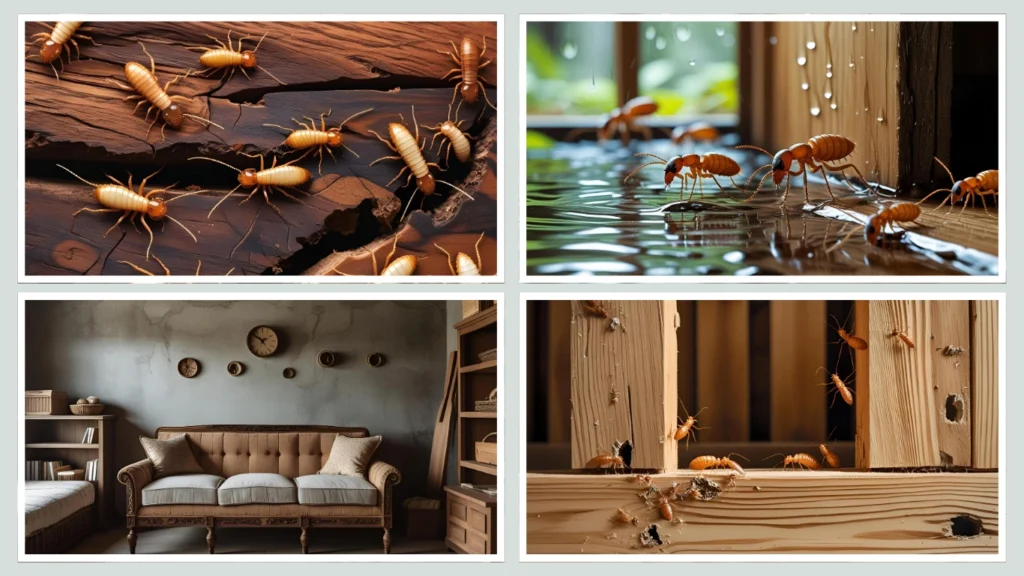
Termites don’t randomly choose your furniture—they’re drawn to certain conditions and materials that make wood easier to consume and infest. Understanding these attractants can help you prevent future damage.
Type of Wood Termites Prefer
Termites love soft, untreated wood with high cellulose content. Drywood termites often infest furniture made from hardwoods like mahogany, oak, and walnut, especially if the wood is aged or cracked.
Moisture and Humidity Issues
High humidity levels, water leaks, or damp indoor environments create ideal conditions for termites, especially subterranean and dampwood species. Even slight moisture in furniture can attract them.
Poor Ventilation and Placement
Furniture placed against walls or in dark, poorly ventilated areas—like basements or storerooms—is more likely to attract termites. These spots create an undisturbed habitat where termites can thrive.
Previous Infestations Nearby
If other wooden structures in the home (like floors or beams) have had termite problems, your furniture is at risk too. Termites can migrate from one source to another if the conditions are favorable.
How to Identify Termites in Furniture
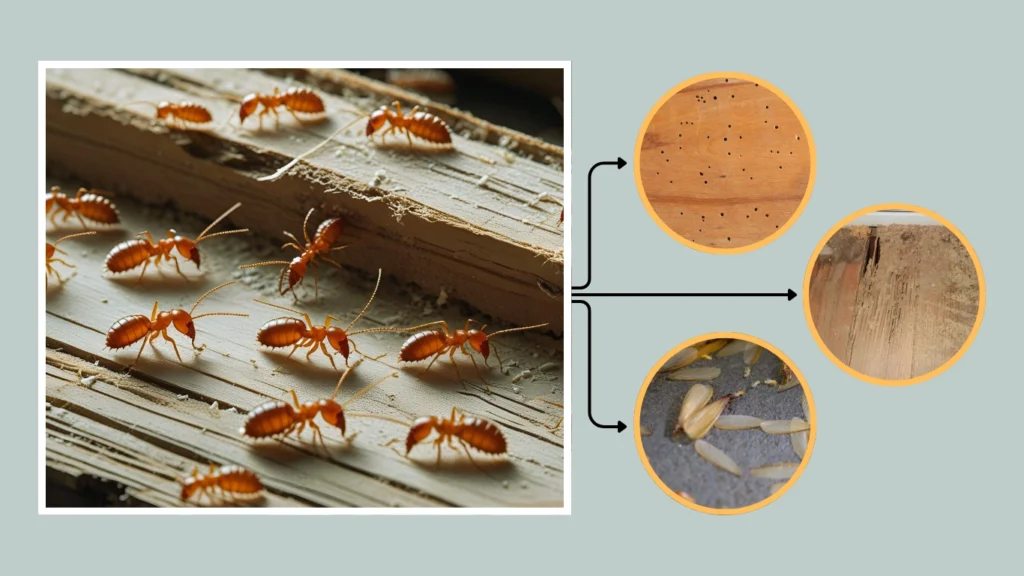
Spotting termites early in furniture can save you from costly repairs. Here’s how to identify their presence effectively:
Visual Identification
- Tiny holes in the wood surface (kick-out holes).
- Mud tubes or small tunnels near or under the furniture.
- Discarded wings around the base or on nearby floors and windowsills.
Furniture Damage Symptoms
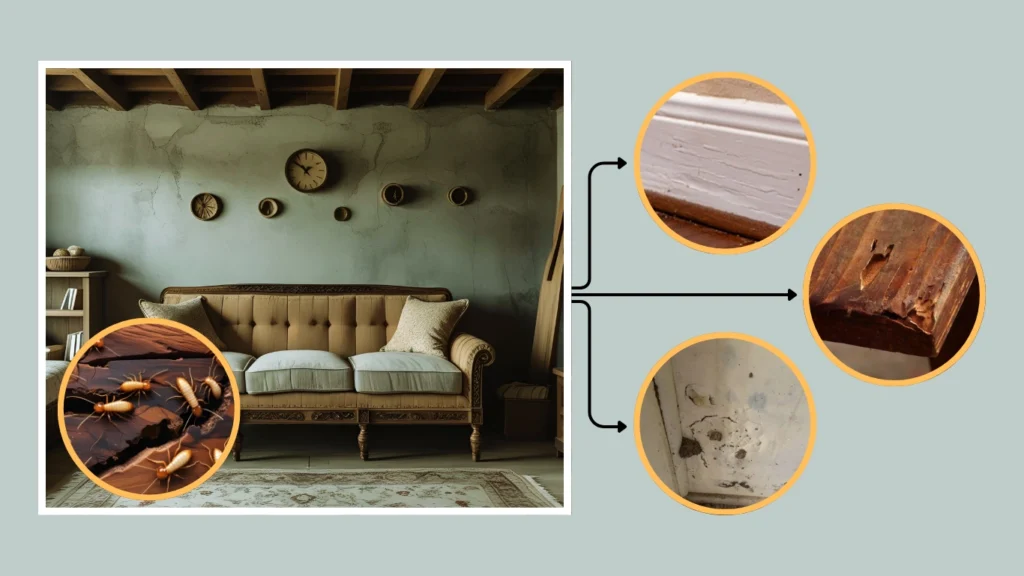
- A hollow sound when tapped lightly.
- Wood feels soft or brittle, especially in high-stress areas like legs or arms.
- Surface appears blistered or warped, sometimes mistaken for water damage.
Signs of Termite Frass (Droppings)
Drywood termites push out fine, pellet-shaped droppings from their tunnels. These often collect beneath furniture or in small piles near joints or corners.
Common Places in Furniture Termites Hide
- Inside drawer panels and joints
- Underneath legs, especially where wood meets the floor
- Hidden corners and cracks in chairs, beds, or cabinets
7 Clear Signs of Termites in Furniture
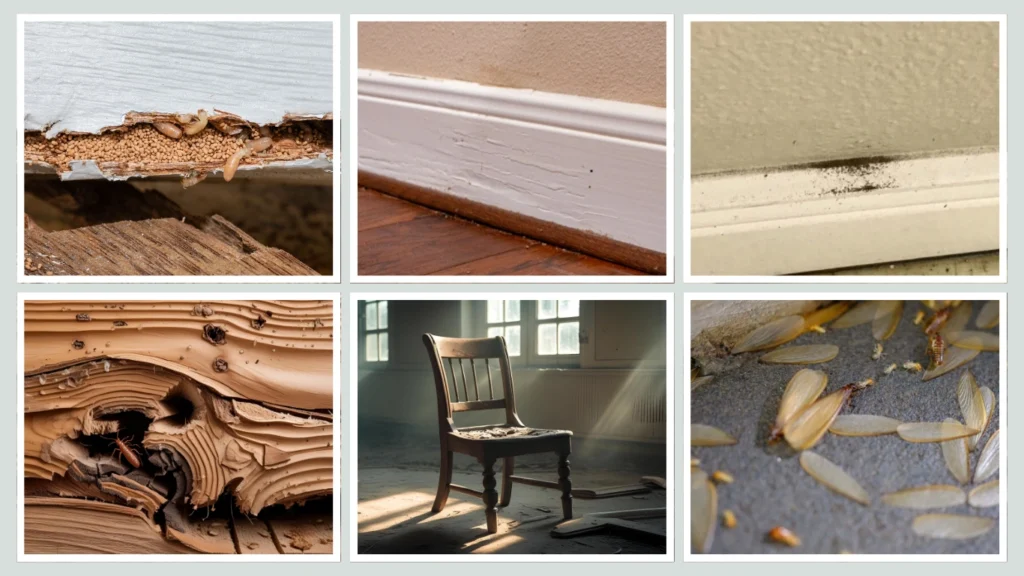
Catching termites early can save your furniture from irreversible damage. Here are seven key signs to watch for:
- Sawdust or Wood Shavings
Fine powder or grainy sawdust-like material, also known as termite frass, often appears below or around infested furniture. - Hollow-Sounding Wood
When you tap the wood and it sounds empty or papery, it usually means the interior has been eaten away by termites. - Clicking or Tapping Sounds
If you listen closely during quiet moments, you might hear faint clicking noises. This comes from soldier termites banging their heads or workers chewing the wood. - Blistered or Bubbling Wood Surface
Wood that appears to be water-damaged—blistered, peeling, or warped—may actually be a result of internal termite tunneling. - Loosened or Weak Joints
Chairs, tables, or cabinets may feel wobbly even when tightened. Termites weaken the structural joints by feeding inside them. - Discarded Wings
After swarming, reproductive termites shed their wings. If you find piles of identical-sized wings around furniture or on windowsills, it’s a strong sign. - Visible Termites or Tunnels
In severe cases, you may see live termites crawling inside the wood when a damaged piece breaks open—or notice maze-like tunnel patterns on exposed areas.
Types of Termites That Attack Furniture
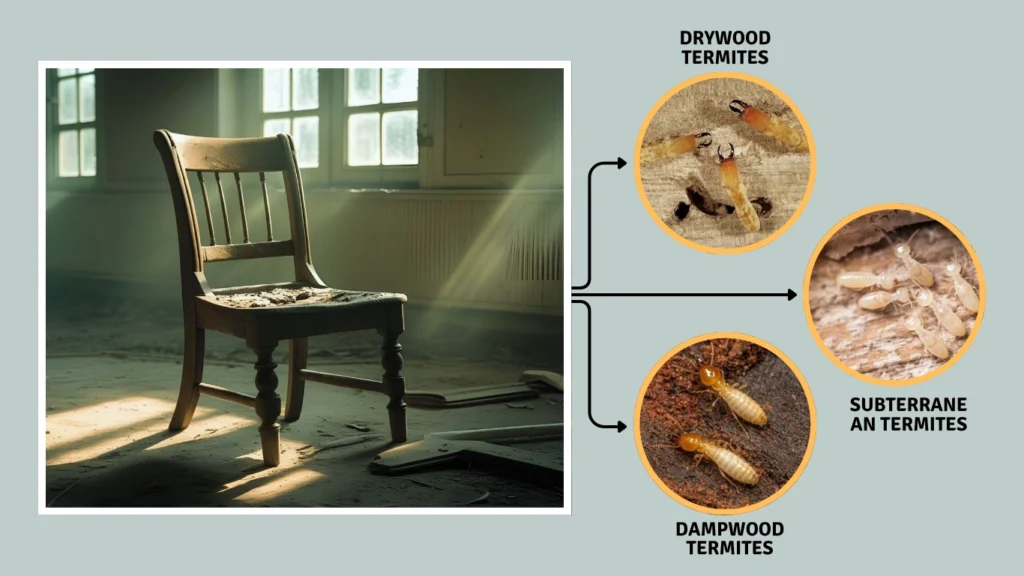
Not all termites are the same—different species target furniture in different ways. Understanding which type is responsible helps you choose the most effective treatment method.
Drywood Termites
These are the most common furniture invaders. They live entirely within the wood and don’t need soil contact or moisture to survive.
Key traits:
- Found in dry, seasoned wood like furniture, doors, and frames
- Leave behind tiny frass pellets
- Create smooth, clean galleries inside wood
Subterranean Termites
These termites typically nest in soil and build mud tubes to reach furniture. While they’re more commonly found in structures, they can attack wooden furniture near ground level.
Key traits:
- Require moisture and contact with the ground
- Build visible mud tubes on walls or furniture bases
- Cause extensive structural damage over time
Dampwood Termites
Less common in homes, but still possible, especially in humid environments or where there’s water damage.
Key traits:
- Prefer damp or rotting wood
- Don’t leave frass like drywood termites
- Found in furniture exposed to leaks or poor ventilation
How to Treat Termites in Furniture

Once termites are confirmed in your furniture, acting quickly is crucial. Depending on the severity, you can choose from DIY methods or professional treatments to eliminate the pests and protect your wood.
Initial Inspection and Safety Precautions
- Move infested furniture away from walls and other wooden items.
- Wear gloves and a mask if you plan to inspect or apply chemicals.
- Avoid disturbing large colonies without a treatment plan—they may scatter and spread.
Natural Remedies
These are ideal for early-stage infestations or eco-conscious households.
Orange oil: Kills termites on contact; inject into affected wood using a syringe.
Neem oil: A slow-acting but natural termite killer; apply generously and repeat.
Sunlight exposure: Placing furniture in direct sunlight for a few days can kill hidden termites.
Freezing: For smaller furniture, wrapping and freezing it for 2–3 days may work.
Chemical Solutions
For moderate to serious infestations, chemical treatments can be highly effective.
Boric acid powder: Dust directly into cracks and crevices or mix with water for a spray solution.
Termite sprays: Ready-made commercial insecticides penetrate deep into the wood.
Termite foams: Expand within hollow spaces and tunnels to reach unseen termites.
Professional Pest Control Options
If DIY methods fail or the infestation is widespread, it’s best to call licensed pest control experts. They can:
- Conduct deep inspections with thermal imaging
- Use stronger termiticides or baits
- Recommend structural repairs if needed
Fumigation – When Is It Necessary?
Fumigation is a last resort used when:
- Multiple furniture pieces are affected
- Termites have spread to walls or beams
- DIY treatments have not worked
This method involves sealing the space or item and releasing gas to kill all termites inside.
How to Prevent Future Infestation
Preventing termites from returning is just as important as removing them. A few regular practices and smart choices can save your furniture in the long run.
Keep Furniture Dry and Well-Ventilated
Moisture attracts termites. Use a dehumidifier in damp rooms and avoid placing furniture directly on moist floors or near leaking windows.
Apply Anti-Termite Wood Polish or Sealant
Protective coatings act as a barrier. Choose termite-resistant varnishes or polishes, especially for wooden legs and undersides that touch the floor.
Routine Inspection Schedule
Inspect your furniture every few months, especially areas with poor light or airflow. Look for small holes, powder, or warping wood.
Use Termite-Resistant Wood When Possible
Opt for woods like teak, cedar, or redwood for long-term furniture use. These naturally resist termites better than softwoods.
Comparison Table: Termite Damage vs Other Wood Pests
| Feature | Termites | Wood Borers | Carpenter Ants |
| Frass appearance | Powdery or pellet-shaped | Fine dust or gritty pellets | No visible frass |
| Tunnel pattern | Irregular, maze-like | Straight or wavy lines | Clean, smooth galleries |
| Sound produced | Clicking or tapping | Usually silent | Rustling noises |
| Wing type | Equal-sized wings | Uneven wings | Uneven wings |
| Common entry points | Inside joints, under legs | Cracks in the wood surface | Natural wood cracks or pre-existing holes |
FAQs
How fast can termites destroy wooden furniture?
Depending on the colony size, termites can significantly damage a piece of furniture within 3–6 months.
Can termites be completely removed without professional help?
Yes, small infestations can be managed using natural or chemical treatments. But severe cases often require expert intervention.
What furniture types are more prone to termite attacks?
Dry, untreated hardwood furniture is most at risk—especially if kept in humid or dark areas.
Are drywood termites more dangerous than subterranean termites indoors?
Yes. Drywood termites live and breed entirely within the furniture, making them harder to detect and remove without opening or treating the wood directly.
What are the early signs I can catch without lifting the furniture?
Look for fine sawdust near the base, discarded wings, clicking sounds, or a hollow sound when tapped.
