
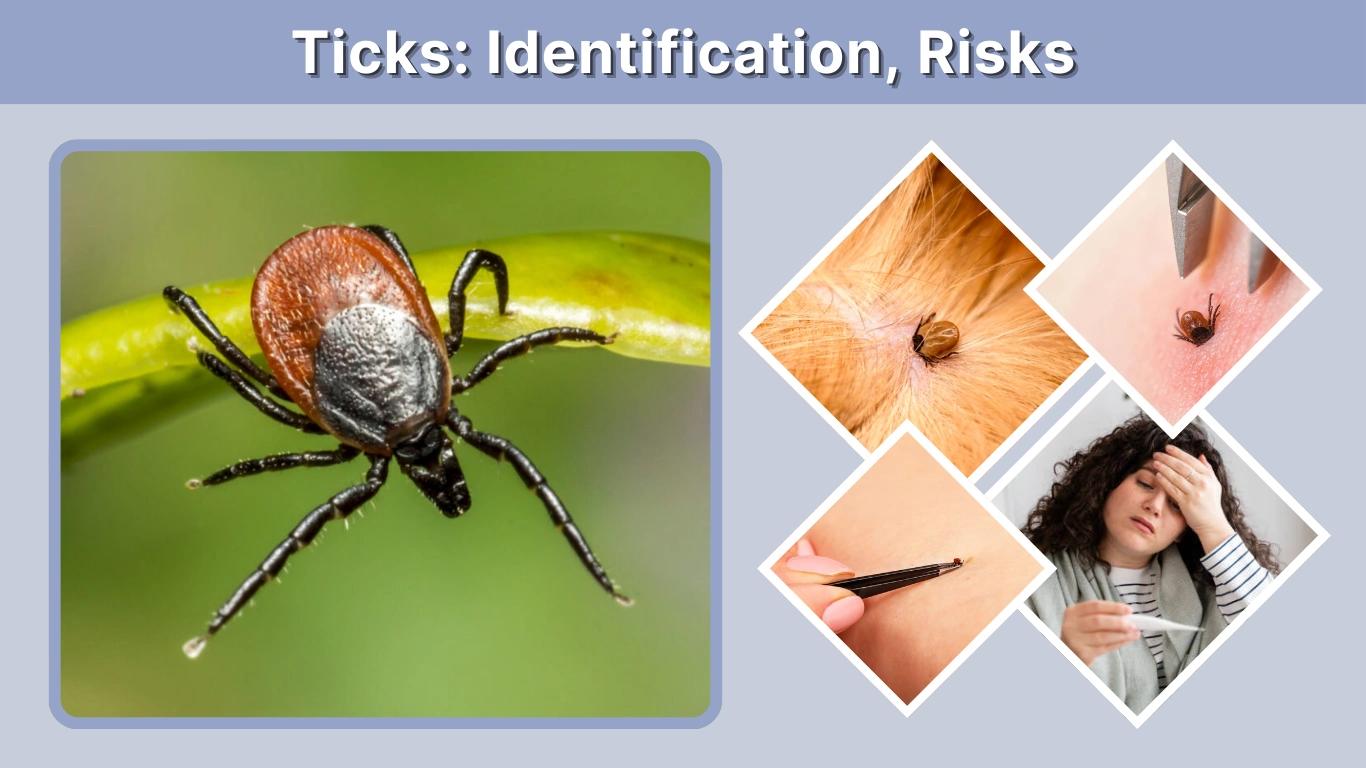
Ticks are small parasitic arachnids that feed on the blood of animals and humans. Although tiny, they can transmit serious diseases through their bites. Ticks are commonly found in grassy fields, forests, gardens, and areas with wildlife. Understanding how ticks live, how they bite, and the risks they pose is essential for protecting yourself and your pets. This guide explains what ticks are, their types, life cycle, and what happens when a tick bites.
What Are Ticks?
Definition and Basic Characteristics
Ticks are tiny external parasites that belong to the arachnid family, which also includes spiders and mites. Unlike insects, ticks have eight legs and a hard or soft body depending on the species. They survive by attaching to a host—such as mammals, birds, reptiles, or humans—and feeding on blood.
Ticks vary in size depending on their life stage. An unfed tick can be as small as a poppy seed, but after feeding it can swell to the size of a small grape. Because of their small size, ticks can easily go unnoticed when they attach to the skin.
How Ticks Survive and Feed
Ticks cannot jump or fly. Instead, they wait on grass or leaves and use a behavior called “questing.” During questing, ticks stretch their front legs outward and wait for a passing host to brush against them.
Once a host is found, the tick crawls onto the skin and searches for a suitable place to bite. Common attachment areas include:
- Behind the ears
- Under the arms
- Around the waist
- Behind the knees
- In the scalp or hairline
Ticks use specialized mouthparts to pierce the skin and anchor themselves while feeding. Some ticks can remain attached for several days while slowly drawing blood.
Where Ticks Are Commonly Found
Ticks thrive in warm, humid environments and are often found in areas with dense vegetation. Common tick habitats include:
- Forests and wooded areas
- Tall grass and shrubs
- Leaf litter on the ground
- Parks and hiking trails
- Gardens and yards with wildlife activity
They are most active during spring, summer, and early fall, although in some regions ticks can remain active year-round.
Types of Ticks
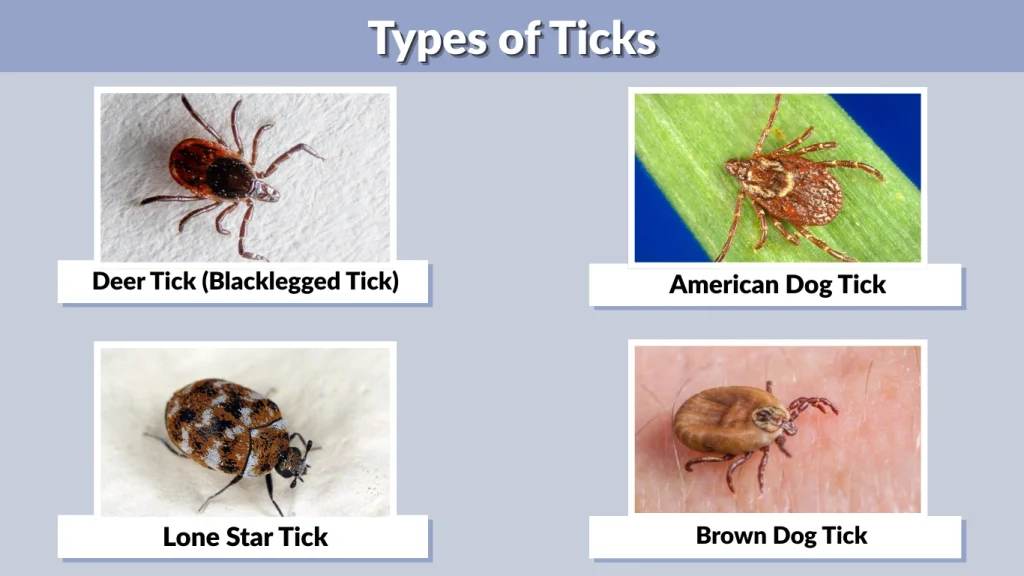
There are hundreds of tick species worldwide, but only a few commonly bite humans and animals. Some species are also known to transmit diseases.
Deer Tick (Blacklegged Tick)
The deer tick, also called the blacklegged tick, is one of the most well-known species because it spreads Lyme disease. These ticks are very small and difficult to spot.
Key characteristics include:
- Dark brown to black legs
- Small body size
- Common in wooded and grassy areas
Deer ticks are commonly found in North America and parts of Europe and Asia.
American Dog Tick
The American dog tick is larger than the deer tick and commonly feeds on dogs, wildlife, and humans.
Characteristics include:
- Brown body with white or gray markings
- Larger size compared to deer ticks
- Common in grassy fields and trails
These ticks are known to transmit Rocky Mountain spotted fever.
Lone Star Tick
The lone star tick gets its name from the single white spot found on the back of adult females.
Important features:
- Aggressive feeding behavior
- Common in southeastern regions
- Can transmit multiple diseases
Some studies also link lone star tick bites to alpha-gal syndrome, a condition that causes an allergy to red meat.
Brown Dog Tick
The brown dog tick mainly feeds on dogs but can also bite humans in some cases.
Key facts:
- Reddish-brown color
- Often found in homes, kennels, and dog shelters
- Can survive indoors more easily than many other tick species
Because they live close to pets, they can become a persistent problem in households with dogs.
Differences Between Tick Species
Different tick species vary in:
- Size and color
- Preferred hosts
- Disease transmission risks
- Habitat preferences
Correct identification is important because certain species are more likely to carry harmful diseases.
Life Cycle of Ticks
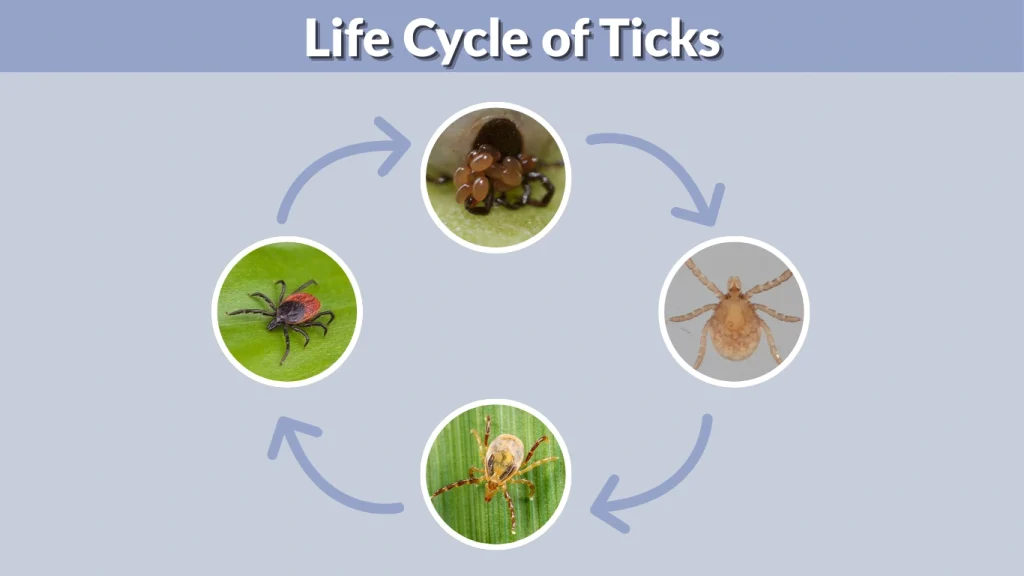
Ticks go through four life stages, and each stage requires a blood meal in order to develop to the next stage.
Egg Stage
The life cycle begins when a female tick lays thousands of eggs in the environment, usually in soil or leaf litter. After laying eggs, the female tick typically dies.
These eggs hatch after several weeks, depending on environmental conditions.
Larva Stage
When eggs hatch, they become larvae, often called “seed ticks.”
Larvae:
- Have six legs instead of eight
- Are extremely small
- Must find a host for their first blood meal
Common hosts for larvae include small animals such as rodents or birds.
Nymph Stage
After feeding, the larva molts into a nymph. At this stage:
- The tick has eight legs
- It becomes slightly larger
- It seeks another host for feeding
Nymphs are responsible for many tick-borne infections because they are very small and difficult to detect.
Adult Tick Stage
Once the nymph feeds, it develops into an adult tick.
Adult ticks typically:
- Seek larger hosts such as deer, dogs, or humans
- Mate after feeding
- Allow females to produce thousands of eggs
How Long Ticks Live
Ticks have a surprisingly long life cycle. Depending on the species and environmental conditions, their full life cycle can last two to three years.
During this time, ticks spend most of their life waiting for hosts rather than actively feeding.
Tick Bites: What Happens When a Tick Bites You
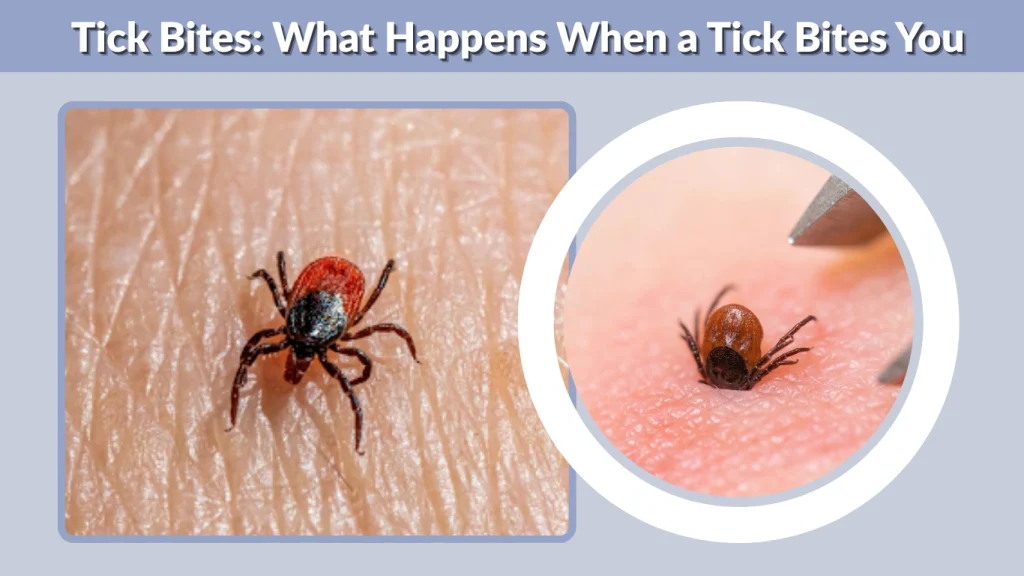
How Ticks Attach to the Skin
Ticks attach using a barbed feeding tube called a hypostome. This structure helps the tick anchor itself firmly into the skin.
Ticks also release a small amount of saliva that contains substances to:
- Prevent blood clotting
- Reduce pain during the bite
- Help them feed for long periods
Because of this, many people do not feel a tick bite immediately.
Signs of a Tick Bite
Tick bites are often painless and may go unnoticed at first. However, common signs include:
- A small red bump at the bite site
- Mild swelling
- Itching or irritation
- A tick attached to the skin
In some cases, the bite area may develop a larger rash.
Common Symptoms After a Bite
Some people experience mild symptoms after a tick bite, such as:
- Redness around the bite
- Slight discomfort
- Temporary itching
However, if a tick carries disease-causing bacteria or parasites, symptoms may develop days or weeks later.
Diseases Caused by Ticks
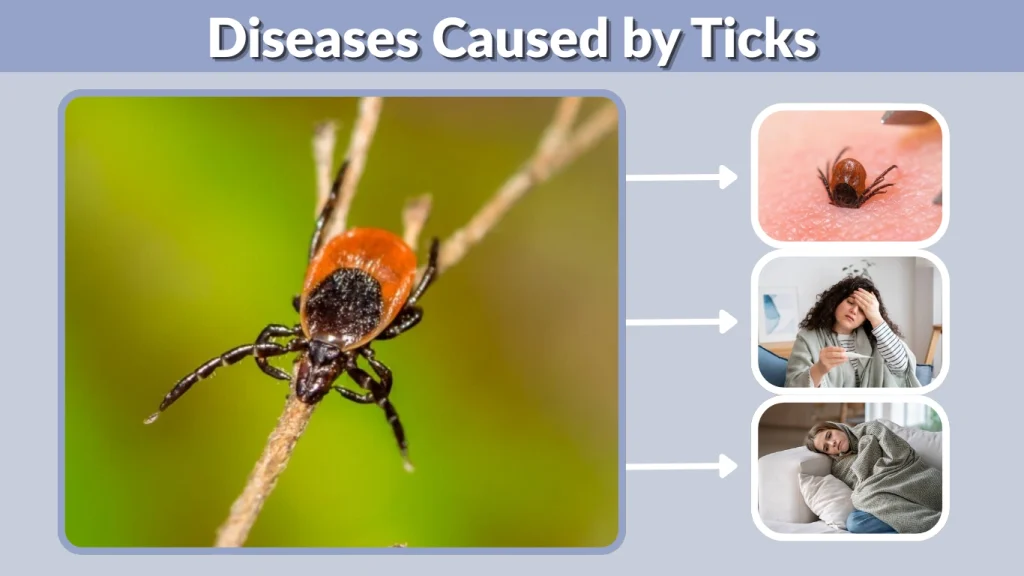
Ticks are known to transmit a variety of tick-borne diseases that can affect humans and animals. These diseases occur when infected ticks pass bacteria, viruses, or parasites into the bloodstream during feeding. While not every tick carries disease, some species are responsible for serious infections that require medical attention.
Lyme Disease
Lyme disease is the most widely known tick-borne illness. It is primarily transmitted by blacklegged ticks (deer ticks).
Common symptoms include:
- A circular “bull’s-eye” rash
- Fever and chills
- Fatigue
- Headache
- Muscle and joint pain
If untreated, Lyme disease can lead to long-term joint, heart, and nervous system problems.
Rocky Mountain Spotted Fever
This disease is transmitted mainly by the American dog tick. Rocky Mountain spotted fever is a serious bacterial infection that can become life-threatening without treatment.
Symptoms often include:
- Sudden fever
- Severe headache
- Rash that spreads across the body
- Nausea and vomiting
Early treatment with antibiotics greatly improves recovery.
Babesiosis
Babesiosis is caused by microscopic parasites that infect red blood cells. It is spread by deer ticks and can cause symptoms such as:
- Fever
- Chills
- Sweating
- Fatigue
- Muscle aches
Some people may have mild symptoms, but severe cases can occur in individuals with weakened immune systems.
Ehrlichiosis
Ehrlichiosis is another bacterial illness transmitted by certain tick species, including the lone star tick.
Common symptoms include:
- Fever
- Headache
- Muscle pain
- Fatigue
- Confusion in severe cases
Prompt medical treatment is important to prevent complications.
Other Tick-Borne Illnesses
Ticks can also transmit several other infections, including:
- Tularemia
- Powassan virus
- Anaplasmosis
Although these diseases are less common, they can still pose significant health risks in areas where ticks are widespread.
How to Remove a Tick Safely
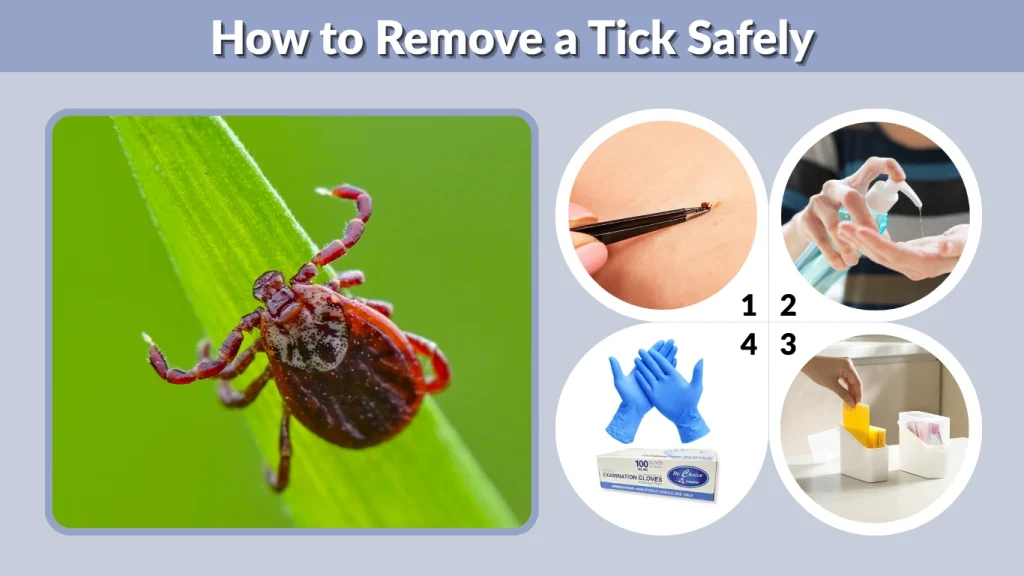
Removing a tick quickly and properly reduces the risk of infection. The longer a tick remains attached, the greater the chance it may transmit disease.
Tools Needed for Tick Removal
To safely remove a tick, you will need:
- Fine-tipped tweezers
- Gloves (optional)
- Antiseptic or alcohol
- A small container or sealed bag
These tools help ensure safe removal and proper cleaning of the bite area.
Step-by-Step Tick Removal Process
Follow these steps to remove a tick safely:
- Use fine-tipped tweezers to grasp the tick as close to the skin as possible.
- Pull upward with steady, even pressure.
- Avoid twisting or jerking the tick.
- Once removed, clean the bite area with soap, water, or antiseptic.
- Dispose of the tick by placing it in alcohol or sealing it in a container.
Proper removal helps prevent parts of the tick from remaining in the skin.
What NOT to Do When Removing a Tick
Certain methods can make the situation worse. Avoid:
- Burning the tick with a match
- Applying petroleum jelly or nail polish
- Twisting the tick forcefully
These methods may cause the tick to release more infectious material into the skin.
Aftercare Following Tick Removal
After removing a tick, monitor the bite area for several days. Watch for signs such as:
- Increasing redness
- Rash formation
- Fever or flu-like symptoms
If unusual symptoms appear, it is best to consult a healthcare professional.
Tick Prevention Tips
Preventing tick bites is one of the best ways to reduce the risk of tick-borne diseases.
Preventing Ticks in Outdoor Areas
Ticks thrive in tall grass and shaded areas. To reduce tick populations around your home:
- Keep grass short and trimmed
- Remove leaf litter and brush
- Create clear walking paths in wooded areas
- Keep play areas away from dense vegetation
These steps can significantly reduce tick exposure.
Clothing and Personal Protection
When spending time outdoors, wearing protective clothing can help prevent ticks from reaching the skin.
Recommended practices include:
- Wearing long sleeves and long pants
- Tucking pants into socks
- Choosing light-colored clothing to spot ticks easily
- Wearing closed shoes instead of sandals
These simple precautions can make it easier to detect ticks early.
Using Tick Repellents
Tick repellents provide an additional layer of protection.
Common repellents include:
- DEET
- Picaridin
- Permethrin-treated clothing
Always follow instructions on repellent products to ensure safe and effective use.
Checking for Ticks After Outdoor Activities
After spending time outdoors, carefully check your body for ticks. Pay close attention to areas such as:
- Under the arms
- Behind the knees
- Around the waist
- In the hairline and scalp
Early detection and removal greatly reduce the risk of disease.
Ticks on Pets
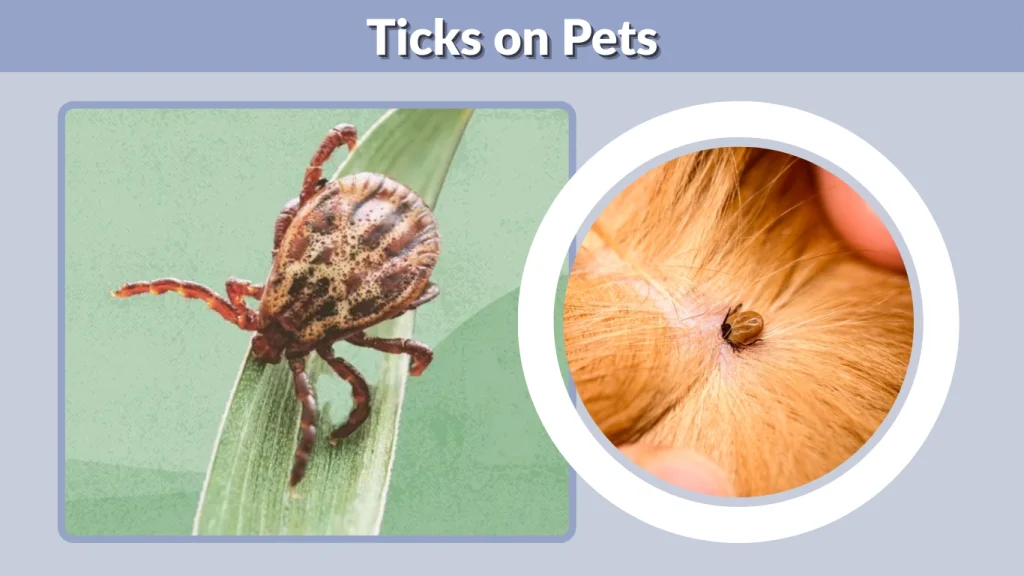
Pets, especially dogs, are frequent targets for ticks because they spend time outdoors and often explore grassy areas.
Why Dogs and Cats Attract Ticks
Animals attract ticks because they provide:
- Warm body temperature
- Thick fur for hiding
- Frequent exposure to outdoor environments
Ticks may attach around the ears, neck, paws, and belly of pets.
Signs Your Pet Has Ticks
Common signs include:
- Excessive scratching or biting
- Small bumps on the skin
- Visible ticks in the fur
- Skin irritation or redness
Regularly checking your pet’s coat can help detect ticks early.
Removing Ticks From Pets
Tick removal for pets is similar to human removal. Use tweezers or a tick removal tool and gently pull the tick out.
After removal:
- Clean the bite area
- Monitor your pet for unusual symptoms
- Contact a veterinarian if needed
Tick Prevention for Pets
Pet owners can reduce tick risks by using:
- Tick prevention collars
- Veterinary-approved medications
- Regular grooming and inspection
These steps help protect pets from tick infestations.
When to See a Doctor After a Tick Bite
Most tick bites are harmless, but medical attention may be necessary in some cases.
Warning Symptoms
Seek medical advice if you experience:
- Fever or chills
- Severe headache
- Muscle or joint pain
- Rash spreading from the bite area
- Fatigue lasting several days
These symptoms may indicate a tick-borne illness.
Possible Medical Treatments
Doctors may prescribe antibiotics or other treatments depending on the suspected infection. Early treatment is usually very effective.
Testing for Tick-Borne Diseases
If symptoms appear, healthcare providers may perform blood tests to check for tick-related infections. Early diagnosis helps prevent complications.
FAQs
Can ticks jump or fly?
No. Ticks cannot jump or fly. They attach to hosts by climbing onto them from vegetation.
How long does a tick stay attached?
Ticks may stay attached for several hours to several days while feeding.
Are all ticks dangerous?
Not all ticks carry disease, but some species can transmit infections, which is why tick bites should always be taken seriously.
Do ticks die after biting?
Unlike some insects, ticks do not die after biting. They detach after feeding and may continue their life cycle.
Conclusion
Ticks may be small, but they can pose serious health risks to both humans and animals. Understanding how ticks live, where they are found, and how they spread disease is essential for staying safe. By learning how to remove ticks properly, checking for bites after outdoor activities, and using preventive measures, you can greatly reduce the risk of tick-borne illnesses. Staying informed and prepared is the best way to protect yourself, your family, and your pets from ticks.
