
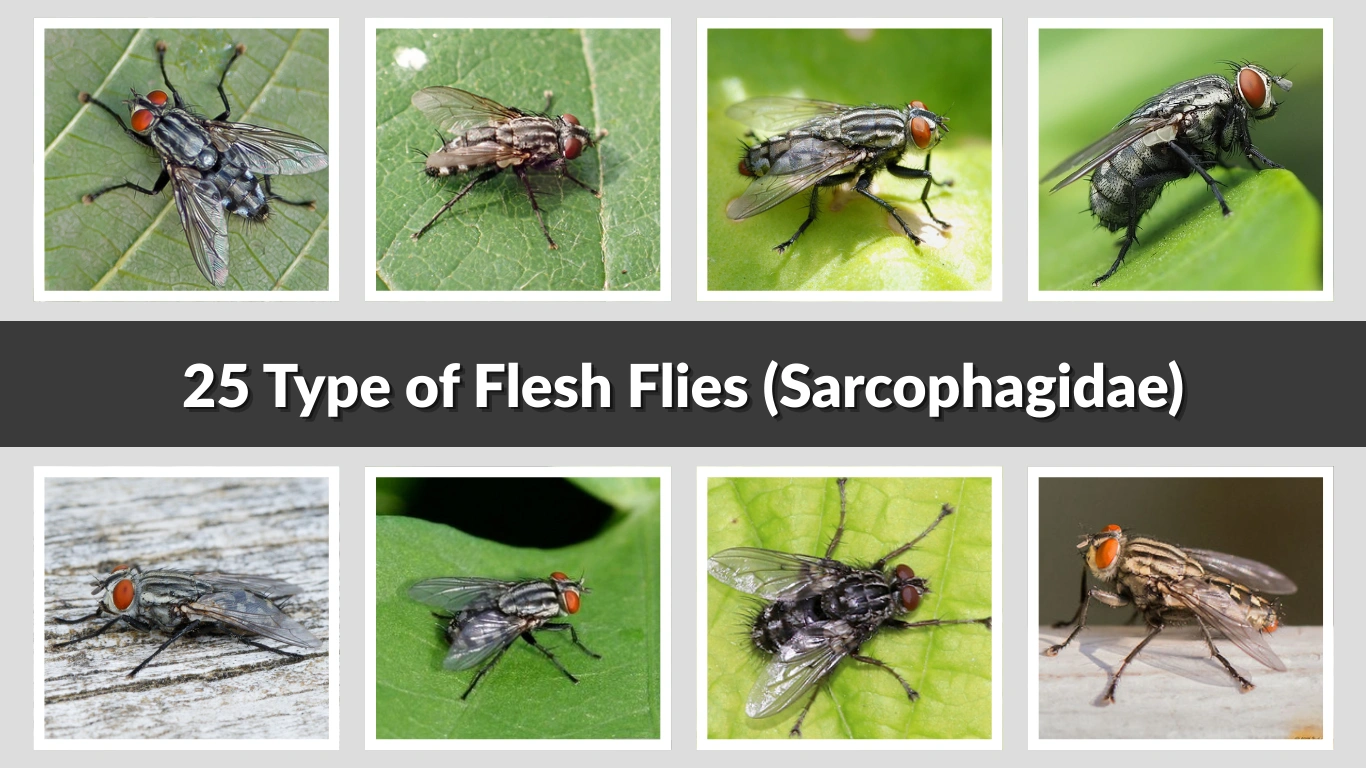
Flesh flies are a diverse group of flies known for their association with decaying organic matter, carrion, and animal waste. They play a crucial role in decomposition and nutrient recycling while also providing valuable information for forensic studies. This article explores 25 different species of flesh flies, highlighting their identification features, habitats, life cycles, and behaviors, helping readers understand their ecological importance and interactions with humans.
1. Sarcophaga carnaria
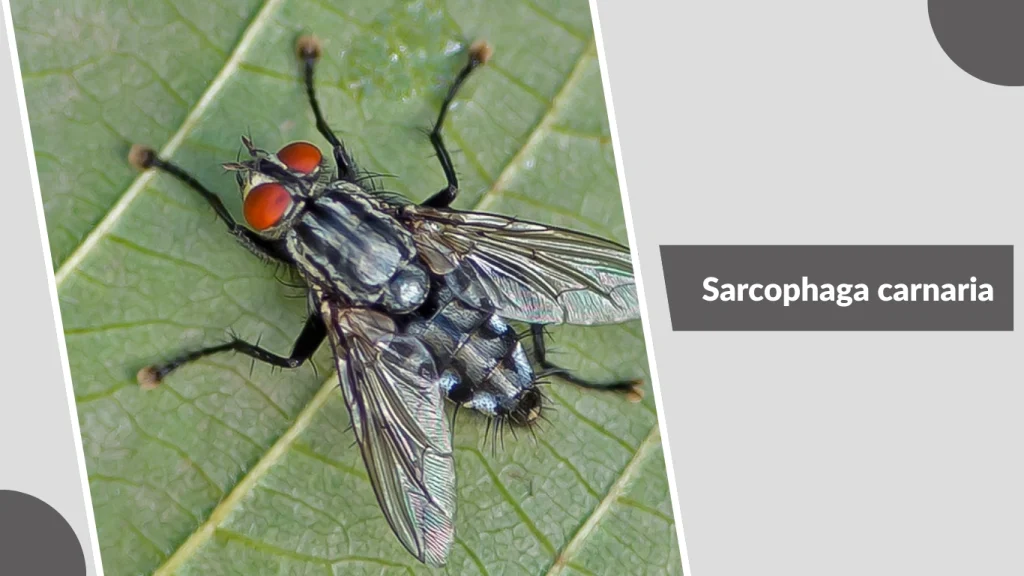
Sarcophaga carnaria is one of the most well-known species of flesh flies, commonly found across Europe and parts of Asia. These flies are associated with decaying organic matter and play a role in decomposition, making them important in natural recycling processes.
Identification
- Medium-sized fly, about 10–14 mm long
- Grey body with three dark longitudinal stripes on the thorax
- Red compound eyes
- Chequered grey-and-black abdomen
- Bristly body with prominent setae
Habitat
This species is usually found in open fields, near garbage dumps, carrion, and decaying matter. It is also present in both rural and urban environments where it can easily locate organic waste.
Life Cycle
Females of Sarcophaga carnaria are larviparous, meaning they deposit live larvae instead of eggs. These larvae immediately begin feeding on decaying flesh or other organic material, completing their development rapidly under warm conditions.
Behavior and Impact
These flies are active during warm months and are strong fliers, often visiting open wounds or exposed meat to deposit larvae. While they play an essential role in breaking down organic material, they can also be pests when they infest stored meat or come into close contact with humans and animals.
2. Sarcophaga africa

Sarcophaga africa is a widespread flesh fly species commonly seen in warmer regions. It thrives in environments rich in organic matter and plays a significant role in decomposition, helping recycle nutrients back into the ecosystem.
Identification
- Medium to large-sized fly, about 12–15 mm long
- Thorax with three distinct black longitudinal stripes
- Abdomen patterned with a checkerboard of grey and black
- Bright red eyes with fine bristles around the head
- Robust, bristly body typical of flesh flies
Habitat
This species is often found in urban areas, rural farmlands, and natural environments where carrion, garbage, and decaying matter are present. It adapts well to human settlements and is common in warmer climates.
Life Cycle
Like other flesh flies, Sarcophaga africa is larviparous. Females deposit live larvae directly onto decaying meat, carcasses, or animal waste. The larvae develop quickly, completing their life cycle faster in hot conditions.
Behavior and Impact
They are strong fliers and are attracted to decaying materials and open wounds. While beneficial as decomposers, their close association with waste and carrion makes them potential carriers of pathogens, posing hygiene concerns in human-inhabited areas.
3. Sarcophaga haemorrhoidalis
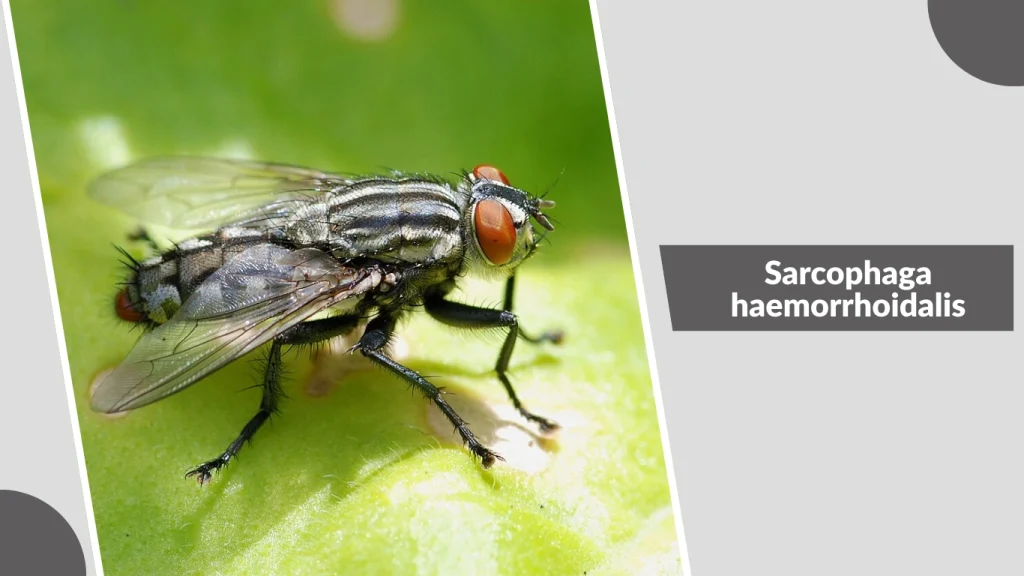
Sarcophaga haemorrhoidalis is a common species of flesh fly found in many parts of the world, especially in temperate and tropical regions. It is frequently encountered near human habitation due to its attraction to waste and decaying organic matter.
Identification
- Medium-sized fly, about 10–14 mm long
- Thorax marked with three dark longitudinal stripes
- Abdomen with a grey-and-black checkered pattern
- Red compound eyes
- Bristly body with strong setae
Habitat
This species prefers urban and rural environments, particularly areas with garbage, carcasses, and decaying animal remains. It can often be seen resting on walls, fences, or near waste disposal areas.
Life Cycle
Sarcophaga haemorrhoidalis is larviparous, with females depositing live larvae onto suitable organic material. The larvae feed on carrion, waste, or decaying food and develop quickly in warm weather.
Behavior and Impact
They are highly opportunistic and often visit exposed food or wounds. Although their ecological role in decomposition is valuable, their tendency to contact human environments raises concerns about disease transmission and contamination.
4. Sarcophaga bullata
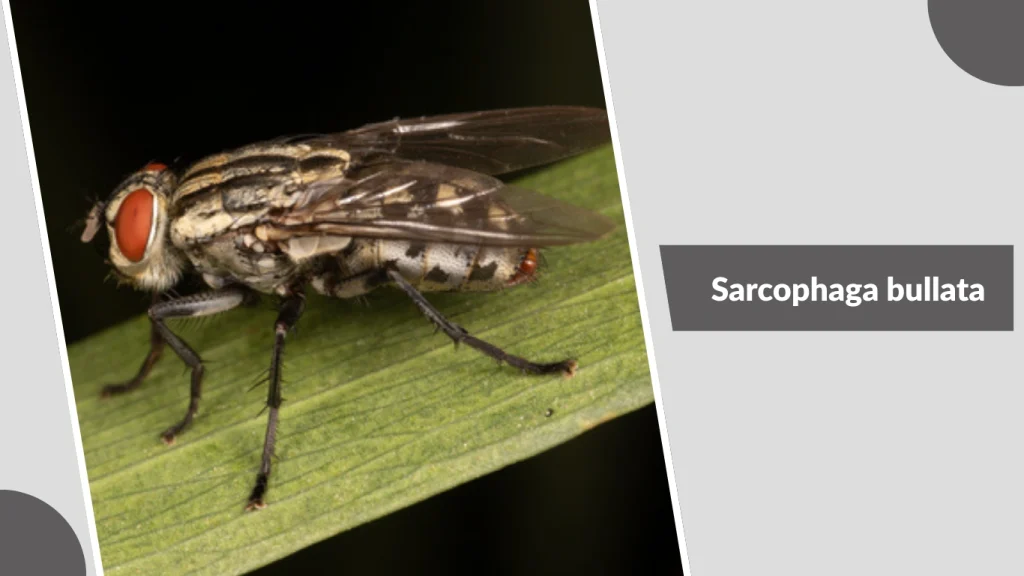
Sarcophaga bullata is a widespread species of flesh fly commonly studied in scientific research due to its predictable life cycle and ease of laboratory rearing. It is often encountered near decaying matter, where it contributes significantly to the process of decomposition.
Identification
- Size ranges between 10–15 mm in length
- Grey thorax with three bold black stripes
- Abdomen with characteristic grey-and-black checkered pattern
- Red eyes with dense bristles around the head
- Sturdy, bristly body typical of flesh flies
Habitat
Sarcophaga bullata thrives in a variety of environments, from urban settings to woodlands and meadows. It is most abundant near carrion, animal waste, and garbage dumps. Because of its adaptability, it is frequently seen near human habitation.
Life Cycle
This species is larviparous, with females depositing live larvae directly onto decomposing meat or carcasses. The larvae undergo rapid development, especially in warm weather, before pupating in soil or hidden debris. Adults emerge within a short time, making the species’ cycle efficient and quick.
Behavior and Impact
Sarcophaga bullata is a strong flyer and highly attracted to carrion and decaying organic waste. While beneficial as a decomposer, its presence around human settlements poses hygiene concerns. It may infest meat products if improperly stored, causing economic loss. In addition, due to its reliable development stages, this species is often used in laboratory studies related to insect physiology and development.
5. Sarcophaga peregrina
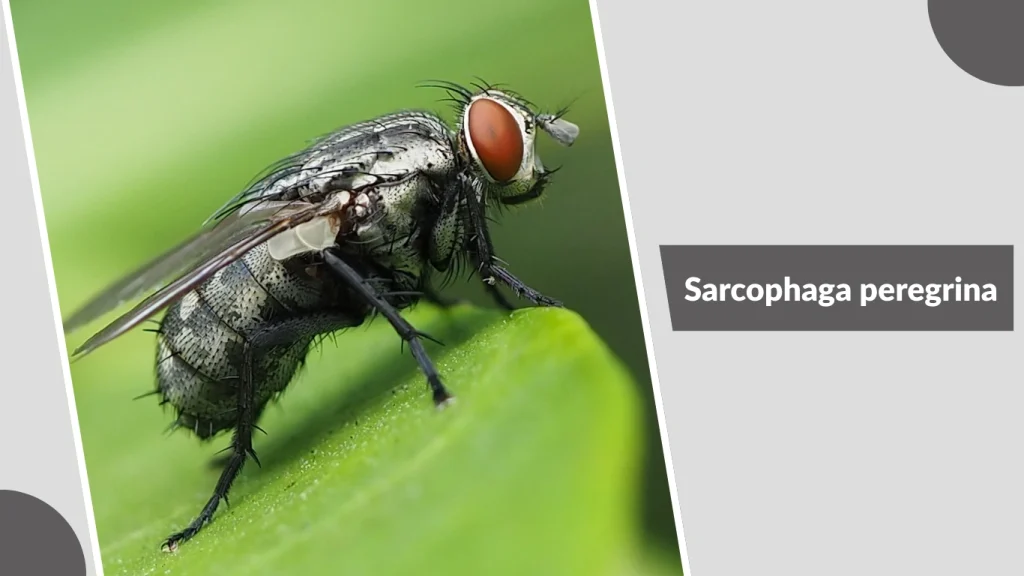
Sarcophaga peregrina is a widely distributed flesh fly species, especially common in Asia, Africa, and parts of Europe. It thrives in warm climates and is often found near human settlements, making it one of the more frequently observed members of the Sarcophagidae family.
Identification
- Medium-sized fly, about 11–14 mm in length
- Thorax with three distinct black stripes running lengthwise
- Abdomen with grey-and-black checkered patterns
- Reddish eyes with short surrounding bristles
- Robust, bristly body structure
Habitat
This species flourishes in both urban and rural environments, especially near markets, garbage sites, and carrion. It is also commonly found in agricultural lands where animal waste and decaying matter are abundant.
Life Cycle
Like other flesh flies, Sarcophaga peregrina is larviparous. Females deposit live larvae directly onto carcasses, decaying organic waste, or excrement. The larvae quickly feed and grow before pupating in nearby soil or debris. Adults emerge within days to weeks depending on environmental conditions.
Behavior and Impact
Sarcophaga peregrina is highly opportunistic and often comes into contact with humans. It is known to infest exposed food, animal waste, and open wounds, which can increase the risk of pathogen transmission. Despite these negative impacts, it plays an essential role in natural recycling by accelerating the decomposition of organic matter.
6. Sarcophaga crassipalpis
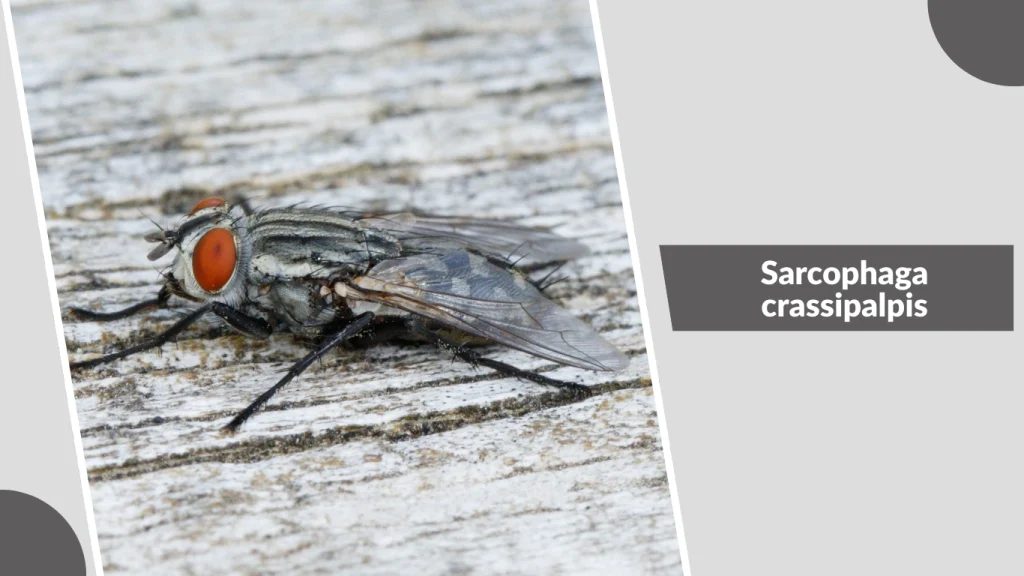
Sarcophaga crassipalpis is a well-studied flesh fly species that has gained importance in entomological research, particularly in studies of diapause and insect physiology. Naturally, it inhabits areas rich in decaying matter, where it contributes to decomposition and nutrient recycling.
Identification
- Medium-sized fly, about 12–15 mm long
- Thorax with three dark longitudinal stripes
- Grey-and-black checkered abdomen
- Red compound eyes with dense bristles
- Strong, bristly body adapted for survival in diverse habitats
Habitat
This species is commonly found in both natural and human-influenced environments. It thrives near carrion, animal waste, and garbage dumps, but can also appear around markets, slaughterhouses, and homes where organic waste is present.
Life Cycle
Sarcophaga crassipalpis is larviparous, meaning the female gives birth to live larvae rather than laying eggs. The larvae feed on decaying tissue and develop rapidly before pupating in the soil or nearby concealed places. Its development cycle is well-documented, which is why it is often used in laboratory studies.
Behavior and Impact
This species is resilient and can tolerate a wide range of environmental conditions. It is active during warmer months and quickly locates decaying materials for breeding. While ecologically beneficial in decomposition, its presence around human settlements can pose hygiene concerns. In scientific contexts, Sarcophaga crassipalpis is particularly valuable for experimental research due to its predictable growth patterns.
7. Sarcophaga aldrichi
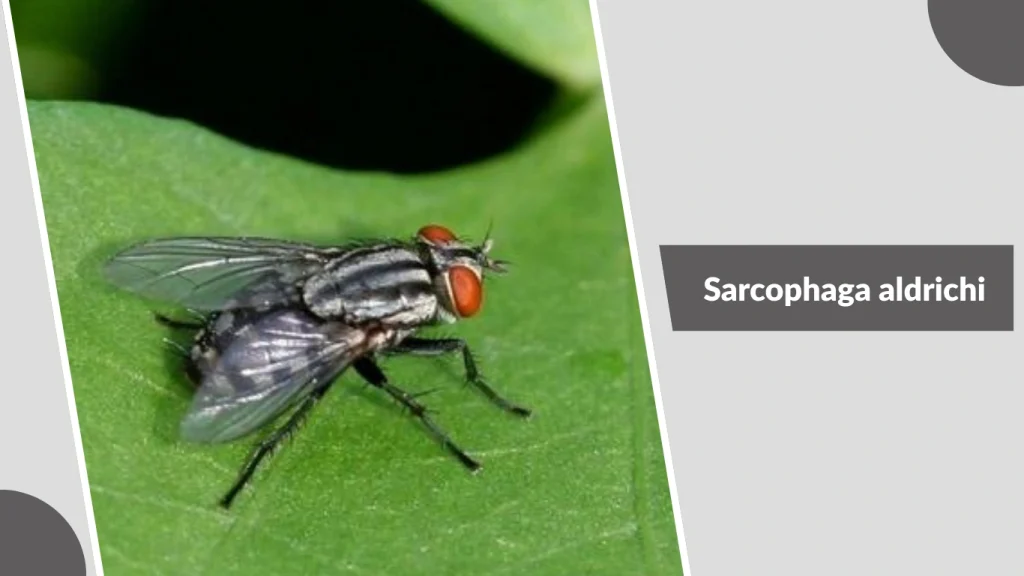
Sarcophaga aldrichi is a distinctive flesh fly species, often recognized for its unique ecological role. Unlike many flesh flies that mainly target carrion, this species is also a known parasite of forest tent caterpillars, helping regulate their populations in North America.
Identification
- Medium-sized fly, typically 10–14 mm in length
- Thorax grey with three longitudinal black stripes
- Abdomen patterned with grey-and-black checkerboard markings
- Reddish compound eyes with surrounding bristles
- Strong, bristly body with typical Sarcophagid features
Habitat
This species is commonly found in forested regions, especially where forest tent caterpillars are abundant. It can also occur in urban and rural landscapes, often near carrion, waste, and wooded areas.
Life Cycle
Unlike many flesh flies, Sarcophaga aldrichi frequently deposits larvae directly on living forest tent caterpillars, where the maggots burrow inside and develop as internal parasites. They may also utilize carrion or decaying organic matter when available. Pupation usually occurs in soil or sheltered debris.
Behavior and Impact
Sarcophaga aldrichi plays an important ecological role by naturally controlling forest tent caterpillar outbreaks, preventing defoliation of trees. While beneficial in forest ecosystems, its attraction to carrion and decaying waste still makes it a nuisance in human environments. Its dual role as both a decomposer and biological control agent makes it unique among flesh flies.
8. Sarcophaga ruficornis
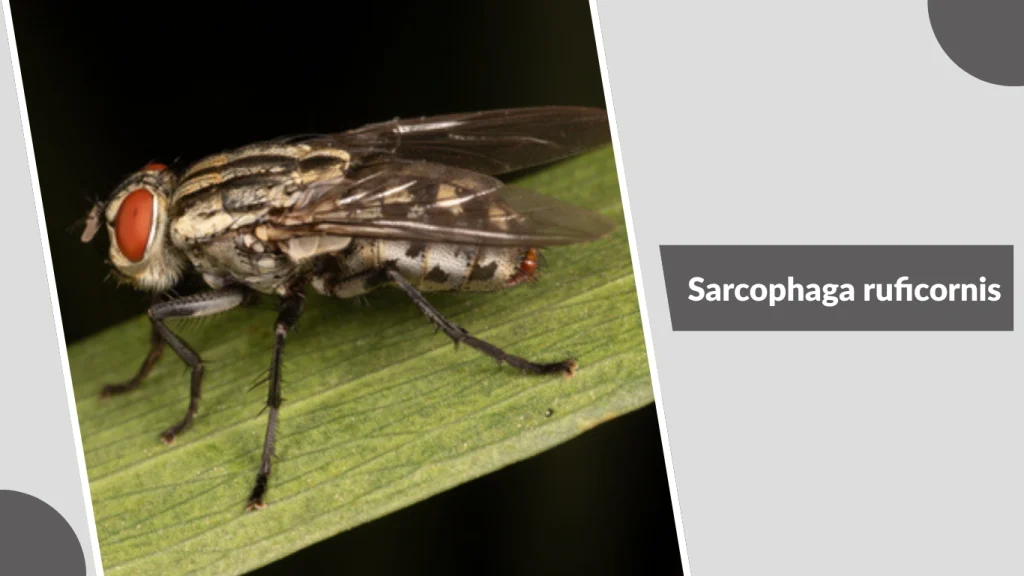
Sarcophaga ruficornis is a flesh fly species widely distributed across Asia, Europe, and Africa. It is commonly associated with decaying organic matter and animal waste, making it an important species in decomposition and nutrient cycling.
Identification
- Medium-sized fly, about 11–14 mm long
- Grey thorax with three prominent black stripes
- Abdomen with a grey-and-black checkered pattern
- Red compound eyes with dense bristles
- Stout, bristly body characteristic of flesh flies
Habitat
This species is adaptable and can be found in urban, rural, and natural habitats. It favors areas with carrion, garbage, animal feces, and decaying organic matter. Markets, slaughterhouses, and farms are common locations for this species.
Life Cycle
Sarcophaga ruficornis is larviparous, depositing live larvae directly onto suitable organic material. The larvae feed rapidly on decaying matter, then pupate in soil or protected areas. Development is faster in warm and humid conditions.
Behavior and Impact
This species is highly opportunistic, often visiting exposed food, animal waste, or wounds. It plays a significant role in decomposition, but its presence near humans can contribute to contamination and potential disease transmission. Ecologically, it helps recycle nutrients back into the soil, supporting ecosystem health.
9. Sarcophaga tibialis
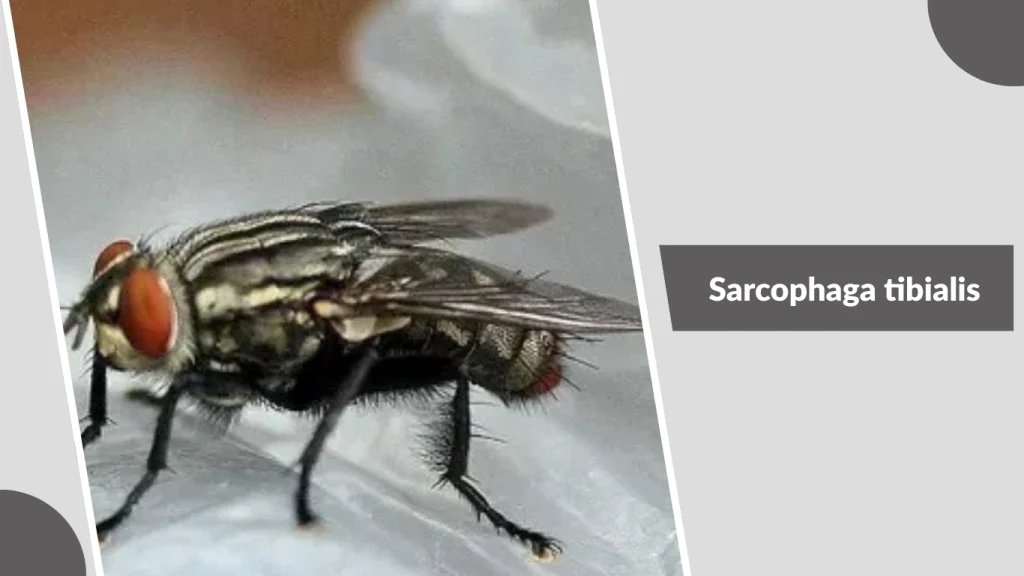
Sarcophaga tibialis is a flesh fly species commonly found in Europe and parts of Asia. It is closely associated with decaying organic matter, making it an important contributor to the decomposition process.
Identification
- Medium-sized fly, approximately 10–13 mm in length
- Grey thorax with three distinct black stripes
- Abdomen with checkered grey-and-black pattern
- Red compound eyes with surrounding bristles
- Robust and bristly body typical of Sarcophagidae
Habitat
This species thrives in a variety of environments including urban areas, farmlands, forests, and near animal waste. It is often observed around carrion, garbage dumps, and areas where decaying organic material is abundant.
Life Cycle
Sarcophaga tibialis is larviparous. Females deposit live larvae directly onto decaying material. The larvae feed quickly, grow, and pupate in soil or hidden debris. Adults emerge in a relatively short period, with life cycle speed dependent on temperature and humidity.
Behavior and Impact
This species is highly attracted to carrion and decaying matter, which accelerates nutrient recycling in ecosystems. While beneficial ecologically, it can become a nuisance near human habitats and food sources. Its predictable life cycle also makes it useful in research related to decomposition studies.
10. Sarcophaga haemorrhoidalis
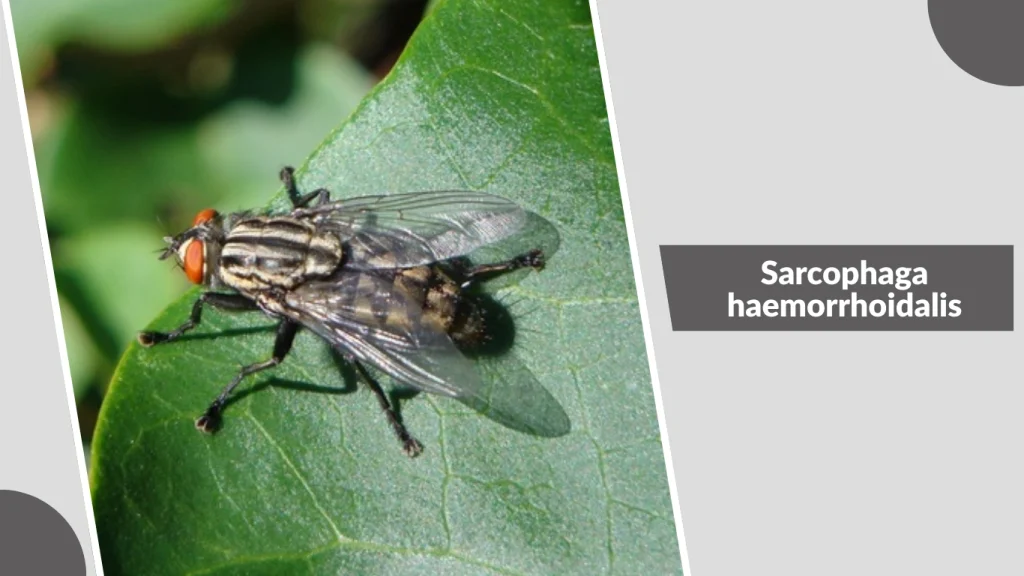
Sarcophaga haemorrhoidalis is a cosmopolitan flesh fly species, often found in tropical and temperate regions. It is closely associated with decaying organic matter and animal excrement, playing a significant role in decomposition.
Identification
- Medium-sized fly, around 10–13 mm long
- Thorax grey with three prominent dark stripes
- Abdomen with a checkered grey-and-black pattern
- Red eyes with dense bristles
- Stout, bristly body typical of Sarcophagidae
Habitat
This species is highly adaptable, inhabiting urban areas, farms, forests, and places with abundant decaying matter. Common locations include garbage dumps, slaughterhouses, and areas with animal waste.
Life Cycle
Sarcophaga haemorrhoidalis is larviparous, depositing live larvae on carrion, feces, or decaying organic material. The larvae feed rapidly, grow, and pupate in soil or concealed areas. The development cycle is accelerated in warm, humid conditions.
Behavior and Impact
This flesh fly species is ecologically important for breaking down organic material and recycling nutrients. However, it can pose hygiene concerns near humans and livestock due to its attraction to waste and carrion. Its presence helps in natural decomposition but also requires management in human-occupied areas.
11. Sarcophaga bullata
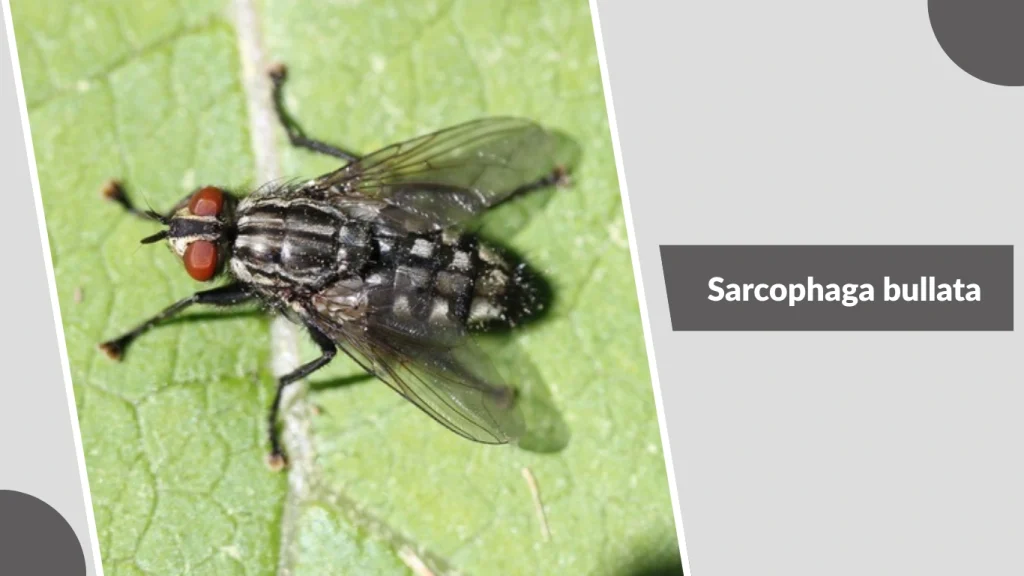
Sarcophaga bullata, commonly known as the grey flesh fly, is a species widely distributed in North America. It is frequently used in scientific research, particularly in studies of decomposition, insect development, and forensic entomology.
Identification
- Medium-sized fly, about 12–15 mm long
- Grey thorax with three black longitudinal stripes
- Abdomen checkered with grey and black patterns
- Red compound eyes with bristles
- Robust, bristly body typical of flesh flies
Habitat
This species is highly adaptable and found in urban, rural, and natural settings. It is attracted to carrion, garbage, animal feces, and other decaying organic matter.
Life Cycle
Sarcophaga bullata is larviparous, depositing live larvae directly onto suitable organic substrates. Larvae feed on decaying material, then pupate in soil or sheltered areas. Its development is rapid in warm and humid environments.
Behavior and Impact
This species contributes significantly to decomposition and nutrient recycling. It is also valuable in research for studying growth rates and developmental patterns. While ecologically beneficial, it can become a nuisance in areas near humans and livestock.
12. Sarcophaga africa
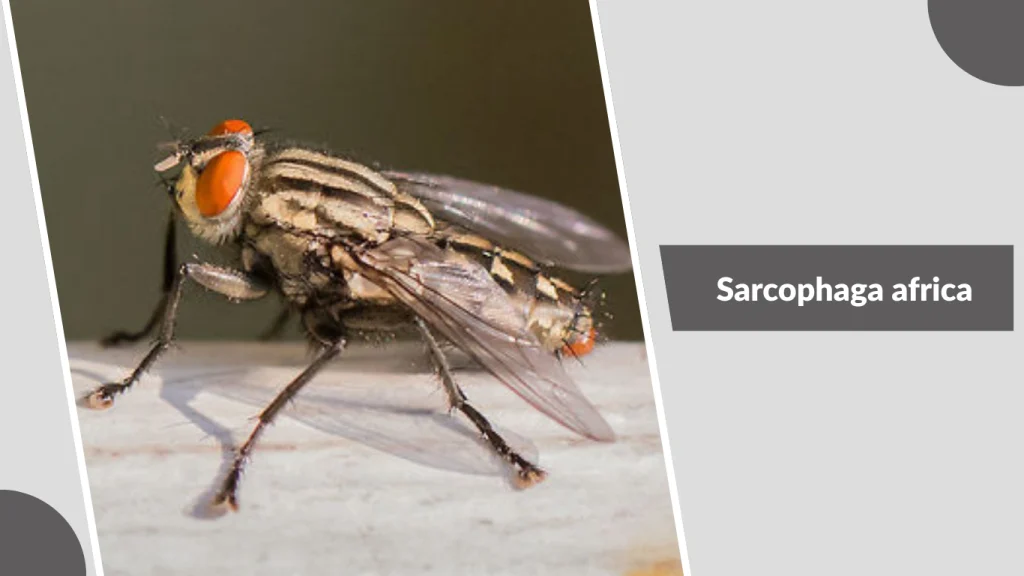
Sarcophaga africa is a flesh fly species predominantly found in Africa, with some records in the Middle East and southern Europe. It is commonly associated with decaying organic matter and plays a vital role in nutrient cycling.
Identification
- Medium-sized fly, approximately 11–14 mm in length
- Grey thorax with three dark stripes
- Abdomen with grey-and-black checkered pattern
- Red compound eyes with fine bristles
- Stout and bristly body typical of Sarcophagidae
Habitat
This species thrives in a variety of environments, including savannas, forests, farms, and urban areas. It is frequently observed around carrion, garbage, and animal waste.
Life Cycle
Sarcophaga africa is larviparous, depositing live larvae on decaying material. The larvae feed rapidly, pupate in soil or protected areas, and adults emerge after a short developmental period, which is influenced by environmental conditions.
Behavior and Impact
This species accelerates decomposition and nutrient recycling in ecosystems. It can also act as a mechanical vector of pathogens in human and livestock environments. Its ecological role is crucial for maintaining soil fertility and controlling organic waste naturally.
13. Sarcophaga variegata
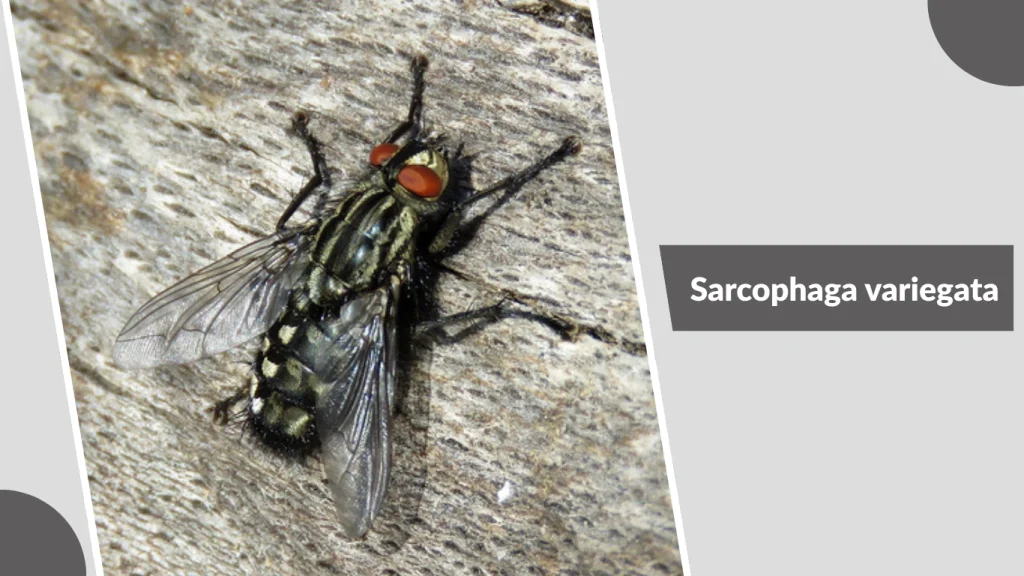
Sarcophaga variegata is a widely distributed flesh fly found in Europe, Asia, and parts of Africa. It is commonly associated with decaying organic matter and animal excrement, contributing to decomposition processes.
Identification
- Medium-sized fly, around 10–13 mm long
- Grey thorax with three dark longitudinal stripes
- Abdomen with a checkered grey-and-black pattern
- Red compound eyes with fine bristles
- Bristly and stout body typical of flesh flies
Habitat
This species is adaptable to a variety of environments including urban areas, farmlands, forests, and near decaying organic material. It is commonly found around carrion, garbage, and animal waste.
Life Cycle
Sarcophaga variegata is larviparous, depositing live larvae directly onto decaying organic matter. Larvae feed quickly, pupate in soil or hidden areas, and adult flies emerge after several days. Warm and humid conditions accelerate development.
Behavior and Impact
This species contributes to the breakdown of organic material and nutrient recycling. While ecologically beneficial, its attraction to human dwellings and livestock areas can pose hygiene concerns. It also serves as an indicator species in decomposition studies.
14. Sarcophaga impatiens
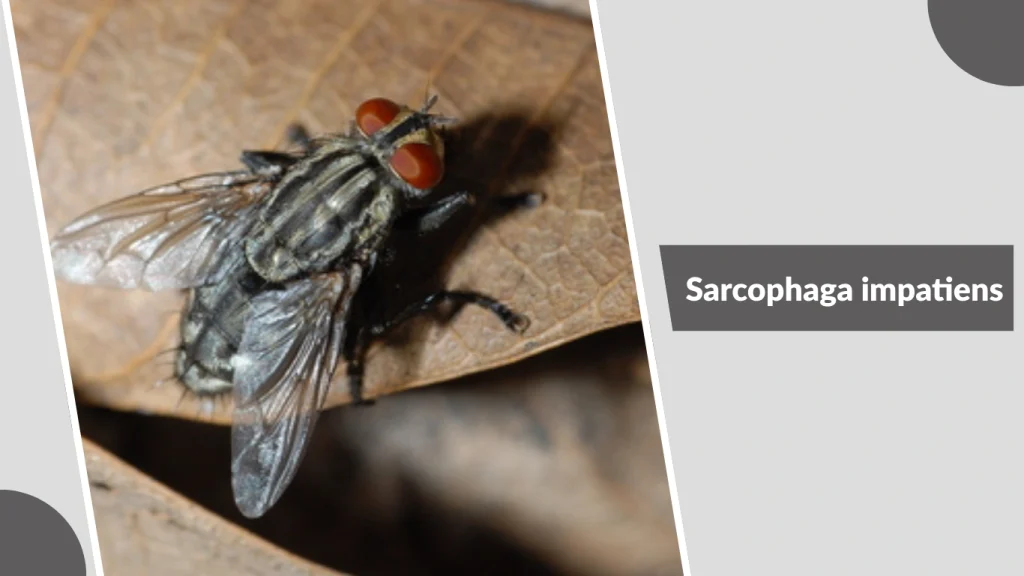
Sarcophaga impatiens is a flesh fly species commonly found in North America and parts of Europe. It is closely associated with decaying organic matter and plays a key role in decomposition.
Identification
- Medium-sized fly, approximately 11–14 mm long
- Grey thorax with three prominent black stripes
- Abdomen with a checkered grey-and-black pattern
- Red compound eyes with surrounding bristles
- Stout, bristly body characteristic of flesh flies
Habitat
This species inhabits a wide range of environments including urban areas, farmlands, forests, and places rich in decaying organic matter. It is often seen around garbage, carrion, and animal feces.
Life Cycle
Sarcophaga impatiens is larviparous, depositing live larvae directly onto decaying material. Larvae feed rapidly, pupate in soil or protected areas, and adults emerge in a few days. Development speed depends on temperature and humidity.
Behavior and Impact
This species is ecologically important for nutrient recycling and decomposition. However, it can become a nuisance near human settlements and livestock. Its predictable life cycle also makes it valuable for research on decomposition and forensic studies.
15. Sarcophaga argyrostoma
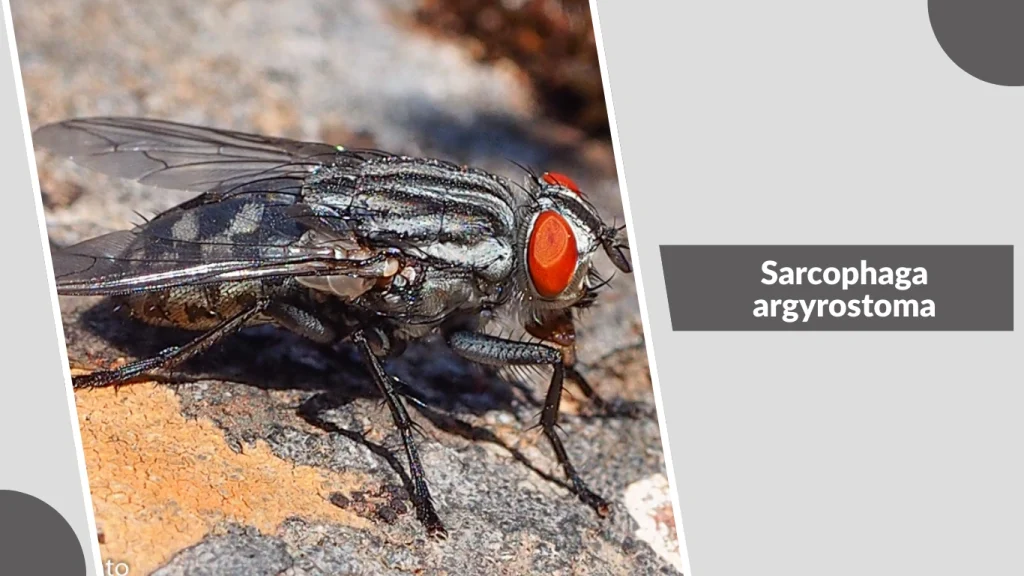
Sarcophaga argyrostoma is a widely distributed flesh fly species found in Europe, Asia, and parts of North Africa. It is commonly associated with decaying organic matter, carrion, and animal feces, playing an important role in nutrient recycling and decomposition.
Identification
- Medium-sized fly, measuring 12–15 mm in length
- Grey thorax with three distinct black longitudinal stripes
- Abdomen with a checkered pattern of grey and black
- Red compound eyes with dense bristles
- Robust, bristly body typical of the Sarcophagidae family
Habitat
Sarcophaga argyrostoma thrives in forests, farmlands, urban areas, and anywhere with decaying material. It is frequently observed around carrion, compost piles, and animal waste.
Life Cycle
This species is larviparous, depositing live larvae directly onto decaying substrates. Larvae feed quickly on organic material, then pupate in soil or protected areas. Adult flies emerge after a short developmental period, with development accelerated in warm and humid conditions.
Behavior and Impact
Sarcophaga argyrostoma significantly contributes to decomposition and nutrient recycling. Its predictable life cycle also makes it valuable in research on organic matter breakdown and forensic studies for estimating post-mortem intervals.
16. Sarcophaga carnaria
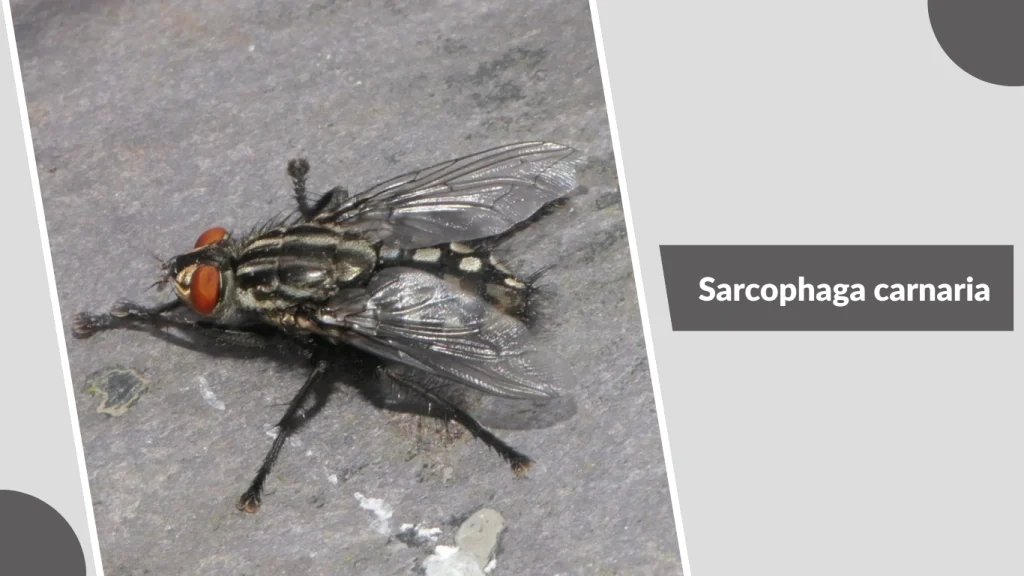
Sarcophaga carnaria is a common flesh fly species found across Europe, North America, and parts of Asia. It is frequently associated with carrion, decaying organic material, and animal waste, playing a significant role in decomposition processes.
Identification
- Medium-sized fly, approximately 10–14 mm in length
- Grey thorax with three dark longitudinal stripes
- Abdomen with a checkered grey-and-black pattern
- Red compound eyes with fine bristles
- Stout, bristly body characteristic of flesh flies
Habitat
This species inhabits diverse environments including urban areas, farmlands, forests, and locations rich in decaying organic matter. It is commonly found near carrion, garbage, and animal feces.
Life Cycle
Sarcophaga carnaria is larviparous, depositing live larvae onto decaying organic material. The larvae feed rapidly, pupate in soil or sheltered areas, and adult flies emerge within a few days. Development speed is influenced by temperature and humidity.
Behavior and Impact
Sarcophaga carnaria accelerates decomposition and nutrient cycling. Its ecological role supports natural sanitation and soil fertility. The species is also used in forensic entomology to help estimate post-mortem intervals due to its predictable life cycle.
17. Sarcophaga haemorrhoidalis
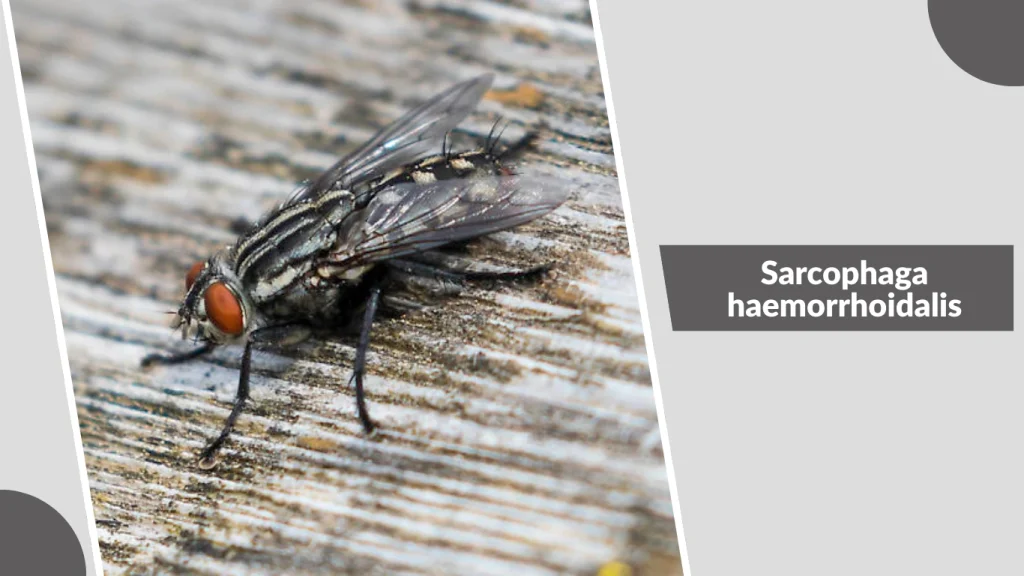
Sarcophaga haemorrhoidalis is a widespread flesh fly species found in Europe, North America, and parts of Asia. It is commonly associated with decaying organic matter, animal carcasses, and fecal material, making it important in decomposition and nutrient cycling.
Identification
- Medium-sized fly, measuring 10–13 mm in length
- Grey thorax with three prominent black stripes
- Abdomen with a distinctive checkered grey-and-black pattern
- Red compound eyes with fine bristles
- Stout, bristly body typical of Sarcophagidae
Habitat
This species inhabits forests, urban areas, farmlands, and locations with abundant decaying matter. It is frequently found near carrion, compost, and animal waste.
Life Cycle
Sarcophaga haemorrhoidalis is larviparous, depositing live larvae directly onto decaying substrates. Larvae feed rapidly, pupate in soil or hidden areas, and adults emerge after several days. Warm and humid conditions accelerate development.
Behavior and Impact
This species plays a key role in decomposition, recycling nutrients into the ecosystem. It aids in natural sanitation processes and is valuable in forensic studies for determining post-mortem intervals due to its predictable developmental stages.
18. Sarcophaga melanura
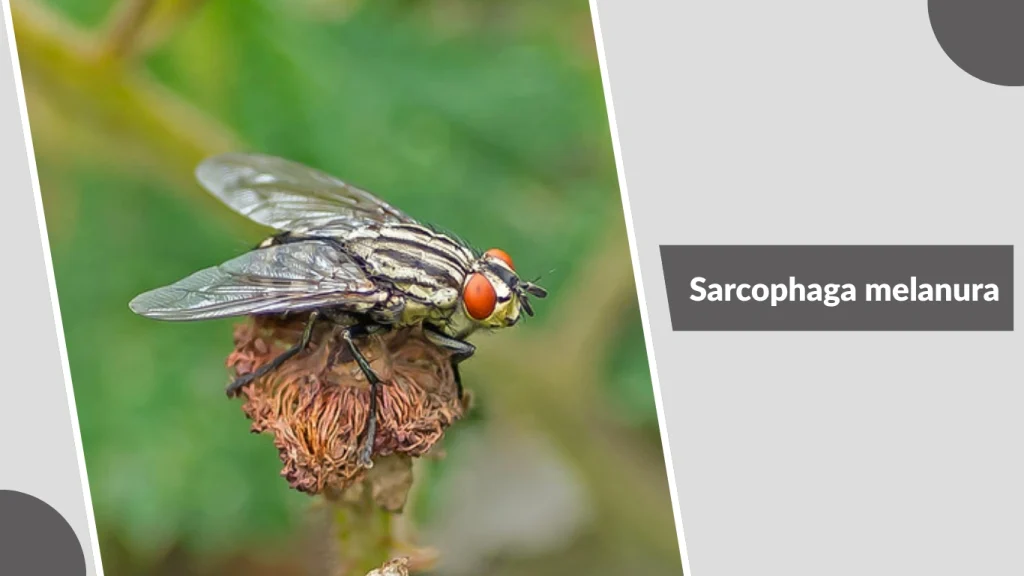
Sarcophaga melanura is a flesh fly species widely distributed across Europe and parts of North America. It is strongly associated with decaying organic material, carrion, and animal feces, contributing significantly to decomposition and nutrient recycling.
Identification
- Medium-sized fly, approximately 11–14 mm in length
- Grey thorax with three distinct black longitudinal stripes
- Abdomen with a checkered grey-and-black pattern
- Red compound eyes with fine bristles
- Bristly, robust body typical of the Sarcophagidae family
Habitat
Sarcophaga melanura inhabits urban areas, farmlands, forests, and any locations rich in decaying organic matter. It is commonly observed around carrion, compost piles, and animal excrement.
Life Cycle
This species is larviparous, depositing live larvae directly on decaying substrates. Larvae feed rapidly, then pupate in soil or protected areas. Adult flies emerge in a few days, with development speed influenced by temperature and humidity.
Behavior and Impact
Sarcophaga melanura plays a vital role in decomposition and nutrient cycling. Its life cycle is predictable, making it useful in forensic entomology to help estimate post-mortem intervals. It also contributes to natural sanitation by accelerating the breakdown of organic waste.
19. Sarcophaga tibialis
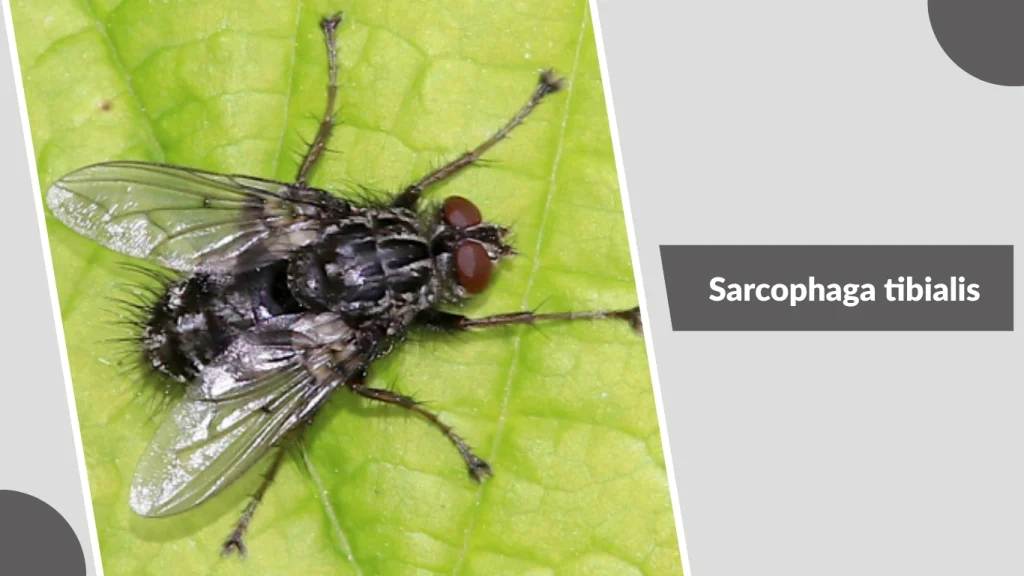
Sarcophaga tibialis is a flesh fly species found throughout Europe and parts of Asia. It is closely associated with decaying organic matter, carrion, and animal waste, playing an important ecological role in decomposition.
Identification
- Medium-sized fly, measuring 10–13 mm in length
- Grey thorax with three dark longitudinal stripes
- Abdomen with a grey-and-black checkered pattern
- Red compound eyes with fine bristles
- Stout and bristly body characteristic of Sarcophagidae
Habitat
This species thrives in forests, urban areas, farmlands, and places with abundant decaying material. It is commonly found near carrion, compost heaps, and animal excrement.
Life Cycle
Sarcophaga tibialis is larviparous, depositing live larvae onto decaying organic material. Larvae feed quickly and pupate in soil or sheltered areas. Adults emerge after a few days, with development accelerated in warm, humid conditions.
Behavior and Impact
Sarcophaga tibialis contributes to decomposition and nutrient cycling. Its predictable life cycle makes it useful in forensic studies, particularly for estimating post-mortem intervals, and it helps accelerate the natural breakdown of organic matter.
20. Sarcophaga subvicina
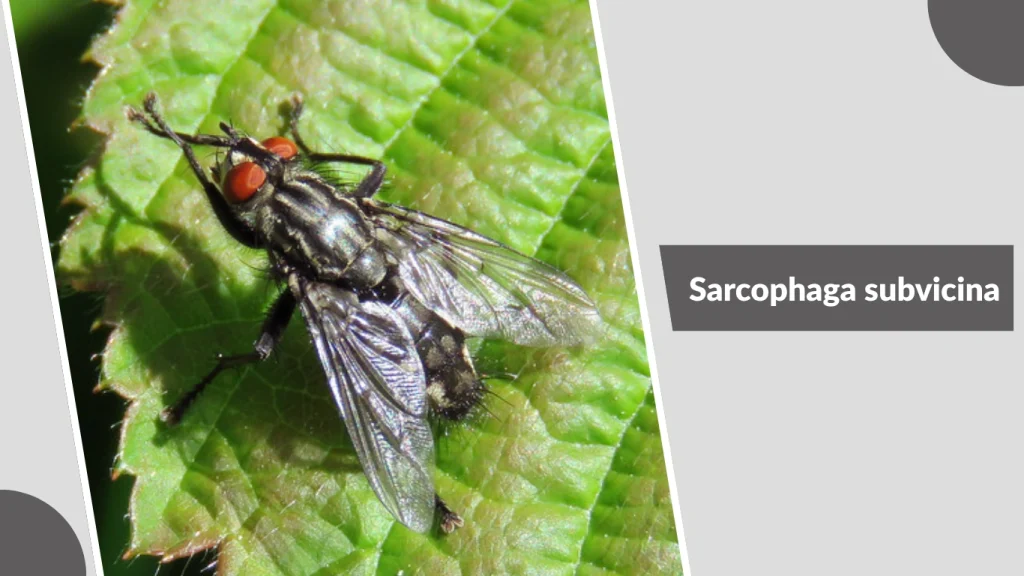
Sarcophaga subvicina is a widespread flesh fly species found across Europe and parts of Asia. It is commonly associated with decaying organic matter, carrion, and animal feces, contributing significantly to decomposition processes.
Identification
- Medium-sized fly, approximately 11–14 mm in length
- Grey thorax with three distinct black longitudinal stripes
- Abdomen with a checkered grey-and-black pattern
- Red compound eyes with fine bristles
- Robust, bristly body typical of Sarcophagidae
Habitat
Sarcophaga subvicina inhabits urban areas, farmlands, forests, and locations rich in decaying organic material. It is frequently found near carrion, compost piles, and animal excrement.
Life Cycle
This species is larviparous, depositing live larvae directly onto decaying substrates. Larvae feed rapidly, pupate in soil or protected areas, and adults emerge after several days. Development is accelerated by warm and humid conditions.
Behavior and Impact
Sarcophaga subvicina plays a key role in decomposition and nutrient cycling. Its predictable life cycle also makes it valuable in forensic entomology for estimating post-mortem intervals and contributes to natural sanitation by breaking down organic waste efficiently.
21. Sarcophaga africa
Sarcophaga africa is a flesh fly species primarily found in Africa, with occasional occurrences in southern Europe. It is associated with decaying organic matter, carrion, and animal waste, making it important for nutrient recycling and decomposition.
Identification
- Medium-sized fly, measuring 10–13 mm in length
- Grey thorax with three prominent black stripes
- Abdomen with a grey-and-black checkered pattern
- Red compound eyes with fine bristles
- Stout, bristly body characteristic of Sarcophagidae
Habitat
Sarcophaga africa inhabits savannas, farmlands, urban areas, and regions abundant in decaying organic material. It is commonly found near carcasses, compost heaps, and animal excrement.
Life Cycle
This species is larviparous, depositing live larvae directly on decaying substrates. Larvae feed quickly, then pupate in soil or hidden areas. Adult flies emerge in a few days, with warm temperatures accelerating development.
Behavior and Impact
Sarcophaga africa contributes significantly to decomposition and nutrient cycling. Its predictable life cycle is valuable in forensic entomology for estimating post-mortem intervals, and it aids in natural sanitation by facilitating the breakdown of organic matter.
22. Sarcophaga argyrostoma
Sarcophaga argyrostoma is a flesh fly species found across Europe, North Africa, and parts of Asia. It is strongly associated with decaying organic material, carrion, and animal waste, playing an important role in decomposition and nutrient recycling.
Identification
- Medium-sized fly, approximately 11–14 mm in length
- Grey thorax with three distinct black longitudinal stripes
- Abdomen with a checkered grey-and-black pattern
- Red compound eyes with fine bristles
- Robust, bristly body typical of Sarcophagidae
Habitat
This species inhabits urban areas, farmlands, forests, and any locations rich in decaying organic matter. It is commonly found around carcasses, compost piles, and animal excrement.
Life Cycle
Sarcophaga argyrostoma is larviparous, depositing live larvae directly on decaying substrates. Larvae feed rapidly, pupate in soil or sheltered areas, and adults emerge after several days. Development speed increases under warm and humid conditions.
Behavior and Impact
Sarcophaga argyrostoma plays a vital role in decomposition and nutrient cycling. Its predictable life cycle makes it useful in forensic entomology for estimating post-mortem intervals and contributes to natural sanitation by accelerating the breakdown of organic waste.
23. Sarcophaga caerulescens
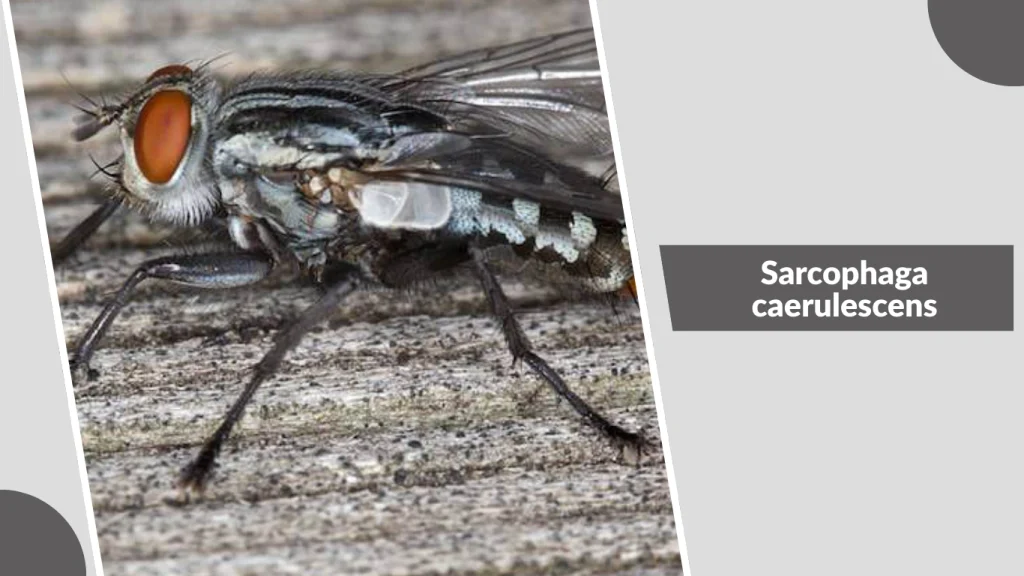
Sarcophaga caerulescens is a flesh fly species commonly found in Europe and parts of Asia. It is associated with decaying organic matter, carrion, and animal waste, contributing significantly to decomposition and nutrient cycling.
Identification
- Medium-sized fly, measuring 10–13 mm in length
- Grey thorax with three dark longitudinal stripes
- Abdomen with a grey-and-black checkered pattern
- Red compound eyes with fine bristles
- Stout, bristly body typical of Sarcophagidae
Habitat
This species thrives in forests, urban areas, farmlands, and places with abundant decaying material. It is frequently observed near carcasses, compost heaps, and animal excrement.
Life Cycle
Sarcophaga caerulescens is larviparous, depositing live larvae directly onto decaying organic material. Larvae feed quickly, pupate in soil or sheltered areas, and adults emerge in a few days. Warm and humid conditions accelerate development.
Behavior and Impact
Sarcophaga caerulescens plays a key role in decomposition and nutrient recycling. Its predictable life cycle is useful in forensic studies for estimating post-mortem intervals, and it aids in natural sanitation by facilitating the breakdown of organic matter.
24. Sarcophaga carnaria
Sarcophaga carnaria is a widely distributed flesh fly species found throughout Europe and parts of Asia. It is strongly associated with decaying organic matter, carrion, and animal waste, contributing significantly to decomposition and ecological nutrient cycling.
Identification
- Medium-sized fly, approximately 12–15 mm in length
- Grey thorax with three distinct black longitudinal stripes
- Abdomen with a grey-and-black checkered pattern
- Red compound eyes with fine bristles
- Stout and bristly body characteristic of Sarcophagidae
Habitat
Sarcophaga carnaria inhabits urban areas, farmlands, forests, and any environment rich in decaying organic matter. It is commonly found near carcasses, compost heaps, and animal excrement.
Life Cycle
This species is larviparous, depositing live larvae directly onto decaying substrates. Larvae feed quickly, pupate in soil or sheltered areas, and adults emerge after several days. Warm temperatures and high humidity accelerate the development process.
Behavior and Impact
Sarcophaga carnaria contributes greatly to decomposition and nutrient cycling. Its predictable life cycle is valuable in forensic entomology for estimating post-mortem intervals and aids natural sanitation by speeding up the breakdown of organic matter.
25. Sarcophaga melanura
Sarcophaga melanura is a flesh fly species found in Europe, North Africa, and parts of Asia. It is typically associated with decaying organic matter, carrion, and animal excrement, playing an important role in decomposition and nutrient recycling.
Identification
- Medium-sized fly, measuring 11–14 mm in length
- Grey thorax with three prominent black longitudinal stripes
- Abdomen with a grey-and-black checkered pattern
- Red compound eyes with fine bristles
- Robust, bristly body typical of Sarcophagidae
Habitat
This species is commonly found in forests, urban areas, farmlands, and any location rich in decaying organic matter. It frequents areas around carcasses, compost piles, and animal waste.
Life Cycle
Sarcophaga melanura is larviparous, depositing live larvae directly on decaying material. Larvae feed rapidly, pupate in soil or sheltered areas, and adults emerge in a few days. Development is faster in warm and humid conditions.
Behavior and Impact
Sarcophaga melanura plays a vital role in decomposition and nutrient cycling. Its predictable life cycle is useful in forensic entomology for estimating post-mortem intervals, and it aids in natural sanitation by accelerating the breakdown of organic waste.
