
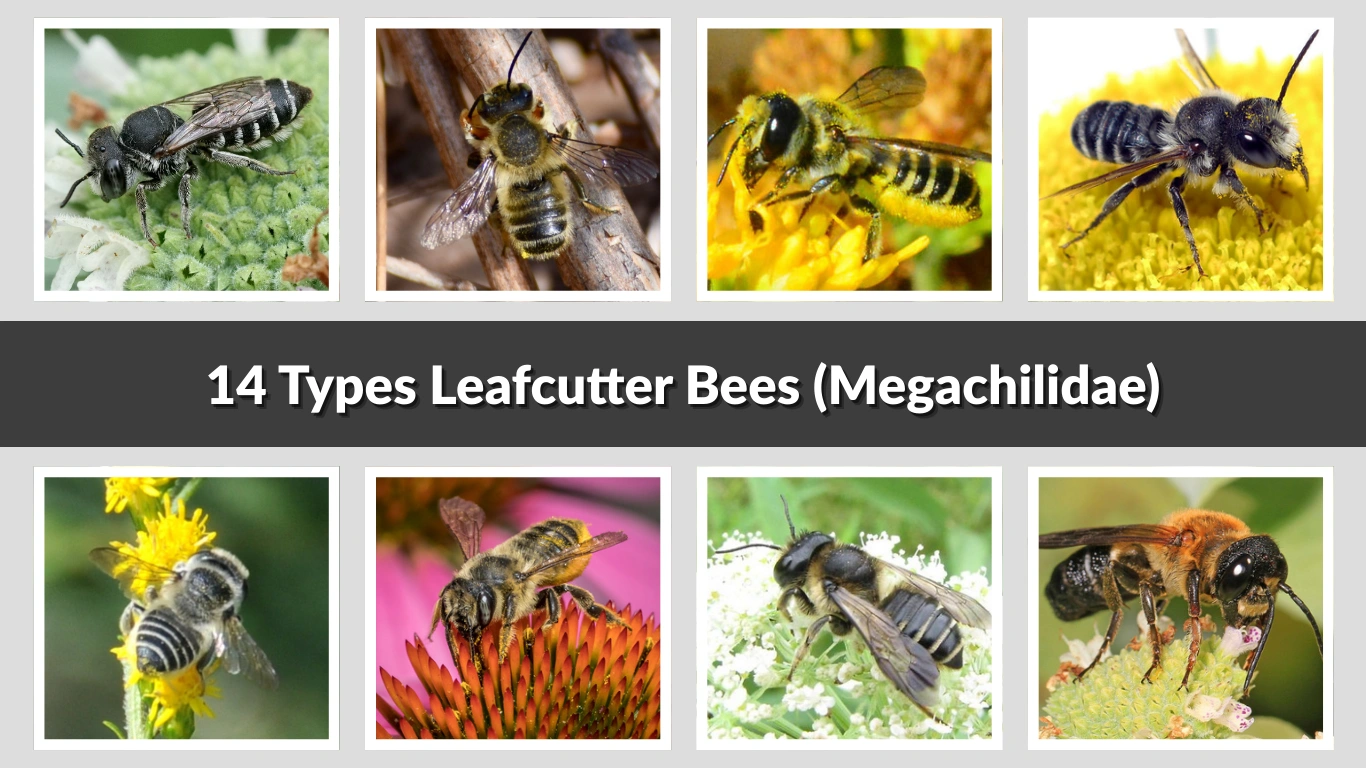
Leafcutter bees (Megachile species) are fascinating solitary pollinators known for their unique habit of cutting leaves and petals to build protective nest cells. Unlike honeybees, they don’t live in large colonies but still play a crucial role in ecosystems by pollinating wildflowers, crops, and garden plants. In this guide, we’ll explore 14 types of leafcutter bees, highlighting their diversity, habitats, and importance in maintaining biodiversity.
1. Megachile rotundata
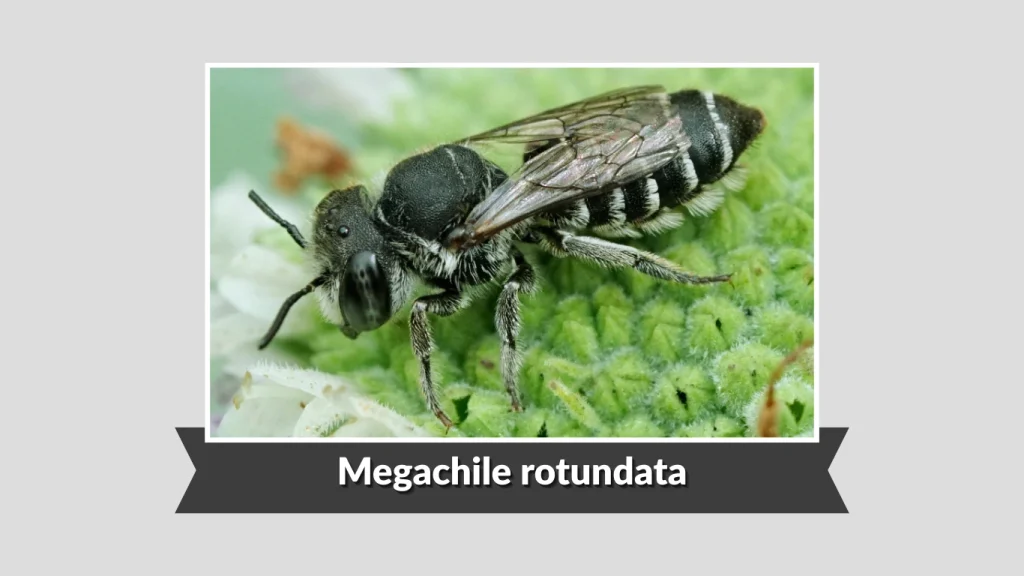
Megachile rotundata, commonly known as the alfalfa leafcutter bee, is one of the most widely managed solitary bee species in the world. Originally from Europe, it has been introduced to many countries for crop pollination, especially alfalfa, due to its efficiency in fertilizing flowers.
Identification
- Size: About 7–8 mm long
- Color: Black body with pale yellow or whitish bands on the abdomen
- Wings: Clear with a slight smoky tint
- Body shape: Compact and cylindrical with strong mandibles for cutting leaves
- Gender trait: Females carry pollen on the underside of their abdomen (scopa) rather than on their legs
Habitat
Megachile rotundata prefers temperate climates and is often found in agricultural landscapes. It naturally nests in pre-existing holes in wood, stems, or soil cavities. In farming practices, artificial nesting blocks or drilled wooden boards are provided to support large populations for pollination.
Behavior
Unlike honeybees, this species is solitary, meaning each female builds and provisions her own nest without a worker caste. Females cut neat, circular pieces of leaves or petals to construct nest cells, lining them with leaf fragments before laying an egg. Males do not contribute to nesting but are active in mating.
Importance
This bee is considered one of the most valuable managed pollinators after the honeybee. It plays a crucial role in the production of alfalfa seed and is also effective in pollinating other crops like canola, carrots, and sunflowers. Farmers worldwide rely on Megachile rotundata to improve yields, making it a cornerstone species in agricultural pollination.
2. Megachile perihirta
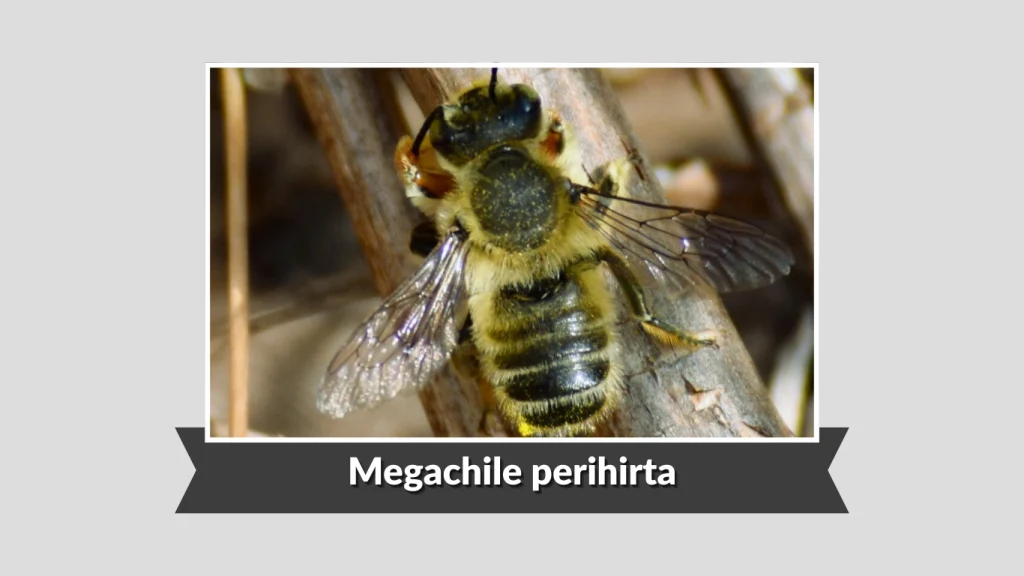
Megachile perihirta, commonly called the Western Leafcutter Bee, is a solitary bee native to North America. It is well adapted to dry and open habitats and is frequently observed visiting a variety of wildflowers during the summer. Though not as widely managed as Megachile rotundata, it still plays an important role in pollination across its native range.
Identification
- Size: Medium-sized, usually around 12–14 mm long
- Color: Grayish-black body with bands of pale hairs on the abdomen
- Wings: Transparent with slight brownish veins
- Body shape: Stout with strong jaws adapted for cutting leaves and petals
- Distinct trait: Females carry pollen on dense hairs (scopa) located on the underside of their abdomen
Habitat
This bee prefers prairies, deserts, meadows, and open woodlands across western North America. Nests are usually built in soil cavities, hollow stems, or cracks in wood. They are less commonly managed but thrive in natural ecosystems where they find abundant nesting sites and floral resources.
Behavior
Megachile perihata is solitary in nature. Females carefully cut round or oval pieces of leaves and petals to create brood cells, lining and sealing each cell before laying an egg with a pollen-nectar mixture. Males focus solely on mating and are often seen patrolling flowers. Adults are active mostly during warm summer months.
Importance
This species contributes significantly to the pollination of wild plants and garden flowers. While it is not commercially reared on a large scale, it benefits ecosystems by maintaining biodiversity and ensuring reproduction of native plants. Its efficiency in handling flowers also makes it a potential pollinator for crops grown in arid regions.
3. Megachile fidelis
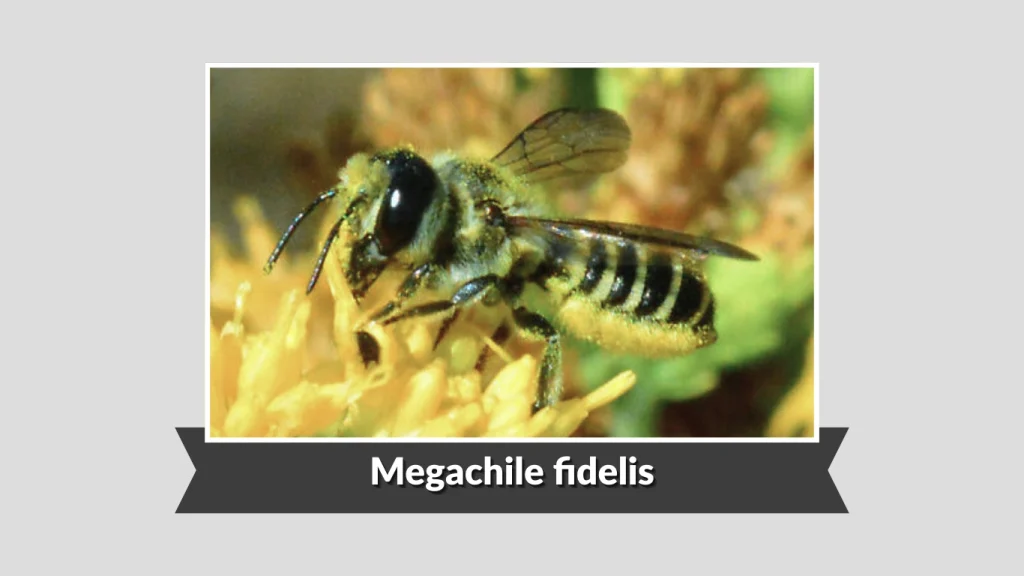
Megachile fidelis, commonly known as the Faithful Leafcutter Bee, is a native pollinator found mainly in the western United States. It is recognized for its strong association with sunflowers and other wildflowers, playing an important role in natural ecosystems as well as gardens. This bee is larger than many other Megachile species and is admired for its efficient flower visitation habits.
Identification
- Size: Medium to large, usually around 13–15 mm long
- Color: Black body with conspicuous white to pale bands of hair on the abdomen
- Wings: Clear with visible dark venation
- Body shape: Sturdy and slightly broader than smaller Megachile species
- Distinct trait: Females possess strong mandibles and dense scopal hairs beneath the abdomen for carrying pollen
Habitat
Megachile fidelis is most common in dry, open habitats such as prairies, deserts, grasslands, and meadows of western North America. They often nest in hollow stems, soil cavities, or cracks in wood. Unlike managed leafcutter bees, they typically occupy natural nesting spaces but can also adapt to artificial bee houses.
Behavior
This solitary species is active mainly in mid-to-late summer when sunflowers and other composite flowers bloom. Females cut circular pieces of leaves and sometimes flower petals to construct brood cells, each stocked with nectar and pollen. Males hover near flowers and actively patrol for mating opportunities. Adults are short-lived but very active during their flight season.
Importance
Megachile fidelis is a key pollinator for wildflowers, especially sunflowers, daisies, and asters. By contributing to the reproduction of these plants, it supports biodiversity and provides ecological services that benefit wildlife. While not widely used in agriculture, it holds potential as a specialized pollinator for sunflower crops due to its flower fidelity.
4. Megachile campanulae
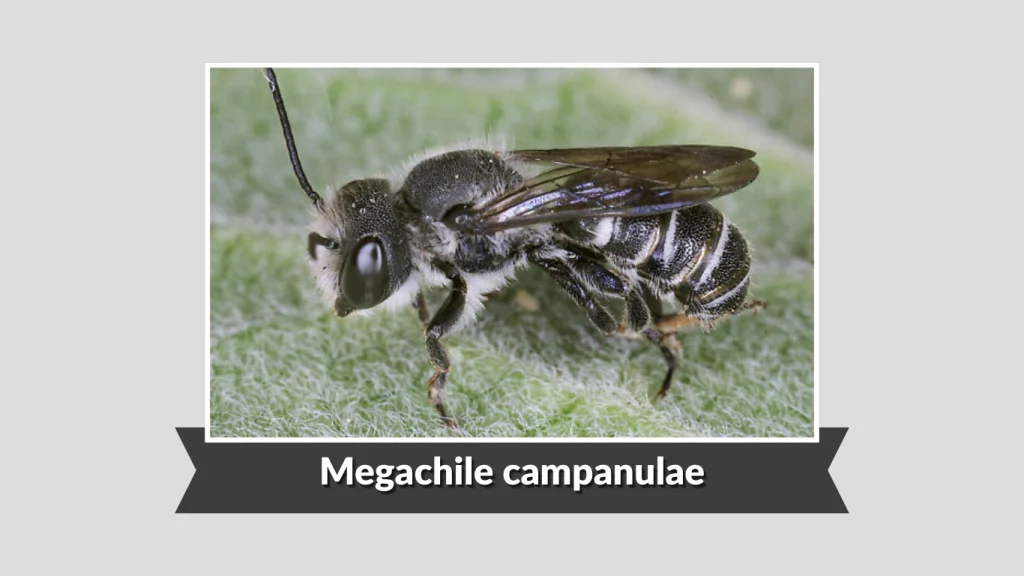
Megachile campanulae, commonly known as the Bellflower Leafcutter Bee, is a solitary bee species native to North America. It is particularly associated with bellflowers (Campanula species), which explains its scientific name. This bee is an effective pollinator and often visits gardens, meadows, and wild habitats where bellflowers and other summer-blooming plants are found.
Identification
- Size: Small to medium, about 8–10 mm in length
- Color: Black body with bands of whitish or pale hairs on the abdomen
- Wings: Clear with slightly smoky veins
- Body shape: Slender and compact, with powerful jaws for cutting leaves
- Distinct trait: Females carry pollen on dense scopa hairs located under the abdomen instead of the hind legs
Habitat
Megachile campanulae inhabits woodlands, gardens, meadows, and prairies throughout much of North America. They nest in hollow stems, old beetle burrows in wood, and artificial bee blocks. Because of their close association with bellflowers, they are often found in areas where these plants grow in abundance.
Behavior
This species is solitary, with each female independently building and provisioning her nest. Females cut oval or circular pieces of leaves or petals to construct brood cells, lining them carefully before placing an egg inside with a supply of pollen and nectar. They are most active during summer months, coinciding with the bloom of bellflowers and other preferred plants.
Importance
Megachile campanulae plays a vital role in pollinating bellflowers, asters, and many garden flowers. Its efficiency in transferring pollen contributes to the reproduction of ornamental plants as well as wild species. Although not commonly managed in agriculture, it is considered valuable in maintaining biodiversity and enhancing pollination in gardens and natural habitats.
5. Megachile relativa
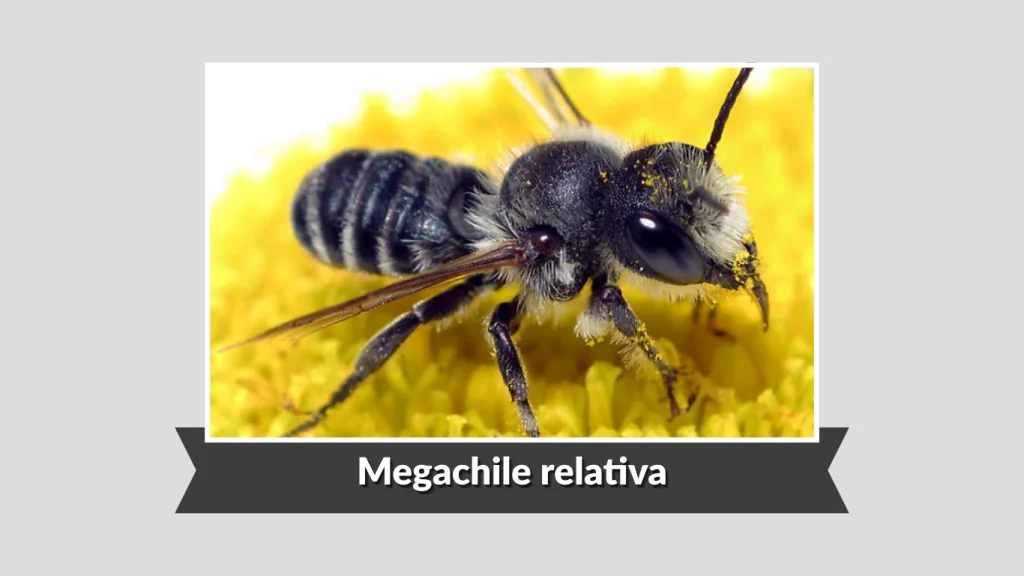
Megachile relativa is a solitary leafcutter bee native to North America. It is less commonly mentioned compared to some other Megachile species, but it still plays an important role as a wild pollinator. Like its relatives, this bee is known for cutting leaves into neat circular or oval pieces to construct nest cells.
Identification
- Size: Medium-sized, typically 10–12 mm long
- Color: Black body with light gray to whitish bands of short hairs across the abdomen
- Wings: Clear with slightly brownish venation
- Body shape: Cylindrical and robust with strong mandibles for leaf-cutting
- Distinct trait: Females carry pollen on dense hairs (scopa) on the underside of the abdomen
Habitat
Megachile relativa inhabits gardens, meadows, grasslands, and woodland edges across parts of North America. It chooses pre-existing cavities such as hollow stems, cracks in wood, and insect burrows to create its nests. It adapts well to artificial bee houses and nesting blocks when provided.
Behavior
This species is solitary, with each female independently responsible for nest construction and brood care. Females cut pieces of leaves to form protective cells, each stocked with a mixture of nectar and pollen to nourish the developing larva. Males spend their time patrolling flowers and searching for mates. Activity peaks during the summer months when flowers are abundant.
Importance
Megachile relativa contributes to pollination of many wildflowers and garden plants. While it is not widely managed for agriculture, it helps maintain biodiversity and supports ecosystems by ensuring the reproduction of flowering plants. Its adaptability to artificial bee houses also makes it an asset for home gardeners interested in attracting native pollinators.
6. Megachile centuncularis
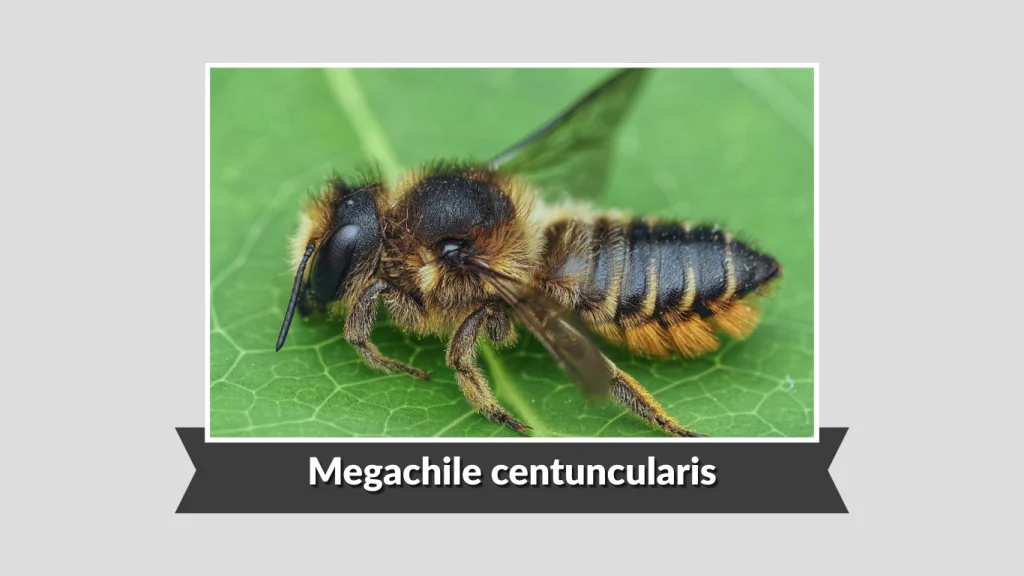
Megachile centuncularis, often called the Patchwork Leafcutter Bee, is one of the most widespread Megachile species across Europe, Asia, and North America. It is frequently encountered in gardens and natural habitats, making it one of the most familiar leafcutter bees to humans. Its name “centuncularis” refers to its habit of patching nests together using leaf pieces.
Identification
- Size: Medium-sized, about 10–12 mm in length
- Color: Black body with pale gray hairs forming faint bands on the abdomen
- Wings: Transparent with light brown venation
- Body shape: Cylindrical and sturdy with strong mandibles adapted for cutting leaf fragments
- Distinct trait: Females carry pollen under the abdomen on scopal hairs instead of on the hind legs
Habitat
This species is highly adaptable and occurs in gardens, woodlands, grasslands, and urban areas. It nests in pre-existing cavities such as hollow stems, wood borings, walls, and artificial bee blocks. Its wide distribution and flexible nesting behavior make it one of the most successful leafcutter bees.
Behavior
Megachile centuncularis is a solitary bee. Females cut oval and circular pieces of leaves to build and line brood cells, where they place pollen and nectar for larvae. They often use rose, lilac, and ash leaves for construction. Males are usually seen hovering around flowers, guarding territories to find mates. Their activity peaks in mid-to-late summer when floral resources are abundant.
Importance
This species is a valuable pollinator for garden flowers, wild plants, and some crops. Its widespread presence ensures that it plays a crucial role in supporting plant reproduction and biodiversity. For gardeners, M. centuncularis is a welcome visitor, helping pollinate ornamentals, herbs, and fruit plants while coexisting peacefully with humans.
7. Megachile latimanus

Megachile latimanus, often referred to as the Broad-Handed Leafcutter Bee, is a robust and widespread species found across North America. It is easily recognizable by its strong forelegs and large body size compared to many other leafcutter bees. This bee is an important wild pollinator, frequently seen visiting flowers in gardens, meadows, and open habitats during summer.
Identification
- Size: Large for a leafcutter bee, usually 14–18 mm long
- Color: Black body with distinct pale bands of hairs on the abdomen
- Wings: Clear with darker venation near the tips
- Body shape: Stout and broad, with particularly large forelegs in males
- Distinct trait: Females carry pollen on dense scopal hairs beneath the abdomen; males have noticeably enlarged front legs used in mating displays
Habitat
Megachile latimanus inhabits open fields, prairies, gardens, and woodland edges throughout much of North America. It commonly nests in pre-existing cavities, including hollow plant stems, old wood burrows, and even cracks in human structures. This species also adapts well to artificial nesting blocks provided by gardeners.
Behavior
As a solitary bee, each female constructs her own nest using carefully cut pieces of leaves to form brood cells. The cells are provisioned with nectar and pollen before an egg is laid. Males patrol flowers and display their enlarged forelegs to attract females. Activity peaks during mid-to-late summer when floral resources are most abundant.
Importance
Megachile latimanus is an efficient pollinator of wildflowers, fruit plants, and garden crops. Its large size allows it to handle bigger flowers, making it especially important for plants that smaller bees cannot pollinate effectively. Though not commonly managed in agriculture, it provides significant ecological benefits by maintaining biodiversity and supporting pollination in natural and human-modified landscapes.
8. Megachile inermis
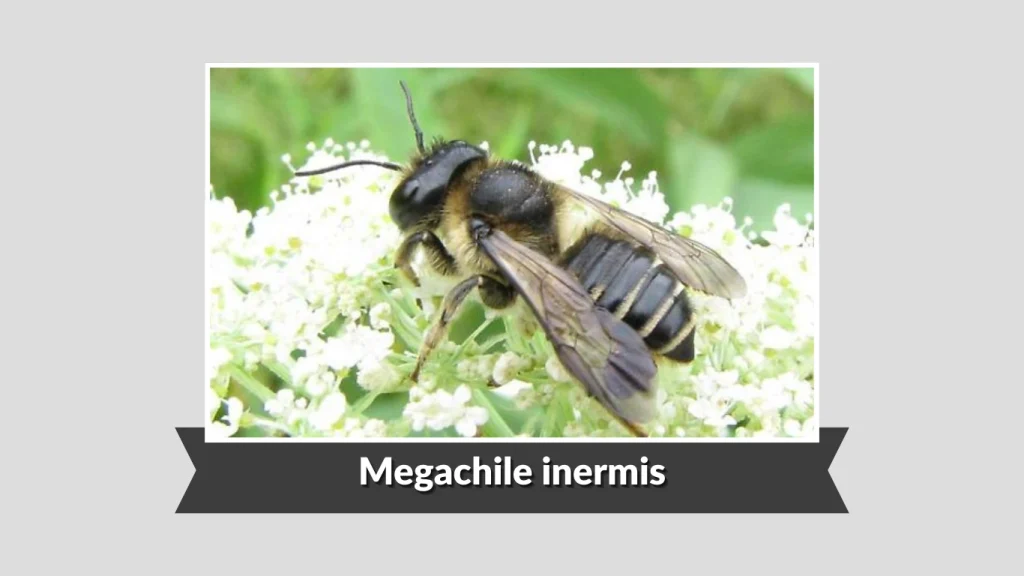
Megachile inermis is a solitary leafcutter bee species distributed mainly in North America. It is less commonly observed than some other Megachile species but still plays a vital role in local ecosystems as a pollinator of wildflowers and garden plants. Its name “inermis” refers to its relatively smooth body compared to other closely related species.
Identification
- Size: Medium-sized, around 10–12 mm long
- Color: Black body with pale gray bands of short hairs on the abdomen
- Wings: Clear with faint brown venation
- Body shape: Cylindrical and compact with strong jaws adapted for leaf-cutting
- Distinct trait: Females possess scopal hairs beneath the abdomen for carrying pollen instead of storing it on hind legs
Habitat
Megachile inermis inhabits meadows, gardens, open grasslands, and forest edges throughout parts of the United States and southern Canada. It typically nests in hollow stems, old beetle burrows, or cracks in wood. It can also make use of artificial bee houses when provided with properly sized holes.
Behavior
This species is solitary, with females independently constructing and provisioning their nests. They cut neat circular or oval pieces of leaves to line brood cells, creating protective compartments for their offspring. Each cell is filled with a pollen-nectar mixture before an egg is laid. Males do not assist in nesting but are active in seeking mates and patrolling flowers.
Importance
Although not widely managed for agriculture, Megachile inermis contributes significantly to pollination in natural and garden settings. It helps maintain floral biodiversity by ensuring the reproduction of many wild plants and ornamentals. For gardeners, its presence is a sign of a healthy environment that supports native pollinators.
9. Megachile sculpturalis
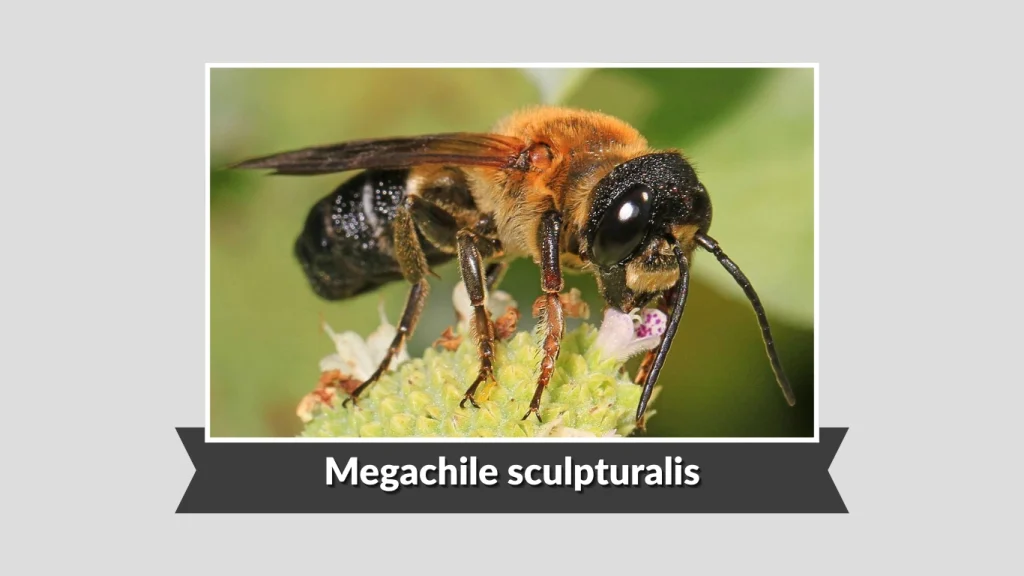
Megachile sculpturalis, commonly known as the Giant Resin Bee, is one of the largest leafcutter bee species. Originally native to East Asia, it has been introduced to North America and parts of Europe, where it has established populations. Unlike many Megachile species that use mostly leaves, this bee also uses resin and wood fibers in nest construction, making it quite unique.
Identification
- Size: Large, typically 19–25 mm long, much bigger than most leafcutter bees
- Color: Dark brown to black body with lighter reddish-brown thorax hairs
- Wings: Smoky-brown and slightly iridescent
- Body shape: Elongated and robust, resembling a small carpenter bee in appearance
- Distinct trait: Females carry pollen on dense scopal hairs beneath the abdomen and use resin in nest building instead of relying only on leaf pieces
Habitat
Megachile sculpturalis inhabit gardens, orchards, forest edges, and urban areas. Since it is an introduced species in many regions, it often nests in man-made structures like drilled wood blocks, hollow bamboo canes, and cavities in buildings. Its adaptability allows it to thrive in both natural and human-modified environments.
Behavior
This species is solitary, with females constructing brood cells lined with resin, leaf pieces, or wood fibers. Each cell is stocked with pollen and nectar before an egg is laid. Males patrol flowers and aggressively defend territories during the breeding season. Activity is most noticeable during summer when their large size and buzzing flight make them stand out.
Importance
Megachile sculpturalis is an efficient pollinator for many flowers, including garden plants and fruit trees. However, in regions where it is non-native, it sometimes competes with local bees for nesting sites. While it does not generally cause harm, its rapid spread has raised concerns about displacement of native pollinators. Despite this, it plays a significant role in pollination wherever it is established.
10. Megachile brevis
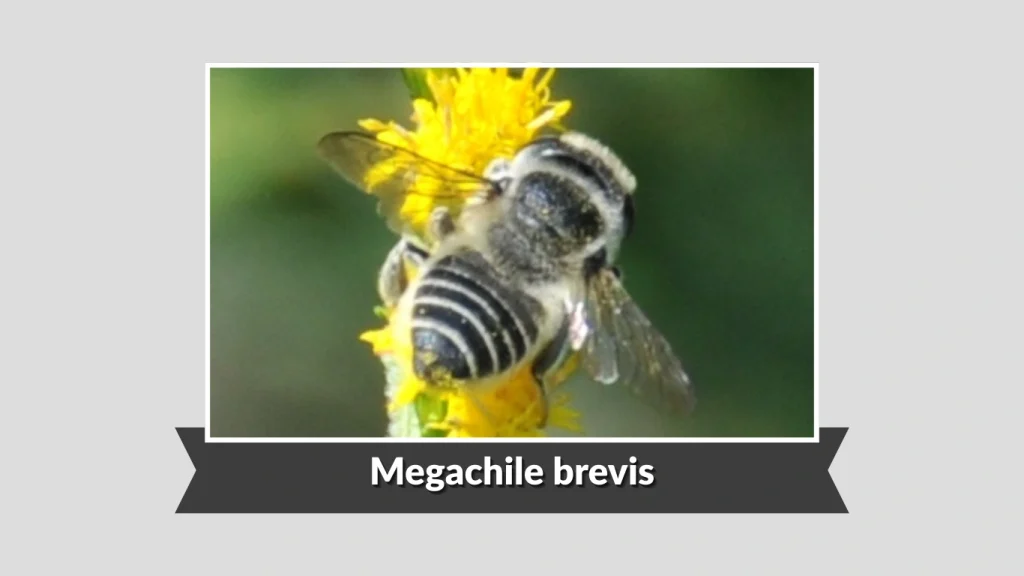
Megachile brevis, known as the Short Leafcutter Bee, is a solitary species found mainly in North America. Though not as large or widely recognized as some other members of the genus, it contributes quietly but effectively to pollination in wild habitats and gardens. Its name “brevis” refers to its relatively small size compared to other leafcutter bees.
Identification
- Size: Small to medium, around 8–10 mm in length
- Color: Black body with faint grayish hairs forming light abdominal bands
- Wings: Clear with light brown venation
- Body shape: Slender and compact with strong mandibles used for leaf cutting
- Distinct trait: Females transport pollen using scopal hairs on the underside of their abdomen rather than on their legs
Habitat
Megachile brevis is commonly found in meadows, gardens, fields, and woodland edges across the United States and southern Canada. It nests in pre-existing cavities, such as hollow stems, burrows in dead wood, or cracks in natural substrates. They may also accept artificial nesting blocks when available.
Behavior
Like other leafcutter bees, M. brevis is solitary, with females independently constructing nests. They cut small circular or oval pieces of leaves to line brood cells, carefully sealing each chamber after placing an egg and pollen-nectar provision inside. Males are active around flowers, searching for mates during the flight season in summer.
Importance
Megachile brevis is an important pollinator for wildflowers and some garden plants. Though not commercially managed, it plays a role in maintaining local biodiversity and supporting plant reproduction. Its small size allows it to visit delicate flowers that may not be efficiently pollinated by larger bees, making it an essential part of native ecosystems.
11. Megachile melanophaea
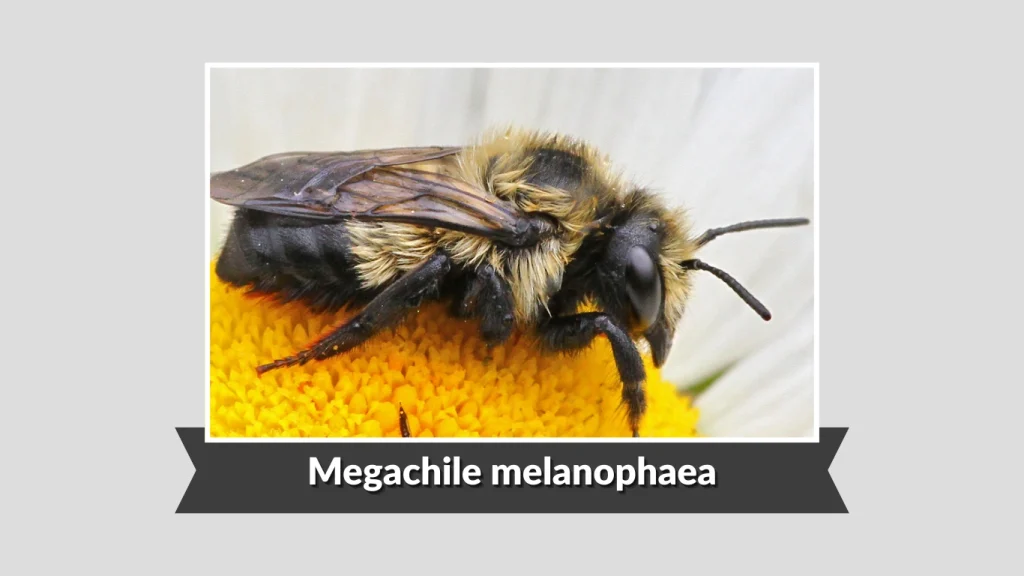
Megachile melanophaea is a solitary leafcutter bee native to North America. It is widely distributed across the United States and Canada and is especially common in gardens, meadows, and open landscapes. This species is active in mid-summer and is easily recognized for its distinctive black-and-white appearance.
Identification
- Size: Medium-sized, typically 10–13 mm long
- Color: Black body with prominent white bands of hair across the abdomen
- Wings: Clear to slightly smoky with noticeable venation
- Body shape: Compact and cylindrical, with strong mandibles for cutting leaves
- Distinct trait: Females have dense pollen-carrying hairs (scopa) under the abdomen; males often have white hair patches on the face, which make them more distinguishable
Habitat
Megachile melanophaea is well adapted to a variety of environments, including gardens, prairies, grasslands, and woodland edges. They often nest in hollow plant stems, cracks in wood, or old insect burrows. In urban and suburban settings, they readily occupy artificial bee houses and drilled nesting blocks.
Behavior
This species is solitary, with each female independently building her nest. She cuts oval and circular pieces of leaves to line brood cells and stocks them with a mixture of pollen and nectar before laying an egg. Adults are most active during July and August, coinciding with peak flower availability. Males are territorial and frequently patrol flower patches while searching for mates.
Importance
Megachile melanophaea is a reliable pollinator of many wildflowers, fruits, and ornamental plants. Its preference for visiting a variety of flower types makes it an important contributor to biodiversity. In gardens, their presence boosts pollination of vegetables, herbs, and flowering plants, making them highly beneficial to both natural ecosystems and human agriculture.
12. Megachile texana
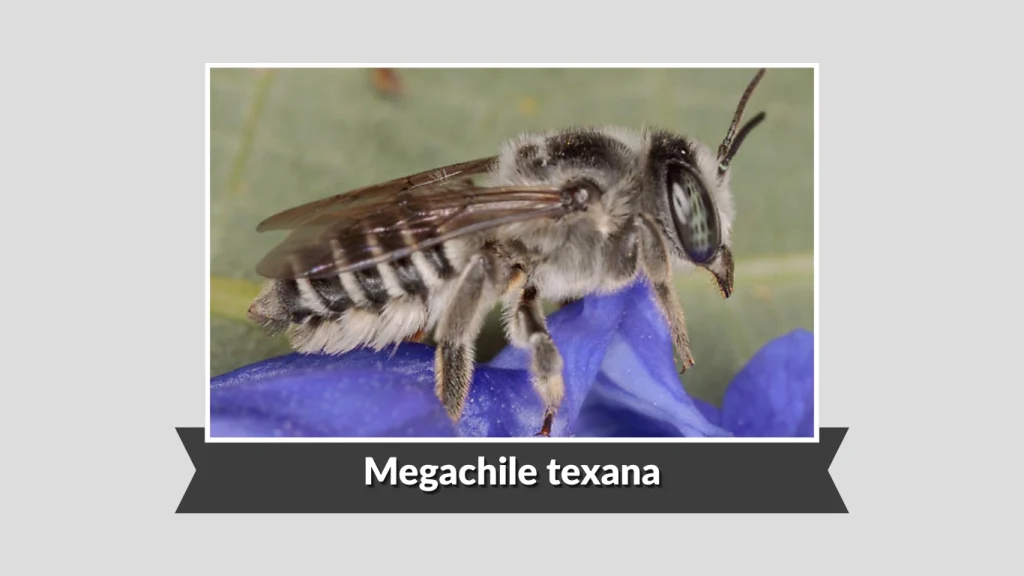
Megachile texana, often called the Texan Leafcutter Bee, is a solitary species native to North America. It is most common in the southern United States, especially in warm and dry habitats. This bee is highly efficient at pollinating wildflowers and garden plants, making it an important contributor to local ecosystems.
Identification
- Size: Medium, usually 10–12 mm long
- Color: Black body with pale gray hairs forming faint abdominal bands
- Wings: Clear with slightly dark venation
- Body shape: Sturdy and cylindrical, with strong mandibles for cutting leaf fragments
- Distinct trait: Females have dense pollen-carrying scopa hairs under the abdomen; males can be recognized by lighter facial hair patches
Habitat
Megachile texana thrives in open, sunny environments such as fields, prairies, gardens, and woodland edges. It nests in pre-existing cavities including hollow stems, beetle burrows in wood, and cracks in natural substrates. In residential areas, it readily adapts to artificial bee houses and drilled wood blocks.
Behavior
This bee is solitary, with each female constructing and provisioning her own nest. Leaf fragments are used to build brood cells, each stocked with nectar and pollen before sealing with more leaf pieces. Males are active in patrolling flower patches for mates. Adults are most active in mid-to-late summer, particularly when wildflowers are in bloom.
Importance
Megachile texana plays a valuable role as a pollinator for native wildflowers and garden plants. Its efficiency benefits ecosystems by ensuring the reproduction of flowering species and supporting biodiversity. Although not commercially managed, it is an important natural pollinator in its native range, especially in the southern states of the U.S.
13. Megachile addenda
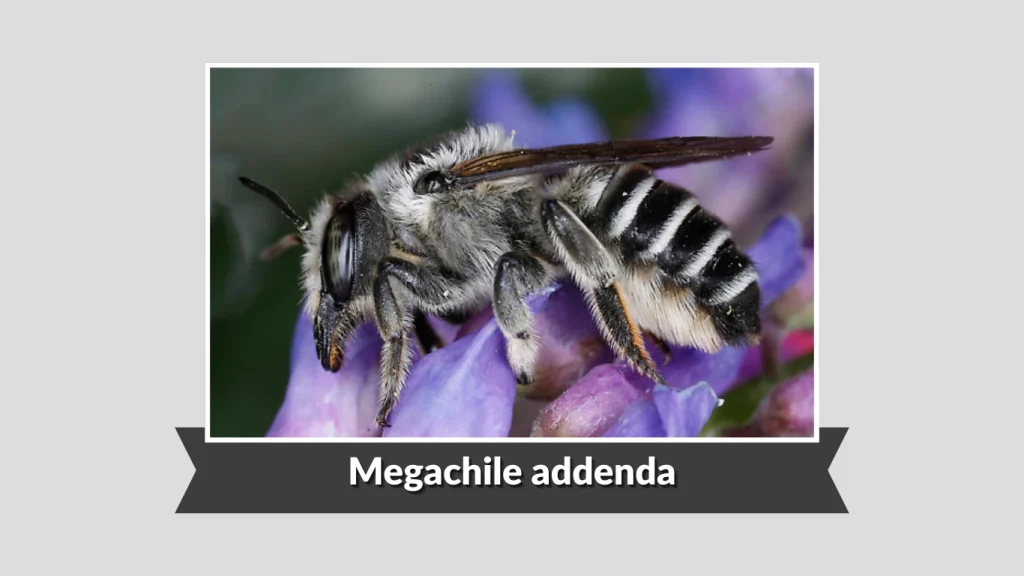
Megachile addenda is a solitary leafcutter bee species found mainly in North America. Though not as commonly recognized as some other Megachile species, it plays a significant role in pollinating wildflowers and garden plants. It is active during the summer months and is often spotted visiting flowering plants in open habitats.
Identification
- Size: Medium-sized, about 10–12 mm in length
- Color: Black body with pale gray or whitish hair bands on the abdomen
- Wings: Clear with light brown venation
- Body shape: Cylindrical and compact, built for efficient flower visitation
- Distinct trait: Females have dense scopal hairs under the abdomen for carrying pollen; males are often distinguished by lighter facial hair patches
Habitat
Megachile addenda inhabits meadows, gardens, grasslands, and woodland edges across parts of the United States and Canada. It usually nests in hollow plant stems, old wood burrows, or cracks in natural materials. Artificial nesting blocks are also readily used when available in gardens or managed pollinator setups.
Behavior
This solitary bee species shows the characteristic nesting pattern of leafcutters—females cut neat oval and circular pieces of leaves to line and seal brood cells. Each cell is stocked with a mixture of pollen and nectar before laying an egg. Adults are most active in midsummer when flowers are abundant, and males spend much of their time around flowers searching for mates.
Importance
Megachile addenda contributes to the pollination of native wildflowers and a variety of garden plants. By ensuring seed and fruit production, it helps maintain ecological balance and biodiversity. Though not widely managed in agriculture, its presence in natural and suburban landscapes makes it an important wild pollinator.
14. Megachile gemula

Megachile gemula is a solitary leafcutter bee native to North America. While not as well-studied or commonly recognized as other Megachile species, it still plays an important role in natural ecosystems by pollinating a variety of wildflowers. Its habits are similar to other leafcutters, relying on cut leaf fragments to build protective nests for its young.
Identification
- Size: Medium, about 9–11 mm long
- Color: Black body with bands of whitish or pale gray hairs on the abdomen
- Wings: Transparent with light brown venation
- Body shape: Compact and cylindrical, equipped with strong mandibles for leaf cutting
- Distinct trait: Females carry pollen on abdominal scopa hairs rather than on the legs, a defining feature of Megachile bees
Habitat
Megachile gemula is typically found in meadows, gardens, open grasslands, and woodland edges. It selects natural cavities such as hollow stems, cracks in dead wood, and abandoned insect burrows for nesting. In human environments, it may also occupy artificial bee houses or drilled nesting blocks.
Behavior
This species follows the solitary lifestyle typical of leafcutter bees. Females cut oval and circular leaf fragments to create brood cells, lining and sealing each compartment before placing an egg inside with a pollen-nectar mixture. Males are not involved in nesting but are active in locating mates and patrolling flower patches. Activity peaks in summer when floral resources are abundant.
Importance
Megachile gemula is a valuable wild pollinator, ensuring the reproduction of many flowering plants. Though not managed on a commercial scale, it contributes to biodiversity and the health of native ecosystems. Its role in pollination makes it an important, though often overlooked, species in both natural landscapes and gardens.
