
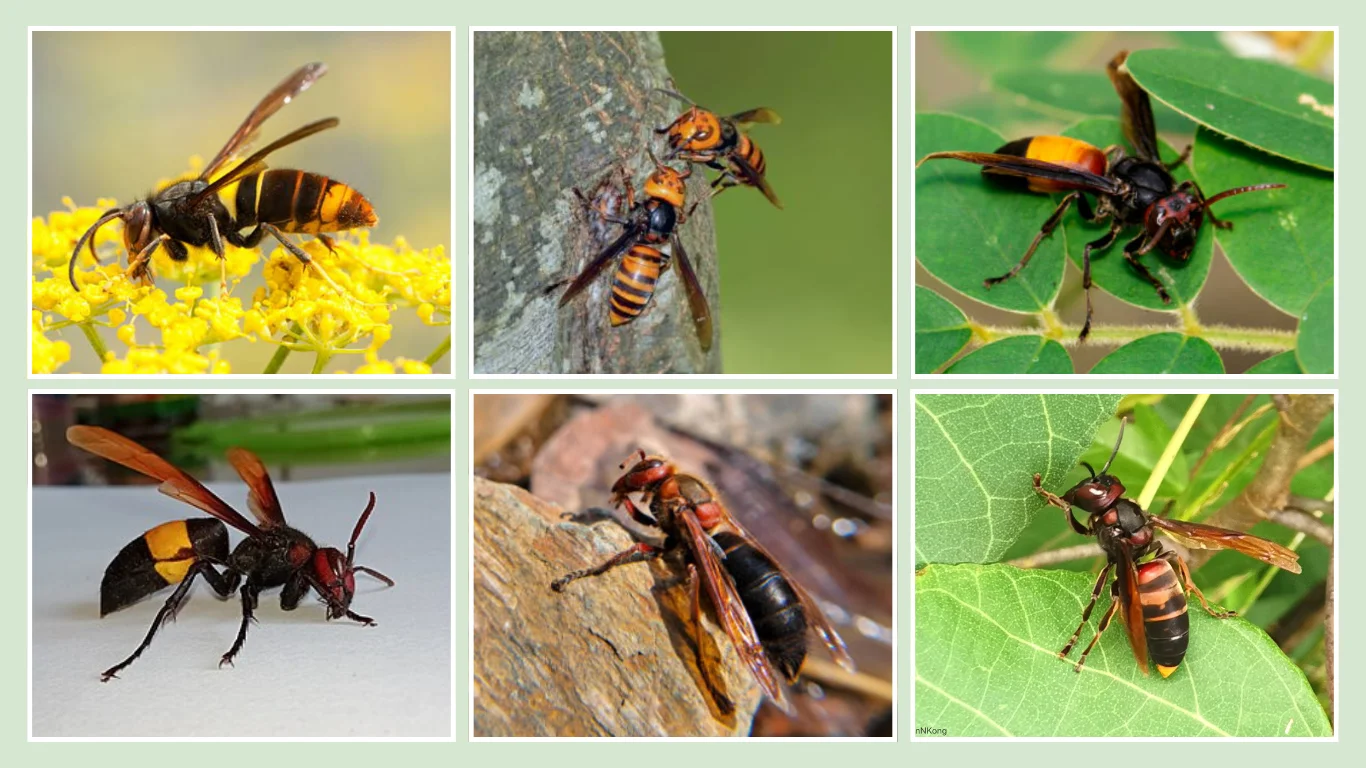
Asian hornets are found across many parts of Asia, each with unique features and behavior. While some species, like the Asian giant hornet, are known for their size and aggression, others are more passive and less harmful to humans. This guide introduces seven common types of Asian hornets, highlighting how to identify them, where they live, and what they eat.
1. Vespa velutina (Asian Hornet)
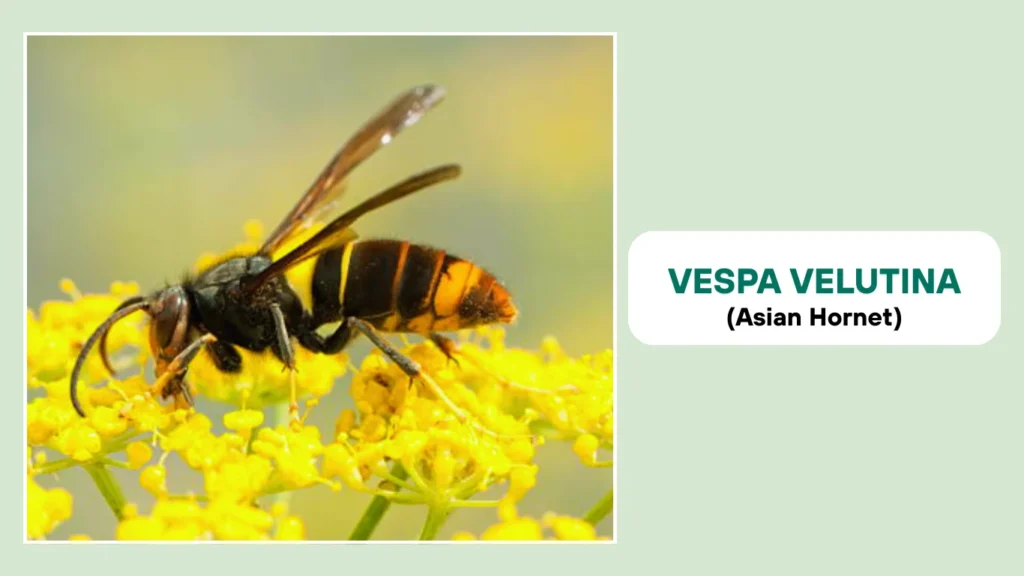
The Vespa velutina, commonly known as the Asian hornet or yellow-legged hornet, is a species native to Southeast Asia. It has become invasive in several parts of Europe and poses a significant threat to honeybee populations due to its aggressive predation behavior. The hornet is recognized for its swift flight, dark body, and yellow-tipped legs.
Identification
- Dark brown or black body
- Yellow-orange band on the fourth abdomen segment
- Yellow-tipped legs
- Slightly smaller than native European hornets (around 25 mm)
Habitat
Asian hornets build large, rounded nests in high trees, building eaves, or shrubs. They prefer urban and rural areas with access to floral resources and insects.
Behavior
These hornets are active hunters, especially targeting honeybees. They hover near hives and attack flying bees, often decapitating them before feeding on the thorax.
Diet
- Honeybees
- Other flying insects
- Fruit and tree sap
- Occasionally sugary human food when available
2. Vespa mandarinia (Asian Giant Hornet)

The Vespa mandarinia, also known as the Asian giant hornet, is the largest hornet species in the world. Native to temperate and tropical Eastern Asia, this hornet has gained global attention due to its size and powerful sting. It is sometimes referred to in the media as the “murder hornet” due to its aggressive attacks on honeybee colonies.
Identification
- Body length up to 45 mm (queen can exceed 50 mm)
- Orange head with prominent eyes
- Black thorax
- Yellow and black striped abdomen
- Large, strong mandibles
Habitat
This species typically nests underground in abandoned rodent burrows, tree roots, or decaying stumps. They prefer low mountain and forested areas and are rarely found in urban environments.
Behavior
Vespa mandarinia is highly territorial and can become aggressive if disturbed. It launches coordinated attacks on honeybee colonies, often wiping out entire hives. Their sting is very painful and can be medically significant for allergic individuals.
Diet
- Honeybees and other insects
- Tree sap
- Fruit
- Occasionally small vertebrates like lizards or frogs
3. Vespa affinis (Lesser Banded Hornet)

The Vespa affinis, or lesser banded hornet, is a widespread species across southern and Southeast Asia. It is known for its distinctive banded appearance and painful sting.
Identification
- Medium-sized (about 22–26 mm)
- Black body with a wide orange or yellow band across the abdomen
- Orange face
- Transparent wings with a slight brown tint
Habitat
Often found nesting in trees, under building roofs, or inside wall cavities. It adapts well to both forested and urban environments.
Behavior
Aggressive when disturbed, particularly around its nest. Frequently seen foraging in the daytime.
Diet
- Nectar
- Tree sap
- Insects
- Human food scraps
4. Vespa tropica (Greater Banded Hornet)

The Vespa tropica is larger and more aggressive than its “lesser” counterpart. It is commonly found in tropical Asia and is feared for its painful sting.
Identification
- Size ranges between 26–30 mm
- Dark brown to black with a broad orange band across the second abdominal segment
- Orange face with dark antennae
- Wings are dark-tinted
Habitat
Builds aerial or ground nests in tree hollows, shrubs, or wall cavities. Prefers warm, tropical climates.
Behavior
Highly territorial and quick to defend its nest. It hunts insects and scavenges around human dwellings.
Diet
- Large insects (including other hornets)
- Tree sap
- Overripe fruits
- Human food waste
5. Vespa basalis (Black-Bellied Hornet)
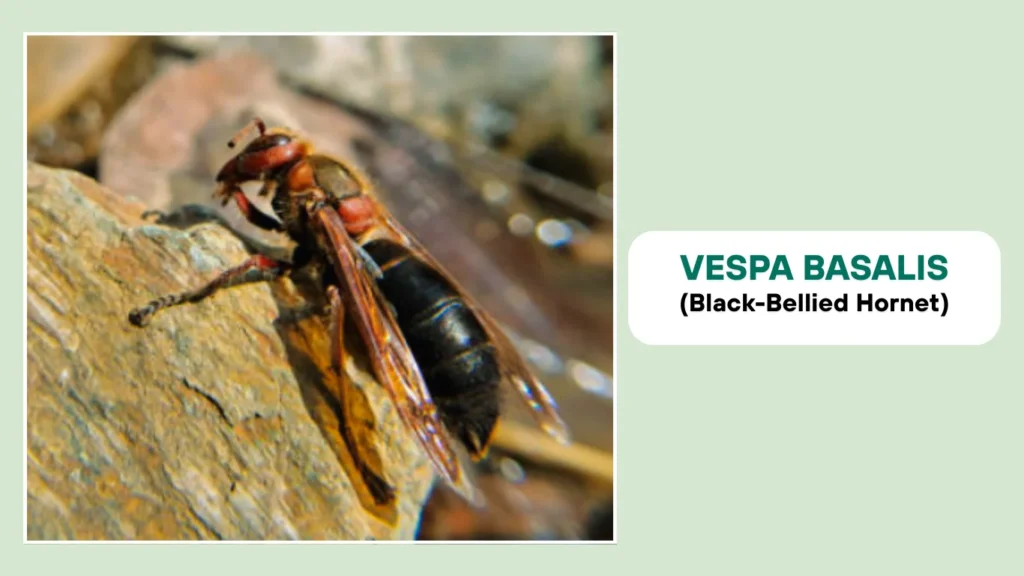
The Vespa basalis, often called the black-bellied hornet, is a lesser-known Asian hornet species with a striking dark abdomen. It is found primarily in Taiwan, southern China, and parts of Southeast Asia.
Identification
- Size about 20–25 mm
- Dark brown to black body with a distinct black abdomen
- Yellow-orange markings on the face
- Semi-transparent brown wings
Habitat
This hornet prefers wooded areas and often builds its nest in tree hollows or under eaves of quiet buildings. It avoids noisy or heavily populated areas.
Behavior
Though less aggressive than other hornet species, it will defend its nest fiercely if provoked. It is active during the day and often seen near flowering plants.
Diet
The black-bellied hornet feeds on sugary substances such as nectar and fruit juices. It also hunts smaller insects for protein, especially to feed its larvae.
6. Vespa ducalis (Black Hornet)
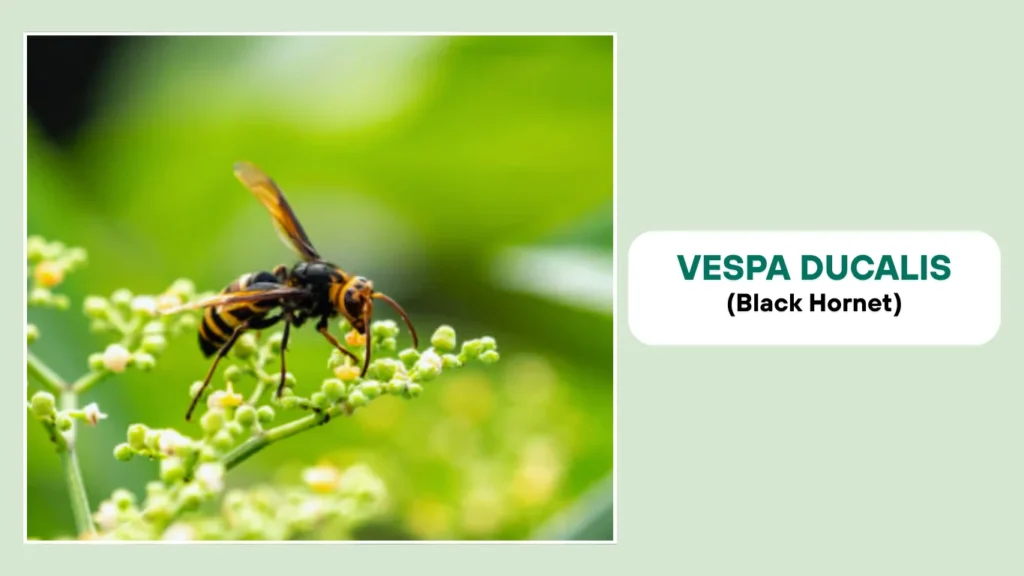
Vespa ducalis, known as the black hornet, is unique for its relatively passive nature compared to more aggressive hornets. Native to East and Southeast Asia, it is distinguishable by its mostly black body.
Identification
- About 25–30 mm long
- Shiny black body with limited yellow or white markings
- Broad head and large jaws
- Transparent wings with a slightly smoky appearance
Habitat
It typically nests in trees or underground spaces. Compared to other species, it is not often found around urban human structures.
Behavior
This species is less aggressive and rarely attacks unless provoked. It spends most of its time foraging and does not pose a significant threat to humans.
Diet
The black hornet’s diet mainly consists of tree sap and nectar. It also catches caterpillars and soft-bodied insects to nourish its developing young.
7. Vespa analis (Yellow-Vented Hornet)
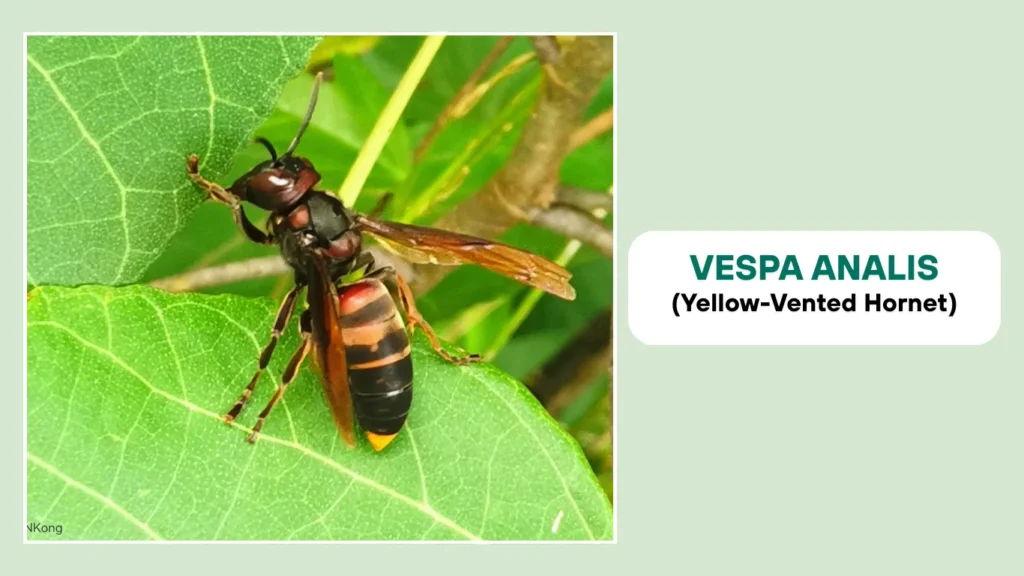
The Vespa analis, commonly referred to as the yellow-vented hornet, is another hornet species found throughout Southeast Asia. It is recognized for its yellowish abdominal segments and moderate size.
Identification
- Body length approximately 20–25 mm
- Yellow and black striped abdomen with yellowish segments
- Yellow legs
- Dark head with black markings
Habitat
It typically nests in trees or large shrubs, preferring a mix of wooded and open areas. Nests are built high up, but can sometimes be found near human settlements.
Behavior
Vespa analis is moderately aggressive when protecting its nest. It hunts insects and scavenges around human activity but tends to avoid confrontation unless provoked.
Diet
The yellow-vented hornet feeds on nectar, tree sap, and small insects. It also takes advantage of human food waste when available, though it is not as attracted to sugary foods as other hornet species.
Summary:
This article explores seven different Asian hornet species, from the well-known Vespa mandarinia to the lesser-known Vespa analis. It provides quick facts on their appearance, nesting habits, behavior, and diet—helping readers understand these powerful insects better.
