

Black flies (Family: Simuliidae) are small, dark-colored insects often found near rivers and streams, where their larvae develop in fast-flowing, oxygen-rich waters. While some species are simply biting nuisances, others are of great medical importance, transmitting diseases such as river blindness (onchocerciasis) in parts of Africa and the Americas. In this guide, we’ll cover 25 notable species of black flies, highlighting their unique traits, distributions, and ecological or health significance.
1. Simulium venustum (Black Fly)

Simulium venustum is one of the most widespread and common black fly species in North America. It is particularly abundant in regions with fast-flowing rivers and streams, where the larvae attach themselves to submerged rocks. This species is notorious for its persistent biting behavior, often swarming in large numbers during the warmer months, which makes it a nuisance to both humans and animals.
Identification
- Scientific Name: Simulium venustum
- Size: Adults typically 2–5 mm
- Color: Black or dark gray with shiny thorax and humped back
- Wings: Broad and clear, with strong veins
- Larvae: Aquatic, attaching to rocks in running water using a posterior sucker
Habitat and Distribution
This species is distributed widely across North America, especially in Canada and the northern United States. It thrives in clean, oxygen-rich rivers and streams where water flows rapidly, supporting larval development.
Behavior and Diet
Adult females are blood feeders, biting mammals and humans to obtain protein for egg development. Their swarms can be extremely aggressive, making outdoor activities uncomfortable in infested areas. Larvae are filter feeders, consuming organic particles and microorganisms from the water, thus playing an important role in aquatic ecosystems.
2. Simulium vittatum (Black Fly)

Simulium vittatum is one of the best-studied black fly species because of its widespread presence across North America and its role as both a nuisance biter and a vector of livestock diseases. This species is often found in huge swarms during late spring and summer, making it one of the most aggressive biting flies in certain regions.
Identification
- Scientific Name: Simulium vittatum
- Size: Adults 2–4 mm
- Color: Dark gray to black body with lighter banding on legs
- Wings: Clear, broad, with strong veins
- Larvae: Aquatic, attached to submerged vegetation and rocks with silk pads and hooks
Habitat and Distribution
This species thrives in temperate regions across North America. It is especially common in agricultural areas with streams or irrigation channels that support larval growth.
Behavior and Diet
Females feed on the blood of humans, cattle, and other mammals. They are notorious for causing “black fly fever” in livestock, marked by irritation, blood loss, and reduced productivity. Larvae filter fine organic material from water, contributing to nutrient cycling.
3. Simulium decorum (Black Fly)

Simulium decorum is a northern black fly species often associated with boreal and subarctic regions. While not as globally notorious as some tropical black flies, it is locally abundant and can cause severe annoyance to humans and animals in infested areas.
Identification
- Scientific Name: Simulium decorum
- Size: Adults 2–3 mm
- Color: Dark brown to black with faintly patterned thorax
- Wings: Short, clear wings with visible venation
- Larvae: Small, clinging to submerged rocks in fast water
Habitat and Distribution
This species is mainly distributed in Canada, Alaska, and northern parts of Europe and Asia. It favors cold, fast-flowing streams typical of boreal landscapes.
Behavior and Diet
Adult females feed on the blood of humans, birds, and mammals, often swarming in clouds near rivers during summer months. Though their bites are irritating, they are primarily considered a nuisance rather than a major disease vector. Larvae act as filter feeders, capturing algae, detritus, and microorganisms from river currents.
4. Simulium tuberosum (Black Fly)

Simulium tuberosum is a common black fly species that belongs to a complex group with several closely related forms. It is widely distributed and often encountered in both rural and urban settings, especially near clean, fast-flowing streams where larvae develop. This species is an aggressive biter and is considered a nuisance in many regions.
Identification
- Scientific Name: Simulium tuberosum
- Size: Adults 2–4 mm
- Color: Black body with faint grayish banding
- Wings: Clear with broad venation
- Larvae: Aquatic, attached to submerged stones, wood, or vegetation
Habitat and Distribution
This species occurs across North America, Europe, and parts of Asia. It thrives in well-oxygenated, flowing waters such as rivers and streams, often in areas with abundant vegetation.
Behavior and Diet
Adult females are persistent blood feeders, attacking humans, birds, and mammals. Their bites are painful and can cause swelling and itching. Larvae act as filter feeders, consuming fine organic particles suspended in the water.
5. Simulium damnosum (Black Fly)
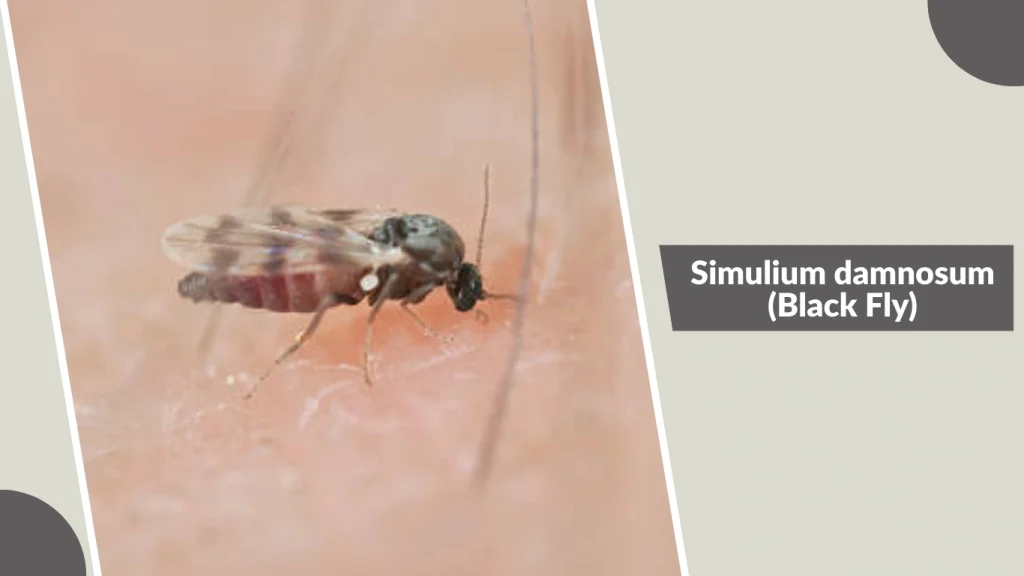
Simulium damnosum is one of the most infamous black fly species because it is the primary vector of river blindness (onchocerciasis) in sub-Saharan Africa. Its presence has significant public health importance, making it one of the best-known black flies worldwide.
Identification
- Scientific Name: Simulium damnosum
- Size: Adults 2–5 mm
- Color: Dark body, often with gray or silvery markings
- Wings: Broad, clear, and strong
- Larvae: Found clinging to rocks in fast-flowing tropical rivers
Habitat and Distribution
This species is found widely across tropical Africa, particularly in areas with large, fast-flowing rivers and streams where larvae can thrive.
Behavior and Diet
Adult females require blood meals and frequently bite humans, transmitting the parasitic worm Onchocerca volvulus. This parasite causes river blindness, making the species a serious medical threat. Larvae are filter feeders, contributing to the river ecosystem but also posing a challenge to human health due to disease transmission.
6. Simulium ochraceum (Black Fly)
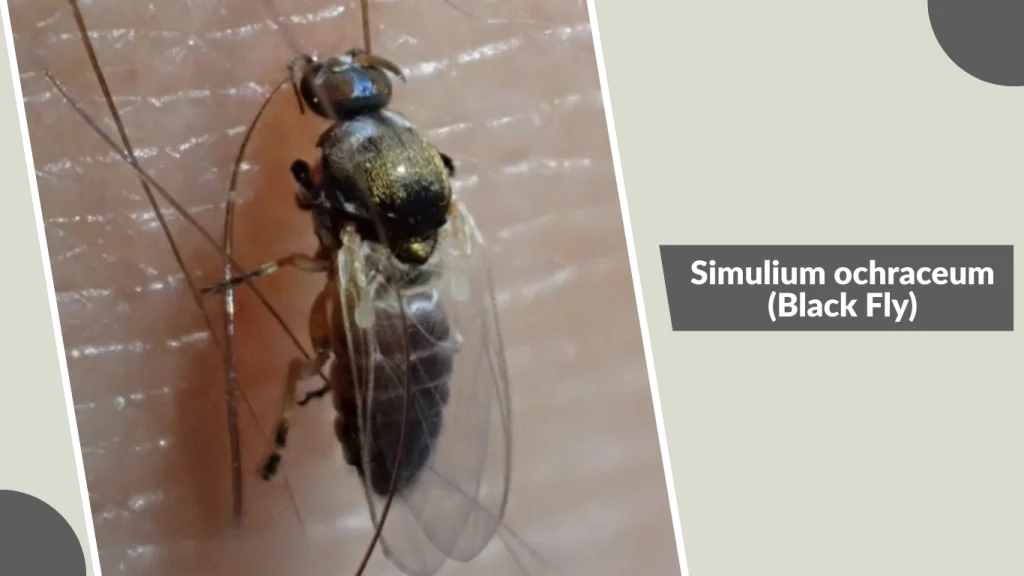
Simulium ochraceum is another medically important black fly species, especially in Central America, where it is a known vector of river blindness (Onchocerca volvulus). Though smaller than many black flies, it occurs in very large swarms, making it a major nuisance and a serious health concern in affected areas.
Identification
- Scientific Name: Simulium ochraceum
- Size: Adults 1.5–3 mm, smaller than many related species
- Color: Dark gray to black body with lighter leg banding
- Wings: Clear, relatively small compared to body size
- Larvae: Aquatic, attaching to submerged vegetation and stones in fast currents
Habitat and Distribution
This species is found in Mexico, Guatemala, and other parts of Central America, favoring mountainous rivers and streams with clean, fast-flowing water.
Behavior and Diet
Females feed on human blood and serve as a vector of the parasite that causes river blindness. Their swarms are extremely persistent, especially in rural farming areas. Larvae filter-feed on organic particles, but the adults’ role in disease transmission makes them particularly dangerous.
7. Simulium yahense (Black Fly)

Simulium yahense is a West African black fly species with significant medical importance as another vector of onchocerciasis. It is less widely distributed than Simulium damnosum but is highly efficient in transmitting the parasite in certain regions, contributing to the disease burden in affected communities.
Identification
- Scientific Name: Simulium yahense
- Size: Adults 2–4 mm
- Color: Black to dark brown body with slightly lighter legs
- Wings: Clear, broad, with strong venation
- Larvae: Found clinging to rocks in swift, oxygen-rich rivers
Habitat and Distribution
This species is concentrated in West Africa, particularly in forested river systems of countries like Côte d’Ivoire, Ghana, and Liberia.
Behavior and Diet
Adult females aggressively bite humans, often forming dense swarms near riverbanks. They play a central role in the transmission of Onchocerca volvulus. Larvae are filter feeders in freshwater, but the medical significance of the adults overshadows their ecological role.
8. Simulium sirbanum (Black Fly)
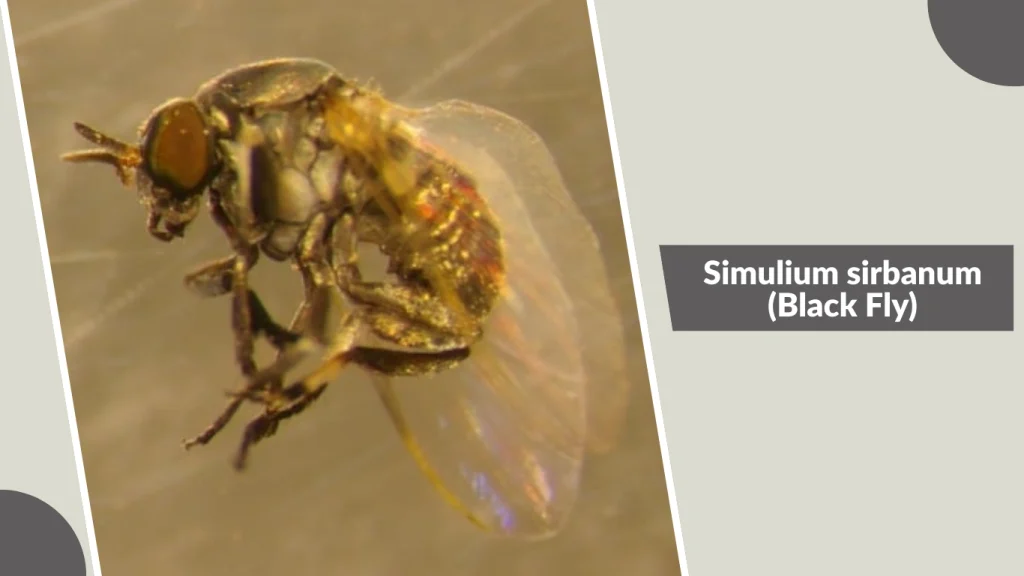
Simulium sirbanum is one of the most important African black fly species in the Simulium damnosum complex. It is a primary vector of river blindness (Onchocerca volvulus) in savanna regions, where the disease often leads to severe eye damage and blindness. Its widespread distribution and role in disease transmission make it a major public health concern.
Identification
- Scientific Name: Simulium sirbanum
- Size: Adults 2–4 mm
- Color: Black body with subtle grayish sheen
- Wings: Clear and broad with pronounced venation
- Larvae: Aquatic, firmly attached to rocks in fast-flowing rivers
Habitat and Distribution
This species dominates in savanna zones of West and Central Africa, where large rivers and streams provide suitable breeding sites.
Behavior and Diet
Adult females are aggressive human biters, transmitting Onchocerca volvulus. Their swarms can make riverside life extremely difficult. Larvae filter-feed in river currents, but the adult stage is medically critical due to its disease vector role.
9. Simulium metallicum (Black Fly)
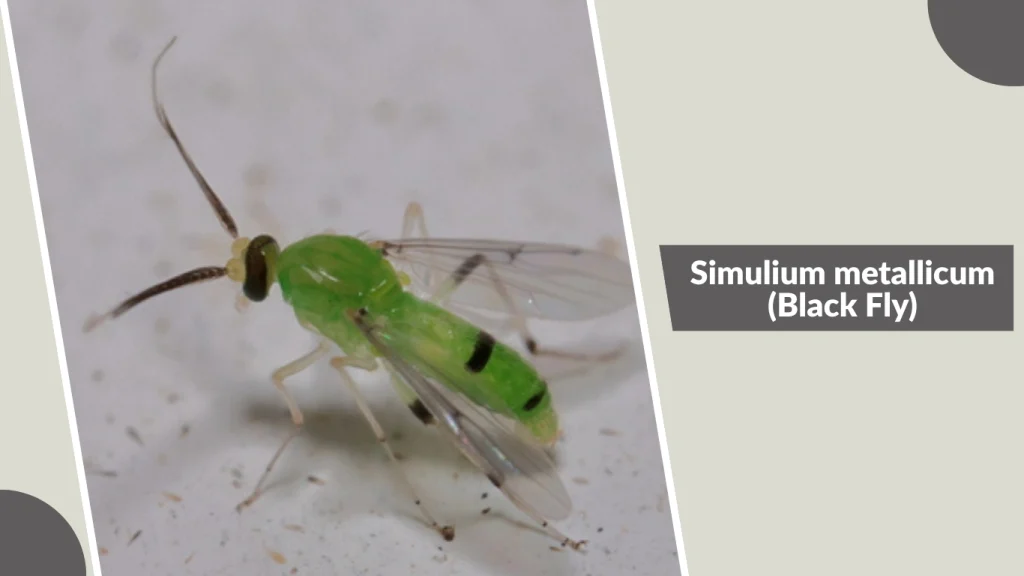
Simulium metallicum is a Central and South American black fly known both as a nuisance and as a vector of human disease. It is considered one of the primary species involved in transmitting river blindness in certain regions. Its name comes from the metallic sheen often seen on its body under light.
Identification
- Scientific Name: Simulium metallicum
- Size: Adults 2–3 mm
- Color: Dark body with a noticeable metallic or shiny appearance
- Wings: Clear and rounded, proportionate to body size
- Larvae: Aquatic, clinging to submerged rocks and vegetation
Habitat and Distribution
This species is widespread in Central America and northern South America, particularly in mountainous and forested river systems.
Behavior and Diet
Adult females are persistent biters, primarily targeting humans and livestock. They are a significant vector of Onchocerca volvulus in endemic areas. Larvae play a role in stream ecosystems as filter feeders, but adults are feared for their biting behavior and disease transmission.
10. Simulium neavei (Black Fly)

Simulium neavei is a unique black fly species notable for its unusual larval ecology. Unlike most black flies, its larvae attach themselves to the bodies of freshwater crabs, using them as living substrates. This close association makes its distribution more limited but also makes it a highly efficient vector of river blindness in certain African regions.
Identification
- Scientific Name: Simulium neavei
- Size: Adults 2–3 mm
- Color: Dark black to brown body with shiny thorax
- Wings: Clear and broad, with strong venation
- Larvae: Parasitic-like, clinging to freshwater crabs instead of rocks or plants
Habitat and Distribution
This species is found in East and Central Africa, particularly in Uganda, Kenya, and Tanzania. It is restricted to areas where suitable freshwater crabs are present to support larval development.
Behavior and Diet
Adult females are persistent human blood feeders and efficient transmitters of Onchocerca volvulus. Their unusual larval life cycle creates a strong link between river blindness transmission and crab populations in certain African river systems.
11. Simulium callidum (Black Fly)

Simulium callidum is a North American black fly species that is locally abundant in certain regions. While not a major vector of disease, it is a significant nuisance species because of its aggressive biting swarms. Like many others, it thrives in clean, fast-flowing streams with high oxygen content.
Identification
- Scientific Name: Simulium callidum
- Size: Adults 2–4 mm
- Color: Black or dark gray body with faint banding on legs
- Wings: Clear, rounded, with visible venation
- Larvae: Aquatic, attached to submerged stones and woody debris
Habitat and Distribution
This species is distributed mainly in North America, with higher abundance in the northeastern United States and Canada. It prefers smaller streams and creeks with moderate to fast currents.
Behavior and Diet
Females feed on the blood of mammals, including humans, and often appear in dense swarms during spring and summer. Their bites can cause itching, swelling, and discomfort. Larvae filter-feed on algae and organic particles, contributing to nutrient cycling in stream ecosystems.
12. Simulium auripellitum (Black Fly)
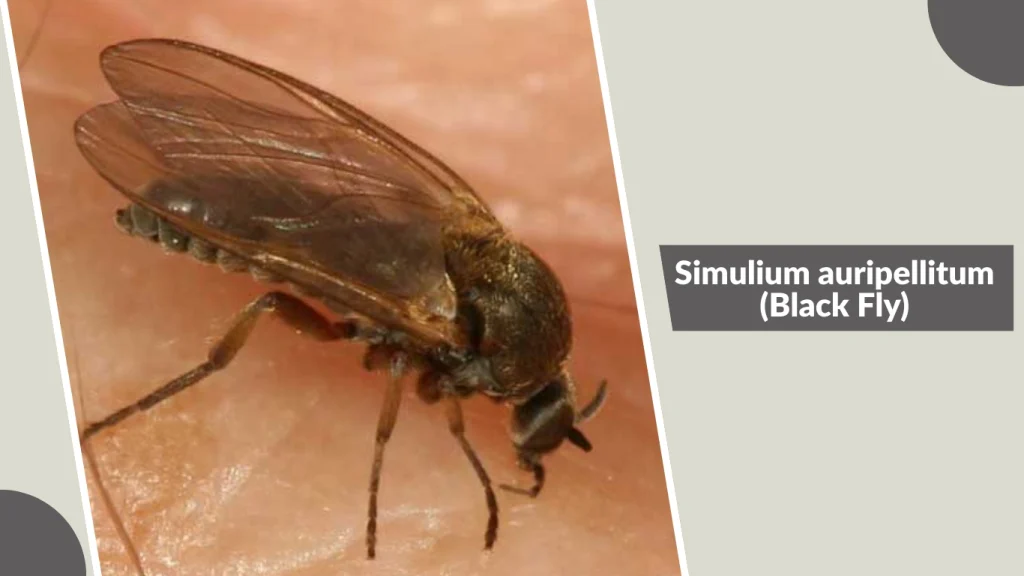
Simulium auripellitum is a lesser-known but locally abundant species of black fly. While not globally notorious, it can still cause serious nuisance to humans and livestock in regions where it swarms heavily. Like other species, it depends on fast-flowing, oxygen-rich water for its larval stage, making its presence an indicator of clean streams.
Identification
- Scientific Name: Simulium auripellitum
- Size: Adults 2–3 mm
- Color: Dark gray to black body with subtle golden sheen on the thorax
- Wings: Clear, proportionately broad
- Larvae: Aquatic, fixed to submerged rocks or vegetation by silk pads
Habitat and Distribution
This species occurs in localized populations across parts of North America and Europe, often in cooler streams with gravelly bottoms.
Behavior and Diet
Adult females feed on blood, primarily from mammals, and may swarm aggressively in infested areas. Larvae filter-feed, consuming organic particles and planktonic microorganisms from the current.
13. Simulium hargreavesi (Black Fly)

Simulium hargreavesi is another African species of medical importance, known as a vector of river blindness (Onchocerca volvulus). It is not as widespread as Simulium damnosum but contributes to disease transmission in specific regions where it thrives.
Identification
- Scientific Name: Simulium hargreavesi
- Size: Adults 2–4 mm
- Color: Black body with lighter patches on legs
- Wings: Clear, rounded, with defined venation
- Larvae: Found on rocks in fast-flowing rivers
Habitat and Distribution
This species is concentrated in parts of West and Central Africa. It favors rivers and streams with swift currents, providing suitable breeding conditions for larvae.
Behavior and Diet
Adult females are persistent human blood feeders and play a role in transmitting the parasite that causes onchocerciasis. Their swarms can be overwhelming for riverside communities, making them both an ecological and public health concern.
14. Simulium reptans (Black Fly)

Simulium reptans is a widespread black fly species across Europe and parts of Asia. It is notorious for its aggressive biting behavior in rural areas, particularly near rivers and streams where it breeds. This species is often a major nuisance to both humans and livestock, and it has been historically associated with outbreaks of black fly plagues in northern Europe.
Identification
- Scientific Name: Simulium reptans
- Size: Adults 2–4 mm
- Color: Black body with dull gray sheen
- Wings: Clear, slightly broad, with strong venation
- Larvae: Aquatic, attaching to submerged rocks and vegetation in running water
Habitat and Distribution
Simulium reptans is distributed widely across northern and central Europe and parts of Asia. It prefers temperate climates and breeds in rivers, streams, and even small creeks with sufficient current.
Behavior and Diet
Adult females are aggressive blood feeders and often attack in large swarms. Their bites are painful and can cause swelling and allergic reactions. Larvae filter-feed on algae and organic matter, making them ecologically important despite their nuisance status.
15. Simulium rugglesi (Black Fly)
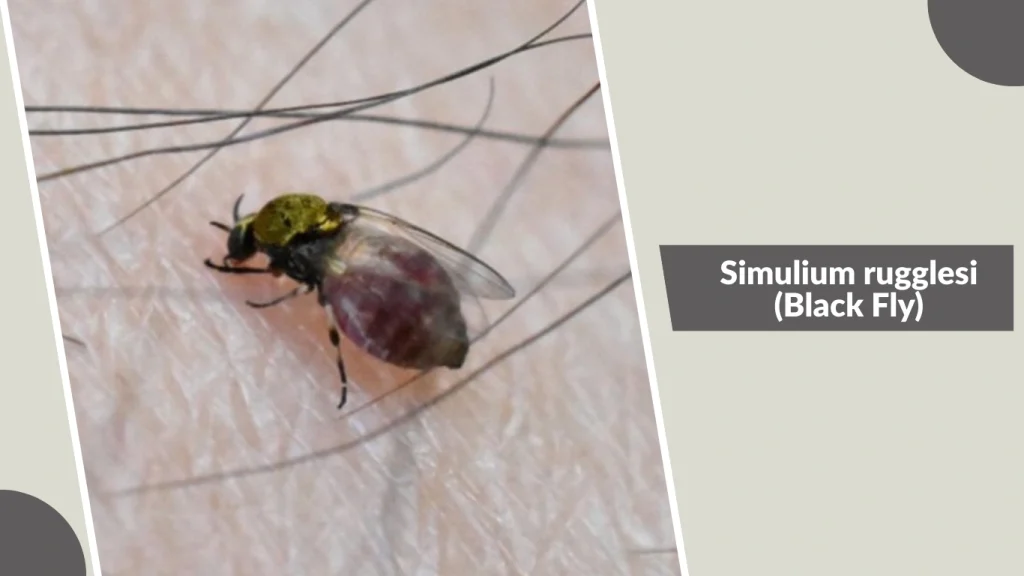
Simulium rugglesi is a North American species that is less widely known than some of its relatives but still locally abundant. It can form significant swarms in rural areas during late spring and summer, making it a biting nuisance for outdoor activities.
Identification
- Scientific Name: Simulium rugglesi
- Size: Adults 2–3 mm
- Color: Dark gray to black body with lightly banded legs
- Wings: Clear, proportionally broad
- Larvae: Aquatic, clinging to stones and woody debris in streams
Habitat and Distribution
This species is found in Canada and the northern United States, especially in forested and rural landscapes with abundant small rivers and creeks.
Behavior and Diet
Females feed on the blood of mammals and humans, often appearing in localized swarms. While not considered a major disease vector, their bites cause irritation, itching, and swelling. Larvae feed on organic particles filtered from the water, supporting stream ecosystems.
16. Simulium exiguum (Black Fly)
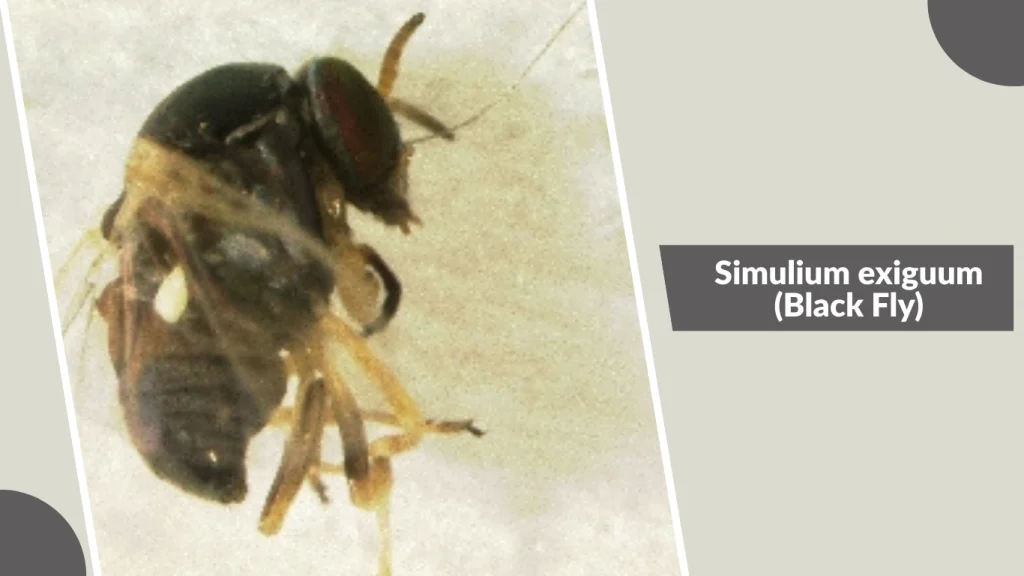
Simulium exiguum is a small but medically significant black fly found in Central and South America. It is one of the principal vectors of onchocerciasis (river blindness) in parts of this region, making it an important species in public health. Despite its tiny size, its dense swarms can cause severe irritation and pose a disease risk.
Identification
- Scientific Name: Simulium exiguum
- Size: Adults 1.5–2.5 mm (among the smallest black flies)
- Color: Dark gray to black body
- Wings: Clear and narrow with strong venation
- Larvae: Aquatic, attached to vegetation and stones in swift rivers
Habitat and Distribution
This species is concentrated in Central America, Colombia, Ecuador, and Venezuela, inhabiting fast-flowing streams and rivers.
Behavior and Diet
Females are aggressive human blood feeders and key vectors of Onchocerca volvulus. Larvae act as filter feeders, consuming organic debris in running water.
17. Simulium jenningsi (Black Fly)

Simulium jenningsi is a common black fly species in North America, particularly in the eastern United States. It is not a major disease vector but is a persistent nuisance because of its large swarms that can affect both rural communities and outdoor recreation.
Identification
- Scientific Name: Simulium jenningsi
- Size: Adults 2–4 mm
- Color: Black body with faint gray banding on thorax
- Wings: Clear, broad with prominent venation
- Larvae: Aquatic, found on submerged rocks and woody debris
Habitat and Distribution
This species is found mainly in the eastern and midwestern United States, thriving in fast-flowing rivers and streams with rocky beds.
Behavior and Diet
Adult females feed on human and animal blood, often swarming in great numbers during late spring and early summer. Their bites can cause itching, swelling, and allergic reactions. Larvae filter organic particles from water, contributing to the balance of stream ecosystems.
18. Simulium colombaschense (Black Fly)

Simulium colombaschense is a historically infamous black fly species in Europe, known for causing devastating outbreaks of biting plagues. In past centuries, its swarms were so intense along the Danube River that they caused fatalities in livestock and severe distress to human populations. Although control measures have reduced its impact, it remains one of the most notable black fly species in European history.
Identification
- Scientific Name: Simulium colombaschense
- Size: Adults 3–5 mm
- Color: Black body with a shiny thorax
- Wings: Clear, broad with strong venation
- Larvae: Aquatic, attached to rocks and submerged vegetation in large rivers
Habitat and Distribution
This species was historically abundant along the Danube River in Central and Eastern Europe. While modern control measures have reduced its outbreaks, it still persists in localized populations in some European rivers.
Behavior and Diet
Adult females are highly aggressive blood feeders of humans and animals, with swarms capable of overwhelming villages and farms. Their larvae filter-feed on organic particles in river currents, but their adult stage made them one of the most feared black flies in European history.
19. Simulium equinum (Black Fly)
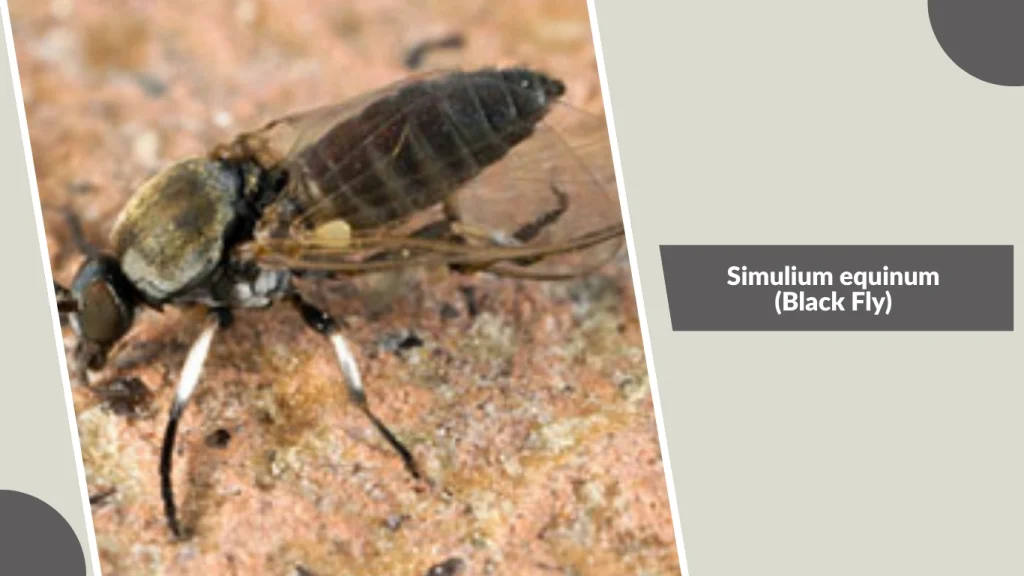
Simulium equinum, often referred to as the “horse black fly,” is a European species named for its preference for feeding on horses and other livestock. Although less aggressive toward humans than some black fly species, it is still considered a nuisance in rural areas.
Identification
- Scientific Name: Simulium equinum
- Size: Adults 3–4 mm
- Color: Black or dark brown body with faint gray sheen
- Wings: Clear with distinct venation
- Larvae: Aquatic, attaching to stones and aquatic plants in rivers
Habitat and Distribution
This species is found across much of Europe and western Asia, particularly in rural and agricultural landscapes near streams and rivers.
Behavior and Diet
Adult females feed primarily on the blood of horses, cattle, and other livestock, although they occasionally bite humans. Their swarms can stress farm animals, reducing milk and meat production. Larvae play an ecological role as filter feeders in running water.
20. Simulium luggeri (Black Fly)

Simulium luggeri is a North American black fly species often associated with nuisance swarms during late spring and summer. While not a major disease vector, it is still locally important because of its abundance and aggressive biting behavior. Its larvae thrive in rivers with strong currents, making it a common species in both rural and semi-urban regions near water.
Identification
- Scientific Name: Simulium luggeri
- Size: Adults 2–4 mm
- Color: Black to dark gray body with slightly banded legs
- Wings: Clear and broad, proportionate to body size
- Larvae: Aquatic, firmly attached to submerged rocks and vegetation
Habitat and Distribution
This species is distributed mainly in the central and eastern United States, especially in areas with large river systems. It prefers moderately to fast-flowing rivers with rocky bottoms.
Behavior and Diet
Females feed on the blood of humans and livestock, swarming in large numbers that cause irritation and discomfort. Though not a disease vector, its bites can cause itching and swelling. Larvae are filter feeders, capturing organic particles from the current.
21. Simulium arcticum (Black Fly)

Simulium arcticum is one of the most abundant black fly species in North America’s northern regions. It is particularly important in Canada and Alaska, where it is not only a biting nuisance but also a vector of onchocerciasis in localized areas. This species tolerates very cold environments, making it a dominant black fly in boreal and arctic zones.
Identification
- Scientific Name: Simulium arcticum
- Size: Adults 2–3 mm
- Color: Black to dark gray with faint sheen on thorax
- Wings: Clear and slightly rounded
- Larvae: Aquatic, attaching to stones in cold, swift rivers and streams
Habitat and Distribution
This species is widespread across northern North America, from Alaska to Canada, and extends into high-altitude mountain regions.
Behavior and Diet
Adult females are aggressive biters of both humans and livestock. In some areas, they are documented as vectors of Onchocerca parasites in localized endemic foci. Larvae are filter feeders, thriving in icy streams where they form dense populations, supporting aquatic ecosystems but creating swarms of adult flies in summer.
22. Simulium noelleri (Black Fly)

Simulium noelleri is a European black fly species often associated with nuisance outbreaks near rivers and wetlands. While it does not have major medical significance compared to African or Central American species, it is well known locally for its aggressive biting behavior, especially during warm summer months.
Identification
- Scientific Name: Simulium noelleri
- Size: Adults 2–3 mm
- Color: Dark gray to black body with subtle lighter banding
- Wings: Clear, proportionally broad, with distinct venation
- Larvae: Aquatic, attached to stones, vegetation, or woody debris in streams
Habitat and Distribution
This species is found across central and northern Europe, especially in river valleys and wetland areas. It prefers clean, oxygen-rich streams and canals where larvae can thrive.
Behavior and Diet
Adult females bite humans, livestock, and birds, often appearing in large swarms. Their bites are irritating and may cause localized allergic reactions. Larvae are filter feeders, consuming fine organic matter suspended in flowing water.
23. Simulium subspinatum (Black Fly)
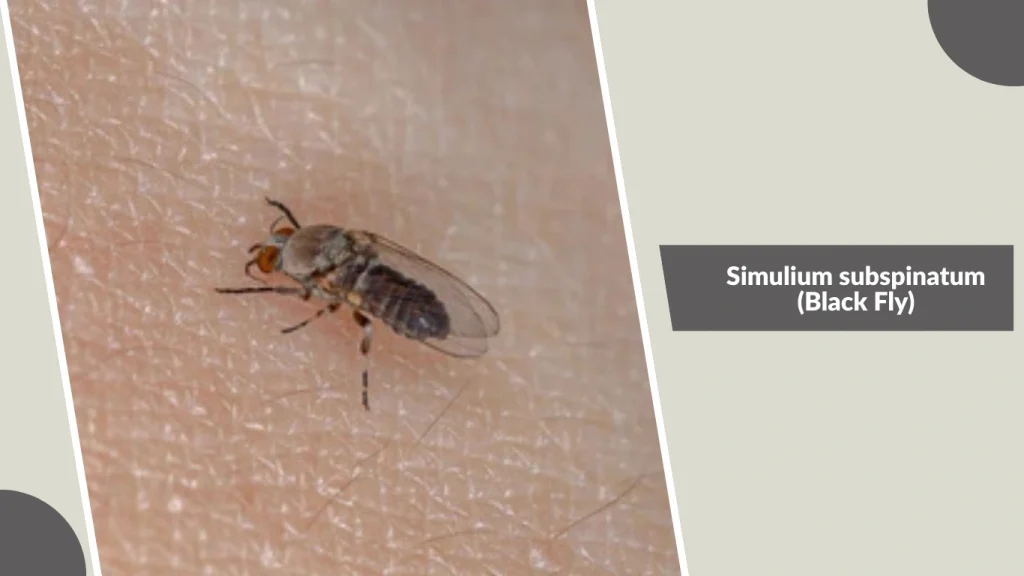
Simulium subspinatum is a lesser-known black fly species but is abundant in parts of North America. Although it is not a major disease vector, it can form heavy nuisance swarms near streams and rivers in rural areas.
Identification
- Scientific Name: Simulium subspinatum
- Size: Adults 2–4 mm
- Color: Black to dark brown body with faint thoracic sheen
- Wings: Clear, with strong and slightly rounded venation
- Larvae: Aquatic, clinging to submerged stones and aquatic plants
Habitat and Distribution
This species is common in Canada and the northern United States, particularly in cool streams and rivers with moderate to fast currents.
Behavior and Diet
Females are active blood feeders on both humans and mammals, and their swarms can disrupt outdoor activities in summer. Their bites cause swelling, irritation, and itching, though they are not known to transmit serious diseases. Larvae filter-feed on algae, bacteria, and organic detritus carried by river currents.
24. Simulium vernum (Black Fly)

Simulium vernum is a widespread European black fly species that often appears in early spring, sometimes even before other biting insects become active. Its early emergence makes it one of the first seasonal nuisance flies for both humans and livestock. Although it is not considered a major vector of human disease, it can cause significant irritation due to its persistent biting.
Identification
- Scientific Name: Simulium vernum
- Size: Adults 2–3 mm
- Color: Dark gray to black body with a slightly shiny thorax
- Wings: Clear, proportionally broad, with strong venation
- Larvae: Aquatic, attached to stones and vegetation in clean, running water
Habitat and Distribution
This species is distributed widely across northern and central Europe, often thriving in forested streams and smaller rivers. It prefers cold, well-oxygenated waters where larvae develop efficiently.
Behavior and Diet
Adult females emerge in early spring and aggressively bite humans, livestock, and wild mammals. Their swarms can be dense and bothersome, especially for outdoor workers and farmers. Larvae filter-feed on algae and detritus, making them important for river ecosystems despite their nuisance as adults.
25. Simulium ornatum (Black Fly)
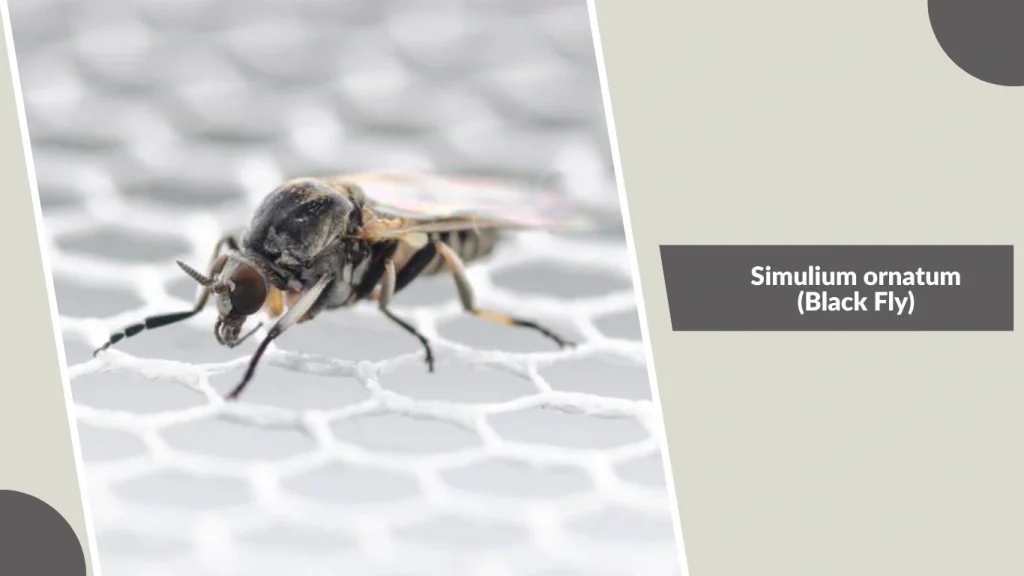
Simulium ornatum is another European black fly species, commonly associated with agricultural areas and rural landscapes. It is not among the most dangerous vectors, but it still causes discomfort to both humans and livestock during the summer months.
Identification
- Scientific Name: Simulium ornatum
- Size: Adults 2–4 mm
- Color: Black body with lighter, patterned markings on the thorax
- Wings: Clear, rounded with well-defined venation
- Larvae: Aquatic, attached to submerged stones, plants, and woody debris
Habitat and Distribution
This species occurs widely across Europe, extending from western regions into central and eastern areas. It breeds in slow-to-moderate streams, canals, and rivers with clean flowing water.
Behavior and Diet
Females bite humans and livestock, with their swarms often affecting rural farming communities. While not a primary disease vector, their bites are irritating and can cause swelling and itching. Larvae contribute to aquatic food webs by filtering fine organic matter and microorganisms from water currents.
