

Black wasps are fascinating and diverse insects known for their sleek appearance, powerful hunting abilities, and vital ecological roles. Found across the world, these species vary in size, color tone, and nesting behavior. From the majestic Great Black Wasp to the industrious Black Mud Dauber, each type of black wasp contributes to nature through pollination and pest control while maintaining an impressive balance between strength and calm temperament.
1. Great Black Wasp (Sphex pensylvanicus)
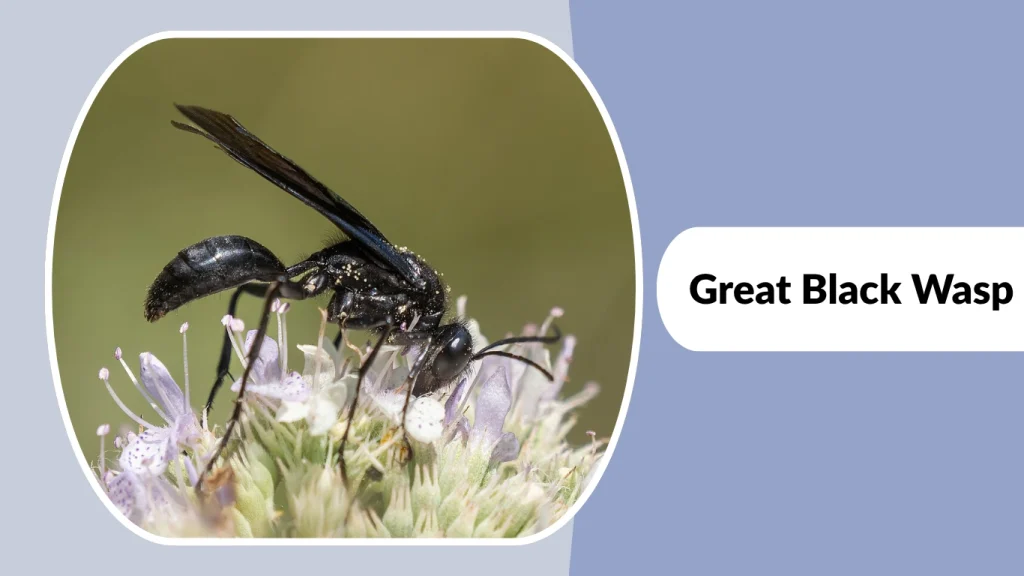
The Great Black Wasp is a large, solitary black wasp known for its glossy body and impressive size. It plays an important ecological role by preying on grasshoppers and katydids. Found across North America, this wasp is often active during warm summer months and is recognized for its calm yet powerful nature.
Identification
- Color: Shiny, deep black body with a metallic blue sheen under sunlight.
- Size: Typically 1 to 1.3 inches long, making it one of the largest solitary wasps.
- Wings: Smoky or dark blue wings that shimmer in daylight.
- Body Shape: Slender waist with a distinct, elongated abdomen.
- Antennae: Long, black, and slightly curved at the tips.
Habitat and Distribution
The Great Black Wasp prefers open fields, gardens, and meadows. It is commonly found throughout the United States, especially in areas with loose, sandy soil where females can dig burrows. These black wasps build underground nests, storing paralyzed insects for their larvae.
Behavior and Diet
This black wasp is a solitary hunter. Female wasps capture and sting grasshoppers or katydids to feed their young. Adults primarily feed on flower nectar, making them useful pollinators. Despite their intimidating look, they are not aggressive unless provoked.
Sting and Human Interaction
The sting of the Great Black Wasp is painful but not dangerous to most people. It is used mainly for paralyzing prey rather than defense. These black wasps rarely sting humans unless handled or threatened, and they are generally considered beneficial insects for pest control and pollination.
Would you like me to continue with the second wasp type — the Black Mud Dauber — in the same structured format?
2. Black Mud Dauber (Sceliphron caementarium)
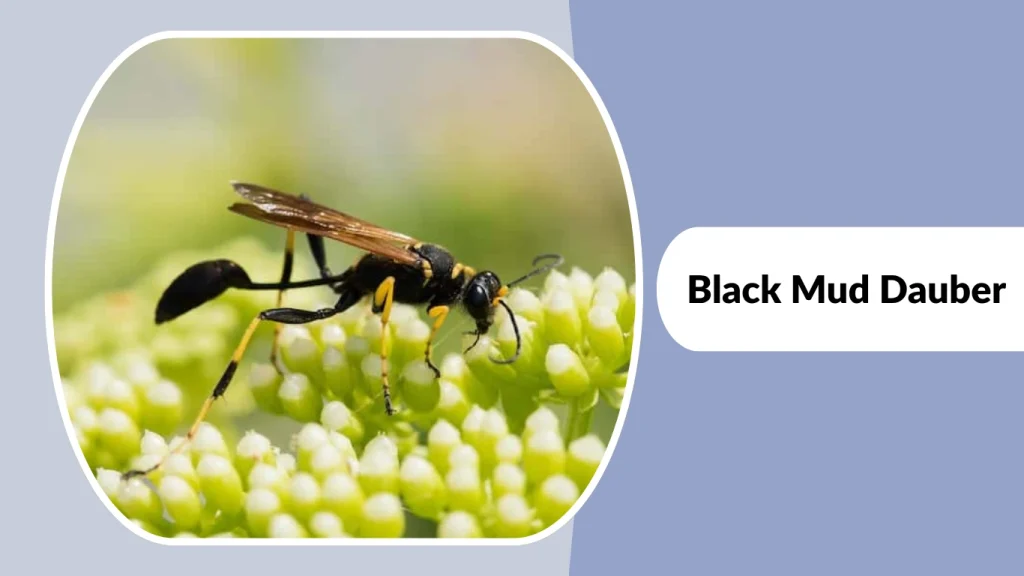
The Black Mud Dauber is a slender black wasp recognized for its unique nesting behavior. Instead of building paper nests, it constructs mud cells on walls, rocks, or under eaves. This species is known for controlling spider populations and is a common sight around homes and barns.
Identification
- Color: Glossy black body with a narrow waist and long legs.
- Size: Around 0.8 to 1 inch in length.
- Wings: Clear to dark-tinted with a faint blue shine.
- Nest: Tube-like mud nests often attached to walls or structures.
- Behavior: Non-aggressive and solitary; rarely stings humans.
Habitat and Distribution
This black wasp thrives in warm environments near water sources and mud. Found across North America, especially in rural and suburban areas, it frequently occupies sheds, garages, and outdoor structures.
Behavior and Diet
The Black Mud Dauber feeds mainly on nectar and hunts spiders to store in its mud nests. Each cell is stocked with paralyzed spiders to nourish larvae. Adults are solitary and play a major role in keeping spider populations under control.
Sting and Human Interaction
This black wasp is not aggressive and rarely stings humans. Its sting is mild compared to social wasps, and it only attacks when directly handled or trapped.
3. Black Mason Wasp (Pseudodynerus quadrisectus)
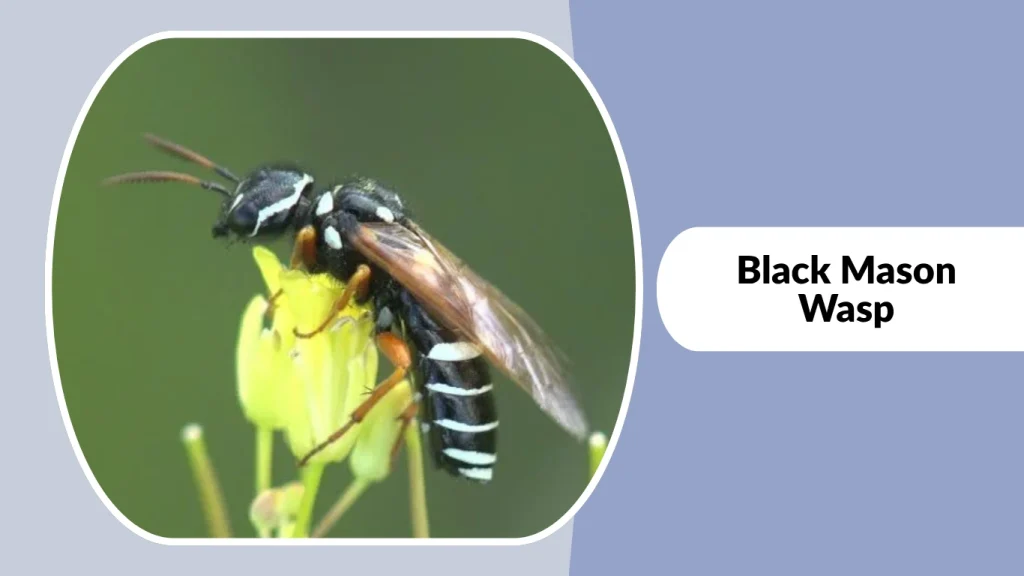
The Black Mason Wasp is a robust black wasp species known for its architectural skill in using mud and plant material to build nests. It is an effective pollinator and pest controller, often seen visiting flowers during the warmer months.
Identification
- Color: Matte black with a subtle metallic sheen.
- Size: Roughly 0.6 to 1 inch long.
- Markings: May have faint white or gray bands on the abdomen.
- Wings: Transparent with a light brown tint.
- Antennae: Medium length and black, slightly curved.
Habitat and Distribution
The Black Mason Wasp prefers gardens, meadows, and wooded areas. It nests in hollow stems, crevices, or existing holes in wood. Found throughout the eastern United States, this wasp often shares habitats with other solitary species.
Behavior and Diet
This black wasp feeds on nectar and pollen while hunting caterpillars and beetle larvae for its young. Females use mud or plant fibers to seal nest compartments. Their behavior makes them valuable natural pest managers.
Sting and Human Interaction
Though equipped with a sting, the Black Mason Wasp is non-aggressive. It only stings if trapped or disturbed. Its sting causes mild pain and swelling but poses no serious threat to humans.
4. Blue-Black Wasp (Chalybion californicum)
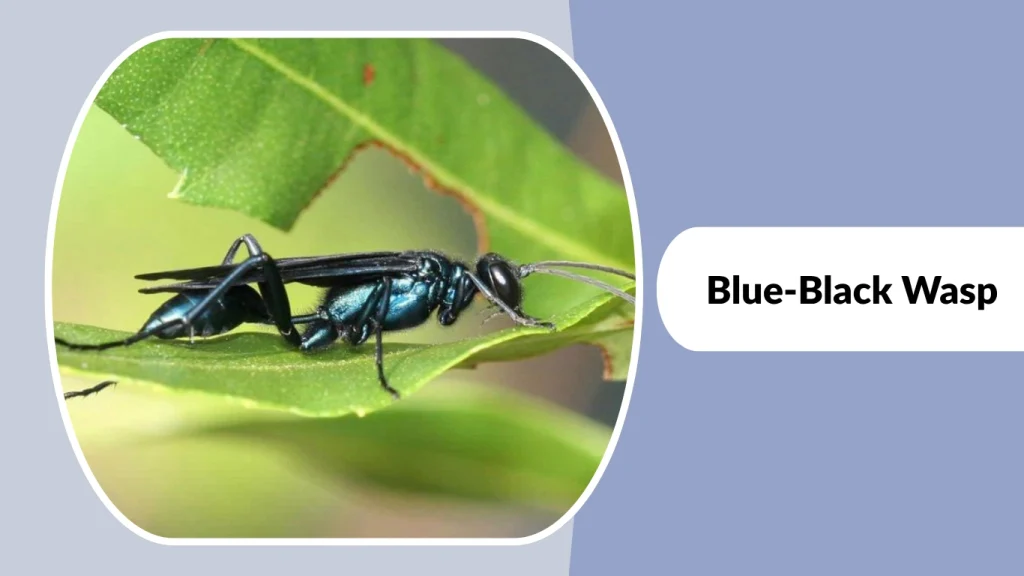
The Blue-Black Wasp is a striking metallic black wasp with a vivid blue sheen. Often mistaken for the black mud dauber, it is a beneficial insect known for recycling old mud nests built by other wasps. This species is a frequent visitor of gardens and open sunny areas.
Identification
- Color: Metallic blue-black body with a glossy appearance.
- Size: Around 0.8 to 1 inch long.
- Wings: Translucent with a bluish tint.
- Body: Long and slender with an extremely narrow waist.
- Flight: Fast and erratic, often hovering near old mud nests.
Habitat and Distribution
This black wasp is found across North America, especially in warm and temperate regions. It typically inhabits areas with existing mud nests or structures suitable for nesting.
Behavior and Diet
The Blue-Black Wasp feeds on flower nectar but hunts spiders to provide food for its larvae. Instead of building new nests, it often reuses or renovates abandoned mud nests. Its activity helps reduce spider populations naturally.
Sting and Human Interaction
This black wasp is docile and rarely stings. Its sting is mild and primarily used for paralyzing prey. They are non-aggressive toward humans and contribute significantly to garden pest control.
5. Black Paper Wasp (Polistes metricus)
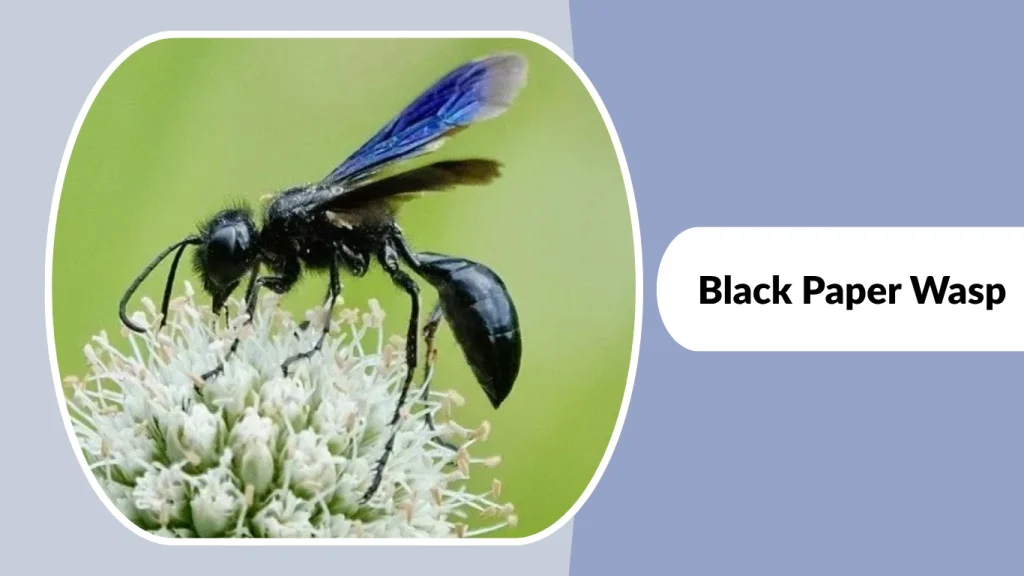
The Black Paper Wasp is a social black wasp species known for constructing umbrella-shaped paper nests. Recognized by its slim black body and reddish markings, it is common in urban and rural settings. These wasps are active builders and strong defenders of their colonies.
Identification
- Color: Mostly black with faint reddish or brownish tones on legs and thorax.
- Size: About 0.7 to 1 inch in length.
- Wings: Smoky or dark brown with slight transparency.
- Nest: Open paper nests attached to eaves, tree branches, or fences.
- Behavior: Social and alert but not aggressive unless provoked.
Habitat and Distribution
The Black Paper Wasp is native to North America, found in gardens, woodlands, and building corners. Colonies prefer sheltered spots to construct paper nests from chewed wood fibers mixed with saliva.
Behavior and Diet
This black wasp feeds on nectar, fruit juices, and other insects like caterpillars. Workers maintain the nest and care for larvae. They play a dual role in pest control and pollination, making them ecologically valuable.
Sting and Human Interaction
Unlike solitary wasps, the Black Paper Wasp can be defensive when its nest is disturbed. The sting is painful and can cause redness or swelling. However, they do not pursue humans unless directly threatened.
6. Black Ichneumon Wasp (Ichneumonidae family)
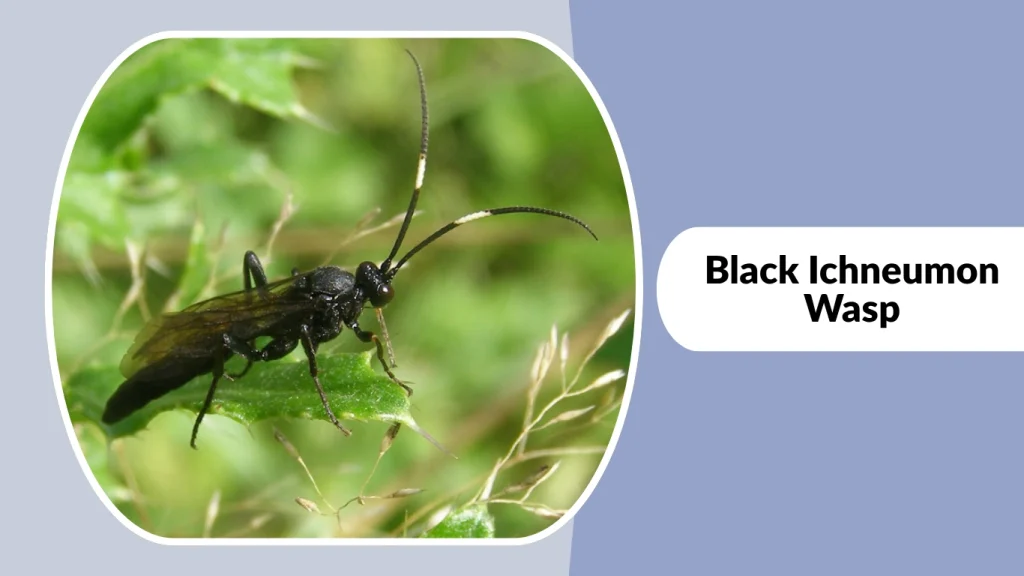
The Black Ichneumon Wasp is a slender parasitic black wasp that plays a vital role in controlling insect populations. Instead of building nests or hunting prey, females lay eggs inside the larvae of other insects. This behavior makes them essential for natural pest management.
Identification
- Color: Jet black with a sleek, narrow body.
- Size: Ranges from 0.5 to 1.5 inches depending on the species.
- Antennae: Extremely long, often longer than the body.
- Wings: Clear or dark-tinted with fine venation.
- Body Shape: Distinctively elongated with a long ovipositor in females.
Habitat and Distribution
This black wasp is found globally, particularly in forests, gardens, and agricultural fields. They thrive in habitats rich in caterpillars and beetle larvae, which serve as hosts for their offspring.
Behavior and Diet
The Black Ichneumon Wasp does not feed on its prey but uses them to nourish larvae. Adults feed mainly on nectar and plant sap. Their parasitic activity helps control pest populations naturally without harming crops.
Sting and Human Interaction
Despite their fearsome appearance, this black wasp does not sting humans. The long ovipositor is not a stinger but an egg-laying tool. They are completely harmless and beneficial for maintaining ecological balance.
7. Black Spider Wasp (Anoplius spp.)
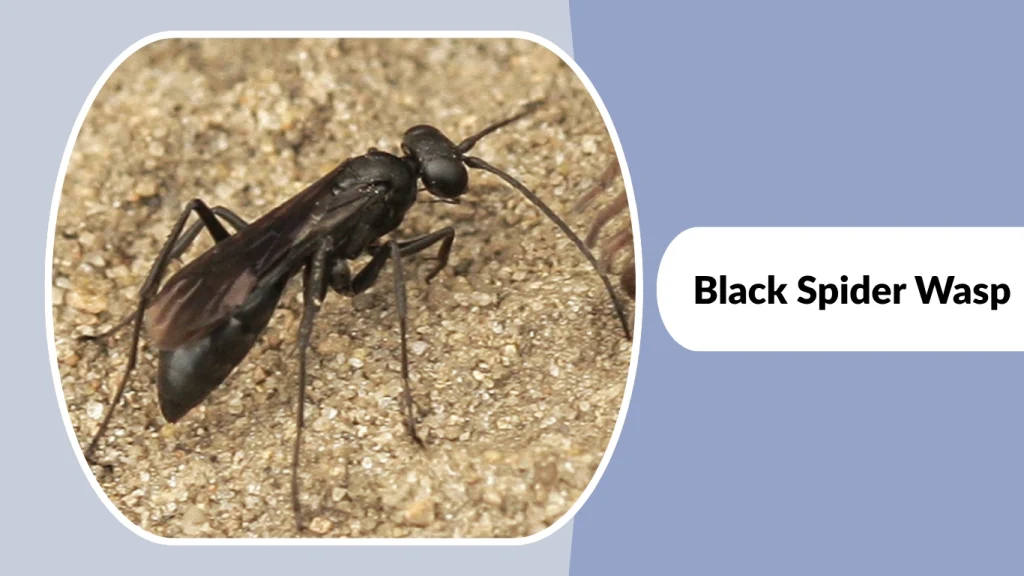
The Black Spider Wasp is a powerful hunter known for subduing spiders far larger than itself. This black wasp species is solitary and can often be seen dragging paralyzed spiders to its nest. Its smooth, dark body and striking blue sheen make it easy to recognize.
Identification
- Color: Deep black with a glossy or bluish shine.
- Size: 0.6 to 1 inch long, depending on species.
- Wings: Metallic blue or violet, slightly transparent.
- Legs: Long and spiny for gripping prey.
- Body: Sleek and robust with a narrow waist and strong mandibles.
Habitat and Distribution
The Black Spider Wasp prefers dry, sandy areas, gardens, and woodland edges. It is found throughout North America and other temperate regions where spiders are abundant.
Behavior and Diet
This black wasp hunts spiders to provide food for its larvae. Females paralyze spiders with a sting, drag them to burrows, and lay eggs on them. Adults feed on nectar and help with pollination.
Sting and Human Interaction
The sting of the Black Spider Wasp is potent but rarely used on humans. It’s designed to immobilize spiders quickly. Although painful, stings are uncommon unless the wasp is handled or trapped.
8. Giant Black Wasp (Sphex pensylvanicus)
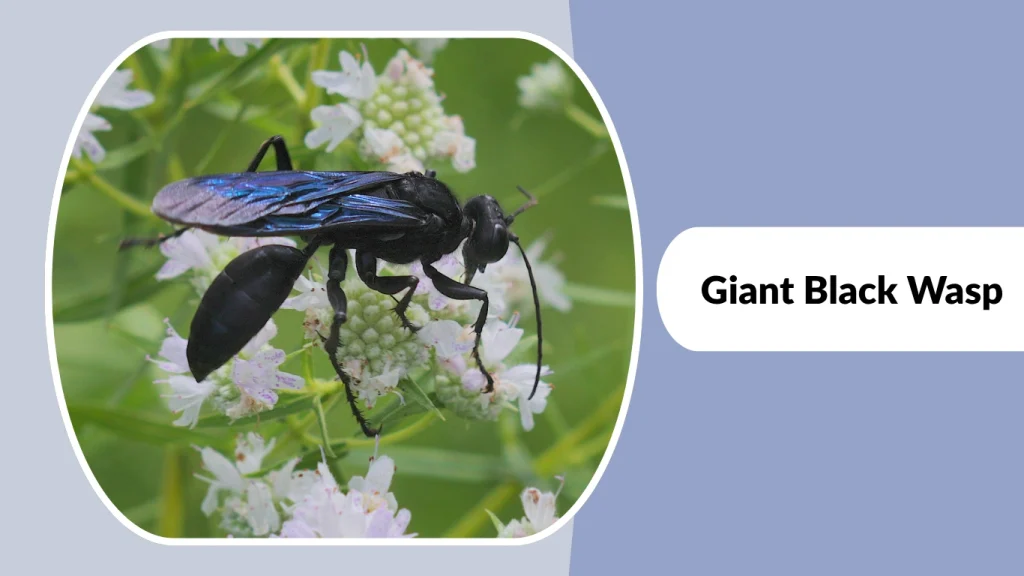
The Giant Black Wasp is one of the largest solitary black wasps in North America. Known for its imposing size and glossy blue-black wings, it is often seen hovering near flowers or digging burrows in soft soil. Despite its intimidating look, it is non-aggressive and beneficial to the environment.
Identification
- Color: Jet black body with an iridescent blue sheen.
- Size: Can reach up to 1.5 inches in length.
- Wings: Metallic blue or purple, reflecting in sunlight.
- Body: Smooth and elongated with a narrow waist.
- Antennae: Long, black, and slightly curved.
Habitat and Distribution
This black wasp thrives in open fields, meadows, and gardens. Commonly found across the United States, it prefers sandy soil for nesting and is particularly active during midsummer.
Behavior and Diet
The Giant Black Wasp hunts grasshoppers and katydids, which it paralyzes and places inside underground nests for its larvae. Adults feed on nectar from milkweed, goldenrod, and other flowering plants, contributing to pollination.
Sting and Human Interaction
While the Giant Black Wasp possesses a strong sting, it seldom uses it on humans. It only stings prey for reproduction. They are non-aggressive and pose little risk unless directly provoked.
9. Black Digger Wasp (Sphex lucae)

The Black Digger Wasp is a ground-nesting black wasp species known for its industrious burrowing behavior. It hunts grasshoppers and locusts, paralyzing them to serve as food for developing larvae. This species is solitary and plays an essential role in pest control.
Identification
- Color: Shiny black body with a faint bluish tint.
- Size: Typically about 1 inch long.
- Wings: Smoky or slightly blue-tinged.
- Body Shape: Streamlined with a narrow waist and long legs.
- Flight: Quick and direct, often seen close to the ground.
Habitat and Distribution
This black wasp prefers dry, sandy areas such as lawns, fields, and garden beds. It is widely distributed in North America, especially in regions with loose soil suitable for digging.
Behavior and Diet
The Black Digger Wasp is a solitary hunter. Females dig burrows in the ground and provision them with paralyzed insects, mainly grasshoppers. Adults are nectar feeders, visiting a variety of wildflowers.
Sting and Human Interaction
Though capable of stinging, this black wasp rarely does so unless disturbed. Its sting is used exclusively for paralyzing prey. Humans generally find them harmless and beneficial for reducing pest insects.
10. Black and White Wasp (Dolichovespula maculata)
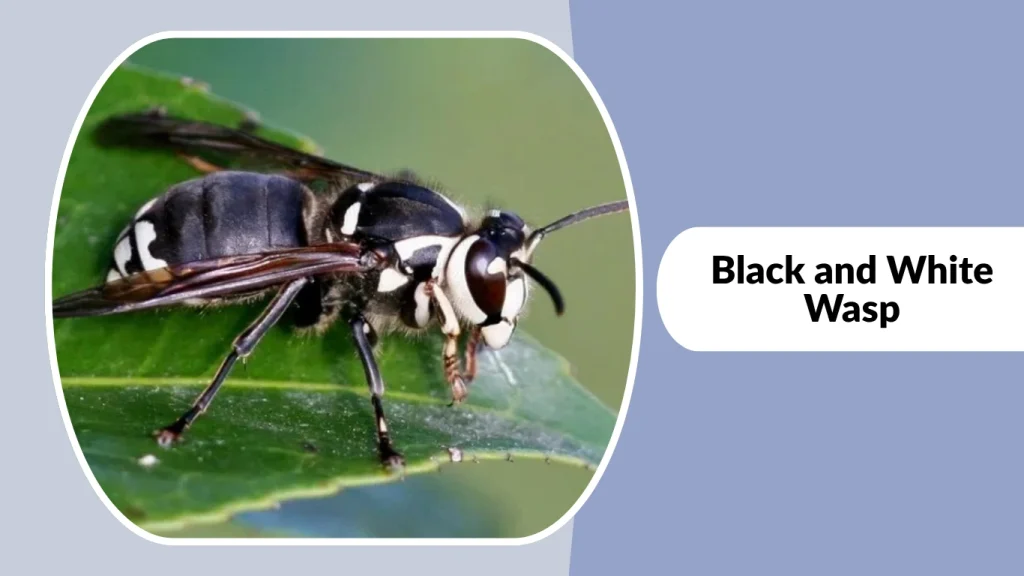
The Black and White Wasp, commonly known as the Bald-Faced Hornet, is a striking black wasp species distinguished by its white facial markings. Despite being called a hornet, it is technically a type of yellowjacket. These wasps are highly social and build large paper nests in trees or under eaves.
Identification
- Color: Predominantly black with bold white patches on the face and abdomen.
- Size: Around 0.6 to 0.8 inches long.
- Wings: Dark brown or smoky gray.
- Nest: Large, football-shaped paper nests hanging from trees or structures.
- Behavior: Social and defensive around nests but peaceful when away from them.
Habitat and Distribution
This black wasp is found throughout North America, particularly in wooded areas, gardens, and suburban environments. Nests are usually built high above ground for protection.
Behavior and Diet
The Black and White Wasp feeds on nectar, fruit juices, and other insects. They are aggressive defenders of their colonies and play a key role in controlling pest insects. Workers actively guard their nests during summer months.
Sting and Human Interaction
The sting of this black wasp is painful and can cause swelling. Multiple stings are possible if the nest is disturbed. However, when left undisturbed, these wasps do not pose a threat and are valuable predators in the ecosystem.
11. Black and Yellow Wasp (Vespula vulgaris)
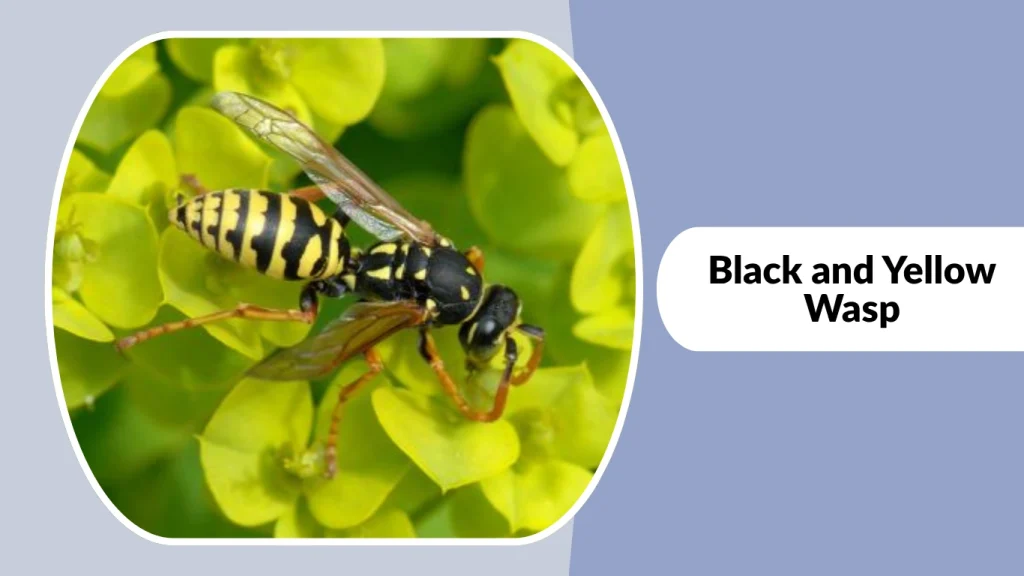
The Black and Yellow Wasp is one of the most recognizable black wasp species, often seen buzzing around food and gardens. Also known as the Common Wasp, it is a social insect that builds intricate paper nests underground or in wall cavities.
Identification
- Color: Bright yellow with distinct black bands across the abdomen.
- Size: Typically 0.5 to 0.7 inches long.
- Wings: Transparent with a light brown hue.
- Antennae: Black and slightly curved forward.
- Body Shape: Compact, smooth body with strong mandibles.
Habitat and Distribution
This black wasp is widely distributed across North America, Europe, and Asia. It thrives in both urban and rural settings, often nesting underground, in tree hollows, or inside walls.
Behavior and Diet
The Black and Yellow Wasp feeds on nectar, fruits, and other insects. It is a social species that protects its colony aggressively, especially in late summer when food becomes scarce.
Sting and Human Interaction
This black wasp has a powerful sting and can sting repeatedly. Stings are painful and can trigger allergic reactions in sensitive individuals. Despite their aggressive behavior, they are important for pollination and insect control.
12. Black and Red Mason Wasp (Pachodynerus erynnis)
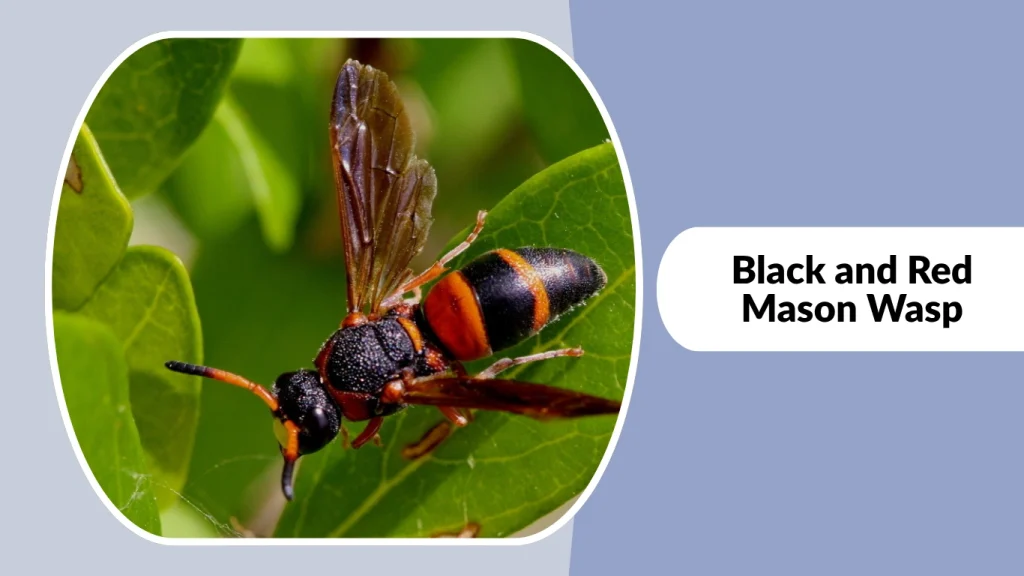
The Black and Red Mason Wasp is a colorful and resilient black wasp species recognized for its vibrant red abdomen contrasting with its black thorax. It is a solitary wasp that uses mud to build small nests, often inside cracks or hollow stems. This species is an efficient natural pest controller.
Identification
- Color: Black head and thorax with a reddish-orange abdomen.
- Size: Around 0.5 to 0.8 inches long.
- Wings: Transparent with a smoky tint.
- Body Shape: Compact with strong legs adapted for building nests.
- Behavior: Solitary and calm; rarely aggressive toward humans.
Habitat and Distribution
This black wasp inhabits gardens, farmlands, and wooded regions across the southern United States. It prefers warm climates and seeks nesting sites in wood crevices, stems, or abandoned insect holes.
Behavior and Diet
The Black and Red Mason Wasp preys on caterpillars and small beetle larvae to feed its offspring. Adults feed on nectar, visiting flowering plants. Their solitary nesting habits help reduce crop pests naturally.
Sting and Human Interaction
This black wasp is mild-tempered and stings only when physically disturbed. Its sting is brief and non-threatening, making it safe to have around gardens and farms.
13. Black and Orange Wasp (Tachypompilus ferrugineus)
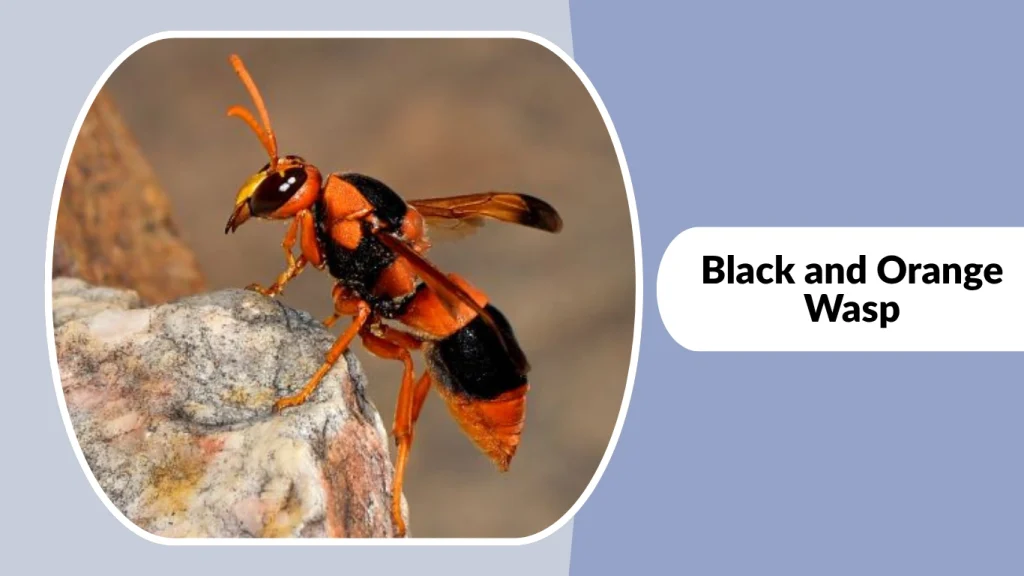
The Black and Orange Wasp, also known as the Rusty Spider Wasp, is a bold and visually striking black wasp species with bright orange wings. It is a solitary predator that hunts spiders, often dragging them to burrows as food for its larvae.
Identification
- Color: Black body with orange or rust-colored wings.
- Size: About 0.8 to 1 inch long.
- Legs: Long and spiny, adapted for tackling spider prey.
- Body Shape: Slender and smooth with a shiny black surface.
- Flight: Swift and erratic, often low to the ground.
Habitat and Distribution
This black wasp is widespread in North and Central America, preferring dry, sandy areas and open fields. It nests in soil burrows or reuses old cavities for breeding.
Behavior and Diet
The Black and Orange Wasp paralyzes spiders with its sting and places them in nests as a food source for larvae. Adults feed on nectar and are frequently seen near flowering plants.
Sting and Human Interaction
Though equipped with a potent sting, this black wasp uses it only for hunting. Human stings are uncommon but can be painful. It is generally harmless and plays a positive ecological role by controlling spider populations.
14. Black Hornet Wasp (Vespa dybowskii)
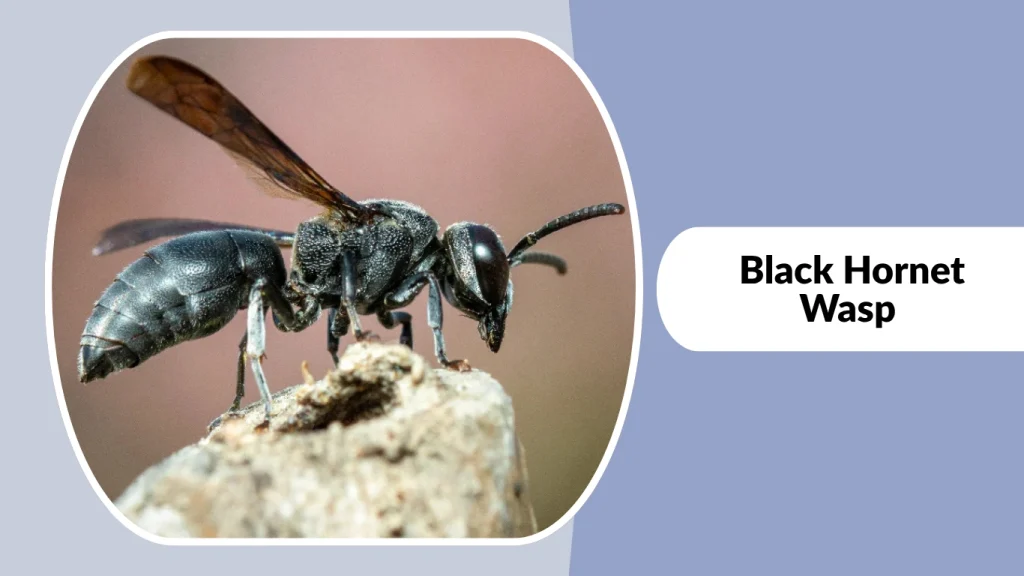
The Black Hornet Wasp is a rare yet powerful black wasp species known for its dominant appearance and aggressive defense of nests. Unlike most hornets, it is almost entirely black with only faint markings. This species is both a predator and a scavenger, maintaining balance in its habitat.
Identification
- Color: Deep matte black with occasional pale stripes.
- Size: Around 0.8 to 1.2 inches in length.
- Wings: Transparent with a brownish hue.
- Antennae: Thick and dark with noticeable segments.
- Body Shape: Sturdy and broad with a rounded abdomen.
Habitat and Distribution
This black wasp is primarily found in East Asia and parts of Europe, though related species appear in North America. It prefers wooded regions, hollow trees, and structures suitable for nesting.
Behavior and Diet
The Black Hornet Wasp is a social insect that preys on other insects, including caterpillars and flies. It also feeds on sugary substances like nectar and sap. Colonies are small but fiercely protective, especially during late summer.
Sting and Human Interaction
The sting of this black wasp is extremely painful and can cause severe reactions. It is highly defensive near nests but rarely attacks without provocation. Due to its powerful venom, caution is advised when encountered.
15. Great Black Digger Wasp (Sphex pensylvanicus)

The Great Black Digger Wasp is an impressive black wasp species known for its burrowing skills and beneficial role in ecosystems. A close relative of the great black wasp, it is famous for preying on grasshoppers and katydids to feed its larvae underground.
Identification
- Color: Glossy black with iridescent blue wings.
- Size: 1 to 1.3 inches long.
- Wings: Shimmering blue or violet, depending on the light.
- Body: Long and smooth with a narrow waist and strong legs.
- Flight: Powerful and low, often seen near soil burrows.
Habitat and Distribution
This black wasp inhabits open fields, gardens, and forest edges across North America. It prefers loose soil or sandy areas ideal for digging nesting tunnels.
Behavior and Diet
The Great Black Digger Wasp is solitary and uses its strong mandibles to dig burrows. Females hunt large insects, sting them to paralyze, and bury them with their eggs. Adults feed on nectar, aiding pollination.
Sting and Human Interaction
Although equipped with a painful sting, this black wasp is not aggressive toward humans. It uses its venom solely for hunting. These wasps are beneficial garden visitors that control pest populations naturally.
