
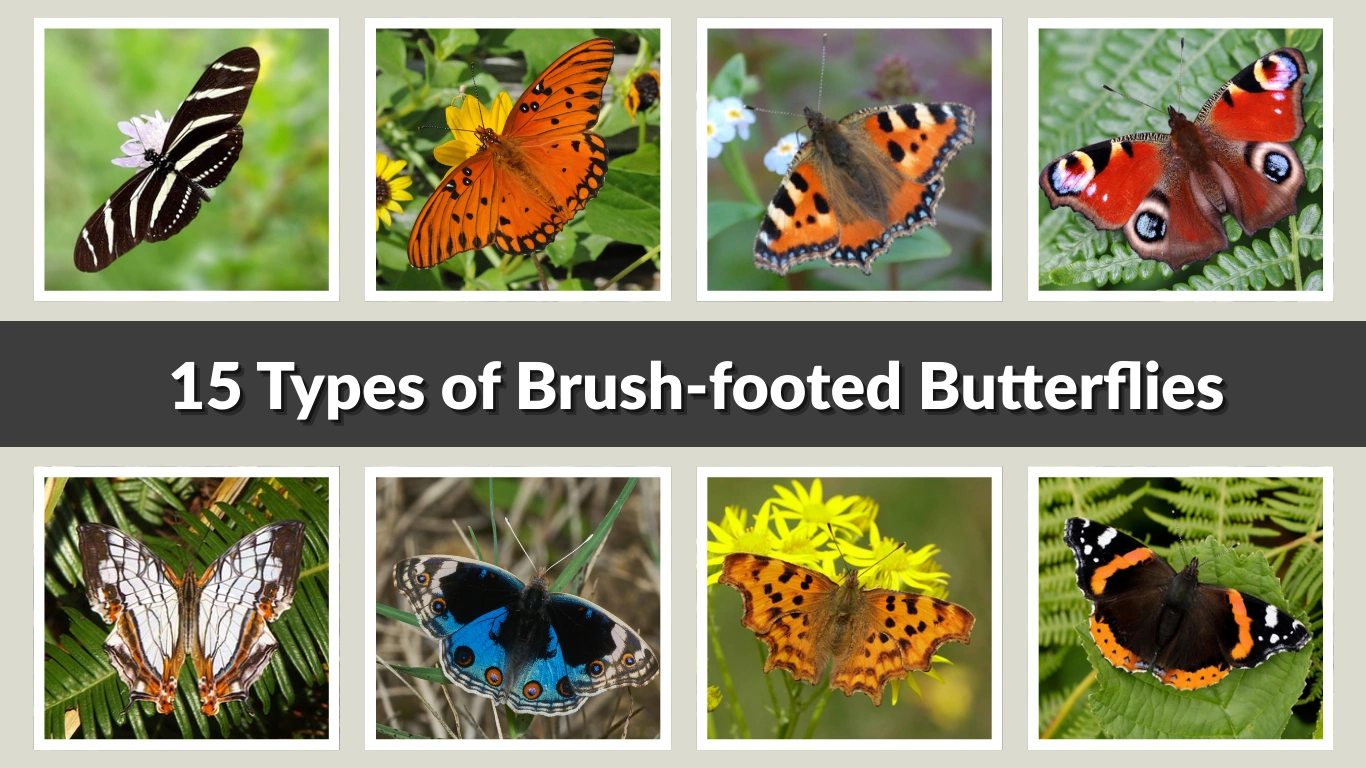
Butterflies of the family Nymphalidae, also known as brush-footed butterflies, are among the most diverse and widespread groups of butterflies in the world. With their colorful wings, fascinating behaviors, and important ecological roles, they capture the admiration of nature lovers everywhere. This article explores 15 well-known brush-footed butterflies, highlighting their identification, habitats, and behaviors to help you better recognize and appreciate these striking insects in the wild.
1. Monarch Butterfly

The Monarch (Danaus plexippus) is one of the most iconic butterflies in the world, best known for its striking orange-and-black wings and its incredible long-distance migration across North America. This butterfly plays an important role in ecosystems as both a pollinator and as part of the food chain. Its beauty and migration behavior make it a favorite subject of conservation efforts and scientific study.
Identification
- Family: Nymphalidae (Brush-footed butterflies)
- Wingspan: 8.9–10.2 cm (3.5–4 in)
- Color: Bright orange wings with black veins and white spots on the edges
- Sexual Dimorphism: Males have scent spots on hindwings; females have thicker black veins
- Caterpillar: Yellow, black, and white striped body
Habitat and Distribution
Monarchs are widespread across North and Central America but are most famous in the United States, Canada, and Mexico. They are often found in meadows, fields, gardens, and areas with abundant milkweed plants, which serve as their larval host.
Behavior and Diet
The adult Monarch feeds on nectar from a wide range of flowers, including milkweed, goldenrod, and asters. Its caterpillars feed exclusively on milkweed, which gives them chemical protection from predators. Monarchs are also renowned for their multi-generational migration, traveling thousands of miles to overwinter in central Mexico.
2. Viceroy Butterfly
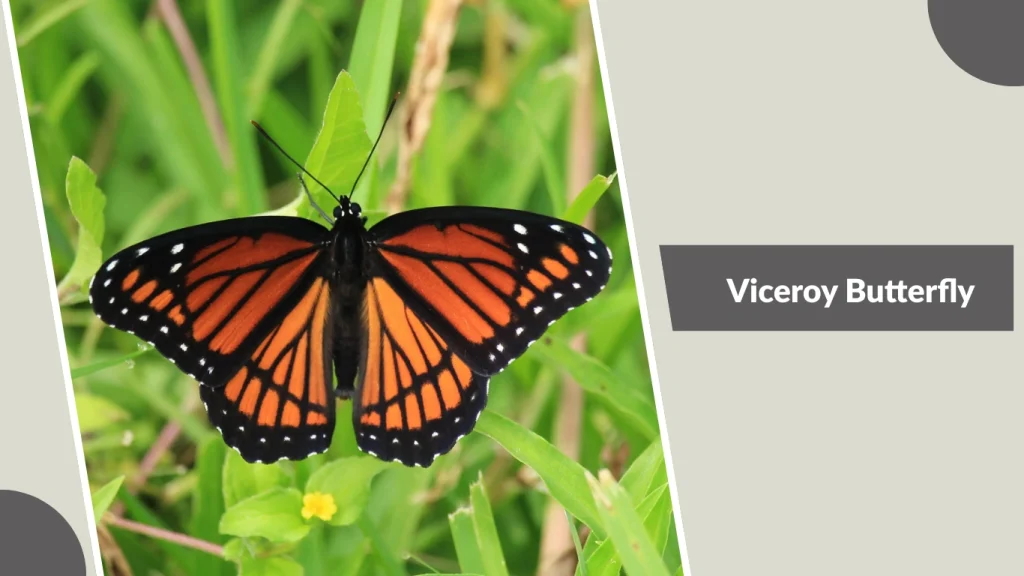
The Viceroy (Limenitis archippus) is a well-known brush-footed butterfly often mistaken for the Monarch due to its similar orange-and-black wing patterns. However, the Viceroy has its own unique traits and plays an important role in mimicry within the insect world. This resemblance provides it with protection from predators who avoid Monarchs due to their toxic milkweed diet.
Identification
- Family: Nymphalidae (Brush-footed butterflies)
- Wingspan: 6.5–7.6 cm (2.5–3 in)
- Color: Orange wings with black veins and white spots, closely resembling Monarchs
- Key Difference: A distinct black horizontal line across the hindwings
- Caterpillar: Brown, white, and greenish with a bird-dropping mimicry appearance
Habitat and Distribution
Viceroys are commonly found in wetlands, marshes, and meadows across North America. They are especially abundant near willows and poplars, which serve as host plants for their larvae.
Behavior and Diet
The adult Viceroy feeds on nectar from flowers like thistles, milkweed, and asters. It also consumes tree sap and rotting fruit more often than many other butterflies. Its caterpillars feed mainly on willow, poplar, and cottonwood leaves. The mimicry with Monarchs is a classic example of “Müllerian mimicry,” where two distasteful species benefit by resembling each other.
3. Painted Lady Butterfly

The Painted Lady (Vanessa cardui) is one of the most widespread butterflies in the world, occurring on nearly every continent. Known for its beautiful patterned wings, it is often spotted during seasonal migrations in large numbers. This butterfly adapts well to diverse habitats, making it one of the most successful species in the brush-footed family.
Identification
- Family: Nymphalidae (Brush-footed butterflies)
- Wingspan: 5–9 cm (2–3.5 in)
- Color: Orange-brown wings with black and white spots on the forewings
- Underside: Pale with intricate patterns and small eyespots for camouflage
- Caterpillar: Spiny, dark-colored with yellow bands
Habitat and Distribution
Painted Ladies thrive in open landscapes such as meadows, gardens, deserts, and grasslands. They are found across North America, Europe, Asia, and Africa, making them one of the most cosmopolitan butterfly species.
Behavior and Diet
These butterflies feed on nectar from thistles, asters, clovers, and many other wildflowers. Caterpillars feed on plants like thistles, mallows, and hollyhocks. Painted Ladies are strong fliers and capable of long-distance migrations, sometimes covering thousands of miles between continents.
4. American Lady Butterfly

The American Lady (Vanessa virginiensis) is a close relative of the Painted Lady but has distinct features that make it easy to identify. Known for its bold colors and elegant flight, this butterfly is admired in gardens and meadows across North America. It is also a strong flier and migratory in some regions, following seasonal food sources.
Identification
- Family: Nymphalidae (Brush-footed butterflies)
- Wingspan: 4.5–7 cm (1.75–2.75 in)
- Color: Orange wings with black patterns and white spots near the forewing tips
- Underside: Hindwings display two large eyespots, unlike the Painted Lady’s smaller four
- Caterpillar: Dark body with spines, feeding on host plants like everlasting and pearly everlasting
Habitat and Distribution
This butterfly thrives in open sunny habitats such as fields, meadows, gardens, and forest edges. It is widely distributed across North America and occasionally wanders further south into Central America.
Behavior and Diet
The adult feeds on nectar from asters, goldenrods, marigolds, and milkweed. The caterpillars prefer host plants in the daisy family, especially cudweed and everlasting. American Ladies are quick fliers and often perch with wings open in sunny spots, making them easier to observe than some of their relatives.
5. Red Admiral Butterfly
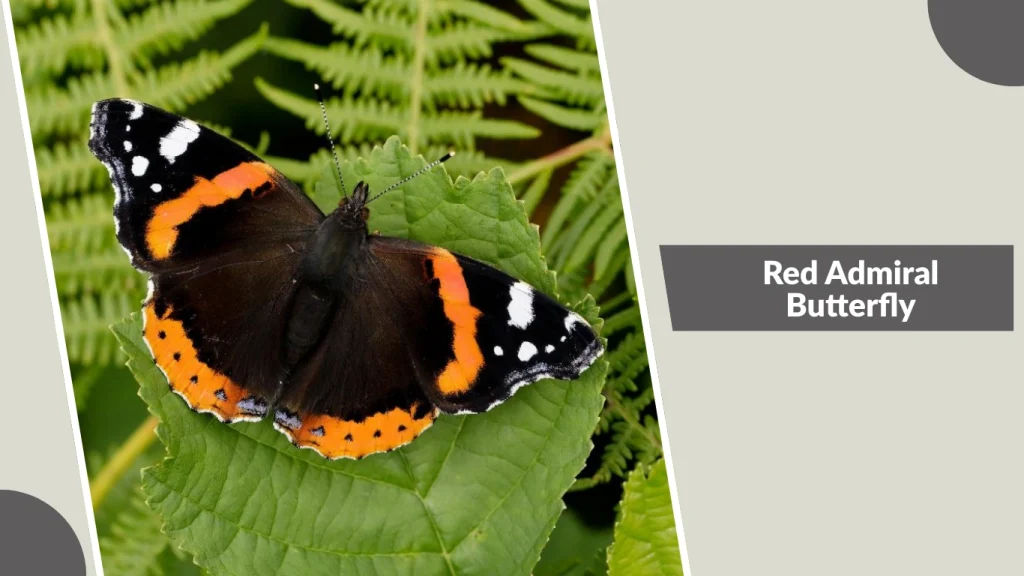
The Red Admiral (Vanessa atalanta) is a striking butterfly known for its bold black, red, and white wing patterns. It is a strong and fast flyer, often spotted in gardens, woodlands, and meadows. This butterfly is admired for both its beauty and its adaptability, thriving in a wide range of habitats across multiple continents.
Identification
- Family: Nymphalidae (Brush-footed butterflies)
- Wingspan: 5–7.5 cm (2–3 in)
- Color: Dark brown to black wings with bright red-orange bands and white spots on forewings
- Underside: Camouflaged mottled brown with hints of red and blue near hindwings
- Caterpillar: Spiny and dark, feeding primarily on nettles
Habitat and Distribution
Red Admirals are widely distributed across North America, Europe, Asia, and North Africa. They are highly migratory, often moving north in spring and summer and returning south during cooler months. Habitats include gardens, woodland edges, meadows, and coastal areas.
Behavior and Diet
Adults feed on nectar from flowers such as asters, buddleia, and milkweed, but they also consume tree sap and rotting fruit. Caterpillars feed mostly on nettle leaves. Red Admirals are known for their territorial behavior and can often be seen basking in sunny clearings with wings spread wide.
6. Mourning Cloak Butterfly
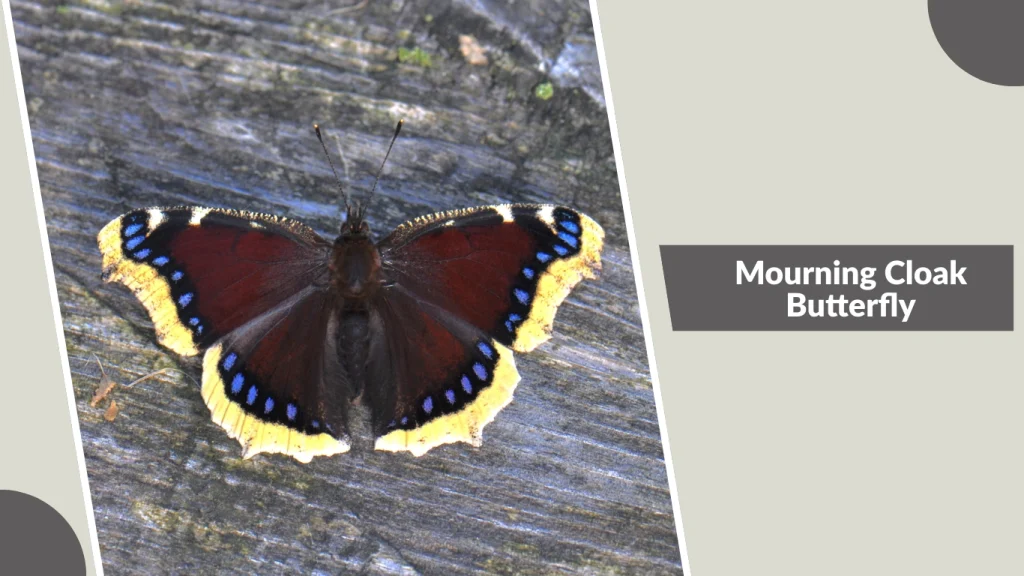
The Mourning Cloak (Nymphalis antiopa) is a large and distinctive butterfly, easily recognized by its dark wings edged with pale yellow and dotted with blue spots. It is among the longest-lived butterflies and can often be seen during early spring, sometimes even flying in winter thaws. Its unique appearance and year-round presence make it a fascinating member of the brush-footed family.
Identification
- Family: Nymphalidae (Brush-footed butterflies)
- Wingspan: 7.5–10 cm (3–4 in)
- Color: Dark maroon-brown wings bordered with creamy yellow and rows of iridescent blue spots
- Underside: Bark-like brown with subtle pale edges for camouflage
- Caterpillar: Black with white dots and red spots along the back, spiny body
Habitat and Distribution
Mourning Cloaks are widespread across North America, Europe, and Asia. They thrive in woodlands, parks, orchards, and along rivers. Because of their ability to hibernate, they are often one of the first butterflies spotted in spring.
Behavior and Diet
Adults feed on tree sap, especially from oak, birch, and willow, and also enjoy rotting fruit. They rarely visit flowers compared to other butterflies. Caterpillars feed on willows, elms, and poplars. Their long lifespan of up to 10–12 months allows them to be active across multiple seasons, making them unique among butterflies.
7. Question Mark Butterfly

The Question Mark (Polygonia interrogationis) gets its name from the small silver mark on the underside of its hindwing, shaped like a tiny question mark. This butterfly is known for its angular wing shape and ability to blend in with dead leaves when at rest.
Identification
- Family: Nymphalidae (Brush-footed butterflies)
- Wingspan: 5–7.6 cm (2–3 in)
- Color: Orange wings with black spots and dark edges
- Underside: Brown with leaf-like texture and a distinct silvery “?” mark
- Caterpillar: Spiny, dark with white or yellow stripes, feeding on elms and nettles
Habitat and Distribution
Found throughout North America, especially in wooded areas, parks, and gardens. They favor habitats near elms and hackberries, which serve as host plants.
Behavior and Diet
Adults feed on tree sap, rotting fruit, and carrion more than nectar. They are quick fliers and territorial. Their cryptic underside allows excellent camouflage against bark and fallen leaves.
8. Comma Butterfly

The Comma (Polygonia comma) is another angular-winged butterfly, very similar to the Question Mark, but with a distinct comma-shaped silver mark beneath the hindwing. Its ragged wing edges and mottled underside give it perfect camouflage.
Identification
- Family: Nymphalidae (Brush-footed butterflies)
- Wingspan: 4.5–6.4 cm (1.75–2.5 in)
- Color: Orange with black spots and dark borders
- Underside: Brown, leaf-like with a silvery comma “,” mark
- Caterpillar: Spiny, striped, and often feeds on hops, elms, and nettles
Habitat and Distribution
Common in North America, found in woodlands, orchards, and gardens. They are especially abundant in areas where elms and nettles grow.
Behavior and Diet
Adults feed on tree sap, rotting fruit, and sometimes nectar. They hibernate during winter, often inside tree hollows or buildings, and are among the first butterflies seen in early spring.
9. Buckeye Butterfly

The Buckeye (Junonia coenia) is a striking butterfly, easily recognized by the bold eyespots on its wings. These eye-like markings serve as a defense mechanism, startling predators and drawing attention away from vital body parts. The Buckeye is active during warm months and is a common sight in open, sunny habitats.
Identification
- Family: Nymphalidae (Brush-footed butterflies)
- Wingspan: 5–6.5 cm (2–2.5 in)
- Color: Brown wings with orange bars and multiple large eyespots (two on each forewing, two on each hindwing)
- Underside: Pale brown with reduced markings, aiding in camouflage
- Caterpillar: Dark with orange or cream stripes, spiny, feeding on plantains and snapdragons
Habitat and Distribution
Buckeyes are found throughout North America, especially in open fields, meadows, gardens, and roadsides. They thrive in sunny areas with low vegetation where host plants grow.
Behavior and Diet
Adults feed on nectar from a wide variety of flowers, including aster, verbena, and tickseed. Caterpillars feed on plantains, snapdragons, toadflax, and related species. The Buckeye is a seasonal migrant in northern regions, moving southward when temperatures drop.
10. Blue Pansy Butterfly
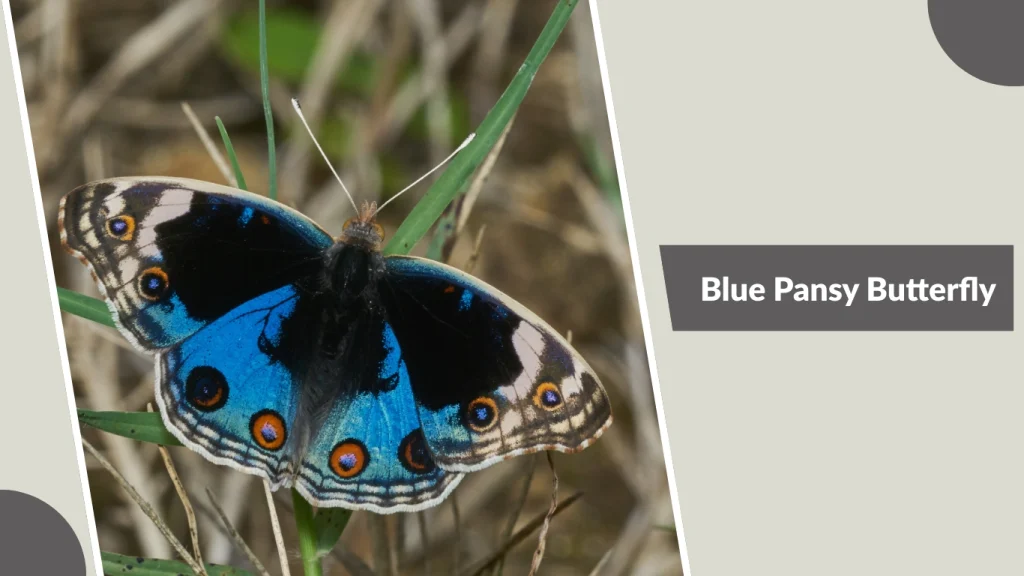
The Blue Pansy (Junonia orithya) is a vibrant butterfly recognized for its dazzling blue coloration on the upper wings, contrasting with bold black and orange patterns. It is admired for its beauty and is a favorite among butterfly enthusiasts in tropical and subtropical regions.
Identification
- Family: Nymphalidae (Brush-footed butterflies)
- Wingspan: 4.5–6 cm (1.75–2.5 in)
- Color: Upperside features bright blue patches with black margins and orange spots; underside is brown with eye-like spots for camouflage
- Sexual Dimorphism: Males show brighter blue than females
- Caterpillar: Dark with spines, feeding on host plants like plantains and acanthus species
Habitat and Distribution
Blue Pansies are found across Asia, Africa, and Australia, favoring open fields, gardens, and grassy areas. They are especially common in warm climates and are often spotted basking in sunlight.
Behavior and Diet
Adults feed on nectar from lantanas, marigolds, and other wildflowers. They are sun-loving butterflies and are often seen resting with wings open. Caterpillars feed on plants in the acanthus family, and their quick growth helps them adapt well to seasonal changes.
11. Common Map Butterfly

The Common Map (Cyrestis thyodamas) is a uniquely patterned butterfly, easily recognized by the intricate lines on its wings that resemble a geographic map. Its delicate appearance and graceful flight make it a fascinating species within the brush-footed family.
Identification
- Family: Nymphalidae (Brush-footed butterflies)
- Wingspan: 4.5–6 cm (1.75–2.5 in)
- Color: White to pale cream wings with thin black-brown lines forming a “map-like” pattern
- Underside: Similar map-like markings, aiding in camouflage against leaves
- Caterpillar: Green with a slender body, feeding on plants like Celtis (hackberry)
Habitat and Distribution
This butterfly is commonly found in South and Southeast Asia, including India, Nepal, Myanmar, and extending to parts of China. It prefers forest edges, riverbanks, and hilly terrain where host plants are abundant.
Behavior and Diet
Adults are often seen fluttering low in shaded forest paths and near streams. They feed on rotting fruit, tree sap, and occasionally flower nectar. The caterpillars rely on hackberry plants as their primary food source. Their calm and slow flight makes them a delight to observe in natural habitats.
12. Peacock Butterfly

The Peacock (Aglais io) is one of the most colorful and easily recognized butterflies in Europe, named for its stunning eye-like spots on the wings. These markings resemble peacock feathers and serve as a defense mechanism, startling predators. Its beauty and distinct features make it one of the most admired members of the brush-footed family.
Identification
- Family: Nymphalidae (Brush-footed butterflies)
- Wingspan: 5–6 cm (2–2.5 in)
- Color: Deep red wings with large blue, yellow, and black “eye spots” on both forewings and hindwings
- Underside: Dark brown to black, resembling a dead leaf when wings are closed
- Caterpillar: Black and spiny with tiny white spots, usually found on nettles
Habitat and Distribution
Peacock butterflies are widespread across Europe and temperate Asia. They thrive in meadows, gardens, hedgerows, and woodland clearings. During winter, they hibernate in dark sheltered places such as tree hollows, sheds, or attics.
Behavior and Diet
Adults feed on nectar from buddleia, dandelion, and thistle, while caterpillars feed primarily on stinging nettle. When threatened, they flash their wings to reveal the eye-like spots, which can confuse or scare away birds. Their ability to hibernate allows them to appear very early in spring.
13. Small Tortoiseshell Butterfly

The Small Tortoiseshell (Aglais urticae) is one of Europe’s most familiar butterflies, admired for its vivid orange-and-black wings and distinctive blue spots along the edges. It is a hardy species, often seen in gardens and open landscapes, and is one of the first butterflies to emerge after winter hibernation.
Identification
- Family: Nymphalidae (Brush-footed butterflies)
- Wingspan: 4.5–6.5 cm (1.75–2.5 in)
- Color: Bright orange wings with black patches and blue spots around the edges
- Underside: Dark brown, resembling dead leaves for camouflage
- Caterpillar: Black with yellow stripes and spines, feeding primarily on nettles
Habitat and Distribution
Small Tortoiseshells are widespread across Europe and temperate Asia. They are found in gardens, meadows, woodland edges, and hedgerows. In colder climates, they hibernate during winter in houses, sheds, and hollow trees.
Behavior and Diet
Adults feed on nectar from buddleia, thistles, and dandelions. Caterpillars feed mainly on stinging nettles, often forming communal webs. These butterflies are known for their abundance and adaptability, making them one of the most commonly observed garden butterflies in Europe.
Would you like me to continue with 14. Gulf Fritillary and then 15. Zebra Longwing so that we complete the full 15 types list?
14. Gulf Fritillary Butterfly
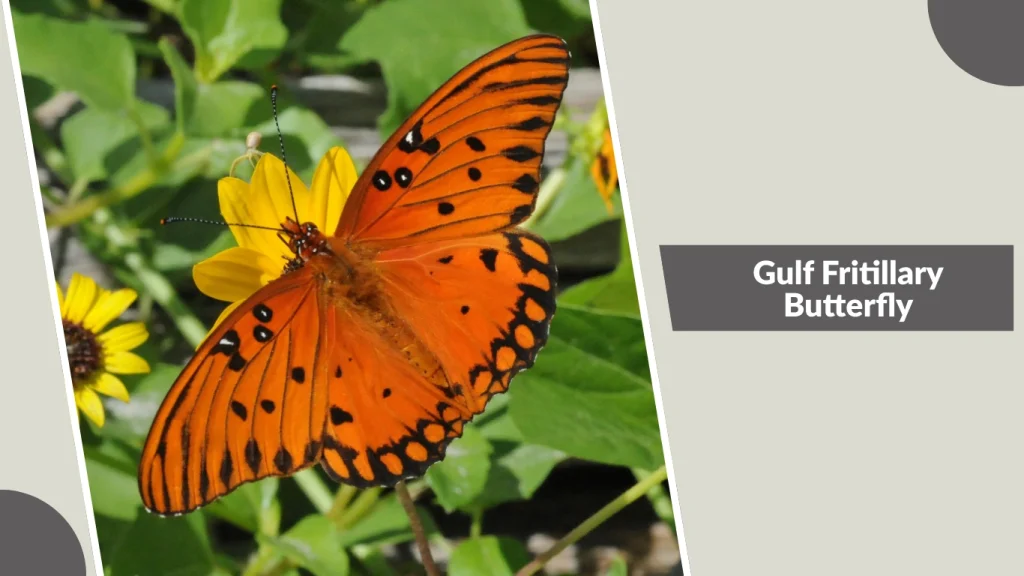
The Gulf Fritillary (Agraulis vanillae) is a bright and graceful butterfly, famous for its vibrant orange wings and long migrations in the southern United States. Its shimmering silver spots on the underside of the wings make it one of the most striking members of the brush-footed family.
Identification
- Family: Nymphalidae (Brush-footed butterflies)
- Wingspan: 6.5–9.5 cm (2.5–3.75 in)
- Color: Bright orange with black spots on the upper wings
- Underside: Brown with large silvery-white spots, creating a reflective look
- Caterpillar: Orange with black spines, feeding on passionflower vines
Habitat and Distribution
The Gulf Fritillary is common in the southern United States, Central America, and South America. It prefers open habitats such as gardens, meadows, roadsides, and especially areas with abundant passionflower plants.
Behavior and Diet
Adults feed on nectar from lantana, zinnias, and passionflowers. Caterpillars exclusively feed on passionflower vines, which provide chemical protection against predators. These butterflies are active year-round in warm regions, and their vivid colors make them easy to spot in flight.
15. Zebra Longwing Butterfly
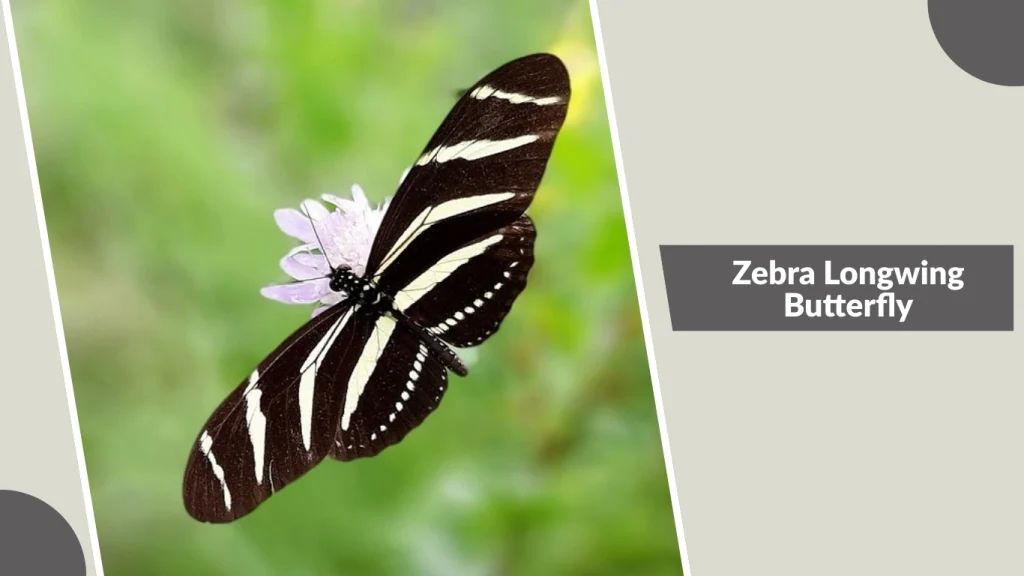
The Zebra Longwing (Heliconius charithonia) is a tropical butterfly known for its elongated wings striped in black and yellow, resembling a zebra’s pattern. It is also Florida’s official state butterfly and is admired for its graceful flight and unique feeding habits.
Identification
- Family: Nymphalidae (Brush-footed butterflies)
- Wingspan: 7.2–10 cm (2.8–4 in)
- Color: Black wings with bold yellow stripes
- Underside: Similar striped pattern but paler in color
- Caterpillar: White with black spots and long black spines, feeding on passionflower vines
Habitat and Distribution
The Zebra Longwing is found in the southern United States, Mexico, Central America, and South America. It thrives in tropical and subtropical forests, gardens, and hammocks.
Behavior and Diet
Unlike most butterflies, Zebra Longwings feed not only on nectar but also on pollen, which provides proteins that extend their lifespan. Caterpillars depend on passionflower leaves. These butterflies are social and roost communally at night, returning to the same spot daily.
