

Flying insects are among the most diverse and fascinating creatures in the insect world. From helpful pollinators like honeybees and butterflies to pests like mosquitoes and horseflies, these airborne species serve a wide range of roles in nature and human environments. This guide covers 19 common and recognizable flying insects, highlighting their characteristics, behaviors, and ecological importance. Whether beneficial or bothersome, each insect plays a part in the delicate balance of our ecosystems.
1. Housefly (Musca domestica)
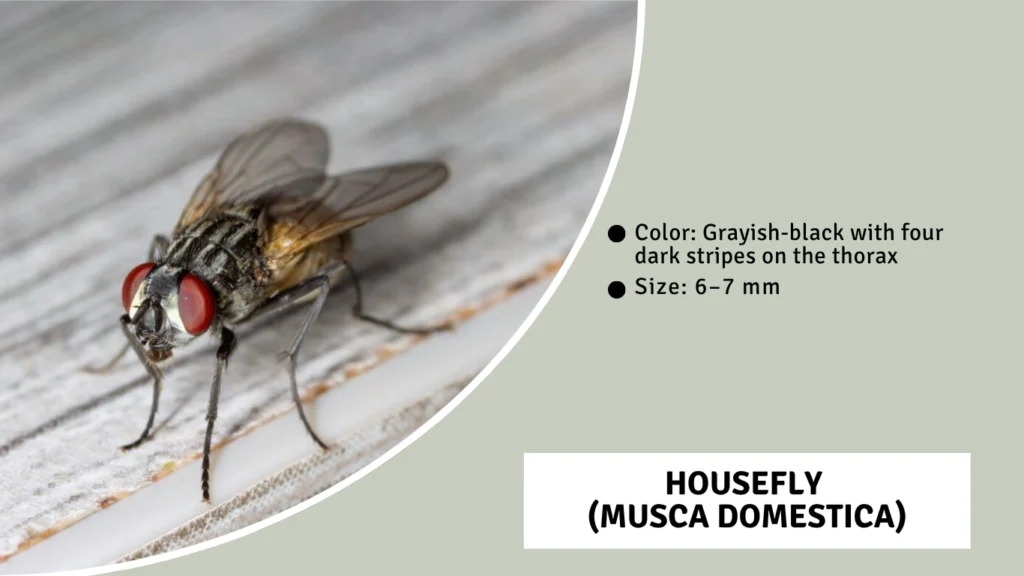
The Housefly is one of the most common flying insects found around human dwellings. Though small and seemingly harmless, it can carry and transmit various bacteria and pathogens due to its feeding and breeding habits.
Identification
- Color: Grayish-black with four dark stripes on the thorax
- Size: 6–7 mm
- Eyes: Large, red compound eyes
- Wings: One pair of transparent wings
- Body: Slightly hairy with sponging mouthparts
Habitat and Behavior
Frequently found in homes, garbage areas, food establishments, and farms. Attracted to food, waste, and moist organic matter where they lay their eggs.
Health Concerns
Known to spread foodborne illnesses like salmonella, E. coli, and cholera. Control methods include proper sanitation, waste management, and the use of physical barriers or traps.
2. Mosquito (Culicidae)
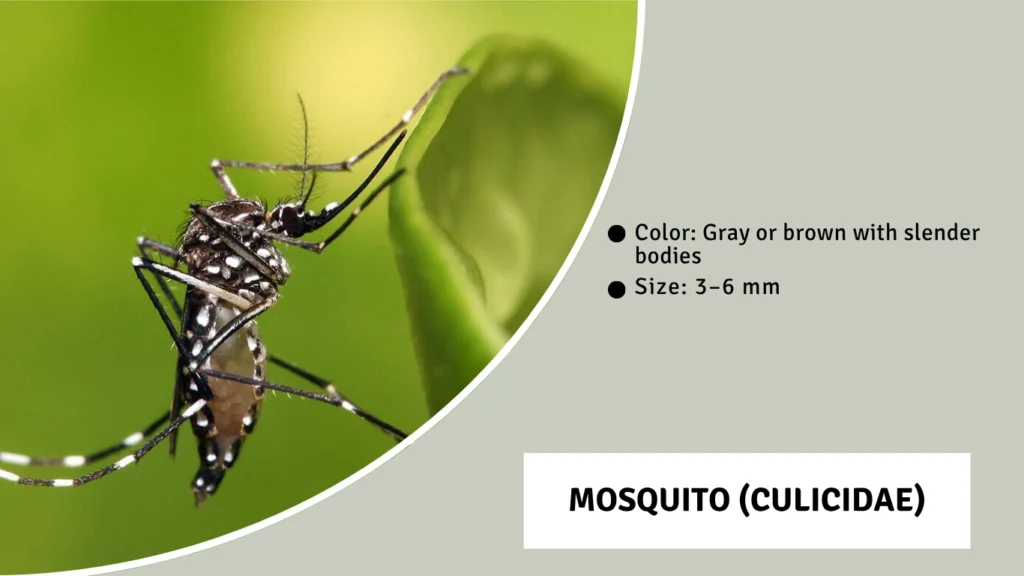
Mosquitoes are small, flying insects best known for their biting behavior and role in spreading diseases. Only females bite, as they require blood to produce eggs, while males feed on nectar.
Identification
- Color: Gray or brown with slender bodies
- Size: 3–6 mm
- Wings: Narrow, often with scales on veins
- Legs: Long and thin
- Mouthparts: Elongated proboscis for piercing skin
Habitat and Behavior
Breed in stagnant water such as ponds, puddles, and containers. Most active during dawn and dusk.
Medical Importance
Transmit diseases like malaria, dengue, Zika virus, and West Nile virus. Control involves removing breeding sites, using repellents, and mosquito nets.
3. Dragonfly (Anisoptera)
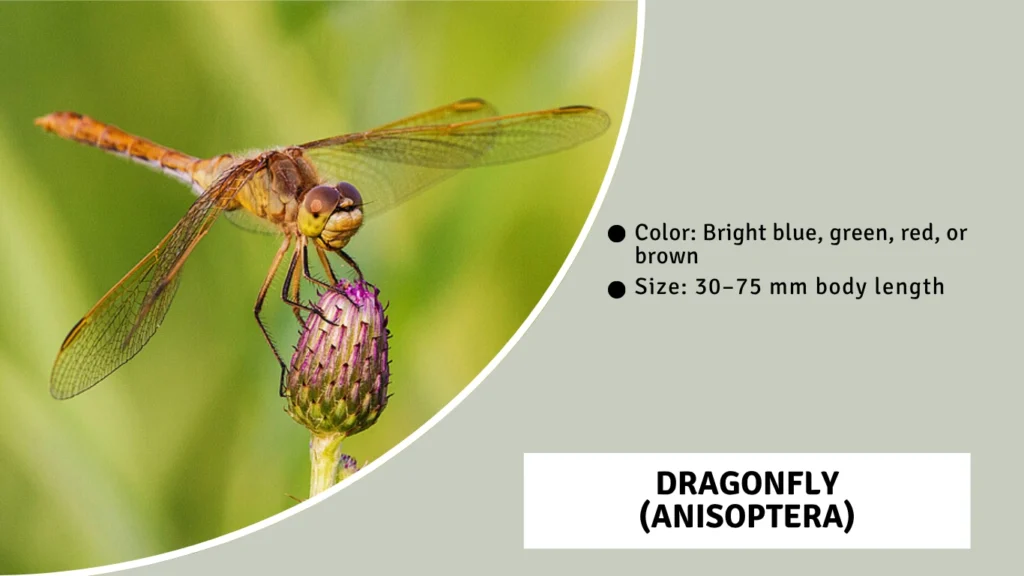
Dragonflies are fast, agile flyers and highly effective predators of mosquitoes and other small flying insects. They spend part of their life cycle in water as aquatic nymphs.
Identification
- Color: Bright blue, green, red, or brown
- Size: 30–75 mm body length
- Wings: Two pairs, transparent, always held open at rest
- Eyes: Large, compound, covering most of the head
Habitat and Behavior
Found near lakes, ponds, wetlands, and streams. Both nymphs and adults are predatory.
Ecological Role
Control mosquito populations naturally and serve as indicators of healthy aquatic environments.
4. Damselfly (Zygoptera)
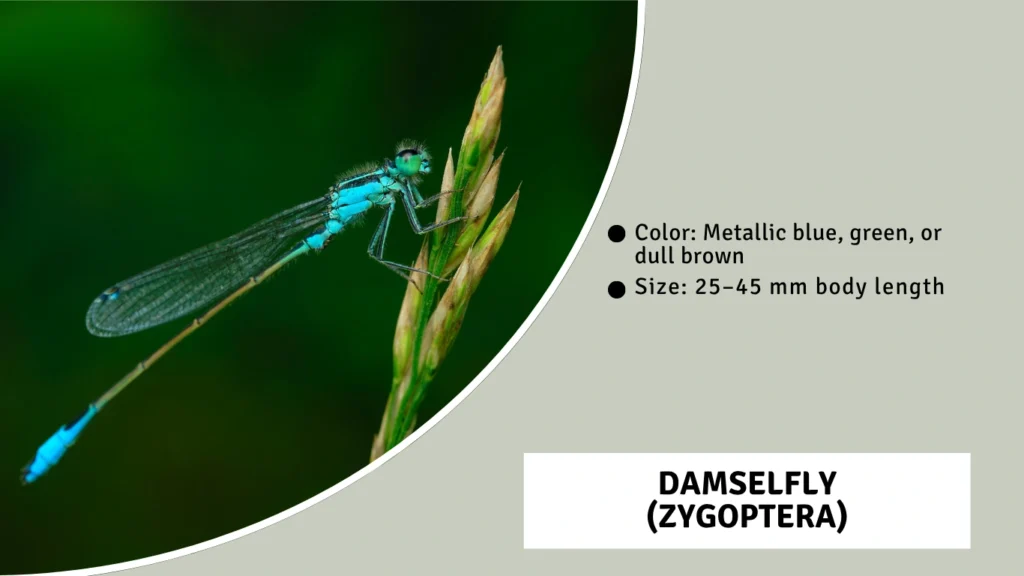
Damselflies are close relatives of dragonflies but more delicate and slender. They are also beneficial predators of gnats and mosquito larvae.
Identification
- Color: Metallic blue, green, or dull brown
- Size: 25–45 mm body length
- Wings: Two pairs, held closed along the body when at rest
- Body Shape: Slim with a narrow abdomen
- Eyes: Large but spaced apart
Habitat and Behavior
Found near water bodies, resting on vegetation. Active during daylight, hunting small flying insects.
Ecological Value
They help keep mosquito and fly populations in check and serve as bioindicators of clean, oxygen-rich aquatic systems.
5. Butterfly (Lepidoptera)
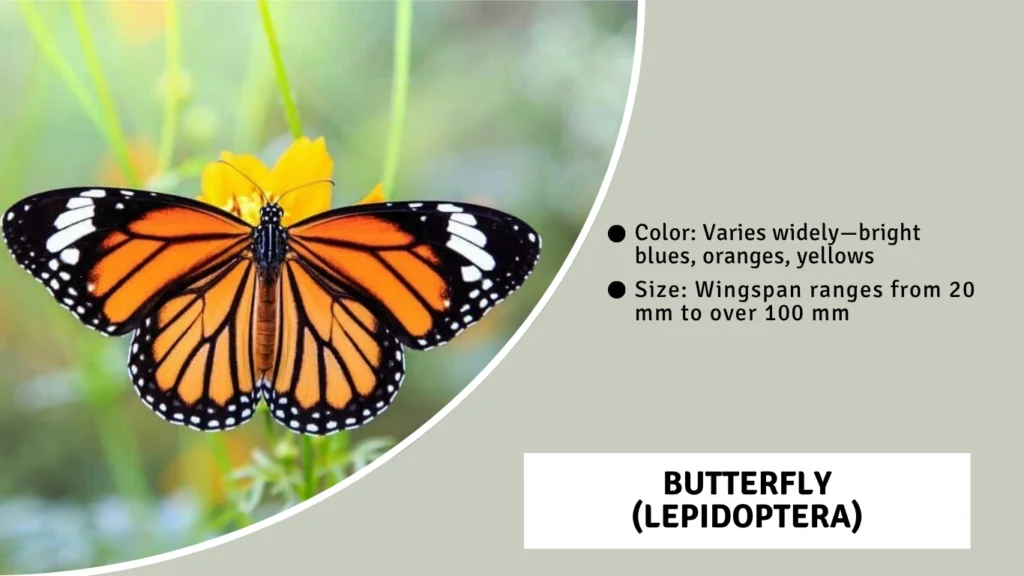
Butterflies are colorful, daytime flying insects admired for their beauty and their role as pollinators. They undergo complete metamorphosis and are often found fluttering around flowers.
Identification
- Color: Varies widely—bright blues, oranges, yellows, whites, and patterns
- Size: Wingspan ranges from 20 mm to over 100 mm
- Wings: Two pairs covered in tiny colored scales
- Antennae: Long and clubbed at the tips
- Body: Slender with a soft thorax
Habitat and Behavior
Seen in gardens, meadows, forests, and open fields. Feed on nectar using a coiled proboscis.
Importance
Pollinate a variety of flowering plants and serve as indicators of a healthy ecosystem.
6. Moth (Lepidoptera)

Moths are nocturnal relatives of butterflies, many of which play roles in pollination or serve as food for other wildlife. Some, however, are known pests in agriculture and textiles.
Identification
- Color: Generally duller than butterflies—browns, grays, and earth tones
- Size: Wide range; wingspans from a few mm to over 150 mm
- Wings: Scaled, often held flat or tent-like at rest
- Antennae: Often feathery or filament-like
- Body: Fuzzy and stout
Habitat and Behavior
Attracted to lights at night; commonly found near vegetation or indoor lights. Larvae (caterpillars) may feed on crops or fabrics.
Roles
Pollinators and food sources for birds and bats; some species are key decomposers in natural systems.
7. Honeybee (Apis mellifera)
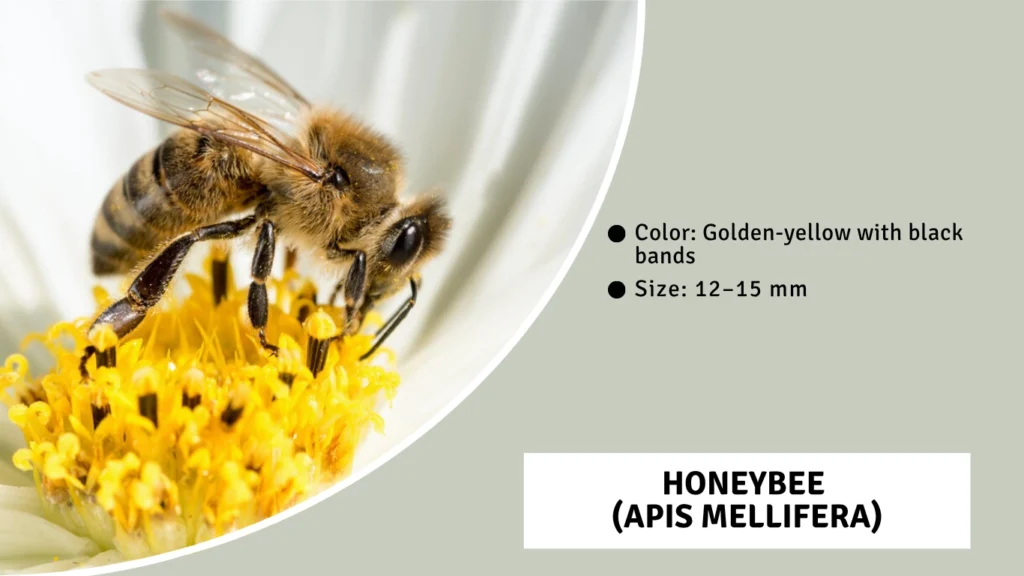
Honeybees are vital pollinators that support agriculture and wild plant life. They live in highly organized colonies and are known for producing honey and beeswax.
Identification
- Color: Golden-yellow with black bands
- Size: 12–15 mm
- Body: Fuzzy, segmented, and compact
- Wings: Two pairs, clear and veined
- Antennae: Medium-length, bent slightly
Habitat and Behavior
Found in gardens, orchards, meadows, and near human-kept hives. Forage on flowers to collect nectar and pollen.
Ecological Importance
Pollinate over 80% of flowering crops. Crucial for food production and biodiversity. Also contribute to natural products like honey, wax, and propolis.
8. Bumblebee (Bombus spp.)
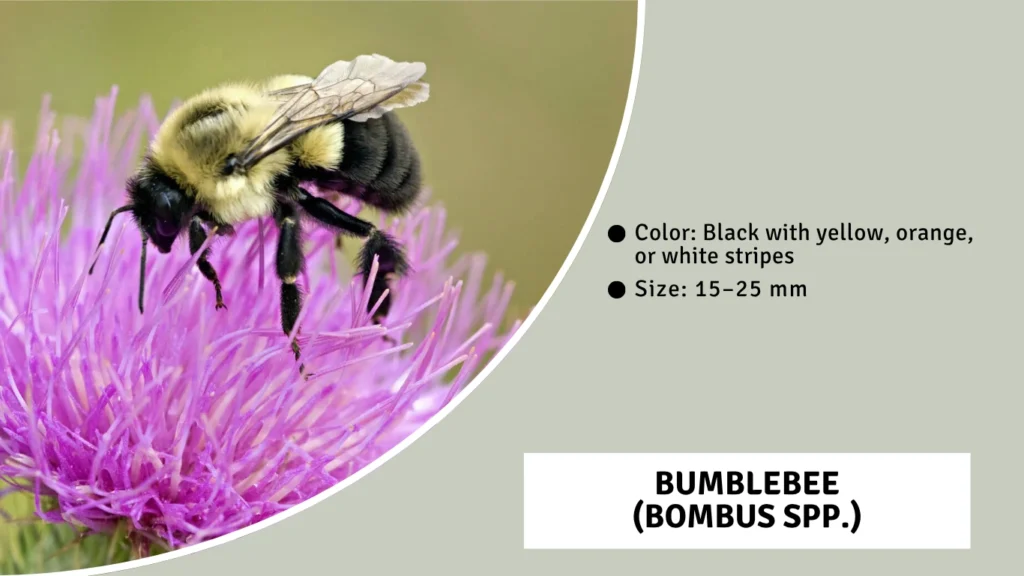
Bumblebees are large, fuzzy pollinators known for their strength and ability to pollinate in cooler and lower-light conditions than other bees. They are essential for crops like tomatoes and berries.
Identification
- Color: Black with yellow, orange, or white stripes
- Size: 15–25 mm
- Body: Round, robust, and hairy
- Wings: Two pairs, beating rapidly
- Sound: Loud buzzing when flying
Habitat and Behavior
Nest in underground burrows or grass clumps. Active in gardens, meadows, and farms throughout the day, even in cloudy weather.
Importance
Perform “buzz pollination,” a technique needed for certain plants. They significantly boost fruit and seed production in both crops and wildflowers.
9. Wasp (Vespidae, Sphecidae, and others)
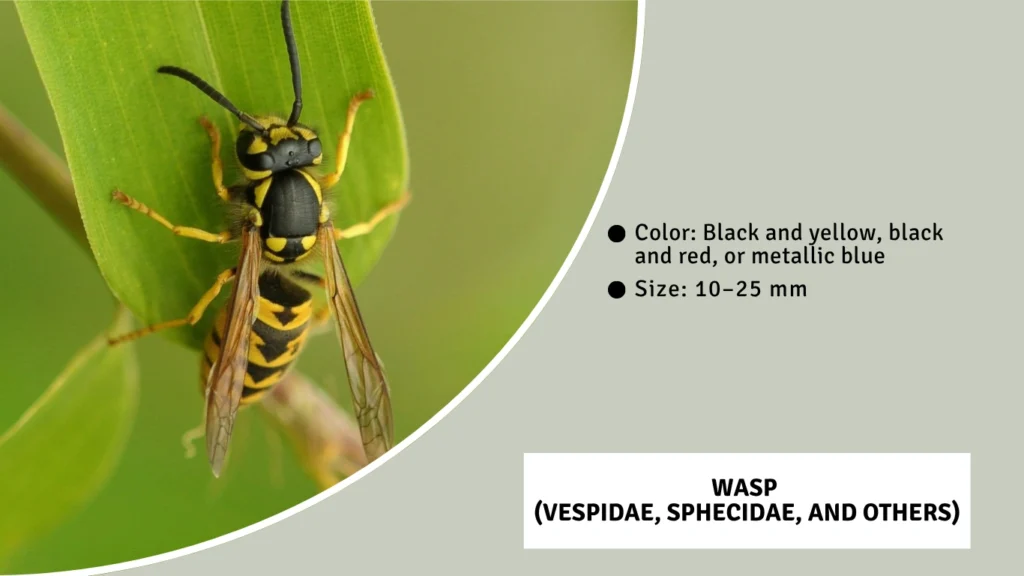
Wasps are diverse flying insects that play a dual role as both pollinators and pest controllers. While some are solitary, many (like yellowjackets and paper wasps) live in colonies.
Identification
- Color: Black and yellow, black and red, or metallic blue
- Size: 10–25 mm
- Body: Slender waist with smooth body
- Wings: Two pairs, often folded at rest
- Stinger: Present in females
Habitat and Behavior
Found in gardens, forests, eaves, and underground. Feed on nectar, insects, and sugary substances. Some species build paper nests.
Role
Pollinate flowers and help control garden pests like caterpillars, flies, and aphids. However, they can sting if provoked.
10. Hornet (Vespa spp.)
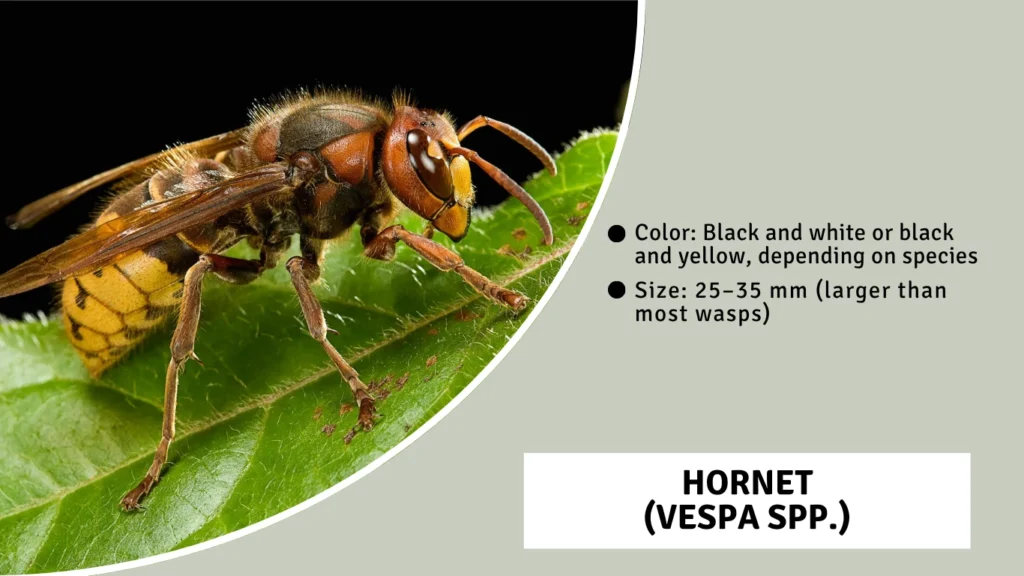
Hornets are a type of large social wasp known for their powerful stings and aggressive nest defense. Despite their fearsome reputation, they help control insect pests in ecosystems.
Identification
- Color: Black and white or black and yellow, depending on species
- Size: 25–35 mm (larger than most wasps)
- Body: Thick and robust with a broad head
- Wings: Two pairs, long and translucent
- Stinger: Present and can sting multiple times
Habitat and Behavior
Nests in trees, shrubs, attics, or wall voids. Feeds on other insects and tree sap. Active in late summer and early fall.
Ecological Role
Prey on flies, caterpillars, and other insects, helping reduce pest populations. Though protective of their nests, they are beneficial predators in the environment.
11. Horsefly (Tabanidae)

Horseflies are large, strong-flying insects known for their painful bites. Females feed on blood, while males feed on nectar. They are often found near livestock and wet environments.
Identification
- Color: Gray or black body with green or patterned eyes
- Size: 10–25 mm
- Body: Stout and hairy
- Wings: Two, often clear or slightly smoky
- Mouthparts: Cutting and sponging (female only)
Habitat and Behavior
Common near rivers, ponds, and pastures. Females seek warm-blooded hosts, including humans, for blood meals.
Impact
While not beneficial due to their biting behavior, they are important in food webs as prey for birds and dragonflies. Males may assist in some pollination.
12. Fruit Fly (Drosophilidae)

Fruit Flies are small flying insects best known for infesting overripe or fermenting fruit. While they are pests indoors, some species are used in scientific research and help decompose organic matter.
Identification
- Color: Tan or brown with red eyes
- Size: 2–4 mm
- Body: Small and slender
- Wings: Transparent, held flat
- Distinct Feature: Quick and erratic flight
Habitat and Behavior
Found near kitchens, compost bins, and decaying produce. Reproduce quickly and are active year-round indoors.
Role
Though often considered a nuisance, they help in decomposition and nutrient recycling. Also widely studied in genetics and biology.
13. Gnat (Various Families: Sciaridae, Mycetophilidae, etc.)
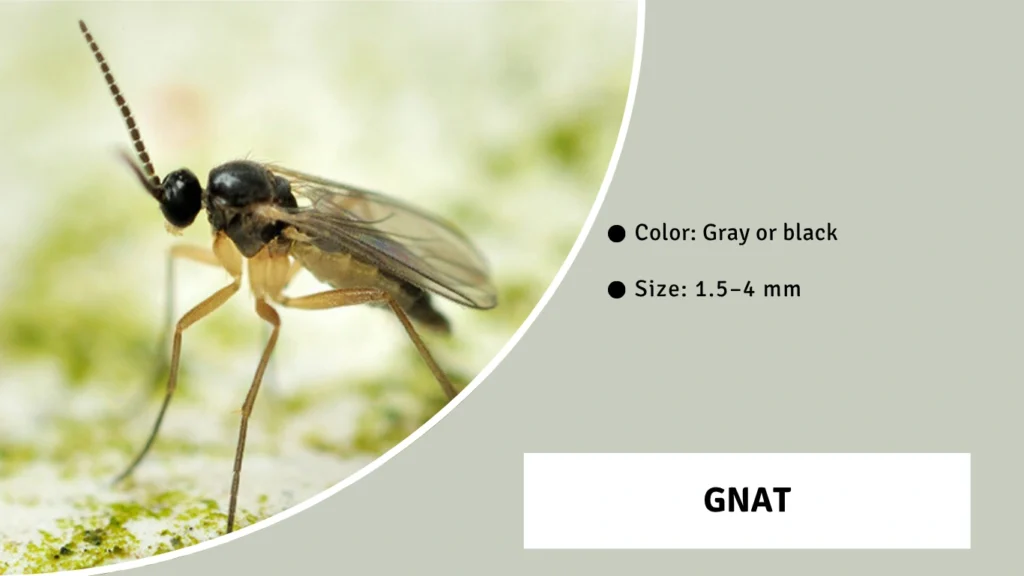
Gnats are tiny flying insects that resemble mosquitoes and are often seen in swarms. Some species bite, while others feed on fungi or plant matter.
Identification
- Color: Gray or black
- Size: 1.5–4 mm
- Body: Thin, mosquito-like
- Wings: Clear, often with a slight shimmer
- Antennae: Long and slender
Habitat and Behavior
Often found near moist soil, houseplants, compost, or decaying vegetation. Some species are attracted to lights or carbon dioxide.
Ecological Role
Serve as food for birds, spiders, and aquatic insects. Non-biting gnats also aid in the breakdown of decaying organic matter.
14. Crane Fly (Tipulidae)
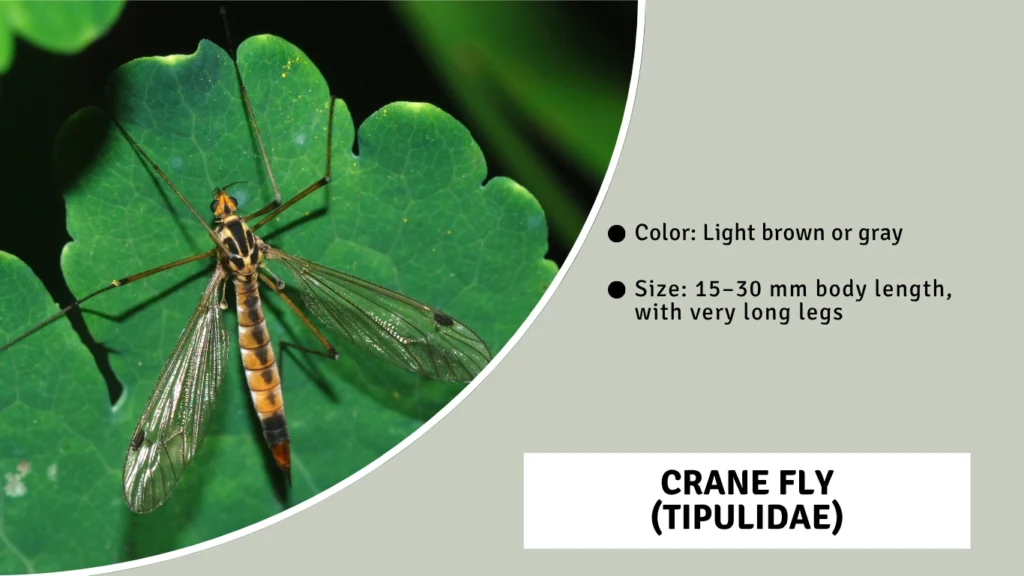
Crane Flies are long-legged, gentle flying insects often mistaken for giant mosquitoes. Despite their appearance, they do not bite or sting and are harmless to humans.
Identification
- Color: Light brown or gray
- Size: 15–30 mm body length, with very long legs
- Body: Slender with a V-shaped suture on the thorax
- Wings: Two, clear and delicate
- Antennae: Long and thread-like
Habitat and Behavior
Found near moist lawns, gardens, and wetlands. Adults live only a few days and feed very little or not at all.
Ecological Role
Larvae (called leatherjackets) live in the soil and feed on decaying organic matter and plant roots. Adults are an important food source for birds and amphibians.
15. Deer Fly (Chrysops spp.)
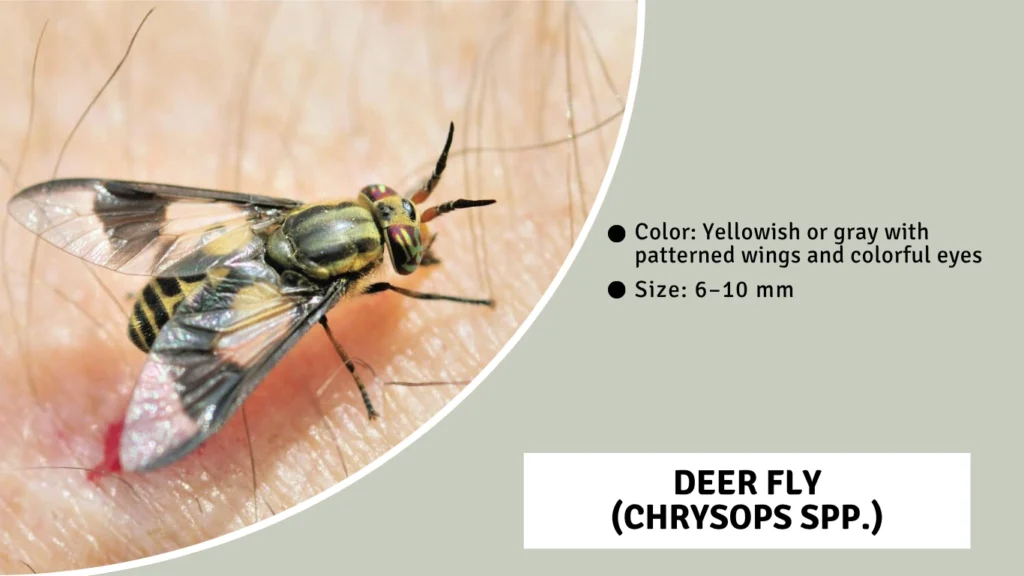
Deer Flies are biting insects related to horseflies. Females feed on the blood of humans and animals, while males feed on pollen and nectar.
Identification
- Color: Yellowish or gray with patterned wings and colorful eyes
- Size: 6–10 mm
- Body: Compact with wide-set eyes
- Wings: Clear with dark bands or patches
- Mouthparts: Scissor-like, designed for slicing skin
Habitat and Behavior
Active during warm months in wooded areas, wetlands, and near lakes. Females lie in wait for hosts like deer or people.
Importance
Although a biting pest, deer flies are part of the natural food chain and are preyed upon by birds, frogs, and dragonflies.
16. Hoverfly (Syrphidae)
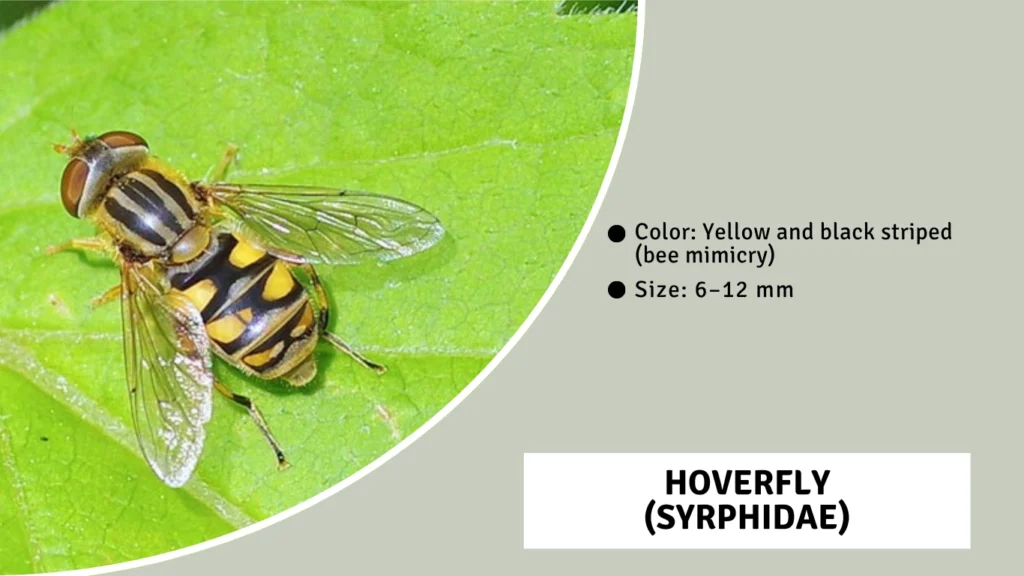
Hoverflies, also known as flower flies or syrphid flies, are important pollinators often mistaken for bees or wasps due to their mimicry. They are harmless and beneficial in gardens.
Identification
- Color: Yellow and black striped (bee mimicry)
- Size: 6–12 mm
- Body: Slender and shiny
- Wings: Two, held outstretched when hovering
- Flight Behavior: Ability to hover in place and dart quickly
Habitat and Behavior
Found hovering around flowers in gardens, fields, and meadows. Adults feed on nectar and pollen, while larvae often eat aphids.
Benefits
Pollinate many flowering plants and vegetables. Larvae help control aphid populations, making hoverflies doubly valuable in gardens and agriculture.
17. Firefly (Lampyridae)
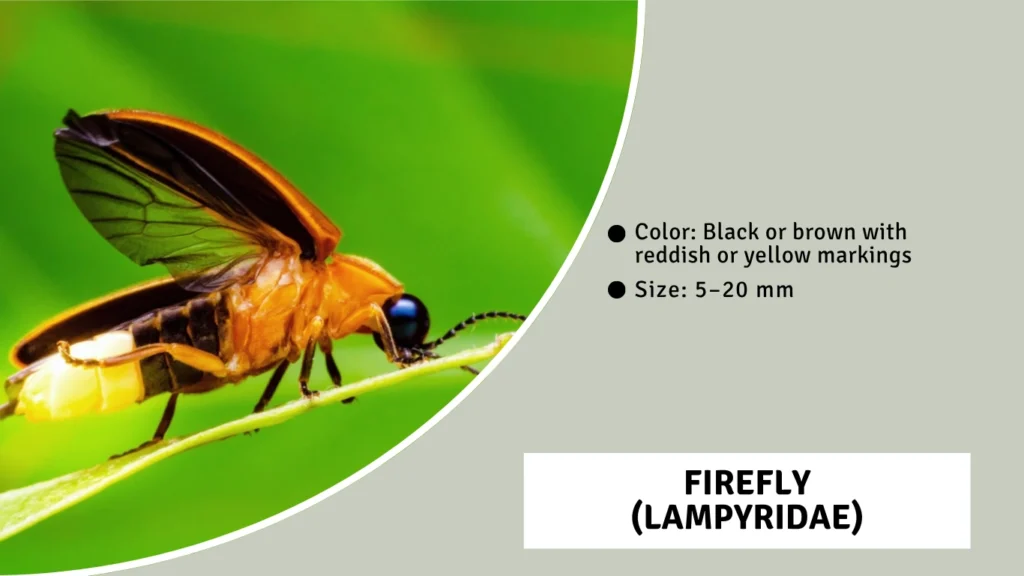
Fireflies, also known as lightning bugs, are beetles that produce light through bioluminescence. They are most active at dusk and night, using their glow to attract mates or prey.
Identification
- Color: Black or brown with reddish or yellow markings
- Size: 5–20 mm
- Body: Soft-bodied with a shield-like thorax
- Wings: Two pairs; elytra cover the hindwings
- Light Organ: Located at the tip of the abdomen (in most species)
Habitat and Behavior
Found in moist fields, forests, and gardens. Larvae are predatory, feeding on snails and slugs.
Ecological Role
Their light displays play a role in mating, and their larvae help control pest populations. Fireflies are also important indicators of environmental health.
18. Cicada (Cicadidae)

Cicadas are known for their loud, buzzing calls and periodic mass emergences. While they don’t sting or bite, they can cause minor damage to trees during egg-laying.
Identification
- Color: Brown or green with clear wings
- Size: 20–35 mm (larger in some species)
- Wings: Transparent with distinct veins
- Eyes: Large and widely spaced
- Body: Stout and robust
Habitat and Behavior
Found in trees and shrubs, especially during summer. Nymphs live underground for years before emerging to molt into adults.
Role in Ecosystem
Aerate soil during emergence, serve as food for birds and mammals, and contribute to nutrient cycling after death.
19. Lacewing (Chrysopidae)

Lacewings are delicate insects with transparent, lace-like wings and are prized for their pest-control abilities, especially in their larval stage.
Identification
- Color: Light green or brown
- Size: 8–15 mm
- Wings: Two pairs, net-veined and held roof-like over the body
- Eyes: Golden or copper-colored in green lacewings
- Body: Slender and soft
Habitat and Behavior
Found in gardens, greenhouses, and crop fields. Adults feed on nectar and pollen, while larvae (known as aphid lions) prey on aphids, mites, and other small insects.
Garden Benefits
Larvae are aggressive predators and highly beneficial in pest management. Lacewings are often released commercially for biological control.
