
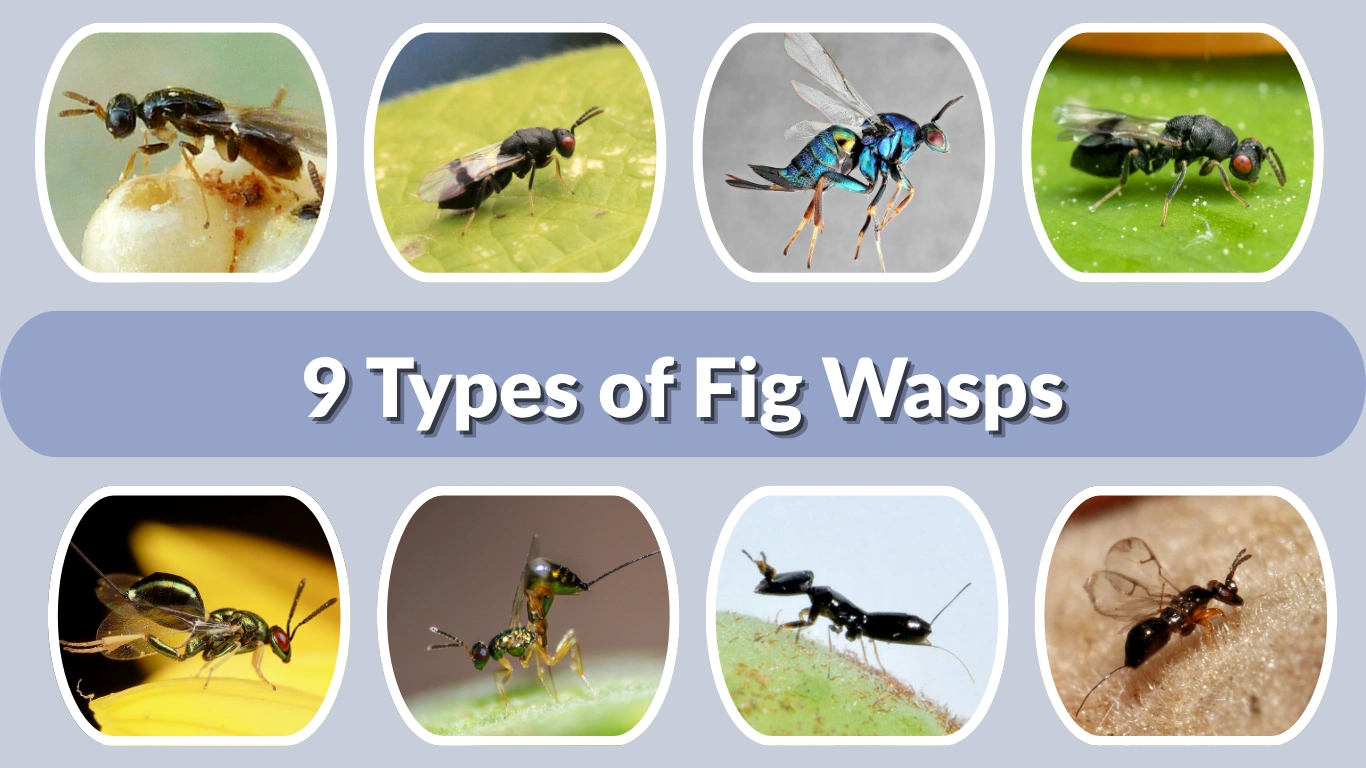
The fig wasp world is remarkably diverse, encompassing species that pollinate figs and others that live parasitically within them. Each type plays a unique role in the delicate ecosystem sustained inside a single fig fruit. From the mutualistic Agaonidae to parasitic genera like Apocrypta and Sycophila, these wasps showcase the intricate balance of cooperation and competition that has evolved over millions of years between fig trees and their tiny, specialized inhabitants.
1. Agaonidae
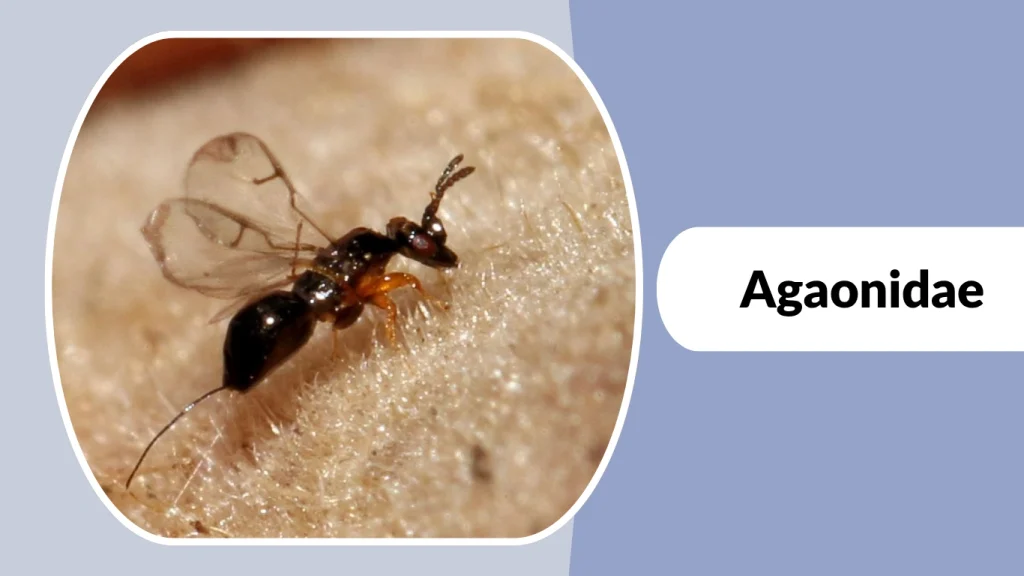
The Agaonidae family represents the true fig wasps — the essential pollinators in the fig-wasp mutualistic relationship. Every species within this family is associated with a specific fig tree, ensuring pollination and reproduction for both. Without Agaonidae wasps, most wild fig species could not produce seeds, making them vital to tropical ecosystems.
Identification
- Scientific Classification: Family Agaonidae, Order Hymenoptera
- Size: Usually 1–2 mm long; females are larger and winged, males are smaller and wingless
- Color: Ranges from light brown to black
- Body Structure: Slender, with narrow heads and strong mandibles for boring into figs
- Distinctive Feature: Females possess pollen pockets and specialized antennae for locating receptive figs
- Wings: Transparent with fine veins; found only in females
Habitat
Agaonid wasps are found across tropical and subtropical regions worldwide. Their distribution follows that of fig trees, including rainforests, savannas, and river valleys. Each species of Agaonid wasp is usually tied to one specific fig tree species, ensuring precise pollination. They thrive in humid, warm environments where fig trees produce fruit year-round.
Diet
Adult Agaonid wasps do not feed during their short lives. Their energy is derived from reserves built during the larval stage.
- Larvae: Feed on gall tissues formed within the fig’s inner flowers.
- Adults: Focus entirely on reproduction and pollination rather than feeding.
This limited diet reflects their life purpose — to complete pollination before their short lifespan ends.
Behavior and Reproduction
Agaonidae wasps exhibit one of nature’s most intricate reproductive systems. The female enters a fig through the ostiole, lays eggs, and simultaneously transfers pollen from another fig. Inside, larvae develop safely in the fig’s galls.
When adults emerge, males mate with females still inside the fig, then dig exit tunnels before dying. Females, now carrying pollen, leave to locate a new fig — restarting the cycle.
Their behavior demonstrates perfect synchronization with the fig’s development cycle, showing millions of years of coevolution.
Ecological Importance
Agaonid wasps are keystone pollinators in tropical forests. By ensuring fig trees reproduce, they indirectly support thousands of animal species — from birds and bats to primates — that rely on figs for food. Their role in maintaining biodiversity makes Agaonidae essential to the balance of entire ecosystems.
2. Eupristina verticillata
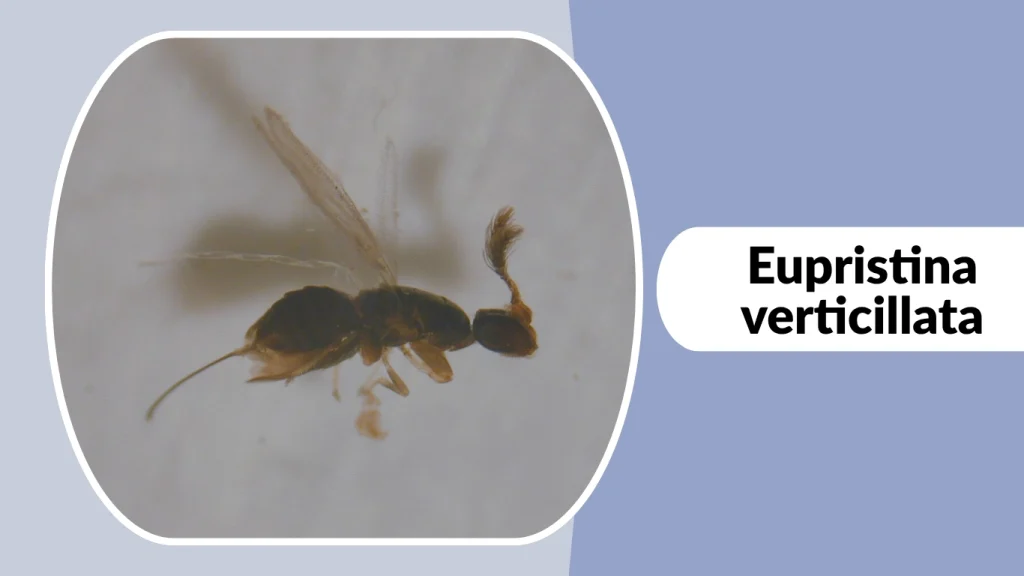
Eupristina verticillata is a pollinating fig wasp species belonging to the family Agaonidae. It plays a critical role in pollinating Ficus microcarpa (the Chinese banyan), a fig species common in Asia. This wasp is small yet essential to maintaining the reproduction and survival of its host fig species through precise pollination.
Identification
- Scientific Name: Eupristina verticillata
- Family: Agaonidae
- Host Fig: Ficus microcarpa
- Size: Around 1.5–2 mm
- Color: Light brown to dark amber
- Body: Slender body with long antennae; females are winged, males are wingless
- Distinct Feature: Females have pollen pockets that enable active pollination
Habitat
This species thrives in tropical and subtropical regions of Asia, particularly in areas where Ficus microcarpa trees are abundant. It can be found in urban parks, forests, and botanical gardens where banyan trees grow year-round.
Diet
Adult Eupristina verticillata do not eat; they live solely to reproduce and pollinate. Larvae feed on the gall tissue inside figs, gaining the nutrients required for growth and metamorphosis.
Behavior and Reproduction
The wasp’s life cycle is tightly bound to Ficus microcarpa. Females enter the fig through its ostiole to lay eggs and pollinate flowers. Larvae grow within the fig’s galls, and when mature, males emerge first to mate with females. Males then dig exit tunnels and die, while fertilized females collect pollen and fly off to find a new receptive fig.
Ecological Importance
This species ensures the survival of Ficus microcarpa, a keystone tree supporting many urban and forest animals. Without Eupristina verticillata, the reproductive success of the banyan tree would collapse, affecting the ecosystems it supports.
3. Pleistodontes imperialis
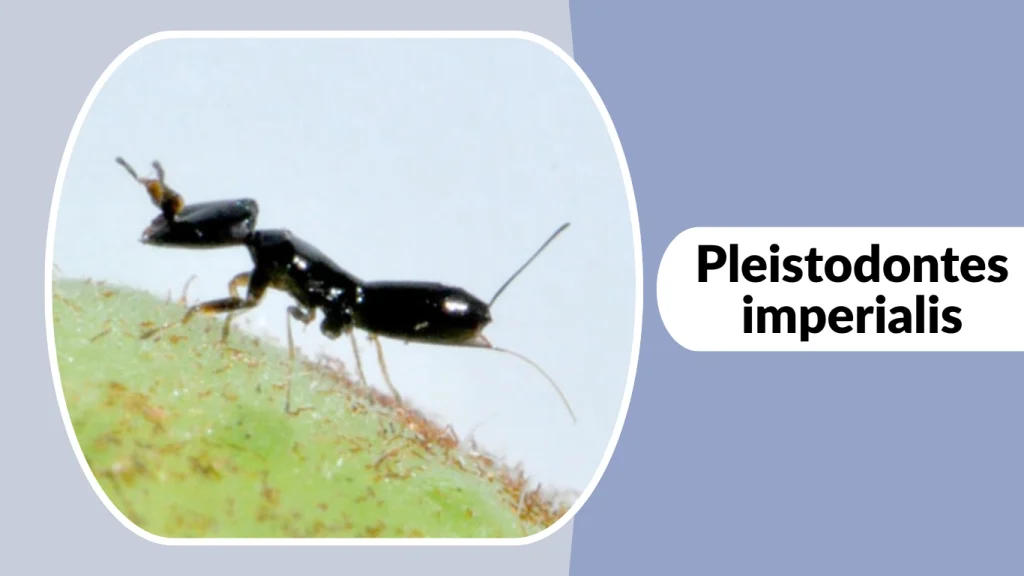
Pleistodontes imperialis is a species of pollinating fig wasp also in the family Agaonidae, known for its exclusive relationship with Ficus rubiginosa (the rusty fig). Found mainly in Australia, it represents a perfect example of fig-wasp mutualism, where both species rely completely on one another for reproduction.
Identification
- Scientific Name: Pleistodontes imperialis
- Family: Agaonidae
- Host Fig: Ficus rubiginosa
- Size: Approximately 2 mm
- Color: Golden brown or amber
- Body: Compact, smooth body with narrow head; females possess wings and pollen pockets
- Distinctive Feature: Males are blind and wingless, designed only for mating inside the fig
Habitat
This species inhabits coastal and subtropical regions of Australia, particularly along New South Wales and Queensland. It thrives in environments rich in fig trees, including forests, coastal cliffs, and urban green spaces.
Diet
Similar to other Agaonid wasps, adults do not feed. Larvae consume nutrient-rich gall tissue within the fig during their developmental stages. This unique diet ensures rapid growth before metamorphosis.
Behavior and Reproduction
Female wasps enter the fig through the ostiole, lay eggs, and deposit pollen gathered from previous figs. Larvae develop inside galls until maturity. Males emerge first, mate with females within the fig, dig exit tunnels, and die shortly after. Females exit carrying pollen and seek another Ficus rubiginosa fig, continuing the cycle.
Ecological Importance
Pleistodontes imperialis is vital for sustaining Ficus rubiginosa populations, which in turn provide food for birds, bats, and other wildlife. Their relationship exemplifies long-term coevolution, ensuring both species’ survival and contributing to the health of Australian ecosystems.
4. Torymidae

The Torymidae family includes several species of non-pollinating fig wasps that often act as parasitoids or gall inducers within figs. Unlike the pollinating Agaonidae, Torymidae wasps do not assist in fig pollination but instead use the fig’s internal structure as a nursery for their young, contributing to the complex ecology within each fig fruit.
Identification
- Scientific Classification: Family Torymidae, Order Hymenoptera
- Size: 1–3 mm in length
- Color: Metallic green, blue, or bronze hues — often with shiny exoskeletons
- Body Structure: Slender body with long ovipositor in females for laying eggs through the fig wall
- Wings: Transparent with noticeable veins; both sexes are winged
- Distinctive Feature: Elongated ovipositor that allows females to pierce the fig without entering it
Habitat
Torymidae wasps inhabit tropical and subtropical forests wherever fig trees are found. They occupy figs already used by pollinating wasps, inserting their eggs into the developing galls from outside. Their presence is crucial for maintaining the ecological balance inside the fig, as they help control pollinator populations naturally.
Diet
Larvae feed on pollinator larvae or gall tissue within the fig, depending on the species. Adults typically do not feed due to their short lifespan, surviving just long enough to reproduce.
Behavior and Reproduction
Female Torymidae wasps exhibit parasitic or semi-parasitic behavior. Using their long ovipositor, they lay eggs in galls that already contain pollinator larvae. Once the eggs hatch, the larvae feed on the host larvae or surrounding gall tissue. This reproductive strategy reduces overcrowding within figs and maintains a balanced internal ecosystem.
Ecological Importance
Although not pollinators, Torymidae wasps play a vital regulatory role. They prevent the overpopulation of pollinators and keep fig microhabitats stable. This dynamic interaction supports biodiversity and maintains equilibrium among the many species sharing a single fig environment.
5. Apocrypta
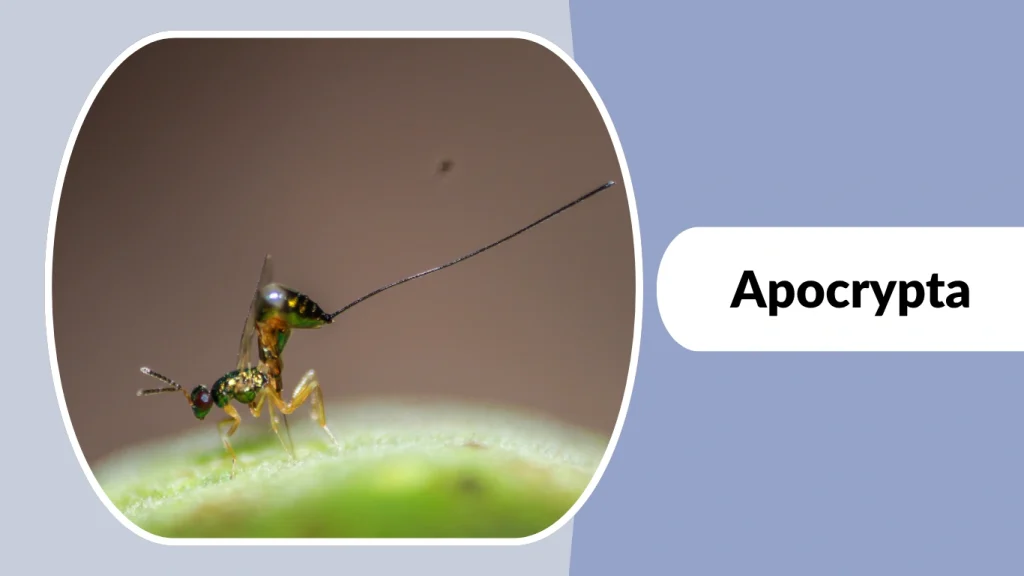
Apocrypta is a genus of non-pollinating fig wasps from the family Pteromalidae. These wasps are known as parasitoids, targeting the larvae of pollinating wasps within the fig. Found widely across Asia and Africa, Apocrypta species form an essential part of the fig-wasp ecosystem, acting as natural population regulators.
Identification
- Scientific Name: Apocrypta spp.
- Family: Pteromalidae
- Size: Around 2–3 mm
- Color: Dark brown to black with metallic sheen
- Body: Robust body with long ovipositor in females
- Distinct Feature: The ovipositor is longer than the body, enabling egg deposition from outside the fig
Habitat
These wasps are found in tropical regions of Africa, India, and Southeast Asia, wherever wild fig trees grow. They inhabit the same environments as pollinating wasps but perform their reproductive activities externally, never entering the fig themselves.
Diet
- Larvae: Feed on developing larvae of pollinating wasps or on fig gall tissues.
- Adults: Do not feed and live only for reproduction.
Behavior and Reproduction
Female Apocrypta wasps use their needle-like ovipositors to pierce the fig wall and lay eggs into galls. Their larvae feed on the larvae of pollinating wasps, effectively regulating their population. Although this parasitic relationship seems harmful, it prevents overbreeding inside figs, allowing the fig-wasp community to remain balanced.
Ecological Importance
Apocrypta wasps contribute to the natural regulation of pollinator populations inside figs. By limiting overcrowding and competition, they help sustain the internal fig ecosystem’s diversity and stability. Their presence exemplifies the delicate balance of cooperation and competition that defines the fig-wasp relationship.
6. Eurytomidae
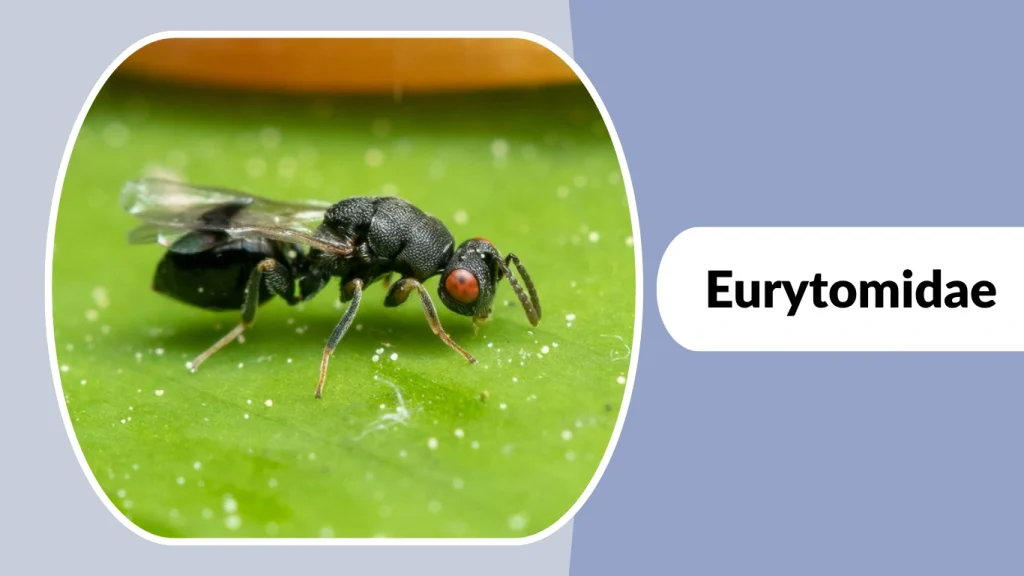
The Eurytomidae family consists of non-pollinating fig wasps that are often parasitoids or secondary gall inducers. These wasps play a complex role in the fig ecosystem, influencing the population of both pollinating and other non-pollinating wasps. While they don’t assist in pollination, they contribute to the natural control and diversity within figs.
Identification
- Scientific Classification: Family Eurytomidae, Order Hymenoptera
- Size: Usually 2–4 mm long
- Color: Shiny black, brown, or metallic green
- Body Structure: Compact with strong legs and a smooth exoskeleton
- Ovipositor: Long and sturdy, designed for penetrating fig walls to lay eggs
- Wings: Clear with few veins, moderately narrow
Habitat
Eurytomidae wasps inhabit tropical and subtropical regions worldwide, particularly in Asia, Africa, and South America. They occupy figs already colonized by pollinating wasps, often parasitizing larvae or using unoccupied gall tissue for reproduction. They prefer humid forest zones where fig trees are abundant.
Diet
Larvae of Eurytomidae species are parasitic. They feed either on gall tissue created by pollinators or directly on pollinator larvae inside figs. Adult wasps rarely feed; their energy is reserved for reproduction.
Behavior and Reproduction
Eurytomidae females locate receptive figs already containing pollinator larvae. Using their ovipositors, they lay eggs inside galls from the fig’s outer wall. When the larvae hatch, they consume available nutrients or larvae within those galls. This behavior regulates pollinator numbers, maintaining the internal ecological balance of the fig.
Ecological Importance
Although not beneficial to fig pollination, Eurytomidae wasps play a stabilizing ecological role. They prevent pollinator overpopulation and contribute to species diversity within the fig microhabitat. Their presence adds a layer of complexity to the fig-wasp ecosystem, demonstrating nature’s intricate checks and balances.
7. Ormyridae

Ormyridae is a small family of non-pollinating parasitic fig wasps found mainly in tropical and subtropical environments. Members of this family act as hyperparasitoids, meaning they parasitize other parasitic wasps, adding another layer to the fig’s internal ecosystem. Though less studied, they play an important role in maintaining species equilibrium within the fig microcosm.
Identification
- Scientific Classification: Family Ormyridae, Order Hymenoptera
- Size: 2–3 mm
- Color: Metallic green, blue, or bronze with a reflective sheen
- Body: Rounded and smooth with large hind legs
- Wings: Transparent with few visible veins
- Distinctive Feature: Curved ovipositor adapted for precision egg-laying
Habitat
Ormyridae wasps are distributed across tropical Asia, Africa, and Australia, inhabiting regions where figs and other fig-associated wasps coexist. They are typically found in dense forest habitats rich in fig diversity.
Diet
Larvae feed on other parasitic wasp larvae rather than pollinators or fig tissues. By targeting parasitoids like Apocrypta, they indirectly protect pollinating wasp populations. Adults are short-lived and rarely feed.
Behavior and Reproduction
Female Ormyridae wasps locate figs already infested by parasitic species. Using their ovipositors, they inject eggs into the parasitic larvae. The newly hatched Ormyridae larvae then consume their hosts from within, eventually pupating inside the fig. This hyperparasitic behavior ensures natural population control among various wasp types living inside figs.
Ecological Importance
Ormyridae wasps serve as regulators of regulators, maintaining balance within the multi-layered fig ecosystem. By limiting the number of parasitic species, they indirectly support pollinator survival and help sustain the delicate harmony required for successful fig reproduction.
8. Sycophila
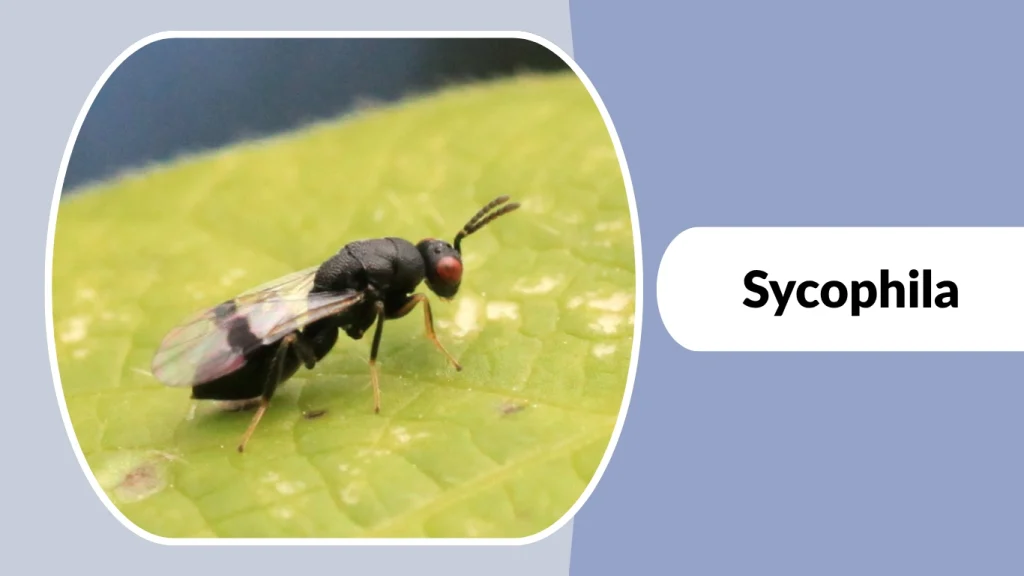
Sycophila is a genus of non-pollinating fig wasps belonging to the family Eurytomidae. These wasps are primarily parasitoids or inquilines, depending on the species, and play a crucial part in the complex web of life inside a fig. Though they do not contribute to pollination, Sycophila wasps help regulate population dynamics among pollinating and parasitic wasps, preserving internal balance within the fig.
Identification
- Scientific Classification: Genus Sycophila, Family Eurytomidae
- Size: 1.5–3 mm
- Color: Usually yellowish-brown, amber, or metallic green
- Body: Compact with well-developed antennae and smooth exoskeleton
- Ovipositor: Medium-length, strong, used for external egg-laying
- Wings: Transparent, delicate, with minimal vein structure
Habitat
Sycophila species inhabit tropical and subtropical forests across Asia, Africa, and Australia. They coexist in figs that host pollinating wasps, often appearing after the pollinators have laid their eggs. Their presence is a natural part of the fig’s small yet diverse ecosystem, which can contain multiple wasp species in one fruit.
Diet
Larvae of Sycophila species are parasitic or inquiline, feeding either on gall tissue or larvae of other wasps within the fig. Adults have short lifespans and do not feed.
Behavior and Reproduction
Female Sycophila wasps use their ovipositors to deposit eggs through the fig wall into developing galls. Depending on the species, their larvae may feed on existing larvae or occupy unused galls, feeding on nutrient-rich tissue. This secondary occupation reduces overcrowding and maintains diversity inside the fig.
Ecological Importance
Sycophila wasps help maintain the ecological equilibrium of fig habitats by balancing pollinator and parasite populations. Although non-pollinating, their presence prevents dominance by a single wasp species, ensuring fig micro-ecosystems remain stable and diverse.
9. Sycomacophila
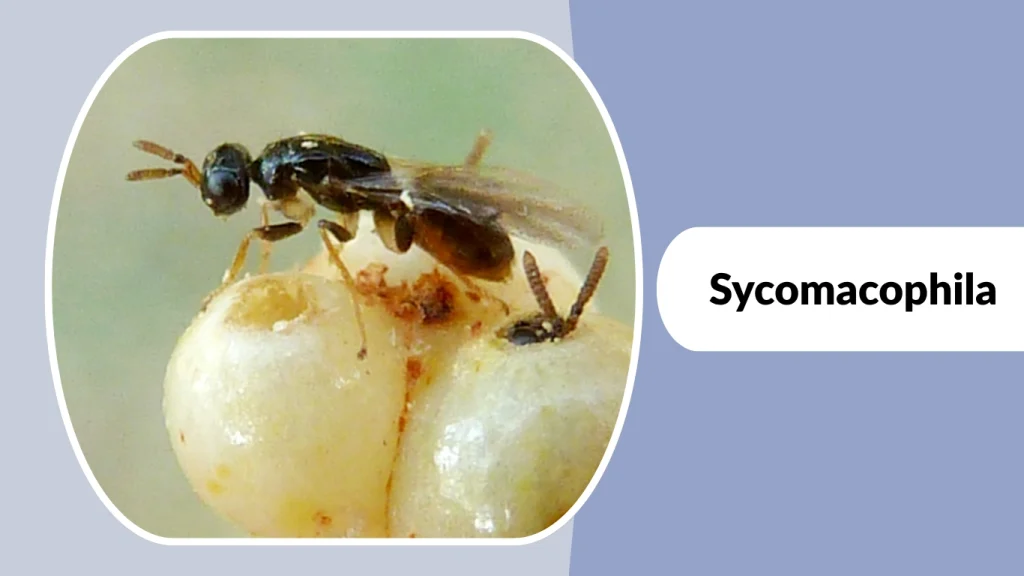
Sycomacophila is a lesser-known genus of non-pollinating fig wasps, also classified under the Eurytomidae family. These wasps are mostly parasitoids, feeding on other wasp larvae inside figs. Despite their parasitic lifestyle, they contribute to maintaining the ecological harmony within figs by naturally regulating populations of other wasp species.
Identification
- Scientific Classification: Genus Sycomacophila, Family Eurytomidae
- Size: Approximately 2–3 mm
- Color: Dark brown to black with a faint metallic sheen
- Body: Sturdy with rounded abdomen and long legs
- Wings: Transparent, often narrow and fringed
- Ovipositor: Long, needle-like, capable of penetrating fig walls
Habitat
Sycomacophila species inhabit tropical and subtropical environments, particularly in regions with abundant Ficus species. They thrive in moist forest ecosystems and can often be found coexisting with both pollinating and parasitic wasps inside the same fig fruit.
Diet
Larvae feed on other developing wasp larvae, typically those of pollinators or gall inducers. This predatory feeding helps control the population of species that might otherwise overcrowd or overexploit the fig’s internal resources. Adults rarely feed and dedicate their short lives to reproduction.
Behavior and Reproduction
Female Sycomacophila wasps locate figs already occupied by other species. Using their slender ovipositors, they lay eggs inside existing galls. Once hatched, the larvae consume their host larvae and pupate within the fig’s secure interior. Their timed emergence ensures they don’t directly interfere with pollination cycles but instead manage post-pollination population control.
Ecological Importance
Though not pollinators, Sycomacophila wasps are crucial for maintaining species diversity inside figs. Their parasitic role prevents overpopulation and ensures that the fig microhabitat remains balanced, healthy, and capable of supporting multiple wasp generations — a key factor in sustaining the broader fig-wasp ecosystem.
