
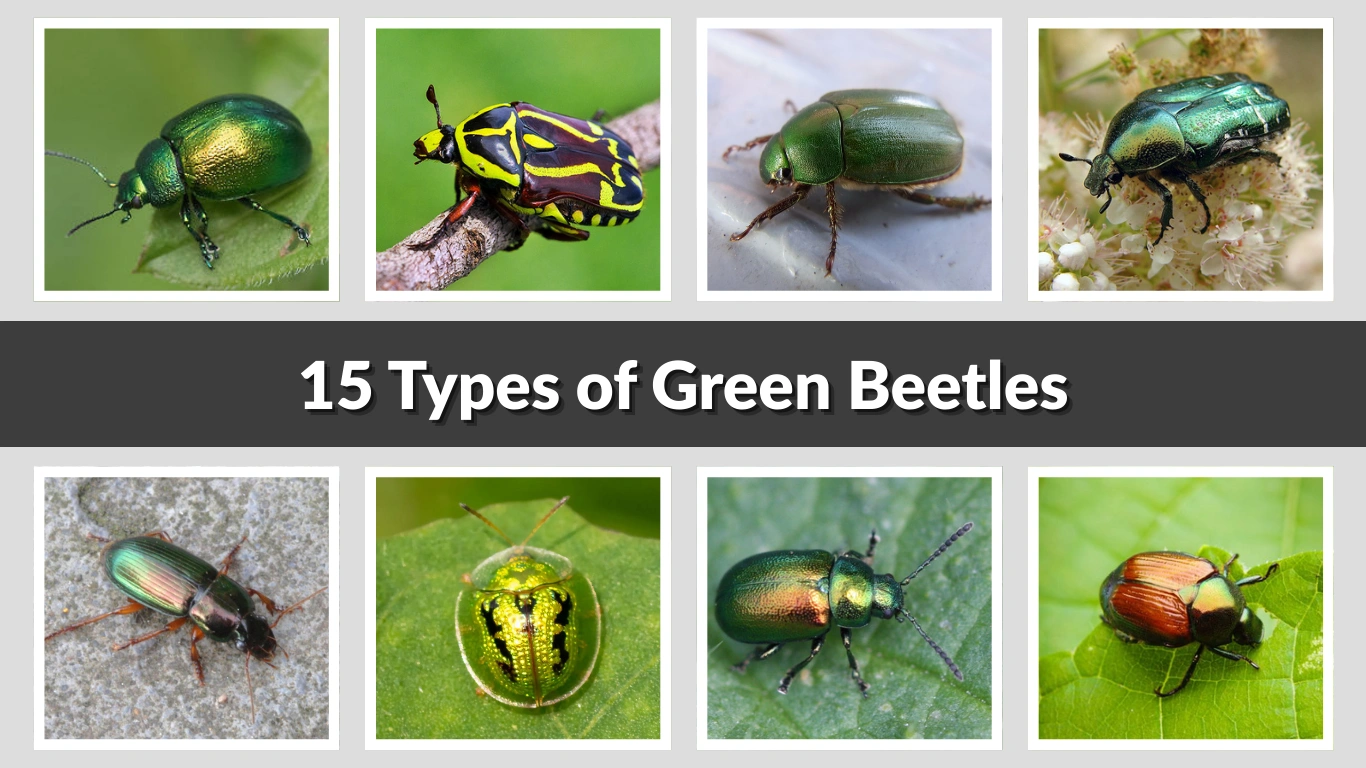
Green beetles are among the most eye-catching insects, thanks to their shimmering metallic hues and unique patterns. From garden pollinators to destructive pests, these beetles appear in a wide range of habitats worldwide, including forests, meadows, farmlands, and even herb gardens. Some, like the Green June Beetle, are large and noisy fliers, while others, such as the Green Mint Beetle, are small yet striking. This list highlights 15 fascinating green beetles and their diverse roles in nature.
1. Green June Beetle (Cotinis nitida)

The Green June Beetle is one of the most recognizable green beetles in North America, admired for its shiny metallic green body with golden or bronze highlights. It is especially active in the summer months, buzzing loudly while flying low over fields, lawns, and gardens. Though striking in appearance, its larvae (white grubs) can become problematic pests in turf and crop fields.
Identification
- Color: Bright metallic green on the top, with golden or bronze reflections on the sides.
- Size: Large, about 20–25 mm long.
- Body Shape: Broad and oval, with smooth, glossy wing covers.
- Antennae: Short, with lamellate clubs that help detect food and mates.
- Larvae: Large white grubs, often found curled in soil.
Habitat
Green June Beetles are common in the southeastern and central United States. They thrive in sunny areas such as fields, lawns, pastures, and gardens. Adults are frequently seen flying close to the ground, while larvae prefer moist, organic-rich soils where they feed on decaying matter and plant roots.
Behavior
Adults feed on ripe fruits such as grapes, peaches, figs, and apples, sometimes causing significant agricultural losses. They are noisy fliers and often appear in swarms during hot summer days. The larvae, unlike most white grubs, can crawl on their backs above the soil surface and feed on organic matter and roots, damaging turfgrass and crops.
2. Dogbane Leaf Beetle (Chrysochus auratus)
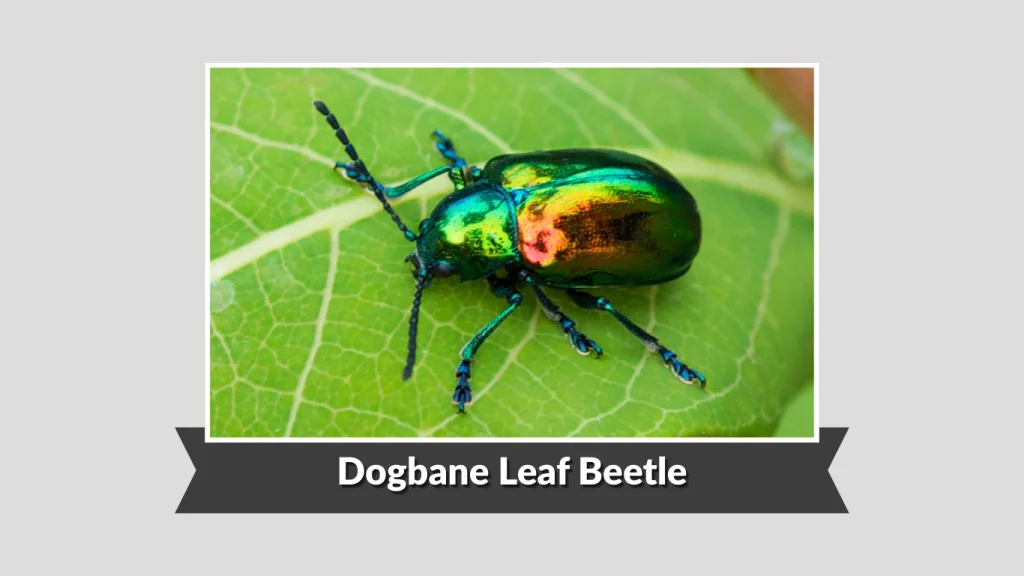
The Dogbane Leaf Beetle is a small but dazzling species, known for its metallic coloration that shifts between green, gold, and copper depending on the angle of light. It is commonly found feeding on dogbane and milkweed plants, making it a familiar sight in meadows and fields.
Identification
- Color: Iridescent green with golden or copper reflections.
- Size: 8–11 mm long, small compared to other beetles.
- Body Shape: Oval and slightly flattened, with smooth wing covers.
- Antennae: Thin and black, about half the body length.
Habitat
These beetles thrive in meadows, grasslands, and roadsides where dogbane and milkweed plants grow. They are especially visible on sunny days, resting and feeding on leaves.
Behavior
Adults feed exclusively on dogbane and milkweed foliage. Their shimmering coloration is caused by microscopic structures in their cuticle that reflect light. They are not considered agricultural pests, as their diet is highly specialized.
3. Fiery Searcher Beetle (Calosoma scrutator)
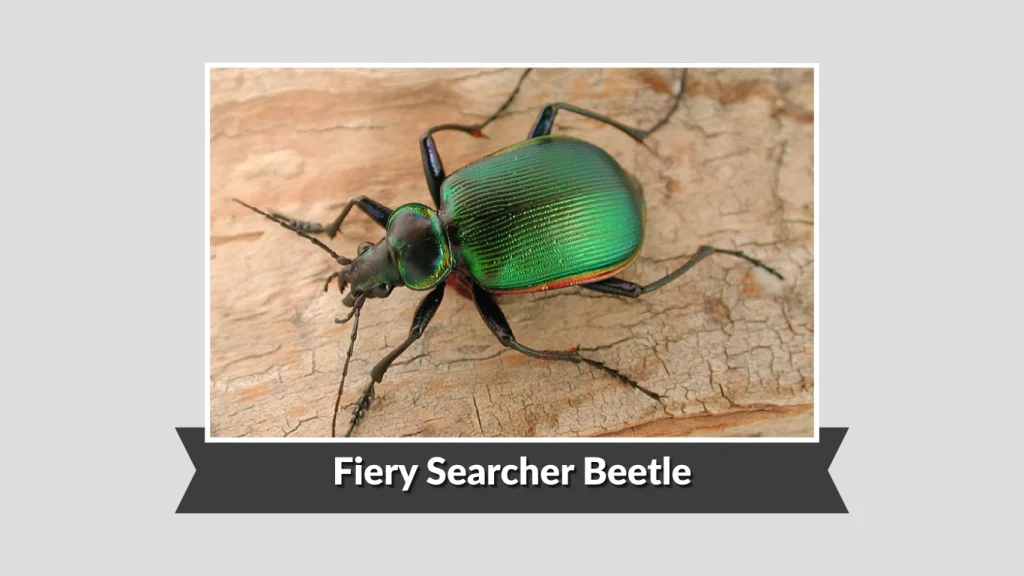
The Fiery Searcher Beetle is a large, ground-dwelling beetle admired for its metallic green body with blue, violet, and copper highlights. It is a fierce predator, feeding on caterpillars and other soft-bodied insects, making it highly beneficial to gardeners and farmers.
Identification
- Color: Brilliant metallic green with coppery or purplish margins.
- Size: 25–35 mm long, one of the larger ground beetles.
- Body Shape: Elongated, with ridged wing covers.
- Antennae: Long and slender, typical of predatory ground beetles.
Habitat
Fiery Searcher Beetles are found in forests, gardens, and agricultural lands throughout North America. They prefer moist environments with plenty of insect prey.
Behavior
These beetles are nocturnal hunters, preying mainly on caterpillars, including many pest species. They are fast runners and strong climbers, often chasing prey into trees. Adults can release a foul-smelling fluid when handled, a common defense mechanism in ground beetles.
4. Six-Spotted Tiger Beetle (Cicindela sexguttata)
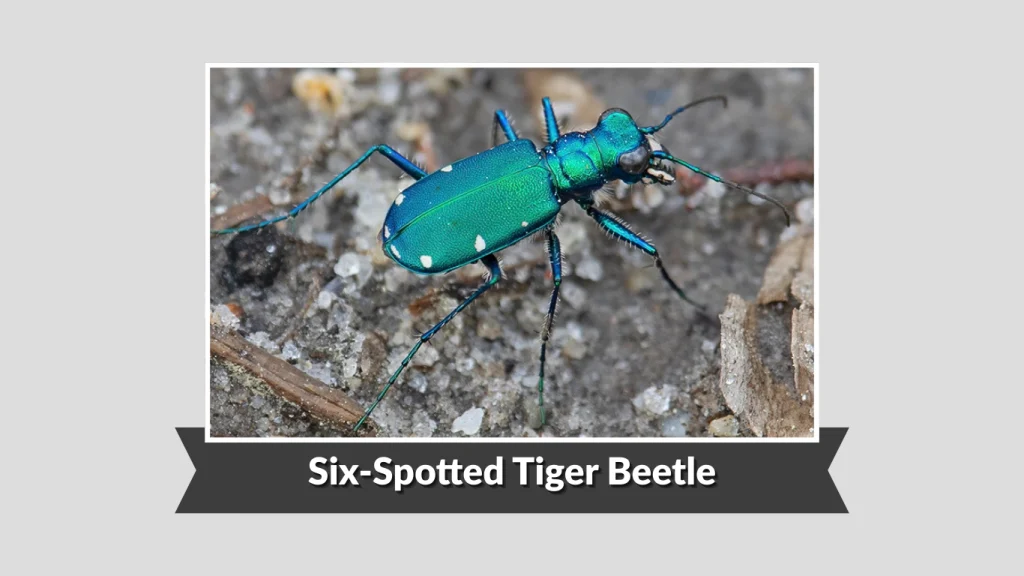
The Six-Spotted Tiger Beetle is a striking, metallic green beetle commonly seen darting along forest paths and open trails. Its brilliant color and predatory habits make it one of the most eye-catching tiger beetles in North America.
Identification
- Color: Bright metallic green, sometimes with bluish or copper tones.
- Size: 12–15 mm long, slender and agile.
- Body Shape: Elongated with long legs adapted for running.
- Markings: Usually six small white spots along the wing covers, though the number can vary.
Habitat
This beetle thrives in open woodlands, sandy trails, and sunny clearings where it can run quickly and hunt prey. It is often seen resting on paths before darting away at high speed.
Behavior
Adults are fast predators, feeding on ants, spiders, and other small insects. They use quick bursts of speed to chase down prey, often stopping suddenly in a characteristic “start and sprint” motion. They are also strong fliers and can cover short distances when disturbed.
5. Emerald Ash Borer (Agrilus planipennis)
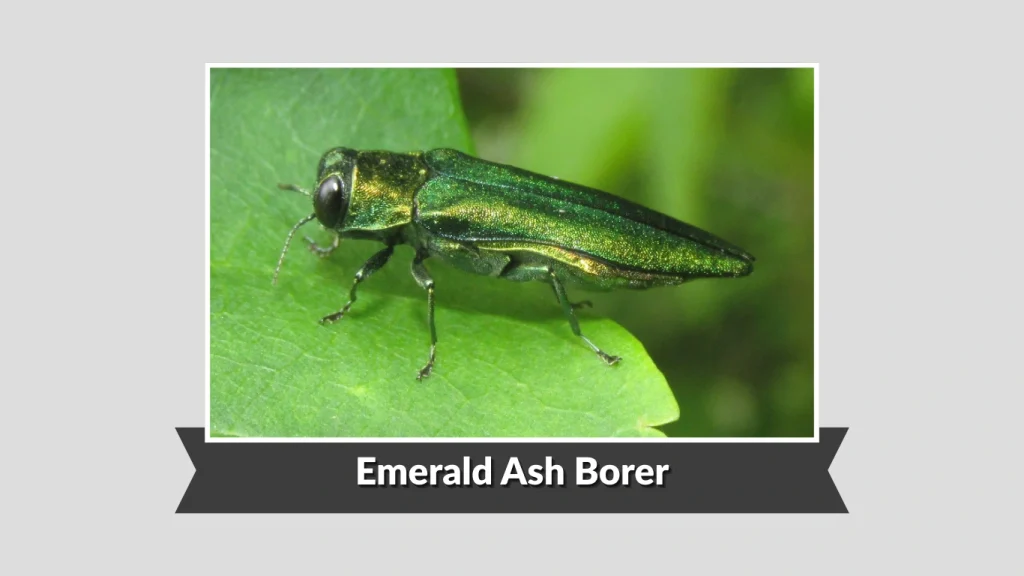
The Emerald Ash Borer is a small but notorious beetle, infamous for its role as an invasive species devastating ash trees in North America. Its jewel-like green coloration hides its destructive larval stage, which bores into ash wood and disrupts nutrient flow.
Identification
- Color: Brilliant metallic emerald green, with a coppery red abdomen visible under the wings.
- Size: 8–14 mm long, slender and elongated.
- Body Shape: Narrow, bullet-shaped with smooth wing covers.
- Antennae: Short and serrated.
Habitat
Native to Asia, the Emerald Ash Borer was introduced to North America and has spread widely, killing millions of ash trees. It is found in forests, parks, and urban landscapes where ash trees are present.
Behavior
Adults feed on ash foliage but cause minimal damage compared to larvae. The larvae tunnel through bark and wood, cutting off water and nutrient flow, eventually killing the tree. Because of this, it is considered one of the most destructive forest pests in recent history.
6. Green Dock Beetle (Gastrophysa viridula)
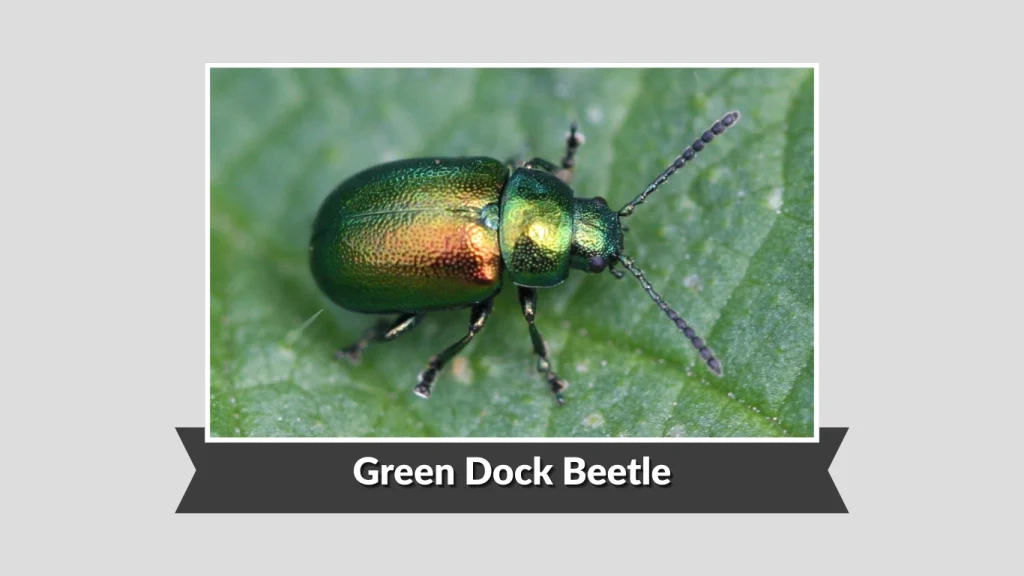
The Green Dock Beetle is a small, shimmering beetle often seen on docks and sorrels, its preferred food plants. Despite its small size, its vivid metallic green body makes it very noticeable in meadows and gardens.
Identification
- Color: Metallic green, sometimes with bluish or golden hues.
- Size: 4–7 mm long, very small compared to other beetles.
- Body Shape: Oval and compact, with smooth wing covers.
- Antennae: Short, slightly thickened toward the tips.
Habitat
This beetle is widespread in Europe, Asia, and introduced in some other regions. It thrives in meadows, gardens, and fields where dock plants (Rumex species) are abundant.
Behavior
Adults and larvae feed heavily on dock and sorrel leaves, often skeletonizing the foliage. They can form large populations but are usually restricted to their host plants, making them minor pests in localized areas.
7. Green Tortoise Beetle (Cassida viridis)
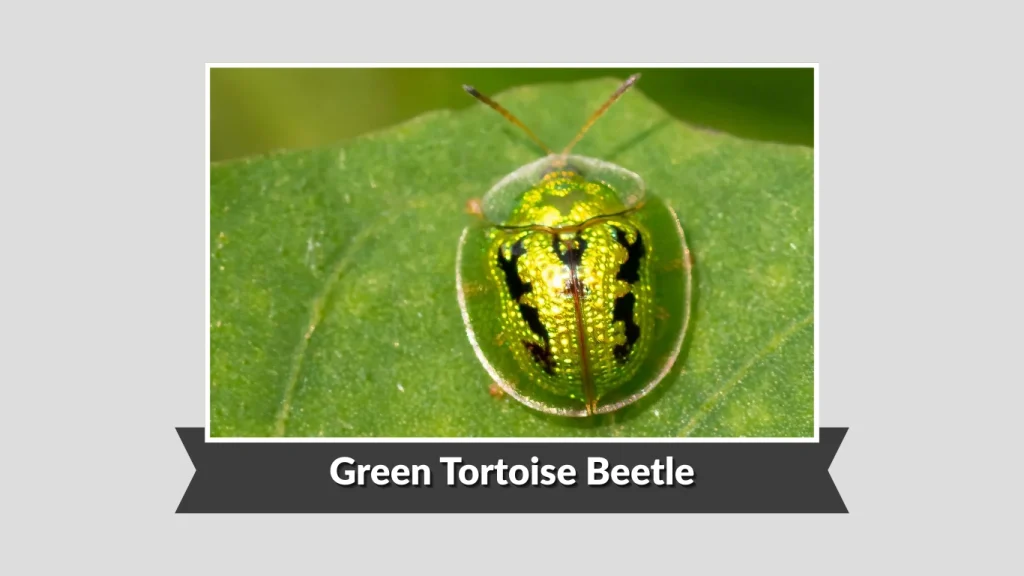
The Green Tortoise Beetle is a unique species known for its flattened, shield-like body and bright green coloration that helps it camouflage among leaves. It is commonly found across Europe and parts of Asia, feeding on plants in the mint and bindweed families.
Identification
- Color: Bright leaf-green, blending well with vegetation.
- Size: 4–6 mm long, small and rounded.
- Body Shape: Flattened and shield-shaped, with wing covers that conceal legs and antennae.
- Antennae: Very short, protruding slightly from under the shell.
Habitat
This species inhabits gardens, meadows, and hedgerows where its host plants, especially mints and bindweeds, grow. Its excellent camouflage makes it difficult to spot unless it moves.
Behavior
Adults and larvae feed on host plant leaves, usually causing small, round holes. Their protective body shape and coloration make them less vulnerable to predators. The species is not considered a serious pest and is more often admired for its unusual appearance.
8. Japanese Beetle (Popillia japonica)
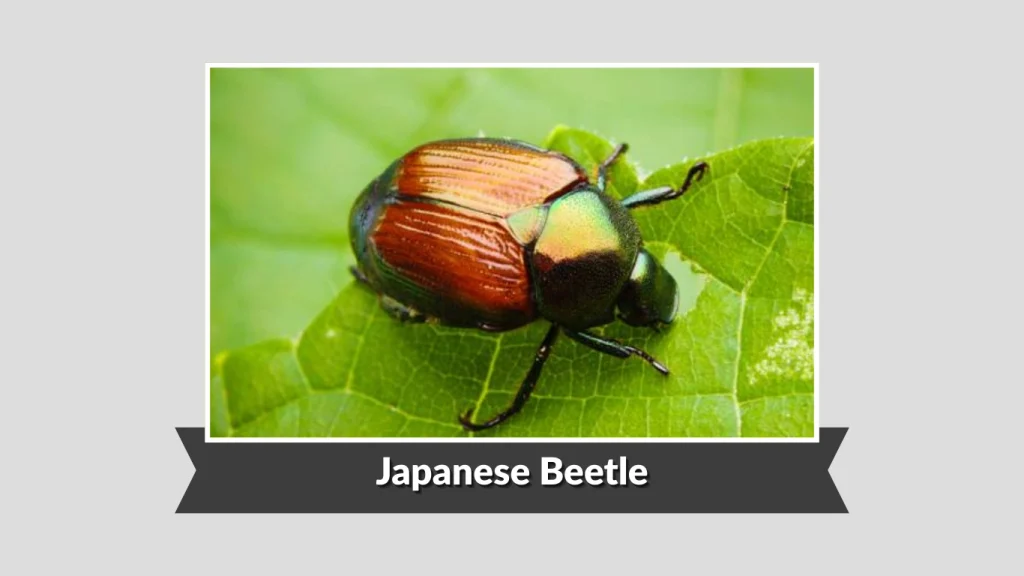
The Japanese Beetle is a well-known pest species introduced from Asia, now widespread across North America. Its striking metallic green body and copper-colored wing covers make it one of the most recognizable beetles in gardens and farms.
Identification
- Color: Shiny metallic green head and thorax with coppery bronze wing covers.
- Size: 10–12 mm long, small to medium-sized.
- Body Shape: Oval and compact, with fine white hair tufts along the abdomen edges.
- Antennae: Clubbed, capable of fanning outward.
Habitat
Japanese Beetles thrive in gardens, agricultural fields, and grassy areas. They feed on over 300 plant species, making them highly destructive. Lawns, orchards, and flower gardens are particularly vulnerable to infestations.
Behavior
Adults are gregarious feeders, often gathering in large numbers to skeletonize leaves, flowers, and fruits. Their larvae (white grubs) live in soil and damage turfgrass roots. They are considered one of the most serious invasive beetle pests in North America.
9. Green Malachite Beetle (Malachius bipustulatus)
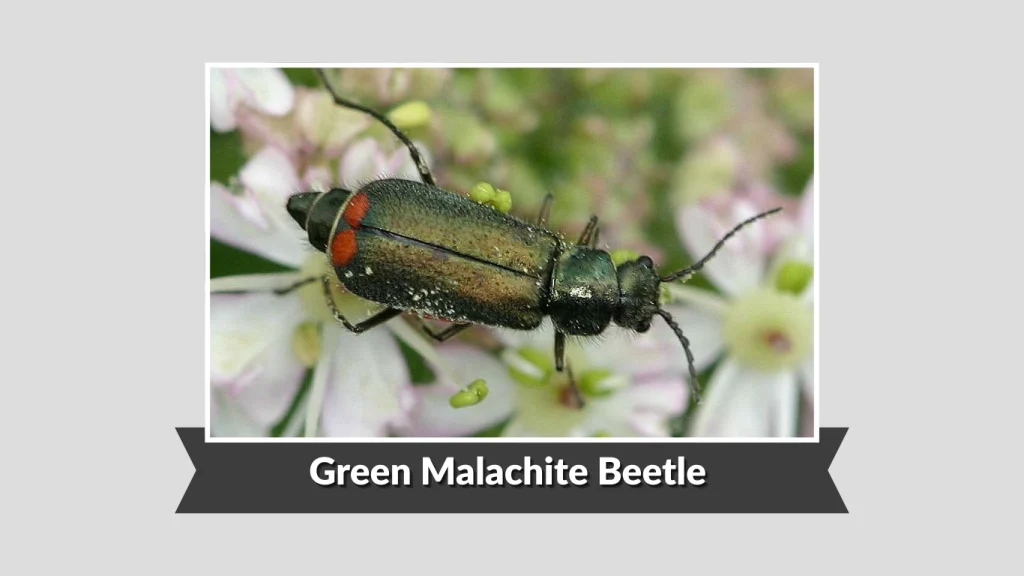
The Green Malachite Beetle is a small, soft-bodied beetle commonly seen on flowers during late spring and summer. Its metallic green sheen and orange-red spots on the wing tips make it easy to identify.
Identification
- Color: Bright metallic green with reddish or orange spots near the wing tips.
- Size: 6–8 mm long, slender and elongated.
- Body Shape: Narrow, soft-bodied with flexible wing covers.
- Antennae: Long and thread-like.
Habitat
This beetle is common in Europe and parts of Asia, typically found in meadows, hedgerows, and gardens. It is often seen visiting flowers for nectar and pollen.
Behavior
Adults feed on small insects, nectar, and pollen, making them both predators and pollinators. They are weak fliers but are often abundant in wildflower-rich areas. Their larvae are predatory, feeding on small insects in soil or under bark.
10. Green Flower Beetle (Cetonia aurata)

The Green Flower Beetle, also called the Rose Chafer, is a large, metallic species admired for its shimmering emerald coloration. It is commonly seen feeding on flowers, especially roses and other ornamentals, across Europe and parts of Asia.
Identification
- Color: Brilliant metallic green, sometimes with golden or bronze reflections.
- Size: 15–20 mm long, fairly large and robust.
- Body Shape: Oval and smooth, with a slightly flattened body.
- Antennae: Short, clubbed with lamellate tips.
Habitat
This beetle inhabits gardens, meadows, orchards, and woodland edges where flowers are abundant. It prefers warm, sunny environments and is especially visible in summer months.
Behavior
Adults feed on pollen, nectar, and petals, often gathering in large numbers on flowers. They are important pollinators, despite sometimes damaging delicate blossoms. The larvae live in decaying wood or compost and help recycle organic matter.
11. Green Metallic Ground Beetle (Chlaenius sericeus)
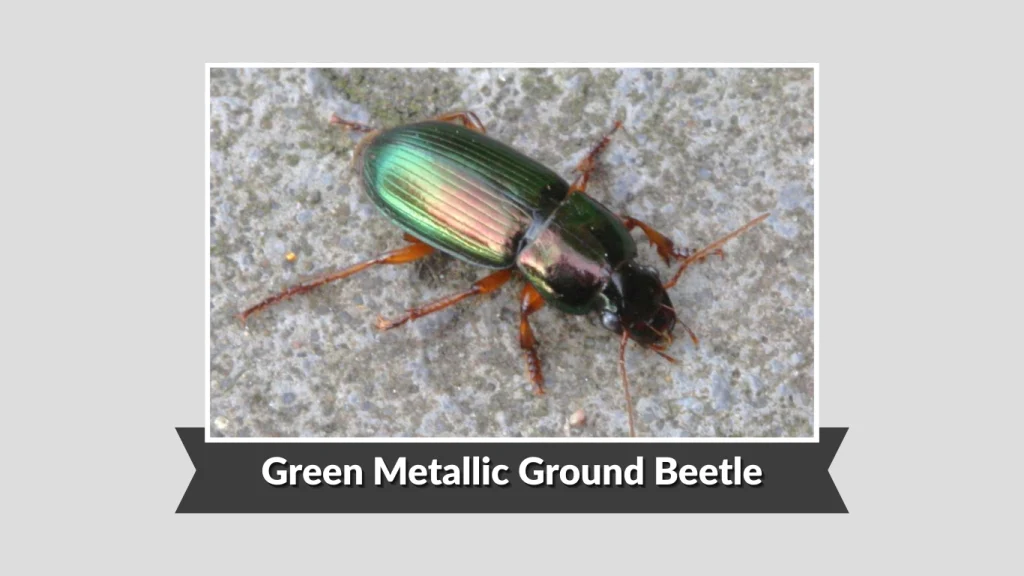
The Green Metallic Ground Beetle is a shiny, fast-moving predator often found in damp habitats. Its striking metallic green sheen makes it one of the most beautiful ground beetles in North America.
Identification
- Color: Metallic green with golden or bluish reflections.
- Size: 12–18 mm long, slender and elongated.
- Body Shape: Narrow, with long legs adapted for running.
- Antennae: Long and thin, typical of ground beetles.
Habitat
This beetle thrives in moist environments such as riverbanks, marshes, fields, and gardens. It hides under stones, logs, and leaf litter during the day and hunts at night.
Behavior
Adults are nocturnal predators, feeding on caterpillars, slugs, and other small invertebrates. They play a beneficial role in natural pest control. When threatened, they can release a foul-smelling defensive fluid from their abdomen.
12. Green Chafer Beetle (Anomala albopilosa)
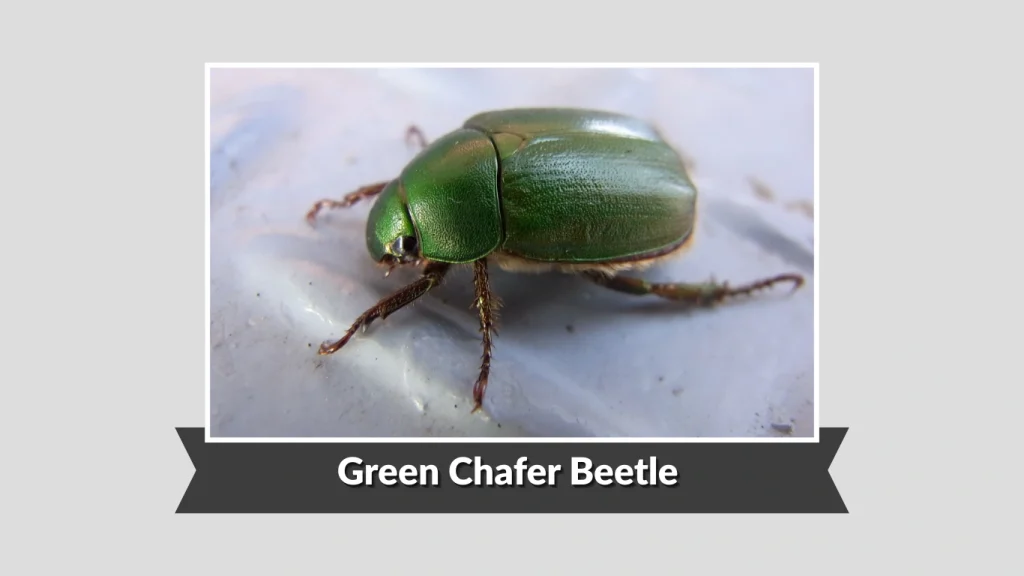
The Green Chafer Beetle is a medium-sized scarab beetle with a shiny metallic green body. It is found mainly in Asia and is often seen feeding on fruits, flowers, and leaves. In some regions, it is considered a minor agricultural pest.
Identification
- Color: Glossy metallic green, sometimes with golden tones.
- Size: 14–18 mm long, compact and oval.
- Body Shape: Sturdy with smooth wing covers.
- Antennae: Short and clubbed, typical of scarab beetles.
Habitat
This species inhabits orchards, farmlands, and gardens, particularly where fruit trees are grown. It prefers warm and humid environments.
Behavior
Adults feed on soft fruits such as peaches, plums, and grapes, as well as flower petals and leaves. Larvae live in soil and feed on decaying plant matter and roots, similar to other scarab grubs.
13. Green Leaf Beetle (Colaspis favosa)

The Green Leaf Beetle is a small, bright metallic beetle native to North America. It is a common leaf feeder found in fields and gardens, especially on crops like corn and soybeans.
Identification
- Color: Metallic green, often with bronze or copper reflections.
- Size: 5–7 mm long, small and oval-shaped.
- Body Shape: Compact, with smooth wing covers.
- Antennae: Short and bead-like.
Habitat
This beetle is common in agricultural lands, grasslands, and home gardens. It thrives in areas with abundant host plants, especially row crops.
Behavior
Adults feed on leaves, chewing small holes that can sometimes reduce crop yields. While not as destructive as Japanese Beetles, they can be pests in large numbers. The larvae live underground and feed on roots, occasionally harming seedlings.
14. Fiddler Beetle (Eupoecila australasiae)

The Fiddler Beetle is a large, colorful scarab beetle native to Australia, instantly recognizable by its green body decorated with yellow markings shaped like a violin or fiddle. It is admired for its striking appearance and is commonly seen during the warmer months.
Identification
- Color: Bright green base color with distinctive yellow violin-shaped markings.
- Size: 20–25 mm long, fairly large and robust.
- Body Shape: Oval and sturdy with smooth wing covers.
- Antennae: Short and clubbed, typical of scarab beetles.
Habitat
This beetle inhabits woodlands, gardens, and bushlands across eastern and southern Australia. Adults are often seen feeding on flowers during the day.
Behavior
Fiddler Beetles feed mainly on nectar and pollen, acting as pollinators. They are strong fliers and often visit garden plants. Their larvae develop in decaying wood and soil, contributing to natural decomposition processes.
15. Green Mint Beetle (Chrysolina herbacea)
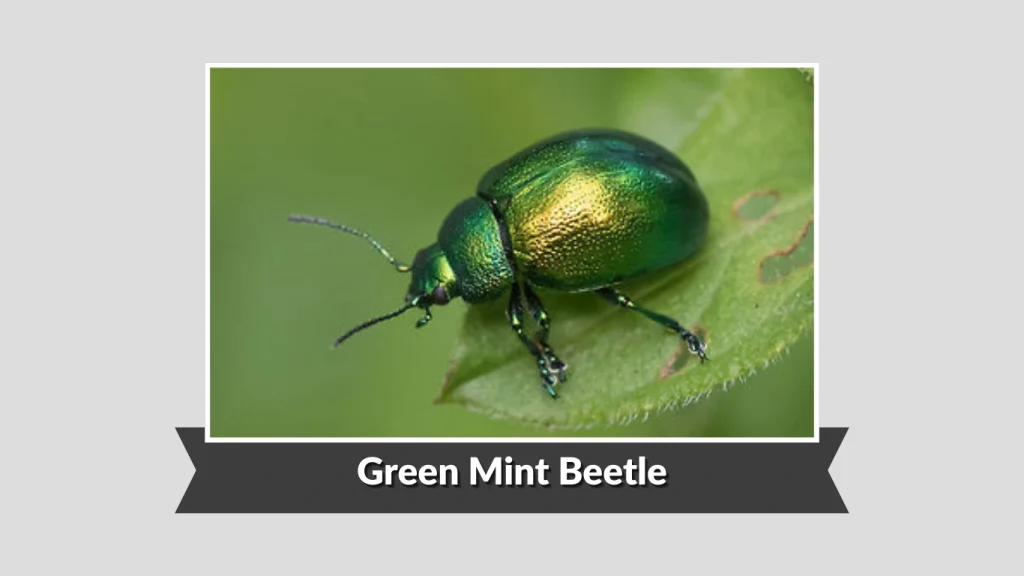
The Green Mint Beetle is a small, shiny metallic beetle found across Europe and Asia. It is particularly associated with mint plants, where it feeds heavily on leaves. Its iridescent green body makes it a beautiful yet sometimes troublesome garden insect.
Identification
- Color: Brilliant emerald green with metallic sheen.
- Size: 8–10 mm long, compact and oval.
- Body Shape: Rounded with smooth wing covers.
- Antennae: Short, bead-like, and black.
Habitat
This species is common in herb gardens, meadows, and riverbanks where mint plants grow naturally. It is especially abundant in sunny, moist areas.
Behavior
Adults feed on mint leaves, often leaving visible holes that can weaken plants. While attractive to look at, they can become pests in herb gardens when present in large numbers. Their larvae also feed on mint, completing development on the same host plants.
