
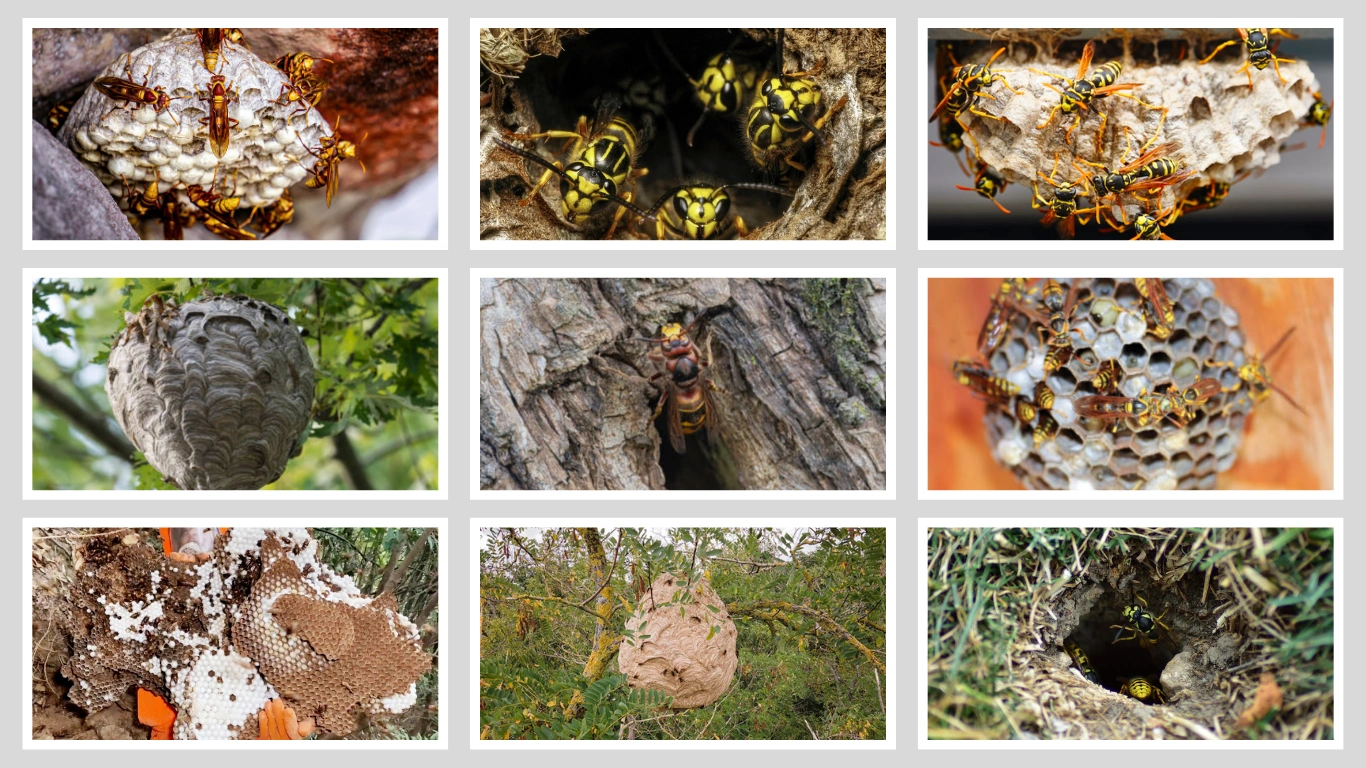
Hornets are known for their aggressive defense and powerful stings, but their nests are equally fascinating and diverse. From towering aerial structures in trees to hidden underground chambers, hornet nests vary by species, environment, and location. Understanding the different types of hornet nests is essential for safe identification and proper removal. In this guide, I’ll share 15 distinct types of hornet nests, highlighting how to recognize each one, what they’re made of, and where you’re most likely to find them.
1. Bald-Faced Hornet Nest

The bald-faced hornet nest is a large, paper-like structure commonly found hanging from tree branches or building eaves. Known for its enclosed, football-shaped appearance, this nest serves as both home and defense zone for an aggressive hornet colony.
Nest Identification
- Greyish paper-like exterior
- Football or teardrop shape
- Typically 12–24 inches in height
- Single entrance hole near the bottom
- Layered surface with a swirled pattern
Nest Material
The nest is made from a mixture of chewed wood fibers and the hornet’s saliva, forming a papery pulp. This natural material hardens when dry and provides strong yet lightweight protection for the colony.
Common Nest Locations
Bald-faced hornets usually build their nests in elevated and sheltered areas. Trees and tall shrubs are preferred, but man-made structures like overhangs, sheds, and utility poles can also be used.
Seasonal Pattern
These nests are typically constructed in late spring and continue growing through summer. The colony dies off in fall, and the nest is abandoned and not reused the next year.
2. European Hornet Nest
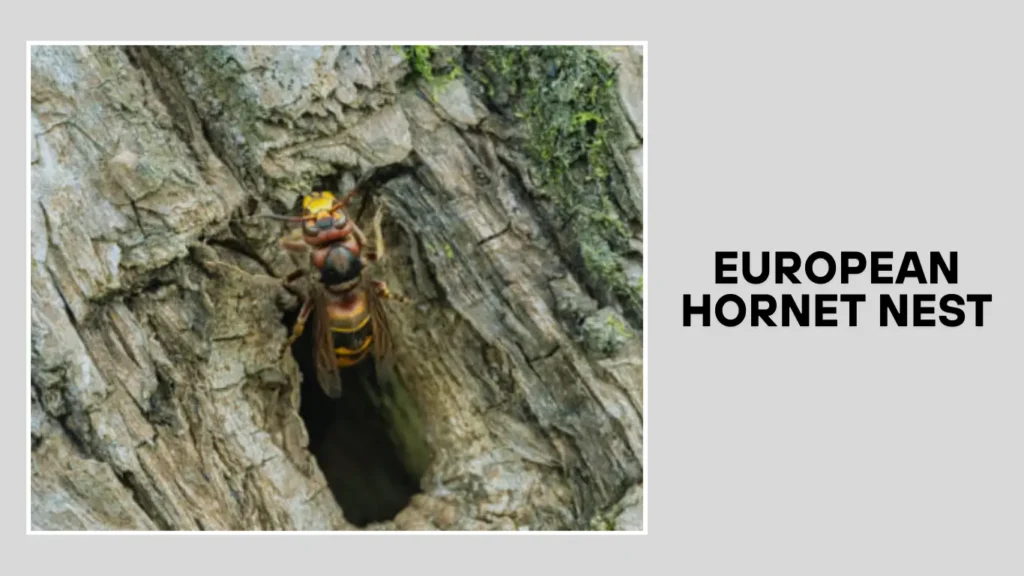
The European hornet creates nests that are usually hidden from plain view, often located inside wall cavities, hollow trees, or attics. These nests are more concealed than those of bald-faced hornets but are just as active and structurally complex.
Nest Identification
- Brown to tan paper-like texture
- Irregular shape, often adapted to available space
- Several layered combs inside
- Entry hole typically not visible from outside
- May have chewed wood fibers around the nest site
Nest Material
Made from a paper-like substance formed by mixing saliva with decayed wood. The texture is slightly rougher and darker than other hornet nests due to the use of aged wood.
Common Nest Locations
European hornets favor enclosed spaces such as hollow trees, wall voids, attics, and abandoned rodent burrows. Their nests are less likely to be exposed in open air.
Seasonal Pattern
Nests are initiated in spring and actively grow throughout summer. Colonies die off in late fall, leaving the nest empty and unused the next season.
3. Asian Giant Hornet Nest
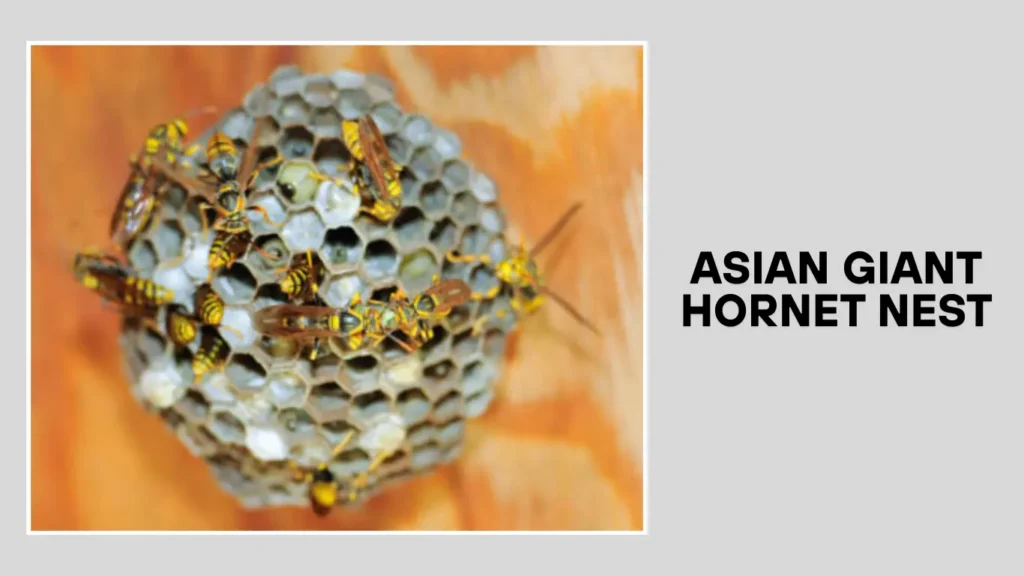
Also known as the “murder hornet,” the Asian giant hornet typically builds nests in underground cavities, making them difficult to detect. These nests can house hundreds of large, aggressive hornets.
Nest Identification
- Located underground or in rotting tree roots
- Very little visible from above ground
- Contains vertical comb layers
- Covered by loose dirt or plant debris
- Large entry hole at ground level
Nest Material
Constructed from chewed tree bark and plant material mixed with saliva. The structure is papery and layered, with the internal combs protected by an outer envelope.
Common Nest Locations
Prefers underground sites such as rodent burrows, root hollows, or spaces beneath logs. Rarely found above ground.
Seasonal Pattern
Nests begin forming in late spring. By summer, the colony is fully active and aggressive. The nest is abandoned in winter as all but the queen die off.
4. Japanese Hornet Nest
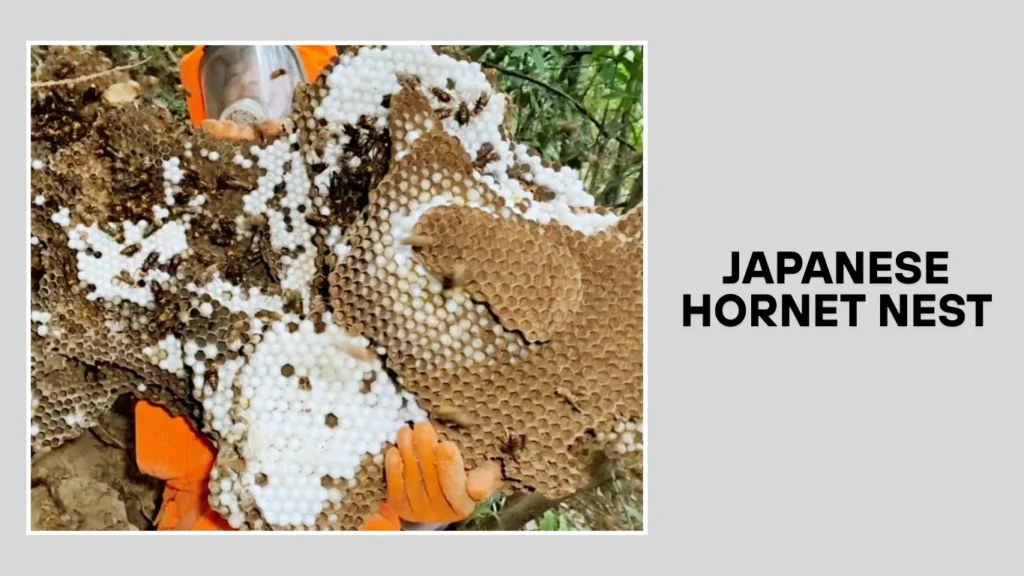
The Japanese hornet, a subspecies of the Asian giant hornet, builds nests that are typically hidden underground or within hollow tree trunks. These nests are robust and can grow quite large to support their aggressive colonies.
Nest Identification
- Often underground or in tree cavities
- Multi-layered vertical combs inside
- Covered with a thick, tan papery envelope
- Large opening usually at ground level or on the side of a tree
- Can be difficult to spot without disturbing surroundings
Nest Material
Made from chewed wood pulp mixed with saliva, forming a thick, durable papery structure. The outer covering provides strong insulation and protection.
Common Nest Locations
Primarily found in forested areas, inside rotting tree trunks, stumps, or underground burrows. Occasionally built in sheltered crevices of buildings in rural zones.
Seasonal Pattern
Nesting starts in spring, with rapid expansion through summer. Abandoned in autumn as only the fertilized queen survives to hibernate.
5. Yellow-Legged Hornet Nest
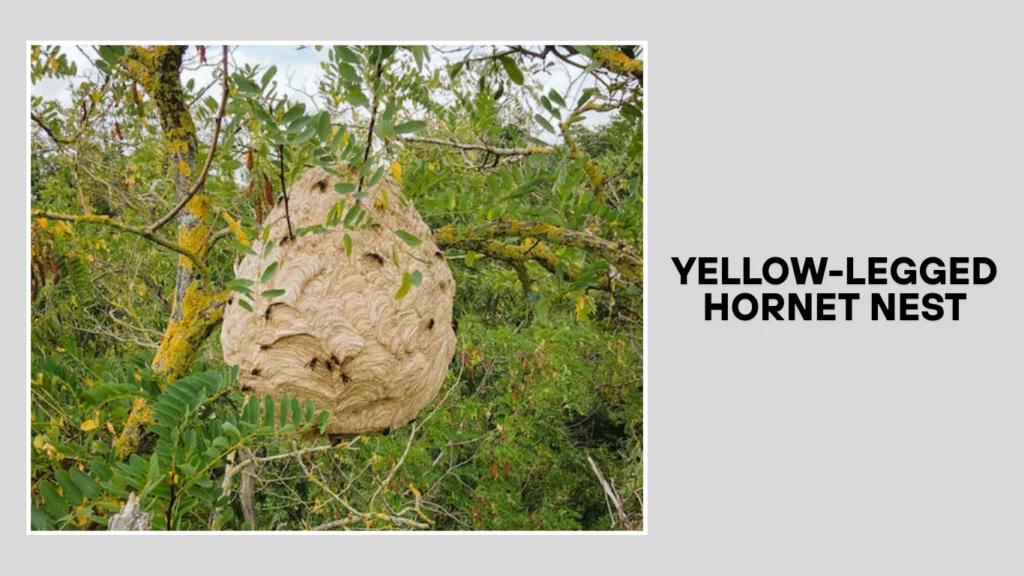
This invasive species builds aerial nests that are often spherical and high above the ground. Yellow-legged hornet nests can house thousands of individuals and pose a serious threat to bee populations.
Nest Identification
- Large, round, and closed structure
- Usually grey or beige in color
- Smooth papery surface with subtle patterning
- Entrance hole typically on the side, not the bottom
- Can exceed 40 cm (16 inches) in diameter
Nest Material
The nest is crafted from wood fibers chewed into a pulp and combined with saliva. The result is a smooth, paper-like material with layered strength.
Common Nest Locations
Commonly suspended in tall trees, on building overhangs, or other high structures. Rarely found underground.
Seasonal Pattern
The colony starts building in spring and peaks by late summer. The nest is vacated by winter and not reused the following year.
6. Ground Hornet Nest
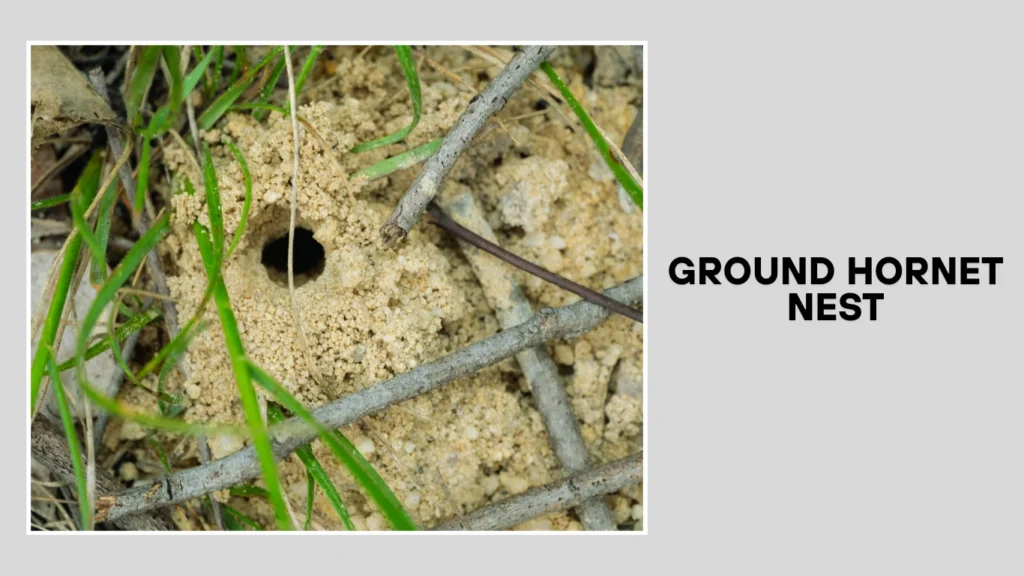
Ground hornets, also known as cicada killers or solitary hornets, build their nests directly into the soil. These nests appear as simple holes but lead to an extensive underground tunnel system.
Nest Identification
- Small to medium-sized entry hole in bare soil
- Surrounding dirt often looks disturbed or mounded
- No visible nest structure above ground
- May see hornets entering and exiting regularly
- Usually located in sunny, sandy, or well-drained areas
Nest Material
Unlike aerial nests, ground hornet nests are excavated directly into the earth. The hornets do not build papery structures but instead dig chambers and tunnels.
Common Nest Locations
Found in lawns, garden beds, playgrounds, or along footpaths with loose soil. Prefer quiet areas with minimal disturbance.
Seasonal Pattern
Nesting begins in late spring. These nests are active during summer and typically abandoned by early fall as hornets die off or go dormant.
7. Tree-Hanging Hornet Nest
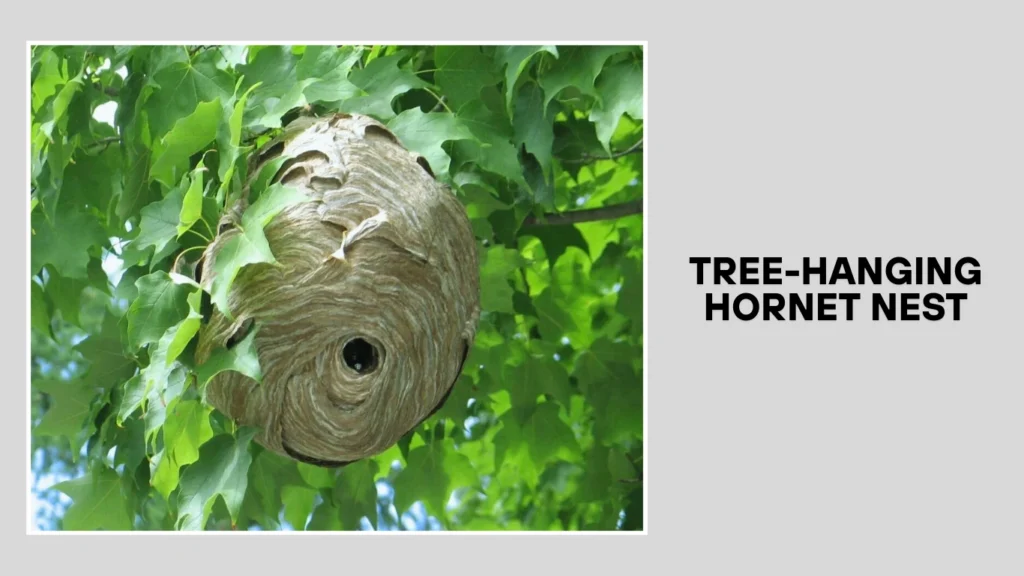
These nests are suspended from high tree branches, often resembling a grey football or lantern. This common hornet nest location provides protection from predators and human disturbance.
Nest Identification
- Teardrop or football-shaped nest hanging in trees
- Smooth grey papery surface
- Single entry hole near the bottom
- Can grow very large and hang several feet above ground
- Clearly visible from a distance in deciduous trees
Nest Material
Made from weathered wood pulp chewed into a paste and formed into a papery shell. The nest is layered to create insulation and stability.
Common Nest Locations
High branches of trees, especially oaks, maples, and pines. Often found in forests, parks, or wooded residential areas.
Seasonal Pattern
Built in spring and expands throughout summer. Abandoned in late fall and not reused, though visible into winter if undisturbed.
8. Underground Hornet Nest

Underground hornet nests are built below the soil surface and are often difficult to detect until active hornets are seen entering or exiting. These nests are especially common in areas with soft, undisturbed soil.
Nest Identification
- Hidden beneath the ground with a small, round entrance
- No visible structure above the surface
- Often surrounded by loose or slightly mounded soil
- Hornets seen flying close to the ground
- Entrance may be near tree roots, logs, or stone piles
Nest Material
Constructed with chewed plant material and wood pulp, forming comb layers inside underground chambers. The structure is protected by surrounding soil and vegetation.
Common Nest Locations
Found in grassy fields, under porches, garden edges, or abandoned burrows. Frequently built in shaded or partially hidden places.
Seasonal Pattern
Active from spring to fall. The colony disbands in late autumn, and the nest is never reused.
9. Wall-Cavity Hornet Nest
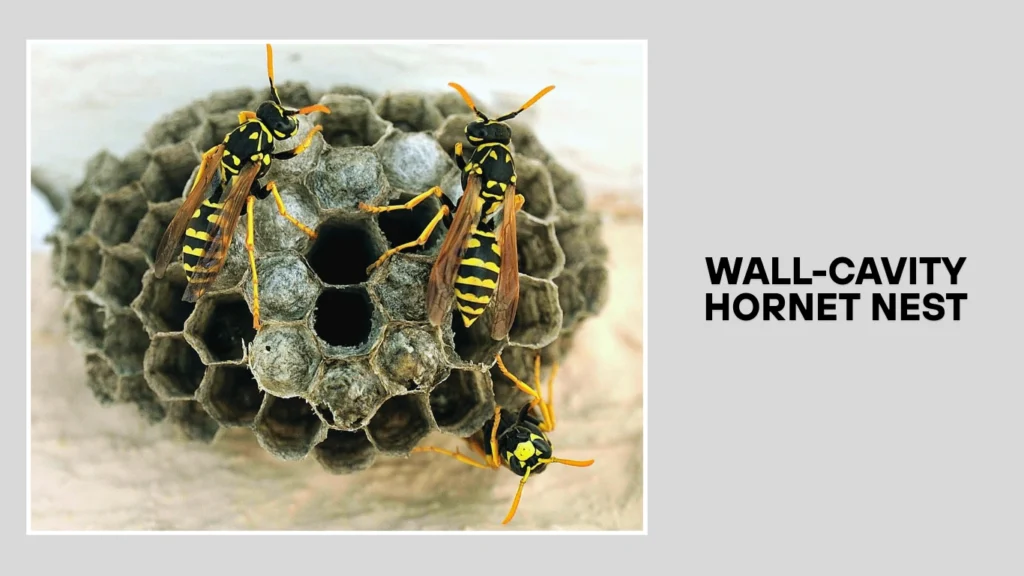
Hornets sometimes invade human structures, building nests within wall voids, soffits, or behind siding. These hidden nests can grow large and become dangerous if disturbed.
Nest Identification
- Not visible externally—only the hornet activity is noticeable
- Faint rustling or buzzing sounds inside walls
- Hornets entering through small cracks or vents
- May cause wall bulges or moisture damage over time
- Found near light fixtures, attic openings, or vents
Nest Material
Made from chewed wood and saliva, forming a concealed paper nest inside the cavity. The layers expand to fill the available space.
Common Nest Locations
Inside walls, attics, crawlspaces, or behind siding of homes and sheds. Often discovered only after activity increases or damage occurs.
Seasonal Pattern
Built in spring or early summer. Nests grow through fall and are abandoned before winter, though wall damage may remain.
10. Attic Hornet Nest
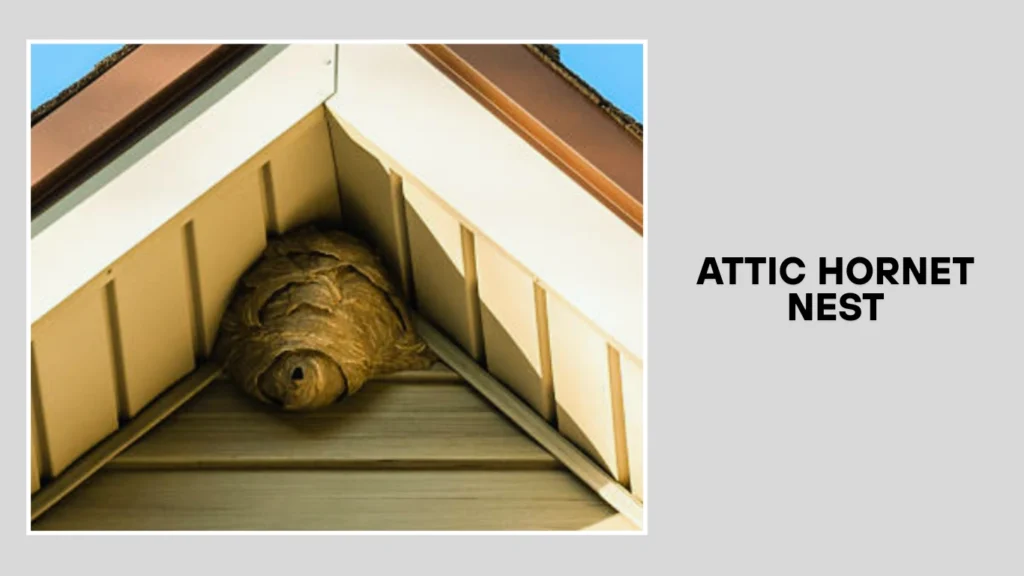
Attics offer a warm, dry, and undisturbed environment, making them an ideal nesting site for hornets. These nests can become quite large if unnoticed for a season.
Nest Identification
- Hidden within attic insulation or between rafters
- Grey, papery structure, often rounded or oval
- Entry point may be through vents or eaves
- Audible buzzing or humming noises in the ceiling
- Debris or dead hornets may accumulate below
Nest Material
Built from chewed wood pulp and saliva, the nest forms a multi-layered paper shell. Attic nests are often attached to wooden beams or ceiling structures.
Common Nest Locations
Inside attics, roof voids, or crawlspaces—typically near light sources, vents, or air ducts where hornets can enter.
Seasonal Pattern
Nests begin in spring and grow rapidly in summer. Colonies die out by fall, leaving the structure behind through winter.
11. Chimney Hornet Nest

Some hornets take advantage of the sheltered vertical space inside chimneys. These nests are difficult to detect until the hornets start entering homes or becoming aggressive.
Nest Identification
- Often hidden inside chimney flues or ventilation shafts
- Activity noticed when hornets fly out of fireplaces or vents
- Nest itself is papery and attached to the inner wall
- May hear faint buzzing inside the chimney
- Soot or droppings may appear near the fireplace
Nest Material
Constructed from chewed wood pulp, forming comb structures protected by a grey outer shell. Anchored to the chimney lining or bricks.
Common Nest Locations
Inside unused or infrequently used chimneys, especially older brick chimneys with gaps or cracks. Also found in ventilation ducts or flues.
Seasonal Pattern
Active in warm months—spring through fall. Abandoned in winter, but remnants of the nest may remain lodged in place.
12. Bush or Shrub Hornet Nest

Hornets sometimes build their nests low to the ground in thick bushes or shrubs, especially when tree branches or building eaves are unavailable. These nests can pose a threat to anyone gardening or walking nearby.
Nest Identification
- Teardrop or oval-shaped nest nestled within dense foliage
- Grey papery exterior, similar to tree-hanging nests
- Entry hole usually near the bottom
- May be partially hidden by leaves
- Easily disturbed by movement or vibration
Nest Material
Constructed using chewed wood fibers and saliva, resulting in a lightweight, weather-resistant paper shell with internal comb layers.
Common Nest Locations
Inside boxwoods, hedges, flower bushes, and decorative shrubs. Often found in residential gardens, parks, and along fences.
Seasonal Pattern
Nests begin forming in late spring and grow through summer. The colony disbands in late fall, and the nest is left empty.
13. Soffit or Eave Hornet Nest

These nests are commonly built under overhanging parts of roofs, such as soffits or eaves, where hornets are shielded from rain and wind. They’re often close to human activity.
Nest Identification
- Grey, papery structure tucked under eaves or soffits
- Round or elongated with a visible bottom entry hole
- May see hornets flying in and out frequently
- Sometimes partially hidden behind trim or siding
- Size can vary greatly depending on time of season
Nest Material
Made from pulped wood mixed with saliva. Forms a multi-layered protective shell, which expands as the colony grows.
Common Nest Locations
Beneath the eaves of homes, garages, sheds, and porches. Also found behind gutters and downspouts.
Seasonal Pattern
Usually established in spring and active throughout summer. Abandoned in autumn when the colony naturally dies off.
14. Hornet Nest in Abandoned Structures

Hornets often take advantage of old, unused buildings or sheds to construct their nests in undisturbed areas. These nests can grow large unnoticed and pose a risk when the structure is re-entered.
Nest Identification
- Large, enclosed papery nest inside wall voids, rafters, or ceilings
- May be suspended from beams or tucked in corners
- Entry points often through broken windows or wall gaps
- Nest is grey or tan, with a rough, layered texture
- Buzzing sound may be heard before the nest is seen
Nest Material
Created from chewed plant fibers and decayed wood pulp, forming a sturdy, weathered paper structure. The interior contains multiple combs for brood rearing.
Common Nest Locations
Inside barns, abandoned houses, sheds, garages, and outdoor latrines. Preferred for the lack of disturbance and shelter from weather.
Seasonal Pattern
Colonies begin building in spring. These nests remain active until late fall, after which the nest is deserted and not reused.
15. Hornet Nest in Birdhouses or Mailboxes
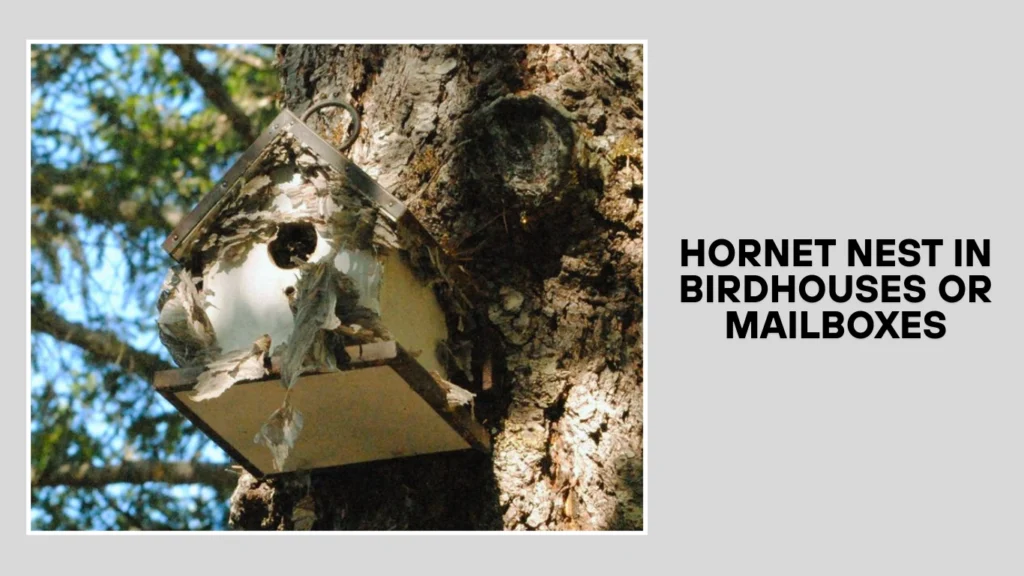
Though less common, hornets occasionally construct nests in birdhouses, mailboxes, or similar small enclosed spaces that offer warmth and protection.
Nest Identification
- Compact nest built inside confined wooden or metal enclosures
- Entry hole typically matches the birdhouse or mailbox opening
- Grey or brown paper nest, tightly packed
- Hornet activity may increase around mail delivery or nesting season
- May block original purpose of the structure
Nest Material
Made from chewed wood pulp and saliva. The tight quarters result in dense, layered nest walls with reduced expansion space.
Common Nest Locations
Inside hanging birdhouses, wall-mounted nesting boxes, mailboxes (especially rural ones), and even newspaper tubes.
Seasonal Pattern
Nests are built in late spring or early summer and remain active through the warm months. Hornets abandon these nests by late autumn.
Hornets Nest Removal: Step-by-Step Guide
Removing a hornets nest can be dangerous if not done correctly. Whether it’s hanging from a tree or hidden under an eave, proper precautions and timing are crucial for safety. Here’s a step-by-step guide to safely remove a hornet’s nest.
Step 1: Identify the Nest Type and Activity
Before removal, confirm it’s a hornets nest and observe the activity. Note the time of day when hornets are least active—usually just before dawn or after sunset.
Step 2: Wear Protective Clothing
Suit up with thick clothing, gloves, closed shoes, and a bee veil or face covering to protect against stings.
Step 3: Choose the Right Insecticide Spray
Purchase a wasp and hornet spray designed for long-range use. Ensure it can be used at night and from a safe distance (15–20 feet).
Step 4: Spray the Nest Thoroughly
Spray the entrance and surface of the nest during low activity hours. Soak the nest completely, then retreat immediately.
Step 5: Wait and Observe
Wait at least 24 hours. Monitor from a distance to ensure no hornets remain active.
Step 6: Remove and Dispose
Once all activity has ceased, carefully knock down the nest with a long pole and place it in a sealed garbage bag for disposal.
