
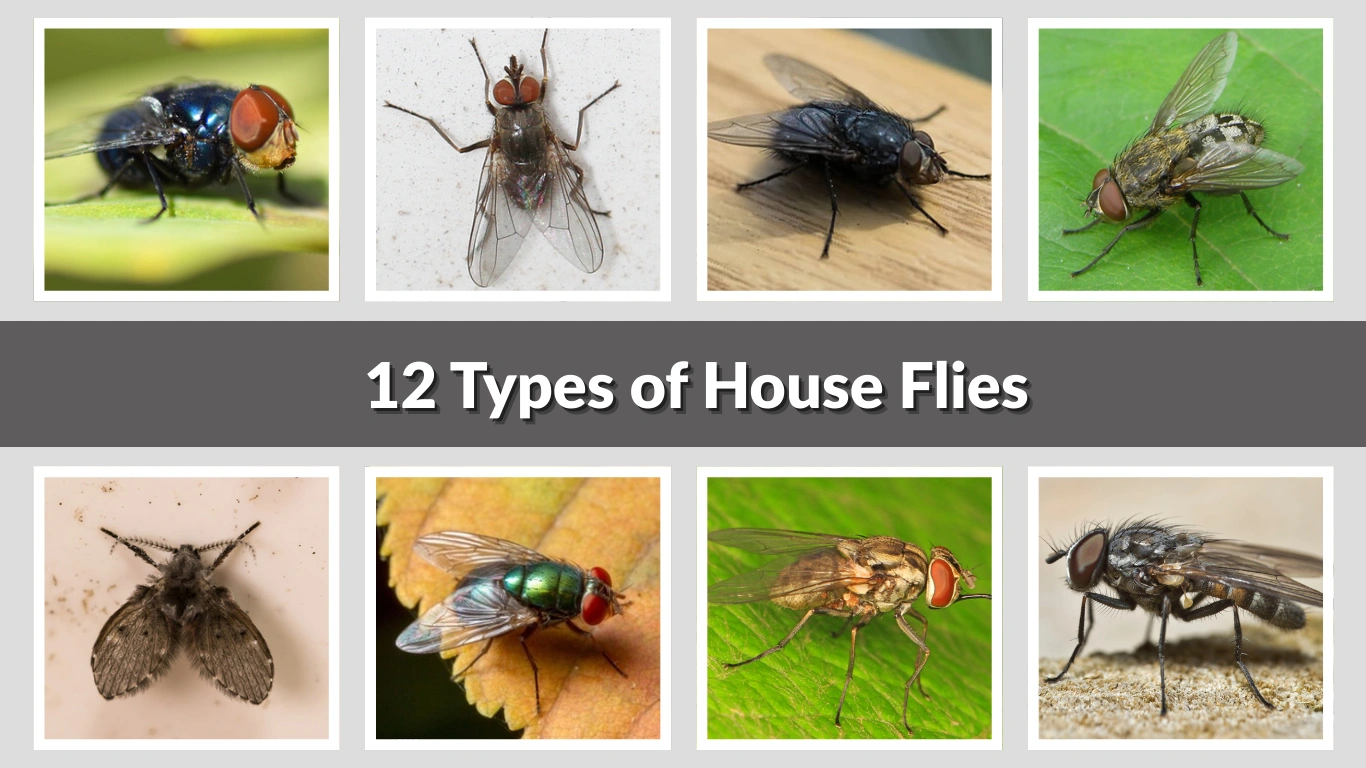
House flies are among the most common insects found around human and animal habitats. While many seem similar at first glance, there are several distinct types, each with unique behaviors, habitats, and life cycles. From the nuisance-causing Common House Fly to disease-carrying Flesh Flies and the face-bothering Bush Flies, understanding these species helps in better control and prevention. This guide explores 12 types of house flies, their identification traits, habits, and how they develop.
1. Common House Fly (Musca domestica)

The Common House Fly is the most widespread fly species found around human habitats. It thrives in urban and rural environments, living close to people and animals. These flies are not just a nuisance—they are also known carriers of various bacteria and diseases due to their feeding and breeding habits.
Identification
- Size: About 6–7 mm long
- Color: Gray body with four dark stripes on the thorax
- Eyes: Large, reddish compound eyes
- Wings: Transparent with slight veins visible
Behavior
Common House Flies are highly active during the day and rest at night. They are attracted to food, garbage, and waste, often moving quickly from dirty surfaces to human meals, which spreads contamination.
Habitat
They breed in moist, decaying organic matter such as garbage, compost, and animal manure. House Flies thrive in warm conditions and are found in homes, markets, farms, and anywhere with accessible food waste.
Life Cycle
House Flies undergo complete metamorphosis with four stages: egg, larva (maggot), pupa, and adult. Females can lay up to 500 eggs in their lifetime, usually in moist organic matter. Eggs hatch within 24 hours, larvae develop within a few days, and the pupal stage lasts about 4–5 days before emerging as adults. The full life cycle can complete in as little as 7–10 days under warm conditions.
2. Lesser House Fly (Fannia canicularis)
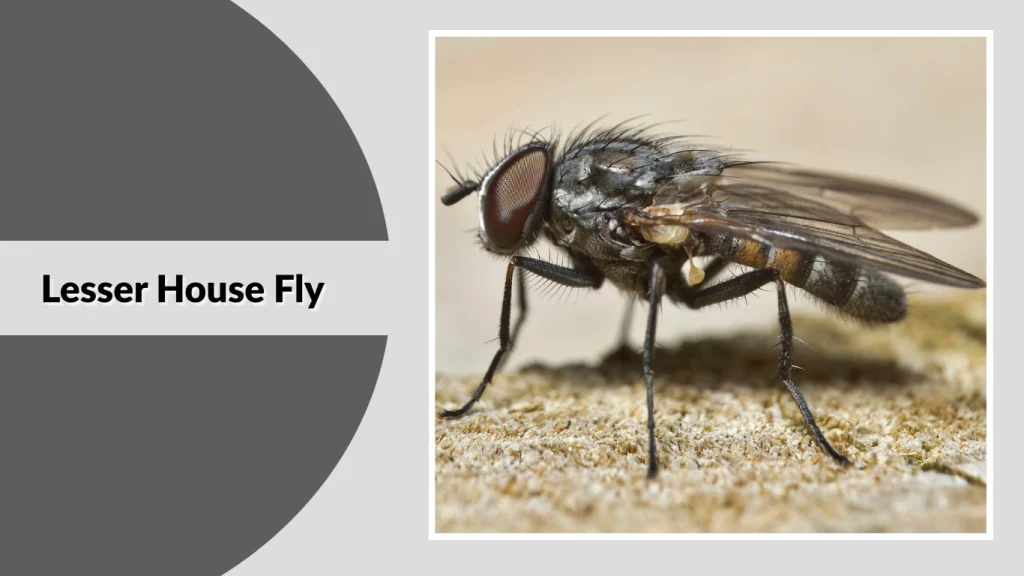
The Lesser House Fly is smaller than the Common House Fly and is often found buzzing indoors, especially around windows and lights. Unlike the erratic flight of the common fly, it has a distinctive habit of circling around in a repetitive pattern.
Identification
- Size: Around 4–6 mm long
- Color: Grayish with less prominent stripes than the Common House Fly
- Eyes: Reddish, slightly smaller than those of Musca domestica
- Wings: Narrower and held slightly differently in flight
Behavior
Males are known for their hovering, circling flight patterns, often seen indoors. They are less attracted to human food than common house flies but still gather around waste and decaying matter.
Habitat
They breed in decaying organic matter, particularly in animal feces and compost. Indoors, they are commonly found in kitchens, bathrooms, and near windows.
Life Cycle
Females lay eggs in moist organic material. The larvae develop more slowly than those of the Common House Fly, often taking two to three weeks to mature before pupating. Adults live for about 3–4 weeks.
3. Stable Fly (Stomoxys calcitrans)
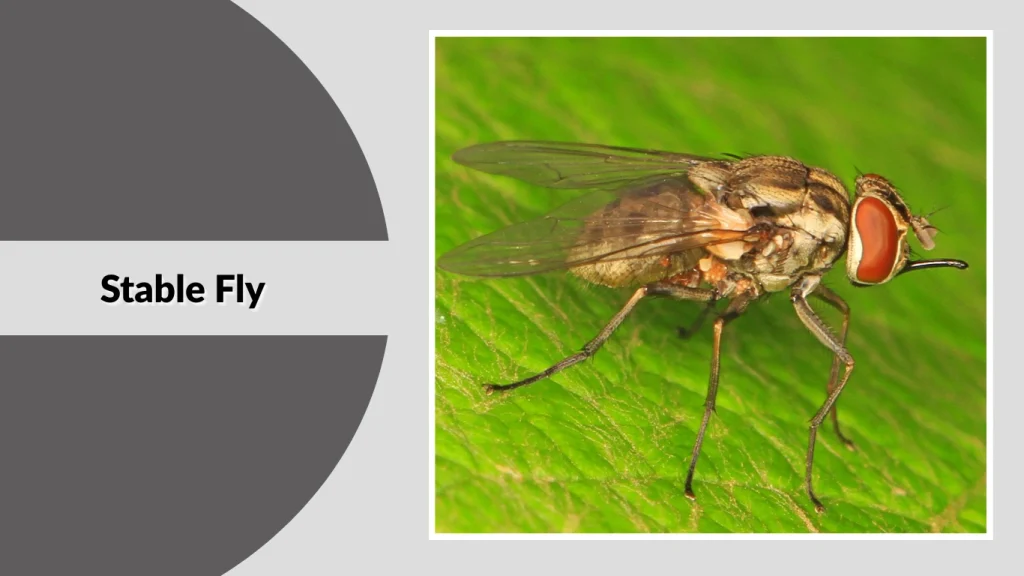
The Stable Fly closely resembles the Common House Fly but can be easily identified by its biting mouthparts. It is a blood-feeding species that commonly bites livestock, pets, and sometimes humans, causing irritation.
Identification
- Size: 5–7 mm long
- Color: Gray body with four stripes on the thorax, similar to Common House Fly
- Mouthparts: Piercing proboscis for blood-feeding
- Wings: Clear, held flat over the abdomen when at rest
Behavior
Stable Flies are persistent biters, especially during warm weather. They are active outdoors near stables, barns, and livestock areas but can also enter homes. Unlike common flies, they bite for blood rather than feeding on decaying matter.
Habitat
They thrive in areas with decaying vegetation, manure mixed with straw, and damp organic waste. These environments provide ideal breeding grounds.
Life Cycle
Females lay eggs in moist, decaying vegetation and manure. Eggs hatch within 1–2 days, and larvae develop in about 2 weeks before pupating. Adults emerge in 3–4 weeks, with lifespans of about 20–30 days.
4. Face Fly (Musca autumnalis)

The Face Fly is similar in appearance to the Common House Fly but is primarily known for feeding on secretions around the eyes, nose, and mouth of livestock. It is a common pest in rural areas.
Identification
- Size: About 6–8 mm long
- Color: Gray body with distinct black stripes on the thorax
- Eyes: Reddish-brown compound eyes
- Wings: Clear, slightly broader than those of the Common House Fly
Behavior
Face Flies are most active during the day and frequently gather around the eyes and nose of cattle, feeding on tears, mucus, and saliva. They rarely enter homes but can be found near farms.
Habitat
They prefer rural and agricultural areas, particularly where cattle are present. They rest on vegetation and fences and breed in fresh cattle dung.
Life Cycle
Females lay eggs in fresh manure. The larvae develop quickly, passing through three instars in about a week, followed by pupation. Adults live 2–3 weeks and remain close to livestock throughout their lives.
5. Blow Fly (Calliphoridae family)
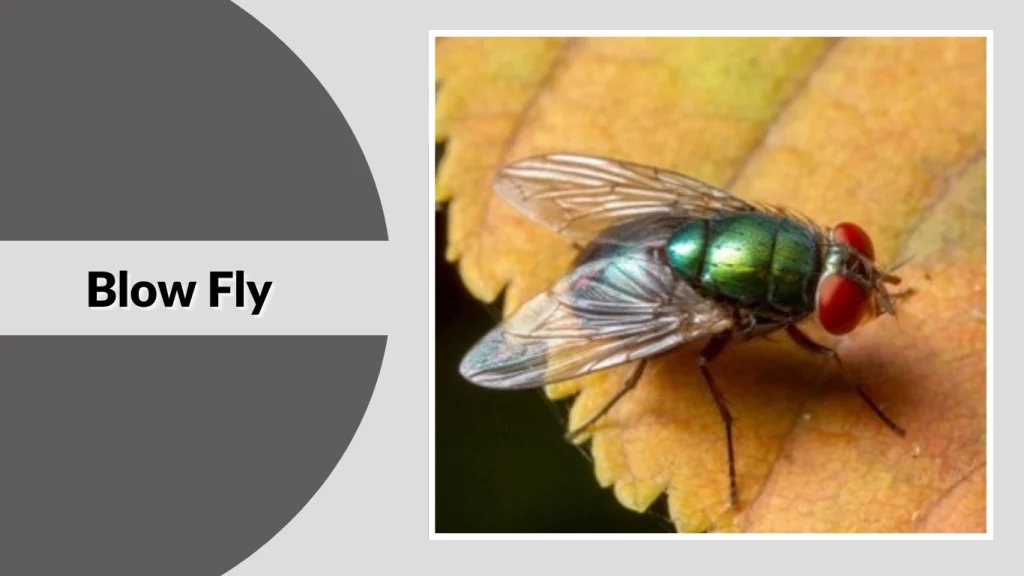
Blow Flies are metallic-colored flies often found near decaying animal matter. They are among the first insects to colonize carcasses, making them important in forensic science.
Identification
- Size: 8–10 mm long
- Color: Metallic blue, green, or bronze sheen on the body
- Eyes: Large, reddish
- Wings: Clear with strong veins
Behavior
Blow Flies are attracted to dead animals, garbage, and rotting meat. They play a vital role in decomposition and are also used in forensic entomology to estimate the time of death in criminal cases.
Habitat
They are commonly found outdoors near carrion, garbage bins, and slaughterhouses. Indoors, they may appear if there is decaying organic matter.
Life Cycle
Females lay hundreds of eggs on carcasses or decaying meat. Eggs hatch in less than 24 hours, and larvae (maggots) feed voraciously for several days before pupating. The full cycle can be completed in 2–3 weeks depending on temperature.
6. Flesh Fly (Sarcophagidae family)
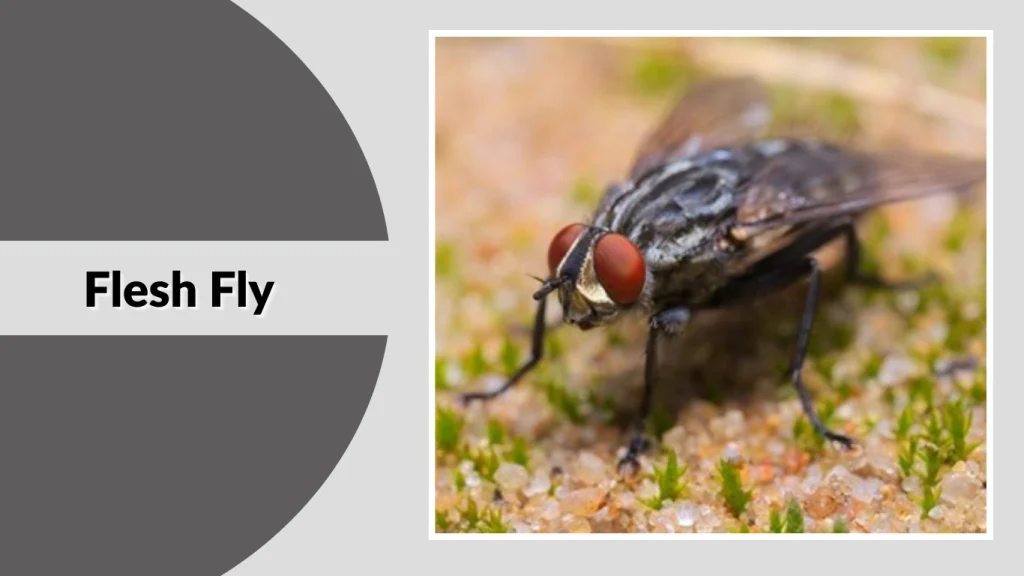
Flesh Flies are medium to large-sized flies that are often gray with dark stripes on the thorax. Unlike many other flies, they usually deposit live larvae instead of eggs, making them fast colonizers of decaying matter.
Identification
- Size: 10–14 mm long
- Color: Gray body with three broad black stripes on the thorax
- Abdomen: Often checkered with black and gray patterns
- Eyes: Reddish, slightly smaller than those of Blow Flies
Behavior
Flesh Flies are strongly attracted to carrion, garbage, and feces. They may also infest wounds of animals and humans. Their presence is common in both urban and rural environments.
Habitat
They are typically found near garbage dumps, carcasses, and decaying organic material. Indoors, they appear if suitable breeding material is nearby.
Life Cycle
Females are larviparous, depositing live maggots directly onto decaying flesh or feces. The larvae develop rapidly, pupating within a week. Adults live for about 2–3 weeks, and the entire cycle completes in 2–4 weeks.
7. Cluster Fly (Pollenia rudis)

Cluster Flies are slightly larger than the Common House Fly and are known for gathering in large numbers inside houses, especially in attics and wall voids during colder months.
Identification
- Size: 7–10 mm long
- Color: Dark gray to black with golden hairs on the thorax
- Wings: Overlap slightly when at rest
- Movement: Sluggish compared to House Flies
Behavior
Cluster Flies do not pose health risks like other house flies. Instead, they become nuisances by invading homes in large numbers, especially in autumn, where they cluster together to hibernate.
Habitat
They are common in rural and suburban areas. Outdoors, they are associated with earthworm habitats, where larvae develop. Indoors, they seek shelter in warm, protected spaces such as attics and wall cavities.
Life Cycle
Females lay eggs in soil near earthworms, which serve as food for larvae. The larval stage is parasitic on earthworms. Adults emerge in late summer and seek out warm structures to overwinter. Several generations may occur annually.
8. Drain Fly (Psychodidae family)
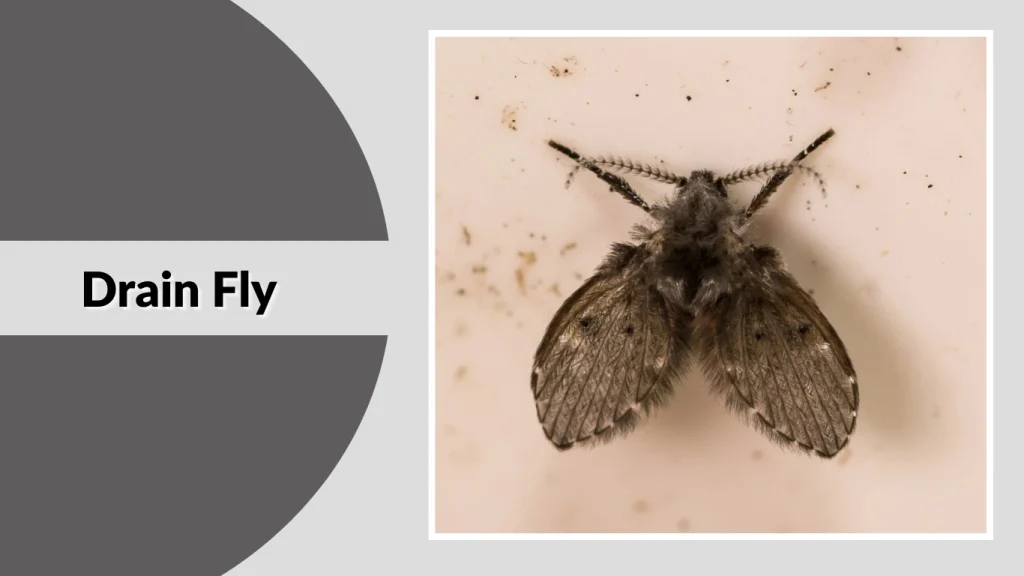
Drain Flies, also called moth flies, are tiny flies with hairy bodies and wings that resemble small moths. They are common in bathrooms and kitchens, especially around sinks and drains.
Identification
- Size: 1.5–5 mm long
- Color: Gray or brown, with fuzzy body and wings
- Wings: Heart-shaped and covered with tiny hairs
- Flight: Weak, fluttering motion
Behavior
Drain Flies are weak fliers and often rest on walls near drains. They are mostly nuisance pests but may multiply rapidly if drains are not cleaned. They are not strong disease transmitters but can indicate poor sanitation.
Habitat
They thrive in damp, organic-rich areas such as sink drains, bathroom tiles, septic tanks, and sewage filters. Indoors, they are usually found in kitchens, bathrooms, and laundry rooms.
Life Cycle
Females lay eggs in the gelatinous film that builds up inside drains. Eggs hatch within 2 days, larvae feed on organic matter in the slime, and pupation occurs after 9–15 days. Adults live about 2 weeks.
9. Black Garbage Fly (Hydrotaea aenescens)
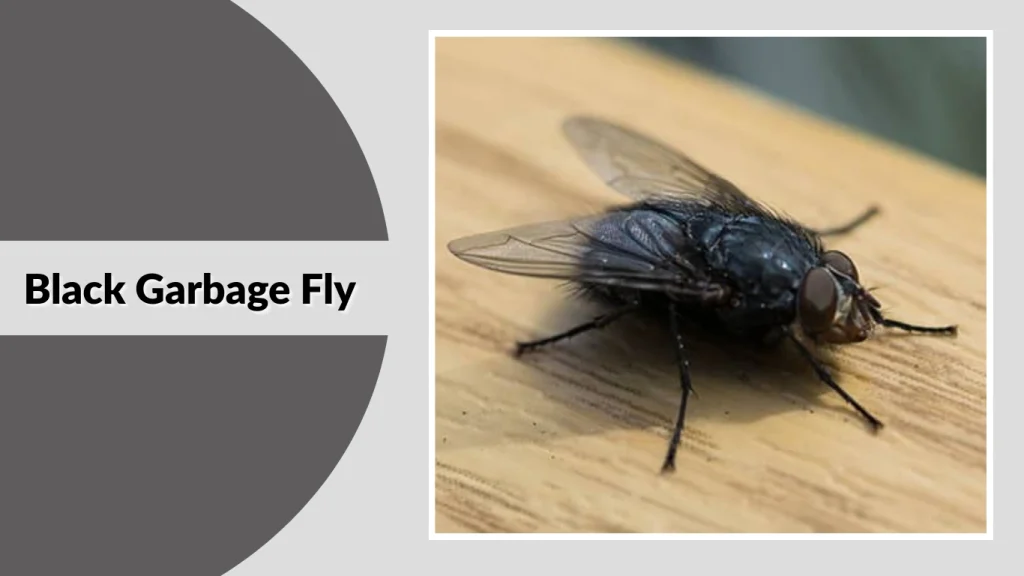
The Black Garbage Fly is commonly found around waste and is recognized for its dark, shiny body. It helps in decomposing organic waste but can also be a nuisance in homes.
Identification
- Size: 5–7 mm long
- Color: Shiny black or metallic dark green
- Eyes: Large and reddish
- Wings: Transparent, slightly shorter than body length
Behavior
These flies are strongly attracted to garbage and decaying organic waste. Unlike stable flies, they do not bite but may spread bacteria by landing on food.
Habitat
They breed in decaying waste, compost heaps, and garbage dumps. Indoors, they appear if trash bins are not cleaned or sealed properly.
Life Cycle
Females lay eggs in decomposing waste. The larvae, known as garbage maggots, feed on decaying material and mature within a week. Pupation takes about 4–6 days, and adults emerge shortly after. The entire cycle may take 2–3 weeks.
10. Bush Fly (Musca vetustissima)

The Bush Fly is a close relative of the Common House Fly and is a serious pest in Australia. It is notorious for swarming around people’s faces, seeking moisture from eyes, nose, and mouth.
Identification
- Size: 5–6 mm long
- Color: Gray body with faint stripes on the thorax
- Eyes: Large and reddish
- Wings: Clear and slightly shorter than body length
Behavior
Bush Flies are persistent face pests. Unlike Stable Flies, they do not bite but irritate humans and animals by feeding on body secretions. Their swarming behavior makes them a nuisance outdoors.
Habitat
They are abundant in rural and bush areas, particularly near livestock farms. They thrive in warm, dry climates and are rarely found inside houses compared to other house fly types.
Life Cycle
Females lay eggs in animal dung, especially cattle manure. Eggs hatch within 24 hours, and larvae develop rapidly before pupating in the soil. Adults emerge in about 10 days, and several generations occur during summer.
11. Latrine Fly (Chrysomya megacephala)

The Latrine Fly, also called the Oriental Latrine Fly, is a blow fly species commonly associated with human and animal waste. It is considered a strong vector of diseases in tropical regions.
Identification
- Size: 8–12 mm long
- Color: Metallic blue-green sheen on the body
- Eyes: Very large, reddish to purple
- Wings: Clear with heavy veins
Behavior
Latrine Flies are strongly attracted to feces, garbage, and decaying matter. They frequently visit human habitations in tropical and subtropical areas. They are aggressive feeders on waste and can contaminate food.
Habitat
They are found in and around latrines, garbage dumps, slaughterhouses, and other places rich in decaying organic matter.
Life Cycle
Females lay up to 200 eggs at a time in feces or decaying waste. The larvae hatch quickly, developing in 2–3 days before pupating. Adults live about 2–3 weeks, and their life cycle completes in as little as 10–12 days in warm climates.
12. Horn Fly (Haematobia irritans)

The Horn Fly is a small blood-feeding fly that primarily targets cattle and other livestock. It causes significant irritation and can reduce animal health and productivity.
Identification
- Size: 3–5 mm long
- Color: Dark gray body with slender build
- Eyes: Reddish, slightly bulging
- Wings: Held flat over the back when resting
Behavior
Horn Flies spend most of their lives on cattle, feeding on blood up to 20–30 times a day. They are persistent pests, clustering around the shoulders, backs, and sides of animals.
Habitat
They are strongly associated with livestock environments. Outdoors, they remain close to cattle herds, while indoors they are rarely seen unless animals are present nearby.
Life Cycle
Females leave the host only to lay eggs in fresh cattle manure. Eggs hatch within a day, larvae develop in 3–5 days, and pupation occurs in the soil beneath dung pats. Adults emerge in about 10–14 days, quickly returning to a host.
