
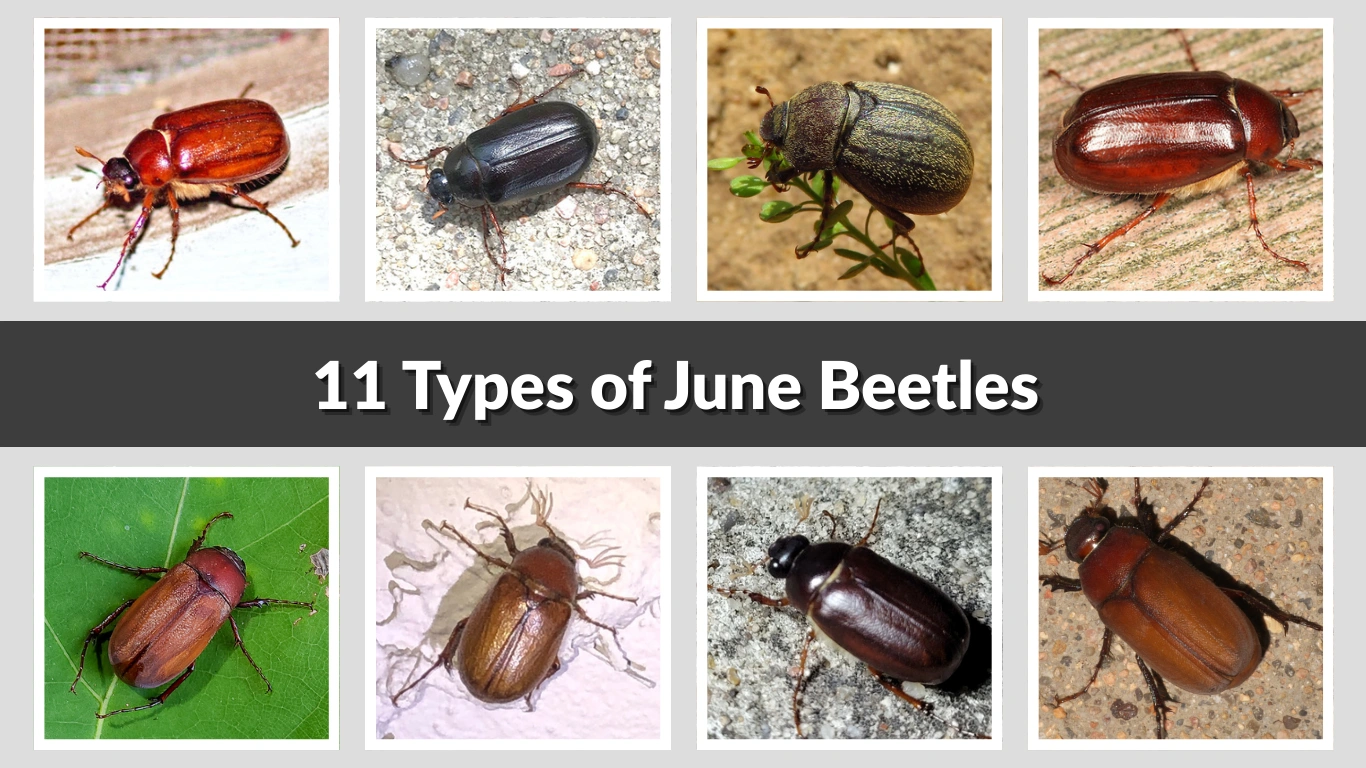
June beetles, also called May beetles, are a group of scarab beetles from the Phyllophaga genus, well known for their buzzing summer flights and destructive underground larvae (white grubs). These beetles vary in size, color, and behavior, but all share a similar life cycle that impacts lawns, gardens, and crops. From the common Phyllophaga anxia to the glossy Phyllophaga ephilida, each species has unique traits that make them both fascinating and troublesome for homeowners and farmers.
1. Phyllophaga anxia (Common June Beetle)

The Common June Beetle (Phyllophaga anxia) is among the most familiar beetles seen in late spring and summer nights across North America. Its buzzing flight around porch lights often makes it one of the first beetles people notice during warm evenings. Beyond its presence as an adult, its underground larvae (white grubs) are well known for damaging lawns, gardens, and agricultural crops by feeding on plant roots.
Identification
- Color: Usually reddish-brown to dark chestnut brown, with a glossy appearance.
- Size: Typically 12–25 mm in length, making it medium to large compared to other scarab beetles.
- Body Shape: Oval, stout, with hardened wing covers that protect the body.
- Antennae: Short, with distinctive lamellate clubs that can fan open, more prominent in males.
- Legs: Strong, spiny front legs adapted for digging into soil.
- Underside: Covered with fine, pale hairs that contrast with the darker exoskeleton.
Habitat
Common June Beetles are found throughout fields, meadows, lawns, and forest edges. Adults emerge from the soil in late spring to early summer and are strongly attracted to artificial lights, often seen circling streetlamps and windows. Their larvae thrive underground, preferring well-drained soils rich in organic matter. Agricultural fields, turfgrass, and gardens are prime habitats for their grubs.
Behavior
Adult beetles are nocturnal, feeding on the foliage of trees and shrubs, though their leaf damage is usually minimal compared to the underground grubs. They are clumsy in flight, producing a loud buzzing sound as they move from one light source to another.
The larvae, known as white grubs, are far more destructive. They feed heavily on the roots of grasses, grains, and vegetables, causing brown patches in lawns and weakened plants in crop fields. Their life cycle lasts 1–3 years, during which they overwinter deep in the soil before pupating and emerging as adults in late spring.
2. Phyllophaga fusca (Northern June Beetle)
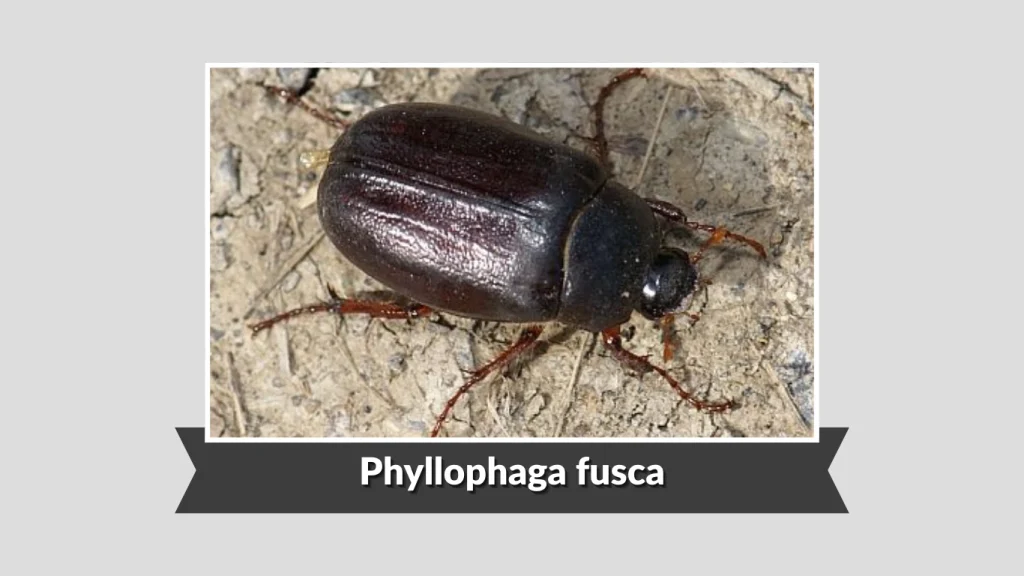
The Northern June Beetle (Phyllophaga fusca) is a common species found across cooler regions of North America. It is frequently seen buzzing around lights in late spring and early summer evenings. While similar in appearance to other June beetles, this species is slightly darker and thrives in northern climates where it plays a significant role in turfgrass and agricultural ecosystems.
Identification
- Color: Dark reddish-brown to almost black, with a duller sheen compared to other species.
- Size: Around 15–22 mm long, slightly smaller than the Common June Beetle.
- Body Shape: Oval and robust, with strong wing covers.
- Antennae: Short with lamellate clubs, capable of fanning out.
- Legs: Adapted for digging, with stout spines.
Habitat
This beetle is often found in northern fields, pastures, and suburban lawns. Adults emerge in late May and are especially common in regions with sandy or loamy soils. The larvae live underground, damaging turfgrass and agricultural crops by feeding on plant roots.
Behavior
Adults are nocturnal and often swarm toward light sources. They feed lightly on the foliage of shrubs and trees but rarely cause noticeable defoliation. The larvae, however, are serious pests, especially in lawns where patches of grass turn brown due to root feeding.
3. Phyllophaga implicita (Southern June Beetle)

The Southern June Beetle (Phyllophaga implicita) is widely distributed in the southern United States, where it emerges in warm months. It is one of the most active June beetles in warm, humid environments and is recognized for its destructive larval stage in pastures and gardens.
Identification
- Color: Shiny reddish-brown, often lighter than northern species.
- Size: 16–25 mm in length, making it a fairly large June beetle.
- Body Shape: Broad and oval with a smooth outer shell.
- Antennae: Clubbed with segmented plates, larger in males.
- Wings: Hardened forewings that cover membranous flight wings.
Habitat
This species thrives in the southern U.S., particularly in agricultural lands, gardens, and suburban lawns. Adults emerge during late spring and summer, with the heaviest activity occurring in June and July. The larvae live beneath the soil surface, feeding on the roots of turfgrass, corn, and vegetable plants.
Behavior
Southern June Beetles are nocturnal fliers that gather around artificial lights in large numbers. Adults feed on leaves of trees such as pecan and oak, though the feeding damage is minor. The subterranean grubs cause far more damage by consuming plant roots, often leading to significant agricultural losses in southern regions.
4. Phyllophaga crinita (Hairy June Beetle)

The Hairy June Beetle (Phyllophaga crinita) is a distinctive species recognized for the dense hair-like setae covering its body. Unlike many other June beetles that are more glossy, this one has a fuzzy or velvety look. It is especially prevalent in the southern and central United States, where it emerges in large numbers during summer nights.
Identification
- Color: Reddish-brown to dark brown, with dense yellowish hairs giving a velvety texture.
- Size: 18–22 mm long, medium to large-sized compared to related species.
- Body Shape: Oval and stout, with slightly rougher wing covers.
- Antennae: Clubbed with fan-like lamellae, more developed in males.
- Hair Coverage: Thick hairs on both dorsal and ventral surfaces, unlike most June beetles.
Habitat
The Hairy June Beetle is most common in sandy soils, grasslands, and agricultural fields in Texas, Oklahoma, and surrounding regions. Adults often swarm around lights at dusk and are particularly numerous in rural areas where soil conditions favor larval development.
Behavior
Adults feed lightly on the foliage of trees and shrubs but are not considered major defoliators. They are clumsy fliers, often colliding with windows or walls when attracted to light. The larvae (white grubs) remain underground for multiple seasons, feeding on grass and crop roots, and are regarded as serious turf and agricultural pests in their range.
5. Phyllophaga congrua (Brown May Beetle)

The Brown May Beetle (Phyllophaga congrua), sometimes also called a June Beetle, is an early-emerging species often seen in May. It is widespread in the eastern and central United States and is a familiar sight on warm nights, buzzing around porch lights. Its larvae are particularly damaging to gardens and lawns.
Identification
- Color: Uniform light to medium brown, less shiny compared to other June beetles.
- Size: 15–20 mm long, average in size within the genus.
- Body Shape: Oval, with smooth wing covers and a slightly flattened underside.
- Antennae: Short, ending with lamellate clubs typical of June beetles.
- Texture: Less hairy than P. crinita, giving it a smoother appearance.
Habitat
The Brown May Beetle prefers grassy lawns, cultivated gardens, and agricultural fields. Because it emerges slightly earlier than other June beetles, it is often one of the first species observed in spring evenings. Its larvae thrive in moist soils, feeding heavily on root systems.
Behavior
Adults are nocturnal and clumsy in flight, often striking against windows and walls when drawn to artificial lights. They feed on leaves of ornamental plants and trees but rarely cause serious damage above ground. The grubs are far more destructive, capable of ruining turfgrass, vegetable crops, and even ornamental flowers by eating roots.
6. Phyllophaga rugosa (Rugose June Beetle)

The Rugose June Beetle (Phyllophaga rugosa) is recognized for its rough-textured exoskeleton, which sets it apart from smoother, shinier species in the genus. It is found in many parts of North America and is especially active in summer months. Its underground larvae are a familiar turf pest, while adults are frequent nighttime visitors to lights.
Identification
- Color: Dark brown to black, sometimes with a dull reddish tint.
- Size: Around 16–23 mm long, fairly robust in build.
- Body Shape: Oval with a slightly elongated appearance.
- Antennae: Lamellate, with clubs that spread out like fingers.
- Texture: Characteristically rough or wrinkled elytra (wing covers), unlike the smooth ones of many June beetles.
Habitat
This species inhabits meadows, suburban lawns, and agricultural areas. It thrives in loamy soils and is often seen in open landscapes where turf and crops are available. Adults typically appear during warm summer nights, frequently swarming lights near human settlements.
Behavior
Adults are nocturnal and feed modestly on leaves and tree foliage, though the impact is minimal. Their larvae, however, can remain underground for years, consuming roots of grasses, grains, and vegetables, creating dead patches in turf and weakening crops.
7. Phyllophaga gracilis (Gracile June Beetle)

The Gracile June Beetle (Phyllophaga gracilis) is a slimmer and more delicate-looking species compared to its robust relatives. It is not as widely known as some other June beetles but occurs in scattered populations across North America, often favoring sandy or loose soils.
Identification
- Color: Light brown to reddish-brown, with a smooth, shiny body.
- Size: 14–18 mm long, smaller and more slender than most June beetles.
- Body Shape: Narrower and elongated, giving a more graceful appearance.
- Antennae: Short with lamellate clubs, more prominent in males.
- Legs: Adapted for digging, but more slender than those of larger June beetles.
Habitat
The Gracile June Beetle is often found in lightly wooded areas, grasslands, and sandy soils. Unlike other June beetles that prefer dense lawns, this species is more common in natural habitats with loose soil where grubs can easily burrow.
Behavior
Adults are night-active and attracted to lights, though usually in smaller numbers than larger, more abundant species. They feed lightly on leaves of shrubs and trees but cause little noticeable damage. Their larvae live underground feeding on roots, though infestations are less severe compared to species like the Common June Beetle.
8. Phyllophaga hirticula (Hairy May Beetle)

The Hairy May Beetle (Phyllophaga hirticula) is a widespread species across the northern and eastern United States. As its name suggests, this beetle is covered with fine hairs that give it a fuzzy appearance compared to smoother June beetles. It is often active in late spring through early summer and is a common sight near lights at night.
Identification
- Color: Dark reddish-brown to nearly black, with a matte finish.
- Size: Typically 15–22 mm in length.
- Body Shape: Oval and stout, resembling other June beetles.
- Antennae: Clubbed with lamellate segments.
- Hair Coverage: Fine pale hairs covering much of the dorsal and ventral body.
Habitat
This beetle prefers wooded edges, pastures, and suburban lawns. It thrives in moist soils where larvae can feed on the roots of turf and crops. Adults are commonly seen in northern states, particularly around forested areas and agricultural lands.
Behavior
Adults feed on foliage of broadleaf trees, especially oaks and maples, but generally do not cause heavy defoliation. They are strong fliers, often circling lights in early summer evenings. Their larvae live in the soil and feed on plant roots, damaging turfgrass, field crops, and garden plants.
9. Phyllophaga lanceolata (Lanceolate June Beetle)

The Lanceolate June Beetle (Phyllophaga lanceolata) is less common than many of its relatives but can be found across parts of North America. It is named for its slightly elongated, lance-like body shape compared to the more rounded form of other June beetles.
Identification
- Color: Medium brown to reddish-brown, with a shiny smooth body.
- Size: About 14–20 mm long, narrower than most June beetles.
- Body Shape: Elongated oval, giving it a more tapered look.
- Antennae: Clubbed, with fan-like lamellae typical of the genus.
- Legs: Slender, with spiny tibiae for digging.
Habitat
The Lanceolate June Beetle is found in grasslands, open fields, and occasionally suburban lawns. It prefers sandy or loamy soils where larvae can easily burrow. This species is not as abundant as other June beetles but still contributes to turf and agricultural pest problems when present in large numbers.
Behavior
Adults are nocturnal, flying in warm evenings during late spring and early summer. They are drawn to artificial lights but generally appear in smaller swarms compared to species like P. anxia. The larvae feed underground on the roots of grasses and field crops, occasionally causing patches of dead or weakened vegetation.
10. Phyllophaga vehemens (Vehement June Beetle)

The Vehement June Beetle (Phyllophaga vehemens) is a lesser-known species but still part of the large Phyllophaga genus. It is named for its vigorous activity during flight, often buzzing loudly on warm summer nights. While not as common as the widespread P. anxia, it contributes to the seasonal surge of June beetles across North America.
Identification
- Color: Dark brown to reddish-brown, sometimes almost black.
- Size: 15–22 mm long, medium-sized for a June beetle.
- Body Shape: Oval and sturdy, with smooth wing covers.
- Antennae: Fan-like lamellate clubs, longer in males.
- Surface Texture: Glossy, with scattered fine hairs underneath.
Habitat
This beetle is found in grasslands, woodlands, and cultivated fields. It is most frequently seen in agricultural zones where its larvae feed underground. Adults emerge in late spring and early summer, often gathering around porch and street lights in rural areas.
Behavior
Adults are active fliers at night and sometimes form large swarms. They feed on leaves of deciduous trees but rarely cause serious defoliation. The larvae live underground for one to three years, feeding on roots of crops, grasses, and garden plants, leading to turf damage and crop loss.
11. Phyllophaga ephilida (Shiny June Beetle)

The Shiny June Beetle (Phyllophaga ephilida) is a striking species, easily recognized by its highly polished exoskeleton. Unlike hairy or rough-textured relatives, this beetle’s smooth, glossy body makes it stand out. Though not as abundant as the Common June Beetle, it is regularly encountered in suburban and agricultural environments.
Identification
- Color: Bright reddish-brown to mahogany, with a glossy, reflective finish.
- Size: About 16–21 mm long, average among June beetles.
- Body Shape: Oval, compact, and smooth.
- Antennae: Short, ending in clubbed lamellae that fan outward.
- Surface: Lacks the dense hair of species like P. crinita, appearing sleek and polished.
Habitat
This species inhabits lawns, gardens, and agricultural regions across parts of the United States. It prefers moist, loamy soils where larvae can feed on a wide variety of plant roots. Adults are often attracted to bright lights at night, especially in suburban neighborhoods.
Behavior
The Shiny June Beetle is a nocturnal flier, producing a distinctive buzzing while circling lights. Adults nibble on foliage but seldom cause significant leaf damage. The underground grubs, however, feed heavily on grasses, vegetables, and ornamental plant roots, weakening and killing plants in infested areas.
