

Longhorn beetles (Cerambycidae) are a diverse family of insects recognized by their extremely long antennae, often longer than their own bodies. Found worldwide, they play important roles in ecosystems as wood recyclers, pollinators, and sometimes pests of forestry and agriculture. Their vivid patterns and striking sizes make them fascinating to both scientists and nature enthusiasts. In this guide, we’ll look at 10 notable types of longhorn beetles, exploring their unique traits and significance.
1. Asian Longhorn Beetle (Anoplophora glabripennis)
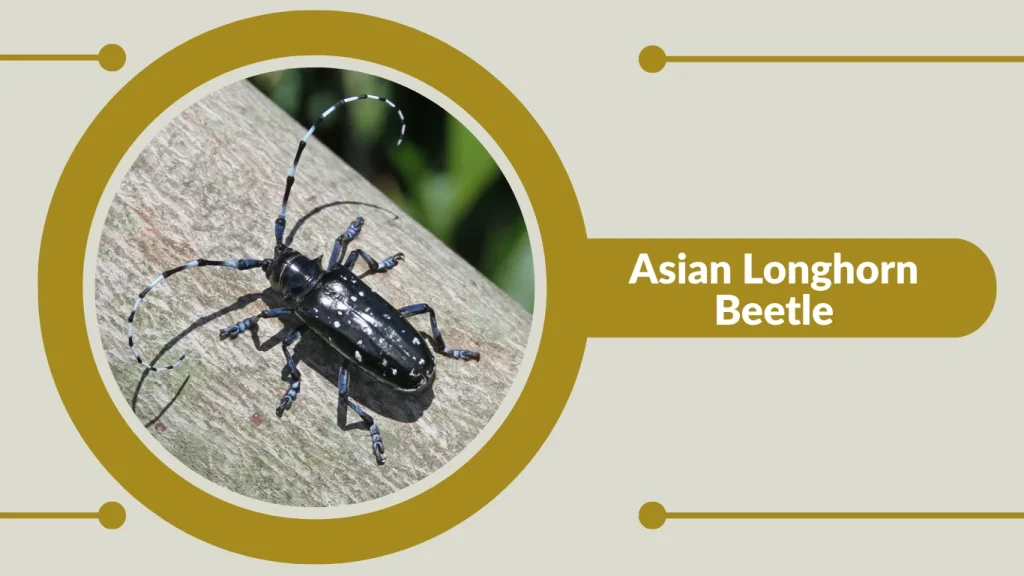
The Asian Longhorn Beetle is a large and destructive wood-boring beetle native to China and Korea but invasive in North America and Europe. It is considered a major pest because its larvae bore deep into hardwood trees such as maples, elms, and willows, eventually killing them. Its striking black-and-white appearance and very long antennae make it easy to recognize.
Identification
- Scientific Name: Anoplophora glabripennis
- Size: Adults 25–40 mm long
- Color: Glossy black body with irregular white spots
- Antennae: Extremely long, often 1.5–2 times body length, banded black and white
- Wings: Hard, shiny elytra covering the back with white markings
- Larvae: Creamy white, cylindrical, wood-boring grubs
Habitat and Distribution
Native to East Asia, this species has spread to the United States, Canada, and parts of Europe through wood packaging materials. It primarily infests urban and suburban trees, where it causes severe ecological and economic damage.
Behavior and Diet
Larvae tunnel through the heartwood of trees, disrupting water and nutrient flow, which can eventually kill the tree. Adults emerge in summer, feeding on leaves, bark, and twigs, but the larval damage is the most destructive. The Asian Longhorn Beetle is subject to strict eradication programs in countries where it has been introduced.
2. Musk Beetle (Aromia moschata)
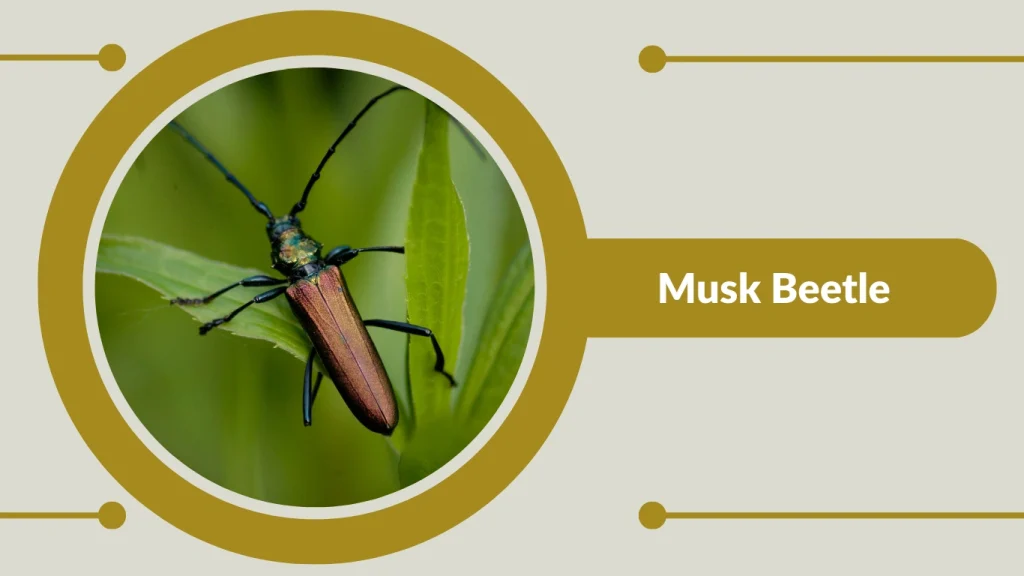
The Musk Beetle is a longhorn beetle known for its striking metallic coloration and the musky scent it emits when disturbed, which gives the insect its name. It is one of the most attractive longhorn beetles and is often found in willow-rich habitats. Unlike many pest longhorns, this species is not usually harmful and plays a role in the natural decomposition of wood.
Identification
- Scientific Name: Aromia moschata
- Size: Adults 15–35 mm long
- Color: Metallic green, copper, or bluish sheen depending on light angle
- Antennae: Long, often longer than the body in males, dark and segmented
- Wings (Elytra): Smooth, shiny, metallic with no spots or stripes
- Larvae: Pale, elongated, and wood-boring, living beneath bark
Habitat and Distribution
Musk Beetles are widely distributed across Europe and parts of Asia, favoring damp habitats near rivers, lakes, and wetlands. They are strongly associated with willows, where larvae develop in decaying wood.
Behavior and Diet
Adults are most active during summer, feeding on leaves, nectar, and pollen, especially from umbellifer flowers. Larvae tunnel in dead or dying willow wood, aiding natural decomposition. When threatened, adults release a musky odor as a defense mechanism. This beetle is admired for its beauty and is considered harmless compared to invasive longhorn species.
3. Red Milkweed Beetle (Tetraopes tetrophthalmus)
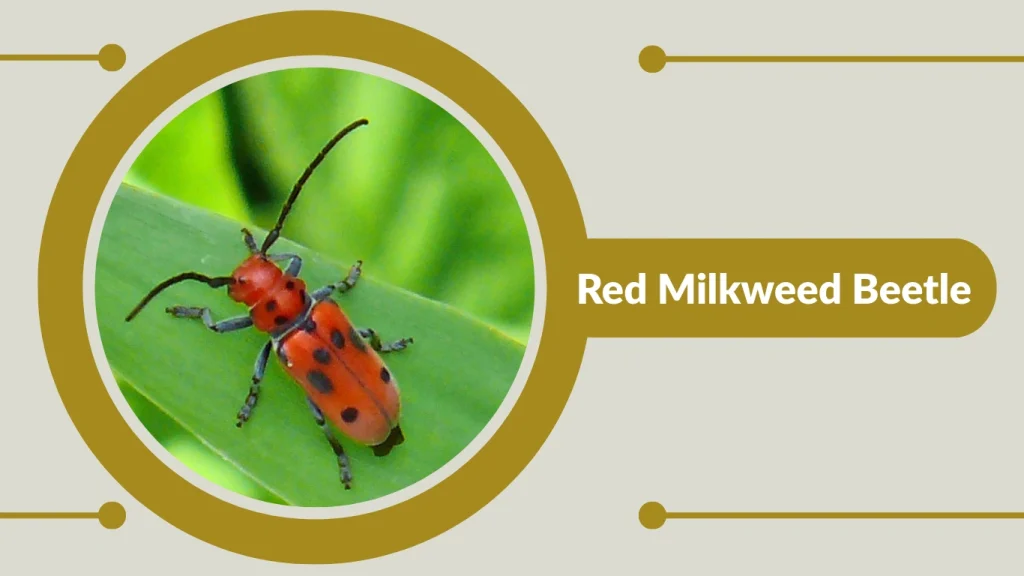
The Red Milkweed Beetle is a brightly colored longhorn beetle closely associated with milkweed plants. Its red body with black spots serves as a warning signal to predators that it is toxic, having absorbed defensive chemicals from the milkweed it feeds on. This beetle is a classic example of co-evolution between insects and host plants.
Identification
- Scientific Name: Tetraopes tetrophthalmus
- Size: Adults 7–15 mm long
- Color: Bright red or orange body with four black spots on each elytron
- Antennae: Medium to long, partly inserted across the beetle’s eyes (tetrophthalmus = “four eyes”)
- Wings (Elytra): Hard, spotted, and brightly pigmented
- Larvae: Pale, living in the roots of milkweed plants
Habitat and Distribution
Red Milkweed Beetles are found throughout North America, wherever milkweed grows. They thrive in meadows, fields, and open habitats rich in wildflowers.
Behavior and Diet
Both adults and larvae feed on milkweed. Adults consume leaves and flowers, while larvae bore into the roots. Their bright coloration warns predators of their toxicity, making them less likely to be eaten.
4. Pine Sawyer Beetle (Monochamus spp.)
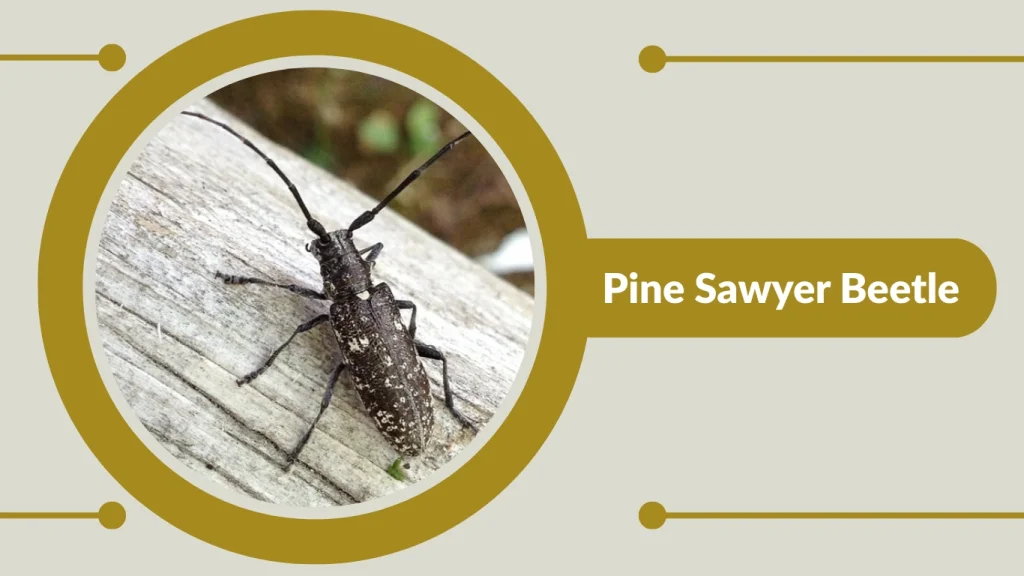
The Pine Sawyer Beetle is a large and rugged longhorn beetle often found in coniferous forests. It is important in forestry because its larvae bore into pine wood, sometimes spreading the pinewood nematode, which can damage timber resources. These beetles are often mistaken for the invasive Asian Longhorn Beetle due to their similar appearance.
Identification
- Scientific Name: Monochamus spp.
- Size: Adults 15–30 mm long
- Color: Dark brown to black body with mottled gray or white markings
- Antennae: Very long, often twice the body length in males
- Wings (Elytra): Rough, with mottled spots and textures
- Larvae: Large white grubs boring deep into conifer wood
Habitat and Distribution
Pine Sawyers are common in North America, Europe, and Asia, particularly in coniferous forests with pines, spruces, and firs.
Behavior and Diet
Larvae feed within the wood of dead, dying, or weakened pine trees. Adults emerge in summer and are often seen feeding on pine bark and needles. While they play a role in breaking down dead wood, some species are also vectors of the pinewood nematode, which can devastate forestry resources.
5. Titan Beetle (Titanus giganteus)

The Titan Beetle is one of the largest beetles in the world, famous for its enormous size and powerful mandibles. Native to South America, this longhorn beetle can reach lengths of up to 17 cm. Though rare to encounter, it is a highly impressive insect and often a symbol of tropical biodiversity.
Identification
- Scientific Name: Titanus giganteus
- Size: Adults 130–170 mm long, among the largest beetles on Earth
- Color: Dark brown to black body, robust and shiny
- Antennae: Long, segmented, about half the body length
- Wings (Elytra): Thick, hard, and smooth, covering strong flight wings
- Larvae: Rarely observed, but believed to bore into hardwoods deep underground
Habitat and Distribution
Titan Beetles are found in the rainforests of South America, especially in Brazil, Peru, Ecuador, and French Guiana. They live in tropical lowland forests with dense vegetation.
Behavior and Diet
Adults feed very little or not at all, as their main purpose is reproduction. Larvae, though rarely seen, are thought to bore into large hardwood trees. Adults are nocturnal and attracted to lights, and their massive size makes them an awe-inspiring sight.
6. Flower Longhorn Beetle (Typocerus spp.)

The Flower Longhorn Beetle is a colorful group of longhorns often seen visiting flowers during the summer months. Unlike many wood-boring longhorns, adults are active pollinators, making them ecologically beneficial. Their slender bodies and bright markings help distinguish them from other beetles.
Identification
- Scientific Name: Typocerus spp.
- Size: Adults 8–15 mm long
- Color: Yellow to orange with black stripes or spots on the elytra
- Antennae: Medium-length, not as long as body
- Wings (Elytra): Smooth, patterned with bright contrasting markings
- Larvae: Wood-boring, living inside decaying hardwoods
Habitat and Distribution
Flower Longhorn Beetles are widespread across North America, often found in meadows, gardens, and woodland edges where wildflowers are abundant.
Behavior and Diet
Adults feed on pollen and nectar, making them important pollinators. Larvae bore into decaying wood, contributing to decomposition. Adults are diurnal and are commonly spotted on daisies, goldenrods, and other wildflowers during midsummer. Their bright patterns make them one of the most attractive and easily spotted longhorn beetles.
7. Rosalia Longicorn (Rosalia alpina)
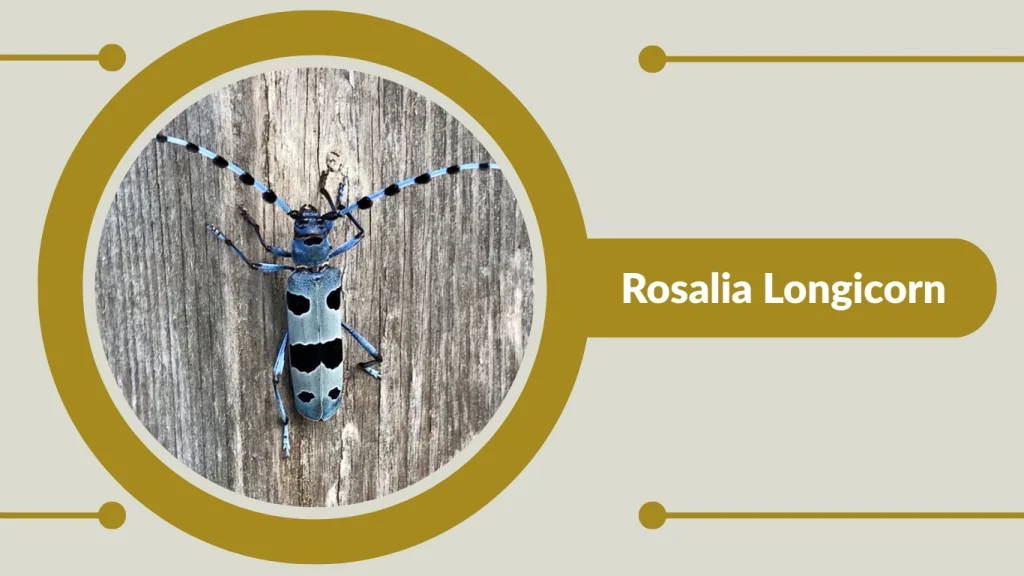
The Rosalia Longicorn is one of the most beautiful longhorn beetles, easily recognized by its bluish-gray body with bold black spots. It is often considered a symbol of European forests and is protected in many countries due to its declining populations.
Identification
- Scientific Name: Rosalia alpina
- Size: Adults 15–38 mm long
- Color: Pale blue to gray body with three distinct black spots on each elytron
- Antennae: Long, banded blue and black, often longer than the body in males
- Wings (Elytra): Smooth, patterned with contrasting dark spots
- Larvae: Pale, wood-boring, developing inside decayed beech wood
Habitat and Distribution
Rosalia Longicorns are found in mountainous regions of central and southern Europe, with strong associations with beech forests.
Behavior and Diet
Larvae develop in old or decaying beech trunks, taking several years to mature. Adults are active in midsummer, often seen basking on sunlit logs. Due to habitat loss, they are a protected species in many regions.
8. Batocera Longhorn Beetle (Batocera rufomaculata)
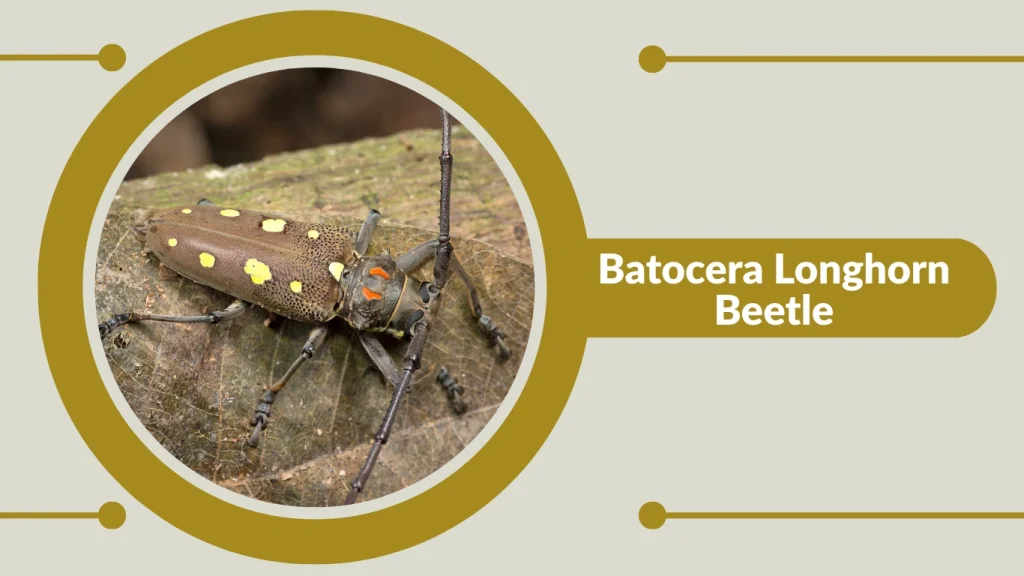
The Batocera Longhorn Beetle is a large tropical beetle known for its impressive size and destructive impact on fruit and shade trees. It is sometimes called the Mango Tree Borer due to its frequent attacks on mango orchards.
Identification
- Scientific Name: Batocera rufomaculata
- Size: Adults 25–50 mm long
- Color: Grayish-brown body with reddish or yellowish mottled spots
- Antennae: Extremely long, often 2–3 times the body length
- Wings (Elytra): Rough-textured with mottled patterns
- Larvae: Thick, white grubs boring deep into hardwoods
Habitat and Distribution
This beetle is found in tropical Asia, Africa, and the Middle East, and has spread to other warm regions due to timber and fruit trade.
Behavior and Diet
Larvae bore into mango, fig, cashew, and other hardwood trees, causing serious damage. Adults emerge in summer, feeding on bark and twigs. This species is a significant pest in agriculture and forestry, leading to economic losses in mango-growing areas.
9. Cottonwood Borer (Plectrodera scalator)
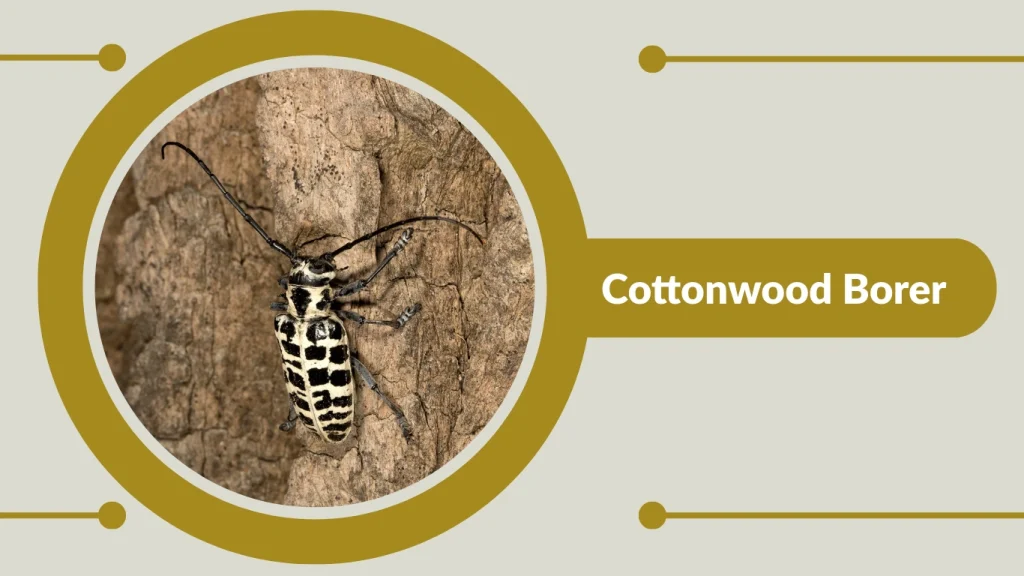
The Cottonwood Borer is a large and striking longhorn beetle native to North America. It is considered one of the largest beetles in the United States and is easily recognized by its bold black-and-white coloration. Despite its size, it is generally not considered a serious pest, though it can cause damage to young cottonwood and poplar trees.
Identification
- Scientific Name: Plectrodera scalator
- Size: Adults 25–40 mm long
- Color: White body with bold black patches and stripes
- Antennae: Long, banded black and white, nearly the same length as the body
- Wings (Elytra): Strongly patterned with irregular black-and-white markings
- Larvae: Large, cream-colored grubs boring into roots and lower trunks
Habitat and Distribution
This species is found throughout the central and eastern United States, especially in regions where cottonwood and poplar trees are common.
Behavior and Diet
Larvae feed inside roots and lower stems, weakening young trees. Adults emerge in summer, often found feeding on leaves and bark. Though sometimes locally damaging, the species is not generally considered a major forestry threat.
10. Black Pine Sawyer (Monochamus galloprovincialis)
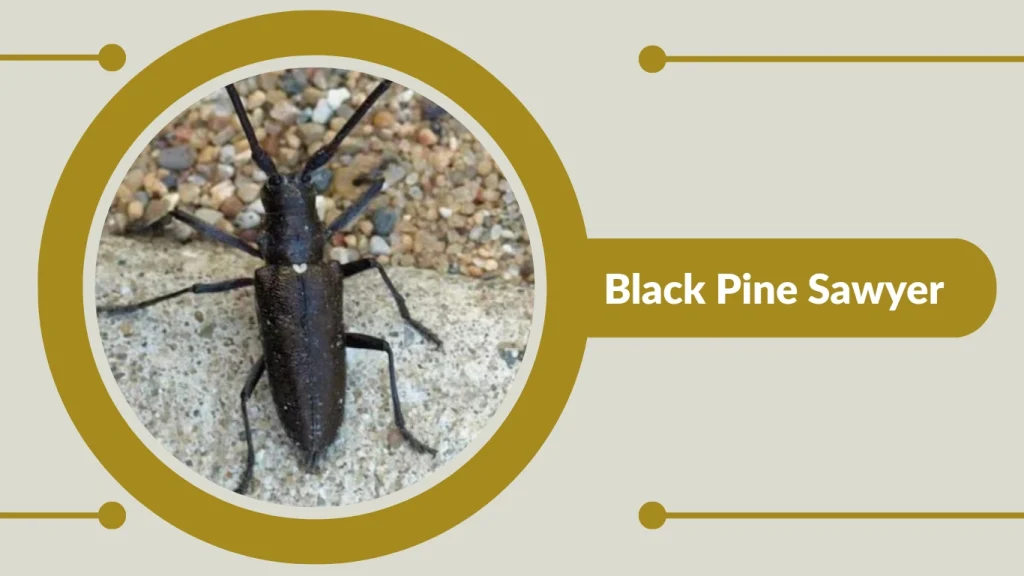
The Black Pine Sawyer is a longhorn beetle closely related to other pine sawyers but distinguished by its dark, robust body. It is a significant pest in coniferous forests, especially in Europe, where it acts as a vector for the pinewood nematode, a serious tree pathogen.
Identification
- Scientific Name: Monochamus galloprovincialis
- Size: Adults 12–28 mm long
- Color: Dark brown to black body, with subtle gray mottling
- Antennae: Very long, especially in males (often twice body length)
- Wings (Elytra): Rugged and dark, with fine hair-like texture
- Larvae: White, cylindrical wood-boring grubs
Habitat and Distribution
This beetle is native to Europe and parts of North Africa but has expanded its range, raising concerns for forestry and ecosystems. It lives in pine forests, especially those stressed by drought or fire.
Behavior and Diet
Larvae bore into the wood of pine trees, creating tunnels that weaken the trunk. Adults feed on bark and twigs but also spread the pinewood nematode, making them a major forestry pest. Control measures are in place in many countries to prevent its spread.
