
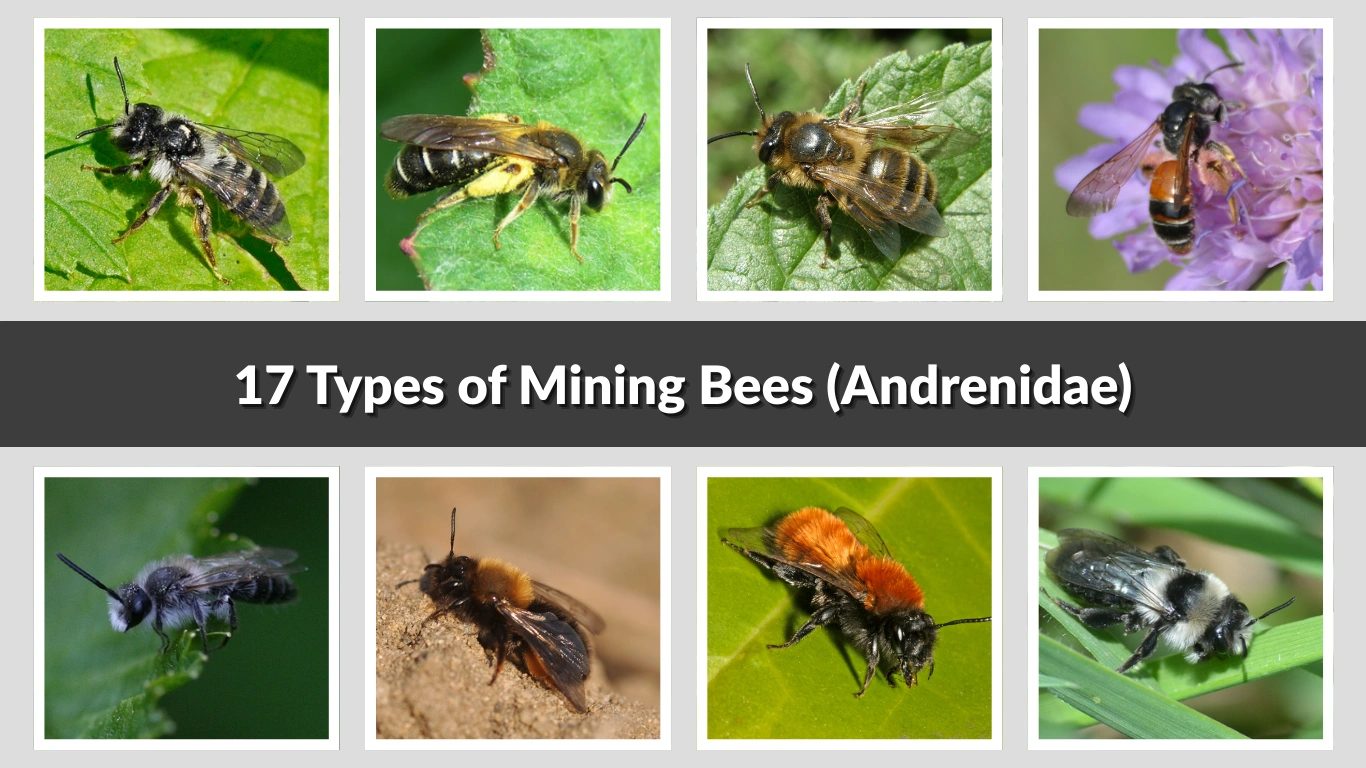
Mining bees (Andrena species) are solitary ground-nesting bees that play an essential role in pollination across Europe and other regions. Unlike honeybees, they do not form large colonies but instead live independently, with each female building her own burrow underground. Their diversity is remarkable, with species adapted to different habitats and flowering seasons. Below is a list of 17 types of mining bees, each with unique traits and ecological importance.
1. Andrena fulva (Tawny Mining Bee)

Andrena fulva, commonly called the Tawny Mining Bee, is one of the most recognizable solitary bees in Europe. Known for its bright orange-red hairs, it often emerges in early spring and is a vital pollinator for fruit trees and garden plants. Unlike honeybees, this species is solitary, with each female building her own nest underground.
Identification
- Size: Females around 10–12 mm; males smaller at 8–10 mm
- Color: Dense orange-red hairs on thorax and abdomen (females); males are browner and less hairy
- Wings: Transparent, slightly smoky in appearance
- Body shape: Robust with a rounded abdomen
- Flight period: Typically from March to May
Habitat
Tawny Mining Bees are widely found across Europe, especially in gardens, meadows, orchards, and grassy open areas. They prefer sandy or loose soils, where females dig small burrows to lay their eggs. Nests often appear as little volcano-shaped mounds of soil on lawns and paths.
Behavior
This species is solitary, meaning each female constructs and provisions her nest independently. They are non-aggressive and rarely disturbed by human presence. Andrena fulva is an early spring flyer, with adults active during the blossoming of fruit trees. Males emerge first and wait near nesting sites to mate with females.
Importance
Tawny Mining Bees are important pollinators of fruit trees such as apple, pear, and cherry. They also visit dandelions, buttercups, and many wildflowers. Their gentle nature and effectiveness as pollinators make them highly beneficial for both natural ecosystems and human agriculture.
2. Andrena cineraria (Ashy Mining Bee)
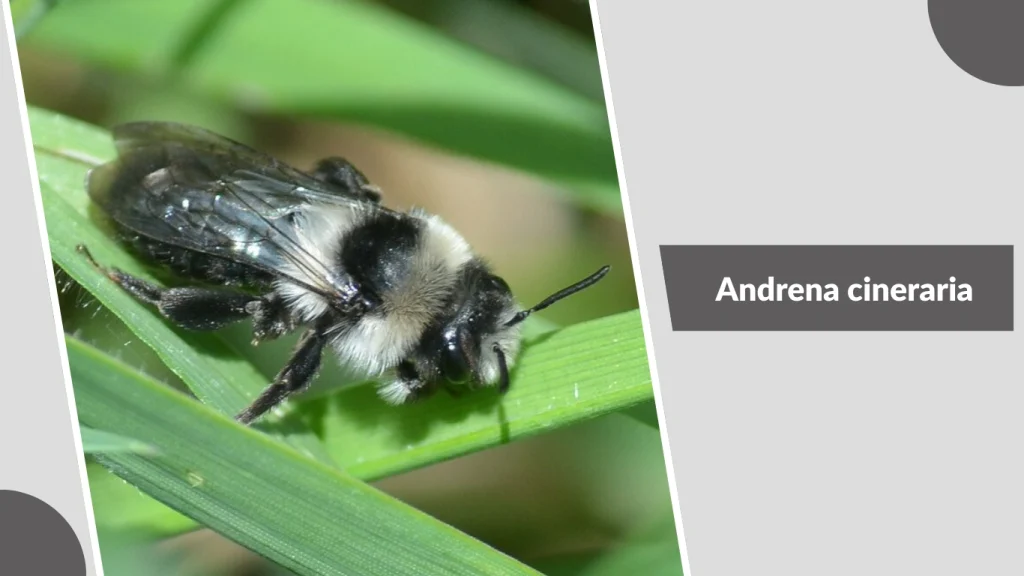
Andrena cineraria, known as the Ashy Mining Bee, is a striking solitary bee easily recognized by its black-and-grey coloring. It is widespread across Europe and commonly spotted in gardens, parks, and open meadows during spring. This species plays an important role in pollinating early-blooming plants and fruit trees.
Identification
- Size: Females 11–14 mm; males slightly smaller at 9–11 mm
- Color: Distinctive grey hair bands across the thorax; abdomen mostly black
- Wings: Clear with a light smoky tint
- Body shape: Elongated with smooth, shiny black abdomen
- Flight period: From April to June
Habitat
Ashy Mining Bees prefer sunny, sandy soils and short-grass habitats. They often create nesting aggregations, where many females dig burrows close to one another. Nests are dug in bare soil patches, garden lawns, or field edges, each tunnel leading to several brood chambers stocked with pollen and nectar.
Behavior
This species is solitary, though multiple females may nest in close proximity. Females dig burrows to lay eggs, while males emerge earlier in the season and patrol nesting areas waiting for mates. Ashy Mining Bees are active, energetic foragers and are especially drawn to hawthorn, buttercups, dandelions, and fruit blossoms.
Importance
Andrena cineraria is a valuable pollinator for early spring plants and crops, particularly orchard fruits. Their gentle behavior makes them harmless to humans, and their preference for gardens and meadows contributes to the health of wildflower ecosystems.
3. Andrena vaga (Grey-backed Mining Bee)
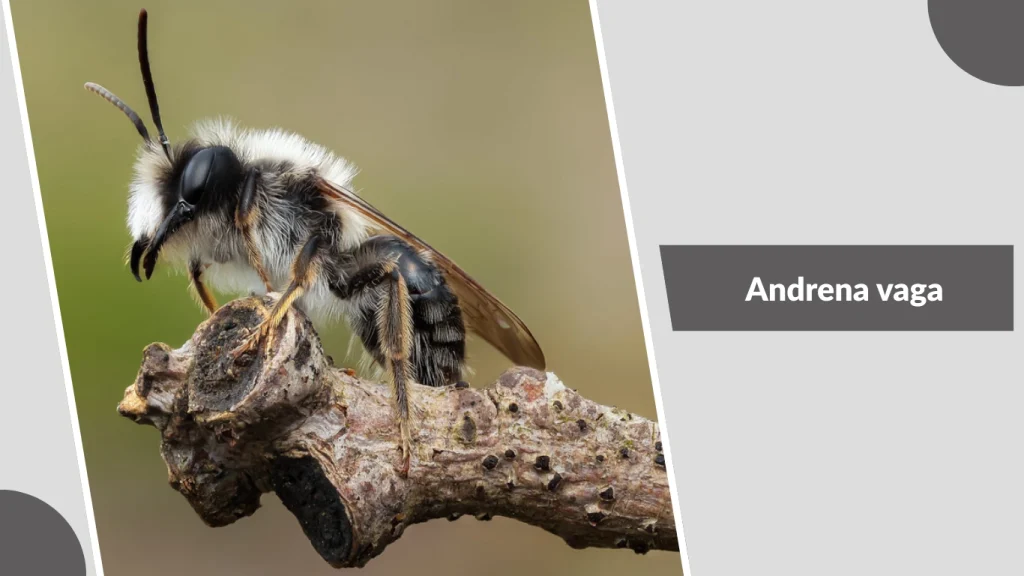
Andrena vaga, commonly called the Grey-backed Mining Bee, is a solitary bee species that appears in early spring. It is especially well adapted to cooler climates and is often one of the first bees to emerge after winter. Its distinctive grey hairs make it easy to recognize in the field.
Identification
- Size: Females about 12–14 mm; males slightly smaller at 10–12 mm
- Color: Dense pale-grey hairs covering the thorax and upper body; abdomen mostly black with sparse hairs
- Wings: Transparent with a faint smoky tone
- Body shape: Slender with a pointed abdomen
- Flight period: March to May, coinciding with willow blossoms
Habitat
Grey-backed Mining Bees favor sandy soils, heathlands, and forest clearings. They are also common in riverbanks and sandy embankments where soil is loose for nesting. Large nesting aggregations are often visible, with many burrows close together, creating small clusters of soil mounds.
Behavior
This species is solitary but often nests in large groups. Females dig vertical tunnels with several side chambers, each provisioned with pollen and nectar before laying eggs. Andrena vaga is strongly associated with willows, as these trees bloom early in spring and provide an essential food source for the bees. Males are typically seen flying near willow catkins, waiting for females.
Importance
Andrena vaga plays a crucial role in pollinating willow trees, which are vital for early spring ecosystems. They also visit other early-blooming plants, making them important contributors to pollination at a time when few other insects are active. Their presence supports both wild plant reproduction and early orchard crops.
4. Andrena haemorrhoa (Orange-tailed Mining Bee)
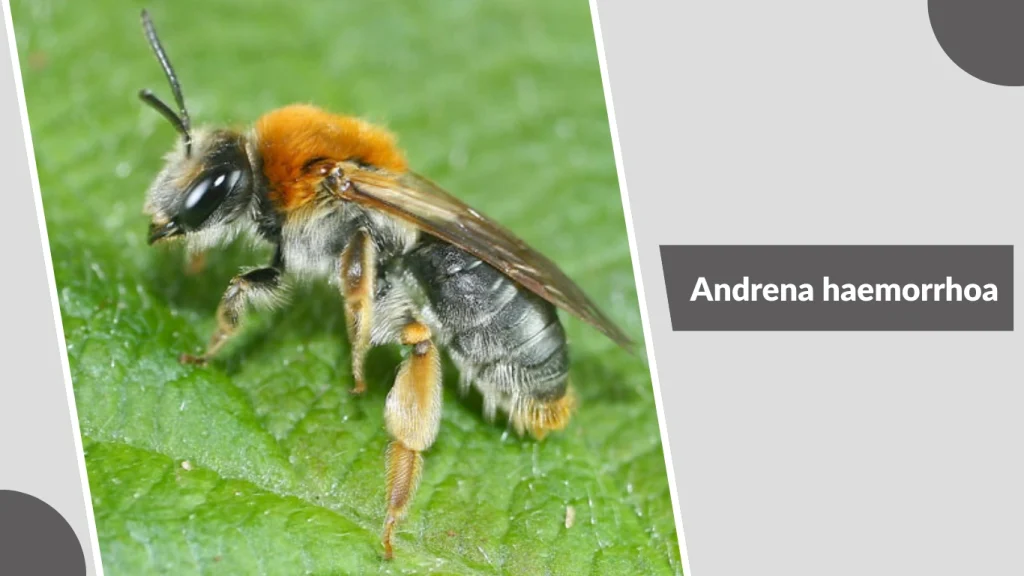
Andrena haemorrhoa, commonly called the Orange-tailed Mining Bee, is one of the most widespread and recognizable solitary bees in Europe. It is known for its reddish-orange tail tip and early spring activity, making it an important pollinator for orchards and wildflowers.
Identification
- Size: Females measure 10–12 mm; males are smaller at 8–10 mm
- Color: Thorax covered in dense brown-orange hairs; abdomen dark and shiny with a distinctive orange-red tip
- Wings: Clear with a slight brownish tint
- Body shape: Compact with a rounded abdomen
- Flight period: March to June, peaking during fruit tree blossom
Habitat
This bee prefers sunny and open habitats with loose, sandy soil for nesting. It can be found in gardens, meadows, field margins, and orchards. Nests are usually solitary burrows in the ground, though many females may nest in close proximity, forming loose aggregations.
Behavior
The Orange-tailed Mining Bee is solitary but often occurs in large numbers where nesting conditions are suitable. Females dig burrows that lead to brood cells, where they deposit pollen and nectar for their offspring. Males emerge first in the spring and patrol flowers and nesting areas, searching for females. These bees are docile and rarely disturbed by human presence.
Importance
Andrena haemorrhoa is a highly effective pollinator, particularly for apple, cherry, plum, and other fruit trees. It also visits dandelions, buttercups, and hawthorn blossoms. Because it is active in early spring, it provides essential pollination services before many other bees are present, benefiting both natural ecosystems and agriculture.
5. Andrena clarkella (Clark’s Mining Bee)
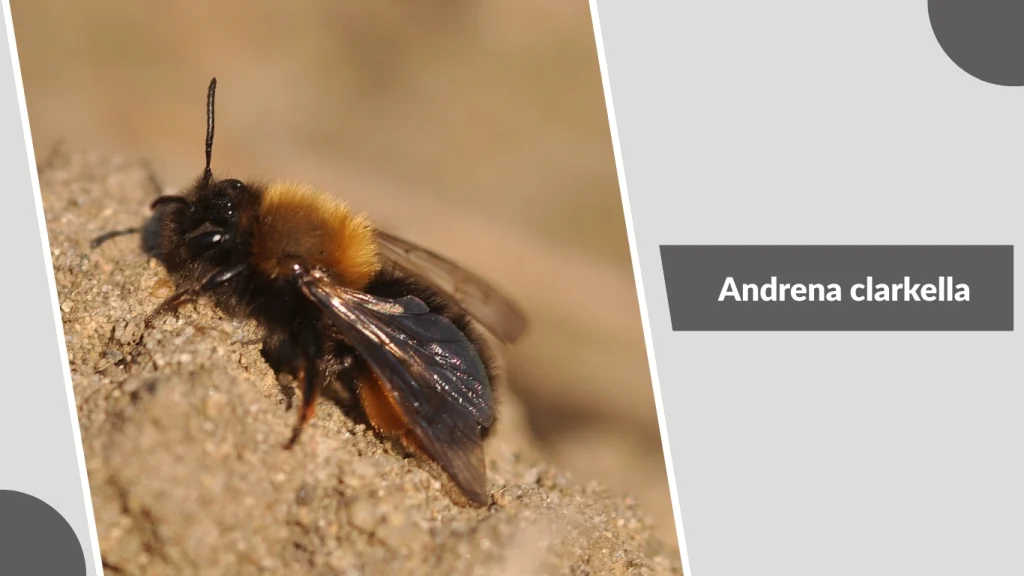
Andrena clarkella, known as Clark’s Mining Bee, is an early-spring solitary bee that emerges as soon as the first flowers bloom after winter. It is particularly associated with willow trees, which provide its main food source. This species is among the first mining bees to appear each year, making it an important pollinator for early flowering plants.
Identification
- Size: Females 11–13 mm; males slightly smaller at 9–11 mm
- Color: Thorax covered in reddish-brown hairs; abdomen shiny black with fine pale hairs
- Wings: Transparent with a light brownish shade
- Distinct trait: Strongly hairy hind legs in females, adapted for pollen collection
- Flight period: Very early, from March to April
Habitat
Clark’s Mining Bee thrives in sandy soils, forest edges, and heathlands where willow trees are abundant. Nests are typically dug into loose soil banks, sandy paths, or sunny clearings. They prefer areas with nearby access to willow flowers, as these are their primary food source.
Behavior
This solitary species is strongly dependent on willows, often seen foraging on willow catkins throughout its short flight season. Females dig burrows leading to brood chambers, stocking them with pollen and nectar before laying eggs. Males usually emerge first and remain near willow stands, awaiting females. They are gentle bees, unlikely to show aggression.
Importance
Andrena clarkella plays a vital ecological role in pollinating willows, which are crucial for early spring biodiversity. By visiting other early-blooming plants, they also contribute to the survival of many wildflowers. Their early emergence makes them essential pollinators during a time when few other insects are active.
6. Andrena bicolor (Gwynne’s Mining Bee)
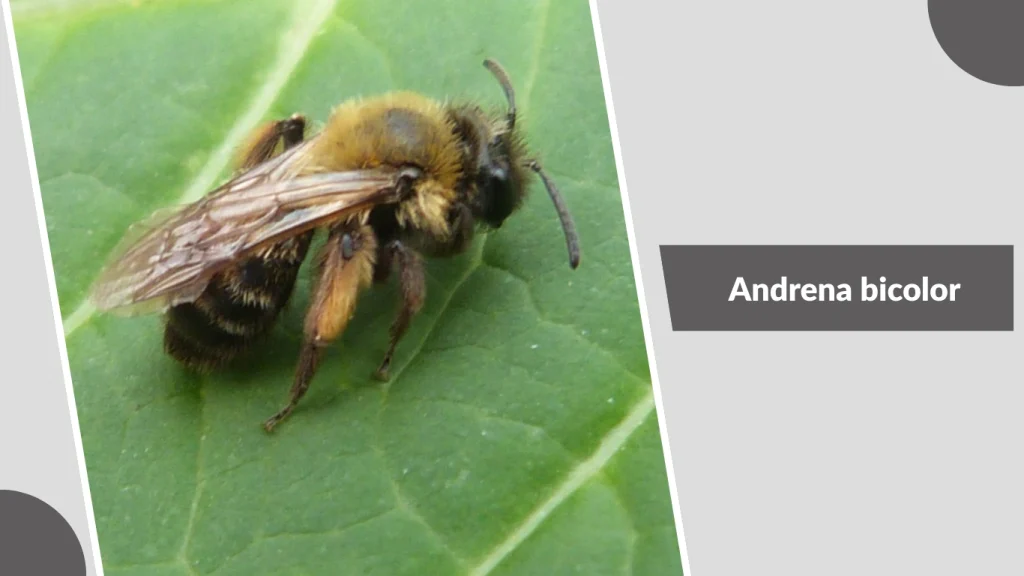
Andrena bicolor, commonly called Gwynne’s Mining Bee or the Two-colored Mining Bee, is a widespread solitary bee across Europe. It is known for its two distinct flight periods, making it one of the few mining bees that appear both in spring and summer. This species is versatile, visiting a wide range of wildflowers and garden plants.
Identification
- Size: Females 8–10 mm; males slightly smaller at 7–9 mm
- Color: Thorax covered in reddish-brown hairs; abdomen dark and shiny with faint pale hair bands
- Wings: Clear with a light smoky hue
- Distinct trait: Presence of two flight generations (bivoltine) each year
- Flight period: March–May (spring generation) and July–August (summer generation)
Habitat
Gwynne’s Mining Bee inhabits sunny, dry areas such as grasslands, gardens, meadows, and woodland edges. It favors light, sandy soils where females can dig their nests. Nests are often solitary but can occur in small aggregations in areas with suitable soil conditions.
Behavior
This bee is unusual among mining bees because it produces two generations annually. The spring generation is usually associated with fruit tree blossoms and early wildflowers, while the summer generation forages on knapweed, thistles, brambles, and other later-blooming flowers. Females create underground burrows with brood chambers stocked with pollen and nectar for their larvae.
Importance
Andrena bicolor is a highly adaptable and effective pollinator. The spring generation supports orchard crops such as apple, cherry, and plum, while the summer generation helps pollinate wildflowers and hedgerow plants. This dual activity period makes it an important species for both natural ecosystems and agriculture throughout much of the year.
7. Andrena barbilabris (Sandpit Mining Bee)
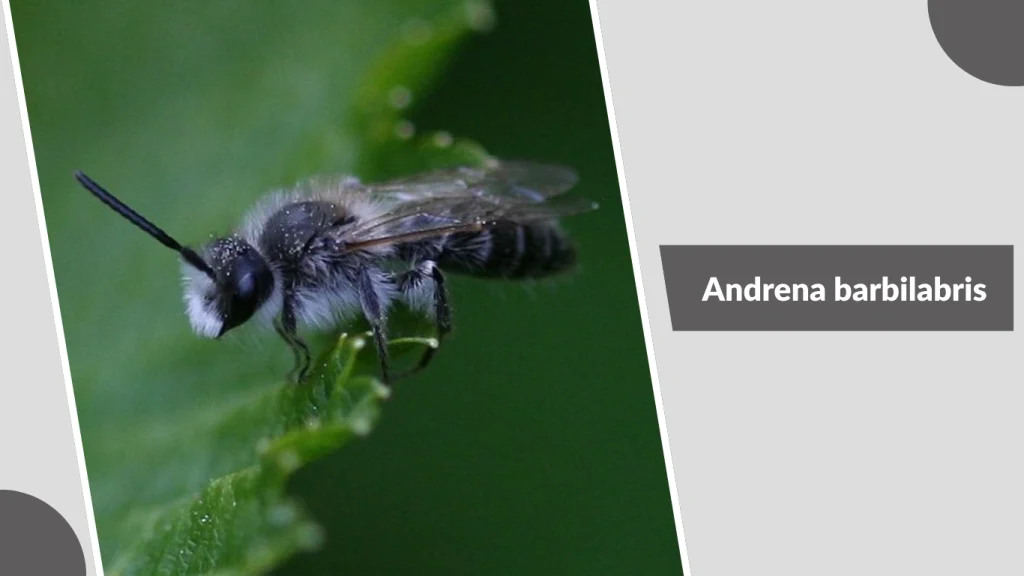
Andrena barbilabris, commonly called the Sandpit Mining Bee, is a solitary bee species often found in sandy habitats. It is one of the earliest spring-flying bees and is easily spotted due to its preference for nesting in large aggregations on sandy banks, dunes, and even garden lawns.
Identification
- Size: Females 9–11 mm; males slightly smaller at 8–10 mm
- Color: Thorax with reddish-brown hairs; abdomen dark and shiny with faint pale hair bands
- Wings: Transparent with a slight brownish tint
- Distinct trait: Frequently nests in large visible clusters on sandy ground
- Flight period: March to May
Habitat
The Sandpit Mining Bee thrives in sandy soils, dunes, quarries, and grassy banks. It often chooses sun-exposed areas where the soil is loose and easy to excavate. Nests are burrows dug into sand, each leading to multiple brood cells. Garden lawns with sandy patches may also be colonized by this species, making it common in both rural and suburban environments.
Behavior
Although solitary, females often nest in close proximity, creating dense nesting sites that can be mistaken for communal colonies. Each female constructs her own burrow, provisions it with pollen and nectar, and lays her eggs individually. Males are typically seen patrolling nesting sites, waiting to mate with emerging females. These bees are docile and pose no threat to humans.
Importance
Andrena barbilabris is an important pollinator for early-flowering plants such as willow, dandelion, and fruit blossoms. By nesting in large numbers, they provide concentrated pollination services to surrounding vegetation. Their early activity supports ecosystems at a time when few other insects are present, making them ecologically valuable.
8. Andrena dorsata (Short-fringed Mining Bee)

Andrena dorsata, commonly known as the Short-fringed Mining Bee, is a solitary ground-nesting bee found across Europe and parts of Asia. It is particularly active in spring and is closely associated with flowering shrubs and trees. Its distinct short hairs along the body make it easier to identify among other Andrena species.
Identification
- Size: Females 9–11 mm; males slightly smaller at 8–10 mm
- Color: Thorax covered in short reddish-brown hairs; abdomen dark with faint pale hair bands
- Wings: Clear with a slight brown tint
- Distinct trait: Noticeably short body hairs compared to many other Andrena bees
- Flight period: April to June
Habitat
The Short-fringed Mining Bee prefers open sunny areas with sandy or light soils. It is commonly found in meadows, gardens, field edges, and heathlands. Nests are typically dug into bare or sparsely vegetated soil, sometimes forming small loose aggregations when conditions are favorable.
Behavior
Like other mining bees, this species is solitary, with females constructing individual burrows underground. Each tunnel leads to brood chambers filled with pollen and nectar before an egg is laid. Males usually emerge slightly earlier and patrol flowers and nesting sites in search of females. The species is non-aggressive and rarely disturbed by human activity.
Importance
Andrena dorsata is a key pollinator for spring-blooming plants such as hawthorn, dandelion, buttercups, and orchard trees. Its foraging activity provides valuable pollination services to both wild plants and cultivated crops. By nesting in diverse habitats, it contributes to maintaining pollination networks across natural and agricultural landscapes.
9. Andrena nigroaenea (Buffish Mining Bee)

Andrena nigroaenea, commonly called the Buffish Mining Bee, is one of the most widespread and abundant solitary bees in Europe. It is often seen in gardens, meadows, and orchards during spring, making it one of the most familiar species of the Andrena genus.
Identification
- Size: Females 12–14 mm; males slightly smaller at 10–12 mm
- Color: Thorax with dense brownish hairs; abdomen dark brown to black with lighter hair bands
- Wings: Transparent with a light brownish tint
- Distinct trait: Larger and more robust than many other Andrena species
- Flight period: March to June
Habitat
The Buffish Mining Bee inhabits a wide range of habitats, including gardens, grasslands, woodland edges, field margins, and orchards. It favors well-drained soils for nesting, often choosing sunny slopes, paths, or patches of bare ground. Although solitary, many females often nest close together, creating noticeable aggregations.
Behavior
This species is solitary but highly adaptable, with females digging burrows in a variety of soil types. Each burrow contains several brood cells, provisioned with pollen and nectar. Males appear earlier in spring and are frequently seen patrolling flowers and nesting areas. The species is docile and poses no threat to humans, even when nesting near homes or footpaths.
Importance
Andrena nigroaenea is a very important pollinator for fruit trees, particularly apple, pear, and cherry orchards. It also visits dandelions, buttercups, and other spring wildflowers. Because of its abundance and wide distribution, this bee plays a crucial role in supporting both agricultural production and natural ecosystems during the spring season.
10. Andrena flavipes (Yellow-legged Mining Bee)
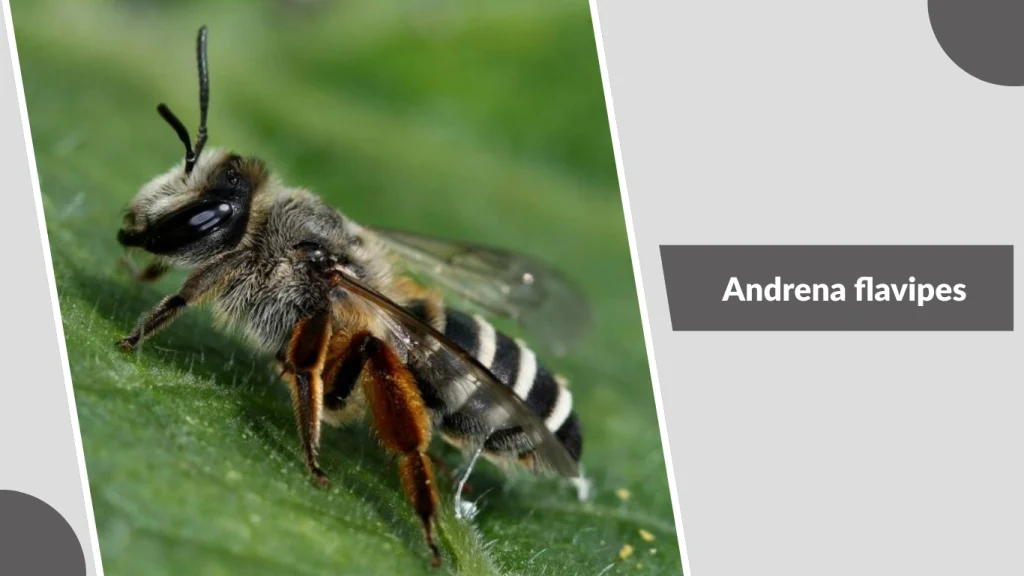
Andrena flavipes, commonly known as the Yellow-legged Mining Bee, is one of the most widespread and distinctive Andrena species in Europe. Its bright yellow hairs on the legs and thorax make it easier to identify compared to many other mining bees. It is especially active in spring and often nests in large, dense aggregations.
Identification
- Size: Females 11–13 mm; males slightly smaller at 9–11 mm
- Color: Thorax densely covered with yellowish-brown hairs; abdomen dark with faint pale hair bands
- Legs: Bright yellow hairs on hind legs, giving the species its name
- Wings: Transparent with a light smoky tint
- Distinct trait: Often forms large nesting groups in sunny, sandy areas
- Flight period: March to June
Habitat
The Yellow-legged Mining Bee prefers sunny, sandy, and loose soils for nesting. It can be found in grasslands, gardens, meadows, farmland, and roadside banks. Nests are often excavated close together, forming dense colonies with hundreds of burrows visible on bare ground or grassy slopes.
Behavior
This species is solitary, but females often choose to nest in close proximity, creating large aggregations that can look like communal colonies. Each female digs her own burrow and provisions brood cells with pollen and nectar. Males typically emerge earlier and can be seen flying low over nesting areas, waiting for females.
Importance
Andrena flavipes is a key pollinator of early fruit trees, including apple, cherry, and plum. It also visits dandelions, oilseed rape, and many wildflowers. Because it often nests in large numbers, it provides concentrated pollination services, making it highly beneficial for agriculture and wild ecosystems.
11. Andrena lapponica (Heathland Mining Bee)
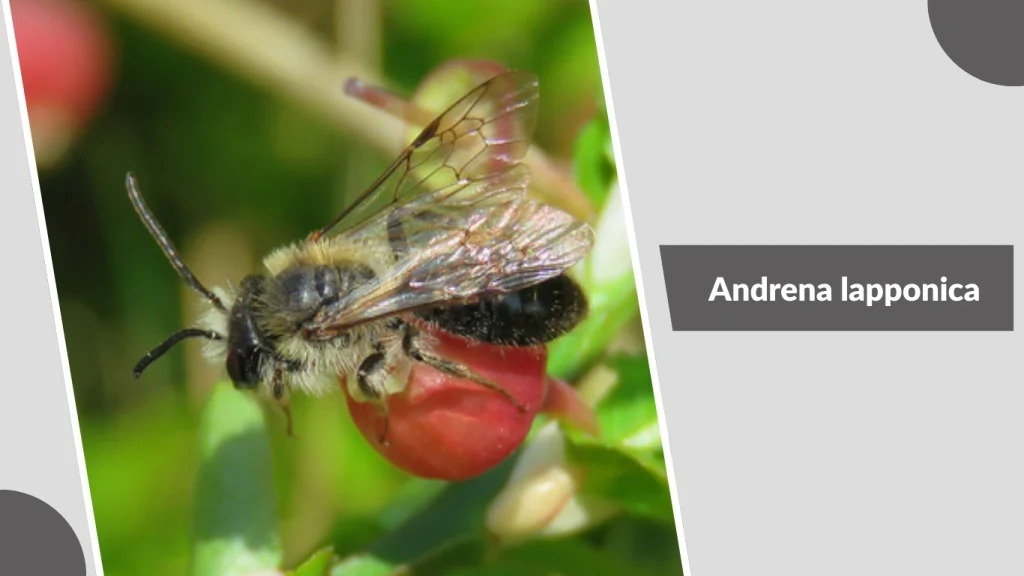
Andrena lapponica, commonly known as the Heathland Mining Bee, is a solitary bee species strongly associated with heathlands and moorlands. It is especially linked with bilberry (Vaccinium myrtillus), making it an important pollinator in upland ecosystems.
Identification
- Size: Females 10–12 mm; males slightly smaller at 8–10 mm
- Color: Thorax covered with reddish-brown hairs; abdomen dark with faint pale hair bands
- Wings: Clear with a light smoky tint
- Distinct trait: Often found foraging almost exclusively on bilberry flowers
- Flight period: May to July
Habitat
This species thrives in upland heathlands, moorlands, and forest clearings where bilberry and related plants are abundant. Nests are excavated in sandy or peaty soils, usually in sunny patches among vegetation. Although solitary, several females may nest in loose aggregations in suitable areas.
Behavior
The Heathland Mining Bee has a strong preference for bilberry blossoms, with females often seen foraging almost exclusively on this plant. They dig burrows in soil, each leading to brood chambers filled with pollen and nectar. Males typically emerge first and patrol bilberry patches, searching for females. This species is docile and rarely disturbed by human presence.
Importance
Andrena lapponica is a specialist pollinator, playing a vital role in the reproduction of bilberry and other heathland plants. By ensuring the pollination of these plants, it supports the wider heathland ecosystem, including birds and mammals that depend on bilberry fruits. Its role in upland environments makes it ecologically significant, even though it is not as common in lowland areas.
12. Andrena helvola (Ginger Mining Bee)
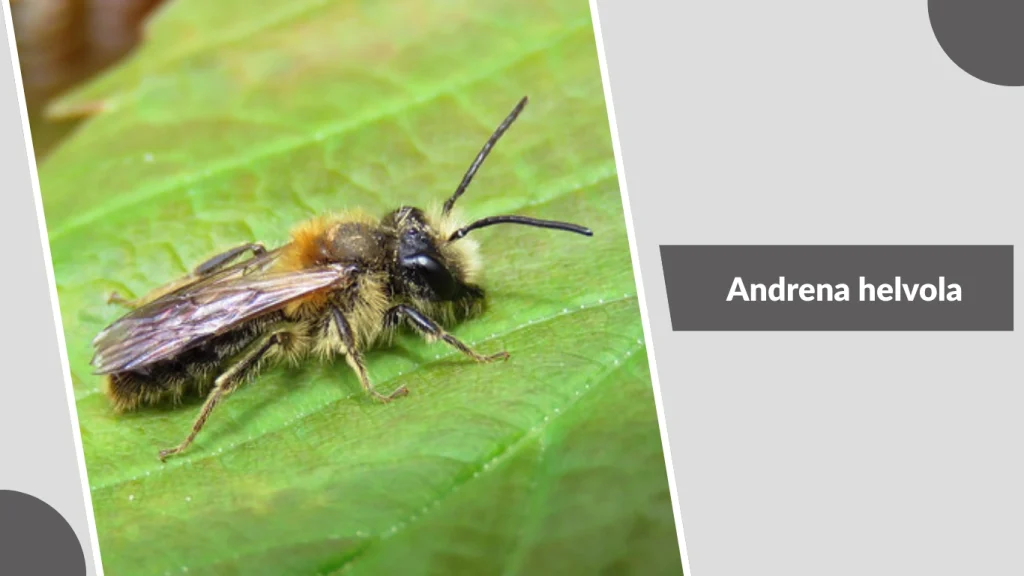
Andrena helvola, commonly called the Ginger Mining Bee, is a solitary bee species easily recognized by its warm reddish hairs. It is fairly widespread across Europe and often seen in spring visiting a wide variety of flowers. This bee is among the more colorful Andrena species, making it easier to identify in the field.
Identification
- Size: Females 10–12 mm; males smaller at 8–10 mm
- Color: Thorax covered in dense reddish-ginger hairs; abdomen dark with faint pale hair bands
- Wings: Clear with a slightly brownish tint
- Distinct trait: Rich ginger-colored hairs give it a brighter appearance than most Andrena bees
- Flight period: April to June
Habitat
The Ginger Mining Bee is found in woodlands, hedgerows, meadows, heathlands, and gardens. It prefers sunny, sandy, or loose soils where burrows can be excavated. Nests are usually solitary but sometimes occur in loose aggregations in favorable habitats.
Behavior
This solitary bee forages widely and is not strongly specialized, making it a generalist pollinator. Females dig underground burrows and create brood chambers filled with pollen and nectar. Males emerge first in spring and patrol flowers while waiting for females. Despite its bright coloring, it is gentle and non-aggressive.
Importance
Andrena helvola is an important pollinator for spring wildflowers and shrubs, including buttercups, hawthorn, and fruit trees. Its broad foraging range means it benefits both natural habitats and cultivated areas. As a generalist pollinator, it helps maintain biodiversity and supports a variety of flowering plants.
13. Andrena wilkella (Little Hairy Mining Bee)
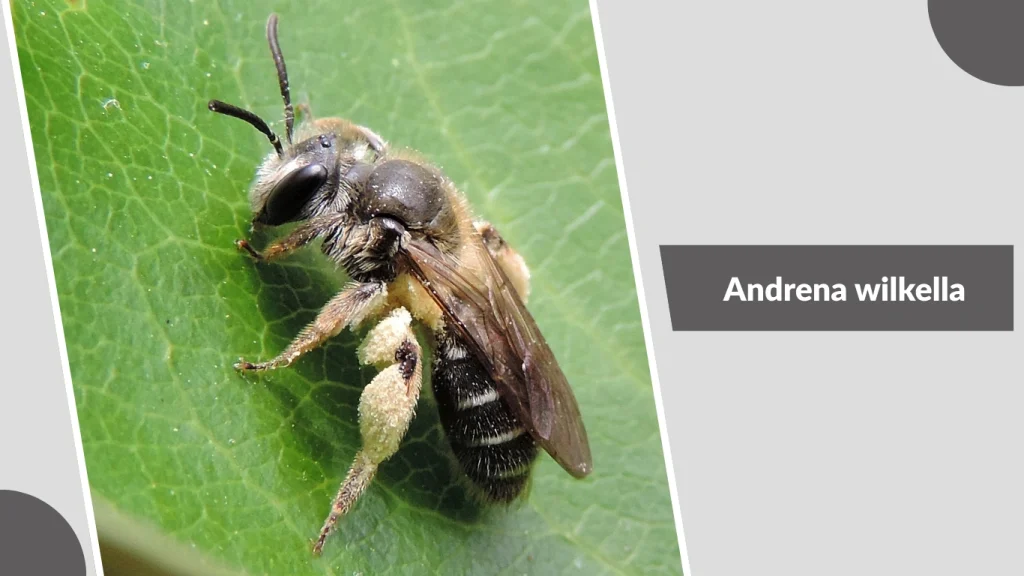
Andrena wilkella, commonly known as the Little Hairy Mining Bee, is a small and widespread solitary bee. It is often found in gardens, grasslands, and farmland during spring and early summer. Despite its modest size, it is a highly effective pollinator, especially of clovers and other legumes.
Identification
- Size: Females 8–10 mm; males slightly smaller at 7–9 mm
- Color: Thorax with brownish hairs; abdomen dark with lighter hair bands
- Wings: Clear with a faint smoky tint
- Distinct trait: Smaller and hairier than many Andrena species
- Flight period: May to July
Habitat
The Little Hairy Mining Bee prefers open, sunny areas with loose or sandy soils. It is commonly found in meadows, gardens, pastures, and roadside verges. Nests are dug into soil, often in small aggregations where conditions are suitable.
Behavior
This species is solitary but may nest close to other females in favorable spots. Females dig burrows with brood chambers stocked with pollen and nectar, mainly collected from clovers and other legume flowers. Males appear earlier and can often be seen patrolling low vegetation in search of females.
Importance
Andrena wilkella is a key pollinator of legumes, including clovers, vetches, and bird’s-foot trefoil. Its activity supports both natural ecosystems and agricultural systems, especially pastures where clover is important for soil fertility. By specializing in legumes, it plays a significant role in nitrogen-fixing plant reproduction.
14. Andrena hattorfiana (Large Scabious Mining Bee)

Andrena hattorfiana, known as the Large Scabious Mining Bee, is a striking and rare solitary bee species. It is strongly associated with field scabious (Knautia arvensis) and small scabious (Scabiosa columbaria), making it a specialist pollinator. Its decline in some regions highlights the importance of flower-rich meadows for its survival.
Identification
- Size: Females 13–15 mm; males slightly smaller at 11–13 mm
- Color: Thorax covered with reddish-brown hairs; abdomen dark with broad, pale hair bands
- Wings: Transparent with a faint brownish hue
- Distinct trait: Strong association with scabious flowers; larger than many other Andrena species
- Flight period: June to August
Habitat
This species prefers unimproved meadows, grasslands, and field margins where scabious plants grow in abundance. Nests are dug in sandy or light soils, often in sunny, undisturbed areas. Because of its close dependence on scabious flowers, its distribution is limited to places where these plants thrive.
Behavior
The Large Scabious Mining Bee is a solitary species, with each female digging her own burrow and provisioning it with scabious pollen. Males patrol scabious flower patches, searching for mates. This close plant-bee relationship makes the species vulnerable to habitat loss and agricultural changes that reduce wildflower diversity.
Importance
As a specialist, Andrena hattorfiana plays a vital role in pollinating scabious plants. It is considered an indicator of flower-rich meadows, and its conservation is linked to protecting traditional grassland habitats. Its presence supports biodiversity by maintaining the reproduction of wildflower species that many other insects rely on for nectar.
15. Andrena trimmerana (Trimmer’s Mining Bee)
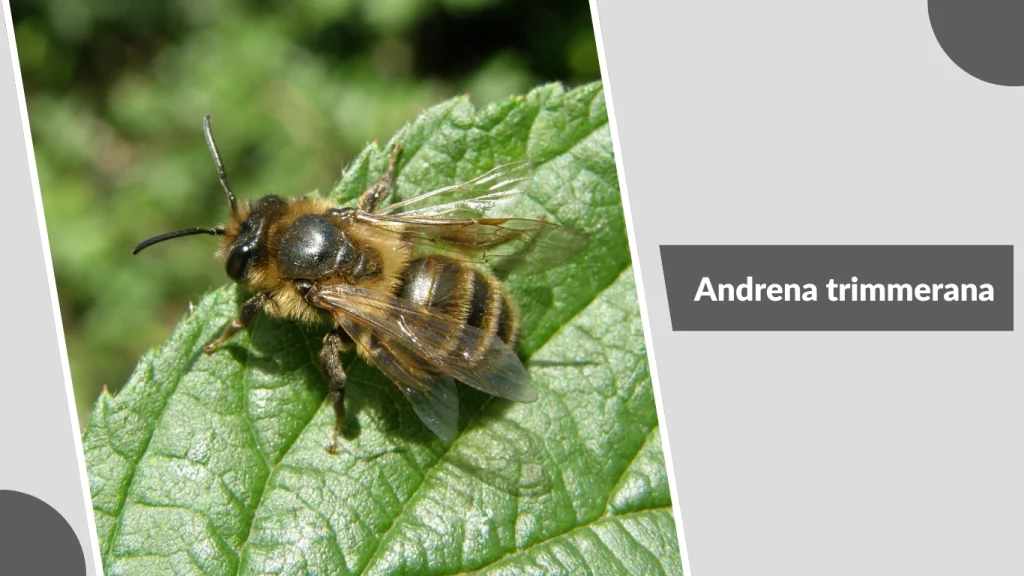
Andrena trimmerana, commonly called Trimmer’s Mining Bee, is a widespread solitary bee in Europe. It is unusual because it has two distinct flight periods each year, making it a bivoltine species. This allows it to pollinate a wide range of spring and summer flowers, making it one of the more adaptable Andrena bees.
Identification
- Size: Females 11–13 mm; males slightly smaller at 9–11 mm
- Color: Thorax covered in reddish-brown hairs; abdomen dark with faint pale bands
- Wings: Clear with a light brownish tint
- Distinct trait: Two flight generations per year (spring and summer)
- Flight period: March–May and June–August
Habitat
Trimmer’s Mining Bee inhabits diverse environments including gardens, orchards, meadows, woodland edges, and farmland. It prefers well-drained, sandy or light soils for nesting. Females excavate burrows in sunny open patches, often in loose aggregations.
Behavior
This species is solitary but often nests near other females in suitable soils. The spring generation usually feeds on fruit trees and early wildflowers, while the summer generation visits brambles, thistles, and clovers. Each female digs a burrow leading to several brood cells provisioned with pollen and nectar. Males appear first in both generations, patrolling flowers in search of mates.
Importance
Andrena trimmerana is a highly valuable pollinator thanks to its two active flight periods. It supports orchard crops in spring such as apples, cherries, and plums, and then shifts to wildflowers and brambles in summer. Its adaptability to different floral resources makes it an important link between natural ecosystems and agriculture.
16. Andrena chrysosceles (Chocolate Mining Bee)
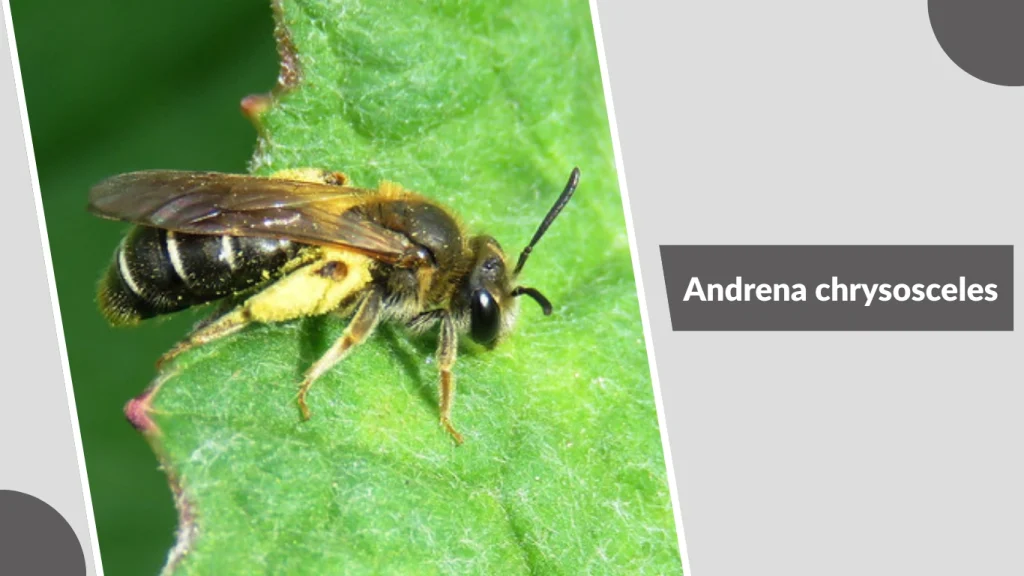
Andrena chrysosceles, commonly known as the Chocolate Mining Bee, is a solitary bee species found across much of Europe. It gets its name from the dark, chocolate-brown coloration of its body. This species is most active in late spring to early summer and is often seen foraging on a wide variety of wildflowers.
Identification
- Size: Females 9–11 mm; males slightly smaller at 8–10 mm
- Color: Thorax with dark brown hairs; abdomen shiny blackish-brown with faint pale hair bands
- Wings: Clear with a slightly smoky hue
- Distinct trait: Rich dark-brown overall coloration gives it a “chocolate” look
- Flight period: May to July
Habitat
The Chocolate Mining Bee inhabits meadows, woodland edges, gardens, and grasslands. It prefers sunny areas with loose or sandy soils for nesting. Nests are typically dug in bare ground or grassy banks, sometimes in small groups when conditions are favorable.
Behavior
This solitary bee is a generalist forager, visiting a wide variety of flowers. Females dig underground burrows with several brood chambers, each provisioned with pollen and nectar before laying an egg. Males emerge earlier in the season and patrol flowering plants, searching for females.
Importance
Andrena chrysosceles is a versatile pollinator that supports many wildflowers, including buttercups, daisies, and brambles. By foraging on a broad range of plants, it contributes to the stability of ecosystems and provides valuable pollination services in both natural and semi-urban habitats.
17. Andrena denticulata (Toothed Mining Bee)

Andrena denticulata, commonly called the Toothed Mining Bee, is a less common solitary bee species found in parts of Europe. It is often associated with wet meadows and damp grasslands, where it forages on late-flowering plants. Its name refers to subtle tooth-like features in its wing veins, which help distinguish it from similar species.
Identification
- Size: Females 10–12 mm; males slightly smaller at 8–10 mm
- Color: Thorax with reddish-brown hairs; abdomen dark with narrow pale hair bands
- Wings: Clear with fine venation showing a “toothed” appearance
- Distinct trait: Prefers late-flowering plants, unlike many early-spring Andrena bees
- Flight period: July to September
Habitat
The Toothed Mining Bee favors damp grasslands, wet meadows, and coastal marshes. It nests in bare or lightly vegetated soils, often in small numbers. Unlike many mining bees that prefer dry sandy soil, this species is more tolerant of moist conditions.
Behavior
This bee is solitary, with each female constructing her own burrow underground. Nests are stocked with pollen and nectar from late-flowering plants. Males emerge first and can be seen flying low over vegetation in search of females. The species is unobtrusive and not aggressive.
Importance
Andrena denticulata is an important pollinator of late-summer wildflowers such as thistles, knapweed, and ragwort. By being active later in the season, it helps extend pollination services when many other bee species have already finished their flight period, providing continuity in ecosystem pollination.
