
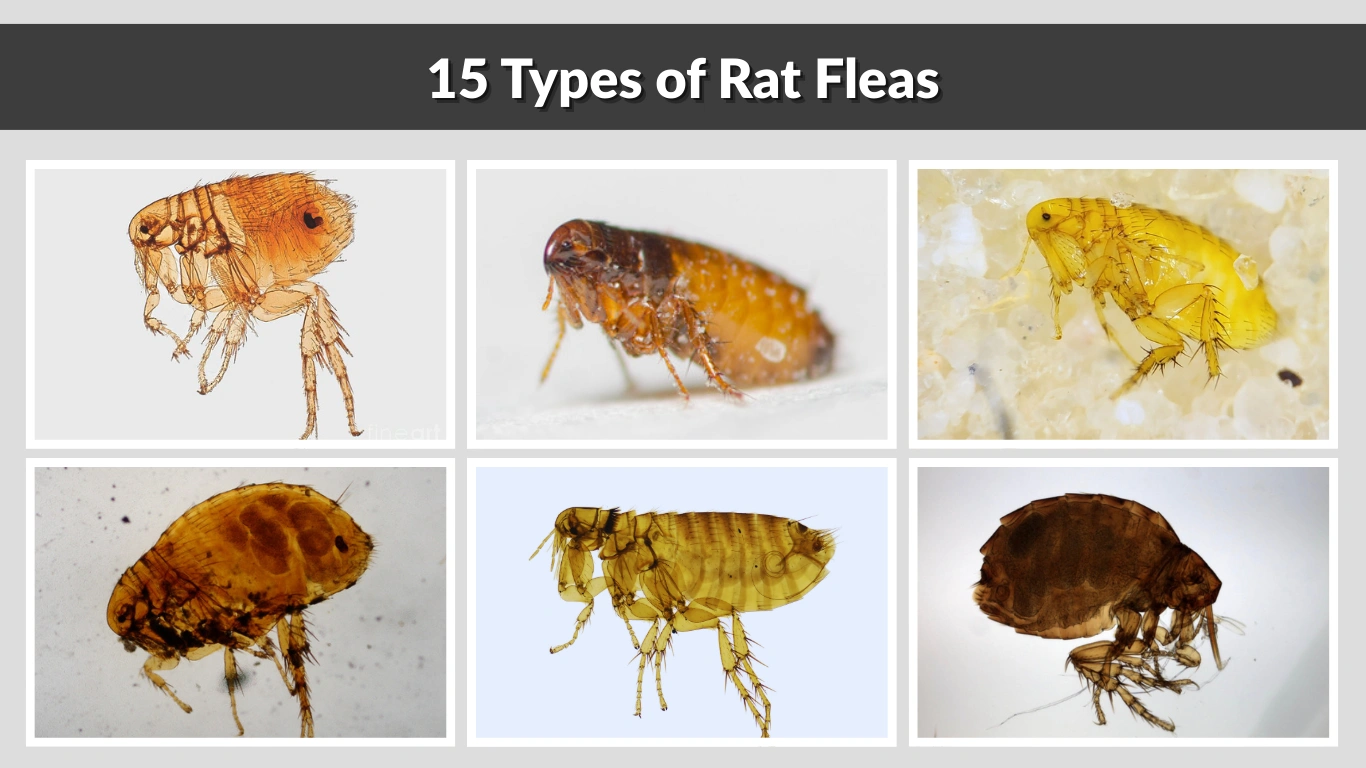
Rat fleas are small parasitic insects that thrive on rodents, particularly black rats (Rattus rattus) and brown rats (Rattus norvegicus). While tiny in size, these fleas play a massive role in history and public health, as several species are responsible for transmitting dangerous diseases such as the bubonic plague and murine typhus. Found across the globe, different species of rat fleas vary in distribution, host preference, and disease-carrying potential. In this guide, we’ll explore 15 types of rat fleas, highlighting their key identification traits, habitats, diets, and behaviors.
1. Xenopsylla cheopis (Oriental Rat Flea)

The Oriental rat flea (Xenopsylla cheopis) is the most notorious flea species associated with rats and is infamous for spreading the bubonic plague and murine typhus. Found worldwide, especially in warm climates, it is the primary vector between rats and humans during historical and modern outbreaks.
Identification
- Size: Around 1.5–4 mm long
- Color: Reddish-brown to dark brown
- Body: Laterally flattened, wingless insect
- Legs: Strong hind legs adapted for jumping
- Distinguishing feature: Lacks both genal and pronotal combs, unlike many other flea species
Habitat
The Oriental rat flea is commonly found on black rats (Rattus rattus) and brown rats (Rattus norvegicus). It also inhabits rat burrows, nests, and nearby human dwellings where rats are present.
Diet
This flea feeds primarily on rat blood but will readily bite humans and other mammals when rats are unavailable. Bites often leave itchy, red marks and can transmit dangerous pathogens.
Behavior
Xenopsylla cheopis is an aggressive feeder and capable of jumping long distances to reach a host. It remains close to rat populations, moving between rodents and occasionally humans. In plague outbreaks, it played a key role by transmitting Yersinia pestis through its bite after feeding on infected rats.
2. Nosopsyllus fasciatus (Northern Rat Flea)
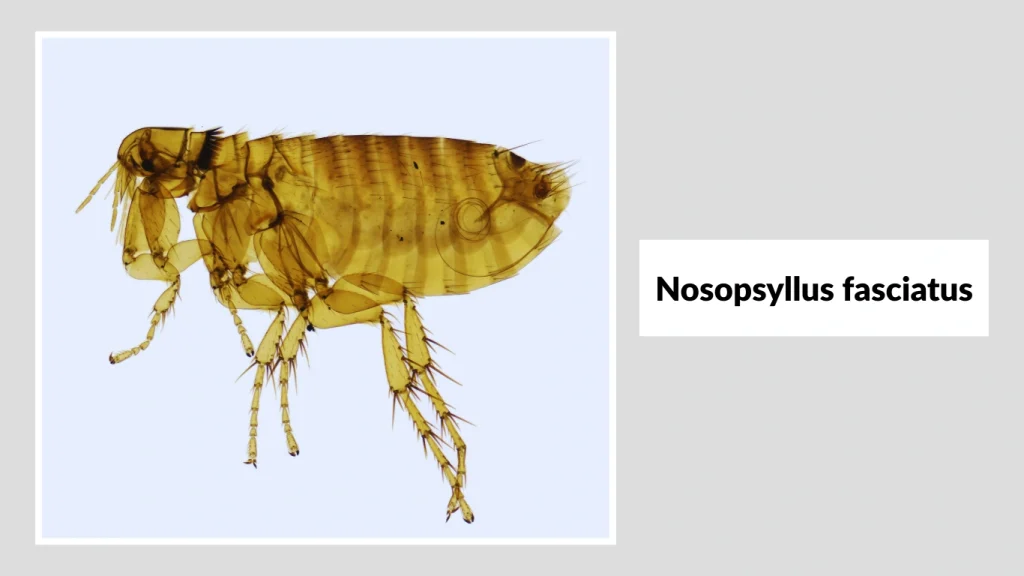
The Northern rat flea (Nosopsyllus fasciatus) is one of the most widespread rat fleas across temperate regions. Unlike the Oriental rat flea, it is less efficient in transmitting plague but still acts as a vector for several diseases and parasites affecting both rats and humans.
Identification
- Size: Typically 3–4.5 mm long
- Color: Dark brown to black
- Body: Flattened sideways with a tough exoskeleton
- Legs: Well-adapted for jumping, though slightly less powerful than Xenopsylla cheopis
- Distinguishing feature: Pronotal comb present, but no genal comb
Habitat
This flea is commonly associated with the brown rat (Rattus norvegicus) and thrives in colder and temperate climates. It is often found in rat nests, warehouses, barns, and human homes where rodents are present.
Diet
The Northern rat flea primarily feeds on the blood of rats but can also bite humans and other mammals if rat hosts are absent.
Behavior
Nosopsyllus fasciatus is less host-specific than some fleas and can adapt to different rodent populations. It tends to remain close to rat colonies, feeding repeatedly on the same host, and plays a role in maintaining flea infestations in colder regions.
3. Leptopsylla segnis (Mouse Rat Flea)
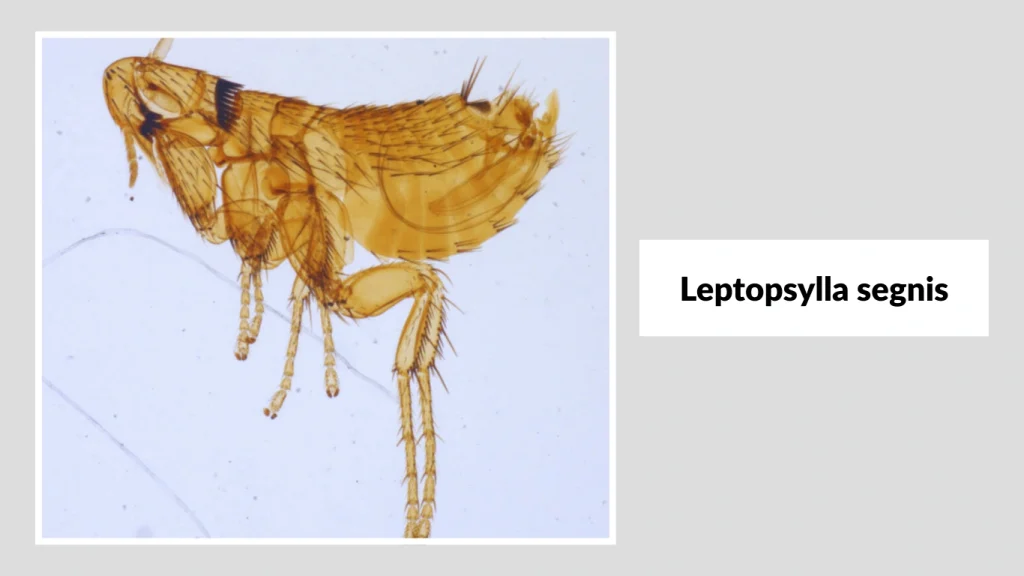
The mouse rat flea (Leptopsylla segnis) is a flea commonly found on both rats and mice, particularly in human-inhabited areas. While less dangerous than the Oriental rat flea, it is still a vector for certain bacterial diseases and can cause irritation to its hosts.
Identification
- Size: About 2–3 mm long
- Color: Light to dark brown
- Body: Narrow and laterally flattened
- Legs: Long hind legs adapted for jumping
- Distinguishing feature: Possesses a small genal comb but lacks a pronotal comb, making it distinct from other common rat fleas
Habitat
This flea is often found in rodent nests, especially those of house mice (Mus musculus) and brown rats (Rattus norvegicus). It adapts well to urban environments, living in homes, warehouses, and grain storage areas where rodents are abundant.
Diet
The mouse rat flea feeds on the blood of rats and mice primarily, but it occasionally bites humans if the rodent host is scarce.
Behavior
Leptopsylla segnis is highly adaptable and capable of surviving in both rural and urban habitats. It tends to infest places where humans and rodents live close together, making it a secondary concern in rodent control efforts.
4. Xenopsylla astia

Xenopsylla astia is a flea species closely related to the Oriental rat flea (Xenopsylla cheopis) and is also a known vector of plague in certain regions. It is most common in parts of Asia and Africa, where it infests rats living near human settlements.
Identification
- Size: About 2–4 mm long
- Color: Brownish to dark brown
- Body: Flattened sideways, wingless, built for moving through fur
- Legs: Strong hind legs designed for jumping
- Distinguishing feature: Lacks both genal and pronotal combs, similar to X. cheopis
Habitat
This flea typically infests black rats (Rattus rattus) and brown rats (Rattus norvegicus), especially in tropical and subtropical regions. It is often found in rat burrows, houses, and storage facilities where food attracts rodents.
Diet
Xenopsylla astia feeds mainly on the blood of rats but will also bite humans and other mammals if rodent hosts are not available.
Behavior
This species is aggressive in feeding and capable of transmitting Yersinia pestis (the plague bacterium). It thrives in warm climates and follows rat populations closely, making it a concern in areas with frequent rodent infestations.
5. Xenopsylla brasiliensis

Xenopsylla brasiliensis is a rat flea species that closely resembles the Oriental rat flea and is also a competent vector of plague. It is found mainly in tropical and subtropical regions, especially in parts of Africa, South America, and Asia, where it lives in close association with rats.
Identification
- Size: About 2–4 mm long
- Color: Dark brown, with a shiny, tough body
- Body: Laterally compressed, wingless, enabling easy movement through fur
- Legs: Long, strong hind legs for jumping
- Distinguishing feature: Like Xenopsylla cheopis, it lacks both genal and pronotal combs
Habitat
This flea primarily inhabits black rats (Rattus rattus) and brown rats (Rattus norvegicus). It is often found in rat nests, warehouses, grain storage areas, and occasionally inside human dwellings.
Diet
The main host is the rat, but when rats are scarce, it can bite humans and other mammals. Its bite is irritating and poses a health risk due to its role in disease transmission.
Behavior
Xenopsylla brasiliensis is highly adaptable and opportunistic. It prefers living in warm, humid regions and follows rat populations closely. Its importance as a vector of plague makes it a serious concern in public health, particularly in rural areas with poor sanitation and high rodent populations.
6. Xenopsylla cunicularis
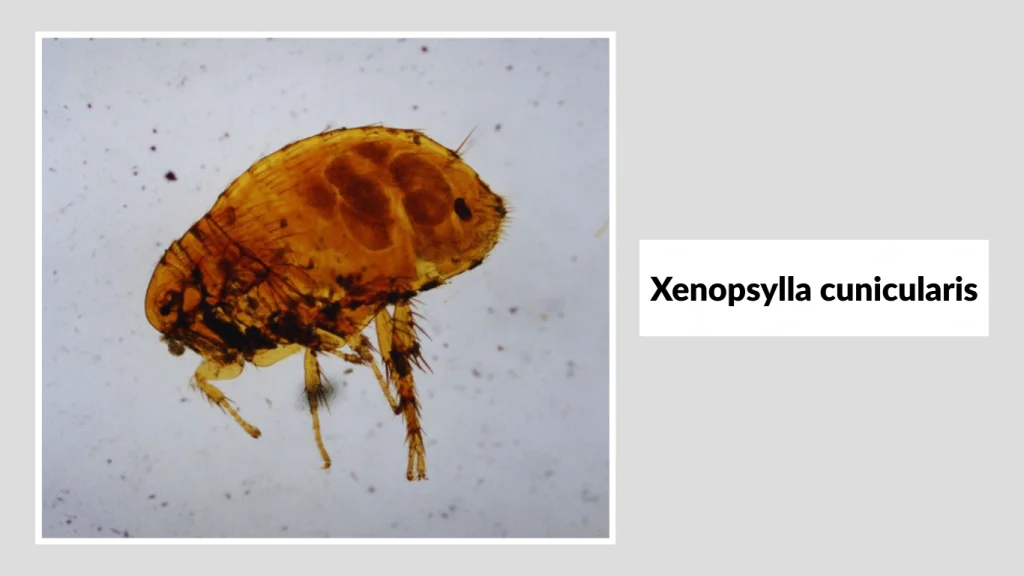
Xenopsylla cunicularis is a lesser-known rat flea species that belongs to the same genus as the Oriental rat flea. While not as widespread, it has been identified in certain rodent populations and is considered of medical and veterinary importance in regions where it occurs.
Identification
- Size: About 2–3.5 mm long
- Color: Light to dark brown
- Body: Flattened laterally, wingless, enabling it to move quickly through rodent fur
- Legs: Hind legs strong and specialized for jumping
- Distinguishing feature: Absence of both genal and pronotal combs, typical of the Xenopsylla genus
Habitat
This flea is most often associated with burrowing rodents, including wild rat species. It inhabits rodent nests, burrows, and nearby human structures where rodents thrive.
Diet
Xenopsylla cunicularis primarily feeds on rat blood but will opportunistically bite other small mammals. In rare cases, it may also feed on humans.
Behavior
This flea remains closely tied to rodent colonies, rarely straying far from its host environment. Like other Xenopsylla fleas, it has potential disease-vector capabilities, although it is less studied compared to X. cheopis and X. brasiliensis.
7. Xenopsylla philoxera

Xenopsylla philoxera is a species of rat flea belonging to the Xenopsylla genus, known for its close association with rodents in warm climates. Though less studied than X. cheopis, it still holds significance as a potential vector of diseases in rodent-infested areas.
Identification
- Size: Around 2–3.5 mm long
- Color: Brownish to dark brown
- Body: Narrow, laterally flattened, adapted for living on rodent hosts
- Legs: Equipped with strong hind legs for quick and long jumps
- Distinguishing feature: Lacks both genal and pronotal combs, typical of Xenopsylla fleas
Habitat
This flea is usually found on black rats (Rattus rattus) and brown rats (Rattus norvegicus), especially in warmer regions. It thrives in rodent nests, burrows, storage areas, and homes where rats are present.
Diet
Xenopsylla philoxera feeds mainly on rat blood. If the host population decreases, it may also bite humans or other small mammals.
Behavior
The species tends to stay close to its rodent hosts, ensuring its survival by feeding frequently. While not as well-documented as other fleas, it is considered medically important due to its ability to carry pathogens, particularly in tropical rodent populations.
8. Xenopsylla vexabilis
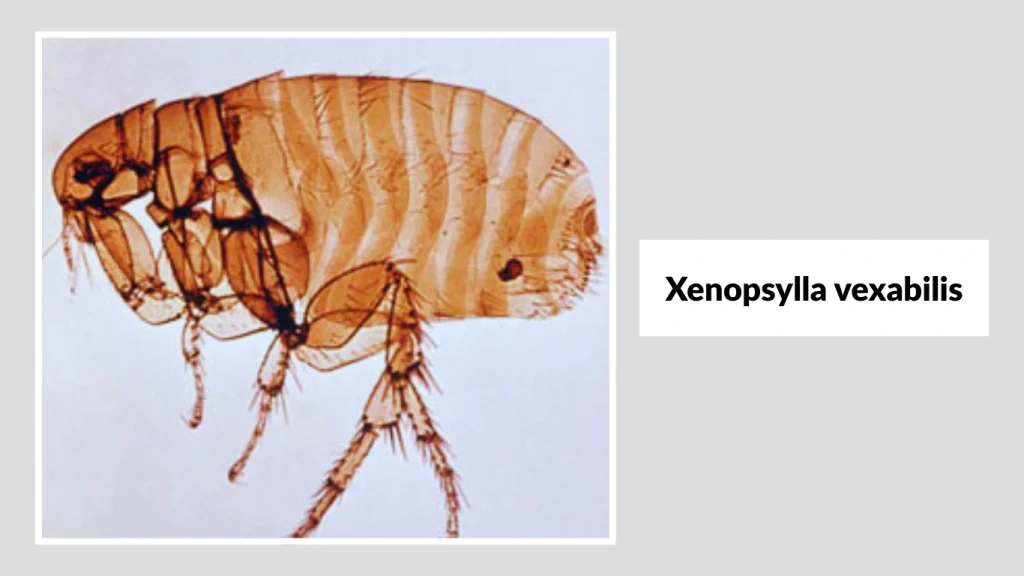
Xenopsylla vexabilis is a rat flea species known to parasitize various rodent populations in tropical and subtropical regions. Although not as notorious as Xenopsylla cheopis, it is still recognized as a potential vector of rodent-borne diseases.
Identification
- Size: Around 2–3.5 mm in length
- Color: Dark brown to reddish-brown
- Body: Laterally compressed, wingless, adapted for movement through fur
- Legs: Strong hind legs for efficient jumping
- Distinguishing feature: Lacks both genal and pronotal combs, consistent with the Xenopsylla genus
Habitat
This flea is found mostly on rats such as Rattus rattus and Rattus norvegicus. It thrives in rodent-infested areas including burrows, warehouses, food storage facilities, and occasionally human dwellings in warmer climates.
Diet
Xenopsylla vexabilis feeds primarily on the blood of rats but can also bite humans and other mammals when necessary. Its feeding habits make it a concern in regions with high rat populations.
Behavior
This species tends to remain in close association with rodents, rarely straying far from their colonies. It is capable of transmitting pathogens, though it is considered less significant than X. cheopis in disease outbreaks. Its adaptability to human-modified environments makes it important for monitoring in pest control programs.
9. Xenopsylla bantorum
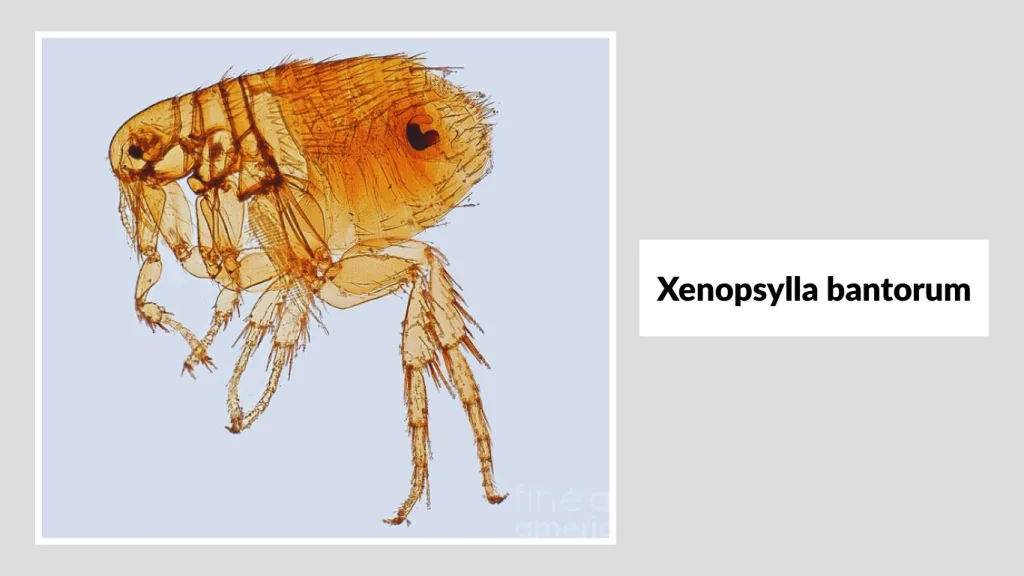
Xenopsylla bantorum is a lesser-known species of rat flea that belongs to the same genus as the infamous plague vector, Xenopsylla cheopis. Although not as widespread, it is still relevant in areas with dense rodent populations, particularly in warmer regions.
Identification
- Size: About 2–3.5 mm long
- Color: Brown to dark brown
- Body: Narrow and laterally flattened, suited for movement on rodent hosts
- Legs: Hind legs powerful for jumping onto hosts
- Distinguishing feature: Like other Xenopsylla species, it lacks both genal and pronotal combs
Habitat
This flea is most commonly associated with rat populations, particularly black rats (Rattus rattus) and brown rats (Rattus norvegicus). It inhabits burrows, rat nests, and areas where rodents live in close contact with humans, such as food storage facilities and houses.
Diet
Xenopsylla bantorum feeds mainly on the blood of rats but, when necessary, will also bite humans and other mammals.
Behavior
This species tends to stay closely attached to rodent hosts, making it a concern in rodent-infested environments. Though less studied, its potential as a disease vector makes it important for monitoring, especially in areas prone to flea-borne illnesses.
10. Xenopsylla conformis
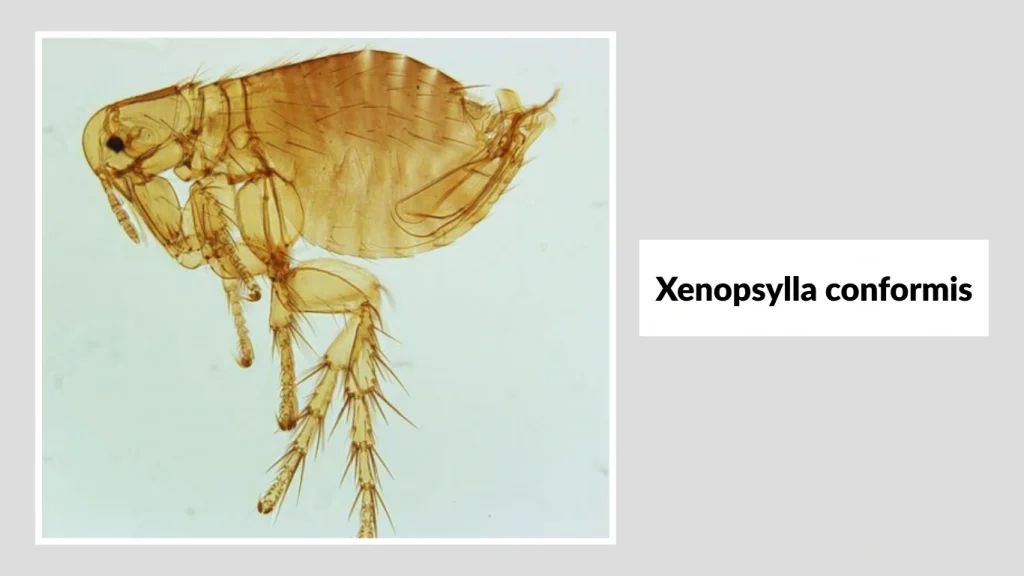
Xenopsylla conformis is a rat flea species within the Xenopsylla genus, closely related to other medically important fleas. Though not as extensively documented as X. cheopis, it plays a role in rodent–flea ecosystems and has potential significance in disease transmission.
Identification
- Size: Roughly 2–3.5 mm long
- Color: Brownish to dark brown
- Body: Laterally flattened, wingless, streamlined for living on rodents
- Legs: Strong hind legs adapted for jumping
- Distinguishing feature: Characteristically lacks both genal and pronotal combs, typical of Xenopsylla fleas
Habitat
This flea primarily infests rats, particularly Rattus rattus and Rattus norvegicus. It is found in rodent nests, burrows, and sometimes in human dwellings located near rodent populations, especially in warmer climates.
Diet
The main host is the rat, but Xenopsylla conformis will opportunistically bite other mammals, including humans, when rat hosts are unavailable.
Behavior
This flea remains closely associated with rodent colonies and shows opportunistic feeding behavior. Its potential for pathogen transmission, while less studied, places it in the group of medically important fleas that need monitoring in pest control and public health programs.
11. Xenopsylla nubica
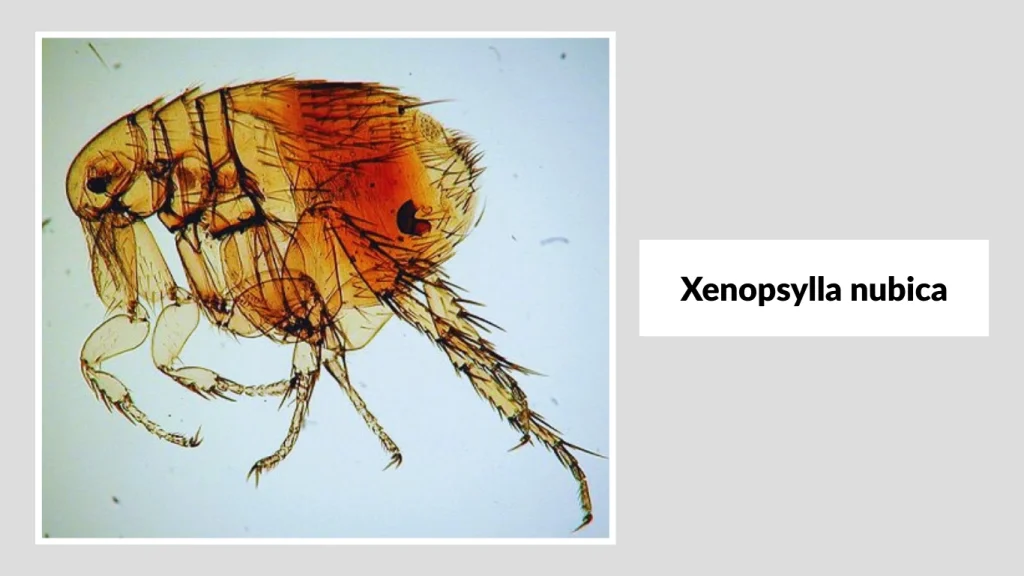
Xenopsylla nubica is a species of rat flea found mainly in parts of Africa and nearby regions. Like other members of the Xenopsylla genus, it is associated with rodents and carries potential importance in the transmission of flea-borne diseases.
Identification
- Size: About 2–3.5 mm long
- Color: Dark brown
- Body: Laterally flattened, wingless, adapted for moving through rodent fur
- Legs: Hind legs strong, built for jumping onto hosts
- Distinguishing feature: Absence of both genal and pronotal combs, which is characteristic of Xenopsylla species
Habitat
This flea is closely associated with rat species, especially Rattus rattus and Rattus norvegicus. It is typically found in rodent burrows, nests, and human environments where rats thrive, such as grain storage and homes in warm climates.
Diet
Xenopsylla nubica feeds mainly on rat blood, but it will also feed on humans and other mammals in the absence of its primary hosts.
Behavior
This flea tends to stay within rodent colonies and feeds aggressively when hosts are nearby. Although less studied than X. cheopis, it is considered a potential disease vector in regions with high rat populations and poor sanitation.
12. Xenopsylla ramesis

Xenopsylla ramesis is a rat flea species primarily distributed in the Middle East and surrounding regions. It belongs to the medically significant Xenopsylla genus, with importance in rodent–human disease cycles, though it is less documented than Xenopsylla cheopis.
Identification
- Size: Around 2–3.5 mm long
- Color: Dark brown to blackish
- Body: Laterally compressed, wingless, built for living on rodent hosts
- Legs: Hind legs powerful for jumping onto hosts
- Distinguishing feature: Absence of both genal and pronotal combs, typical of Xenopsylla fleas
Habitat
This flea is commonly found on wild and commensal rats, including Rattus rattus and Rattus norvegicus. It inhabits rat burrows, nests, and areas where humans and rodents live in close contact, such as food storage and homes.
Diet
Xenopsylla ramesis feeds primarily on rat blood but will also opportunistically bite humans and other mammals.
Behavior
This flea remains close to rodent populations and feeds aggressively when hosts are available. While less notorious than X. cheopis, it is monitored as a potential vector of flea-borne diseases in regions where it overlaps with human settlements.
13. Xenopsylla trinodulosa

Xenopsylla trinodulosa is a relatively rare flea species within the Xenopsylla genus, known for its association with rodents in certain localized regions. Though not as widely studied as other rat fleas, it shares similar traits and potential medical importance.
Identification
- Size: About 2–3 mm long
- Color: Brown to dark brown
- Body: Laterally flattened, wingless, streamlined for living on rodent hosts
- Legs: Strong hind legs adapted for quick jumps
- Distinguishing feature: Like other Xenopsylla species, it lacks both genal and pronotal combs
Habitat
This flea is primarily found on wild rats and occasionally domestic rat species. It inhabits rodent burrows, nests, and environments where rodents live close to human activity.
Diet
Xenopsylla trinodulosa mainly feeds on rat blood but will opportunistically feed on other small mammals, and occasionally humans, when rats are scarce.
Behavior
This species is closely tied to rodent colonies and rarely strays far from its hosts. Though less documented, it is still considered potentially important in flea-borne disease ecology and is monitored in pest management studies.
14. Xenopsylla gratiosa

Xenopsylla gratiosa is another member of the Xenopsylla genus, typically associated with rodents in warmer climates. Though less documented compared to plague-related species like X. cheopis, it still plays a role in rodent–flea ecology and is considered of interest in entomological and public health studies.
Identification
- Size: Around 2–3.5 mm long
- Color: Brown to reddish-brown
- Body: Laterally compressed, wingless, enabling smooth movement through rodent fur
- Legs: Strong hind legs suited for leaping onto hosts
- Distinguishing feature: Absence of both genal and pronotal combs, consistent with the Xenopsylla genus
Habitat
This flea is found on rats and other small rodents, particularly in tropical and subtropical regions. It typically inhabits rodent burrows, nesting sites, and storage areas where rats are abundant.
Diet
Xenopsylla gratiosa feeds mainly on rat blood but may also bite humans and other mammals if rodent hosts are not available.
Behavior
This flea stays close to its rodent hosts and feeds frequently, helping maintain infestations in rat populations. While less studied, it is recognized as having the potential to contribute to the spread of flea-borne pathogens in areas where it coexists with humans.
15. Xenopsylla nesomi

Xenopsylla nesomi is a lesser-known flea species within the Xenopsylla genus, primarily parasitizing rodents in localized regions. Although not as well-documented as X. cheopis or X. brasiliensis, it shares many biological traits common to rat fleas and is considered important in rodent–parasite studies.
Identification
- Size: About 2–3 mm long
- Color: Brown to dark brown
- Body: Narrow, laterally flattened, and wingless
- Legs: Hind legs strong and built for jumping between hosts
- Distinguishing feature: Lacks both genal and pronotal combs, a typical characteristic of Xenopsylla fleas
Habitat
This flea is primarily associated with wild rats and other rodents. It is often found in burrows, nests, and occasionally in human environments where rodent populations are high.
Diet
Xenopsylla nesomi feeds mainly on the blood of rodents, but it may also bite other mammals, including humans, when its preferred hosts are not available.
Behavior
This species remains closely attached to rodent colonies and rarely disperses far from its hosts. While less studied, it is still considered a potential vector of flea-borne pathogens, especially in areas with frequent human–rodent interactions.
