
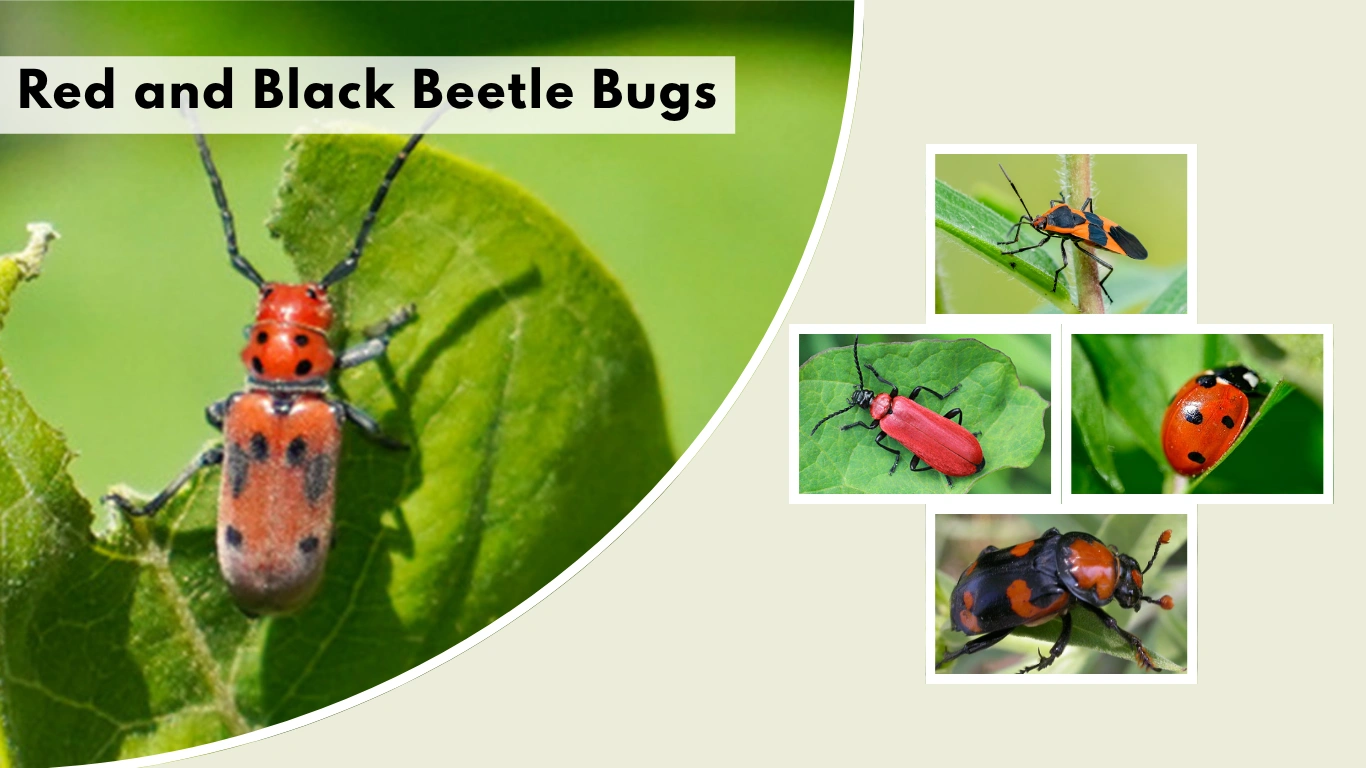
When you spot a red and black beetle, a black bug with red markings, or even a yellow and black beetle, it can be tough to tell what you’re looking at. These bold colors often signal danger or mimicry in the insect world. From garden visitors like ladybugs to pests like cucumber beetles, many insects fit these eye-catching color patterns. Below, you’ll find 13 uniquely colored beetle-like bugs—identified by their size, markings, and common habitats—to help you recognize them in your home, garden, or the wild.
1. Milkweed Beetle
The Milkweed Beetle is a brightly colored insect often found on milkweed plants. It is known for its bold red and black coloration and belongs to the longhorn beetle family. Its striking appearance helps warn predators of its potential toxicity due to its diet of toxic milkweed. This beetle is commonly seen in meadows and gardens during the summer months.
Identification
- Long, cylindrical body
- Black antennae, often longer than the body
- Bright red body with four distinct black spots
- Typically found on milkweed plants
- Size ranges from 10–15 mm
Habitat and Behavior
Milkweed beetles inhabit fields, roadsides, and gardens where milkweed is present. They feed on the leaves and stems of the plant. Their association with milkweed grants them a chemical defense, making them unpalatable to many predators.
Color Pattern
This beetle features a vibrant red body with prominent black spots and contrasting black legs and antennae. Its bold color serves as a natural warning signal.
2. Boxelder Bug
The Boxelder Bug is a common black and red bug often seen around boxelder trees and residential areas. Its distinctive black body with red outlines makes it easily identifiable. These insects are not beetles but are often mistaken for black and red beetles due to their appearance.
Identification
- Elongated, oval-shaped body
- Black body with bright red or orange markings along the thorax and wings
- Wings lie flat over the back in an X pattern
- Measures about 12–14 mm in length
- Typically seen in large numbers during warm weather
Habitat and Behavior
Boxelder bugs are often found on boxelder trees, maples, and ash trees. They gather in large groups on warm surfaces, especially during fall. While harmless to humans, they can become a nuisance when they invade homes in search of warmth.
Color Pattern
Boxelder bugs have a jet-black body with vivid red-orange outlines on their thorax and wings, creating a striking contrast that helps with easy recognition.
3. Red Milkweed Bug
The Red Milkweed Bug is a red and black bug commonly found on milkweed plants. It is often confused with beetles due to its bold coloration but belongs to the true bug family. Its coloration also aligns with common red and black beetle identification patterns.
Identification
- Oval-shaped body with soft, leathery wings
- Red-orange body with black band across the center and black spots on the wings
- Long black legs and antennae
- Adults grow up to 18 mm in length
- Usually found on seed pods and leaves of milkweed plants
Habitat and Behavior
This bug thrives in gardens and wild areas where milkweed grows. It feeds on seeds and other parts of the plant using its piercing-sucking mouthparts. It is not harmful to humans or pets and plays a minor role in controlling milkweed populations.
Color Pattern
The Red Milkweed Bug displays a bright reddish-orange base with bold black markings including bands and spots, offering both camouflage and warning coloration.
4. Firebug
The Firebug is a well-known red and black beetle-like insect native to Europe and found in some parts of North America. Its bright coloration often leads people to mistake it for a beetle, especially under the keyword searches like red and black beetle or red and black beetle bugs.
Identification
- Oval and flattened body shape
- Bright red body with distinct black spots and markings
- Measures about 7–12 mm in length
- Typically found in groups around lime trees or mallows
- Not a beetle, but often mistaken as one due to its appearance
Habitat and Behavior
Firebugs are gregarious and often gather in large groups on sunny tree trunks, sidewalks, or walls. They feed mainly on seeds from lime trees and mallows and are harmless to humans.
Color Pattern
Firebugs have a vibrant red body with bold, symmetrical black patterns, including two black dots and a central black marking forming an eye-catching design.
5. Ladybug
The Ladybug, also known as the ladybird beetle, fits the description of a red beetle with black spots. It is among the most recognized beetles worldwide and plays an important role in gardens and agriculture as a predator of aphids and other pests.
Identification
- Small, dome-shaped, rounded body
- Bright red or orange elytra (wing covers) with black spots
- Head and legs are black
- Measures 4–10 mm depending on species
- Commonly seen on flowers, leaves, and crops
Habitat and Behavior
Ladybugs are found in gardens, farms, and forests. They feed on soft-bodied insects and are beneficial for natural pest control. When threatened, they can release a yellow fluid as a defense mechanism.
Color Pattern
Ladybugs typically feature a glossy red shell with several black spots, although some species may have orange or yellow shells with varying numbers of spots.
6. Soldier Beetle
The Soldier Beetle is a true beetle often identified under search terms like black beetle with red head and black and red beetle. It’s commonly seen on flowers during the summer and is a beneficial insect due to its predatory nature.
Identification
- Elongated, soft-bodied beetle
- Reddish-orange head and thorax with black or dark gray elytra (wing covers)
- Long black legs and antennae
- Measures about 8–13 mm in length
- Found on flowers, especially goldenrod and milkweed
Habitat and Behavior
Soldier beetles are pollinators and natural predators of aphids, caterpillars, and other small pests. They are active during warm months and can often be seen crawling on flowers in gardens and meadows.
Color Pattern
This beetle displays a contrasting red-orange head and thorax with dark black wing covers, giving it a bold, two-toned appearance that helps with quick visual identification.
7. Blister Beetle (Epicauta spp.)
The Blister Beetle is often associated with keywords like red and black striped beetle or black and red bug due to its striking banded coloration. It’s known for its chemical defense mechanism that can irritate skin.
Identification
- Slender, elongated body
- Alternating red and black stripes across its elytra
- Long legs and thread-like antennae
- Size ranges from 10–20 mm
- Found in gardens, fields, and grassy areas
Habitat and Behavior
Blister beetles feed on flowers and foliage but are also known for their chemical defense—cantharidin, a blistering agent. They should not be handled with bare skin due to potential irritation.
Color Pattern
Blister beetles often feature bold red and black horizontal stripes, creating a vivid warning pattern to deter predators.
8. Asian Lady Beetle
The Asian Lady Beetle fits well with search terms like orange and black beetle, orange and black beetle bug, and small black beetle like bug. While it closely resembles the native ladybug, it can be distinguished by its variation in color and the M-shaped mark behind its head.
Identification
- Dome-shaped body similar to native ladybugs
- Color ranges from pale orange to deep red, with or without black spots
- Distinct black “M” or “W” shape on the white area behind the head
- Measures 5–8 mm in length
- Often found on window sills and inside homes during colder months
Habitat and Behavior
Originally introduced for pest control, the Asian lady beetle is now widespread across North America. It feeds on aphids and scale insects, making it beneficial in agriculture. However, in fall, they often invade homes seeking warmth, and some people may develop mild allergic reactions to them.
Color Pattern
This beetle varies in color from light orange to deep red, with or without black spots, and always has a black-and-white pattern behind the head, usually forming an M-shaped mark. Their color diversity can lead to confusion with native ladybugs.
9. Spotted Cucumber Beetle
The Spotted Cucumber Beetle matches terms like black and yellow beetle, yellow and black beetle, and small black and yellow beetle. It is both a garden pest and a pollinator, commonly seen in vegetable patches.
Identification
- Slender, oval body
- Bright yellow-green elytra with 12 distinct black spots
- Black head and antennae
- About 6 mm long
- Common on cucumbers, squash, beans, and melons
Habitat and Behavior
These beetles are notorious for feeding on a wide range of garden vegetables and spreading plant diseases such as bacterial wilt. They are active from spring through fall and often seen crawling or flying around blossoms.
Color Pattern
The Spotted Cucumber Beetle features a vivid yellow-green body with bold black spots, offering a highly visible contrast. The head and antennae are solid black, enhancing the bug’s striped and spotted appearance.
10. Burying Beetle
The Burying Beetle, often linked with keywords like black beetle with red markings on back and black and red beetles pictures, is a large, striking beetle known for its role in decomposing small animal carcasses. It’s also called the sexton beetle and belongs to the Silphidae family.
Identification
- Robust, oval body
- Mostly black with bright orange or red markings on the elytra (wing covers)
- Short clubbed antennae
- Size ranges from 12–25 mm
- Sometimes seen carrying mites on their bodies
Habitat and Behavior
These beetles are found in forests, fields, and gardens where they locate dead animals to bury and lay eggs on. They play a key role in recycling nutrients and keeping the environment clean. Adults are mostly active at night and use their antennae to detect decaying smells.
Color Pattern
Burying beetles have a shiny black body with two or more orange-red bands or blotches across their back. These bright markings help distinguish them from other black beetles.
11. American Carrion Beetle
The American Carrion Beetle fits keyword matches like black beetle with yellow spots and black and yellow beetle. It’s a beneficial species that feeds on decaying matter and is crucial for nutrient recycling in nature.
Identification
- Broad, flat body with short elytra
- Black body with a prominent yellow patch on the thorax (pronotum)
- Elytra may also have lighter markings depending on age
- Around 13–20 mm long
- Often seen near dead animals or fungi
Habitat and Behavior
Found in wooded areas, gardens, and fields, this beetle is a decomposer that feeds on carrion, fungi, and sometimes other insects. It lays eggs in decomposing organic matter so the larvae have access to food.
Color Pattern
This beetle features a dull black body with a bold yellow marking on its thorax, sometimes extending onto the elytra. The contrast serves as a warning signal and makes it easy to identify in the wild.
12. Green June Beetle
The Green June Beetle is often associated with the keywords black and green beetle and long black beetle bug due to its metallic green and dark coloration combined with its large body. These beetles are common in the eastern United States and are known for their buzzing flight.
Identification
- Large, oval-shaped beetle
- Metallic green or bronze-green upper body
- Underside may appear golden or coppery
- Measures 15–25 mm in length
- Often seen flying low over lawns and gardens in summer
Habitat and Behavior
Green June beetles are frequently found in grassy areas, gardens, and fields. Their larvae live underground and feed on decaying organic matter and roots, sometimes causing turf damage. Adults are attracted to ripe fruit and sugary plant sap.
Color Pattern
The Green June Beetle has a shimmering green or bronze-green top, with blackish wings and metallic reflections. This color can look black in low light, contributing to its “black and green beetle” appearance.
13. Black Carpet Beetle
The Black Carpet Beetle matches keywords such as small black beetle like bug, small brown and black beetle like bug, and black beetle stink bug. While it doesn’t stink like a stink bug, it often appears in homes and is considered a fabric pest.
Identification
- Small, oval body
- Color ranges from dark brown to black
- Covered in fine hairs; larvae are carrot-shaped with bristles
- Adults measure 3–5 mm long
- Often found in closets, storage areas, or near carpets and fabrics
Habitat and Behavior
This beetle is common in homes, where its larvae feed on natural fibers such as wool, feathers, and hair. Infestations often go unnoticed until damage appears on stored clothes or upholstery. Adults are more often seen near windows.
Color Pattern
The adult beetle has a solid dark brown to black color, often with a dull sheen. Its small size and color help it blend into household surfaces, making it difficult to spot early in an infestation.
