
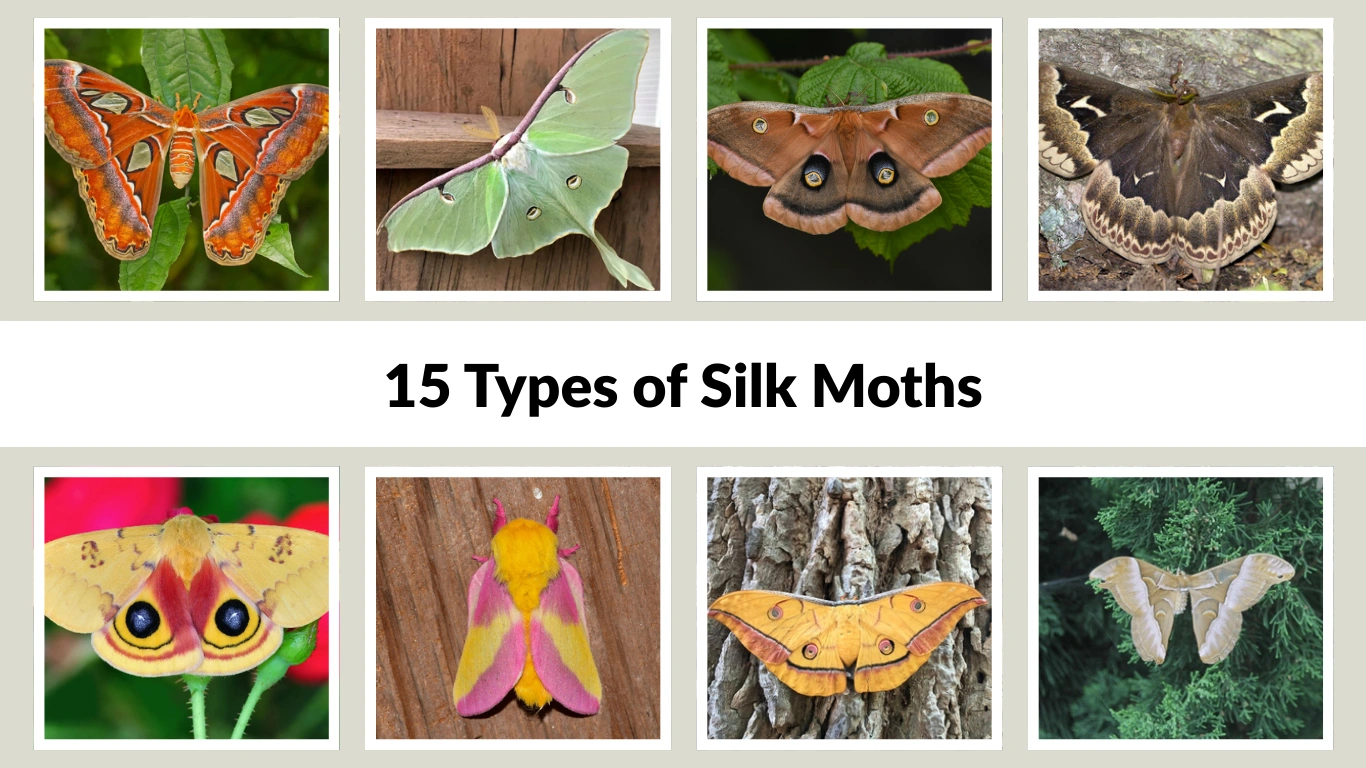
Silk moths, belonging to the family Saturniidae, are among the most fascinating insects due to their role in natural silk production. Spread across Asia, Africa, and the Americas, these moths are admired for their large wingspans, striking patterns, and ecological importance. Beyond their beauty, several species such as the Mulberry, Tussar, and Eri silk moths are cultivated for silk, forming a vital part of traditional weaving cultures. This guide explores 15 remarkable types.
1. Atlas Moth

The Atlas Moth (Attacus atlas) is one of the largest moths in the world, with massive wings that can span up to 25–30 cm (10–12 in). Found in tropical Asia, it is admired for its size and the beautiful patterns on its wings, which resemble snake heads at the tips — a clever form of defense against predators. Despite its grandeur, the adult moth lives only for a short time, as it does not feed.
Identification
- Family: Saturniidae (Silk Moths)
- Wingspan: 25–30 cm (10–12 in), among the largest of any moth
- Color: Rusty brown to reddish with cream, black, and orange markings
- Wing Tips: Curved extensions resembling snake heads for predator deterrence
- Caterpillar: Large, greenish-blue with waxy coating and small spines
Habitat and Distribution
The Atlas Moth is native to tropical and subtropical forests of Southeast Asia, including India, China, Malaysia, and Indonesia. It prefers warm, humid environments and is often found in forests, secondary growth, and plantations.
Behavior and Diet
Adult Atlas Moths do not eat; they survive on stored fat reserves and live only about one to two weeks. Their caterpillars, however, feed voraciously on a variety of host plants such as citrus, guava, and cinnamon leaves. The adults are mostly nocturnal, emerging at dusk and spending much of their short lifespan devoted to reproduction.
2. Luna Moth

The Luna Moth (Actias luna) is one of the most iconic silk moths, admired for its pale green wings and long graceful tails. Its ethereal appearance makes it a symbol of transformation and renewal in many cultures. Although large and striking, the Luna Moth lives for only about a week as an adult since it does not feed, relying entirely on energy stored during its caterpillar stage.
Identification
- Family: Saturniidae (Silk Moths)
- Wingspan: 8–12 cm (3–5 in)
- Color: Light green wings with purple or pinkish margins
- Markings: Transparent eyespots on each wing, which may help confuse predators
- Tails: Hindwings have long, trailing extensions that deflect echolocation of bats
- Caterpillar: Bright green with faint yellow lines and red spots, plump and well-camouflaged
Habitat and Distribution
Luna Moths are found throughout North America, from Canada down to northern Mexico. They inhabit deciduous woodlands, forests, and suburban areas where their host plants are common.
Behavior and Diet
Adults do not eat and live for only 7–10 days, focusing entirely on reproduction. Caterpillars feed on a variety of trees such as hickory, walnut, sweetgum, birch, and persimmon. They are primarily nocturnal, flying at night and attracted to lights, which makes them more visible to humans than many other silk moths.
3. Polyphemus Moth

The Polyphemus Moth (Antheraea polyphemus) is one of the largest and most widespread silk moths in North America. Its name comes from the giant one-eyed cyclops of Greek mythology, referencing the enormous eyespots on its hindwings that serve to startle predators. With its broad wingspan and striking markings, it is a true giant of the moth world.
Identification
- Family: Saturniidae (Silk Moths)
- Wingspan: 10–15 cm (4–6 in)
- Color: Tan to reddish-brown wings with fine lines and large transparent spots
- Markings: Hindwings feature large yellow-and-black eyespots resembling owl eyes
- Caterpillar: Plump green with silver spots and fine hair, often reaching 7–8 cm (3 in) long
Habitat and Distribution
The Polyphemus Moth is found throughout North America, from southern Canada to Mexico. It thrives in deciduous forests, orchards, and suburban areas, adapting well to a variety of habitats where host plants are abundant.
Behavior and Diet
Adults do not feed, living only about a week to reproduce. Caterpillars are voracious eaters, feeding on a wide range of trees and shrubs including oak, maple, willow, birch, and hickory. Polyphemus caterpillars can consume large amounts of leaves daily, storing energy for their brief adult life. Adults are mostly nocturnal and are often attracted to artificial lights at night.
4. Cecropia Moth
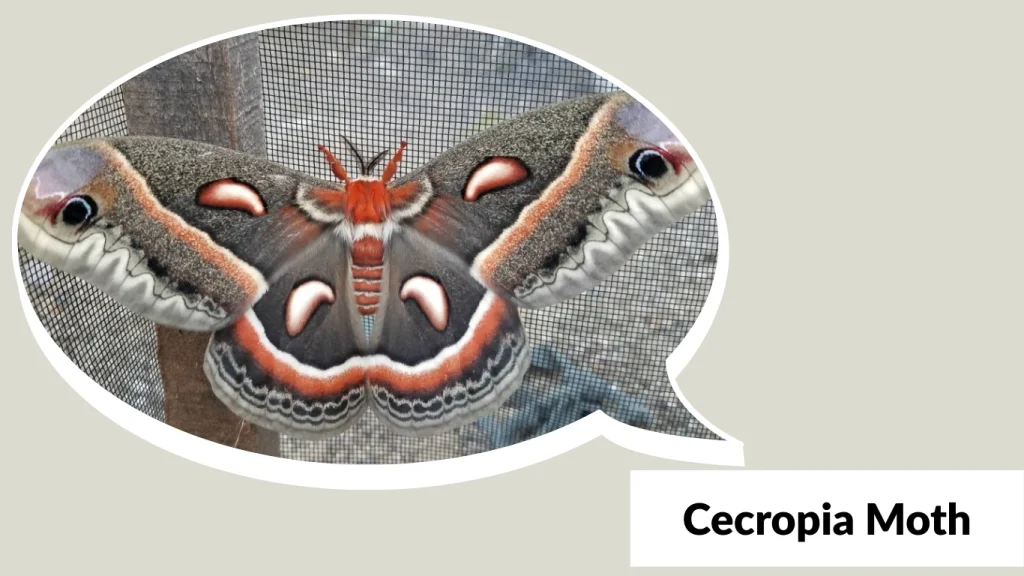
The Cecropia Moth (Hyalophora cecropia) is the largest native moth in North America and a true giant of the silk moth family. With its striking red, white, and brown coloration, it is not only impressive in size but also visually spectacular. Often spotted near lights at night in late spring and early summer, it has become one of the most recognizable giant moths of the continent.
Identification
- Family: Saturniidae (Silk Moths)
- Wingspan: 13–18 cm (5–7 in), the largest in North America
- Color: Reddish-brown wings with white bands and crescent-shaped spots
- Body: Thick, furry body with red and white striping
- Caterpillar: Large, green, with colorful blue, yellow, and orange tubercles tipped with small black bristles
Habitat and Distribution
Cecropia Moths are found across North America, from southern Canada through much of the United States. They inhabit deciduous forests, woodlands, and suburban neighborhoods where their host plants grow.
Behavior and Diet
Adults do not feed and live only one to two weeks, with their main purpose being reproduction. Caterpillars, however, are heavy feeders and consume the leaves of many trees and shrubs, including maple, cherry, birch, apple, and willow. Cecropia Moths are nocturnal, emerging in late spring to early summer, and are often drawn to artificial lights at night, making them more visible to people.
5. Promethea Moth

The Promethea Moth (Callosamia promethea) is a striking silk moth native to North America, known for its sexual dimorphism, where males and females look quite different. Males resemble dark-colored moths with strong contrasts, while females display warm reddish-brown tones. This species is often spotted resting during the day and flying at dusk, making it one of the more active silk moths in its range.
Identification
- Family: Saturniidae (Silk Moths)
- Wingspan: 7.5–10 cm (3–4 in)
- Male: Dark brown to nearly black wings with pale borders and markings
- Female: Rich reddish-brown wings with creamy white lines and crescent-shaped spots
- Caterpillar: Large, green, with bright red, yellow, and blue knobs along its body
Habitat and Distribution
The Promethea Moth is found throughout eastern North America, from southern Canada down through the eastern and southeastern United States. It inhabits deciduous forests, woodland edges, and suburban areas where its host trees and shrubs grow.
Behavior and Diet
Adults do not feed and live for only about a week, devoting their time to reproduction. Caterpillars feed on a wide variety of trees and shrubs including spicebush, sassafras, tulip tree, cherry, and ash. Unlike many other giant silk moths, Promethea Moths are active at dusk, with males flying in search of females, guided by pheromones.
6. Tulip-tree Silkmoth

The Tulip-tree Silkmoth (Callosamia angulifera) is a beautiful North American silk moth closely related to the Promethea Moth. As its name suggests, it relies heavily on the tulip tree (Liriodendron tulipifera) as its primary host plant. With its broad wings and warm reddish-brown colors, it is one of the most striking members of the Saturniidae family.
Identification
- Family: Saturniidae (Silk Moths)
- Wingspan: 8–11 cm (3–4.5 in)
- Color: Reddish-brown wings with pale tan bands and crescent-shaped transparent spots
- Sexual Dimorphism: Males are generally smaller and darker than females
- Caterpillar: Bright green with yellow knobs and reddish tubercles, similar in appearance to Promethea caterpillars
Habitat and Distribution
The Tulip-tree Silkmoth is primarily found in the eastern United States, especially in areas where tulip trees are abundant. Its range extends from the Great Lakes region southward through the Appalachians and into the southeastern states.
Behavior and Diet
Adults live only about a week and do not feed, surviving on fat reserves stored from the larval stage. Caterpillars feed almost exclusively on tulip tree leaves, although they may occasionally use other host plants. Adults are most active at night and are often attracted to lights. Their short but impressive adult life is focused entirely on reproduction.
7. Io Moth

The Io Moth (Automeris io) is one of the most colorful silk moths in North America, instantly recognizable for the large, dramatic eyespots on its hindwings. These striking markings act as a defense mechanism, startling predators when the moth suddenly flashes its hindwings. With its bold colors and wide distribution, the Io Moth is a favorite among butterfly and moth enthusiasts.
Identification
- Family: Saturniidae (Silk Moths)
- Wingspan: 5–9 cm (2–3.5 in)
- Color: Males are bright yellow; females are usually brownish-gray
- Eyespots: Large black-and-blue eyespots on the hindwings for predator deterrence
- Caterpillar: Bright green with red and white stripes and venomous spines capable of causing painful stings
Habitat and Distribution
The Io Moth ranges across much of North America, from southern Canada to Florida and westward to the Great Plains. It inhabits fields, meadows, forest edges, and suburban gardens, often where host plants are abundant.
Behavior and Diet
Adults live only about a week and do not feed. Caterpillars, however, are highly polyphagous, feeding on a wide variety of plants including willow, clover, corn, and roses. The species’ defense strategy relies heavily on its caterpillar stinging spines and the adult’s dramatic eyespots, making it one of the best-defended silk moths in the region.
8. Rosy Maple Moth
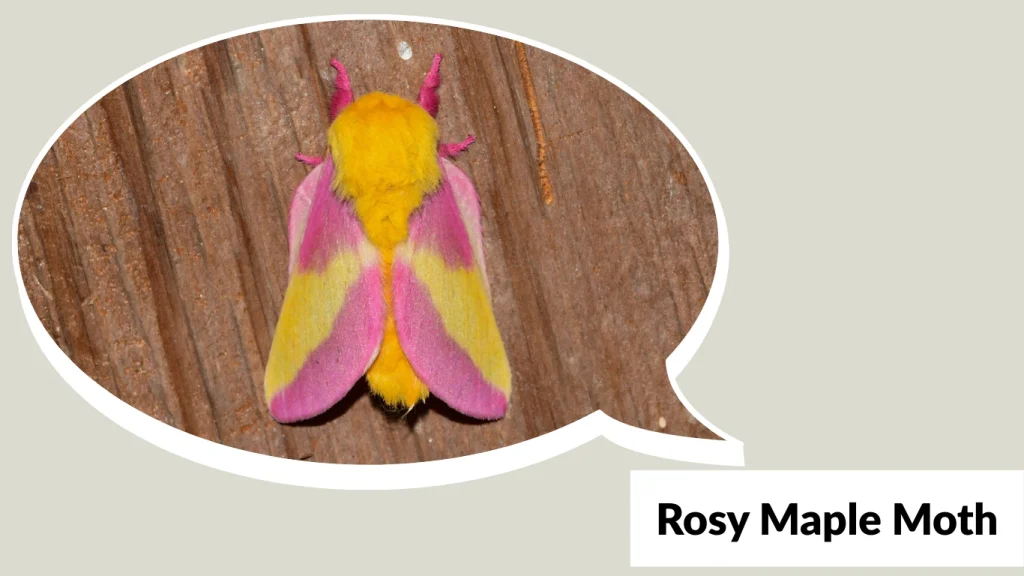
The Rosy Maple Moth (Dryocampa rubicunda) is one of the most visually stunning silk moths, admired for its striking pink and yellow coloration. Despite its small size compared to other silk moths, its bright cotton-candy-like wings make it one of the most recognizable moths in North America.
Identification
- Family: Saturniidae (Silk Moths)
- Wingspan: 3.2–5 cm (1.25–2 in)
- Color: Vibrant mix of pink and yellow on forewings and body
- Caterpillar: Known as the “greenstriped mapleworm,” featuring green stripes and black horns
- Sexual Dimorphism: Males have broader antennae than females
Habitat and Distribution
This species is found throughout eastern North America, ranging from Canada down to Florida and as far west as Texas. It thrives in deciduous forests, especially where maple trees are abundant, as the caterpillars primarily feed on maples.
Behavior and Diet
Adult Rosy Maple Moths do not feed and survive only for a short period to reproduce. Caterpillars feed voraciously on maple leaves, sometimes in large groups, but rarely cause serious damage to the trees. Their colorful adult stage makes them popular among moth enthusiasts and a favorite for photographers.
9. Cecropia Moth
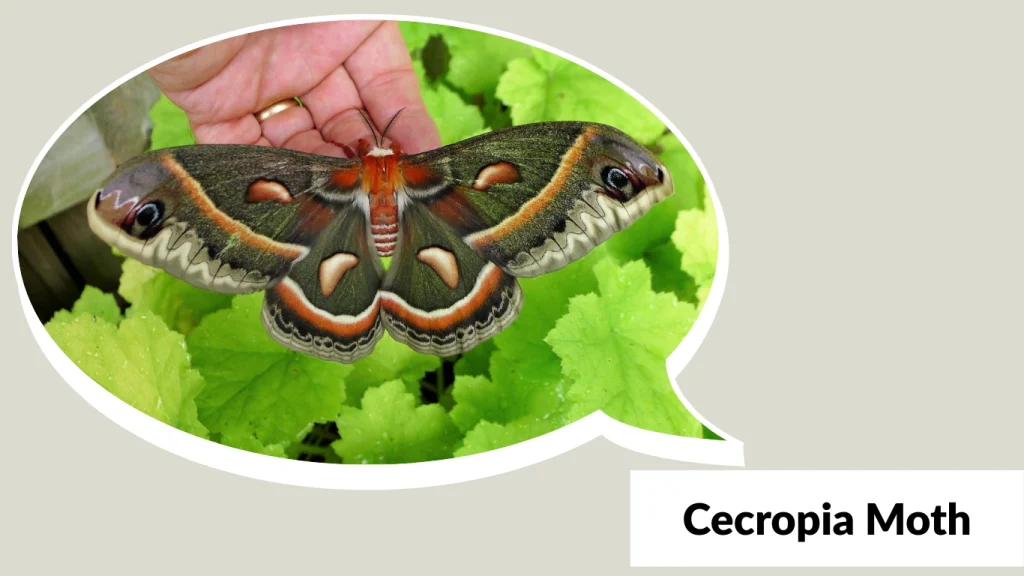
The Cecropia Moth (Hyalophora cecropia) is the largest native moth in North America, belonging to the Saturniidae family. Its massive wings and striking coloration make it one of the most impressive silk moths. Despite its size, like other silk moths, the adult does not feed and lives only a short time.
Identification
- Family: Saturniidae (Silk Moths)
- Wingspan: 13–18 cm (5–7 in), the largest of all North American moths
- Color: Deep brown wings with bold red, white, and black bands; reddish body with white bands
- Caterpillar: Large, greenish with blue, yellow, and red tubercles
- Antennae: Males have broader, feather-like antennae for detecting female pheromones
Habitat and Distribution
Cecropia Moths are widespread across North America, especially in the eastern United States and southern Canada. They thrive in deciduous forests, woodland edges, and suburban areas where host trees are abundant.
Behavior and Diet
Adults do not feed, relying on stored energy reserves from their caterpillar stage. Caterpillars feed on leaves of many tree species, including maple, birch, willow, and apple. Cecropia Moths are nocturnal and attracted to lights, which often makes them easier to spot in residential areas during summer nights.
10. Atlas Moth
The Atlas Moth (Attacus atlas) is one of the largest and most iconic silk moths in the world. Found mainly in tropical and subtropical regions of Asia, it is renowned for its immense wingspan and unique wing patterns that resemble snake heads, serving as a natural defense against predators.
Identification
- Family: Saturniidae (Silk Moths)
- Wingspan: Up to 25–30 cm (10–12 in), among the largest of all moths globally
- Color: Rusty brown wings with striking cream, orange, and black markings
- Distinctive Trait: Forewings with curved tips resembling snake heads
- Caterpillar: Pale green with spines covered in white waxy bloom
Habitat and Distribution
Atlas Moths are native to South and Southeast Asia, including India, Malaysia, Thailand, and Indonesia. They prefer tropical forests, plantations, and rural gardens with abundant host plants.
Behavior and Diet
Adults do not feed, surviving only for a few days using fat reserves stored from the larval stage. The caterpillars feed on the leaves of trees and shrubs like guava, cinnamon, citrus, and cherry. Atlas Moths are mostly nocturnal and often spotted resting during the day on trees, blending in due to their patterned wings.
11. Emperor Moth

The Emperor Moth (Saturnia pavonia) is one of the most striking silk moths found in Europe. Known for its vibrant eye spots and sexual dimorphism, it is admired for both its beauty and fascinating behavior. This moth plays an important role in European ecosystems and has a cultural significance in folklore.
Identification
- Family: Saturniidae
- Wingspan: 50–75 mm (males smaller, females larger)
- Color: Males – reddish-brown with bright eye spots; Females – grayish-brown with larger, duller markings
- Distinctive Trait: Four prominent eye spots, one on each wing
- Caterpillar: Bright green with black rings and yellow wart-like tubercles
Habitat and Distribution
The Emperor Moth is distributed widely across Europe, especially in heathlands, grasslands, and open woodlands. It thrives in areas with plenty of host plants such as heather, bramble, hawthorn, and blackthorn.
Behavior and Diet
Males are strong daytime fliers, actively seeking females by detecting pheromones from several kilometers away. Females are mostly nocturnal, flying after dusk. Adults do not feed, while caterpillars feed heavily on shrubs and wild plants to accumulate energy reserves for metamorphosis.
12. Tussar Silk Moth

The Tussar Silk Moth (Antheraea mylitta) is famous for producing Tussar silk, a type of wild silk widely used in traditional textiles. This moth is native to South Asia and is valued not only for its role in silk production but also for its ecological presence in forests.
Identification
- Family: Saturniidae
- Wingspan: 120–160 mm
- Color: Golden brown with intricate wavy patterns and eye spots
- Distinctive Trait: Transparent circular spot on each wing
- Caterpillar: Greenish with spiny tubercles and distinct body segments
Habitat and Distribution
The Tussar Silk Moth is found mainly in India, Bangladesh, Nepal, and surrounding regions. It thrives in tropical and subtropical forests, where its host plants such as Arjun, Asan, and Sal trees are abundant.
Behavior and Diet
This moth is primarily nocturnal, with adults flying during the night to mate. The caterpillars feed on the leaves of deciduous trees, which contribute to the quality of the silk they produce. Adults, like most silk moths, do not feed and live only a short time to reproduce.
13. Japanese Oak Silk Moth

The Japanese Oak Silk Moth (Antheraea yamamai) is a large moth native to Japan and parts of East Asia, well known for producing a durable and naturally white silk. This silk is still used in traditional Japanese textiles and is highly valued for its strength and beauty.
Identification
- Family: Saturniidae
- Wingspan: 100–150 mm
- Color: Pale greenish to yellowish-brown with subtle markings
- Distinctive Trait: Prominent circular eye spots on all wings
- Caterpillar: Bright green with yellow tubercles and fine hairs
Habitat and Distribution
This moth is native to Japan but has been introduced into parts of Europe, particularly Austria and Italy, for silk production. It inhabits forests and woodlands where oak trees, its primary host plant, are available.
Behavior and Diet
Caterpillars feed almost exclusively on oak leaves, giving the silk unique qualities. The adult moths are nocturnal and do not feed after emerging from their cocoons. They survive only a few days, focusing entirely on reproduction.
14. Ailanthus Silk Moth

The Ailanthus Silk Moth (Samia cynthia) is a striking member of the Saturniidae family, originally native to Asia but later introduced to Europe and North America. It is primarily known for its role in producing coarse silk, though the fabric is not as widely used as that of the Mulberry or Tussar moths.
Identification
- Family: Saturniidae
- Wingspan: 110–160 mm
- Color: Brownish wings with bold white bands across the center
- Distinctive Trait: Large, comma-shaped white patches near the forewing edges
- Caterpillar: Green with small tubercles and a plump body
Habitat and Distribution
This moth is closely associated with the tree-of-heaven (Ailanthus altissima), which serves as its main host plant. It was introduced into Europe and the United States in the 19th century as part of an attempt to establish a silk industry outside Asia. Today, it is found in parts of Asia, Europe, and North America.
Behavior and Diet
Larvae feed primarily on the tree-of-heaven but may also use other deciduous trees. Adults, like many silk moths, do not feed and rely on stored energy reserves to complete their short reproductive stage. They are strong fliers and are often seen around host trees during summer months.
15. Eri Silk Moth

The Eri Silk Moth (Samia ricini) is a domesticated silk moth species valued for producing Eri silk, a fabric known for its durability, warmth, and textured feel. Unlike other silk types, Eri silk is considered “peace silk” because the moth is usually allowed to emerge from the cocoon before harvesting, making it a cruelty-free alternative.
Identification
- Family: Saturniidae
- Wingspan: 100–130 mm
- Color: Greyish-brown wings with faint, wavy bands
- Distinctive Trait: More subdued markings compared to wild relatives
- Caterpillar: Thick, pale green body with small bluish tubercles
Habitat and Distribution
The Eri Silk Moth has been fully domesticated and is no longer found in the wild. It is primarily cultivated in India, Thailand, and parts of Southeast Asia where Eri silk weaving is a traditional practice. Its preferred host plants include castor (Ricinus communis) and cassava leaves.
Behavior and Diet
Larvae feed mainly on castor leaves, which makes them easier to rear compared to species that depend on mulberry. Adults do not feed and live only long enough to reproduce. Since they are domesticated, they depend entirely on human care for survival and silk production.
