

The Skippers (family Hesperiidae) are a fascinating group of butterflies known for their stocky bodies, hooked antennae, and rapid, skipping flight. Unlike the more graceful flight of other butterflies, skippers dart quickly and erratically, making them both lively and challenging to observe. Found across meadows, fields, gardens, and woodland edges, they are among the most diverse butterfly families. This article explores 17 types of skippers, detailing their identification, habitats, and unique behaviors.
1. Silver-spotted Skipper
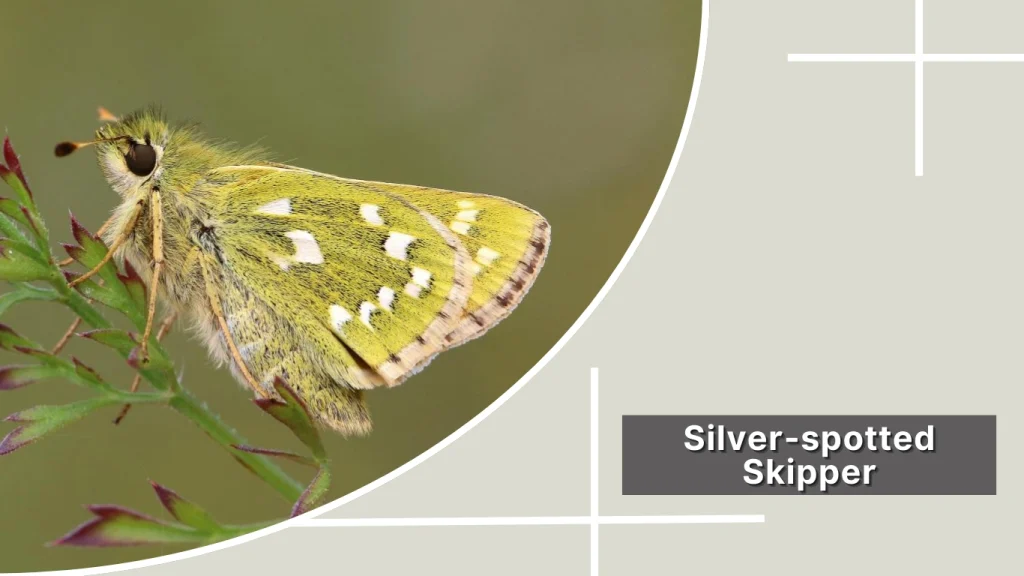
The Silver-spotted Skipper (Epargyreus clarus) is one of the most distinctive skippers in North America. Large, fast, and energetic, it is easily recognized by the bright silvery patch on the underside of its hindwings. Its skipping flight and constant movement between flowers make it a familiar summer butterfly in meadows and gardens.
Identification
- Family: Hesperiidae (Skippers)
- Wingspan: 4.5–6.5 cm (1.75–2.5 in)
- Color: Dark brown forewings with golden-orange patches; hindwings display a bold silvery-white marking
- Underside: Hindwing underside features a large white patch on a chocolate-brown background
- Antennae: Hooked tips, typical of skippers
- Caterpillar: Yellow-green with a reddish-brown head, living in folded leaf shelters
Habitat and Distribution
The Silver-spotted Skipper is widespread across southern Canada, the United States, and parts of northern Mexico. It is commonly found in sunny, open areas such as meadows, woodland edges, fields, and gardens where legume host plants grow.
Behavior and Diet
Adults feed on nectar from red clover, thistles, milkweed, butterfly bush, and blazing star. They perch frequently between nectar visits, often choosing tall plants or fences as lookout spots. Caterpillars feed on legumes like black locust, wisteria, and false indigo, building silk shelters by folding leaves for protection during the day.
2. Long-tailed Skipper
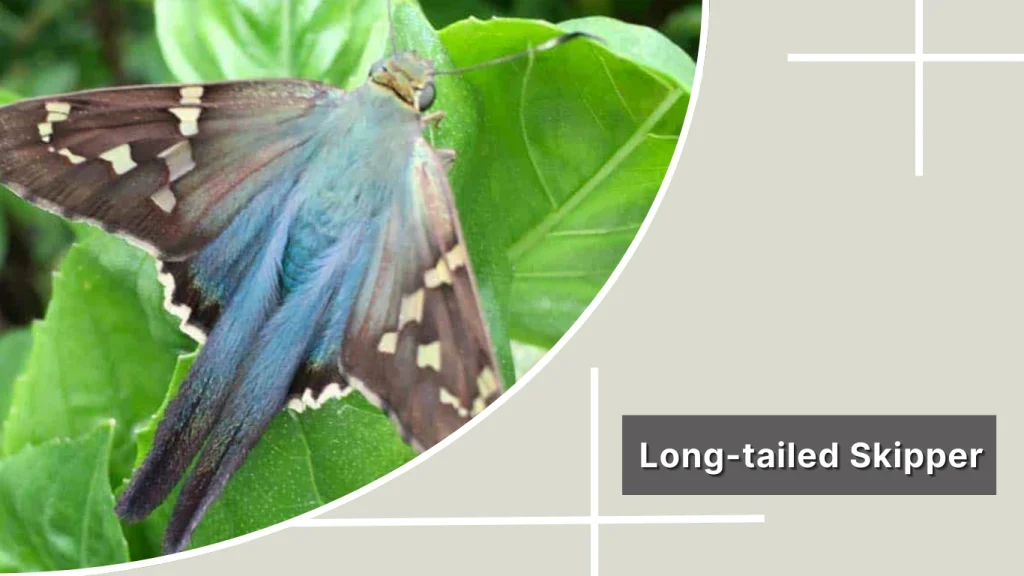
The Long-tailed Skipper (Urbanus proteus) is a striking skipper species, instantly recognizable by its elongated tails and shimmering blue-green body. It is a strong and agile flier, often darting quickly between flowers in sunny fields and gardens. This butterfly is particularly admired for the iridescent sheen on its wings, which glows brightly in sunlight.
Identification
- Family: Hesperiidae (Skippers)
- Wingspan: 3.8–5 cm (1.5–2 in)
- Color: Brown wings with a bluish-green metallic sheen on the body and wing bases
- Hindwings: Long, narrow tails extending outward, giving the species its name
- Underside: Brown with lighter patches and faint markings
- Caterpillar: Yellow-green with a large reddish-brown head, often referred to as a “bean leafroller”
Habitat and Distribution
The Long-tailed Skipper is common in the southeastern United States, Central America, South America, and the Caribbean. It thrives in gardens, agricultural areas, fields, and open woodlands. Its close association with bean plants makes it a familiar sight in farming regions.
Behavior and Diet
Adults feed on nectar from lantana, bougainvillea, hibiscus, and other brightly colored flowers. Caterpillars feed mainly on legumes such as beans, wisteria, and beggarweed, sometimes becoming pests in cultivated crops. The species is most active during warm months and is often observed in both wild and urban settings.
3. Clouded Skipper
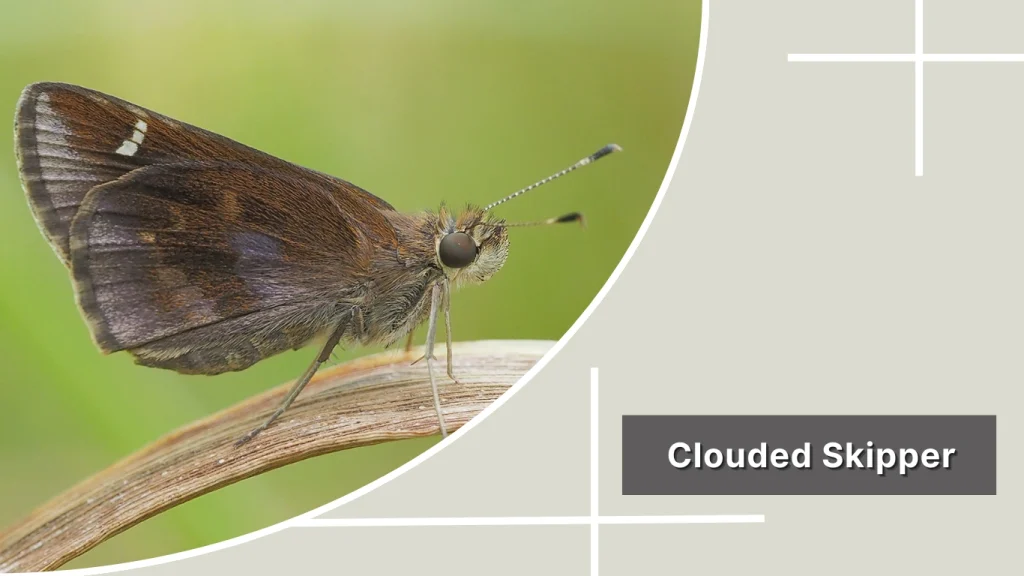
The Clouded Skipper (Lerema accius) is a small, fast-flying butterfly often seen darting close to the ground in fields and gardens. With its subtle dark coloring and quick movements, it is less flashy than other skippers but still easy to recognize once spotted. Its compact size and preference for sunny areas make it a frequent visitor to flowers in the southern United States.
Identification
- Family: Hesperiidae (Skippers)
- Wingspan: 2.5–3.5 cm (1–1.4 in)
- Color: Dark chocolate-brown wings with faint lighter patches; forewings may show subtle gray or purplish shading
- Underside: Gray-brown with two faint pale bands on hindwings
- Caterpillar: Green with a brownish head, living inside leaf shelters tied with silk
Habitat and Distribution
The Clouded Skipper is found mainly in the southeastern and south-central United States, extending into Mexico and the Caribbean. It prefers open grassy fields, roadsides, meadows, gardens, and forest clearings, particularly in warm climates where grasses grow abundantly.
Behavior and Diet
Adults fly low and quickly, often hovering briefly while feeding on nectar from lantana, shepherd’s needle, thistles, and other wildflowers. Caterpillars feed on various grasses, including St. Augustine grass, Bermuda grass, and other turf species. Clouded Skippers are active for long periods in warm regions, producing multiple broods throughout the year.
4. Fiery Skipper

The Fiery Skipper (Hylephila phyleus) is a small but brightly colored skipper, well known for its vivid orange wings and rapid, darting flight. Common in gardens, lawns, and open grassy areas, it is one of the most familiar skippers in warmer parts of North America. Its fiery hues and lively behavior make it easy to spot compared to other brownish skippers.
Identification
- Family: Hesperiidae (Skippers)
- Wingspan: 2.5–3.2 cm (1–1.25 in)
- Color: Males bright orange with black borders; females duller, more brownish with orange patches
- Underside: Yellow-orange with small dark spots on hindwings
- Caterpillar: Green to brown with a black head, often found in folded grass leaves
Habitat and Distribution
The Fiery Skipper is found throughout the southern United States, Central America, and South America, with seasonal migrations reaching farther north. It prefers open sunny habitats such as lawns, gardens, meadows, and roadsides where grasses grow.
Behavior and Diet
Adults feed on nectar from lantana, verbena, thistles, and shepherd’s needle, often visiting flowers close to the ground. Caterpillars feed on Bermuda grass, St. Augustine grass, and other turf species, which makes the Fiery Skipper a familiar sight in urban and suburban areas. Known for its darting, quick flight, it often perches with wings partly open, showing off its fiery orange color.
5. Sachem Skipper

The Sachem (Atalopedes campestris) is one of the most widespread and recognizable grass skippers in North America. Often seen flitting across lawns, gardens, and fields, it is a familiar sight in summer and early autumn. Males are known for their territorial behavior, frequently perching in sunny spots to guard areas against rivals.
Identification
- Family: Hesperiidae (Skippers)
- Wingspan: 2.5–3.8 cm (1–1.5 in)
- Color: Males golden-orange with dark borders; females darker brown with irregular orange patches
- Underside: Hindwings mottled brown with a distinctive squared-off pale patch
- Caterpillar: Greenish-brown with a black head, living in folded grass shelters
Habitat and Distribution
The Sachem is widely distributed across the United States, Central America, and into South America. It thrives in open sunny habitats such as fields, parks, roadsides, suburban lawns, and gardens where grasses are plentiful. Its adaptability to urban and rural areas makes it one of the most commonly encountered skippers.
Behavior and Diet
Adults feed on nectar from lantana, verbena, marigolds, clovers, and other low-growing flowers. Caterpillars feed mainly on Bermuda grass, crabgrass, and other turf species. Males perch on elevated grasses or flower stems to watch for females, often chasing away intruding butterflies. With multiple broods per year, the Sachem is active throughout the warmer months, especially abundant in late summer.
6. Peck’s Skipper

The Peck’s Skipper (Polites peckius) is a small, energetic butterfly commonly found in grassy habitats across North America. With its golden-orange wings bordered by dark brown, it has a distinctive checkered appearance. Its quick, darting flight often makes it challenging to follow, but when perched, its patterned wings are easy to recognize.
Identification
- Family: Hesperiidae (Skippers)
- Wingspan: 2.5–3.2 cm (1–1.25 in)
- Color: Forewings orange with dark brown margins, creating a checkered look; hindwings brown with orange spots
- Underside: Yellowish-brown with pale spots on the hindwings
- Caterpillar: Green with a dark head, building shelters from grass blades tied with silk
Habitat and Distribution
Peck’s Skipper is widespread throughout much of North America, from southern Canada through most of the United States. It thrives in meadows, lawns, roadsides, and open woodlands where grasses are abundant. Its adaptability allows it to live in both rural and urban environments.
Behavior and Diet
Adults feed on nectar from clovers, thistles, milkweed, and asters. Caterpillars feed mainly on grasses such as bluegrass, bentgrass, and fescue. Males often perch low in sunny patches, waiting to intercept females, while their rapid, erratic flight makes them a lively presence in summer fields.
7. Tawny-edged Skipper

The Tawny-edged Skipper (Polites themistocles) is a small, active skipper often seen flitting through grassy areas in summer. It is named for the warm tawny-orange patch along the forewing edge, a feature that helps distinguish it from similar skippers. Though tiny and quick in flight, it frequently perches with wings half-open, revealing its unique coloration.
Identification
- Family: Hesperiidae (Skippers)
- Wingspan: 2–3 cm (0.75–1.25 in)
- Color: Dark brown wings with a distinct tawny-orange patch along the leading edge of the forewings
- Underside: Yellowish to brown with faint pale spots, aiding in camouflage among grasses
- Caterpillar: Green with a dark head, often sheltering inside folded grass blades
Habitat and Distribution
The Tawny-edged Skipper is common in eastern and central North America, ranging from southern Canada to the southeastern United States. It thrives in grassy meadows, fields, roadsides, and forest openings where its host grasses are abundant.
Behavior and Diet
Adults feed on nectar from clovers, milkweed, asters, and other summer wildflowers. Caterpillars feed mainly on grasses, especially panic grass (Panicum) and crabgrass (Digitaria). Known for its short, skipping flight, this butterfly is most active in sunny weather and is often overlooked due to its small size and rapid movements.
8. Least Skipper
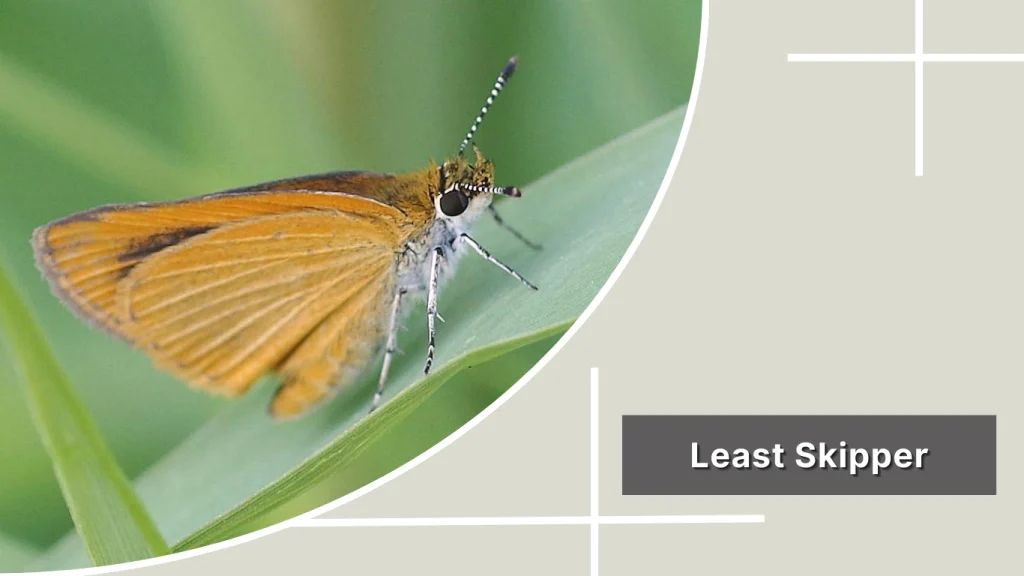
The Least Skipper (Ancyloxypha numitor) is one of the smallest butterflies in North America, often overlooked because of its tiny size and delicate flight. Unlike many other skippers, it has a weak, fluttery flight pattern, which makes it resemble a small moth drifting among grasses. Its soft orange coloring gives it a gentle charm despite its small stature.
Identification
- Family: Hesperiidae (Skippers)
- Wingspan: 1.5–2.5 cm (0.6–1 in)
- Color: Bright orange wings with narrow dark brown borders; forewings short and rounded
- Underside: Pale yellowish-orange, giving a soft glowing look in sunlight
- Caterpillar: Green, slender, with a dark head, often rolled inside grass blades for protection
Habitat and Distribution
The Least Skipper is widespread across eastern and central North America, from southern Canada to the Gulf Coast. It thrives in damp, grassy habitats such as marshes, ditches, moist meadows, and stream edges where grasses grow thickly.
Behavior and Diet
Adults have a weak, fluttering flight close to the tops of grasses, often moving slowly compared to other skippers. They feed on nectar from small flowers such as clover, buttercups, and asters. Caterpillars feed on various grasses, including bluegrass, rice cutgrass, and other wetland species. Least Skippers are often active from late spring through early autumn, with multiple broods each year.
9. European Skipper

The European Skipper (Thymelicus lineola) is a small, golden-orange butterfly that was accidentally introduced to North America from Europe in the early 20th century. It has since become one of the most abundant grass skippers across northeastern North America. Its uniform orange wings and upright resting posture make it easy to identify in summer meadows.
Identification
- Family: Hesperiidae (Skippers)
- Wingspan: 2.5–3 cm (1–1.25 in)
- Color: Bright orange wings with narrow dark brown edging; both sexes appear similar
- Underside: Pale yellowish to tan with little or no markings
- Caterpillar: Green with a dark stripe along the back and pale side lines, feeding on grasses
Habitat and Distribution
The European Skipper is native to Europe and Asia but is now widespread in North America, especially in the northeastern United States and southern Canada. It thrives in meadows, pastures, roadsides, and other grassy habitats where its host plants are plentiful.
Behavior and Diet
Adults are very active in summer, often flying in large numbers over meadows filled with grasses and wildflowers. They feed on nectar from daisies, clovers, buttercups, and other small flowers. Caterpillars feed primarily on timothy grass and other grasses. The species is univoltine, producing one generation per year, with adults most common in June and July.
10. Delaware Skipper

The Delaware Skipper (Anatrytone logan) is a bright, golden-orange butterfly that stands out among grass skippers for its bold coloration and smooth appearance. Unlike many skippers with patterned wings, the Delaware Skipper has a cleaner look, making it easier to identify in the field. It is often seen in midsummer, darting quickly across meadows and gardens.
Identification
- Family: Hesperiidae (Skippers)
- Wingspan: 3.5–4.5 cm (1.4–1.75 in)
- Color: Vivid orange wings with narrow black borders; males and females look very similar
- Underside: Bright golden-orange with little to no markings, giving it a “glowing” effect
- Caterpillar: Green with a dark head, commonly found in grass shelters
Habitat and Distribution
The Delaware Skipper is widespread in North America, ranging from southern Canada through most of the United States. It thrives in open grassy areas, including meadows, prairies, marshes, and suburban lawns. Its reliance on grasses as larval host plants allows it to adapt well to both natural and human-modified landscapes.
Behavior and Diet
Adults feed on nectar from milkweed, thistles, clovers, and blazing star, often hovering briefly before landing. Caterpillars feed mainly on switchgrass (Panicum virgatum) and big bluestem (Andropogon gerardii). Known for its smooth, darting flight, the Delaware Skipper is most abundant in midsummer when wildflowers bloom in abundance.
11. Zabulon Skipper

The Zabulon Skipper (Poanes zabulon) is a small, lively butterfly known for its strong sexual dimorphism — males and females look quite different. It is a common skipper of the eastern United States, often seen along woodland edges, gardens, and sunny meadows. Its quick, darting flight makes it a challenge to follow, but its bright markings make it easier to spot when perched.
Identification
- Family: Hesperiidae (Skippers)
- Wingspan: 2.5–3.8 cm (1–1.5 in)
- Male: Golden-orange forewings with dark borders and a dark hindwing
- Female: Dark brown with bold pale yellow patches on forewings
- Underside: Males show golden hindwings with dark edging; females appear mottled brown with pale patches
- Caterpillar: Greenish with a dark head, often hiding in folded grass leaves
Habitat and Distribution
The Zabulon Skipper is found across the eastern and southeastern United States, ranging from New England through the Midwest and into the Gulf Coast states. It favors open habitats near woodlands, including forest edges, roadsides, and gardens.
Behavior and Diet
Adults visit a wide variety of flowers for nectar, such as clovers, thistles, milkweed, and ironweed. Caterpillars feed mainly on grasses including purpletop (Tridens flavus) and other native species. Zabulon Skippers are often seen basking in sunny spots with wings partially open and can be abundant during summer months, producing two or more generations per year.
12. Dun Skipper
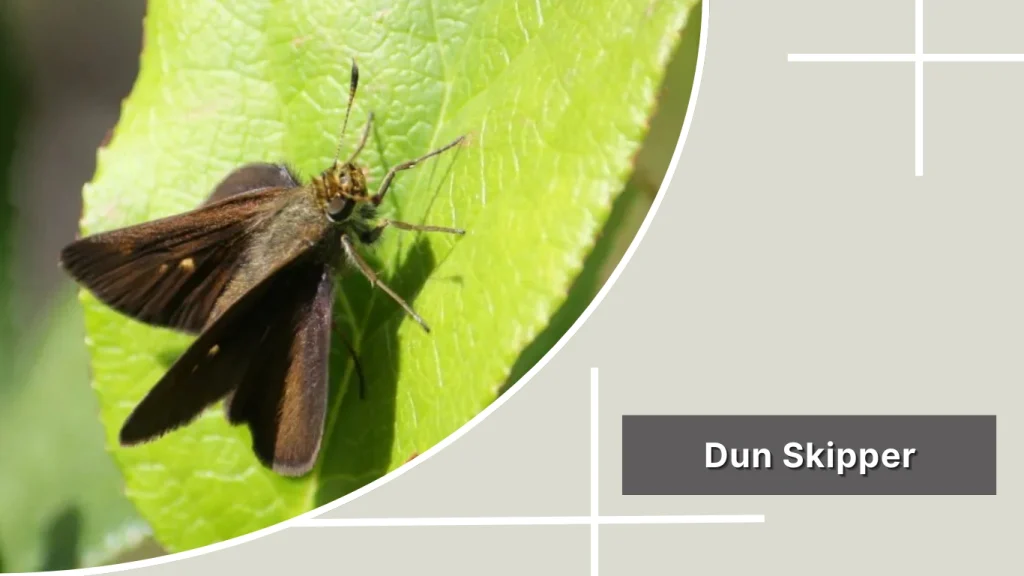
The Dun Skipper (Euphyes vestris) is a small, dark skipper that may appear plain compared to other skippers, but its subtle chocolate-brown wings and strong flight make it distinctive once observed closely. Often seen in shady areas, it is less colorful than many of its relatives, yet remains a common butterfly in summer.
Identification
- Family: Hesperiidae (Skippers)
- Wingspan: 2.5–3.5 cm (1–1.4 in)
- Color: Uniform dark brown wings with a soft, velvety look; males sometimes show faint darker patches
- Underside: Similar dark brown with little or no markings, giving a plain appearance
- Caterpillar: Green with a black head, hiding in folded grass leaves tied with silk
Habitat and Distribution
The Dun Skipper is widespread in North America, occurring from southern Canada through much of the United States. It favors damp habitats such as marshes, wet meadows, forest edges, and stream sides where grasses are abundant.
Behavior and Diet
Adults often fly low and close to vegetation, feeding on nectar from milkweed, buttonbush, dogbane, and swamp thistle. Caterpillars feed on sedges (Carex) and other grasses. Unlike brightly patterned skippers, the Dun Skipper blends into shaded habitats, but its steady flight and preference for moist environments make it a reliable summer butterfly to find.
13. Crossline Skipper
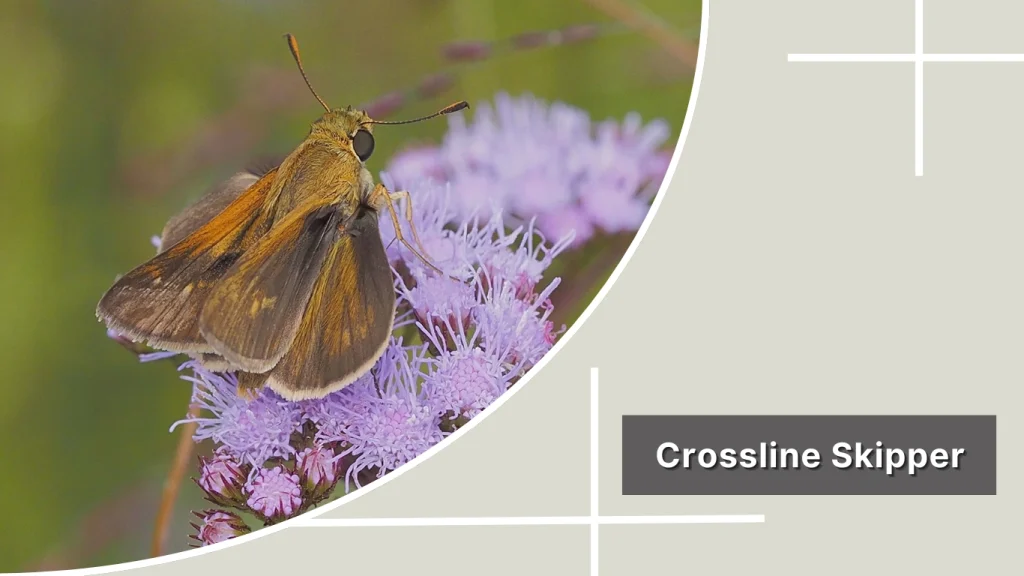
The Crossline Skipper (Polites origenes) is a small, warm-toned butterfly that can be tricky to distinguish from other orange skippers, but its darker crossline patterns on the wings make it identifiable. It is an active summer species that prefers open grassy fields and sunny meadows.
Identification
- Family: Hesperiidae (Skippers)
- Wingspan: 2.5–3.2 cm (1–1.25 in)
- Color: Forewings orange with a dark brown border and a faint crossline of darker shading
- Underside: Yellowish-brown with small pale spots on the hindwings
- Caterpillar: Green with a dark head, typically hidden inside folded grass leaves
Habitat and Distribution
The Crossline Skipper is found in eastern and central North America, ranging from southern Canada to the southeastern United States. It prefers open fields, roadsides, pastures, and prairies where grasses are abundant.
Behavior and Diet
Adults feed on nectar from clovers, milkweed, asters, and other wildflowers that bloom during summer. Caterpillars feed on grasses such as panic grass (Panicum), crabgrass (Digitaria), and other related species. Known for its fast, skipping flight, the Crossline Skipper is most often seen perching low in grassy areas, blending in well with its surroundings.
14. Northern Broken-Dash Skipper

The Northern Broken-Dash (Wallengrenia egeremet) is a small grass skipper with a distinctive broken dash marking on its forewing, which gives the species its name. Though modest in color, it is a common butterfly in meadows and fields during the summer months, especially in eastern North America.
Identification
- Family: Hesperiidae (Skippers)
- Wingspan: 2.5–3.5 cm (1–1.4 in)
- Color: Dark brown forewings with orange patches; males show a “broken dash” marking on the forewing
- Underside: Hindwings grayish-brown with faint pale spots, aiding in camouflage
- Caterpillar: Green with a dark head, building shelters in grasses
Habitat and Distribution
This skipper is widely distributed across eastern North America, from southern Canada through much of the eastern and central United States. It prefers grassy meadows, pastures, fields, and roadsides where host grasses are common.
Behavior and Diet
Adults feed on nectar from dogbane, milkweed, clovers, and thistles. Caterpillars feed on a variety of grasses, including switchgrass and panic grass. Males are often seen perched low in grassy areas, waiting for females, while their darting flight makes them quick but noticeable in sunny open fields.
15. Common Checkered Skipper
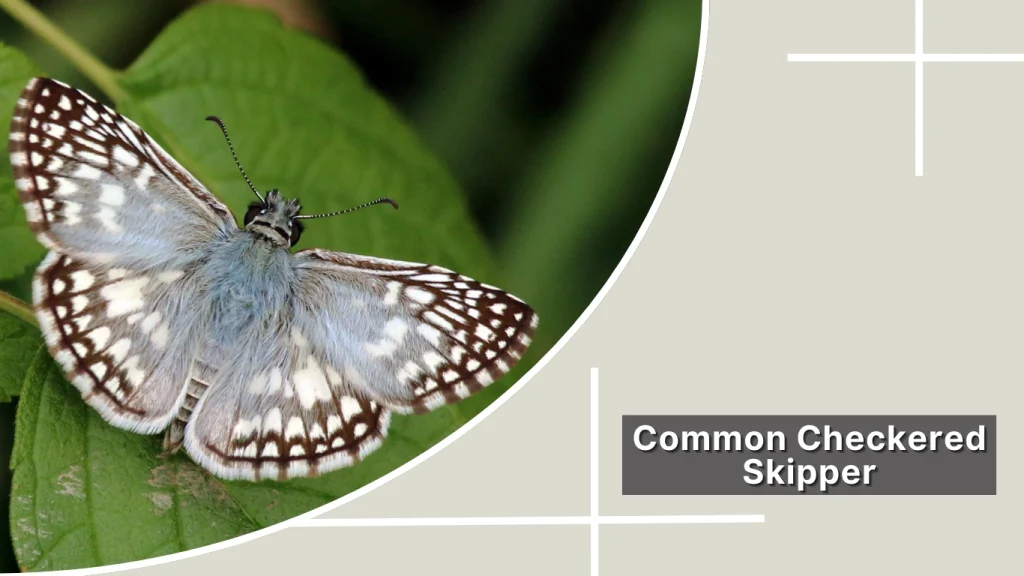
The Common Checkered Skipper (Pyrgus communis) is a small, energetic butterfly known for its bold checkered wing pattern. Unlike many grass skippers that are mostly orange or brown, this species has a distinctive black-and-white mosaic that makes it stand out in fields and gardens. Its busy, hovering flight often draws attention as it flits from flower to flower.
Identification
- Family: Hesperiidae (Skippers)
- Wingspan: 2.5–3.8 cm (1–1.5 in)
- Color: Forewings and hindwings patterned in black-and-white checks; males usually brighter, females darker
- Underside: Hindwings pale grayish with white spots, offering camouflage when resting
- Caterpillar: Greenish or brown with a black head, feeding inside silken shelters on host plants
Habitat and Distribution
The Common Checkered Skipper is found across most of North America, from southern Canada through the United States and into Mexico. It thrives in sunny, open areas such as gardens, fields, roadsides, and meadows where mallows grow in abundance.
Behavior and Diet
Adults feed on nectar from asters, thistles, clovers, and many other wildflowers. Caterpillars feed primarily on plants in the mallow family (Malvaceae), including common mallow and hibiscus. With its restless and buzzing flight, the Common Checkered Skipper is one of the most familiar and easily recognized skippers in North America.
16. Tropical Checkered Skipper

The Tropical Checkered Skipper (Pyrgus oileus) is a close relative of the Common Checkered Skipper but is mostly found in the warmer southern regions. It shares the same checkered wing pattern but is slightly darker in overall appearance. Active nearly year-round in tropical areas, it is one of the most commonly encountered skippers in gardens and open fields.
Identification
- Family: Hesperiidae (Skippers)
- Wingspan: 2.5–3.5 cm (1–1.4 in)
- Color: Black-and-white checkered pattern; generally darker than the Common Checkered Skipper
- Underside: Gray-brown with pale spots, blending well with dry vegetation
- Caterpillar: Green to brown with a black head, feeding on mallows
Habitat and Distribution
The Tropical Checkered Skipper is found mainly in the southern United States (Florida, Texas, and the Southwest), Mexico, Central America, and South America. It prefers warm, open habitats such as gardens, roadsides, fields, and disturbed areas with plenty of low-growing flowers.
Behavior and Diet
Adults feed on nectar from lantana, verbena, clovers, and other small flowers. Caterpillars feed on plants in the mallow family, including hibiscus and common mallow. This skipper’s fast, buzzing flight and tendency to stay close to the ground make it an active presence in sunny fields.
17. Hayhurst’s Scallopwing
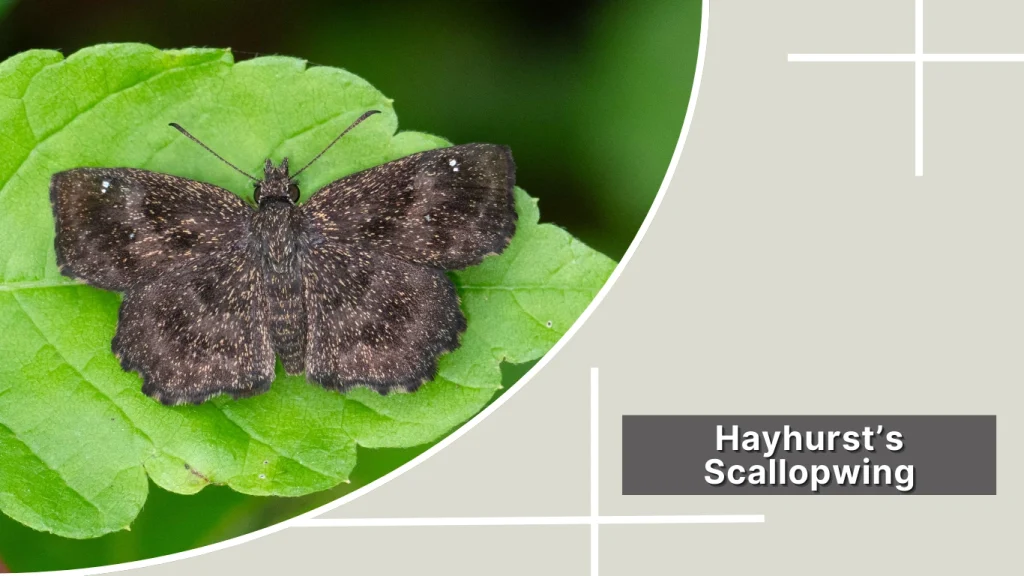
The Hayhurst’s Scallopwing (Staphylus hayhurstii) is a small, dark skipper with a scalloped wing shape that gives it a distinctive outline. Unlike many other skippers with bright orange tones, this species is mostly brown, making it more subtle but still unique among the Hesperiidae family.
Identification
- Family: Hesperiidae (Skippers)
- Wingspan: 2.5–3.5 cm (1–1.4 in)
- Color: Dark brown wings with faint pale spots; forewings and hindwings have scalloped edges
- Underside: Brown with faint lighter spotting and scalloped patterning
- Caterpillar: Green with a brownish head, feeding on plants in the mallow family
Habitat and Distribution
Hayhurst’s Scallopwing is found in the eastern and southern United States, extending into parts of Central America. It favors open fields, roadsides, woodland edges, and gardens, particularly where mallows (its host plants) are abundant.
Behavior and Diet
Adults feed on nectar from dogbane, milkweed, clovers, and various summer wildflowers. Caterpillars feed on mallows (Malvaceae), including common mallow and hibiscus. Their short, darting flight and habit of staying close to the ground make them less conspicuous, but they are common in sunny open areas during the warmer months.
