
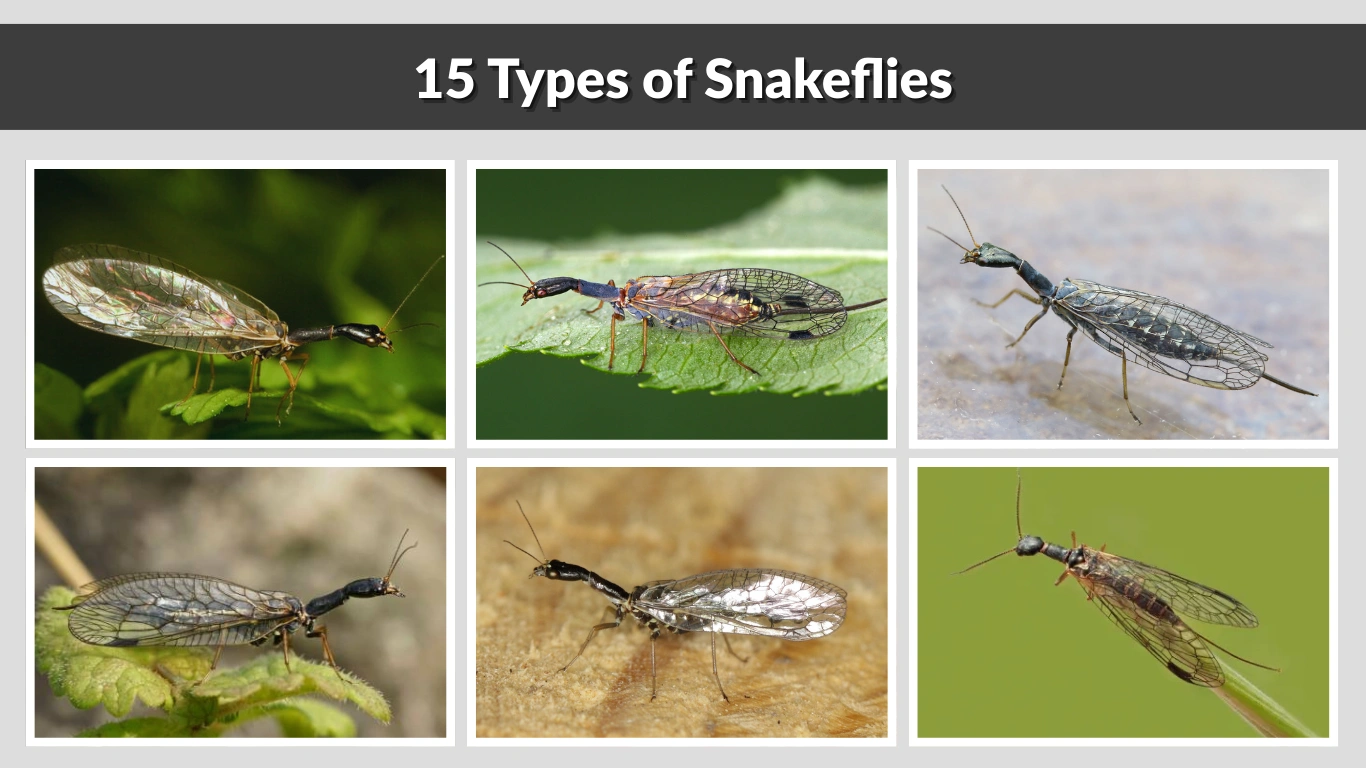
Snakeflies (order Raphidioptera) are fascinating insects known for their elongated neck-like prothorax, transparent wings, and predatory behavior. Found across Europe, Asia, and parts of the Himalayas, these species play an important role in controlling pest populations like aphids and caterpillars. In this article, we’ll explore 15 different types of snakeflies, highlighting their unique features, habitats, diets, and behaviors that make them both ecologically valuable and scientifically intriguing.
1. Raphidia flavipes

Raphidia flavipes is one of the most widespread snakeflies found in Europe. Known for its long prothorax and distinctive wings, this species is often observed in forested areas where it plays a role as a predator of small insects. Its name “flavipes” refers to the yellowish legs, which help in identification.
Identification
- Long, slender body with an elongated neck-like prothorax
- Transparent wings with fine venation, held roof-like over the body
- Legs typically yellowish, a key trait of this species
- Females possess a long ovipositor for laying eggs in crevices
Habitat
This species prefers woodland areas, particularly deciduous and mixed forests. They are commonly found resting on leaves, bark, or shrubs during warm months.
Diet
Raphidia flavipes is predatory, feeding mainly on aphids, small larvae, and other soft-bodied insects. Both larvae and adults contribute to controlling pest populations.
Behavior
Adults are most active during the warmer months, often flying short distances between trees and shrubs. They are diurnal, spending much of the day hunting prey. Females are frequently observed searching for suitable egg-laying sites in tree bark.
2. Raphidia notata

Raphidia notata is a distinctive species of snakefly found across parts of Europe and Asia. It is well recognized for the small dark spots or markings on its wings, which set it apart from many other members of the Raphidiidae family. This species thrives in wooded areas where prey is abundant.
Identification
- Slender body with elongated prothorax resembling a “neck”
- Clear wings with characteristic dark spots or notations
- Legs are pale to yellowish, aiding movement on leaves and bark
- Females have a long ovipositor for egg-laying in crevices
Habitat
Raphidia notata is typically found in forest edges, hedgerows, and woodland clearings. They prefer sunny areas where insects are plentiful and often rest on leaves or tree bark.
Diet
Like other snakeflies, this species preys on small insects such as aphids, caterpillars, and soft-bodied larvae. Both adult and larval stages are beneficial in reducing pest populations.
Behavior
Adults are agile hunters, often flying short distances to capture prey. They are diurnal and prefer warm, sunny conditions for activity. Females are active in seeking crevices in bark or wood to deposit eggs.
3. Raphidia ophiopsis
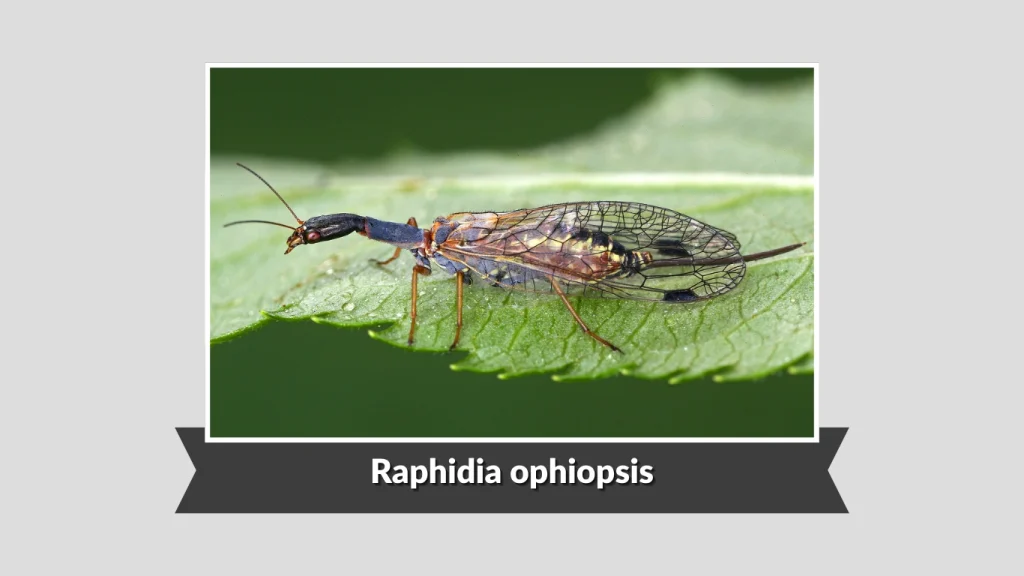
Raphidia ophiopsis is a widespread snakefly species in Europe, easily recognized by its slender body and elongated neck-like thorax. It is one of the more commonly studied species within the Raphidiidae family, often found in warm, dry habitats where insect prey is abundant.
Identification
- Long, narrow body with an extended prothorax resembling a snake’s neck
- Transparent wings with fine venation, sometimes faintly shaded
- Legs are pale to yellowish-brown
- Females possess a long, pointed ovipositor for egg-laying
Habitat
This species favors sunny, open woodlands, scrublands, and forest edges. It can often be spotted on shrubs, tree trunks, or low vegetation during the warmer months.
Diet
Raphidia ophiopsis preys on aphids, small caterpillars, and other soft-bodied insects. Both adults and larvae act as effective natural predators in controlling pest populations.
Behavior
Active mainly in daylight, adults fly short distances and frequently land on bark or leaves while hunting. They are highly predatory and exhibit quick, darting movements when capturing prey. Females are particularly active in locating cracks in bark for egg-laying.
4. Raphidia ligurica
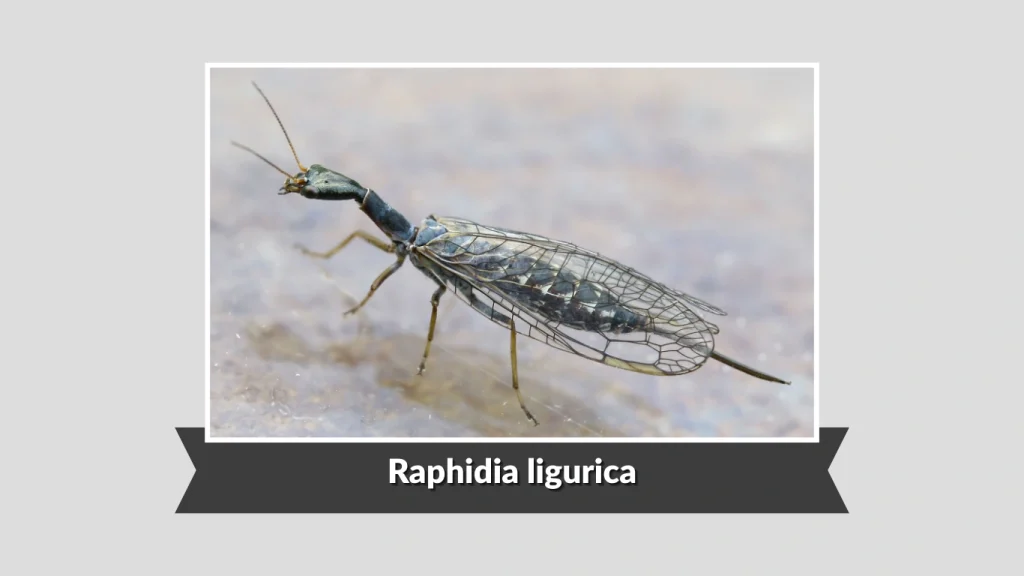
Raphidia ligurica is a lesser-known snakefly species distributed in parts of Southern Europe, particularly in Mediterranean regions. It is adapted to warmer climates and is often seen in areas with plenty of shrubs and small trees where insect prey is available.
Identification
- Slender body with a distinct elongated prothorax
- Clear wings with fine venation, sometimes with a slight smoky tint
- Legs generally pale yellowish to light brown
- Females have a prominent ovipositor used for depositing eggs in bark crevices
Habitat
This species is mostly found in Mediterranean woodlands, rocky slopes with vegetation, and dry forest edges. They are often spotted resting on shrubs, vines, or low tree branches in sunlit areas.
Diet
Raphidia ligurica feeds on small insects, especially aphids and larvae of other insects. Both the larval and adult stages are predatory, contributing to natural pest control.
Behavior
Adults are diurnal hunters, flying in short bursts and landing frequently on foliage. They prefer warm, sunny days for activity and are highly responsive to prey movement. Females actively search for suitable egg-laying sites in bark fissures and woody stems.
5. Raphidia ulrikae
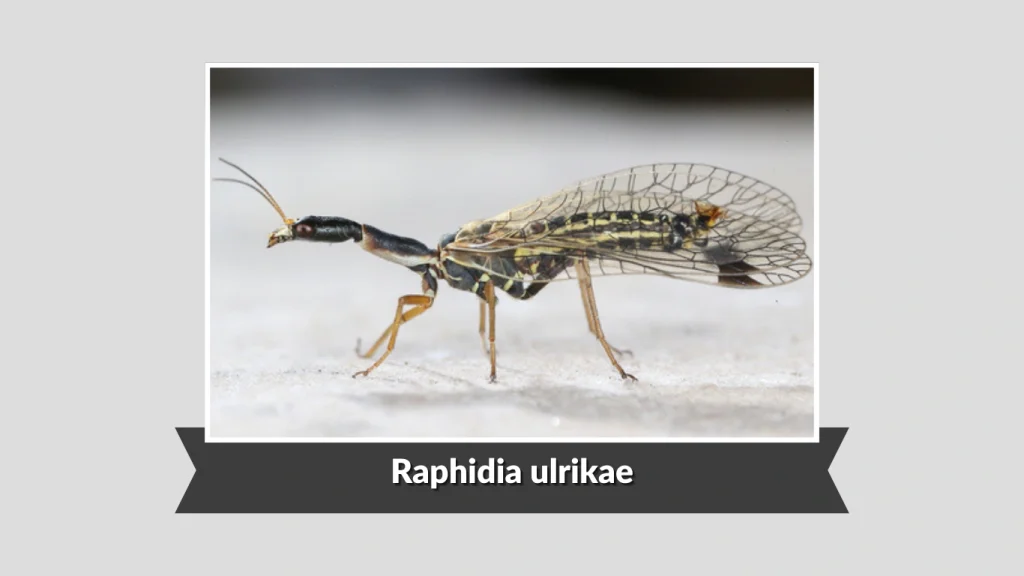
Raphidia ulrikae is a relatively rare snakefly species, primarily recorded in parts of Northern and Central Europe. It is known for its delicate appearance and its preference for cooler forested environments compared to many of its Mediterranean relatives.
Identification
- Slender body with an elongated “neck-like” prothorax
- Transparent wings with fine venation and slightly darker margins
- Legs are pale yellow to light brown
- Females carry a noticeable, elongated ovipositor for egg-laying
Habitat
This species inhabits mixed and coniferous forests, often at higher elevations. They are usually found resting on tree trunks, shrubs, or forest vegetation where insect activity is high.
Diet
Raphidia ulrikae preys on small insects such as aphids, caterpillars, and other soft-bodied invertebrates. Both larvae and adults serve as beneficial predators in their ecosystem.
Behavior
Adults are most active during the day, especially in warmer hours. They are agile hunters, flying short distances and quickly darting after prey. Females spend considerable time seeking cracks in bark or woody plants for egg-laying.
6. Raphidia taurica
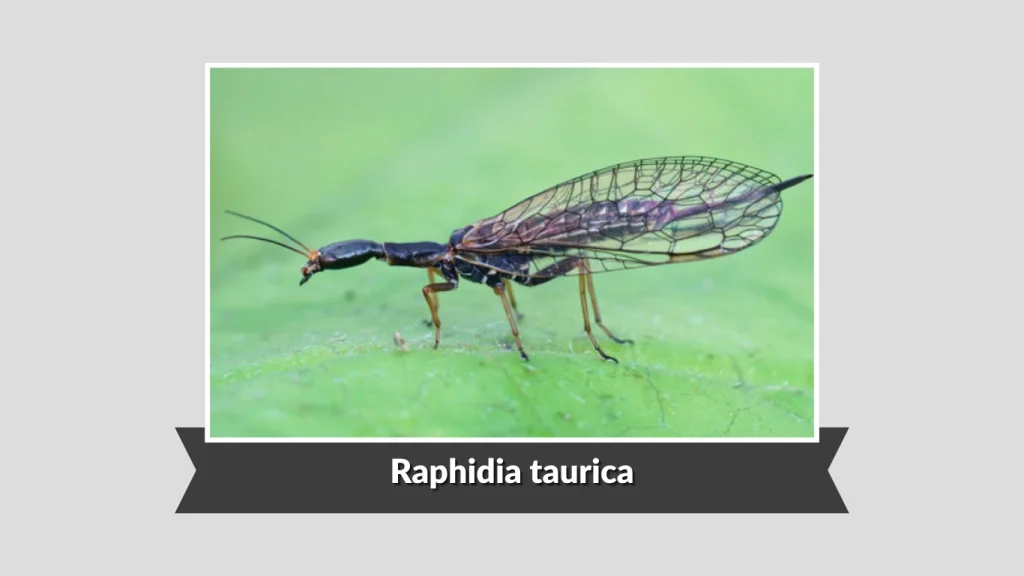
Raphidia taurica is a snakefly species native to Eastern Europe and parts of Western Asia. It is closely associated with warm, dry regions and is often observed in hilly or semi-mountainous habitats where insect prey is abundant.
Identification
- Long, slender body with a prominent elongated prothorax
- Clear wings with fine venation, sometimes showing faint dark patches
- Legs are yellowish to light brown
- Females bear a long, pointed ovipositor typical of the genus
Habitat
This species thrives in dry woodlands, scrublands, and open forest edges, especially in regions with a continental climate. They are commonly seen resting on shrubs, tree trunks, or rocky vegetation.
Diet
Raphidia taurica feeds primarily on aphids, small larvae, and other soft-bodied insects. Its predatory role makes it valuable for natural pest control in its habitat.
Behavior
Adults are diurnal, becoming more active during sunny, warm days. They often fly in short bursts between shrubs and trees, scanning for prey. Females show persistent searching behavior, probing bark cracks and crevices for suitable egg-laying sites.
7. Raphidia mediterranea
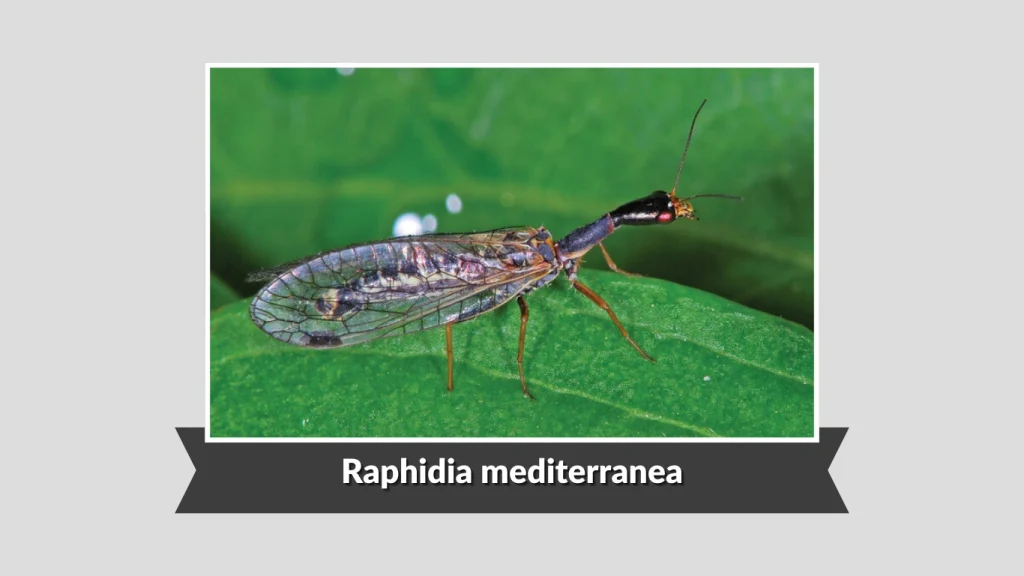
Raphidia mediterranea is a snakefly species commonly found in the Mediterranean region. Adapted to warm and dry environments, it is frequently observed in areas with rich shrubbery and low forests, playing an important role as a natural insect predator.
Identification
- Slender body with an elongated, snake-like prothorax
- Transparent wings with delicate venation and a slight smoky hue
- Legs usually pale yellow to brownish
- Females possess a distinctive elongated ovipositor for egg-laying
Habitat
This species inhabits Mediterranean woodlands, scrublands, and rocky hillsides. It is often encountered on sunlit shrubs, olive trees, and vineyard surroundings, where insect populations are abundant.
Diet
Raphidia mediterranea primarily feeds on aphids, caterpillars, and other small insects. Both adults and larvae act as predators, contributing to pest control in agricultural and natural habitats.
Behavior
Adults are most active on warm, sunny days. They fly short distances and frequently land on leaves or bark while scanning for prey. Females spend significant time probing tree bark and woody stems to locate suitable places for laying eggs.
8. Raphidia mongolica

Raphidia mongolica is a snakefly species native to Central Asia, particularly Mongolia and surrounding regions. It is adapted to the harsher, drier climates of steppe and semi-mountainous habitats, making it a unique representative of the Raphidiidae family.
Identification
- Long, narrow body with an extended prothorax resembling a snake’s neck
- Clear wings with strong venation, sometimes slightly darkened
- Legs are pale yellow to light brown
- Females carry a long ovipositor, used for egg-laying in wood or bark
Habitat
This species is typically found in open steppe woodlands, dry forest edges, and rocky slopes. It prefers sunny, elevated areas where shrubs and sparse trees provide both cover and prey availability.
Diet
Raphidia mongolica feeds on small insects such as aphids, leafhoppers, and caterpillars. Both the larval and adult stages are predatory, contributing to natural pest balance in their habitats.
Behavior
Adults are diurnal and prefer warm daylight hours for hunting. They often fly short distances between shrubs or trees, perching frequently while scanning for prey. Females show a strong tendency to explore cracks in bark and branches to deposit eggs.
9. Raphidia bicolorata

Raphidia bicolorata is a striking snakefly species known for its two-toned coloration, which distinguishes it from many other members of the Raphidiidae family. It is found in select regions of Europe and Asia, often favoring woodland and scrub habitats.
Identification
- Slender body with an elongated, snake-like prothorax
- Wings transparent with fine venation, sometimes faintly tinted
- Legs and body show contrasting two-toned (bicolored) pattern
- Females possess a long ovipositor for laying eggs in bark crevices
Habitat
This species inhabits mixed woodlands, forest edges, and shrubby areas. It is most often seen resting on bark or low vegetation in sunny patches of woodland.
Diet
Raphidia bicolorata feeds mainly on aphids, caterpillars, and other soft-bodied insects. Its predatory behavior helps reduce pest populations in natural ecosystems.
Behavior
Adults are agile daytime hunters, making short flights between shrubs and tree trunks. They are quick to spot moving prey and capture it with precision. Females spend much time exploring crevices in trees to deposit eggs securely.
10. Raphidia palaeformis
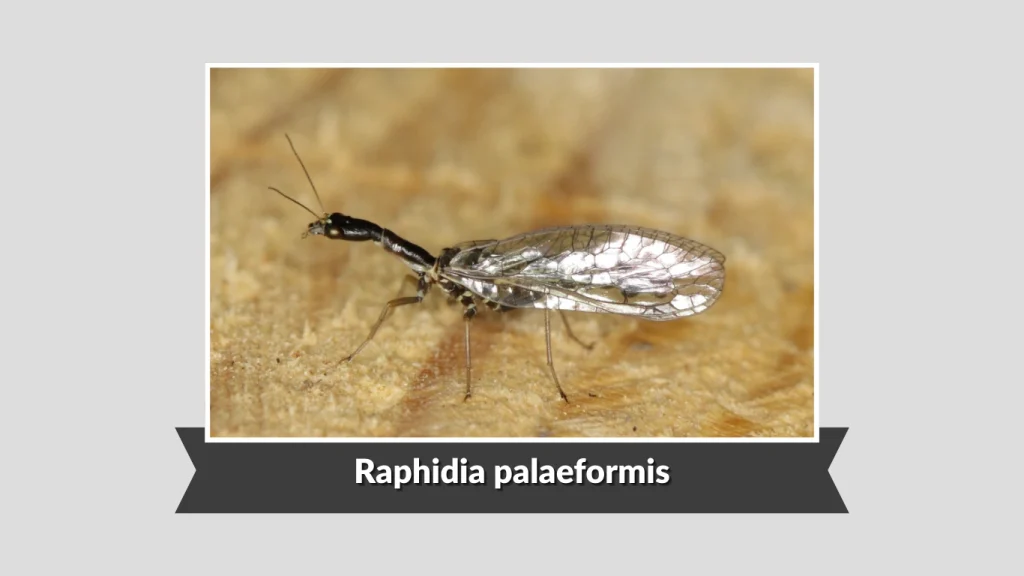
Raphidia palaeformis is a lesser-known snakefly species recorded in parts of Europe and Western Asia. It is characterized by its slender form and preference for wooded and semi-dry habitats where prey insects are abundant.
Identification
- Long, narrow body with a distinct elongated prothorax
- Transparent wings with well-marked venation, occasionally shaded
- Legs are yellowish to light brown
- Females have a prominent ovipositor used for egg deposition
Habitat
This species favors deciduous and mixed forests, as well as scrublands and hilly terrains. It can be found resting on shrubs, bark, and leafy vegetation in sunlit areas.
Diet
Raphidia palaeformis preys on small arthropods, especially aphids, soft-bodied larvae, and caterpillars. Both adults and larvae are effective natural predators.
Behavior
Adults are diurnal, showing increased activity during warmer daylight hours. They are agile fliers, making short, rapid flights between plants while hunting. Females are highly active in seeking out crevices in bark and wood for laying eggs.
11. Raphidia nielseni
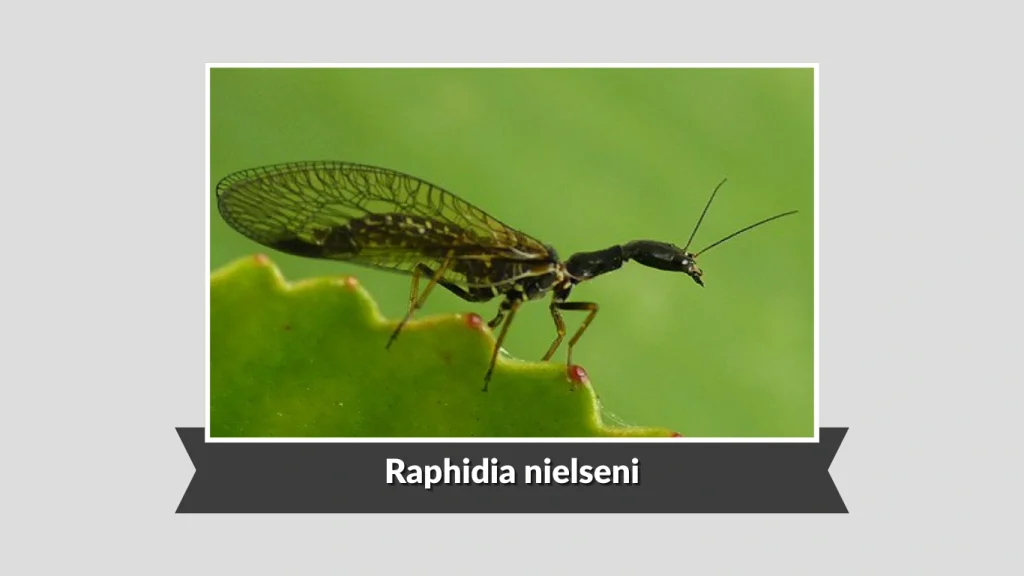
Raphidia nielseni is a snakefly species native to Northern and Central Europe, often associated with cooler climates. It is a relatively uncommon species but important in maintaining ecological balance by preying on small insect populations.
Identification
- Slender body with an elongated, snake-like prothorax
- Clear wings with fine venation, sometimes faintly shaded
- Legs pale yellow to light brown
- Females possess a long, narrow ovipositor for laying eggs
Habitat
This species is typically found in mixed and coniferous forests, especially in cooler, moist environments. It is often observed on tree trunks, shrubs, and leafy vegetation.
Diet
Raphidia nielseni feeds on aphids, small caterpillars, and other soft-bodied insects. Both larvae and adults act as predators, contributing to natural pest regulation.
Behavior
Adults are active during daylight, particularly in warmer hours of the day. They fly short distances between plants and frequently perch while scanning for prey. Females spend much of their time probing bark and crevices to deposit eggs.
12. Raphidia peterresseni
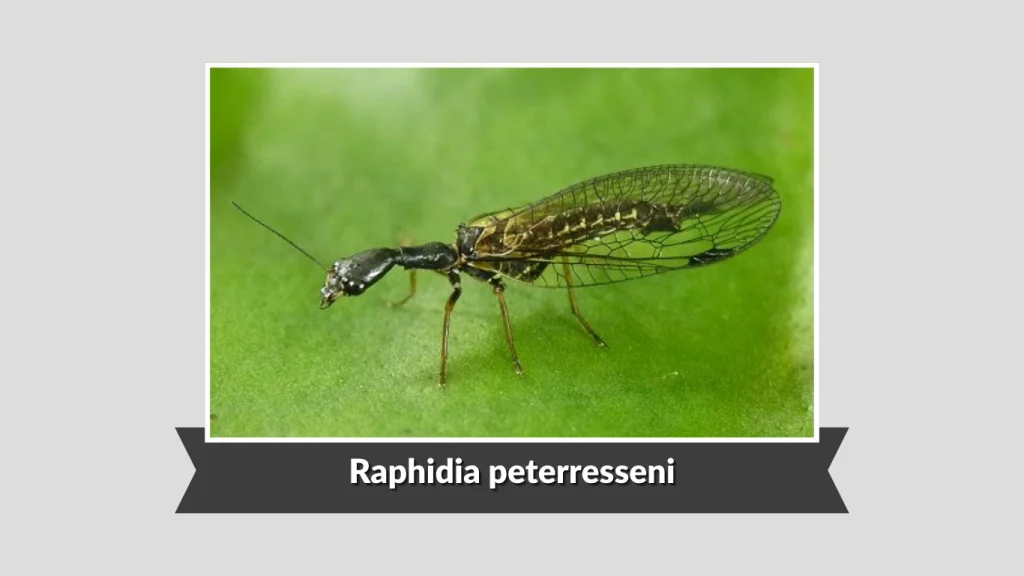
Raphidia peterresseni is a rare and specialized snakefly species found in localized areas of Europe. It is named after the entomologist who first described it and remains less studied compared to more common snakeflies. Its rarity makes it an interesting species for entomologists who focus on insect biodiversity and conservation.
Identification
- Elongated body with a distinctive prothorax resembling a snake’s neck
- Clear wings with intricate venation patterns, sometimes slightly darkened
- Legs pale to yellowish-brown, suited for clinging to bark and vegetation
- Females possess a long ovipositor for egg-laying in woody crevices
Habitat
Raphidia peterresseni prefers woodland areas, especially deciduous forests with abundant shrubs and undergrowth. It has also been observed in semi-mountainous regions, where tree bark and shaded vegetation provide ideal egg-laying and hunting grounds.
Diet
This species is predatory, feeding on a wide range of soft-bodied insects, including aphids, small larvae, and caterpillars. Its larvae continue this predatory role under tree bark, helping maintain insect population control.
Behavior
Adults are diurnal, actively hunting during sunny, warm periods. They typically make short, darting flights between trees and shrubs, landing on bark or leaves to capture prey. Females display persistent probing behavior, searching for cracks and crevices in wood where they can safely deposit their eggs.
13. Inocellia crassicornis

Inocellia crassicornis is one of the most well-known members of the Inocelliidae family of snakeflies. Unlike the genus Raphidia, this species is recognized by its shorter ovipositor and somewhat different body proportions, yet it retains the characteristic elongated prothorax of snakeflies. It is widespread across Europe and valued as a natural predator of pest insects.
Identification
- Slender body with an extended prothorax resembling a snake’s neck
- Transparent wings with distinct venation, usually slightly broader than Raphidia species
- Antennae appear relatively thick and robust (hence the name crassicornis)
- Females have a shorter ovipositor compared to Raphidia snakeflies
Habitat
This species is typically found in deciduous and mixed forests, forest edges, and shrubby areas. It prefers sunny environments with abundant insect prey and is commonly seen resting on bark and leaves.
Diet
Inocellia crassicornis feeds on soft-bodied insects such as aphids, leafhoppers, and caterpillars. Both adults and larvae are predatory, supporting ecological pest control.
Behavior
Adults are diurnal hunters, actively moving between plants and tree trunks in search of prey. They fly short distances and quickly settle on vegetation to capture insects. Females spend significant time inspecting bark cracks to locate suitable egg-laying sites.
14. Inocellia fulvostigmata

Inocellia fulvostigmata is a distinctive snakefly species from the Inocelliidae family, recognized for its characteristic wing markings. Compared to other Inocellia species, it has a more pronounced dark or reddish patch on its wings, which makes it easier to identify in the field.
Identification
- Slender body with an elongated prothorax, typical of snakeflies
- Transparent wings with a noticeable fulvous (reddish-brown) spot or patch near the stigma
- Antennae fairly robust, a trait common in the genus Inocellia
- Females have a shorter ovipositor than those of the Raphidia genus
Habitat
This species inhabits deciduous and mixed woodlands, often preferring sunny forest edges, clearings, and shrubby areas. It thrives in habitats with dense undergrowth where prey insects are abundant.
Diet
Inocellia fulvostigmata feeds on small soft-bodied insects such as aphids, larvae, and leafhoppers. Both adults and larvae contribute to controlling insect populations in their environment.
Behavior
Adults are most active during warm daylight hours, often flying short distances between shrubs and tree trunks. They perch frequently on leaves or bark, scanning for prey. Females spend considerable time seeking cracks or crevices in tree bark to deposit eggs.
15. Inocellia bhutana

Inocellia bhutana is a rare snakefly species belonging to the family Inocelliidae, described from the Himalayan region, particularly Bhutan. Its limited distribution makes it an important species for biodiversity records and entomological studies in Asia.
Identification
- Elongated body with the typical snake-like prothorax
- Clear wings with delicate venation, sometimes showing faint markings
- Antennae moderately thick, consistent with other Inocellia species
- Females have a shorter ovipositor compared to Raphidia species
Habitat
This species is found in forested areas of the Himalayan foothills, particularly in cool, elevated environments. It is usually associated with shrubs and trees in mountainous regions where prey insects are abundant.
Diet
Inocellia bhutana is predatory, feeding on small arthropods such as aphids, larvae, and caterpillars. Both adults and larvae play a role in natural pest regulation.
Behavior
Adults are diurnal, actively hunting during warmer daylight hours. They fly short distances and frequently rest on tree bark and foliage. Females carefully search bark fissures and woody stems for appropriate egg-laying sites.
