

Stick insects, also known as phasmids, are masters of disguise, resembling twigs and leaves to evade predators. Found across tropical forests, deserts, and even classrooms, these insects vary in size, color, and behavior. In this guide, you’ll discover 17 unique types of stick insects from around the world—each with its own features, habitat, and role in the ecosystem. Whether winged or wingless, they’re some of nature’s most fascinating mimics.
1. Giant Prickly Stick Insect (Extatosoma tiaratum)

The Giant Prickly Stick Insect, also known as the spiny leaf insect or Macleay’s spectre, is a large and impressive species native to Australia. It’s famous for its remarkable camouflage, mimicking dried leaves with spines and curled posture. Females are notably larger and more robust than males and display stunning leaf-like features.
Identification
- Color: Ranges from brown to green with leaf-like patterns
- Size: Females up to 20 cm; males smaller and slimmer
- Shape: Broad, spiny body with lobed legs resembling leaves
- Movement: Sways like a leaf in the wind when disturbed
- Special Traits: Females have thorn-like projections; males can fly
Habitat
Native to Australia, especially Queensland. Found in eucalyptus forests and shrubs where they blend perfectly with dry leaves and twigs.
Behavior and Diet
Feeds on leaves of eucalyptus, bramble, and other plants. Mostly nocturnal, it remains motionless during the day, relying on its camouflage to avoid predators. Females lay eggs that mimic plant seeds.
Role in the Ecosystem
Helps manage plant growth by consuming foliage. Also serves as a prey species for birds and reptiles, supporting food chains in forest environments.
2. Indian Stick Insect (Carausius morosus)
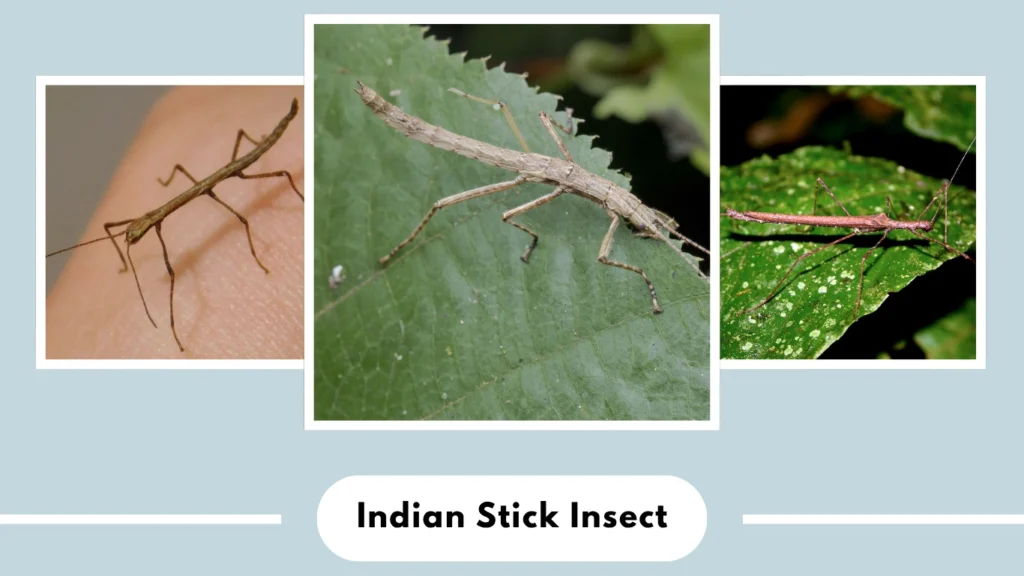
The Indian Stick Insect is one of the most commonly kept species in captivity due to its simple care requirements and docile nature. Native to southern India and Sri Lanka, it is a master of camouflage, perfectly mimicking thin twigs. It reproduces mostly through parthenogenesis, meaning females can produce offspring without males.
Identification
- Color: Light brown to greenish-gray
- Size: Around 8–10 cm
- Shape: Slender, straight body like a twig
- Movement: Slow crawler, rarely uses defense behavior
- Special Traits: No wings; often all-female populations
Habitat
Found in tropical and subtropical forests. Often clings to branches and stems of shrubs and small trees.
Behavior and Diet
Feeds mainly on bramble, rose, and ivy leaves. Remains still for hours to avoid detection. Known for its ability to regenerate lost legs over molts.
Role in the Ecosystem
Contributes to natural pruning of plants and is a food source for insectivorous animals. In captivity, it’s often used in education and insect behavior studies.
3. Pink Winged Stick Insect (Sipyloidea sipylus)

The Pink Winged Stick Insect, also known as the laboratory stick insect, is a lightweight, slender species that originates from Southeast Asia. It’s known for its delicate body and flash of pink wings used in short glides when disturbed.
Identification
- Color: Pale green or light brown with pink hind wings
- Size: 7–10 cm
- Shape: Thin, elongated body with narrow legs
- Movement: Gentle walker, can flutter short distances
- Special Traits: Wings only visible when spread during movement or escape
Habitat
Lives in humid tropical regions with dense vegetation. Commonly found on leaves, shrubs, and garden plants.
Behavior and Diet
Eats a variety of soft leaves including guava, rose, and bramble. Uses its wings as a surprise display to deter predators.
Role in the Ecosystem
Plays a role in controlling foliage and serves as prey for birds and reptiles. Its appearance and behavior help researchers study insect mimicry and defensive adaptations.
4. Jungle Nymph (Heteropteryx dilatata)
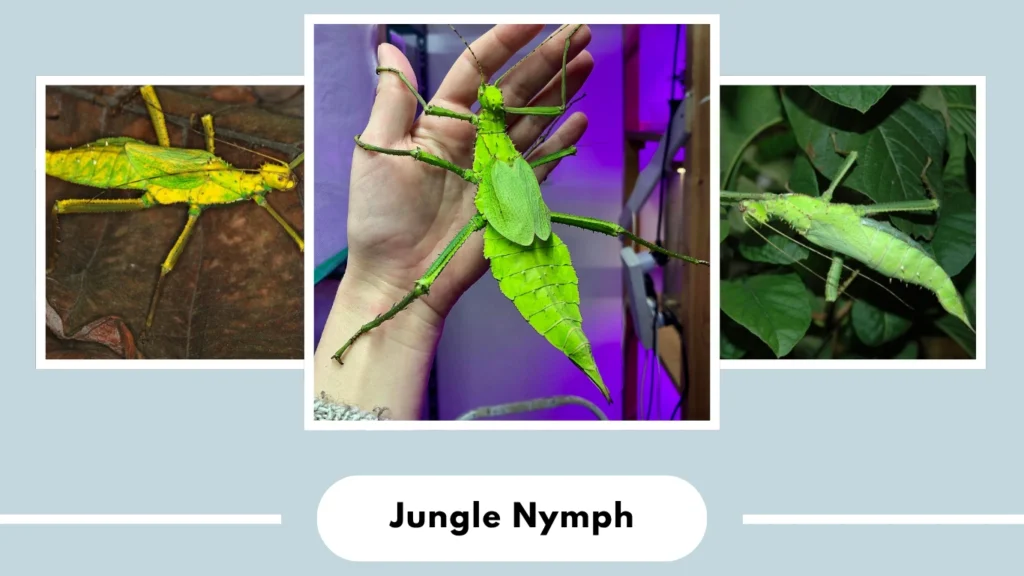
The Jungle Nymph, also known as the Malaysian stick insect, is one of the heaviest and most robust stick insect species in the world. Native to the rainforests of Malaysia, this species is known for its powerful defensive behavior and vibrant coloration in females.
Identification
- Color: Females are bright green; males are brown and slimmer
- Size: Females up to 15 cm; males smaller and more mobile
- Shape: Thick, leaf-like body with strong, spiny legs
- Movement: Slow-moving but defensive when threatened
- Special Traits: Males can fly; females cannot
Habitat
Found in lowland rainforests of Malaysia. Prefers dense vegetation where it can stay camouflaged among leaves and branches.
Behavior and Diet
Feeds on leaves such as guava, bramble, and hibiscus. Females may produce a hissing sound by rubbing wings when disturbed and use spiny legs to deter predators.
Role in the Ecosystem
Helps regulate plant growth and provides food for predators. Their presence also supports rainforest biodiversity through their role in nutrient cycling.
5. Maclay’s Spectre (Extatosoma popa)
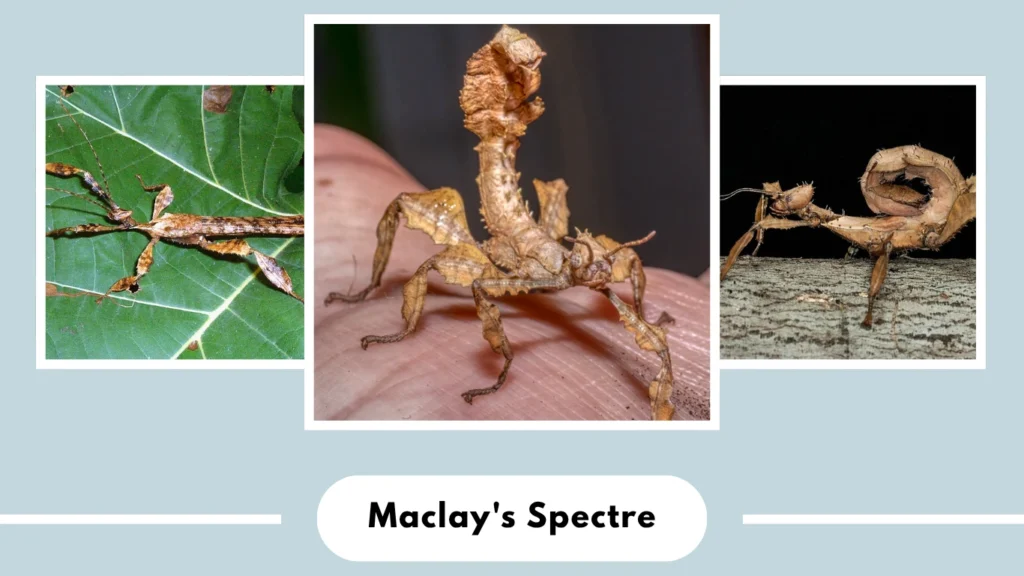
Maclay’s Spectre is a lesser-known relative of the Giant Prickly Stick Insect. It exhibits similar camouflage and defensive behavior but is found in different regions of Australia. Like its cousin, it mimics dead leaves and twigs with remarkable precision.
Identification
- Color: Brown to dark tan with mottled patterns
- Size: Around 12–14 cm
- Shape: Spiny, irregular body resembling bark or dry foliage
- Movement: Gentle swaying like a leaf in the breeze
- Special Traits: Spines and curled body posture enhance mimicry
Habitat
Native to parts of northern and eastern Australia. Inhabits woodland edges and dry eucalyptus forests with plenty of leaf litter.
Behavior and Diet
Consumes eucalyptus, bramble, and other native plant leaves. Uses both passive (camouflage) and active (thrashing or displaying legs) defenses when disturbed.
Role in the Ecosystem
Assists in controlling native plant foliage and adds to the diversity of insect life in its habitat. Also serves as prey for insectivorous animals.
6. Annam Walking Stick (Medauroidea extradentata)
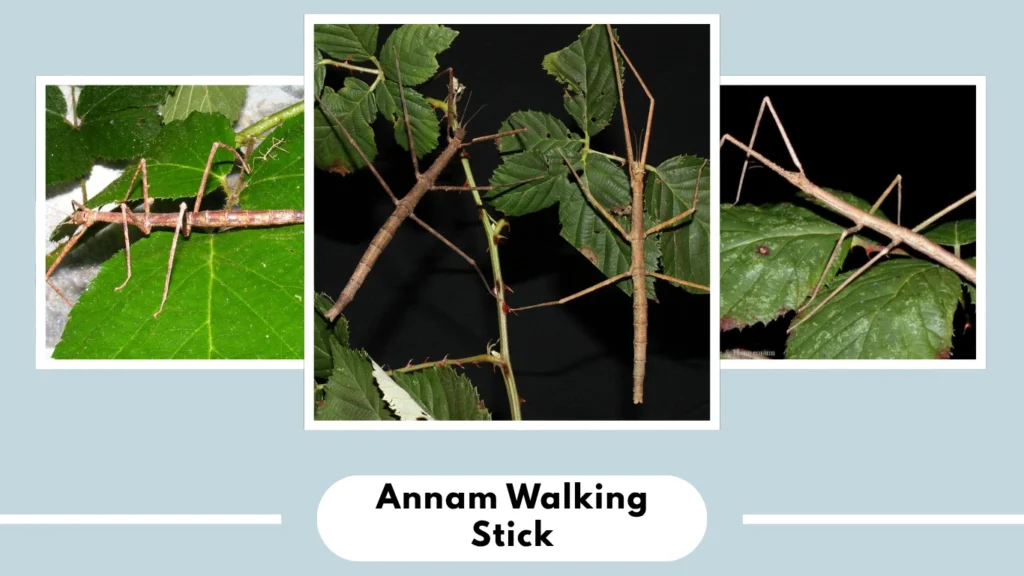
The Annam Walking Stick is a popular species in insect collections and classrooms due to its calm behavior and easy care. Native to Vietnam, it’s a flightless, parthenogenetic species—meaning all individuals are female and reproduce without males.
Identification
- Color: Light brown to olive-green
- Size: Around 10–12 cm
- Shape: Thin, cylindrical, and smooth body
- Movement: Slow-moving; clings tightly to branches
- Special Traits: Wingless; reproduces asexually in captivity
Habitat
Native to tropical forests in Vietnam. Commonly lives on shrubs, small trees, and forest undergrowth where it camouflages well.
Behavior and Diet
Feeds mainly on bramble, ivy, and oak leaves. Its still posture and twig-like appearance make it almost invisible to predators.
Role in the Ecosystem
Aids in leaf litter recycling and is commonly used in education to demonstrate insect camouflage and reproduction strategies.
7. Achrioptera manga

Achrioptera manga is a stunning stick insect species from Madagascar, noted for its vibrant coloration—an unusual trait among stick insects. The males are especially eye-catching with bright blue or turquoise coloring, used both for camouflage and mate attraction.
Identification
- Color: Males are electric blue with red or black markings; females are greenish or brown
- Size: Up to 15 cm
- Shape: Slender, with long legs and antennae
- Movement: Active walkers; good climbers
- Special Traits: One of the most colorful stick insects
Habitat
Endemic to Madagascar, especially in humid forested areas. Found on trees and bushes with ample foliage.
Behavior and Diet
Feeds on leaves of local shrubs and trees. Males use their color for mating displays and possibly to confuse predators in dappled light.
Role in the Ecosystem
Supports leaf turnover and serves as a unique example of visual communication in stick insects. Its beauty also raises awareness for Madagascar’s unique biodiversity.
8. Timema (Timema cristinae)

Timema cristinae is a primitive stick insect species native to California and belongs to one of the oldest lineages of walking sticks. Unlike many other phasmids, Timema species are short-bodied and wingless. They exhibit excellent camouflage and have been widely studied for their role in evolutionary biology and natural selection.
Identification
- Color: Green or brown, sometimes with stripes or mottled patterns
- Size: Small, about 1–3 cm
- Shape: Short, thick-bodied with stubby legs
- Movement: Slow and deliberate
- Special Traits: No wings; known for rapid adaptive evolution
Habitat
Found in chaparral and shrubland habitats of California, especially on plants like chamise and manzanita.
Behavior and Diet
Feeds on leaves of its host plant, using its coloration to blend in. It is primarily active at night and rests motionless during the day.
Role in the Ecosystem
An important subject in ecological and genetic studies. Helps maintain plant balance in shrubland ecosystems and supports predator-prey dynamics.
9. Tropical Walking Stick (Paraphanocles keratosqueleton)
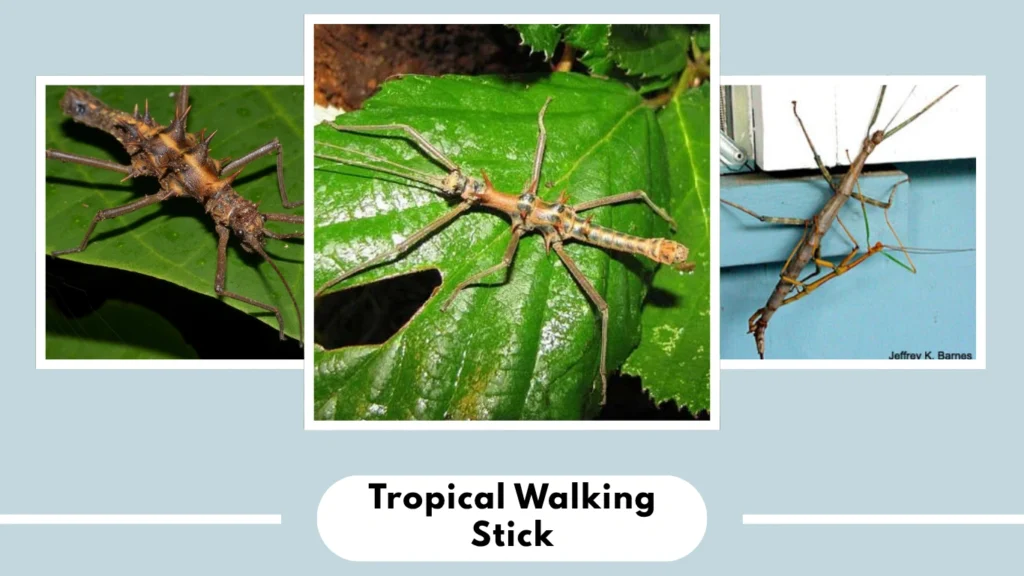
The Tropical Walking Stick is a rare and exotic species known for its extremely slender frame and long limbs. Native to Central and South America, it demonstrates extreme mimicry—looking nearly identical to a thin twig or stem, making it nearly invisible in the wild.
Identification
- Color: Dark brown to gray, sometimes mottled
- Size: 15–20 cm
- Shape: Extremely long and thin, with fine limbs
- Movement: Very slow, mimicking twigs swaying in the wind
- Special Traits: Exceptional camouflage; hard to detect in natural settings
Habitat
Native to rainforests and tropical woodlands. Found clinging to branches, vines, and thin stems in dense vegetation.
Behavior and Diet
Feeds on a variety of soft leaves, especially in moist, shaded environments. Avoids movement during the day to avoid predators.
Role in the Ecosystem
Contributes to foliage control and nutrient cycling in tropical forests. Its impressive camouflage highlights the power of natural selection and survival strategies.
10. White-Footed Stick Insect (Anchiale briareus)
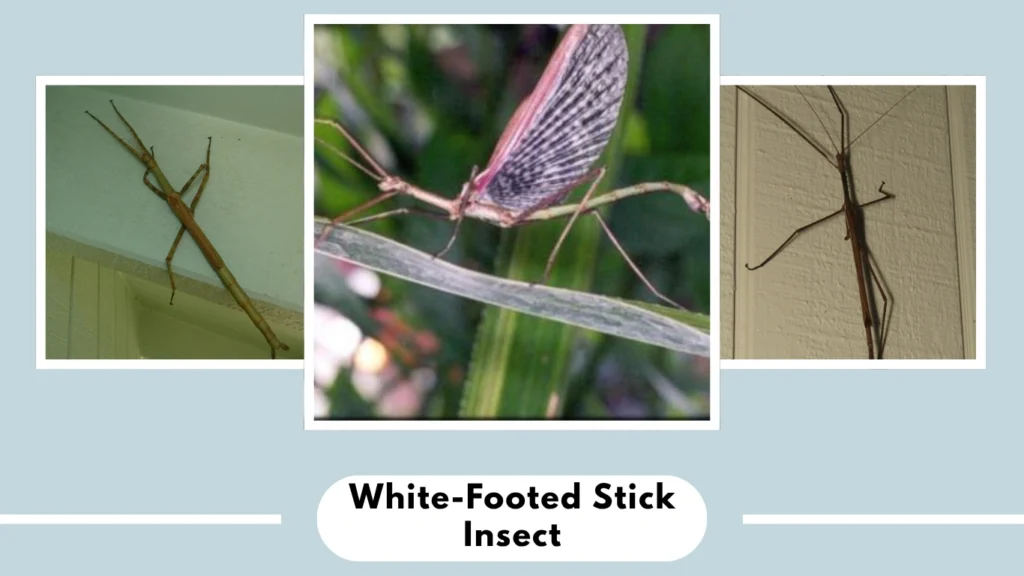
The White-Footed Stick Insect is a striking species native to Australia and nearby islands. It’s named for the pale or white-colored markings on its legs. This insect has a slender body and broad wings, making the males capable of flight while females are generally heavier and less mobile.
Identification
- Color: Brown or greenish-brown with pale markings on legs
- Size: 12–15 cm
- Shape: Slender body with long legs; males have large wings
- Movement: Males can fly; females walk slowly
- Special Traits: Pale “white-foot” markings; noticeable wing span in males
Habitat
Found in tropical and subtropical forests of northern Australia, often hiding among leaves and branches of trees and shrubs.
Behavior and Diet
Feeds on eucalyptus, guava, and other broadleaf plants. Uses flight (males) and stillness (females) to evade predators. Active mostly at night.
Role in the Ecosystem
Contributes to leaf cycling and serves as prey for birds and reptiles. Its visual traits and mobility add diversity to canopy insect life.
11. New Guinea Spiny Stick Insect (Eurycantha calcarata)

The New Guinea Spiny Stick Insect is a robust, ground-dwelling species that stands out due to its armored body and spiny legs. Native to New Guinea, it lives among leaf litter and logs and is one of the few stick insects that prefers crawling to climbing.
Identification
- Color: Dark brown to blackish-green
- Size: Up to 14 cm
- Shape: Thick-bodied with thorn-like spines on legs and back
- Movement: Slow crawler; rarely climbs high
- Special Traits: Strong legs; defensive posture with raised abdomen
Habitat
Inhabits forest floors, rotting logs, and underbrush in New Guinea. Prefers damp, shaded environments with lots of cover.
Behavior and Diet
Feeds on a wide range of leaves including bramble, ficus, and ivy. Defends itself with strong legs and can pinch when threatened.
Role in the Ecosystem
Plays a key role in breaking down lower canopy leaves and supporting detritivore food chains. It’s also a popular species in insect collections and breeding programs.
12. Red-Winged Stick Insect (Megacrania nigrosulfurea)

The Red-Winged Stick Insect is a brightly colored species known for its vivid red or orange wings, which it displays when threatened. Native to parts of northern Australia and nearby islands, it’s a herbivore that lives among pandanus plants and coastal vegetation.
Identification
- Color: Bright green body with red or orange hind wings
- Size: Around 12–14 cm
- Shape: Slender, slightly flattened body
- Movement: Slow crawler; uses wings for threat display
- Special Traits: Flash of red wings when disturbed to scare off predators
Habitat
Found in tropical coastal forests, especially in pandanus trees and mangrove areas. Prefers warm, moist environments with dense foliage.
Behavior and Diet
Feeds mainly on pandanus and related plant leaves. When threatened, opens its red wings suddenly as a startle defense.
Role in the Ecosystem
Acts as a plant regulator and contributes to nutrient recycling in coastal habitats. Its dramatic wing display is a key example of insect defense through visual warning.
13. Vietnamese Stick Insect (Baculum extradentatum)
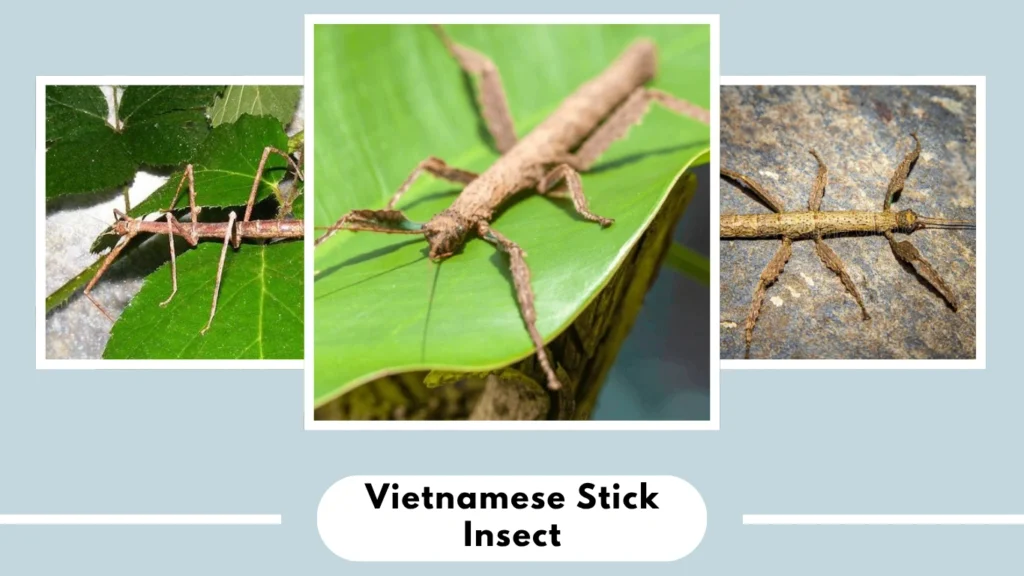
The Vietnamese Stick Insect is a calm, hardy species often found in educational collections. Native to Vietnam, this wingless species is entirely herbivorous and very easy to care for. It is capable of parthenogenesis, where females lay fertile eggs without mating.
Identification
- Color: Green or brown
- Size: Around 10–12 cm
- Shape: Straight, twig-like with smooth texture
- Movement: Slow and steady crawler
- Special Traits: All-female populations are common; flightless
Habitat
Lives in tropical forests and gardens across Vietnam. Often clings to branches and shrubs during the day and feeds at night.
Behavior and Diet
Feeds on bramble, rose, and other soft-leaved plants. Remains motionless for long periods, relying on mimicry for protection.
Role in the Ecosystem
Helps control plant growth and supports biodiversity in forest ecosystems. Its ease of breeding makes it popular in schools and research for insect life cycle education.
14. Blue Stick Insect (Ramulus nematodes)

The Blue Stick Insect is a rare and visually captivating species known for its bluish or turquoise coloration—an uncommon trait in stick insects. Native to parts of Southeast Asia, it uses its color to blend in with cool-toned vegetation and shaded forest environments.
Identification
- Color: Blue, turquoise, or bluish-green
- Size: Around 10–13 cm
- Shape: Thin and elongated with long legs
- Movement: Calm crawler; uses stillness as primary defense
- Special Traits: Striking blue coloration for camouflage
Habitat
Found in shaded tropical forests with dense foliage. Prefers cool, moist areas like under canopies or beside streams.
Behavior and Diet
Feeds on various leafy plants including bramble, ficus, and guava. Remains still during the day and becomes more active at night.
Role in the Ecosystem
Acts as a leaf consumer and aids in plant matter breakdown. Its unique color also makes it a valuable species in educational and breeding programs.
15. Giant Walking Stick (Megaphasma denticrus)
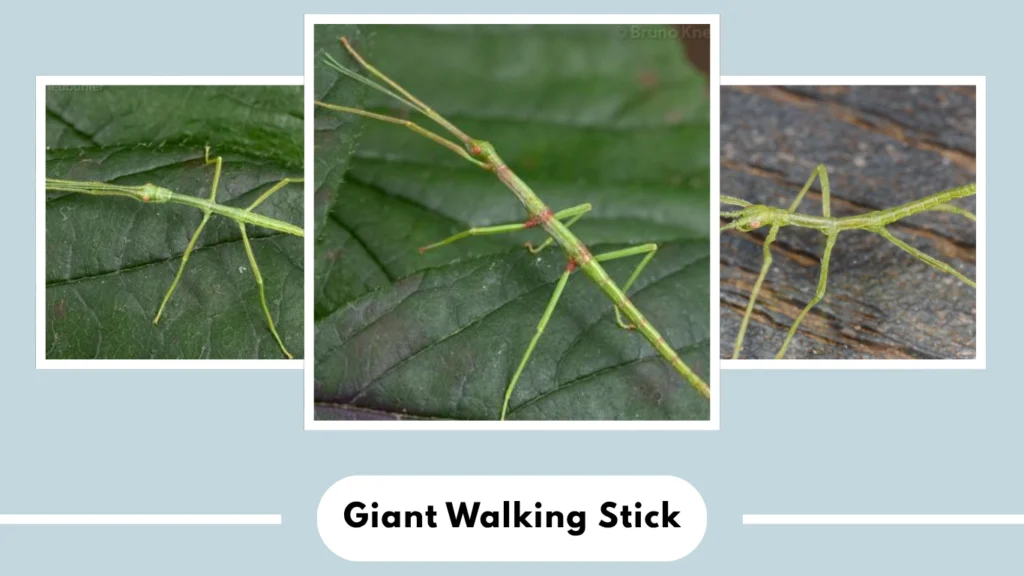
The Giant Walking Stick is the largest species in North America, native to the southern United States. Despite its impressive size, it’s harmless and relies on its twig-like appearance to stay hidden from predators.
Identification
- Color: Brown or grayish
- Size: Up to 17 cm (one of the longest in North America)
- Shape: Extremely slender and twig-like
- Movement: Slow, deliberate crawler
- Special Traits: Long legs and antennae; perfect mimic of twigs
Habitat
Found in woodlands, fields, and brushy areas across Texas, Louisiana, and surrounding regions. Prefers shrubs and small trees with narrow branches.
Behavior and Diet
Feeds on oak, blackberry, and other broadleaf plants. Often stays motionless during the day, hanging from branches like a stick.
Role in the Ecosystem
Helps regulate leaf growth and supports food chains as prey for birds and small mammals. Its large size makes it an iconic species in American entomology.
16. Malaysian Jungle Stick Insect (Phaenopharus khaoyaiensis)
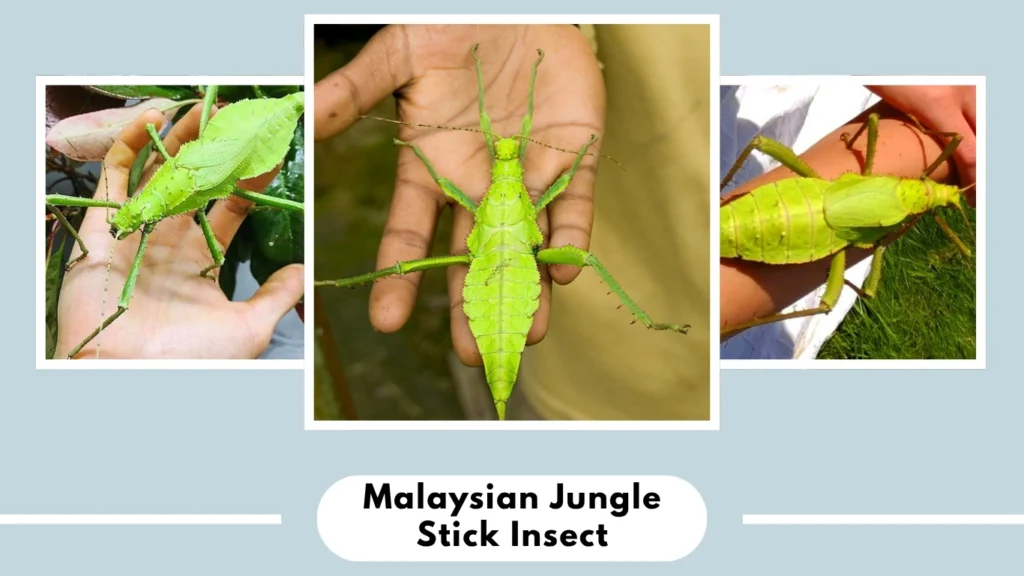
The Malaysian Jungle Stick Insect is a fascinating species found in the dense forests of Southeast Asia, particularly Thailand and Malaysia. It is slender, cryptic, and often remains unnoticed due to its perfect stick mimicry. Though relatively little-known, it adds to the incredible diversity of Asian phasmids.
Identification
- Color: Brown to greenish-brown
- Size: Around 10–12 cm
- Shape: Very thin and elongated with stick-like legs
- Movement: Extremely slow; mimics plant twigs
- Special Traits: Excellent camouflage in forest vegetation
Habitat
Inhabits rainforests and jungle edges in Thailand and Malaysia. Found resting on narrow branches and twigs during the day.
Behavior and Diet
Eats leaves of native tropical plants and vines. Freezes when approached, relying entirely on camouflage to avoid predators.
Role in the Ecosystem
Helps maintain plant balance in tropical forests and provides food for native predators like reptiles and birds. Its cryptic nature makes it a strong example of natural camouflage.
17. Arizona Walking Stick (Diapheromera arizonensis)
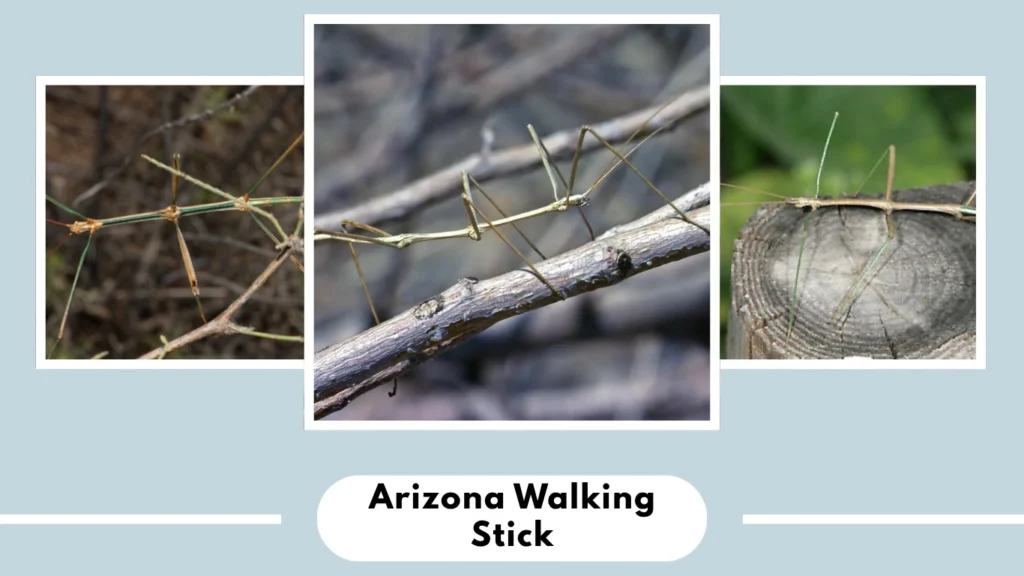
The Arizona Walking Stick is a slender, desert-adapted species native to the southwestern United States. Unlike tropical species, it thrives in arid shrublands and can often be seen on desert plants like creosote or mesquite.
Identification
- Color: Light brown to tan, sometimes with greenish tinges
- Size: Around 7–10 cm
- Shape: Thin and twig-like with long antennae
- Movement: Slow-moving; relies on camouflage
- Special Traits: Adapted to dry climates; blends with desert shrubs
Habitat
Found in deserts and semi-arid habitats of Arizona, New Mexico, and parts of Mexico. Typically lives among desert scrub and brush.
Behavior and Diet
Feeds on leaves of desert plants like mesquite and acacia. Mostly nocturnal to avoid the heat and reduce visibility to predators.
Role in the Ecosystem
Supports desert food chains by serving as both herbivore and prey. Its adaptations to arid life offer insights into insect survival strategies in extreme environments.
