

Sticktight fleas are unique parasites known for their ability to firmly attach to the skin of their hosts, unlike common fleas that move freely through fur or feathers. They often target sensitive areas like the face, eyes, and ears of animals, causing irritation, sores, and sometimes transmitting diseases. Found worldwide, these fleas infest poultry, pets, and small mammals, making them a significant concern for both farmers and pet owners.
1. Echidnophaga gallinacea (Sticktight Flea / Hen Flea)
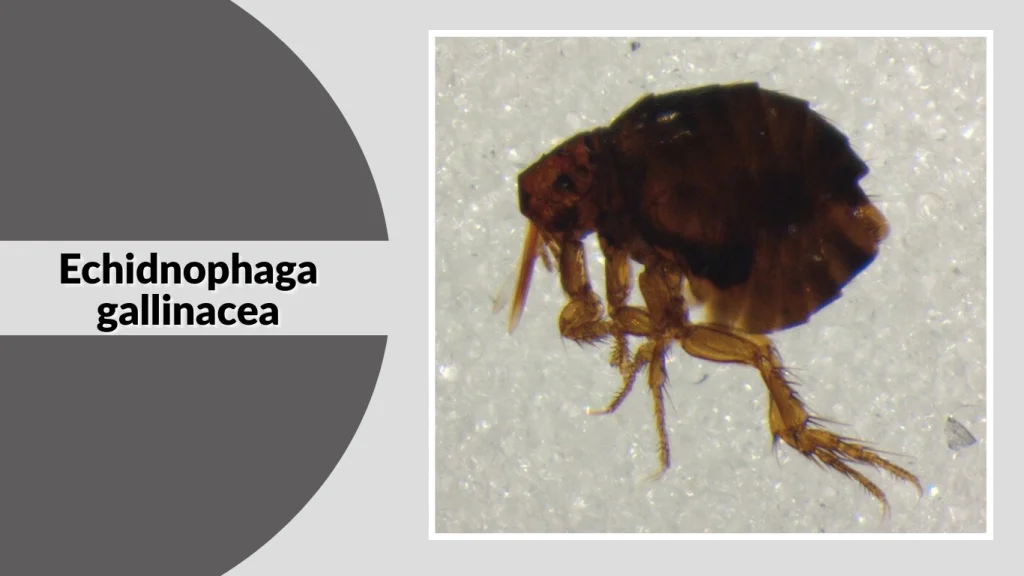
The sticktight flea (Echidnophaga gallinacea) is a parasitic insect commonly found on poultry, dogs, cats, and sometimes humans. Unlike most fleas that move freely through fur or feathers, this species attaches tightly to the host’s skin, often around the face, comb, wattles, and ears. Its strong grip makes it difficult to remove, and heavy infestations can cause severe irritation, anemia, or even death in small animals.
Identification
- Adult size: 1.5–2 mm long
- Color: Dark brown to black
- Body: Compact and flattened for attachment
- Head: Blunt with a short, squared front
- Distinctive trait: Firmly embeds mouthparts into host’s skin, remaining in place for long periods
Habitat
This flea is widespread in tropical and subtropical regions, particularly in rural areas where poultry and pets coexist. It is commonly found in chicken coops, barns, and outdoor resting spots of dogs and cats.
Diet
The sticktight flea feeds exclusively on blood. Once attached, it continuously sucks blood from the host, which can lead to skin swelling, wounds, and secondary infections.
Behavior
Unlike other fleas that hop from host to host, Echidnophaga gallinacea clings tightly to one spot and remains there for days or weeks. Females often cluster in large numbers on poultry combs or around the eyes of pets, causing scabbing and irritation. They are less active jumpers than typical fleas but are highly persistent once attached.
2. Echidnophaga myrmecobii (Rabbit Flea of Australia)
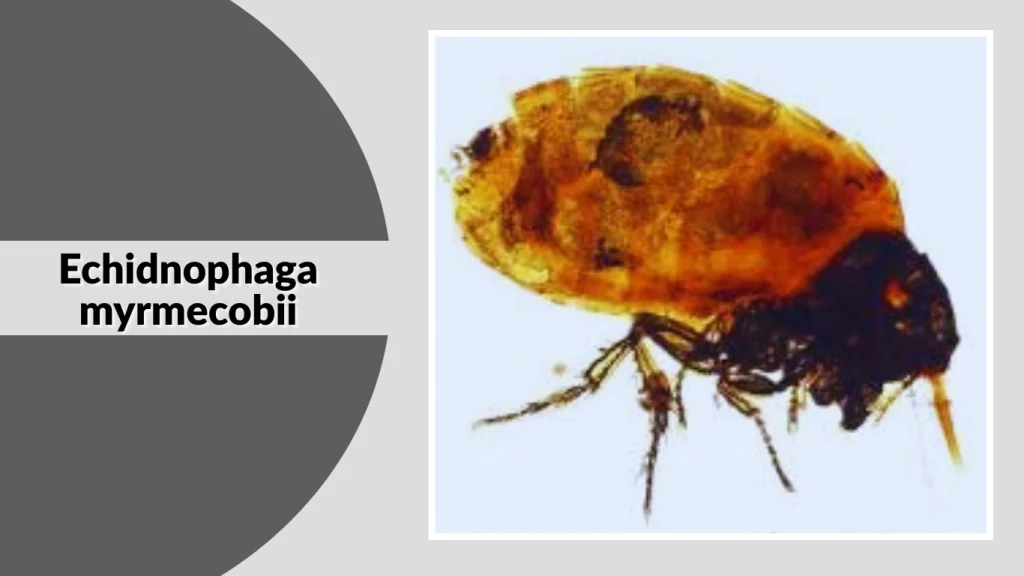
The rabbit sticktight flea (Echidnophaga myrmecobii) is a close relative of the hen flea and is primarily found on wild and domestic rabbits in Australia. It firmly attaches to the skin around the eyes, nose, and ears, often in large groups. Infestations can weaken rabbits, transmit diseases, and cause severe irritation.
Identification
- Adult size: About 1.5–2 mm
- Color: Dark brown to black
- Body: Compact, strongly adapted for clinging
- Head: Squared-off front, similar to E. gallinacea
- Key feature: Mouthparts penetrate deeply, anchoring the flea to rabbit skin
Habitat
This species is mostly found in Australia, inhabiting areas where rabbits burrow and rest. They are common in dry grasslands, farmlands, and bushy regions.
Diet
They feed on rabbit blood almost exclusively. In cases of heavy infestations, they can cause anemia and weight loss, particularly in young or weak rabbits.
Behavior
E. myrmecobii remains firmly attached to its host and rarely moves once it embeds itself. Females gather in clusters, especially around sensitive skin regions, leading to scabs and lesions. Unlike free-moving fleas, they show little hopping behavior and rely on close contact between rabbits for spreading.
3. Echidnophaga perilis
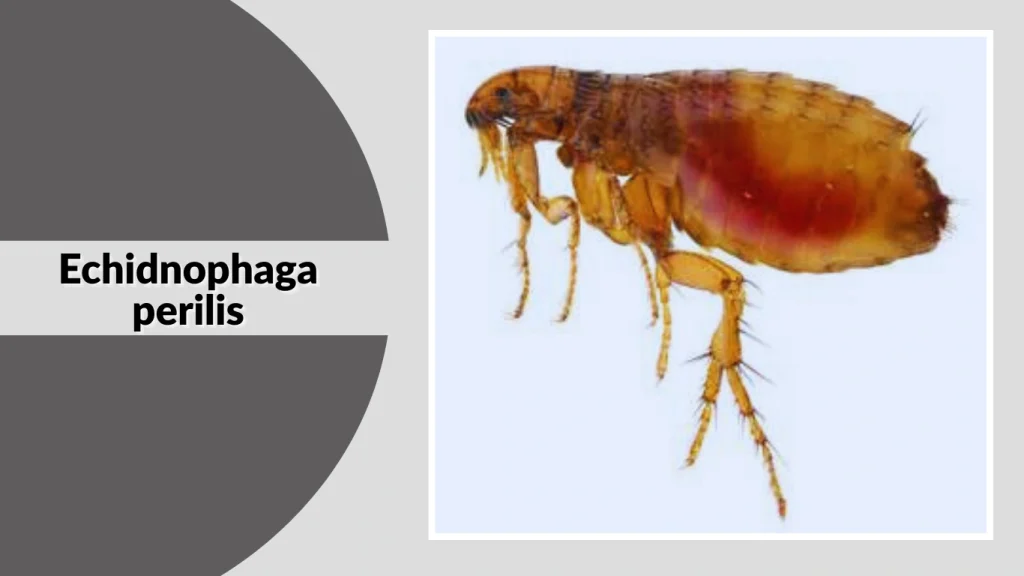
Echidnophaga perilis is a lesser-known species of sticktight flea that shares the same clinging behavior as other members of the genus. It attaches itself firmly to the skin of its host, causing irritation, wounds, and potential secondary infections. While not as widespread as E. gallinacea or E. myrmecobii, it is still of veterinary concern in areas where it occurs.
Identification
- Adult size: Around 1.5–2 mm
- Color: Dark brown
- Body: Flattened and compact, adapted for attachment
- Head: Short, squared, similar to other sticktight fleas
- Notable trait: Uses strong mouthparts to remain embedded in one location
Habitat
This flea inhabits warm and dry environments where suitable hosts are available. It is more localized compared to common sticktight fleas but still found in regions with small mammals and domestic animals.
Diet
It feeds on the blood of mammals and occasionally birds. Its bites may lead to scabbing, irritation, and hair loss around affected areas.
Behavior
Like other sticktight fleas, E. perilis remains fixed in one spot on the host rather than moving freely. It shows little jumping activity and instead spreads through direct contact with infested animals or contaminated environments.
4. Echidnophaga liopus
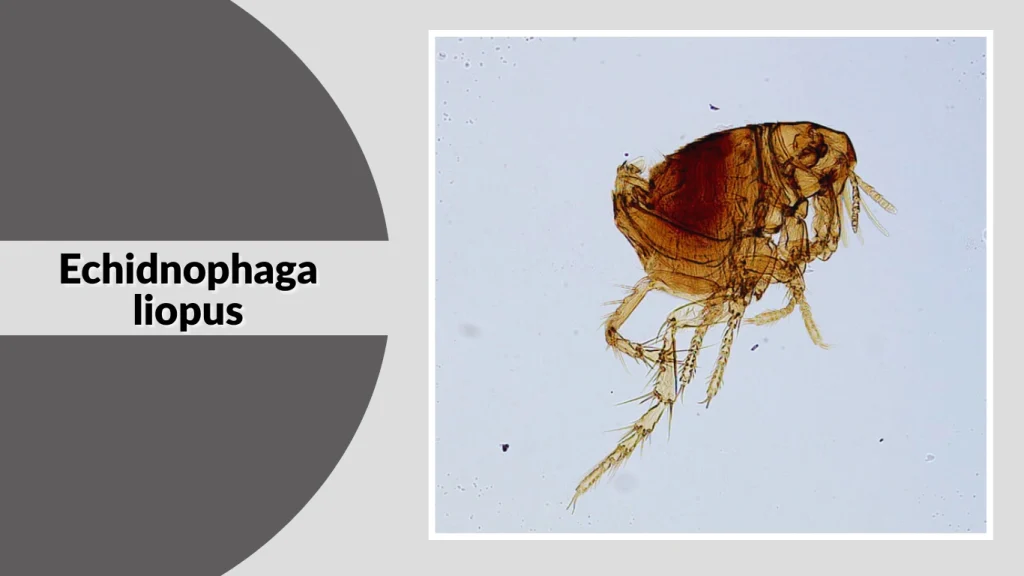
Echidnophaga liopus is another species of sticktight flea known for its firm attachment to hosts. Although not as globally recognized as E. gallinacea, it shares the same harmful parasitic behavior, embedding its mouthparts deeply into the skin. This flea is primarily reported on small mammals and sometimes poultry, where it can cause irritation and skin damage.
Identification
- Adult size: About 1.5–2 mm
- Color: Dark brown to black
- Body: Small, flattened, and compact for clinging
- Head: Squared-off front similar to other sticktight fleas
- Distinctive feature: Anchors securely to one spot, often in clusters
Habitat
E. liopus thrives in areas with warm climates and where small mammals and poultry are present. It is usually found in barns, animal shelters, or outdoor areas where hosts spend long periods resting.
Diet
This flea feeds on the blood of mammals and birds. Heavy infestations may lead to scabbing, open wounds, and in severe cases, anemia in smaller animals.
Behavior
Once attached, E. liopus rarely moves, embedding itself deeply and feeding continuously. Females often cluster on soft skin areas like around the eyes, ears, or combs of poultry. Their persistence makes them harder to remove compared to free-moving flea species.
5. Echidnophaga iberica

Echidnophaga iberica is a regional species of sticktight flea, mainly reported from the Iberian Peninsula. Like other members of the genus, it is characterized by its strong ability to cling to the skin of its host for extended periods. While not as widespread as E. gallinacea, it can still affect domestic animals and wildlife, causing skin irritation and discomfort.
Identification
- Adult size: Around 1.5–2 mm
- Color: Dark brown
- Body: Compact and laterally flattened
- Head: Squared-off shape typical of Echidnophaga species
- Key feature: Remains tightly attached to one spot, usually in small groups
Habitat
This flea is found mostly in southern Europe, especially in dry and warm rural areas where livestock, poultry, and small mammals are common. It inhabits animal shelters, nesting areas, and farmyards.
Diet
The flea feeds on the blood of mammals and sometimes birds. Its attachment can lead to localized wounds, swelling, and irritation, particularly in sensitive areas such as around the eyes and ears.
Behavior
Unlike free-roaming fleas, E. iberica stays fixed in one position, embedding its mouthparts into the host’s skin. It often clusters in groups, making infestations more harmful. Transmission occurs mainly through close animal contact.
6. Echidnophaga bradyta
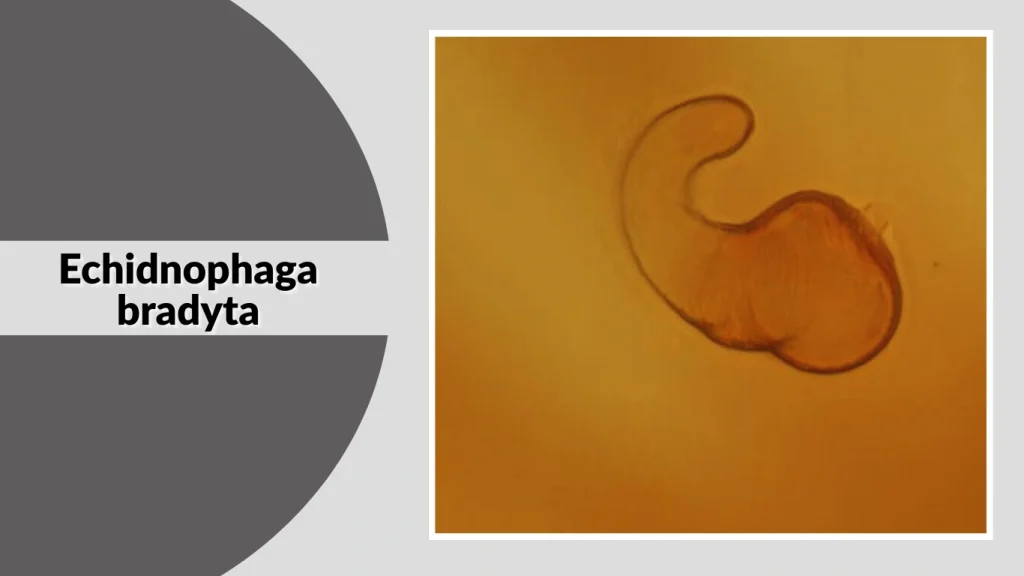
Echidnophaga bradyta is a lesser-documented sticktight flea species but follows the same parasitic lifestyle as other members of the genus. It firmly attaches itself to the host’s skin, feeding continuously on blood. While not as well-known as E. gallinacea or E. myrmecobii, it can still cause irritation and localized skin damage where infestations occur.
Identification
- Adult size: About 1.5–2 mm
- Color: Dark brown to nearly black
- Body: Small, compact, and laterally compressed
- Head: Squared-off, typical of sticktight fleas
- Defining trait: Strong mouthparts allow it to remain fixed on the host for long periods
Habitat
This species is found in regions with warm, dry climates where small mammals, poultry, or domestic animals live. It is usually present in animal shelters, rural farm areas, and outdoor resting spots of pets or livestock.
Diet
Feeds exclusively on host blood. Its persistent feeding often results in small wounds, crusting, or scabbing of the skin. In heavy infestations, it can contribute to anemia in smaller hosts.
Behavior
E. bradyta attaches tightly to sensitive areas such as the face, ears, or around the eyes. Unlike free-jumping fleas, it remains nearly motionless once attached, depending on host-to-host contact for spreading. It shows the same “sticktight” behavior that defines its genus.
7. Echidnophaga longiceps
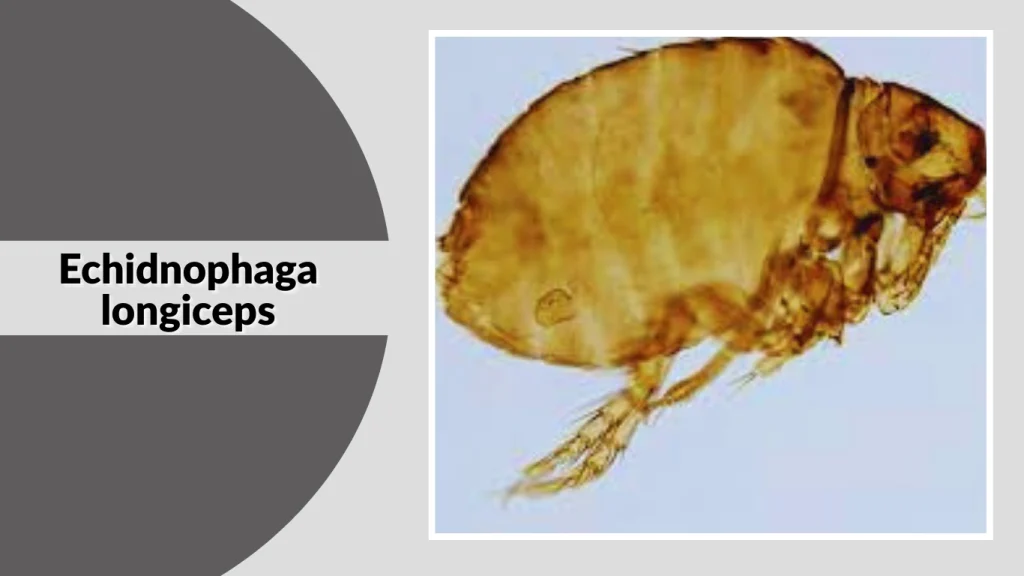
Echidnophaga longiceps is a species of sticktight flea distinguished by its relatively elongated head compared to other members of the genus. Like other sticktight fleas, it firmly embeds itself into the host’s skin, causing irritation, swelling, and sometimes secondary infections. Though less studied than E. gallinacea, it poses risks to small mammals, birds, and domestic animals in regions where it occurs.
Identification
- Adult size: About 1.5–2 mm
- Color: Dark brown to black
- Body: Flattened and compact for clinging
- Head: Longer and more elongated than most Echidnophaga species
- Key trait: Strong anchoring mouthparts, remaining fixed in one location
Habitat
This flea is usually found in warm, dry environments with a high presence of small mammals or poultry. It can survive in barns, nesting sites, and areas where animals frequently rest.
Diet
Feeds primarily on the blood of mammals and birds. Its strong mouthparts allow prolonged feeding, which can lead to wounds, skin thickening, or scabs on the host.
Behavior
Unlike mobile flea species, E. longiceps clings tightly to its host and rarely moves once embedded. It clusters in sensitive regions such as the eyes, ears, and face. Its spread typically occurs through close contact between animals, rather than jumping from host to host.
8. Echidnophaga cornicina

Echidnophaga cornicina is a rare sticktight flea species that follows the same lifestyle as its relatives by firmly attaching to the skin of its host. Though not as commonly encountered as E. gallinacea, it still poses risks of irritation, skin damage, and localized infections in animals where it is present.
Identification
- Adult size: Around 1.5–2 mm
- Color: Dark brown to nearly black
- Body: Compact, laterally flattened for clinging
- Head: Squared and slightly angled, typical of the genus
- Distinctive trait: Strong mouthparts that embed deeply, making removal difficult
Habitat
E. cornicina is generally reported in warm rural areas, particularly where small mammals and domestic animals are kept. It tends to thrive in barns, poultry houses, and outdoor shelters.
Diet
Feeds exclusively on blood from mammals and sometimes birds. Its fixed feeding behavior can cause swelling, crusts, or sores on the skin of its host.
Behavior
This flea clings tightly to one location on the host, most often around sensitive areas such as the ears, eyes, or face. It rarely hops once attached and relies on animal-to-animal contact for spreading. Clustering is common in infestations, increasing irritation and risk of skin infections.
9. Echidnophaga calabyi
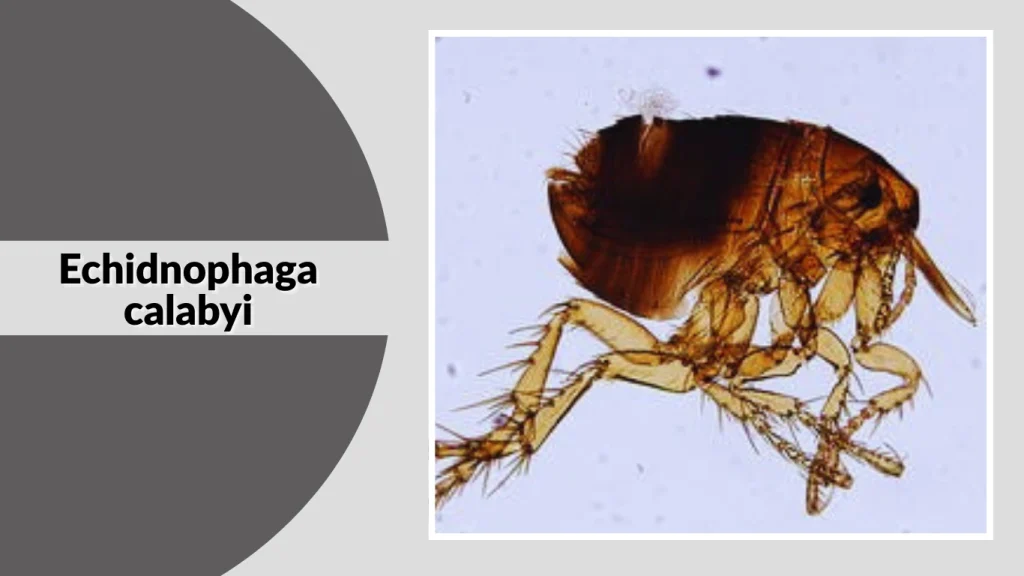
Echidnophaga calabyi is a lesser-known sticktight flea species, closely related to the common hen flea. Like other members of its genus, it is characterized by its ability to embed firmly into the host’s skin, causing irritation and sometimes secondary infections. Though not as widespread, it remains a concern in regions where small mammals, poultry, and pets are present.
Identification
- Adult size: About 1.5–2 mm
- Color: Dark brown
- Body: Flattened and compact, adapted for clinging
- Head: Squared-off front, typical of Echidnophaga fleas
- Distinctive trait: Remains attached to a single site on the host for long periods
Habitat
This flea is most commonly found in warm rural settings where domestic animals, poultry, or small wild mammals are abundant. It inhabits animal resting places, barns, and outdoor soil where hosts spend time.
Diet
Feeds solely on blood, primarily from small mammals and poultry. Heavy infestations can result in crusting skin lesions, anemia, and reduced health in young or weakened animals.
Behavior
E. calabyi is less mobile than typical fleas, preferring to remain fixed at the point of attachment. It is often found in clusters around sensitive skin areas, particularly the face and ears. Its persistence makes removal challenging without proper treatment.
10. Echidnophaga arfakensis
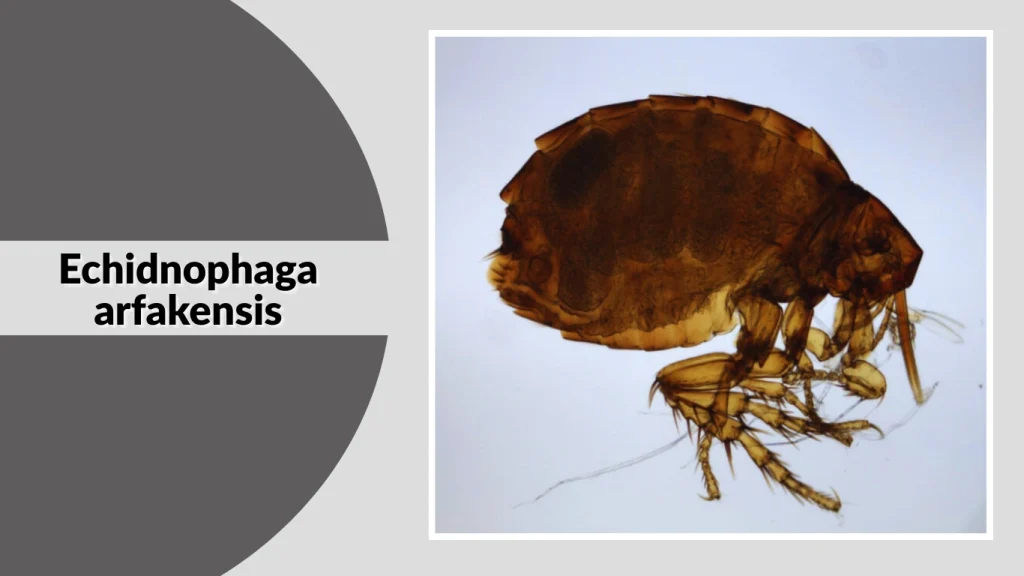
Echidnophaga arfakensis is one of the lesser-documented species of sticktight fleas, mainly noted in specific geographic regions. Like its relatives, it strongly embeds into the host’s skin with powerful mouthparts, leading to irritation, sores, and potential infections. Though not as widespread as E. gallinacea, it follows the same harmful parasitic behavior.
Identification
- Adult size: Around 1.5–2 mm
- Color: Dark brown to black
- Body: Small, laterally flattened, adapted for firm attachment
- Head: Squared and compact, typical of Echidnophaga species
- Unique trait: Anchors tightly to the host, remaining in place for days or weeks
Habitat
This species is regionally distributed, often found in rural environments where small mammals and poultry are common. It thrives in outdoor shelters, soil near animal resting sites, and poorly managed animal housing.
Diet
Feeds exclusively on the blood of mammals and occasionally birds. Persistent feeding can lead to scabs, skin inflammation, and even anemia in severe infestations.
Behavior
E. arfakensis shows the typical “sticktight” behavior—once attached, it rarely moves, preferring to remain embedded in a single spot. Infestations often appear in clusters, especially around the face, eyes, and ears of hosts. Spread occurs mainly through close host contact rather than free movement.
