
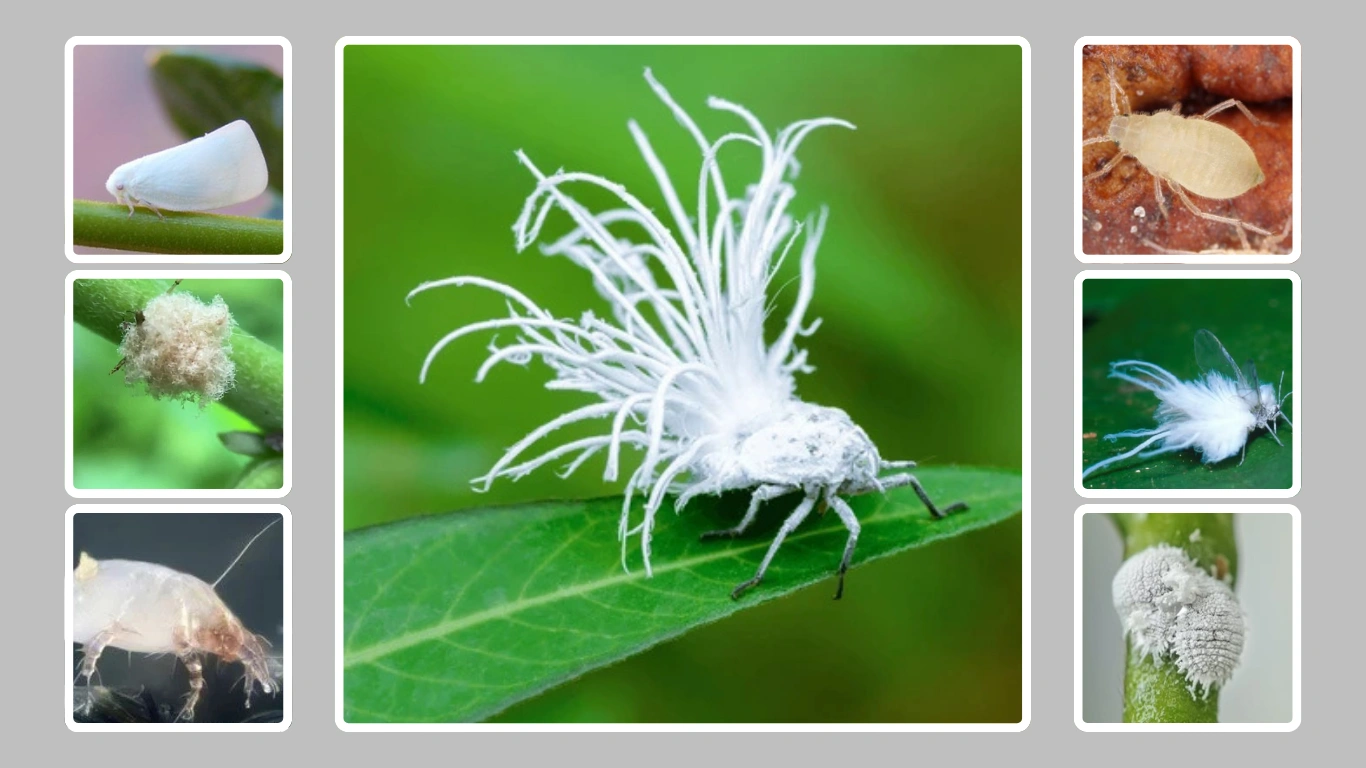
Tiny white insects can be a mystery in homes, gardens, and greenhouses. From fluttering whiteflies on leaves to nearly invisible spider mites hiding under plant foliage, these pale pests come in many forms. While some are harmless decomposers, others damage plants or infest food and furniture. This guide lists 22 types of small white insects, each with clear identification tips, habitat info, and behavioral traits to help you recognize and manage them effectively.
1. Whiteflies
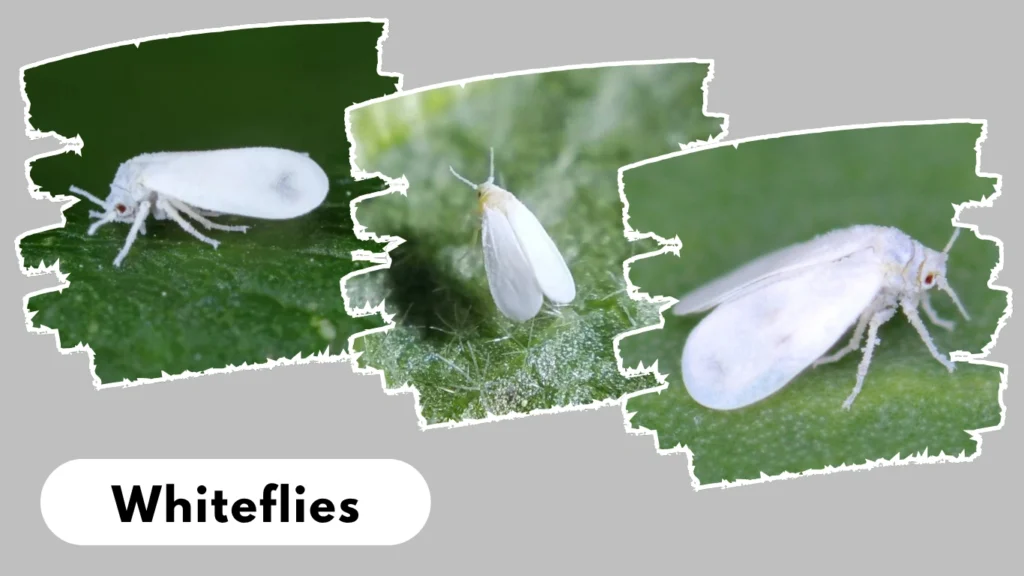
Whiteflies are tiny, soft-bodied insects commonly found on the undersides of plant leaves. Despite their name, they are not true flies but are closely related to aphids and mealybugs. These insects are known for their powdery white wings and their ability to reproduce quickly, making them a persistent pest in greenhouses, gardens, and indoor plants.
Identification
- Size: Around 1–2 mm long
- Shape: Moth-like body with white, waxy wings
- Color: Pure white or slightly pale yellow body
- Location: Typically found on the underside of leaves
- Movement: Fly in short bursts when disturbed
Habitat and Behavior
Whiteflies prefer warm, humid environments and thrive on various host plants, particularly ornamentals and vegetables. They feed by piercing plant tissue and sucking sap, which can lead to wilting, yellowing, and reduced plant vigor. Heavy infestations may also result in sooty mold due to the honeydew they excrete.
Reproduction and Lifecycle
A female whitefly can lay hundreds of eggs in her lifetime, often in circular patterns on leaf surfaces. These eggs hatch into tiny, crawling nymphs which then settle and become immobile, feeding on plant sap. The entire lifecycle can complete in as little as 3 weeks under optimal conditions.
2. Mealybugs
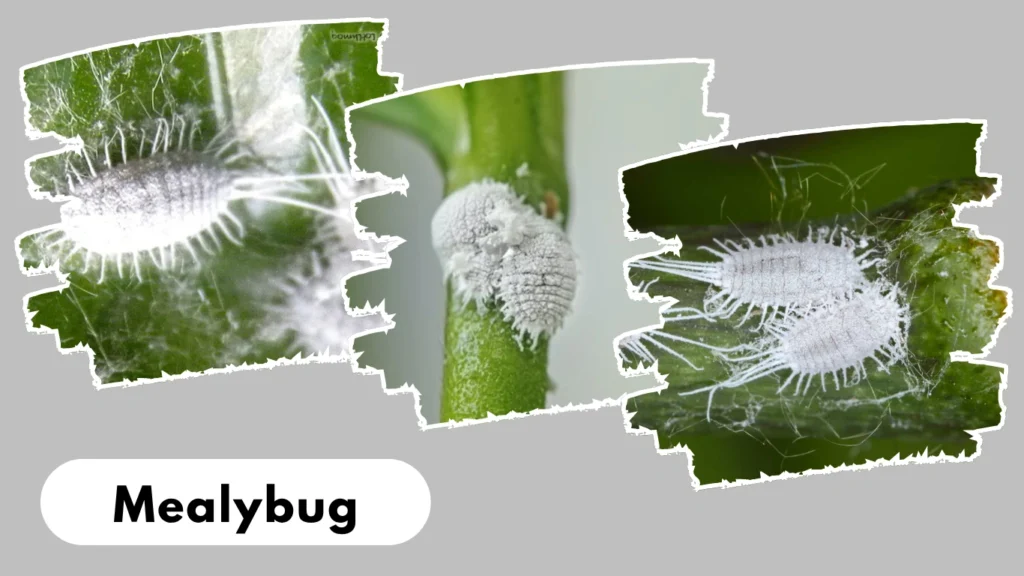
Mealybugs are slow-moving, soft-bodied insects covered with a white, powdery or cotton-like wax coating. They are common plant pests, particularly on houseplants, succulents, and greenhouse crops. Their presence can stunt plant growth and lead to yellowing or dropping leaves.
Identification
- Size: 1–4 mm long
- Shape: Oval, segmented body
- Color: White with a waxy or cottony texture
- Location: Found in leaf joints, stems, or roots
- Movement: Slow crawling
Habitat and Behavior
Mealybugs prefer warm, moist environments and often hide in plant crevices. They feed on plant sap and excrete honeydew, encouraging mold growth. Infestations can spread quickly without early detection.
Reproduction and Lifecycle
Female mealybugs lay eggs in protective cotton-like sacs. After hatching, nymphs spread across the plant. Most species reproduce rapidly, especially in indoor conditions.
3. Woolly Aphids
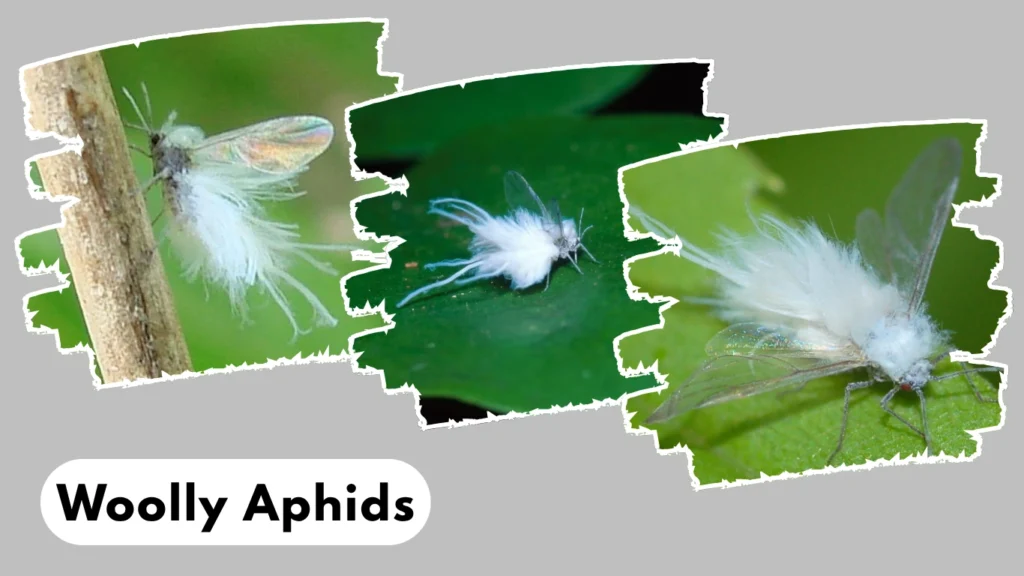
Woolly aphids are sap-sucking insects that appear as fuzzy white clumps on trees, shrubs, and garden plants. Their waxy coating gives them a wool-like appearance, which protects them from predators and environmental stress.
Identification
- Size: 2–4 mm long
- Shape: Pear-shaped body hidden under waxy filaments
- Color: Pale green or blue beneath white wool coating
- Location: Found on stems, bark, and leaf undersides
- Movement: Slow-moving, often in colonies
Habitat and Behavior
Woolly aphids cluster on host plants like apple, elm, or alder trees. They feed by inserting their mouthparts into plant tissue to extract sap. The sugary waste they produce can lead to mold and attract ants.
Reproduction and Lifecycle
Woolly aphids reproduce both sexually and asexually. Many species give live birth during the growing season, allowing colonies to grow quickly. Winged forms may appear to colonize new plants.
4. Spider Mites (White Variety)
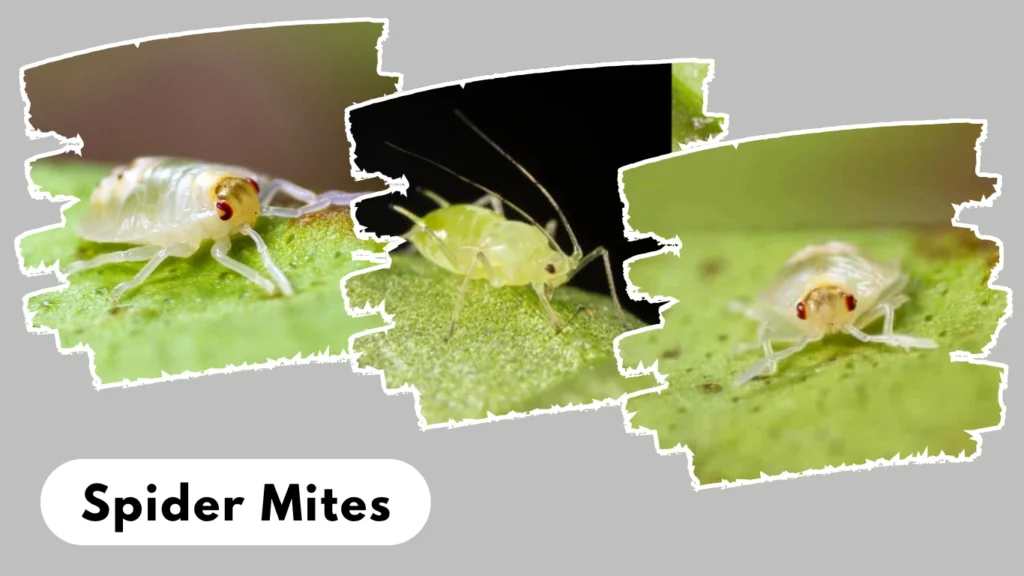
White spider mites are extremely small arachnids, not true insects, that infest a variety of indoor and outdoor plants. While many spider mites are red or brown, some appear white or translucent, especially in their early stages or specific species.
Identification
- Size: Less than 1 mm
- Shape: Oval body, eight legs
- Color: White or pale translucent
- Location: Underside of leaves, often near webbing
- Movement: Very slow, almost invisible without magnification
Habitat and Behavior
They thrive in hot, dry conditions and often go unnoticed until plants show damage. They pierce plant cells to feed, causing stippling, leaf curling, and eventual leaf drop. Fine webbing is a common sign of infestation.
Reproduction and Lifecycle
Spider mites lay tiny eggs on the underside of leaves. The life cycle—from egg to adult—can be as short as 5 days under ideal conditions, allowing populations to explode rapidly.
5. Springtails
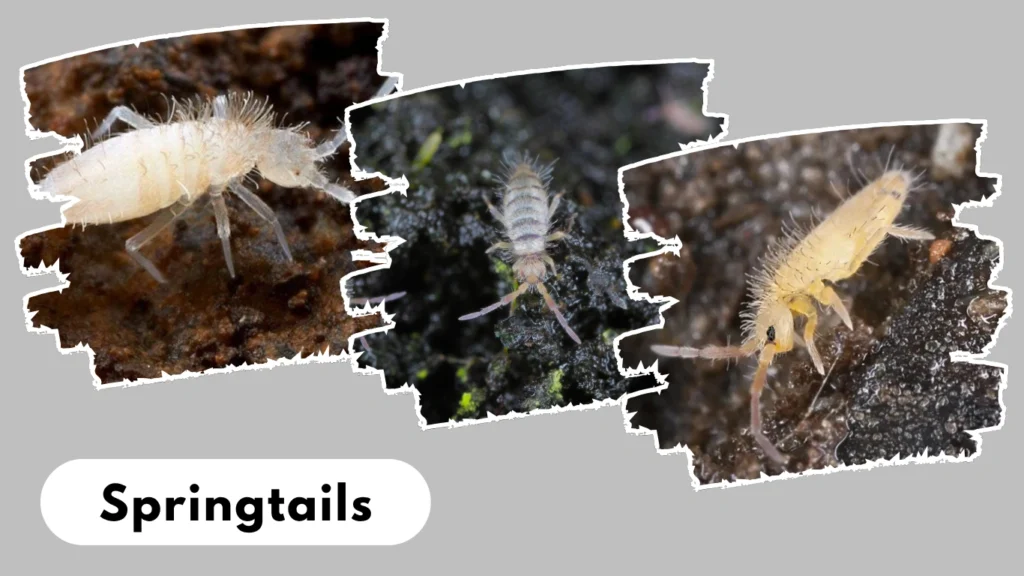
Springtails are tiny, wingless hexapods commonly found in moist soil, compost, or leaf litter. Though they are often mistaken for white mites, they do not harm plants and are generally considered beneficial decomposers.
Identification
- Size: 1–2 mm
- Shape: Slender or globular body with a forked tail (furcula)
- Color: White, pale gray, or translucent
- Location: Soil surface, under pots, around drains
- Movement: Jumping motion when disturbed
Habitat and Behavior
Springtails prefer damp environments and feed on decaying organic matter, fungi, and algae. Indoors, they may appear around sinks, potted plants, or basements with excess moisture.
Reproduction and Lifecycle
They reproduce by laying eggs in moist substrates. Their populations grow rapidly under favorable conditions, but they tend to disappear once the environment dries out.
6. Thrips (Pale Species)
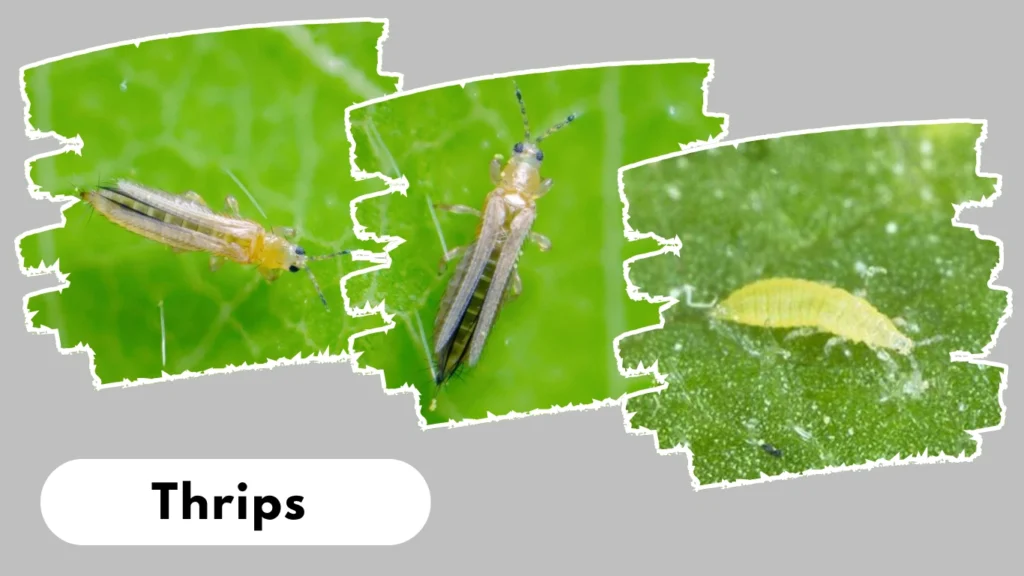
Some species of thrips appear pale or whitish, especially during early life stages. These tiny insects are known for their slender bodies and fast, darting movements. They are serious pests of many flowers, vegetables, and ornamental plants.
Identification
- Size: 1–2 mm
- Shape: Slender, elongated body with narrow wings
- Color: Pale white to yellowish
- Location: Found on flower petals, buds, and leaf undersides
- Movement: Quick, darting movements when disturbed
Habitat and Behavior
Thrips feed by scraping plant surfaces and sucking out contents, leaving silvery or discolored streaks. They can also transmit plant viruses, making them especially damaging in greenhouses and gardens.
Reproduction and Lifecycle
Female thrips lay eggs inside plant tissues. Nymphs emerge and feed immediately. Depending on conditions, they can complete their life cycle in 2–3 weeks, leading to multiple generations per season.
7. White Scale Insects
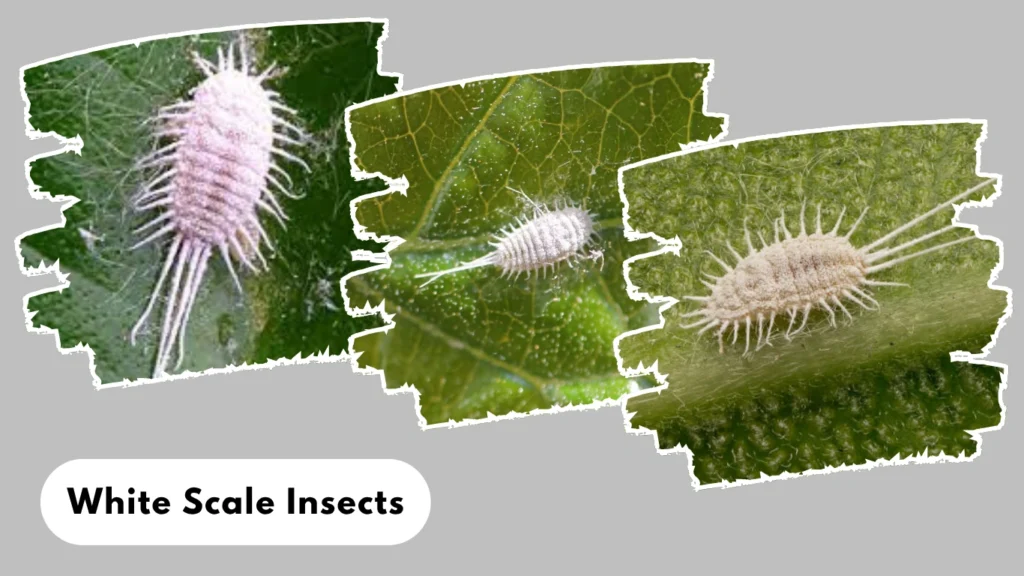
White scale insects are immobile pests that attach themselves to stems, leaves, or fruits. They appear as small, white bumps and often go unnoticed until plant health declines.
Identification
- Size: 1–3 mm
- Shape: Dome or shell-like body
- Color: White, waxy outer coating
- Location: Attached to stems, leaf veins, or fruits
- Movement: Immobile once settled
Habitat and Behavior
They thrive in warm, protected areas of plants. As they suck sap from their host, they weaken the plant and excrete sticky honeydew, encouraging mold growth.
Reproduction and Lifecycle
Female scales lay eggs under their protective shell. Once hatched, crawlers (the only mobile stage) move to new locations before settling down and forming their own covering. Multiple overlapping generations are common.
8. Booklice
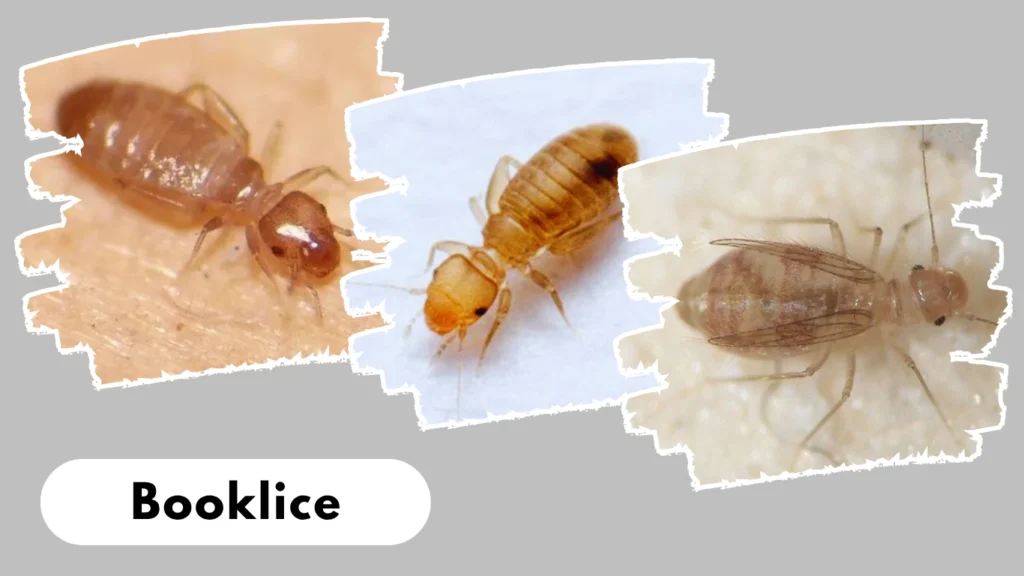
Booklice, also called psocids, are tiny, soft-bodied insects that can appear white or pale gray. They are not true lice and are harmless to humans but may become a nuisance in humid indoor environments.
Identification
- Size: 1–2 mm
- Shape: Elongated body with large head and antennae
- Color: Pale white to translucent
- Location: Found on books, stored food, cardboard, or damp walls
- Movement: Slow crawling, often seen in clusters
Habitat and Behavior
Booklice prefer high humidity and are commonly found in bathrooms, kitchens, and basements. They feed on mold, fungi, and microscopic organic material rather than fabric or paper.
Reproduction and Lifecycle
Booklice reproduce rapidly in warm, moist conditions. Females lay eggs in hidden crevices. Nymphs resemble adults and mature in a few weeks. Drying the environment usually reduces infestations.
9. White Fungus Gnats
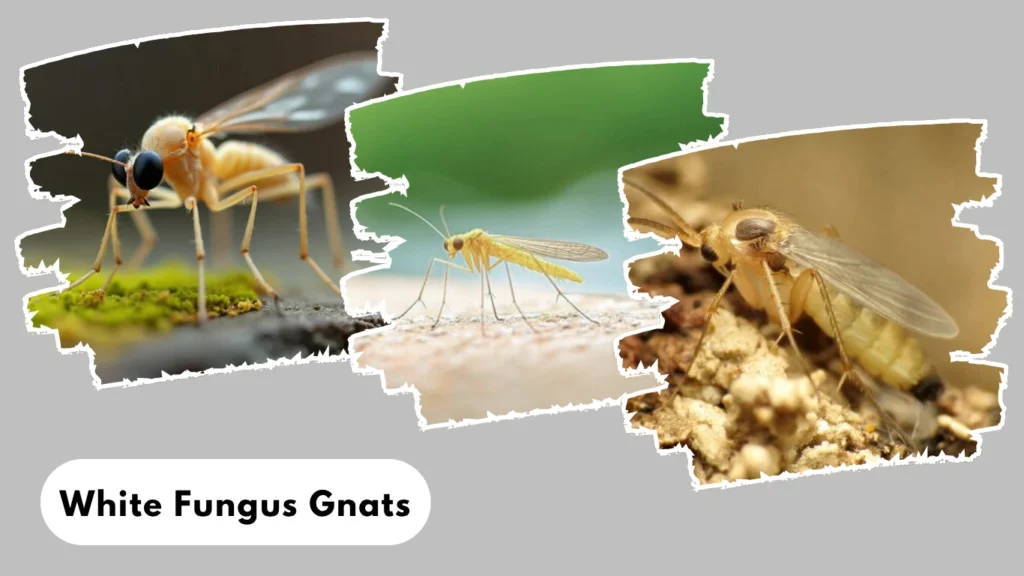
White fungus gnats are a rare variation of the common dark-winged fungus gnat. Some species or early larval stages may appear white, especially when found in damp soils.
Identification
- Size: Adults 2–4 mm; larvae up to 5 mm
- Shape: Slender body with long legs and antennae
- Color: Larvae are white or clear with black heads
- Location: Found in moist potting soil and around houseplants
- Movement: Larvae crawl in soil; adults fly near plants
Habitat and Behavior
Fungus gnats thrive in overwatered soil and feed on decaying organic matter and fungi. Larvae can damage young roots, making them harmful to seedlings and delicate plants.
Reproduction and Lifecycle
Adult gnats lay eggs in moist soil. The larvae hatch and live in the top layer of soil before pupating. Their entire lifecycle can be completed in about 3–4 weeks.
10. White Root Aphids
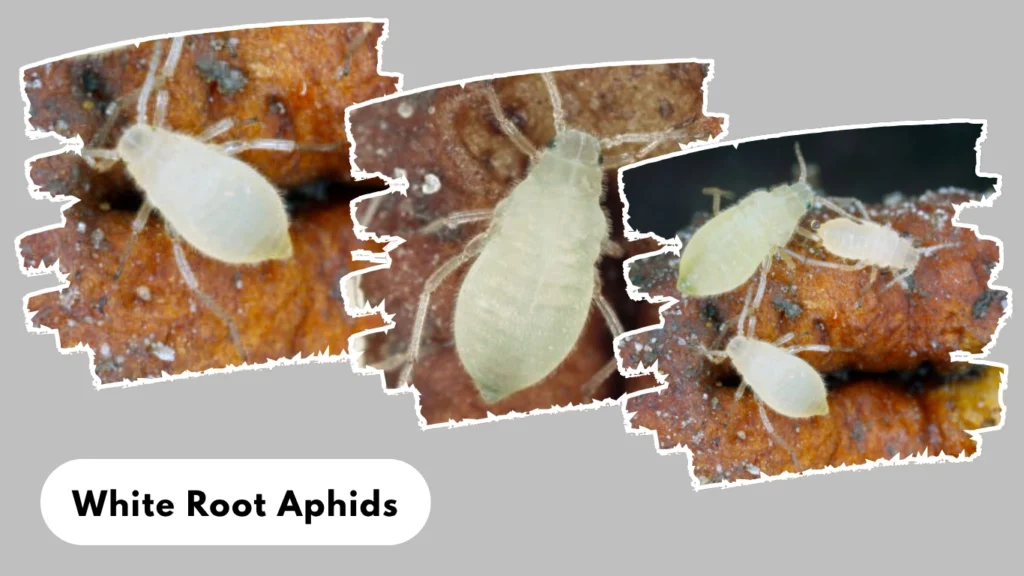
White root aphids are subterranean pests that attack plant roots, especially in container-grown or hydroponic systems. Unlike green or black aphids, these appear pale white and are often mistaken for mealybugs due to their waxy coating.
Identification
- Size: 1–2 mm
- Shape: Pear-shaped body
- Color: White to translucent with a waxy coating
- Location: Found in root zones, soil, or hydroponic media
- Movement: Slow crawling, usually hidden in soil
Habitat and Behavior
These aphids feed on plant roots, causing stunted growth, yellowing leaves, and wilting. Their feeding weakens the plant and may also attract ants that feed on their honeydew.
Reproduction and Lifecycle
White root aphids reproduce both sexually and asexually. Winged adults may appear to colonize new pots or areas. The lifecycle can be rapid, especially in warm indoor setups.
11. White Grain Mites
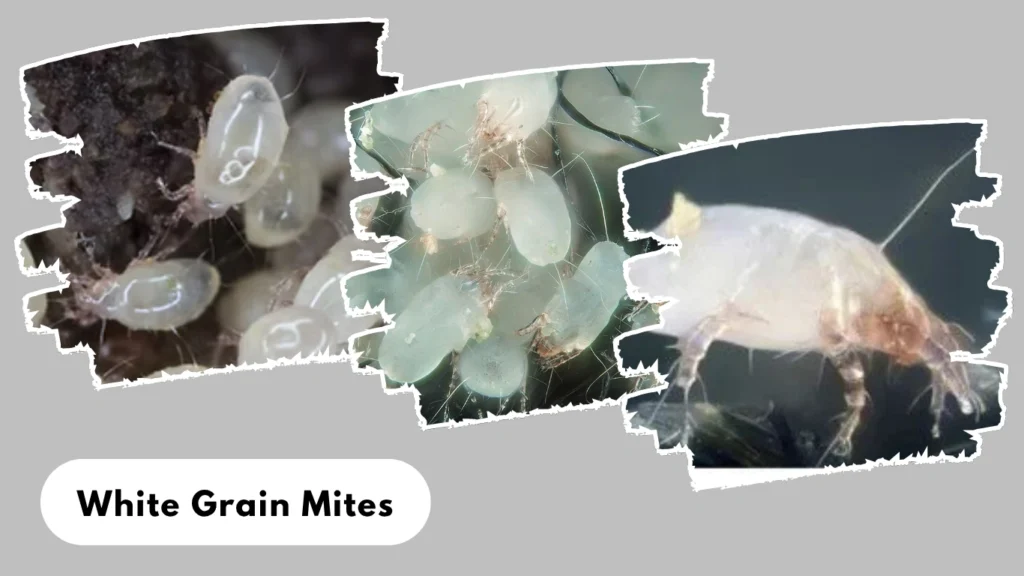
White grain mites are tiny arthropods that infest stored grains, flour, pet food, and other pantry products. They are difficult to spot without magnification and often go unnoticed until there’s a significant infestation.
Identification
- Size: 0.3–0.5 mm
- Shape: Round body with fine hairs
- Color: Whitish to transparent
- Location: Found in dry food containers or pantry crevices
- Movement: Slow-moving but build up in large numbers
Habitat and Behavior
They thrive in warm, humid environments with high food availability. Infestations can result in a dusty or powdery appearance in stored products, often accompanied by a sweet, musty odor.
Reproduction and Lifecycle
Grain mites lay clusters of eggs in food material. Under ideal conditions, their lifecycle completes in about 10 days, allowing populations to explode rapidly if not controlled.
12. White Clover Mites
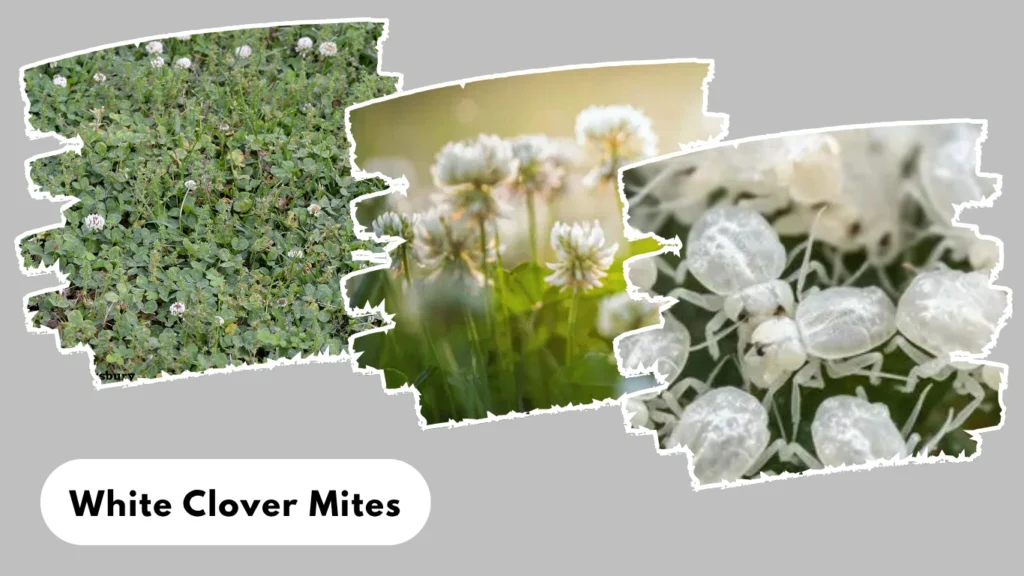
White clover mites are tiny arachnids that may appear pale or white, especially in their immature stages. While adults are typically reddish, their nymphs can range from light pink to white, depending on lighting and surface.
Identification
- Size: 0.5 mm or smaller
- Shape: Oval body with long front legs
- Color: Pale pink to white (immature); red when mature
- Location: Found on walls, windowsills, and around grass or clover
- Movement: Slow crawling, often in large numbers
Habitat and Behavior
These mites live outdoors in grassy areas but often invade homes during sudden temperature changes. Though harmless to humans, they can be a nuisance and may leave reddish stains when crushed.
Reproduction and Lifecycle
Clover mites reproduce without mating (parthenogenesis). Eggs are laid in cracks or beneath bark. They hatch in spring or fall, and their entire lifecycle can be completed in just a few weeks.
13. White Lacewing Larvae
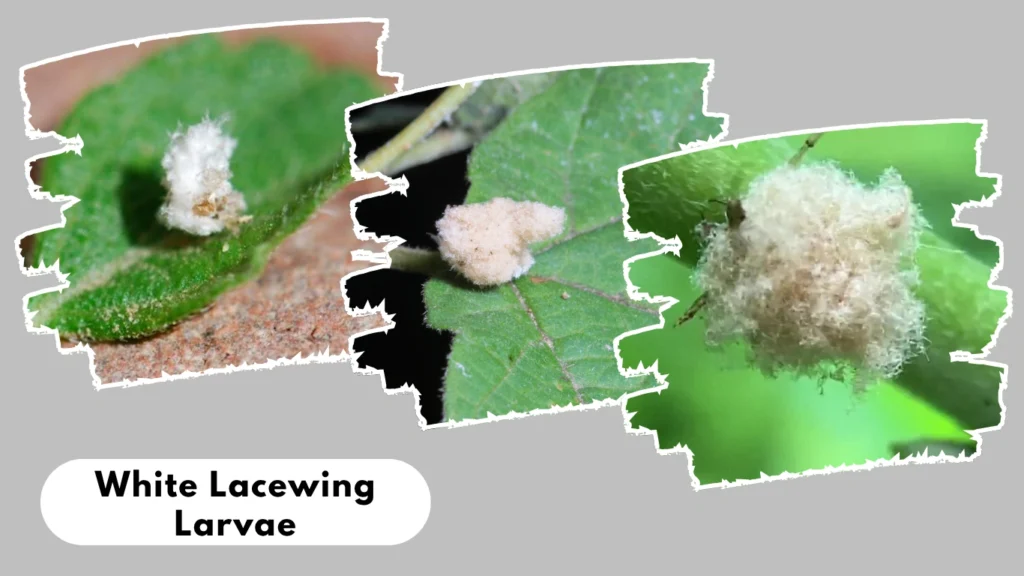
White lacewing larvae are the immature stage of the green lacewing insect. Though adults are green with transparent wings, their larvae are predatory and appear pale or whitish, resembling tiny alligators.
Identification
- Size: 1–3 mm
- Shape: Elongated, curved body with large jaws
- Color: White to pale gray or translucent
- Location: Found on leaves, flowers, or near aphid colonies
- Movement: Slow crawling, highly active hunters
Habitat and Behavior
Lacewing larvae are beneficial insects, feeding on aphids, mites, whiteflies, and thrips. They are often used in biological pest control and are commonly found in gardens or greenhouses.
Reproduction and Lifecycle
Eggs are laid on thin stalks on plant surfaces. After hatching, the larvae actively feed for about 2–3 weeks before pupating. One larva can consume hundreds of pests during its development.
14. White Ants (Termite Nymphs)
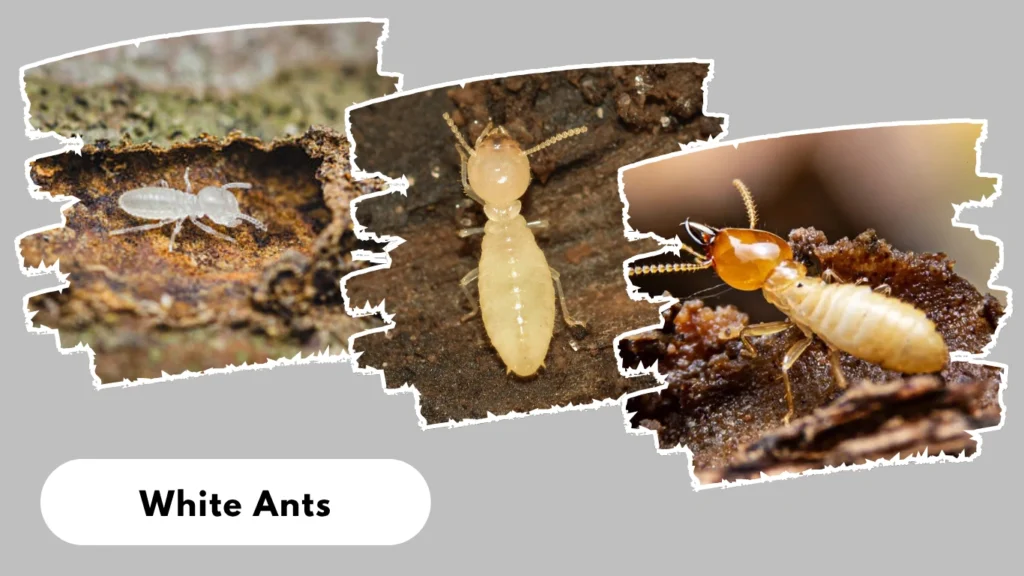
The term “white ants” is a common misnomer for termites, particularly their pale nymph stage. These soft-bodied insects live in colonies and feed on wood and cellulose-based materials, often causing structural damage.
Identification
- Size: 3–6 mm (varies by caste and age)
- Shape: Elongated body with straight antennae
- Color: Creamy white or pale beige
- Location: Found in wood, soil, or hidden crevices
- Movement: Slow, secretive, usually in groups
Habitat and Behavior
White termites live in colonies underground or inside wooden structures. They are most often seen during infestations when damage becomes apparent. Unlike ants, they avoid light and build mud tubes for protection.
Reproduction and Lifecycle
Eggs hatch into white nymphs, which later develop into workers, soldiers, or reproductives. Colonies grow slowly but can become massive over time if undetected.
15. White Leafhoppers
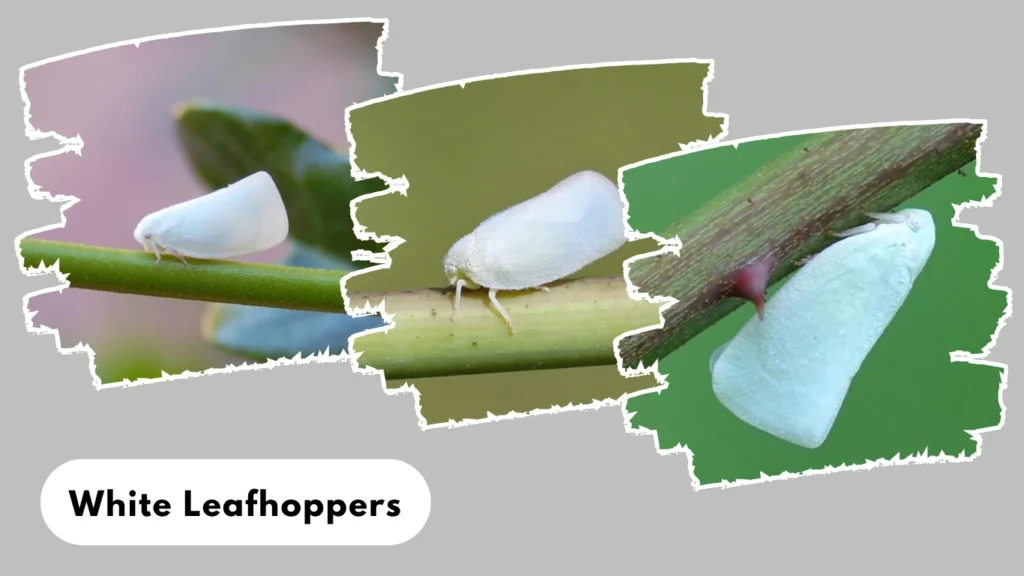
White leafhoppers are small, sap-feeding insects that jump or fly away when disturbed. While most leafhoppers are green or brown, some species—especially nymphs—appear pale or white.
Identification
- Size: 2–4 mm
- Shape: Wedge-shaped body with long hind legs
- Color: Pale white or translucent in nymph stages
- Location: Found on the undersides of leaves
- Movement: Quick jumping or flying when approached
Habitat and Behavior
Leafhoppers feed on a variety of plants, including vegetables, fruit trees, and ornamental plants. They damage plants by sucking sap and transmitting diseases, often leaving speckled or yellowed foliage.
Reproduction and Lifecycle
Females lay eggs inside leaf tissue. After hatching, the nymphs molt several times before becoming adults. Multiple generations can occur in a single growing season, especially in warm climates.
16. White Wood Mites
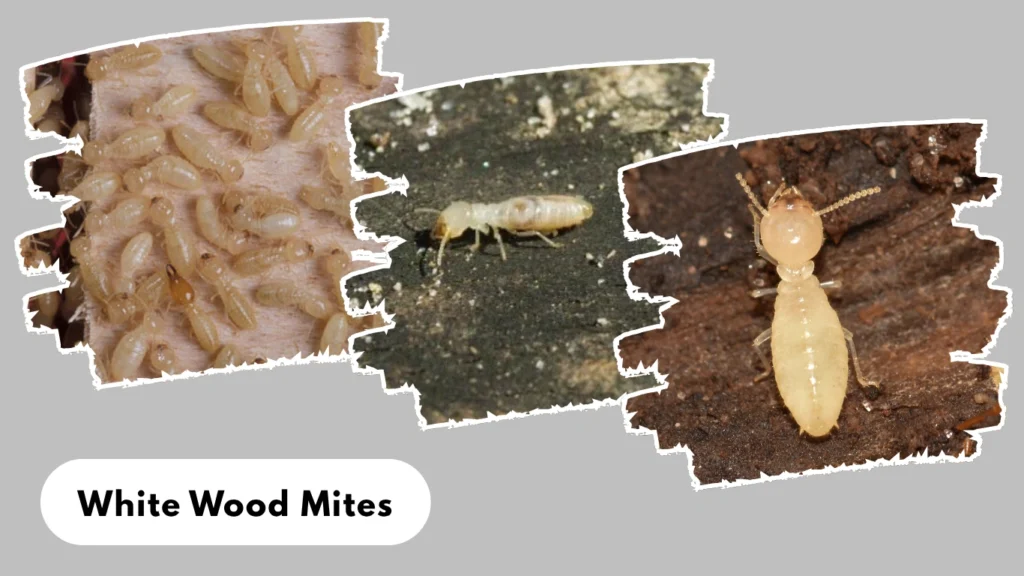
White wood mites are tiny mites often found in damp wood, old furniture, or near decaying organic material. Though harmless to humans, their presence can be concerning, especially in large numbers.
Identification
- Size: 0.5–1 mm
- Shape: Oval, soft-bodied with fine hairs
- Color: Bright white or pale cream
- Location: Found on old wood, baseboards, or potted plants
- Movement: Slow crawling, sometimes seen in clusters
Habitat and Behavior
They thrive in moist, humid environments and often appear in crawl spaces, basements, or under sinks. Unlike dust mites, wood mites don’t feed on skin cells but prefer decaying wood or mold.
Reproduction and Lifecycle
Wood mites reproduce quickly when humidity is high. Females lay eggs in cracks or soil, and populations can surge in moist areas. Lowering humidity usually helps control them naturally.
17. White Psyllids
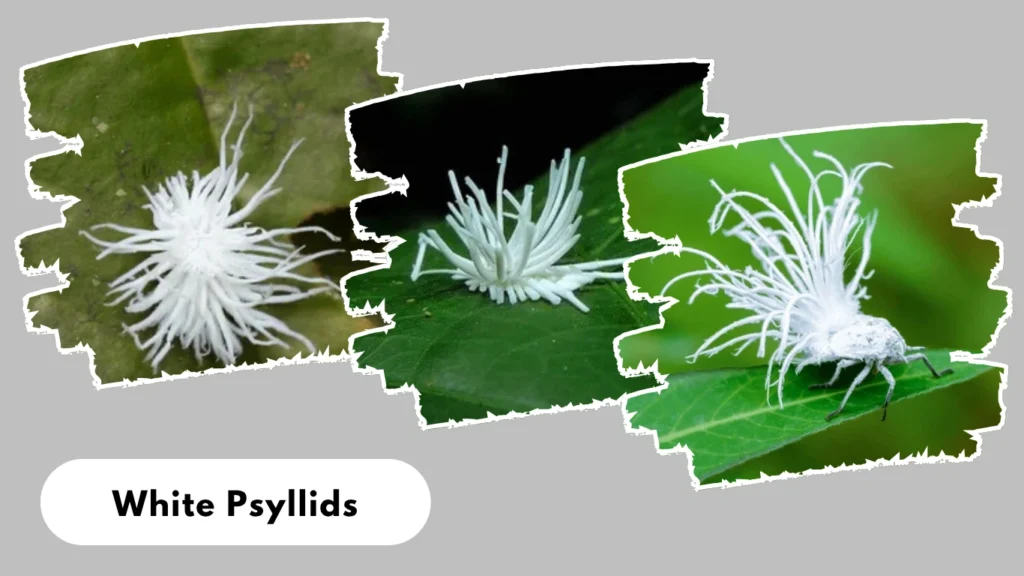
White psyllids, also known as jumping plant lice, are small sap-feeding insects that resemble miniature cicadas. Some species, particularly nymphs, have a waxy white coating that makes them look fluffy or dusty.
Identification
- Size: 1–3 mm
- Shape: Compact body with clear wings held roof-like
- Color: White to pale yellow or green with waxy coating
- Location: Found on leaves, especially young shoots
- Movement: Hop or fly quickly when disturbed
Habitat and Behavior
They target specific plants such as eucalyptus, citrus, or boxwood. Feeding causes leaf curling, yellowing, and stunted growth. White wax filaments secreted by nymphs often signal infestation.
Reproduction and Lifecycle
Females lay eggs in plant crevices. Nymphs hatch and remain near the egg site while feeding. They pass through several stages before becoming winged adults capable of dispersing to new plants.
18. White Flea Beetles
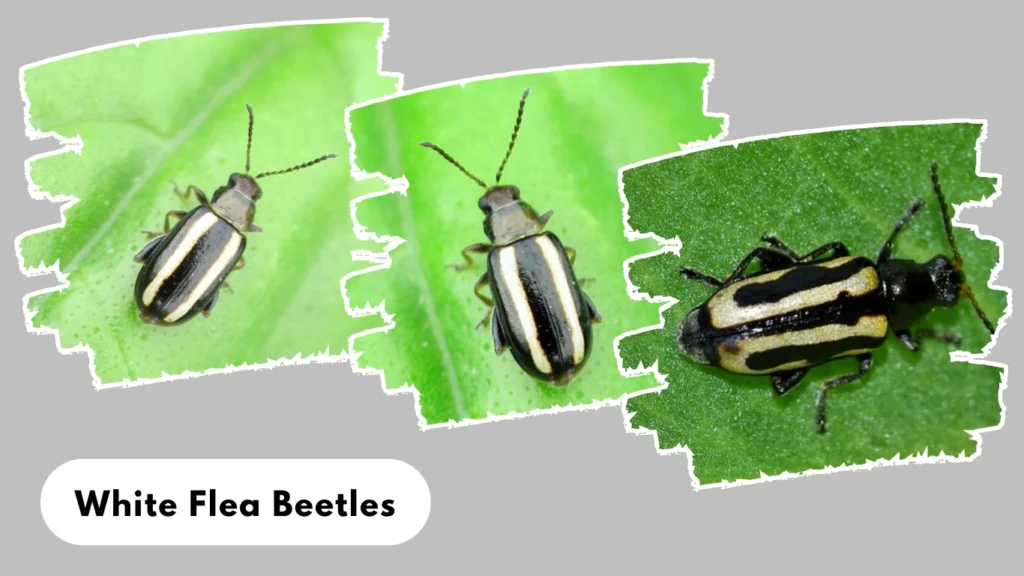
White flea beetles are a rare, pale-colored variety of the common flea beetle species. These tiny beetles are known for their strong jumping ability and the damage they cause to plants by chewing small holes in leaves.
Identification
- Size: 1.5–3 mm
- Shape: Oval, slightly flattened body
- Color: Pale white, cream, or light yellow
- Location: Found on vegetable crops, especially young seedlings
- Movement: Jump quickly when disturbed
Habitat and Behavior
Flea beetles thrive in sunny gardens and crop fields. They primarily feed on cruciferous vegetables like cabbage, radish, and mustard, leaving behind shot-hole damage on leaves. Severe infestations can stunt plant growth.
Reproduction and Lifecycle
Females lay eggs in soil near host plants. Larvae feed on roots, while adults feed on foliage. Their lifecycle completes in 3–4 weeks, with multiple generations in warm climates.
19. White Bagworms (Larvae)
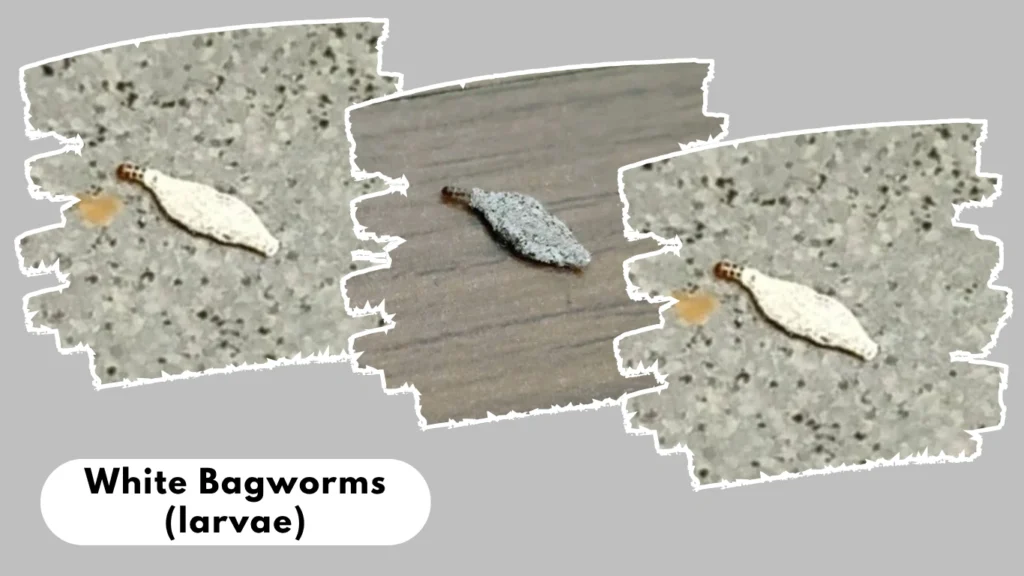
White bagworms are the larval stage of certain moths that create protective silk cases (bags) covered in plant debris. While most bagworms are brown or gray, some species or early instars appear pale or whitish.
Identification
- Size: 2–10 mm (larvae); bags can be larger
- Shape: Caterpillar-like larvae enclosed in silk bags
- Color: White to light beige body in early stages
- Location: Hanging from twigs, walls, or plant stems
- Movement: Very limited; move with bag when feeding
Habitat and Behavior
Bagworms attach their cases to trees, shrubs, and sometimes buildings. They feed on foliage and can defoliate ornamental plants if left unchecked. Their protective bags make them difficult to remove manually.
Reproduction and Lifecycle
Adult females remain inside the bag and lay hundreds of eggs. Larvae hatch and disperse to build their own cases. Most species have one generation per year.
20. White Pantry Moths (Larvae)
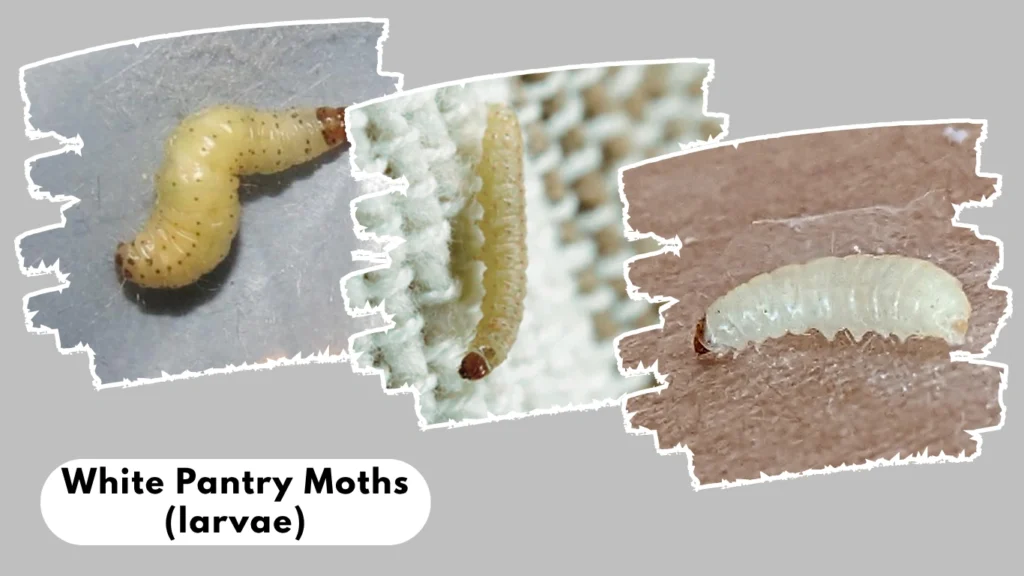
White pantry moth larvae, also known as Indian meal moth larvae, are common kitchen pests. These cream-colored caterpillars infest stored food products and are often the first visible sign of an infestation.
Identification
- Size: 9–12 mm (larvae)
- Shape: Cylindrical, worm-like body with visible segments
- Color: White to off-white with a brown head
- Location: Found in rice, flour, grains, cereals, and pet food
- Movement: Slow crawling, often inside food packaging
Habitat and Behavior
These larvae live inside dry stored products, spinning silk threads and contaminating food with frass and webbing. They’re often discovered in pantries or cupboards with open or old food containers.
Reproduction and Lifecycle
Adult moths lay eggs directly in food sources. Larvae feed for several weeks before pupating in hidden cracks. The full lifecycle—from egg to adult—can complete in about a month in warm environments.
21. White Plaster Beetles
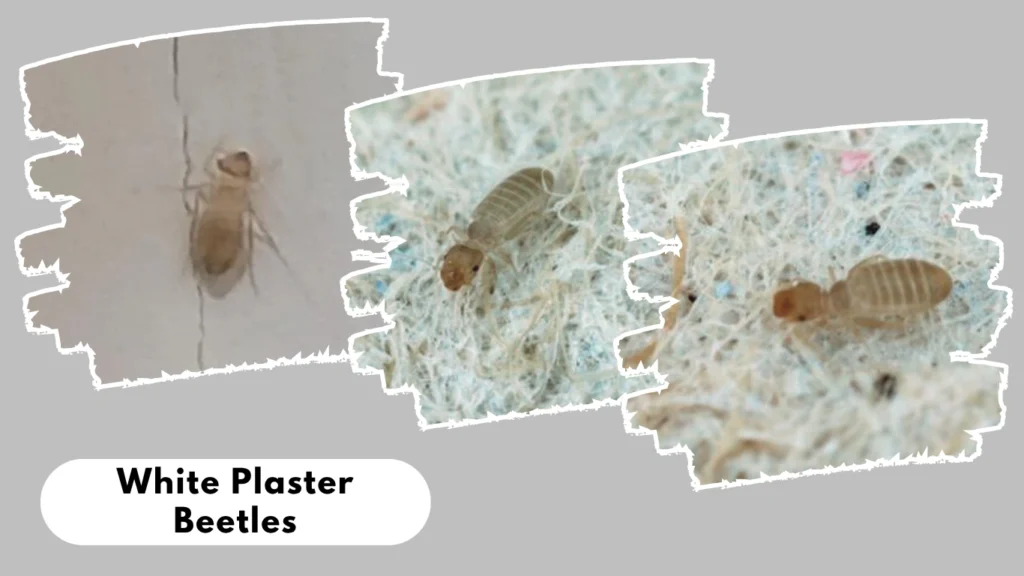
White plaster beetles are small insects that thrive in damp indoor environments, especially new buildings or areas with water damage. Though harmless, their presence often indicates moisture or mold issues.
Identification
- Size: 1–2 mm
- Shape: Oval to slightly elongated body
- Color: White to pale gray
- Location: Found near damp plaster, walls, or under sinks
- Movement: Slow crawling; may gather in groups
Habitat and Behavior
These beetles feed on mold and mildew growing on damp building materials. They commonly appear after flooding, construction, or in poorly ventilated areas. They don’t damage structures but signal excess moisture.
Reproduction and Lifecycle
Females lay eggs in moist, moldy areas. Larvae and adults feed on fungal growth. Populations decline once moisture levels are reduced, making dehumidification a key control method.
22. White Silverfish (Albino Stage)
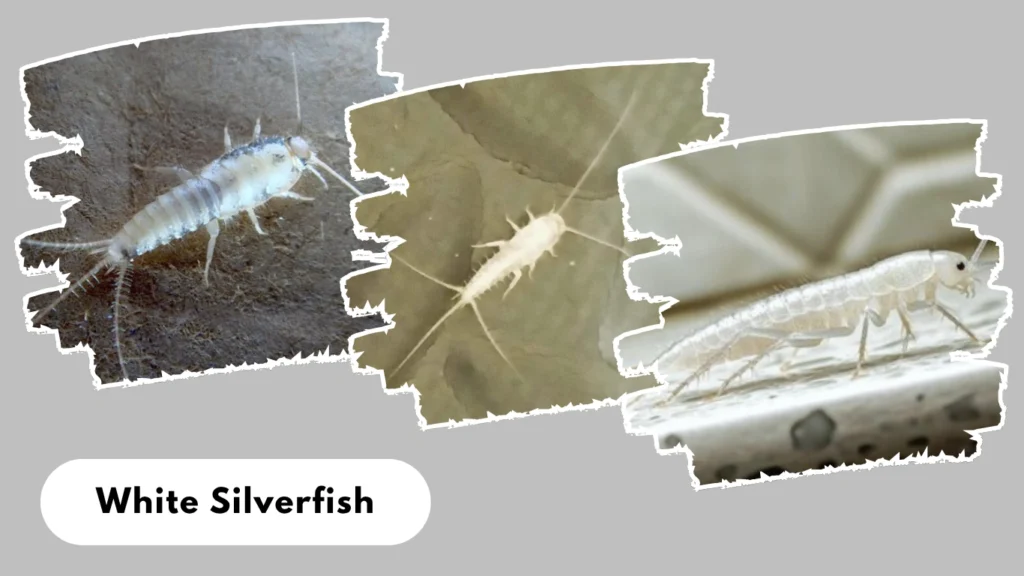
White silverfish are not a separate species but a developmental stage of the common silverfish. These pale or white individuals are newly molted and appear ghostly white before darkening with age.
Identification
- Size: 7–12 mm
- Shape: Elongated, teardrop-shaped body with long antennae and three tail-like appendages
- Color: Bright white or translucent just after molting
- Location: Found in bathrooms, basements, kitchens, and bookshelves
- Movement: Fast, darting motion
Habitat and Behavior
White silverfish favor dark, humid environments and often hide in cracks, under sinks, or behind baseboards. They feed on starchy materials like glue, paper, and dead insects, sometimes damaging books and wallpaper.
Reproduction and Lifecycle
Silverfish lay eggs in hidden crevices. Nymphs hatch looking like miniature adults and molt several times. After each molt, they briefly appear white until their exoskeleton hardens and darkens.
