

Wasps that live in the ground are more common than many people realize. From small solitary diggers to large, intimidating species, these ground-nesting wasps can be found in gardens, lawns, and sandy areas. If you’ve noticed holes in your yard or wasps flying close to the ground, you’re likely dealing with one of these species.
In this guide, you’ll discover the most common types of wasps that live in the ground, how to identify them, and whether they are aggressive or harmless. Understanding these wasps can help you stay safe and know when action is actually needed.
1. Yellowjackets That Live in the Ground

Yellowjackets are one of the most common wasps that live in the ground. They often build nests in abandoned rodent holes, making them easy to miss until disturbed. These ground-nesting wasps are known for their aggressive behavior and painful stings, especially when their colony is threatened.
What Are Yellowjackets
Yellowjackets are social wasps with black and yellow markings. Unlike some solitary species, they live in large colonies underground. If you’re searching for “wasp that lives in the ground” or “types of wasps that live in the ground,” yellowjackets are usually the top match due to their widespread presence.
Signs of Wasps That Live in the Ground
- Small hole in the ground with frequent wasp activity
- Wasps flying low and entering/exiting one spot
- Increased aggression near the nest area
- Buzzing sound coming from underground
- Visible dirt piles around the entrance
Why Yellowjackets Are Considered Aggressive Wasps
Among aggressive wasps that live in the ground, yellowjackets stand out. They defend their nests quickly and can sting multiple times. This makes them more dangerous than many other ground-nesting wasps, especially if the nest is accidentally stepped on.
How to Identify Ground-Nesting Yellowjackets
To identify yellowjackets, look for their compact bodies, bright yellow and black stripes, and fast, erratic flight. If you notice “black and yellow wasps that live in the ground,” it is very likely a yellowjacket colony. They are commonly found in gardens, lawns, and open fields.
2. Cicada Killer Wasps That Live in the Ground

Cicada killer wasps are large, ground-nesting wasps often mistaken for aggressive species. Despite their intimidating size, they are mostly harmless to humans. These big wasps that live in the ground prefer sandy or loose soil where they can dig burrows.
What Are Cicada Killer Wasps
Cicada killers are solitary wasps, unlike yellowjackets. They do not form large colonies but instead create individual nests underground. If you search for “giant wasps that live in the ground” or “large wasps that live in the ground,” this species is a common answer due to its noticeable size.
Signs of Big Wasps That Live in the Ground
- Large holes in dry or sandy soil
- Piles of loose dirt near the entrance
- Big wasps flying low over the ground
- Wasps carrying cicadas into burrows
- Activity mostly during warm daylight hours
Are Cicada Killers Aggressive Wasps
Although they look like aggressive wasps that live in the ground, cicada killers are not highly dangerous. Males may act territorial but cannot sting, while females only sting if directly handled or threatened.
How to Identify Giant Ground Wasps
Cicada killers are easy to recognize. They have black bodies with yellow markings and are much larger than typical wasps. If you notice huge wasps that live in the ground hovering over lawns or gardens, they are likely cicada killers.
3. Digger Wasps That Live in the Ground

Digger wasps are a group of solitary wasps that live in the ground and are known for their burrowing behavior. These small to medium-sized wasps create nests in soil, making them common in gardens, lawns, and sandy areas. They are generally non-aggressive and beneficial for pest control.
What Are Digger Wasps
Digger wasps are solitary insects, meaning each female builds and manages her own nest. If you search for “small wasps that live in the ground” or “wasp species that live in the ground,” digger wasps are a very common type found worldwide.
Signs of Wasps That Live in Holes in the Ground
- Small holes in the soil with little dirt piles
- Wasps entering and exiting individual burrows
- Low flying activity close to the ground
- Scattered nesting spots rather than one large colony
- Quiet behavior with minimal buzzing
Are Digger Wasps Aggressive
Digger wasps are not considered aggressive wasps that live in the ground. They rarely sting humans and usually only do so if handled or threatened. Their calm nature makes them less dangerous compared to social wasps like yellowjackets.
How to Identify Small Ground Wasps
Digger wasps vary in color, including black, brown, or striped patterns. If you notice small wasps that live in the ground with individual holes instead of a shared nest, they are likely digger wasps. They play an important role by hunting insects and keeping pest populations under control.
4. Sand Wasps That Live in the Ground
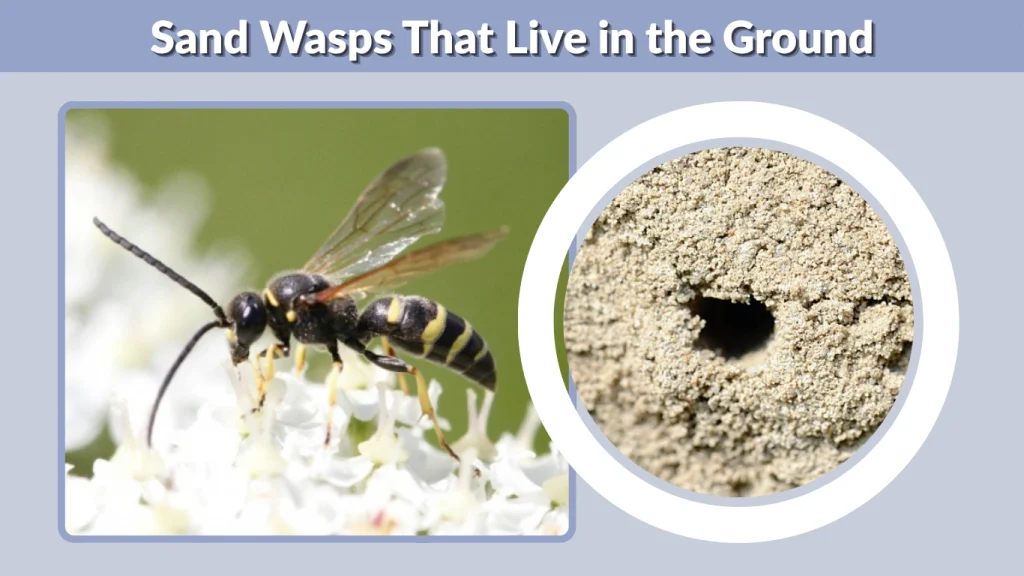
Sand wasps are slender, fast-moving wasps that live in the ground, especially in sandy or loose soil. These ground-nesting wasps are commonly found in open areas like beaches, riverbanks, and dry fields. They are generally harmless and help control other insect populations.
What Are Sand Wasps
Sand wasps are solitary wasps that dig narrow burrows in sandy soil. If you search for “wasps that live in holes in the ground” or “small wasps that live in the ground,” sand wasps are often included due to their nesting habits.
Signs of Small Wasps That Live in the Ground
- Tiny holes in sandy or dry soil
- Wasps hovering close to the ground
- Quick movement in and out of burrows
- Minimal noise compared to other wasps
- Scattered nesting areas instead of colonies
Are Sand Wasps Aggressive
Sand wasps are not aggressive wasps that live in the ground. They avoid humans and rarely sting unless directly handled. This makes them much less dangerous compared to larger or social ground wasps.
How to Identify Ground-Nesting Sand Wasps
Sand wasps are usually slim with long legs and narrow waists. Their colors range from black to black-and-yellow patterns. If you notice small, fast wasps that live in the ground in sandy areas, they are likely sand wasps.
5. Mining Wasps That Live in the Ground

Mining wasps are solitary wasps that live in the ground and are known for digging tunnels in soft soil. These small ground-nesting wasps are often confused with bees because of their behavior. They are commonly found in lawns, gardens, and open land areas.
What Are Mining Wasps
Mining wasps are independent insects that create their own nests underground. If you search for “bees or wasps that live in the ground” or “types of bees and wasps that live in the ground,” mining wasps are often included due to their similar nesting habits.
Signs of Bees and Wasps That Live in the Ground
- Small round holes in the soil
- Fine dirt mounds around nest entrances
- Wasps flying low and close to the ground
- Multiple small nests scattered across an area
- Activity mostly during sunny weather
Are Mining Wasps Aggressive
Mining wasps are not aggressive wasps that live in the ground. They are calm and rarely sting humans unless directly handled. Their behavior is more similar to non-aggressive bees than defensive wasp species.
How to Identify Small Ground-Nesting Wasps
Mining wasps are usually small, with black or dark-colored bodies and subtle markings. If you notice small wasps that live in the ground forming many tiny holes across your yard, they are likely mining wasps.
6. Potter Wasps That Live in the Ground
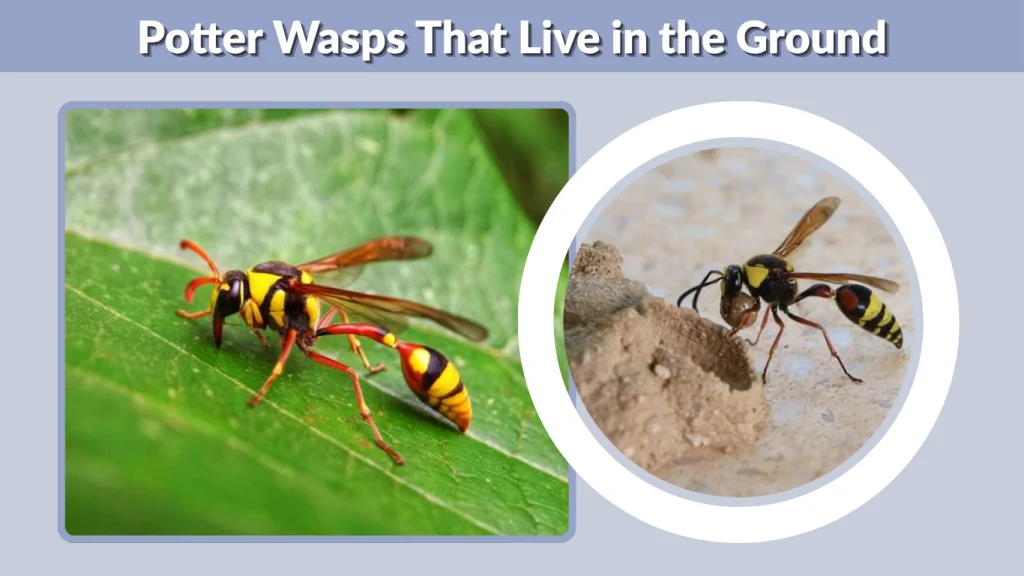
Potter wasps are typically known for building clay nests, but some species also live in the ground. These wasps are solitary and prefer quiet environments like gardens and soft soil areas. They are among the less aggressive wasps that live in the ground.
What Are Potter Wasps
Potter wasps are solitary insects that usually create small nests, sometimes underground. If you search for “wasp species that live in the ground” or “small wasps that live in the ground,” certain potter wasp species may appear in results due to their nesting flexibility.
Signs of Small Wasps That Live in the Ground
- Small, neat holes in soft soil
- Minimal wasp activity around the nest
- Wasps flying slowly near the ground
- No large colony or swarm behavior
- Quiet nesting areas in gardens or yards
Are Potter Wasps Aggressive
Potter wasps are not aggressive wasps that live in the ground. They are very calm and rarely interact with humans. Stings are extremely uncommon and usually only happen if the wasp is handled directly.
How to Identify Ground-Nesting Potter Wasps
Potter wasps have slender bodies with narrow waists and can be black, brown, or have yellow markings. If you notice small, calm wasps that live in the ground without colony behavior, they may be potter wasps.
7. Great Black Wasps That Live in the Ground

Great black wasps are large, solitary wasps that live in the ground and are known for their shiny black appearance. These big black wasps that live in the ground are commonly seen in gardens and open areas, where they dig burrows in soil.
What Are Great Black Wasps
Great black wasps are solitary hunters that build nests underground. If you search for “black wasps that live in the ground” or “big black wasps that live in the ground,” this species is one of the most recognizable due to its size and color.
Signs of Black Wasps That Live in the Ground
- Medium to large holes in the soil
- Shiny black wasps flying close to the ground
- Wasps carrying prey like grasshoppers
- Isolated nesting spots rather than colonies
- Activity during warm daytime hours
Are Great Black Wasps Aggressive
Great black wasps are not aggressive wasps that live in the ground. They are generally calm and avoid human contact. Stings are rare and usually only occur if the wasp is directly threatened or handled.
How to Identify Big Black Ground Wasps
These wasps are easy to identify by their solid black, glossy bodies and long wings. If you notice large black wasps that live in the ground with solitary behavior, they are likely great black wasps.
FAQs
What are the most common wasps that live in the ground
The most common ground-nesting wasps include yellowjackets, digger wasps, sand wasps, and cicada killers. These species are frequently found in lawns and gardens. Among them, yellowjackets are the most aggressive, while others are usually solitary and less dangerous.
Are wasps that live in the ground dangerous
Not all ground-nesting wasps are dangerous. Social species like yellowjackets can be aggressive and sting multiple times. However, most solitary wasps that live in the ground are not aggressive and will only sting if directly handled or threatened.
How can I tell if I have wasps in the ground
You can identify wasps that live in the ground by small holes in the soil with frequent wasp activity. Look for wasps flying low, entering and exiting one spot, or dirt piles around the entrance. Increased activity in one area is a key sign.
Why do wasps choose to live in the ground
Wasps choose the ground because it provides protection and a stable environment for nesting. Many species use soft or sandy soil to dig burrows. Ground nests also help protect their larvae from predators and harsh weather conditions.
What should I do if I find ground-nesting wasps
If you find wasps that live in the ground, avoid disturbing the nest. Keep a safe distance and monitor their activity. If they are aggressive or located in high-traffic areas, it may be best to contact a pest control professional for safe removal.
