
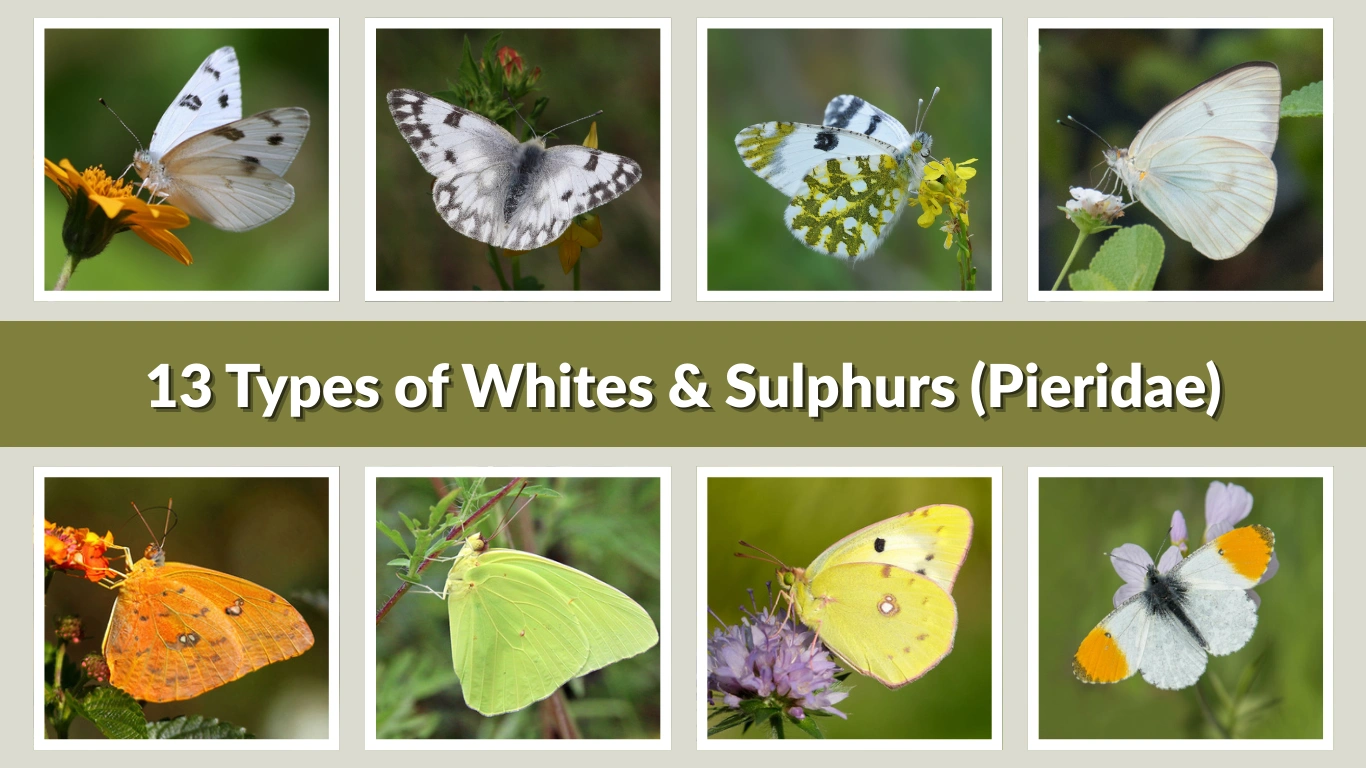
The Whites and Sulphurs (family Pieridae) are a diverse group of butterflies recognized for their bright white, yellow, and orange wings. Found across the world, they are among the most commonly seen butterflies in fields, gardens, and meadows. Some species, like the Cabbage White, are known as crop pests, while others are admired for their beauty and migration habits. This article highlights 13 notable Whites and Sulphurs, exploring their unique traits, habitats, and behaviors.
1. Cabbage White Butterfly

The Cabbage White (Pieris rapae) is one of the most common and widely recognized butterflies in the Pieridae family. Often seen fluttering in gardens and fields, it is considered both a beautiful sight and an agricultural pest because its larvae feed on cabbage and other cruciferous plants. Despite this, it remains an important species in ecosystems, helping with pollination while also serving as prey for birds and other predators.
Identification
- Family: Pieridae (Whites & Sulphurs)
- Wingspan: 4–6.5 cm (1.5–2.5 in)
- Color: White wings with black wingtips; females have two black spots on forewings, males usually have one
- Underside: Pale yellow-greenish with faint markings, offering camouflage when at rest
- Caterpillar: Velvety green with a faint yellow stripe along the body
Habitat and Distribution
The Cabbage White is found throughout North America, Europe, Asia, and Australia. It thrives in gardens, meadows, farmland, and urban areas where host plants are abundant. Because of its adaptability, it has become one of the most successful butterfly species worldwide.
Behavior and Diet
Adults feed on nectar from flowers such as dandelions, clovers, and asters. Caterpillars feed primarily on cabbages, kale, broccoli, and related plants in the mustard family, which is why the species is often labeled a crop pest. They are active from spring through autumn, with multiple generations each year.
2. Large White Butterfly
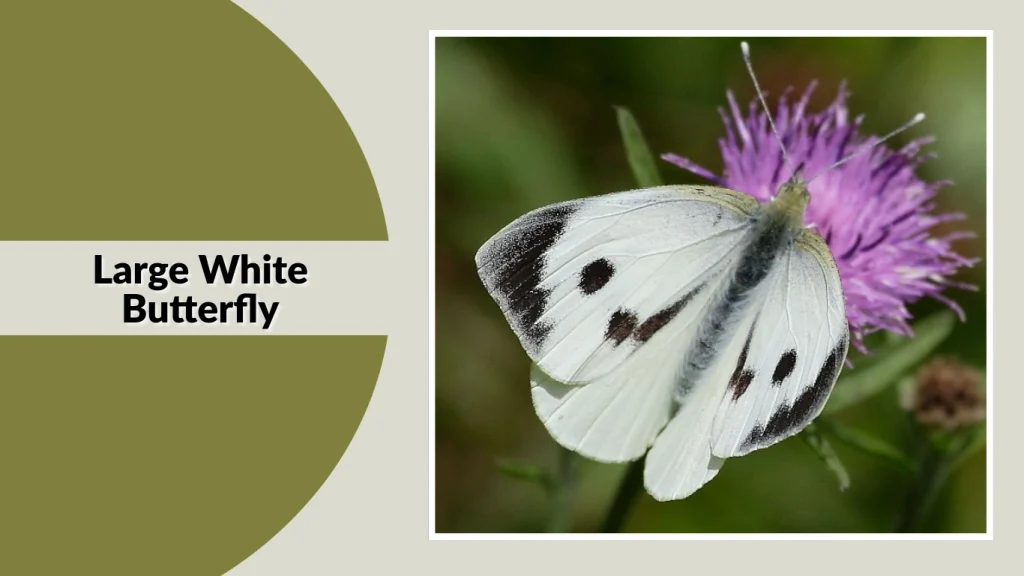
The Large White (Pieris brassicae) is often called the “Cabbage Butterfly” in Europe because its caterpillars are notorious for feeding on cabbages and other brassicas. Larger and bolder than the Cabbage White, this butterfly is easily identified by its stronger markings and impressive wingspan. It is both admired for its beauty and disliked as an agricultural pest.
Identification
- Family: Pieridae (Whites & Sulphurs)
- Wingspan: 5.5–7 cm (2–2.75 in)
- Color: Bright white wings with black tips on forewings; females have two large black spots on each forewing, males often lack or have faint spots
- Underside: Pale yellow with faint gray markings, helping with camouflage
- Caterpillar: Greenish-yellow with black spots, often seen feeding in groups
Habitat and Distribution
The Large White is native to Europe, Asia, and North Africa but has spread to other regions, including New Zealand. It thrives in gardens, meadows, farmlands, and open fields, especially where cabbages and related crops grow.
Behavior and Diet
Adults feed on nectar from flowers like thistles, dandelions, and nasturtiums. Caterpillars feed heavily on cabbages, broccoli, cauliflower, and related plants, sometimes causing significant damage in gardens and agriculture. Large Whites are strong fliers and may travel considerable distances in search of host plants.
3. Green-veined White Butterfly
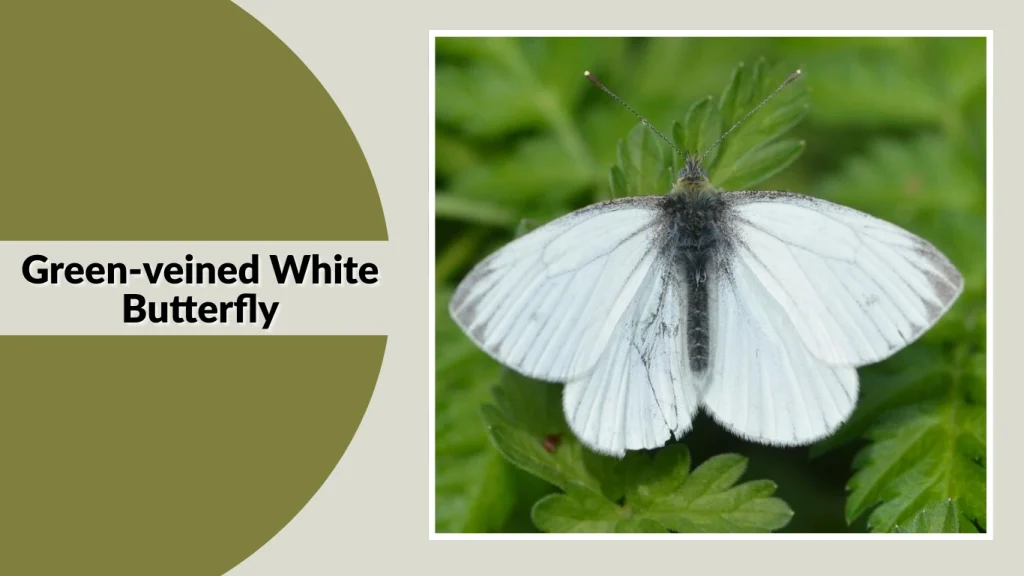
The Green-veined White (Pieris napi) is a delicate and elegant butterfly, often mistaken for the Cabbage White. Its most distinguishing feature is the greenish-black veining on the undersides of the wings, giving it a softer and more patterned appearance compared to other white butterflies. Unlike its relatives, it causes little harm to crops, making it less of a pest.
Identification
- Family: Pieridae (Whites & Sulphurs)
- Wingspan: 4–5 cm (1.5–2 in)
- Color: White upper wings with faint black tips and small spots (females usually show more spotting than males)
- Underside: Greenish-gray veining on hindwings, giving it its name
- Caterpillar: Green with a thin yellow line, blending well with host plants
Habitat and Distribution
The Green-veined White is common throughout Europe, Asia, and parts of North America. It thrives in damp meadows, woodland edges, hedgerows, and gardens, especially where wildflowers are abundant.
Behavior and Diet
Adults feed on nectar from dandelions, clovers, bluebells, and other wildflowers. Caterpillars feed on wild crucifers such as garlic mustard and cuckoo flower, rather than cultivated cabbages, which makes this butterfly friendlier to gardeners compared to its close relatives.
4. Southern Small White Butterfly
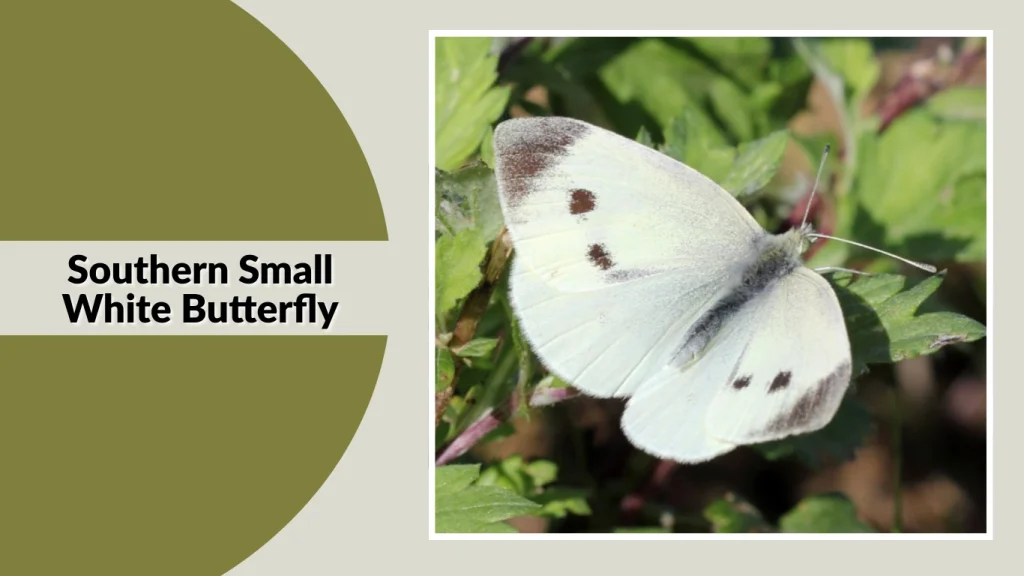
The Southern Small White (Pieris mannii) is a close relative of the well-known Small and Cabbage Whites but is mainly found in southern Europe and parts of Asia. While similar in appearance to other whites, subtle differences in wing markings and habitat preference set it apart.
Identification
- Family: Pieridae (Whites & Sulphurs)
- Wingspan: 4–5 cm (1.5–2 in)
- Color: White wings with black tips on forewings; females usually show two dark spots, while males often have one or none
- Underside: Yellowish or greenish tint with faint gray markings on hindwings
- Caterpillar: Green with fine yellowish lines, blending well with host plants
Habitat and Distribution
This butterfly is mainly found in southern and central Europe, North Africa, and parts of western Asia. It prefers warm, open habitats such as grasslands, farmland, gardens, and dry meadows.
Behavior and Diet
Adults feed on nectar from flowers like mustard, thistles, and wild radish. Caterpillars feed on wild and cultivated crucifers but are less destructive than the Cabbage White. Southern Small Whites often produce multiple broods a year, taking advantage of long warm seasons.
5. Orange-tip Butterfly
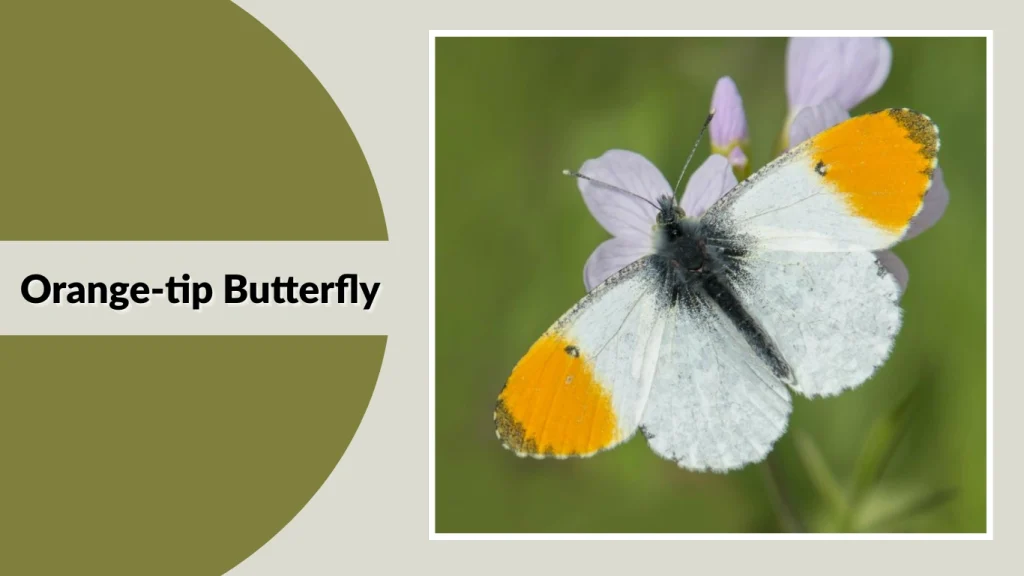
The Orange-tip (Anthocharis cardamines) is one of the most easily recognized spring butterflies, thanks to the bright orange patches on the forewings of the males. Females lack the orange markings, making them resemble other white butterflies, but both sexes are admired for their beauty and early seasonal appearance.
Identification
- Family: Pieridae (Whites & Sulphurs)
- Wingspan: 4.5–5.5 cm (1.75–2.25 in)
- Color: Males have white wings with vivid orange tips on the forewings; females lack orange, appearing mostly white with black wing tips
- Underside: Green marbled pattern on hindwings for excellent camouflage
- Caterpillar: Slender green body with a white line along the sides
Habitat and Distribution
The Orange-tip is widespread across Europe and Asia, favoring damp meadows, hedgerows, woodland edges, and gardens. It is strongly associated with areas where its larval food plants grow.
Behavior and Diet
Adults are active in spring, often among the first butterflies to appear after winter. They feed on nectar from cuckoo flower, garlic mustard, and other wildflowers. Caterpillars feed on crucifers like garlic mustard and hedge mustard. The species typically has one main generation each year, with adults flying from April to early summer.
6. Clouded Yellow Butterfly
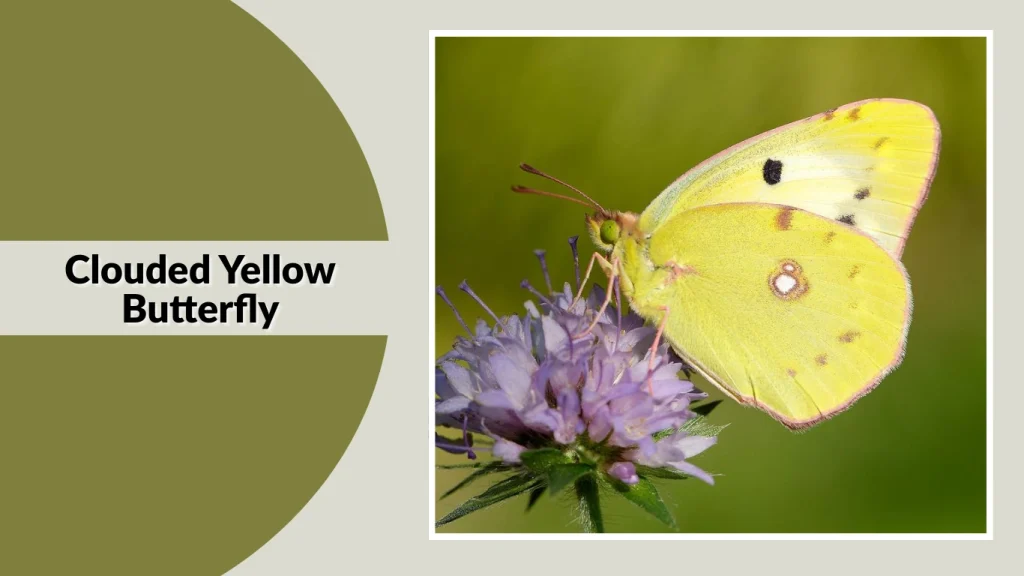
The Clouded Yellow (Colias croceus) is a vibrant sulphur butterfly, famous for its rich golden-yellow wings edged with black. It is a strong migrant, often seen in large numbers moving across open landscapes during late summer and autumn. Its bright colors make it one of the most striking members of the Pieridae family.
Identification
- Family: Pieridae (Whites & Sulphurs)
- Wingspan: 5–6.5 cm (2–2.5 in)
- Color: Brilliant golden-yellow wings bordered with broad black margins; females sometimes show paler or whitish forms
- Underside: Greenish-yellow with a white-centered eyespot on the hindwing
- Caterpillar: Green with a fine white stripe along the body, blending with host plants
Habitat and Distribution
The Clouded Yellow is widespread across Europe, North Africa, and Asia, and occasionally migrates north into the UK and central Europe. It prefers meadows, grasslands, fields, and open countryside where clovers and other legumes grow.
Behavior and Diet
Adults feed on nectar from red clover, dandelions, thistles, and knapweed. Caterpillars feed mainly on clovers, lucerne (alfalfa), and vetches. Known for their fast, darting flight, Clouded Yellows are often seen in sunny, open spaces and can appear in large migratory waves during favorable seasons.
7. Common Brimstone Butterfly

The Common Brimstone (Gonepteryx rhamni) is a well-known sulphur butterfly, often regarded as the inspiration behind the word “butterfly” due to the male’s bright buttery-yellow wings. It is one of the longest-lived butterflies in Europe and is usually among the first to appear in spring after hibernation.
Identification
- Family: Pieridae (Whites & Sulphurs)
- Wingspan: 6–7 cm (2.25–2.75 in)
- Color: Males are bright yellow; females are pale greenish-white
- Wing Shape: Angular, leaf-like with pointed tips that provide camouflage when at rest
- Underside: Greenish, resembling a leaf
- Caterpillar: Green with faint lines, blending with buckthorn leaves
Habitat and Distribution
The Common Brimstone is widespread across Europe, North Africa, and parts of Asia. It prefers woodlands, meadows, hedgerows, and gardens, especially where buckthorn plants grow, as they are the main host plants.
Behavior and Diet
Adults feed on nectar from thistles, dandelions, primroses, and buddleia. Caterpillars feed exclusively on buckthorn species. Known for their long lifespan (up to 11 months), Brimstones hibernate during winter in dense vegetation and emerge early in spring, often heralding the butterfly season.
8. Cloudless Sulphur Butterfly
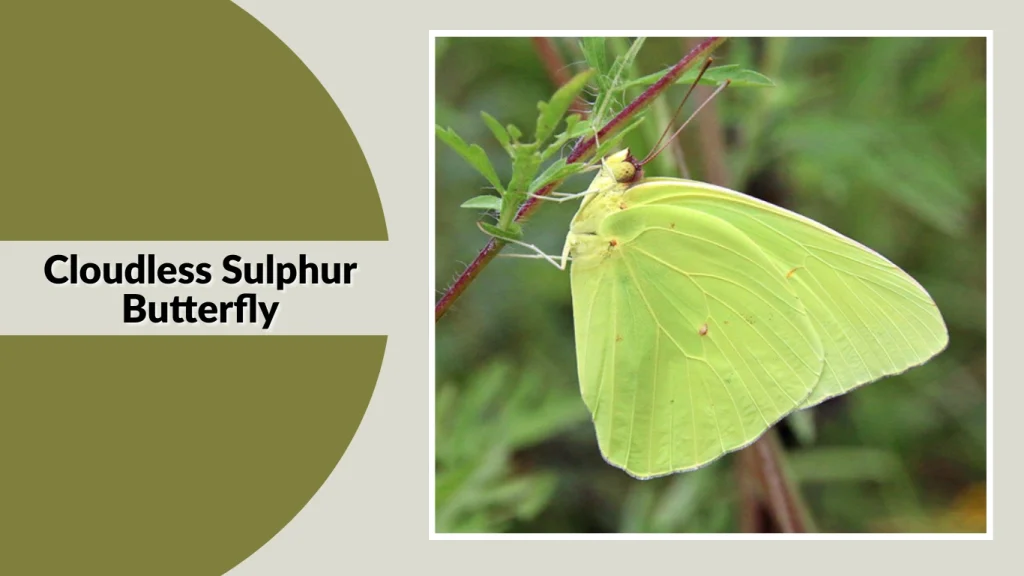
The Cloudless Sulphur (Phoebis sennae) is one of the most widespread sulphur butterflies, known for its bright lemon-yellow wings and long-distance migratory behavior. It is especially common in warmer regions and is often seen fluttering rapidly across open fields and gardens. Its vivid color makes it stand out among the Pieridae family.
Identification
- Family: Pieridae (Whites & Sulphurs)
- Wingspan: 5.5–7.5 cm (2.25–3 in)
- Color: Bright yellow in males; females may appear paler or whitish with darker wing edges
- Underside: Pale greenish or yellow with small, faint eyespots
- Caterpillar: Green with a yellow stripe and tiny black dots, feeding on senna and cassia plants
Habitat and Distribution
The Cloudless Sulphur is found throughout the Americas, from the United States down to South America. It thrives in open fields, gardens, roadsides, and disturbed areas with abundant host plants.
Behavior and Diet
Adults feed on nectar from lantana, hibiscus, and red morning glory, among other flowers. Caterpillars rely heavily on senna and cassia plants as their food source. The Cloudless Sulphur is a strong and fast flier, known for its seasonal migrations across large regions, often forming noticeable flight lines during late summer and autumn.
9. Orange-barred Sulphur Butterfly
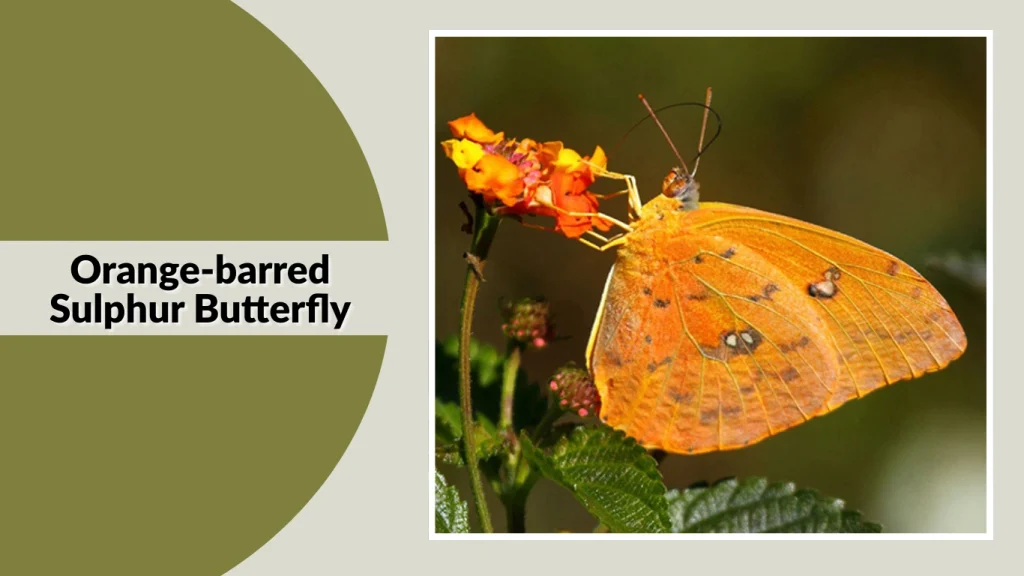
The Orange-barred Sulphur (Phoebis philea) is a large and brilliant butterfly, admired for its striking yellow wings accented with bold orange bars. It is one of the more colorful sulphurs and is especially common in tropical and subtropical regions. Its fast, powerful flight makes it easy to spot in sunny open habitats.
Identification
- Family: Pieridae (Whites & Sulphurs)
- Wingspan: 7.5–10.5 cm (3–4 in)
- Color: Males have bright yellow wings with vivid orange patches across the forewings; females are paler, often whitish with dark borders
- Underside: Pale yellow to brownish with subtle markings for camouflage
- Caterpillar: Green with fine stripes, primarily feeding on cassia plants
Habitat and Distribution
The Orange-barred Sulphur is widespread in the Americas, from the southern United States through Central and South America. It favors open fields, tropical forests, roadsides, and gardens with plenty of flowering plants.
Behavior and Diet
Adults feed on nectar from lantanas, hibiscus, bougainvillea, and other brightly colored flowers. Caterpillars rely heavily on cassia plants. These butterflies are strong fliers and often seen in continuous flight, rarely staying in one place for long. They also participate in mass migrations in some regions, forming colorful swarms.
10. Great Southern White Butterfly
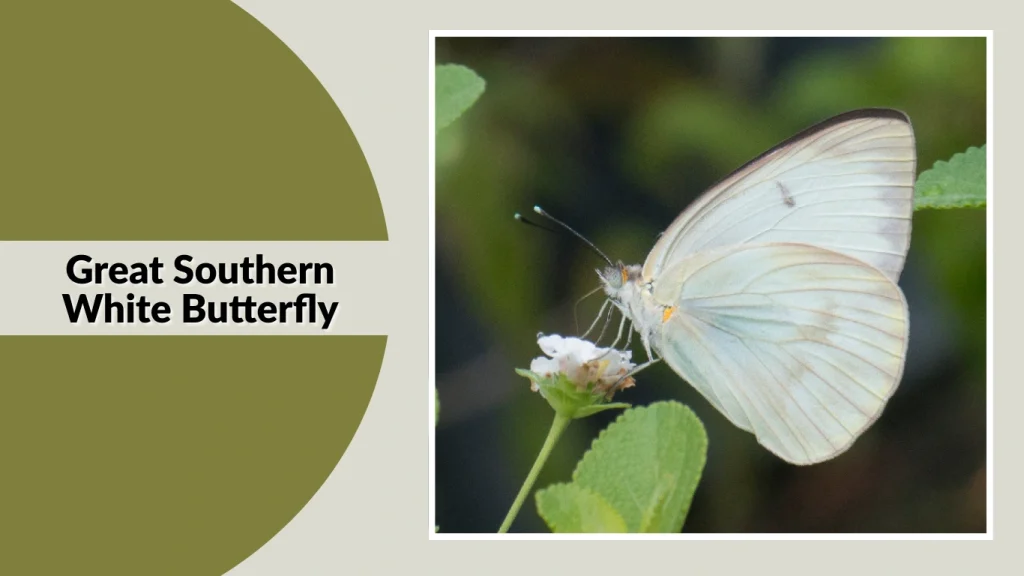
The Great Southern White (Ascia monuste) is a graceful white butterfly recognized for its soft coloration and seasonal migrations. In coastal regions of the southern United States, it is one of the most commonly seen whites, often gathering in large numbers around flowering plants.
Identification
- Family: Pieridae (Whites & Sulphurs)
- Wingspan: 5–7 cm (2–2.75 in)
- Color: White wings with grayish or bluish tips on the forewings; females often appear duller with darker edging
- Underside: Pale yellowish or greenish tint, aiding in camouflage
- Caterpillar: Green with faint stripes, feeding mainly on cabbage, mustard, and peppergrass
Habitat and Distribution
The Great Southern White is found in the southeastern United States, Central America, the Caribbean, and South America. It thrives in coastal dunes, open fields, marshes, and gardens where host plants are abundant.
Behavior and Diet
Adults feed on nectar from lantana, saltbush, and shepherd’s needle. Caterpillars feed on crucifers and related plants, sometimes becoming minor pests in gardens. These butterflies are strong fliers and can form noticeable migrations along coastlines, creating impressive spectacles during peak seasons.
11. Dappled White Butterfly

The Dappled White (Euchloe crameri) is a charming butterfly known for the intricate greenish marbling on the undersides of its wings. Often confused with other white butterflies, it stands out through its mottled pattern that blends perfectly with its natural surroundings.
Identification
- Family: Pieridae (Whites & Sulphurs)
- Wingspan: 4–5 cm (1.5–2 in)
- Color: White wings with small dark spots near the forewing tips
- Underside: Green marbled pattern on hindwings, excellent for camouflage
- Caterpillar: Green with faint lines, feeding mostly on crucifers
Habitat and Distribution
The Dappled White is widespread in southern Europe, North Africa, and parts of the Middle East. It prefers dry, open areas such as rocky slopes, grasslands, and scrubby meadows where wild crucifer plants grow.
Behavior and Diet
Adults fly low over vegetation, feeding on nectar from wildflowers such as mustards and rock cress. Caterpillars depend on cruciferous plants, including wild rocket and other Brassicaceae species. Their camouflaged undersides allow them to remain nearly invisible when resting among grasses and rocks.
12. Western White Butterfly
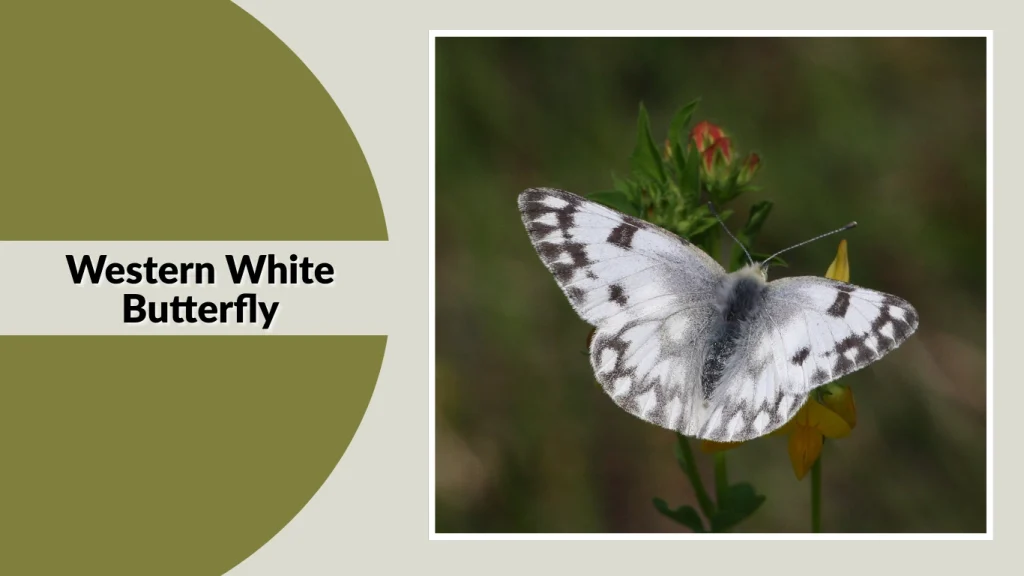
The Western White (Pontia occidentalis) is a small and active butterfly, often found in open and sunny landscapes of western North America. It is admired for its clean white wings accented with dark markings and its quick, darting flight style.
Identification
- Family: Pieridae (Whites & Sulphurs)
- Wingspan: 3.5–5 cm (1.25–2 in)
- Color: White wings with dark gray or black tips and fine markings on forewings
- Underside: Greenish-gray mottling on hindwings, useful for camouflage
- Caterpillar: Green with pale stripes, feeding on cruciferous plants
Habitat and Distribution
The Western White is distributed across the western United States and Canada, particularly in grasslands, deserts, meadows, and open forests. It prefers drier regions and higher elevations during warmer months.
Behavior and Diet
Adults feed on nectar from asters, mustards, phlox, and clovers. Caterpillars feed on wild crucifers, including mustard and peppergrass. This butterfly is known for multiple broods in warm climates, with populations peaking during spring and summer.
13. Checkered White Butterfly
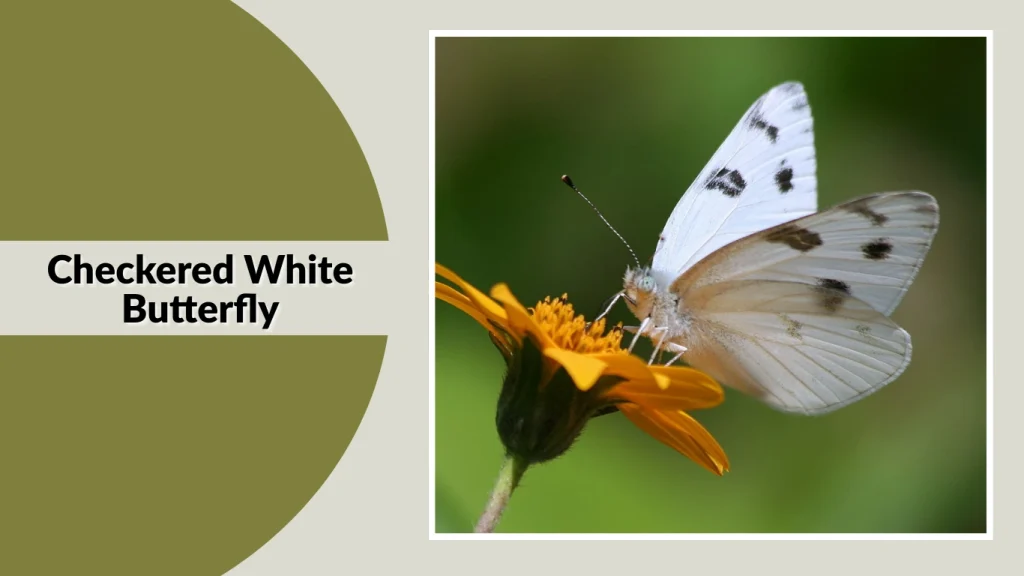
The Checkered White (Pontia protodice) is a distinctive butterfly, named for the checkered black-and-white markings on its wings. It is especially common in dry, open areas and is considered one of the most widespread whites in North America. Its fast and erratic flight makes it an active and eye-catching species.
Identification
- Family: Pieridae (Whites & Sulphurs)
- Wingspan: 3.5–5 cm (1.25–2 in)
- Color: White wings with dark checkered black markings on the forewings; females are usually darker than males
- Underside: Hindwings have a gray-green checkered pattern, aiding camouflage
- Caterpillar: Green with faint stripes, feeding on mustards and related plants
Habitat and Distribution
The Checkered White is widespread across North America, especially in the United States and Mexico. It favors dry open habitats, including fields, roadsides, deserts, and prairies, where host plants are abundant.
Behavior and Diet
Adults feed on nectar from asters, alfalfa, clovers, and mustards. Caterpillars feed on various cruciferous plants, including peppergrass and mustard species. The butterfly is active for long seasons in warmer regions, producing multiple generations each year.
