
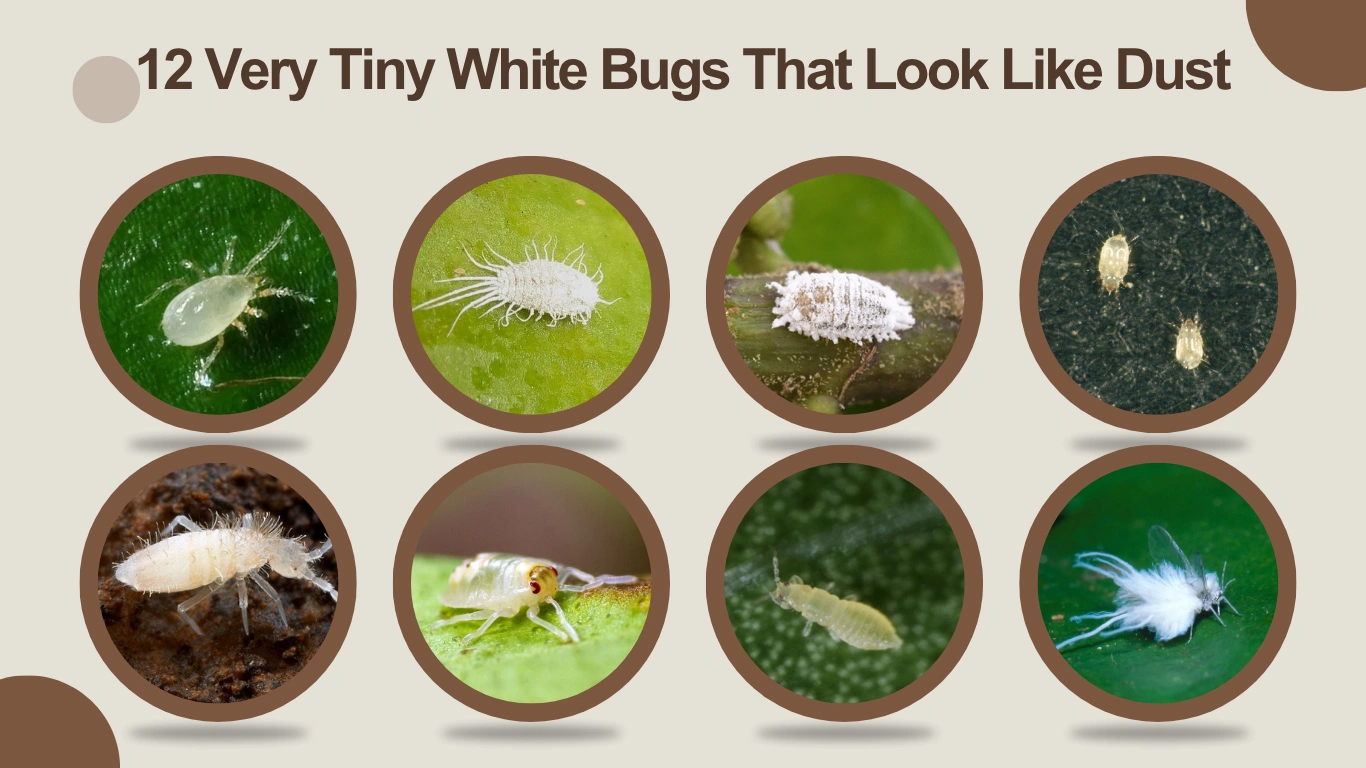
If you’ve ever noticed small white specks moving on your windowsill, soil, or furniture, you might be dealing with tiny white bugs that resemble dust. These minuscule pests are often so small and light-colored that they blend right into their surroundings, making them hard to detect. Some are harmless, while others can harm plants, trigger allergies, or contaminate food.
In this guide, you’ll discover 12 types of very tiny white bugs that look like dust, how to identify them, where they’re commonly found, and whether they pose any threat to your home or health.
1. White Mites

White mites are among the most common tiny white bugs that look like dust, often found crawling on window sills, plant pots, or in damp corners of the home. Their minuscule size and pale color make them resemble drifting dust particles, especially when viewed on dark surfaces.
Identification
- Color: White to translucent
- Size: Approximately 0.2 to 0.5 mm
- Body Shape: Oval, soft-bodied with eight short legs
- Movement: Slow and barely noticeable without close inspection
- Visibility: Usually seen in groups or clusters, often confused with dust
Where They Are Found
White mites thrive in:
- Moist, humid indoor areas
- Window frames and sills
- On houseplants or soil
- Inside wall cracks and along baseboards
Behavior and Infestation Signs
These mites prefer feeding on fungi, organic debris, or decaying plant matter. Their presence is usually first noticed when homeowners see small white specks moving slowly or gathering around light sources and moist spots.
Are They Harmful?
While white mites don’t bite or pose a health risk to humans, their presence can still be unsettling. In larger numbers, they may damage houseplants or indicate excess humidity and mold growth indoors.
2. Mealybugs
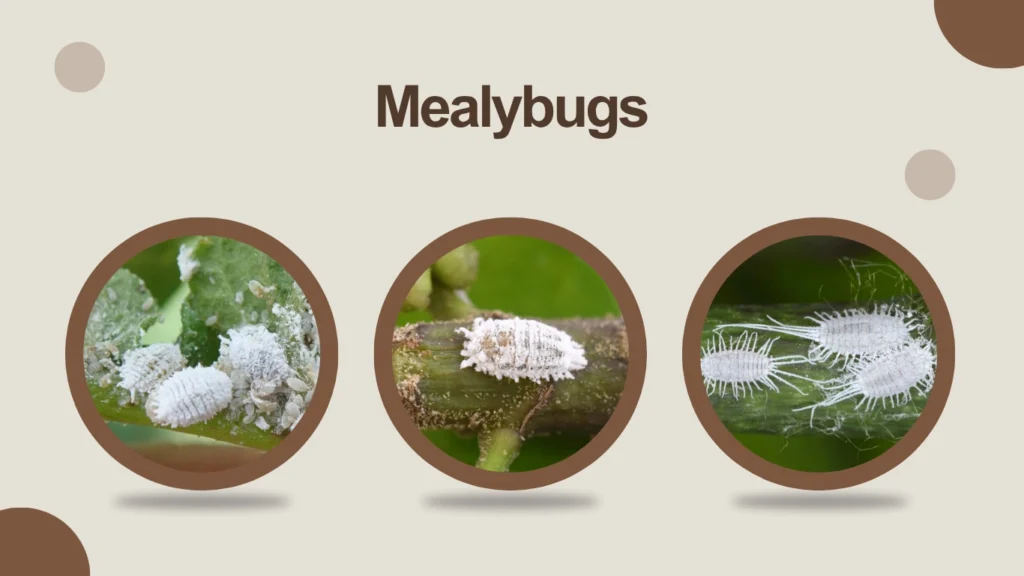
Mealybugs are soft-bodied, sap-sucking insects often seen on houseplants and garden plants. They appear as tiny white bugs that look like dust or cotton, especially when clustered around leaf joints or stems. Their waxy coating gives them a dusty appearance, making them hard to detect at first glance.
Identification
- Color: White with a waxy or cotton-like texture
- Size: 1 to 4 mm long
- Shape: Oval, segmented body with short legs
- Surface Texture: Covered in a powdery or mealy wax
- Clustering: Often found in groups, especially around new plant growth
Where They Are Found
Mealybugs commonly appear:
- On indoor and outdoor plants
- Along stems, leaf axils, and undersides of leaves
- Around the roots (root mealybugs) in potted plants
- In greenhouses or humid plant environments
Behavior and Infestation Signs
They feed by piercing plant tissue and sucking sap, causing yellowing, wilting, and stunted growth. Heavy infestations may leave behind a sticky substance called honeydew, which attracts ants and promotes mold growth.
Are They Harmful?
Yes, especially to plants. Mealybugs can severely damage or even kill houseplants if not managed promptly. They can spread between plants quickly if left untreated.
3. Booklice (Psocids)

Booklice are tiny, white or pale gray bugs that resemble dust specks on books, paper, cardboard, and in moist areas of the home. Despite their name, they are not true lice and are harmless to humans, but they can become a nuisance when they multiply.
Identification
- Color: Pale white, gray, or translucent
- Size: 0.5 to 1 mm
- Shape: Soft-bodied with a large head and long antennae
- Wings: Most indoor types are wingless
- Movement: Slow walkers, scatter quickly when disturbed
Where They Are Found
You might find booklice:
- In books, cardboard boxes, or wallpaper
- Inside kitchen cabinets and food storage areas
- On window sills and bathroom walls
- Anywhere moisture and mold are present
Behavior and Infestation Signs
Booklice feed on mold, fungi, and starchy materials like book bindings or wallpaper paste. A sudden appearance of moving dust particles near books or food storage is a strong sign of infestation.
Are They Harmful?
Not to humans. They don’t bite, sting, or cause illness, but they can contaminate food and damage paper products, making them a minor but annoying pest.
4. Clover Mites (Larval Stage)
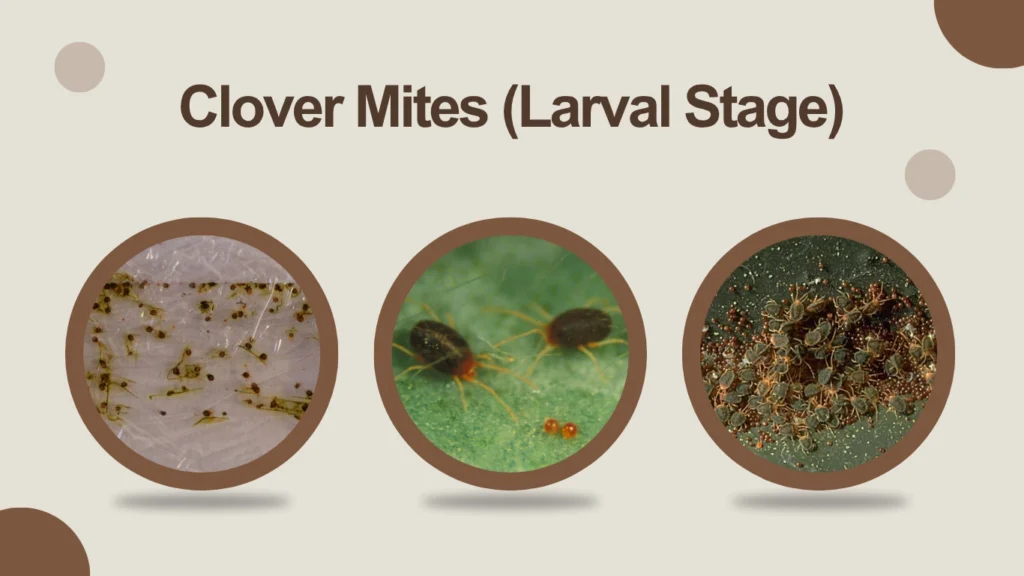
Clover mites are tiny red or reddish-brown creatures in adulthood, but in their early larval stage, they can appear very pale or nearly white, making them look like specks of dust. They often gather around windows, walls, or sunlit surfaces and can easily be mistaken for dust or dirt particles.
Identification
- Color: Pale white to translucent red in larval stage
- Size: Less than 0.3 mm
- Shape: Oval body with long front legs
- Movement: Crawl slowly, often in groups
- Signs: White or reddish smears when crushed
Where They Are Found
Clover mites are found:
- Near sunny windows and walls
- On indoor plants and window sills
- In gardens with heavy vegetation
- Entering through tiny foundation cracks
Behavior and Infestation Signs
Larvae and adults feed on plant sap, especially from clover, grass, and ornamental plants. While they don’t cause structural damage, they can invade homes in large numbers, especially during seasonal changes.
Are They Harmful?
No—clover mites are harmless to humans and pets, but their presence in large numbers can be unsettling. Their bodies can leave red or rust-colored stains when squished.
5. Springtails (White Species)

Springtails are tiny jumping insects that can sometimes appear white and dust-like, especially the pale or albino species. They’re named for the spring-like appendage under their abdomen that allows them to leap when disturbed.
Identification
- Color: White, gray, or translucent
- Size: 0.25 to 1 mm
- Shape: Elongated body with antennae
- Movement: Quick hopping motion when touched
- Surface: May look like mold dust when clustered
Where They Are Found
Springtails thrive in:
- Soil of potted plants
- Damp bathrooms, basements, and kitchens
- Near sinks, tubs, and drains
- Leaf litter or mulch around the home
Behavior and Infestation Signs
They feed on fungi, algae, and decaying organic matter, and they love moist environments. A sign of infestation is seeing them jump around like flea-like specks of dust, especially on wet surfaces.
Are They Harmful?
No—they don’t bite or cause damage, but their presence can indicate excess moisture, which could lead to mold or mildew problems.
6. White Aphids

White aphids are soft-bodied insects that feed on plant sap and often appear like moving white dust on stems, leaves, or flower buds. Their waxy coating gives them a dull, powdery appearance, and their clusters may resemble fungal patches at first glance.
Identification
- Color: White or pale gray
- Size: 1 to 3 mm
- Shape: Pear-shaped with long antennae and legs
- Wings: May be winged or wingless depending on stage
- Grouping: Typically found in large clusters
Where They Are Found
They are usually found:
- On the underside of leaves
- Around new plant growth and stems
- On houseplants and outdoor garden plants
- In greenhouses or plant nurseries
Behavior and Infestation Signs
White aphids suck plant sap, causing leaf curling, yellowing, and stunted growth. They excrete honeydew, which promotes black sooty mold and attracts ants.
Are They Harmful?
Yes—to plants. A heavy white aphid infestation can weaken or kill sensitive houseplants or young garden plants if not managed.
7. Root Aphids (White Variety)

Root aphids are a subterranean type of aphid that feed on plant roots and sometimes appear white or waxy, resembling tiny white bugs that look like dust in the soil. They are rarely seen on plant leaves but can be detected when repotting or inspecting root systems.
Identification
- Color: White to pale gray with a waxy coating
- Size: 1 to 2 mm
- Shape: Pear-shaped body, short legs
- Location: Found around plant roots, not on foliage
- Texture: May look like white powder or mold near roots
Where They Are Found
Root aphids typically appear:
- In the soil of potted plants
- Around the base of indoor or greenhouse plants
- Near drainage holes of containers
- In hydroponic systems or damp planting media
Behavior and Infestation Signs
They feed by piercing roots and sucking sap, leading to wilting, poor growth, yellowing leaves, and nutrient deficiency symptoms. Ants may be seen farming them for the honeydew they produce.
Are They Harmful?
Yes, root aphids are highly damaging to plant roots and can be difficult to eliminate once established. Left untreated, they can kill young or sensitive plants.
8. White Spider Mites

White spider mites are a very small and pale variant of spider mites that can look like white dust or lint on plant leaves. They’re not true insects but arachnids, and their feeding leads to yellowing, speckled leaves, and webbing.
Identification
- Color: White or translucent
- Size: Around 0.3 to 0.5 mm
- Shape: Oval body with eight legs
- Webbing: Fine silk webbing on leaf surfaces
- Visibility: Seen with magnification or in heavy infestations
Where They Are Found
They prefer:
- Undersides of leaves
- Houseplants and ornamental plants
- Warm, dry indoor environments
- Greenhouses and outdoor gardens during dry seasons
Behavior and Infestation Signs
White spider mites feed on plant cell sap, leaving behind tiny yellow or white specks on leaves. As the infestation grows, you may see webbing across leaves and stems.
Are They Harmful?
Yes—these mites can weaken and destroy plants if not controlled early. Infestations can spread quickly in dry conditions, making early detection important.
9. Woolly Aphids (Early Stage)
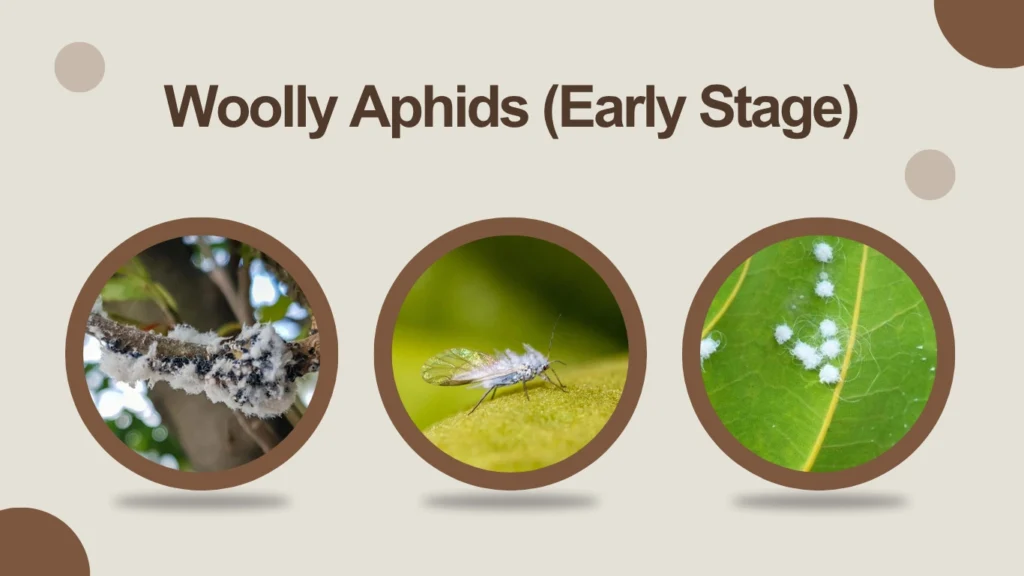
Woolly aphids are known for their fuzzy, cotton-like appearance. In their early stage, they may appear as tiny white bugs that look like floating dust or lint, especially when seen on tree bark, leaves, or stems. Their white, waxy coating can easily be mistaken for mold or fluff.
Identification
- Color: White, pale blue, or light gray
- Size: 1 to 3 mm
- Shape: Oval body hidden beneath waxy filaments
- Texture: Soft, fluffy appearance
- Wings: Wingless in early stage; winged as adults
Where They Are Found
Woolly aphids typically appear:
- On tree bark and leaf joints
- On ornamental plants and fruit trees
- Near root crowns or trunk crevices
- Often grouped in large cottony clusters
Behavior and Infestation Signs
They feed on plant sap, creating galls, leaf curl, and honeydew, which encourages black sooty mold. The fluffy masses they form can obstruct photosynthesis and weaken the plant.
Are They Harmful?
Yes—while not dangerous to humans, woolly aphids can cause serious damage to trees and shrubs, particularly if infestations go untreated.
10. Thrips (White Nymphs)
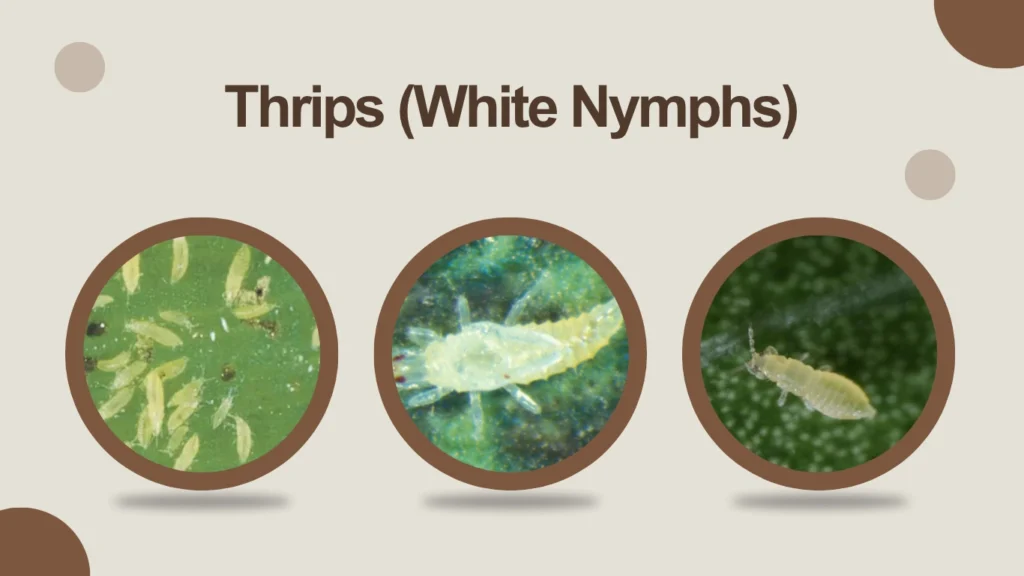
Thrips are slender, winged insects, but in their nymph stage, they often appear white or pale yellow and are so small they resemble specks of moving dust. These nymphs are fast movers and can be difficult to spot without close observation.
Identification
- Color: White to light yellow (in nymph stage)
- Size: 0.5 to 1 mm
- Shape: Elongated, narrow body with short legs
- Movement: Active and fast-moving
- Adult Stage: Darker color with fringed wings
Where They Are Found
Thrips are commonly seen:
- On flower petals, buds, and leaves
- Inside greenhouses or on houseplants
- Near window sills or garden beds
- On vegetables, fruits, and ornamental plants
Behavior and Infestation Signs
Thrips nymphs feed by scraping plant tissue and sucking out the juices, causing silver streaks, spots, and distorted leaves. Their damage often resembles fungal infections.
Are They Harmful?
Yes—thrips can severely damage crops and houseplants and are also known to transmit plant viruses. Early detection is key to limiting their impact.
