

The vine weevil, particularly the black vine weevil (Otiorhynchus sulcatus), is a notorious pest in gardens, greenhouses, and nurseries. Known for their destructive larvae and nocturnal adults, vine weevils are capable of causing extensive damage to a wide range of plants—especially those in containers. Whether you’re a home gardener or a commercial grower, understanding how to identify, treat, and control vine weevils is essential to protect your plants.
This comprehensive guide will cover everything from identification and the life cycle to pest control, biological treatments, and the most effective ways to eradicate vine weevils from your garden and soil.
What Is a Vine Weevil?
A vine weevil is a small beetle that feeds on ornamental and edible plants, particularly those in containers. Adult vine weevils cause leaf damage by chewing notches along the edges, while their larvae (or grubs) do far greater harm underground by feeding on the roots of plants.
The most common and damaging species is the black vine weevil, whose scientific name is Otiorhynchus sulcatus. These beetles are flightless but capable of traveling short distances by crawling, spreading infestations between pots, beds, and indoor areas.
They are considered one of the most troublesome garden bugs in the UK and other temperate regions, with infestations peaking between spring and early autumn.
Vine Weevil Life Cycle
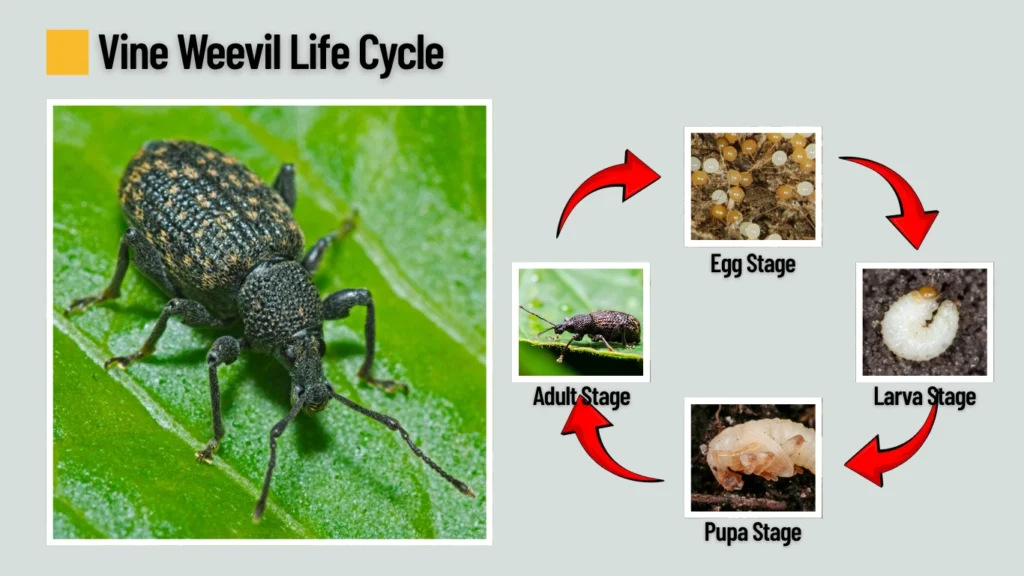
The vine weevil has a complete metamorphosis with four stages: egg, larva, pupa, and adult. Each stage plays a unique role in the infestation process, and understanding this cycle is key to effective control.
Egg Stage
Females lay tiny, round, brown eggs in the soil near the base of host plants, particularly in moist environments. Each female can lay several hundred eggs during summer.
Larva Stage
The eggs hatch into creamy-white, legless larvae with brown heads, commonly known as vine weevil grubs. This stage causes the most damage as the larvae feed on plant roots and underground stems. They can be especially destructive in potted plants and containers.
Pupa Stage
After weeks of feeding, the grubs pupate in the soil, forming a hard protective casing while they transform into adults.
Adult Stage
Adults emerge between late spring and early summer. They are nocturnal, feeding on leaves during the night. Adults are dark brown or black, measuring 8–12 mm, with a rough texture and slightly curved snout.
The full life cycle can take several months, with most damage occurring from late summer to autumn as larvae build up underground.
What Does a Vine Weevil Look Like?
- Adult vine weevil: Black, wingless beetles with elbowed antennae, rough bodies, and a length of about 1 cm. They leave distinctive notches in leaf margins.
- Larvae (grubs): White or cream, curved, legless bodies with brown heads. These are found in soil and are often responsible for killing plants.
- Eggs: Very small and round, brown in color, laid in soil.
- Pupae: Found in deeper layers of the soil, forming during late larval development.
Including images of vine weevils, eggs, and grubs can help gardeners identify them early, especially when leaf damage or wilting is first observed.
Vine Weevil Damage

Vine weevils cause two types of damage depending on their stage of development:
Adult Damage
Adults chew notches on the edges of leaves, causing unsightly foliage but generally not killing the plant. However, their feeding indicates egg-laying activity nearby.
Larval (Grub) Damage
The larvae feed on plant roots and tubers, leading to:
- Sudden plant collapse
- Wilting and yellowing leaves
- Stunted growth or plant death
- Significant damage in container plants, alpine plants, heucheras, cyclamen, primulas, strawberries, and rhododendrons
Black vine weevil damage photos often show collapsed plants with severely eaten roots, confirming larval infestation.
Plants Affected by Vine Weevils
Vine weevils are not picky eaters and attack a wide variety of garden plants. They are especially attracted to:
- Heucheras
- Cyclamen
- Begonias
- Fuchsias
- Rhododendrons
- Camellias
- Strawberries
- Hardy ferns and alpines
They also affect houseplants in containers, especially if soil remains moist and undisturbed.
Some plants resistant to vine weevil include grasses, ferns, geraniums, and certain woody shrubs. However, even resistant plants can harbor adult beetles that later move to more vulnerable species.
How to Get Rid of Vine Weevils

Eliminating vine weevils requires attacking both adults and larvae. Here’s how to do it effectively:
Manual Control
- Night patrol: Hand-pick adults at night using a torchlight.
- Shake-and-drop: Shake infested plants over a sheet and dispose of the beetles.
- Use sticky traps or vine weevil traps near pots to catch crawling adults.
Natural Predators
- Birds, frogs, hedgehogs, and ground beetles are natural predators.
- Avoid overusing insecticides that could kill these beneficial creatures.
Physical Control
- Repot plants in fresh compost and discard old soil where larvae may reside.
- Add a layer of horticultural grit on the soil surface to deter egg-laying.
Biological Control Using Nematodes

Biological control is one of the most effective methods for killing vine weevil larvae without chemicals. Specially formulated nematodes—microscopic parasitic worms—enter and kill larvae in the soil.
Popular Vine Weevil Nematodes:
- Nemasys Vine Weevil Killer
- MightyNem Vine Weevil Killer
- Green Gardener nematodes
- Vine weevil nematodes (Amazon, RHS-approved options)
Apply nematodes in moist soil when temperatures are above 5°C (preferably in spring and autumn). Water them into the soil, and within days, they will infect and kill vine weevil grubs.
For large areas, you can use vine weevil nematodes 100 sqm packs, especially in commercial settings.
Chemical Vine Weevil Control
For more persistent infestations, insecticides can be used. However, timing is crucial.
Popular Insecticides:
- Bug Clear Ultra Vine Weevil Killer
- Provado Vine Weevil Killer / Provado Vine Weevil Killer 2
- Scotts Miracle-Gro Vine Weevil Control
- Bug Clear Vine Weevil Killer UK
- Wilkos & B&Q vine weevil killer products
Application Tips:
- Apply systemic insecticides during adult feeding seasons (spring or late summer).
- Do not apply when bees or beneficial insects are present.
- Read label instructions carefully—some products are not safe for edible crops.
Note: While these sprays can control adult beetles, they are generally ineffective against larvae in the soil. For best results, pair them with nematode treatments.
When to Use Vine Weevil Treatments
- Spring (March to May): Use nematodes to target overwintering grubs before they pupate.
- Summer (June to August): Monitor for adult beetle damage and apply traps or insecticides if needed.
- Late summer to autumn (September to October): Use nematodes again as new eggs hatch and larvae start feeding.
Understanding the vine weevil life cycle UK pattern allows you to time treatments precisely for maximum effect.
FAQs
1. What do vine weevils look like?
Adult vine weevils are small, black or dark brown beetles about 8–12 mm long. They have a rough body texture and a distinctive curved snout. Their larvae (grubs) are creamy-white, legless, with brown heads, and are typically found in the soil.
2. What does vine weevil damage look like?
Adults chew irregular notches on the edges of leaves, while larvae feed on roots underground. Larval damage causes wilting, yellowing, or sudden collapse of plants, especially in containers. You may also find rootless, mushy plants when repotting.
3. What plants do vine weevils attack?
They attack a wide range of plants, including heucheras, cyclamen, fuchsias, camellias, rhododendrons, strawberries, and many houseplants. They especially prefer container-grown plants with moist soil.
4. Are there any plants resistant to vine weevils?
Yes, some plants like geraniums, grasses, certain ferns, and woody shrubs are more resistant. However, vine weevils may still shelter in the soil around them or move to nearby plants.
5. How do I get rid of vine weevil grubs in pots?
Replace the soil entirely and wash the roots thoroughly. Apply vine weevil nematodes to the fresh compost. Avoid using old, infested compost in other containers or beds.
6. When should I use vine weevil killer?
Apply nematodes in spring (March–May) and autumn (September–October) when larvae are active. Chemical vine weevil killers should be used when adult beetles are feeding—usually in late spring and late summer.
