
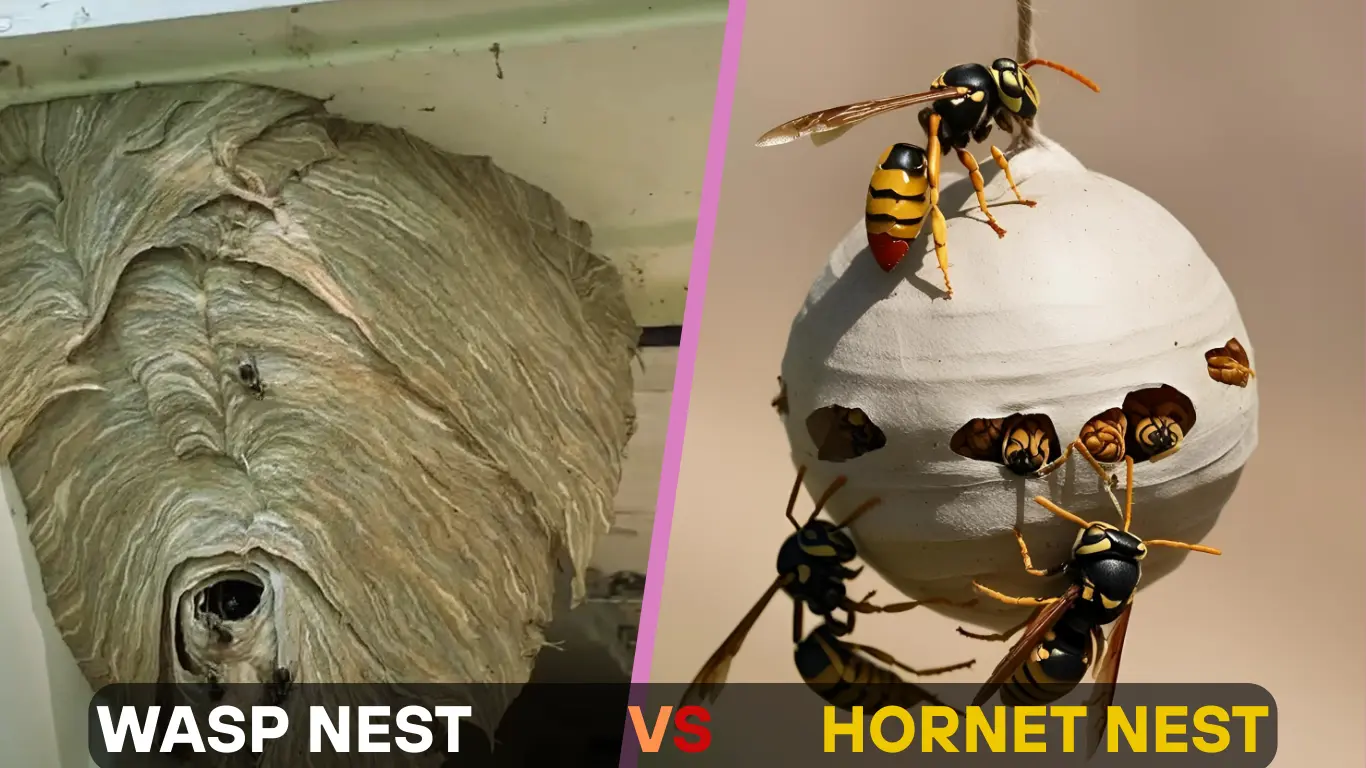
Wasps and hornets may look similar, but their nests are very different. Knowing the difference can help you stay safe and handle the situation better.
In this article, I will explain 10 key differences between wasp nests and hornet nests. I will use simple words so you can easily understand.
Whether you are dealing with a nest at home or just curious, this guide will help you know what to look for.
Let’s get started!
Key differences Between their Nest
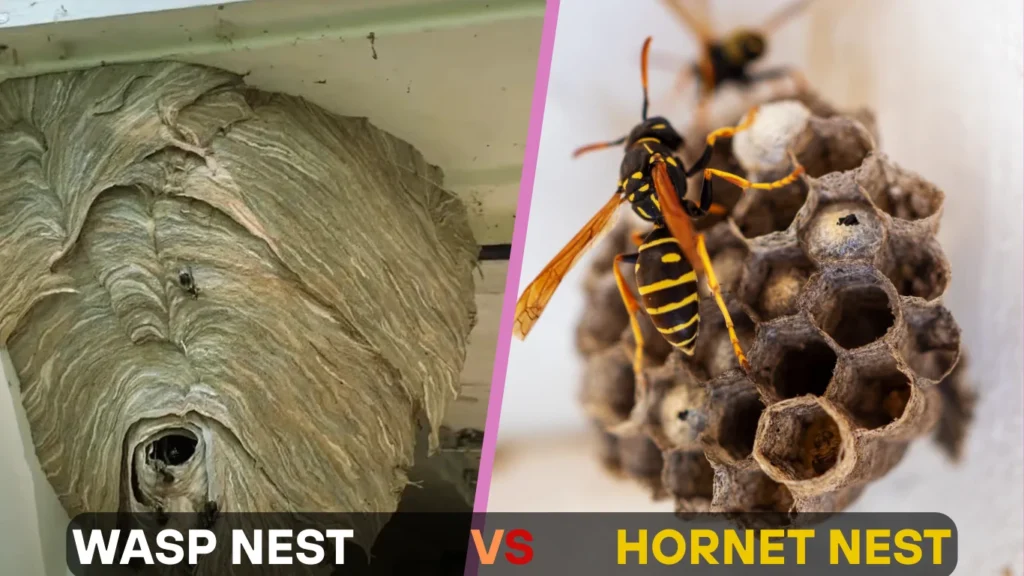
Here’s a simple table summarizing all the key differences between wasp nests and hornet nests for quick and easy understanding:
| Feature | Wasp Nest | Hornet Nest |
| Appearance | Small to medium, smooth and papery | Large, rough, football-shaped |
| Size | Golf ball to baseball size | Basketball size or bigger |
| Location | Open places like roof edges, porches | High trees, bushes, hidden spots |
| Construction Material | Thin, light, fragile | Thick, strong, layered |
| Aggressiveness | Less aggressive, warns before attack | Very aggressive, attacks quickly |
| Entry Hole | Multiple small openings | One large opening at bottom |
| Nest Color | Light grey or tan | Dark grey, brown, patchy |
| Seasonal Changes | Dies off after summer | Active longer into fall |
| Nest Population | Dozens to hundreds of wasps | Hundreds to over a thousand hornets |
| Risk and Danger Level | Painful sting, usually sting once | Very painful, multiple stings possible |
1. Nest Appearance
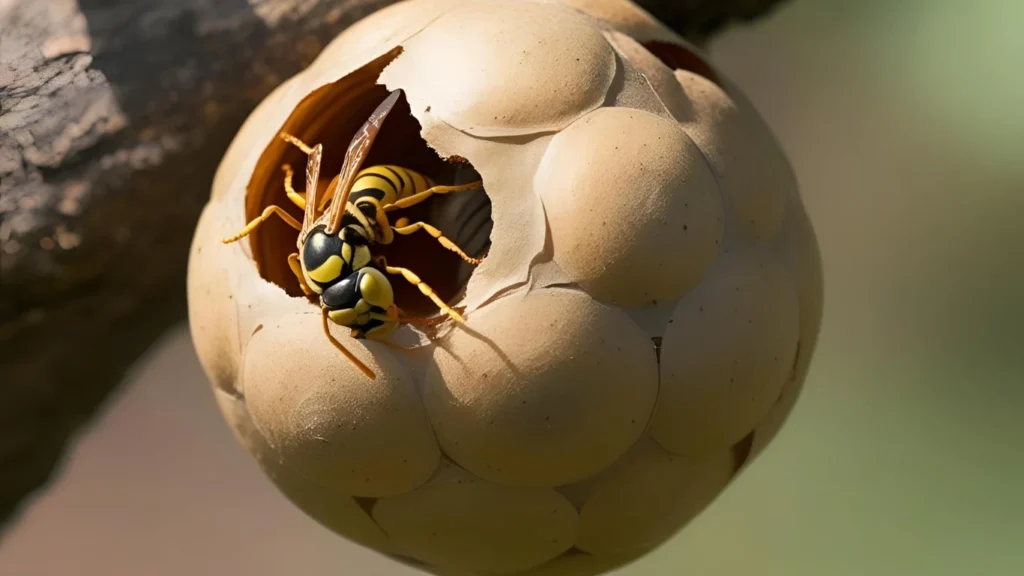
When you first see a wasp or hornet nest, their appearance can give you a big clue about which insect made it.
Wasp nests usually look like a round or oval ball. They are often small to medium in size. The outside of the nest looks smooth and papery. Some wasp nests can hang from tree branches, roof edges, or under porches.
Hornet nests, on the other hand, are much bigger and shaped like a large football or even a teardrop. Their nests look thicker and rougher than wasp nests. Hornet nests often have a pointed bottom and a round body.
Another easy way to tell them apart is by the surface. Wasp nests have a cleaner, smoother surface. Hornet nests look layered and uneven, like they are built with strips of paper.
So, if you see a small, smooth ball — it is likely a wasp nest. If you see a big, rough football-shaped nest — it is likely a hornet nest.
2. Nest Size
Wasp nests are usually smaller than hornet nests. Most wasp nests are about the size of a golf ball to a baseball. Some can grow a bit bigger, but they stay medium-sized.
Hornet nests are much larger. A hornet nest can be as big as a basketball or even bigger. Some hornet nests can grow to more than two feet tall by the end of the season.
So, if you see a small or medium nest, it is probably made by wasps. If the nest looks huge, it is most likely made by hornets.
3. Nest Location
Wasps like to build their nests in open and visible places. You may find wasp nests hanging from tree branches, under roof edges, porch ceilings, or even on windowsills.
Hornets prefer more hidden or high-up places. They often build their nests high in trees, inside thick bushes, or under eaves where it is harder to see.
Sometimes hornets also build nests inside wall cavities or attics, where you may not notice them right away.
If you find a nest low and easy to spot, it is likely a wasp nest. If the nest is hidden or very high, it could be a hornet nest.
4. Construction Material
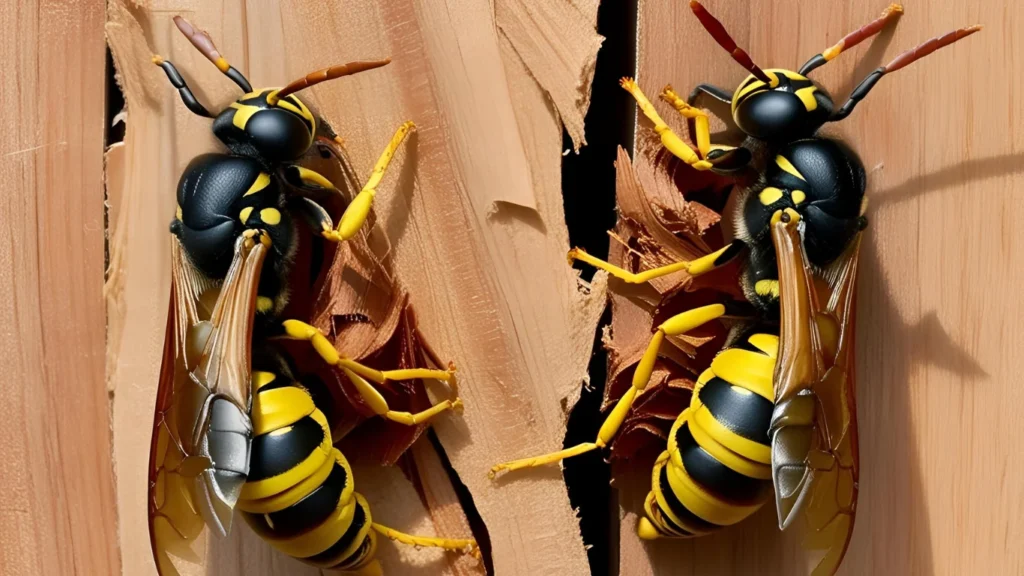
Both wasps and hornets use wood fibers to build their nests. They chew wood, mix it with their saliva, and make a papery material.
Wasp nests are thinner and lighter. They feel more fragile if you touch them (but don’t touch!). They break easily because wasps use less material.
Hornet nests are much thicker and stronger. They use more layers, making their nests tougher and better protected.
In short, wasp nests are lighter and softer. Hornet nests are heavier and more solid.
5. Aggressiveness Around the Nest
Wasps are protective of their nests, but they are not always quick to attack. They usually warn you first by flying around you.
Hornets are much more aggressive. They will attack quickly if they think you are too close to their nest. Hornets can also sting multiple times without dying.
So, if you get close to a nest and feel wasps just watching you, it is likely a wasp nest. But if insects rush at you fast, it could be a hornet nest.
6. Entry Hole
Wasp nests usually have many open holes. You can often see several wasps flying in and out from different spots.
Hornet nests are different. They usually have only one big entry hole near the bottom of the nest. Most hornets enter and leave through that one hole.
If you see a nest with many small openings, it is probably a wasp nest. If you notice one main entrance hole, it is likely a hornet nest.
7. Nest Color
Wasp nests are often grey or light tan. They look almost the same color as old paper or dry wood.
Hornet nests are usually darker. They can be grey, brown, or a mix of colors. Sometimes hornet nests look patchy because they use different kinds of wood.
In simple words, wasp nests are lighter and cleaner looking. Hornet nests are darker and have more rough color patterns.
8. Seasonal Changes
Wasp nests grow during the warm months, like spring and summer. They reach their biggest size in late summer or early fall. After that, wasps usually leave the nest, and the nest falls apart.
Hornet nests also grow through the summer, but they often get even bigger than wasp nests. Hornets stay active longer into the fall.
Neither wasps nor hornets reuse old nests. Each year, the queen starts a new nest from scratch.
9. Nest Population
Wasp nests can have a few dozen to a few hundred wasps inside. Most common wasp species have smaller groups compared to hornets.
Hornet nests are much more crowded. A single hornet nest can have up to 700 or even 1,000 hornets during peak season.
If a nest seems to have a lot of insects flying in and out, it could be a hornet nest. If there are fewer insects, it’s more likely a wasp nest.
10. Risk and Danger Level
Wasp stings can hurt a lot, but wasps usually attack only if you disturb their nest. Most wasps sting once and then fly away.
Hornet stings are more dangerous. Hornets can sting many times without stopping. Their stings are also more painful and can cause serious allergic reactions.
If you see a nest and are unsure which insect it belongs to, it’s safest to stay away. Always call a pest control expert to remove wasp or hornet nests safely.
Wasp or Hornet Nest Identification: Quick Checklist
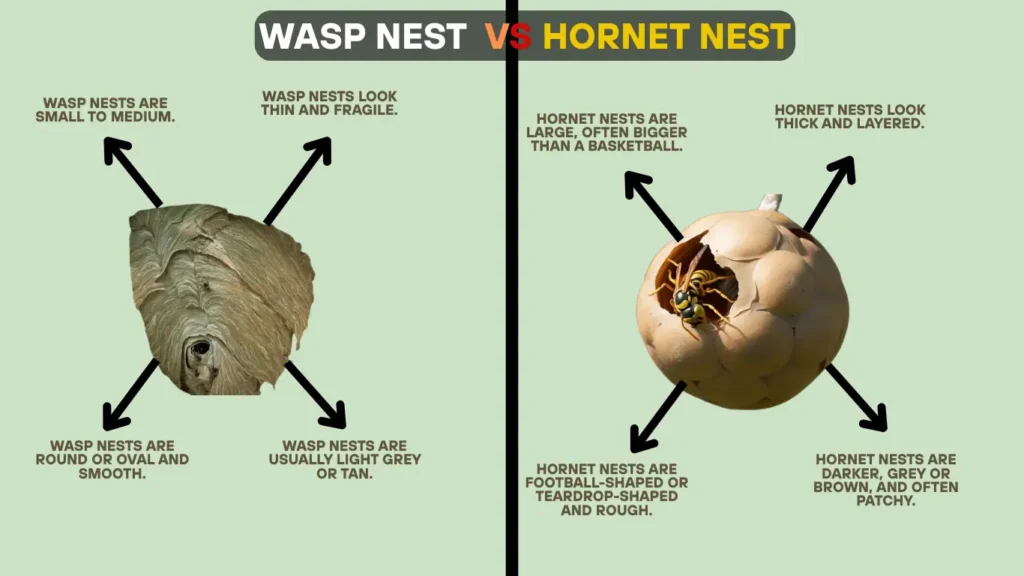
- Size:
- Wasp nests are small to medium.
- Hornet nests are large, often bigger than a basketball.
- Wasp nests are small to medium.
- Shape:
- Wasp nests are round or oval and smooth.
- Hornet nests are football-shaped or teardrop-shaped and rough.
- Wasp nests are round or oval and smooth.
- Location:
- Wasp nests are built in open, visible places like porches, windows, or tree branches.
- Hornet nests are built in hidden spots like tall trees, thick bushes, or inside walls.
- Wasp nests are built in open, visible places like porches, windows, or tree branches.
- Entry Holes:
- Wasp nests have many small openings.
- Hornet nests have one big hole near the bottom.
- Wasp nests have many small openings.
- Material and Texture:
- Wasp nests look thin and fragile.
- Hornet nests look thick and layered.
- Wasp nests look thin and fragile.
- Nest Color:
- Wasp nests are usually light grey or tan.
- Hornet nests are darker, grey or brown, and often patchy.
- Wasp nests are usually light grey or tan.
- Aggressiveness:
- Wasps are less aggressive, often warning first.
- Hornets are very aggressive and attack quickly.
- Wasps are less aggressive, often warning first.
Hornet and Wasp Nest Pictures
There is a image of Hornet and Wasp nest pictures so that you can Identify the differences between their nest.
