
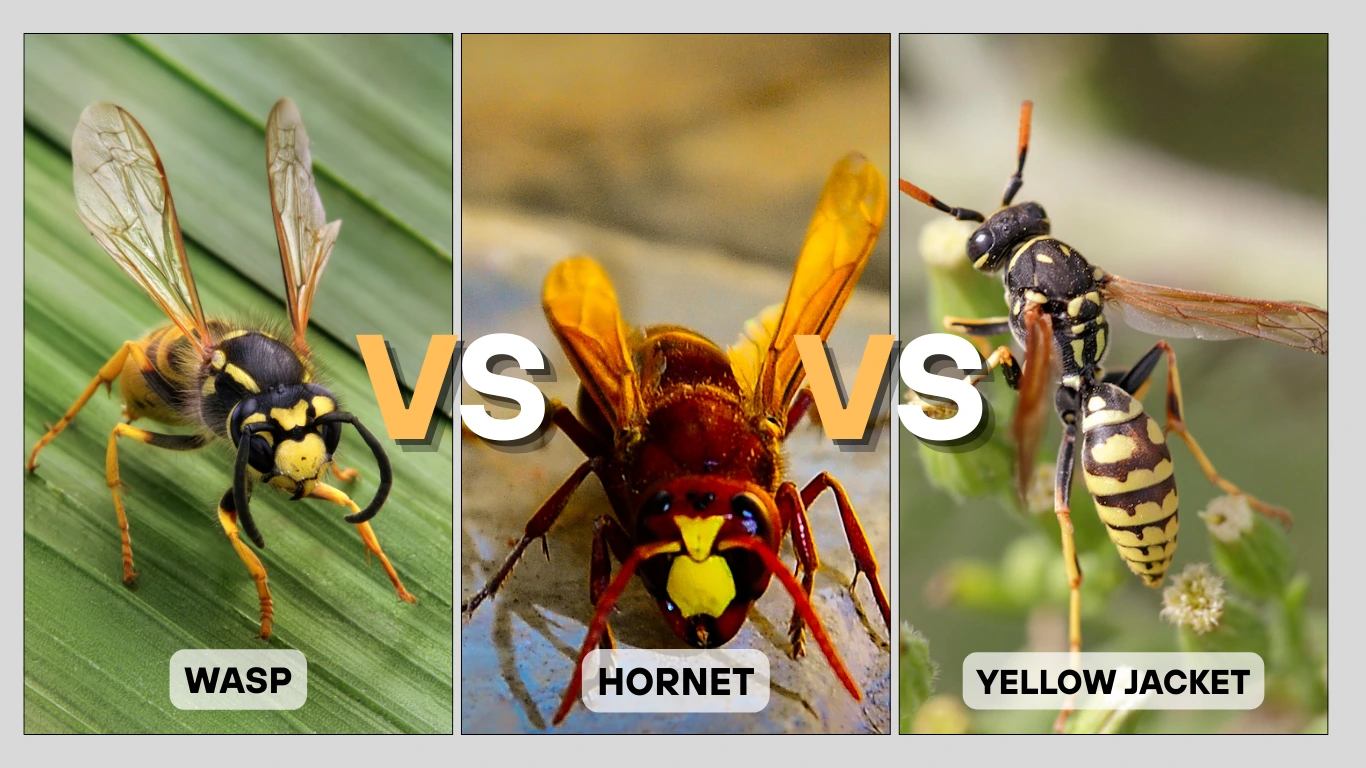
Wasps, hornets, and yellow jackets are often mistaken for one another because of their similar appearance and painful stings. However, each has distinct traits that set them apart. Understanding their differences can help you avoid stings, deal with infestations safely, and appreciate their role in the ecosystem. Below are the 7 main differences between these stinging insects.
1. Size and Body Shape

Wasp
Wasps typically have a slender body with a very noticeable narrow waist connecting the thorax and abdomen. Their legs dangle visibly when they fly.
Hornet
Hornets are generally the largest among the three. They have robust, thick bodies and are more intimidating in size, often reaching up to 2 inches in length.
Yellow Jacket
Yellow jackets have a compact, stocky body. Though smaller than hornets, they appear bulkier than most common wasps.
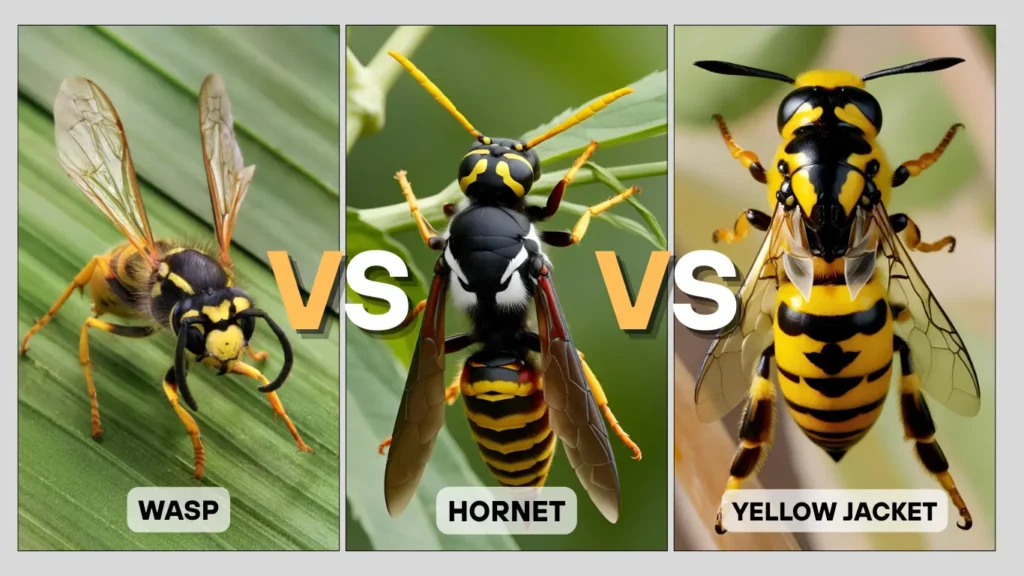
2. Color and Markings
Wasp
Wasps are usually black with yellow or white markings. Their body has a smooth texture and lacks dense hair.
Hornet
Hornets often display darker colors—commonly black and white or reddish-brown with yellow markings. Their coloring can vary by species, but they tend to look less vibrant than yellow jackets.
Yellow Jacket
Easily recognized by their bright yellow and black stripes, yellow jackets have a vivid, high-contrast appearance that makes them stand out. This color pattern often leads people to confuse them with bees.
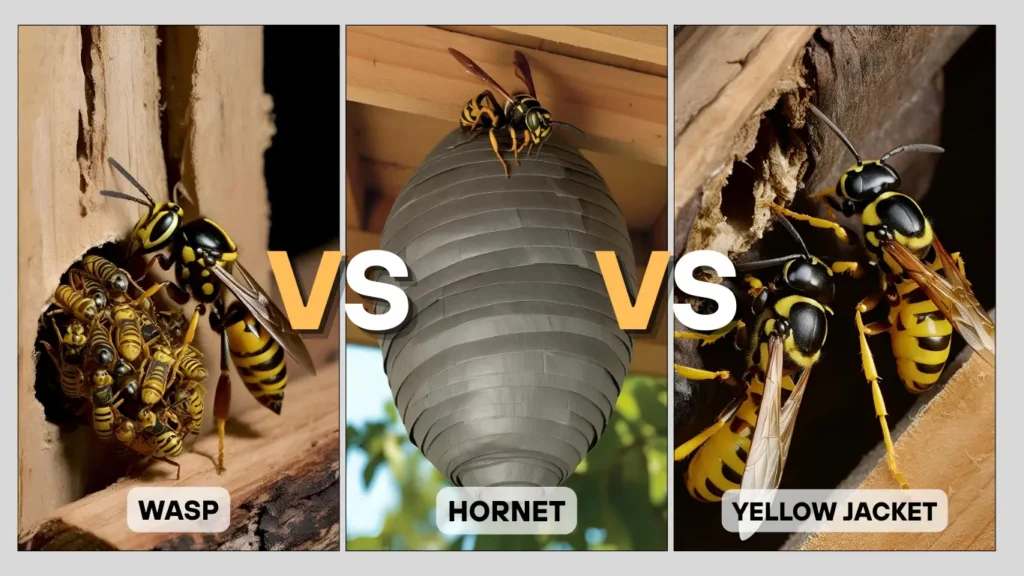
3. Nesting Location and Structure
Wasp
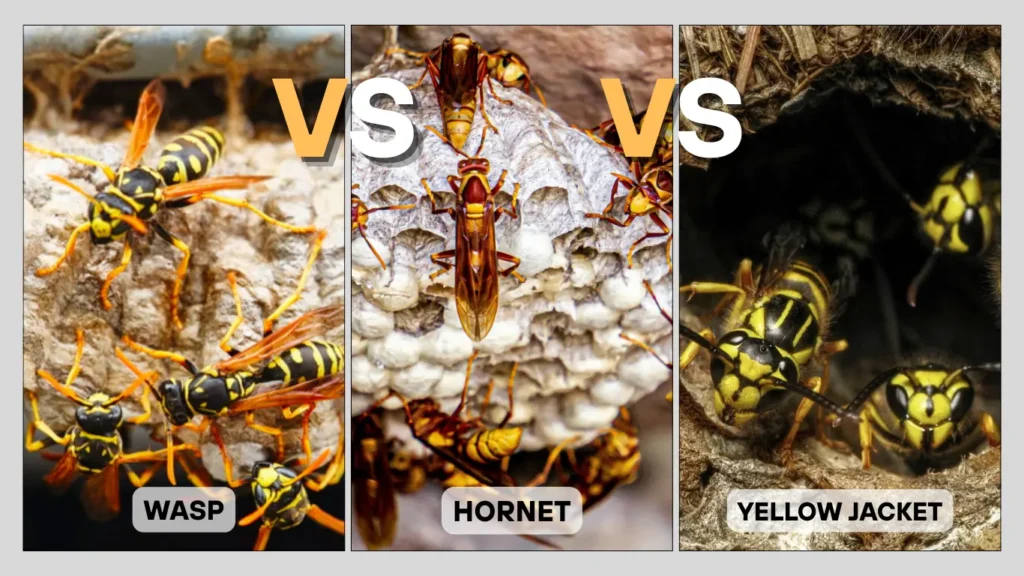
Wasps, particularly paper wasps, build open, umbrella-shaped nests made of chewed wood and saliva. These nests are often found hanging under eaves, branches, or porches.
Hornet
Hornets build large, enclosed nests that resemble a gray football. These paper-like nests are commonly found in tree branches, attics, or high under eaves.
Yellow Jacket
Yellow jackets prefer concealed nesting sites. They often build nests underground, in wall cavities, or inside logs. Their colonies are typically larger and more aggressive in defending their territory.
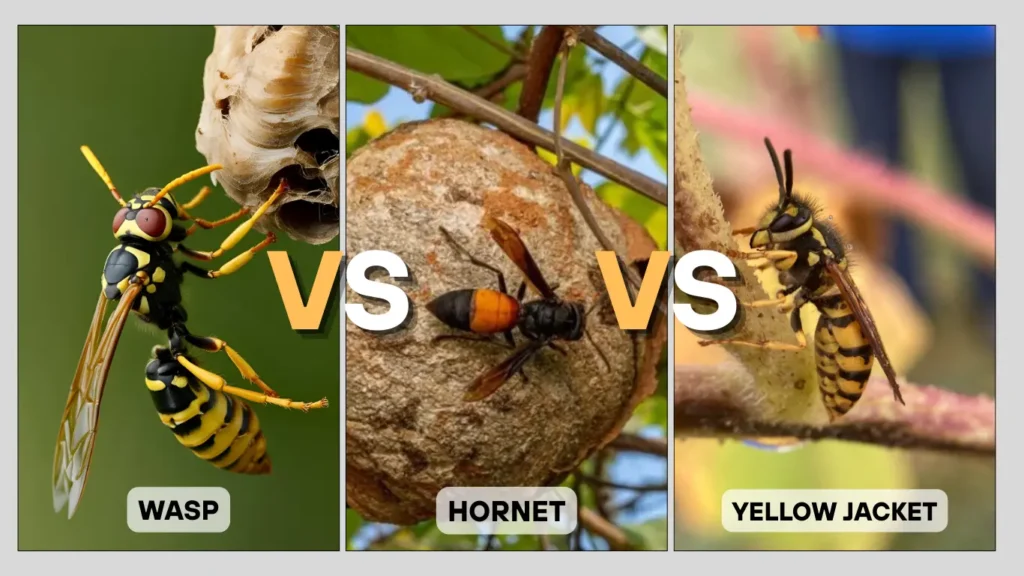
4. Aggression Level
Wasp
Most wasps are defensive rather than aggressive. They sting when provoked or disturbed, particularly near their nest.
Hornet
Hornets are notably aggressive when they feel threatened, especially if their nest is approached. Their size and powerful sting make them a serious concern during encounters.
Yellow Jacket
Among the three, yellow jackets are the most aggressive. They are territorial, highly protective of their nests, and may sting with little provocation—especially in late summer when food is scarce and colony activity peaks.
5. Sting Behavior
Wasp
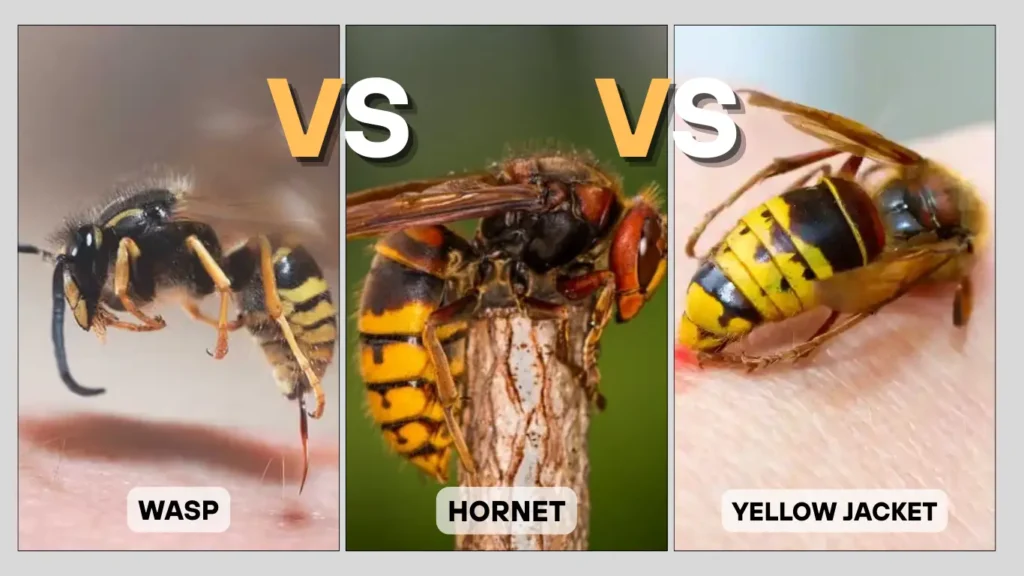
Wasps can sting multiple times because their stingers are smooth and do not detach after stinging. Their venom can cause localized pain, redness, and swelling. Though painful, wasp stings are typically less intense than hornet or yellow jacket stings.
Hornet
Hornets have one of the most painful stings among these insects. Their venom contains acetylcholine and other compounds that intensify the burning sensation. A hornet can also sting multiple times, making an encounter especially dangerous for allergic individuals.
Yellow Jacket
Yellow jackets are notorious for their repeated stings. They will chase and sting perceived threats aggressively. Their venom is potent and may trigger severe allergic reactions, including anaphylaxis in sensitive individuals.
6. Diet and Role in Ecosystem
Wasp
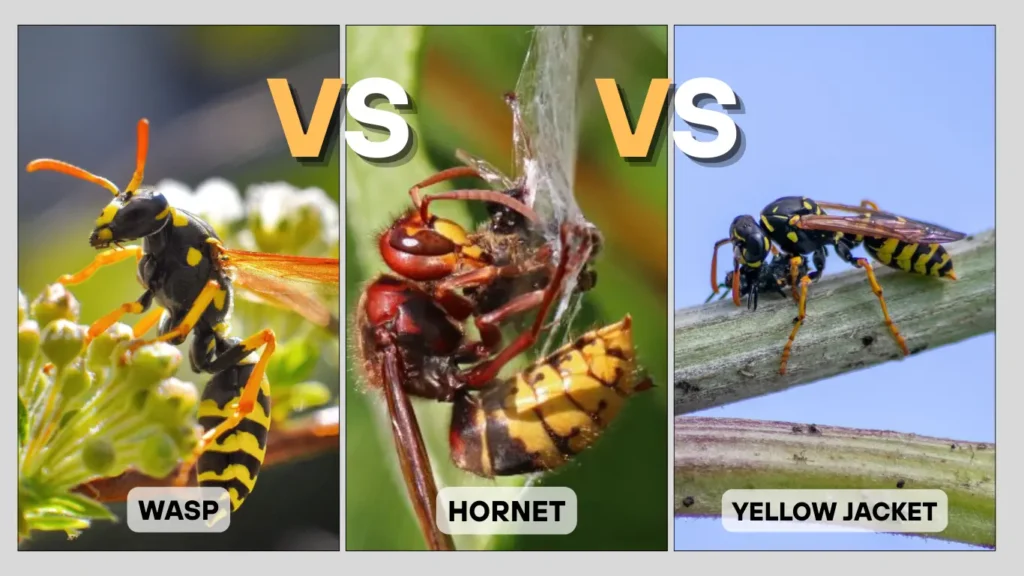
Wasps are beneficial predators that feed on other insects like caterpillars and flies. Many also consume nectar and help with pollination, although not as efficiently as bees.
Hornet
Hornets are carnivorous and play a strong role in pest control. They feed on larger insects, including other wasps and bees, helping to maintain ecological balance.
Yellow Jacket
Yellow jackets have a scavenger diet, often feeding on sugary foods, meats, and garbage—especially later in the season. They also hunt insects, but their strong attraction to human food often brings them into conflict with people.
7. Human Interaction & Threat Level
Wasp
Encounters with wasps are common in gardens and around homes. They typically avoid humans unless threatened. Removing nests early in the season can prevent problems later on.
Hornet
Hornets pose a serious threat if their nest is disturbed. Their aggressive defense and painful stings make professional removal necessary in most cases.
Yellow Jacket
Yellow jackets are the most dangerous due to their aggressive nature and tendency to nest in hidden areas. They are responsible for the majority of stinging incidents and are particularly problematic at outdoor events and picnics.
Comparison Table
| Feature | Wasp | Hornet | Yellow Jacket |
| Size | Slender, medium | Large and robust | Compact and small |
| Color | Yellow & black | Dark with pale bands | Bright yellow & black |
| Nest Location | Under eaves, trees | Trees, high places | Underground, wall voids |
| Aggression | Moderate | High | Very high |
| Sting Pain | Moderate | Severe | Severe |
| Diet | Insects, nectar | Insects | Insects, human food |
| Risk to Humans | Moderate | High | Very high |
FAQs
Which is more dangerous: a wasp, hornet, or yellow jacket?
A: Yellow jackets are generally the most aggressive and likely to sting without provocation. Hornet stings are the most painful. All three can be dangerous to people with allergies.
Can a wasp, hornet, or yellow jacket sting more than once?
A: Yes. Unlike bees, all three can sting multiple times because their stingers do not get stuck in the skin.
How can I tell the difference just by looking?
A: Wasps have a narrow waist and longer body. Hornets are larger and bulkier with duller colors. Yellow jackets are shorter, stockier, and have bright yellow and black stripes.
What should I do if I get stung?
A: Wash the area, apply ice, and take antihistamines for swelling. If you have difficulty breathing, dizziness, or swelling beyond the sting site, seek medical help immediately—it could be a serious allergic reaction.
Are any of them beneficial to the environment?
A: Yes. Wasps and hornets help control pest insect populations. Yellow jackets also hunt insects, though they are more of a nuisance due to their scavenging behavior.
Final Thoughts
Knowing the difference between wasps, hornets, and yellow jackets can help you respond appropriately when you encounter them. Whether it’s avoiding a sting or knowing when to call pest control, a little identification knowledge goes a long way in staying safe and appreciating these often misunderstood insects.
