

Discovering water bugs swimming in your pool can be both annoying and alarming. These insects appear suddenly, float across the surface, or even bite unsuspecting swimmers. While some are harmless, others indicate problems like algae buildup or poor water balance. Understanding which bugs live in pools, why they appear, and how to eliminate them helps keep your pool clean, safe, and inviting all season long.
Understanding Water Bugs in Pools
What Are Water Bugs?
The term water bugs refers to various aquatic insects that thrive in or near water. In pools, they’re often water boatmen or backswimmers, not cockroaches as many believe. They enter pools seeking food, warmth, or shelter. While they can be unsettling, they don’t infest homes and generally appear because of favorable conditions like algae growth or low chlorine levels.
Difference Between True Water Bugs and Cockroaches
True water bugs are aquatic hunters belonging to the Hemiptera order. They have flat, oval bodies and strong legs for swimming. Cockroaches, on the other hand, are terrestrial scavengers. Although both are attracted to moisture, roaches can’t live in chlorinated water. Knowing the difference is essential because cockroach infestations require a very different approach than removing pool insects.
Types of Water Bugs Found in Pools

Water Boatmen
Water boatmen are small, oval-shaped insects that move smoothly across the pool surface. They are generally harmless to humans and feed on algae, bacteria, and organic debris. However, their presence can attract predators, which causes secondary infestations. If you notice water boatmen, it’s often a sign that your pool needs cleaning or chemical adjustment.
Backswimmers
Backswimmers are slightly larger and swim upside down with long, oar-like legs. They feed on water boatmen and other small insects. These bugs can bite when disturbed, causing a painful sting similar to a bee sting. Backswimmers are often mistaken for water boatmen, but their more aggressive behavior and tendency to bite make them less welcome guests.
Giant Water Bugs
Occasionally, you may find giant water bugs, also called toe-biters, in large outdoor pools or ponds. They are large, flat insects that can fly and are attracted to light. Though their bite is rare, it’s painful and should be avoided. Giant water bugs usually wander into pools accidentally during humid or rainy weather.
Identifying Water Bugs in Your Pool

Visual Signs
Spotting small, moving specks or floating insects on the surface usually means a bug infestation is beginning. Water boatmen are brownish and glide calmly, while backswimmers appear lighter and swim upside down. Giant water bugs are much larger and can be seen resting near pool edges or lights.
Behavior and Movement
Water bugs are typically nocturnal and attracted to light sources. They fly toward illuminated areas at night, mistaking reflections on pool water for ponds or lakes. If you frequently see them under pool lights or floating near skimmers in the morning, they likely arrived overnight.
Why Water Bugs Appear in Pools

Algae Growth
The main reason water bugs invade pools is algae. Water boatmen feed directly on algae, while backswimmers follow to prey on the boatmen. If you notice either species, it’s a clear sign your pool chemistry is off-balance and needs attention.
Stagnant or Unbalanced Water
Poor filtration, clogged skimmers, or low chlorine levels create stagnant water, which promotes algae and bacteria growth. This environment attracts aquatic insects seeking food and shelter. Even if the pool looks clean, improper chemical balance can invite bugs.
Outdoor Lighting and Warm Weather
Water bugs are drawn to light and warmth. Bright pool lights, patio lamps, and porch bulbs can attract them from nearby ponds or fields. Warm, humid weather further encourages activity, especially at night when bugs mistake light reflections for water surfaces.
How Water Bugs Get Into Pools
Natural Entry Points
Water bugs can fly short distances and often enter pools by accident. They may land while searching for water or food. Outdoor pools near lakes, streams, or gardens are particularly vulnerable. Once inside, they can survive for days unless removed or treated.
Carried by Wind or Rainwater
Heavy rain, flooding, or strong winds can carry bugs or their eggs into pools. Even small puddles or birdbaths nearby can serve as temporary breeding grounds. When these overflow, the insects may migrate or be blown into your pool area.
Are Water Bugs in Pools Dangerous?

Do Water Bugs Bite?
Most water bugs are harmless, but backswimmers and giant water bugs can bite if handled or trapped. Their bites are not venomous but can be painful, causing redness and swelling similar to a bee sting. Wearing pool shoes and avoiding handling bugs is the simplest prevention.
Do They Indicate Dirty Water?
Yes — the presence of water bugs is often a warning sign that your pool’s sanitation levels are declining. Bugs survive in clean water only temporarily; they prefer pools with algae and organic matter. Regular maintenance and balanced water chemistry are key to keeping them away.
How to Get Rid of Water Bugs in Pools
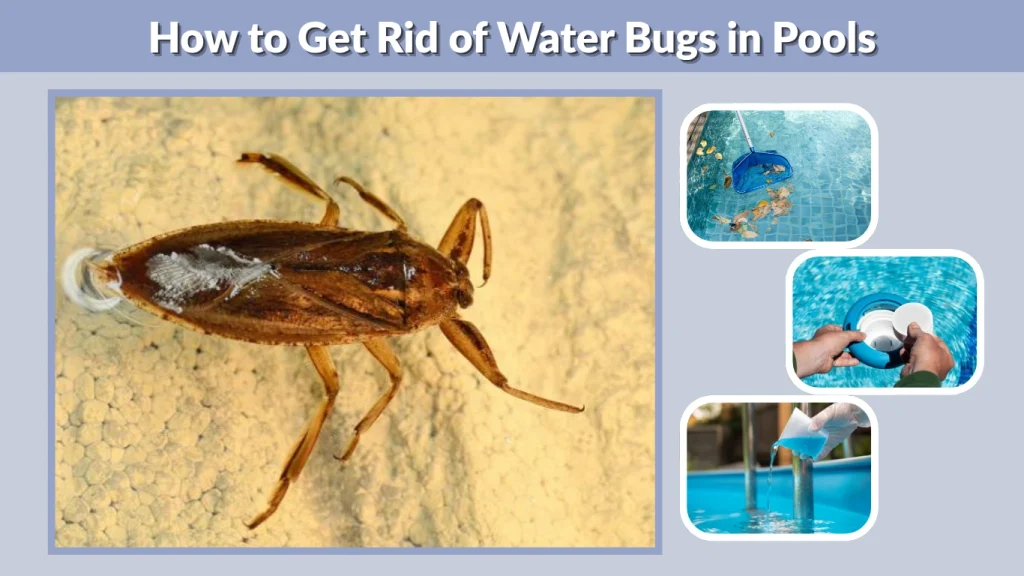
Step 1: Clean the Pool Thoroughly
The first step to removing water bugs is deep cleaning. Use a skimmer net to scoop out visible insects, leaves, and debris. Brush the pool walls and floor to remove algae buildup, especially around corners and steps where bugs tend to hide. Vacuum the pool bottom to eliminate eggs or organic residue that attracts more insects. This physical cleaning should be done before adjusting any chemicals.
Step 2: Shock the Pool
Once the pool is clean, apply a chlorine shock treatment. This raises chlorine levels high enough to kill algae, bacteria, and insect larvae.
- Add 3–5 times the regular chlorine dosage.
- Run the filtration system continuously for 24 hours.
- Avoid swimming until chlorine levels return to the normal range (1–3 ppm).
A chlorine shock not only eliminates food sources but also disrupts the insects’ breeding environment, preventing reappearance.
Step 3: Balance Pool Chemistry
Water bugs thrive in imbalanced water. Maintaining proper pool chemistry creates an environment unsuitable for both algae and aquatic insects.
- pH level: 7.2–7.8
- Chlorine: 1–3 ppm
- Alkalinity: 80–120 ppm
Test water weekly with a pool kit to ensure stability. Balanced chemistry keeps your water clear and bug-free.
Step 4: Use Algaecide and Clarifier
After shocking, add an algaecide to prevent algae from returning. Bugs won’t stay without a food source. Follow up with a clarifier to remove cloudy particles and improve water clarity. Using these products regularly helps maintain a clean, inviting pool surface that doesn’t attract insects.
How to Kill Water Bugs Effectively
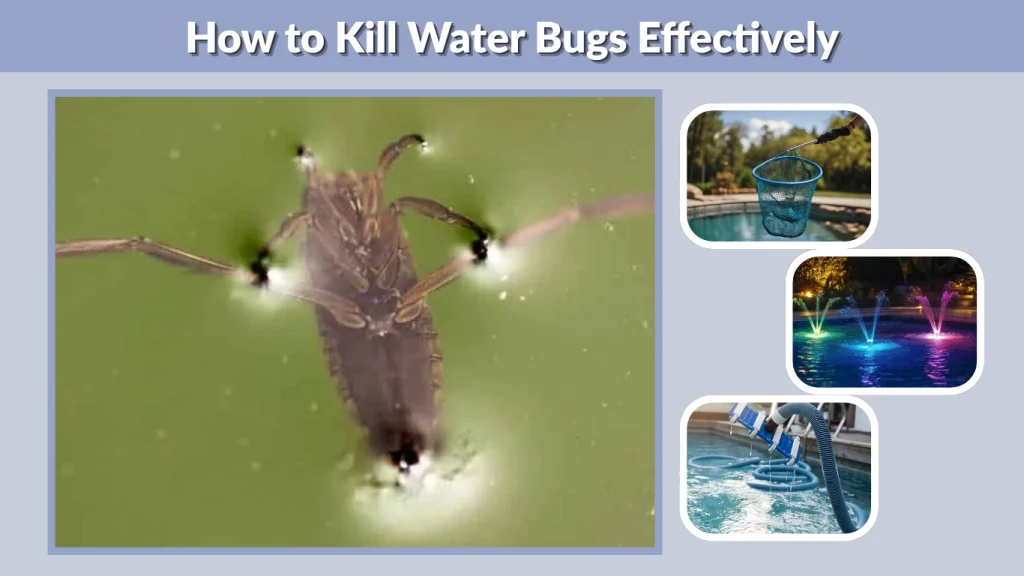
Physical Removal
Use a fine mesh skimmer to collect floating bugs daily. Remove them from the pool area entirely — tossing them aside will only allow them to return. Empty skimmer baskets frequently and inspect filter cartridges for trapped insects or eggs.
Chemical Methods
If the infestation persists, use pool-safe algaecides and insect growth regulators (IGRs). These disrupt the bugs’ life cycles and prevent larvae from developing into adults. Avoid using household insect sprays near pools; they can introduce toxic residues into the water and damage the filtration system.
Natural Alternatives
For those preferring non-chemical methods, try:
- Turning off pool lights at night to reduce attraction.
- Adding a few drops of peppermint oil around the pool deck to repel bugs naturally.
- Using vinegar solutions for small infestations (vinegar disrupts eggs and larvae).
While these methods are less aggressive, they work best when combined with proper cleaning and chlorine balance.
How to Prevent Water Bugs in Pools
Regular Maintenance Routine
A consistent cleaning and chemical schedule is the best defense.
- Skim and vacuum at least twice a week.
- Run the pump for 8–10 hours daily to maintain circulation.
- Check filters and skimmers for clogs.
- Brush walls weekly to prevent algae from forming.
Regular upkeep ensures that bugs find your pool uninhabitable.
Control Outdoor Environment
Water bugs often come from surrounding environments. Limit their access by:
- Turning off or dimming bright outdoor lights at night.
- Trimming grass and bushes near the pool.
- Removing puddles, fountains, and birdbaths that can harbor insects.
- Installing screens or pool enclosures in highly infested areas.
A well-maintained yard discourages insects from migrating to your pool.
Cover the Pool
When not in use, cover the pool to block insects from entering and laying eggs. A high-quality pool cover also reduces debris accumulation, keeps chlorine levels stable, and minimizes evaporation — all of which contribute to a bug-free pool environment.
Regional and Seasonal Factors
Warm Climate Pools
Pools in warm, humid states like Florida, Texas, and Arizona are more prone to water bugs. These climates promote algae growth and year-round bug activity. To manage infestations, increase filtration time during summer months and perform mid-season chlorine shocks.
Saltwater Pools
Even saltwater systems can host water bugs if algae is present. While salt discourages bacteria, it doesn’t kill insects or algae completely. Maintain appropriate salinity levels (2,700–3,400 ppm) and use salt-compatible algaecides to keep bugs away.
Common Myths About Pool Bugs
Myth 1: Bugs Only Appear in Dirty Pools
False. Even well-maintained pools can attract bugs, especially during humid nights when lights lure flying insects. However, they won’t stay long in properly chlorinated water.
Myth 2: Chlorine Alone Keeps Bugs Away
Chlorine helps but isn’t enough by itself. Bugs can tolerate mild chlorine levels. Preventing algae growth and controlling lights are equally important.
Myth 3: Water Bugs Lay Eggs on People
Completely false. Water bugs lay eggs on submerged plants or hard surfaces — never on human skin. They may swim close, but they’re not parasitic.
FAQs
Why do I have water bugs in my pool?
Water bugs appear due to algae, low chlorine, or poor circulation. They feed on organic material and seek calm, nutrient-rich water. Regular cleaning and balanced chemistry are key to prevention.
What are the small black bugs swimming in my pool?
They are likely water boatmen or backswimmers. Water boatmen feed on algae, while backswimmers prey on them and can bite when disturbed. Identifying which one you have helps determine treatment.
Do water bugs in pools bite humans?
Some species, such as backswimmers and giant water bugs, can bite if handled. Their bite causes brief pain but is not venomous or harmful.
How do I get rid of water bugs permanently?
Clean your pool thoroughly, shock it with chlorine, add algaecide, and maintain balanced water chemistry. Keep lights dim at night and use covers to prevent reinfestation.
Are water bugs in saltwater pools different?
No, the same species can appear in saltwater pools if algae develops. Proper salinity, regular brushing, and routine chemical maintenance will keep them away.
