

Western flower thrips (Frankliniella occidentalis) may be tiny, but their impact on gardens, greenhouses, and farms can be devastating. Known for feeding on flowers, fruits, and vegetables, these slender insects cause widespread damage by sucking out plant juices and transmitting serious viruses. If you’re noticing deformed blooms, silver streaks on leaves, or stunted plant growth, thrips might be to blame.
In this article, we’ll walk you through how to identify Western flower thrips, understand their life cycle, recognize infestation signs, and explore the most effective control and prevention methods.
What Are Western Flower Thrips?
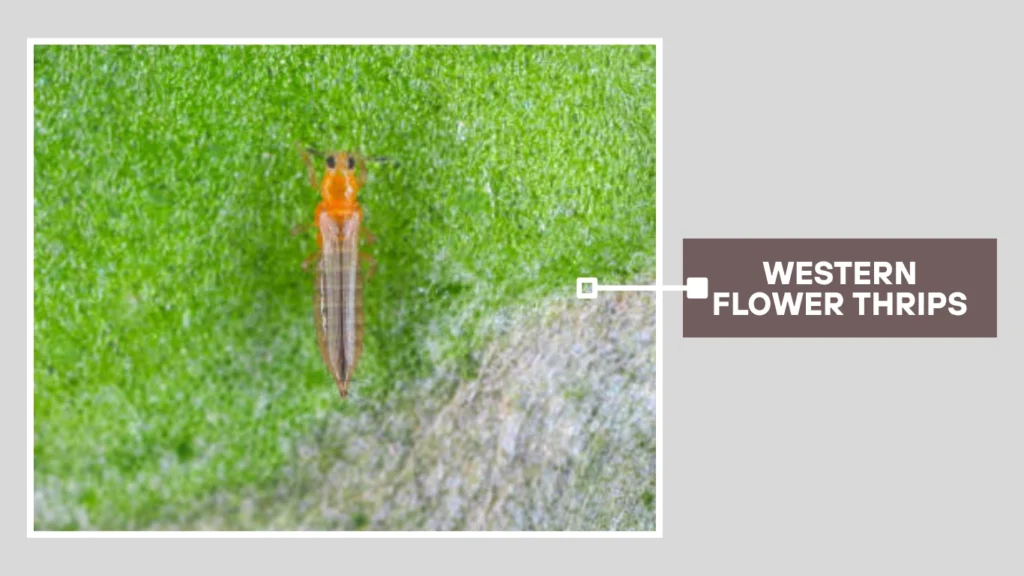
Western flower thrips are among the most common and destructive species of thrips in North America and around the world. Originally native to the western United States, they’ve spread globally due to trade, especially through ornamental plants and greenhouse crops.
They are not just a nuisance; they’re also primary carriers of Tomato Spotted Wilt Virus (TSWV) and Impatiens Necrotic Spot Virus (INSV), both of which can severely impact crop yield and quality.
How to Identify Western Flower Thrips
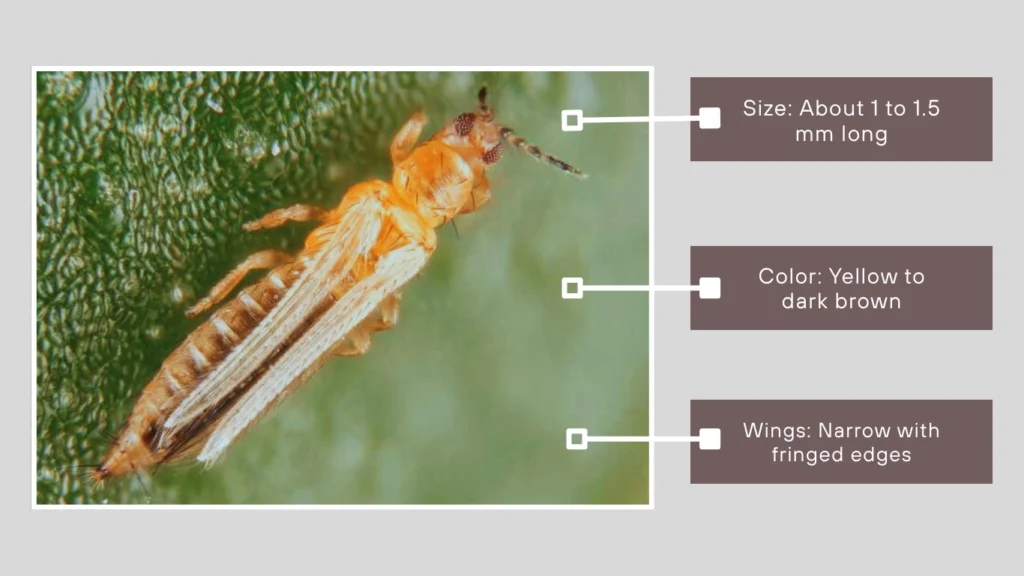
Spotting thrips can be tricky due to their small size, but there are key features to look for:
Adult Appearance
- Size: About 1 to 1.5 mm long
- Color: Yellow to dark brown
- Wings: Narrow with fringed edges
Nymphs vs Adults
Nymphs are smaller, lighter in color, and lack fully developed wings. They’re often found on the undersides of leaves or inside flowers.
Where to Look
Thrips prefer:
- Flower buds
- Leaf axils
- Petals and newly growing tissues
Check these areas for crawling thrips or damage symptoms.
Life Cycle of Western Flower Thrips

Thrips have a fast and complex life cycle, especially in warm conditions:
Egg Stage – Inserted inside plant tissue, invisible to the naked eye.
Nymph Stages (2 phases) – Pale yellow larvae feed actively on plant surfaces.
Pupal Stages (2 phases) – Pupate in soil, leaf litter, or flower structures.
Adult Stage – Live for several weeks and lay up to 250 eggs in a lifetime.
A full life cycle can take just two to three weeks during summer, allowing populations to explode quickly.
Behavior and Feeding Habits
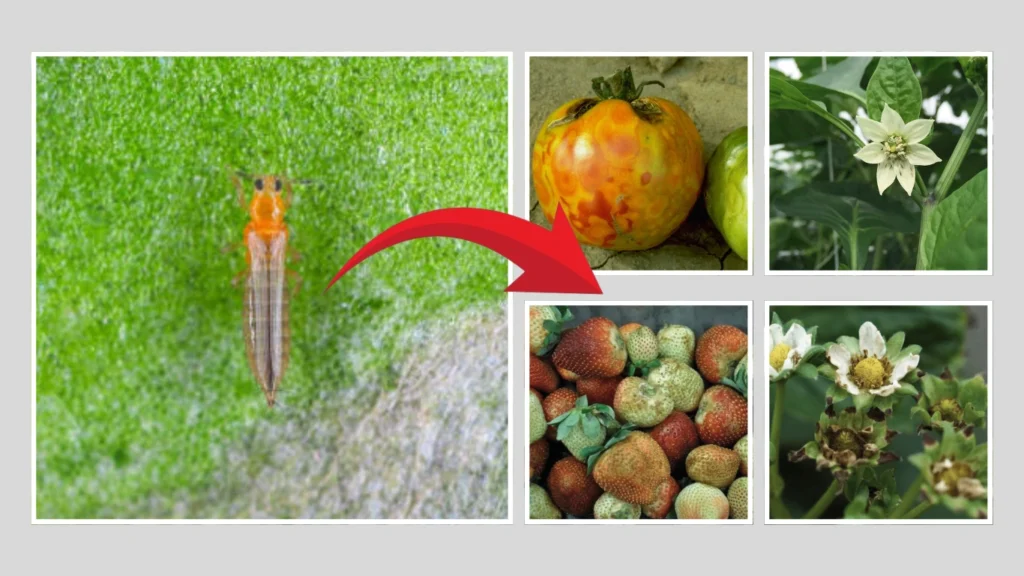
Western flower thrips are piercing-sucking insects. They puncture plant cells and suck out the contents, leaving behind:
- Silvery patches or streaks
- Black specks of excrement
- Deformed or discolored tissue
They’re especially drawn to:
- Tomatoes
- Peppers
- Strawberries
- Ornamental flowers like roses and petunias
They move fast and can fly short distances, making them highly mobile in both outdoor gardens and indoor greenhouses.
Signs of Infestation and Plant Damage
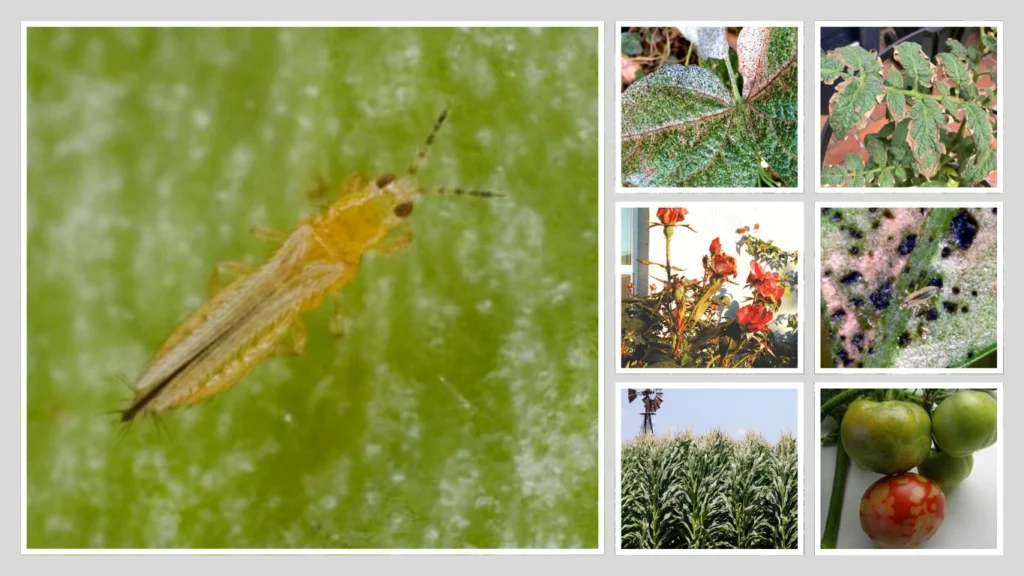
Here’s how to tell if thrips are present:
- Silver streaks or patches on leaves or petals
- Browning and curling at leaf edges
- Flower buds failing to open or look twisted
- Black specks (their droppings) near damaged tissue
- Overall plant stunting and reduced yield
- Viral symptoms, such as ring spots or necrotic lesions, especially on tomatoes and peppers
Because they’re so small, many gardeners only notice the damage after it’s already serious.
Western Flower Thrips vs Other Thrips
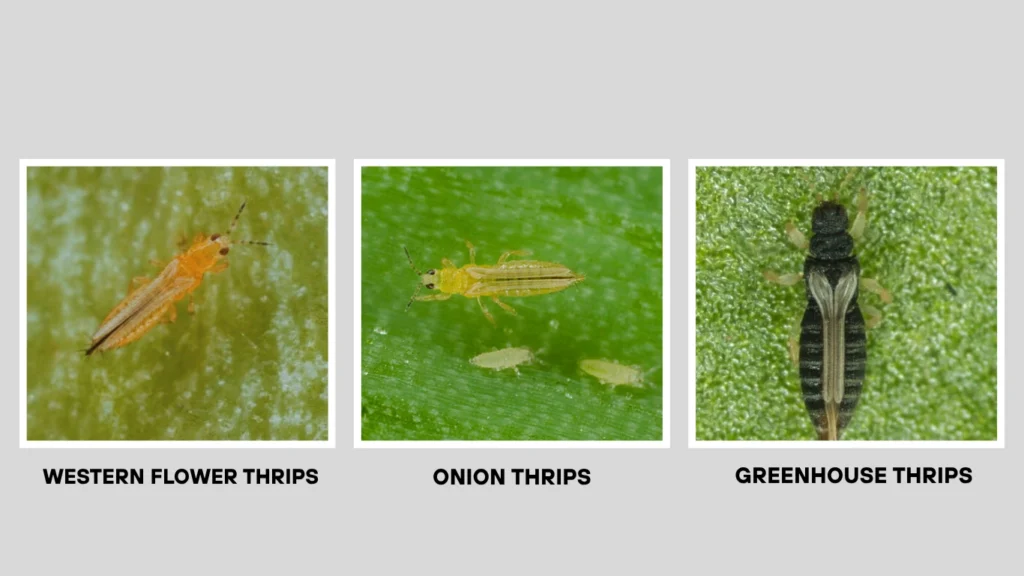
Not all thrips are the same. Here’s a quick comparison:
| Feature | Western Flower Thrips | Onion Thrips | Greenhouse Thrips |
| Size | 1–1.5 mm | 1–1.3 mm | 1.2–1.5 mm |
| Body Color | Yellow to brown | Pale yellow | Dark brown |
| Wing Shape | Fringed | Narrow | Broader with hairs |
| Host Preference | Flowers, vegetables | Onions, leeks | Tropical ornamentals |
| Virus Vector | Yes | No | No |
Natural Predators and Biological Control
Using beneficial insects is a smart way to handle thrips without harming pollinators.
Predatory Mites
Species like Amblyseius cucumeris and Neoseiulus barkeri feed on thrips larvae and are widely used in greenhouses.
Minute Pirate Bugs
Orius insidiosus is a voracious thrips predator, especially effective in outdoor settings.
Other Allies
- Lacewing larvae
- Lady beetles
- Parasitic wasps (for pupal stages)
Using neem oil, insecticidal soaps, and spinosad sprays also helps suppress populations naturally, especially when applied early and directly to affected areas.
Chemical and Physical Control Methods
If natural methods don’t work, you may need targeted treatments:
Chemical Control
- Spinosad: Highly effective, minimal impact on bees if used in the evening.
- Insecticidal Soaps: Best for light infestations.
- Pyrethroids: Can work, but thrips may develop resistance.
Physical Barriers
- Sticky Traps: Blue and yellow traps attract adult thrips.
- Reflective Mulch: Deters thrips from landing on plants.
- Pruning and Disposal: Remove heavily infested flowers or leaves.
How to Prevent Western Flower Thrips
Prevention starts with vigilance:
- Inspect new plants before introducing them to your garden or greenhouse.
- Clean up plant debris regularly, especially fallen leaves and flowers.
- Avoid over-fertilization, which leads to excessive tender growth (thrips love it).
- Use resistant plant varieties when available.
Early detection and intervention are the keys to keeping your plants healthy.
FAQs
Are Western flower thrips dangerous to humans?
No, Western flower thrips do not bite or sting humans. They pose no direct health risk to people or pets. Their damage is limited to plants, where they feed on leaves, flowers, and buds by piercing plant cells and sucking out the contents.
Can you completely eliminate thrips?
Total eradication is extremely difficult due to their fast life cycle and tendency to hide in tight plant crevices. However, with a combination of early detection, biological control (like predatory mites or pirate bugs), and targeted insecticidal applications, you can reduce their populations to levels that cause minimal or no damage to plants.
Do they survive in winter?
Yes, in milder climates or inside greenhouses, Western flower thrips can overwinter. They often survive in plant debris, soil, or even in weeds and host plants. In colder outdoor climates, most adult thrips die off, but pupae or eggs may survive in protected spots until spring.
Can Western flower thrips fly?
Yes. While not strong fliers, adult Western flower thrips can fly short distances, especially when disturbed or seeking new food sources. Their fringed wings allow them to glide on air currents, which helps them spread between plants and even enter greenhouses or homes through vents and screens.
What plants are most at risk?
Western flower thrips are highly polyphagous, meaning they feed on a wide range of plant species. The most commonly affected plants include:
Vegetables: Tomatoes, peppers, cucumbers, lettuce, eggplants
Fruits: Strawberries, grapes, blueberries
Ornamentals: Roses, chrysanthemums, petunias, impatiens, marigolds
Herbs and greenhouse crops: Basil, mint, and ornamental bedding plants
Final Thoughts
Western flower thrips are small but mighty plant pests. Their ability to reproduce rapidly and spread plant viruses makes them a serious threat in gardens, greenhouses, and commercial agriculture. By learning to recognize early signs of infestation, using natural predators, and applying targeted controls, you can protect your plants and reduce damage without over-relying on harsh chemicals.
