

Carpet beetles are small household insects that often go unnoticed until fabric damage or crawling larvae suddenly appear. Many homeowners become concerned when they see tiny beetles near windows or strange holes in clothes and carpets, not knowing what they are or where they came from. Carpet beetles are common indoor pests worldwide and are frequently mistaken for bed bugs or fleas. Understanding what carpet beetles are, what they look like, and what attracts them is essential for identifying infestations early and preventing serious household damage.
What Are Carpet Beetles?
Carpet beetles are tiny insects belonging to the dermestid beetle family. While the adult beetles mainly feed on pollen and nectar outdoors, their larvae are the destructive stage responsible for indoor infestations. Larvae feed on natural fibers and organic materials found inside homes, including wool, silk, fur, feathers, pet hair, and even food crumbs or dead insects.
Indoors, carpet beetles thrive because homes provide stable temperatures, hidden spaces, and constant food sources. Closets, carpets, upholstered furniture, vents, and stored fabrics all create ideal environments for larvae to develop. Because larvae avoid light and remain hidden in cracks and fabrics, infestations can exist for months before becoming visible. Most people first notice adult beetles near windows, unaware that larvae may already be widespread inside the home.
What Are Black Carpet Beetles?
Black carpet beetles are one of the most common and destructive carpet beetle species found in houses. Unlike varied carpet beetles, which often have patterned shells, black carpet beetles are solid dark brown to black in color and have a longer, more oval-shaped body.
Black carpet beetle larvae are especially damaging because they feed aggressively on animal-based materials such as wool, fur, feathers, leather, and pet hair. Indoors, they are often found in closets, basements, air ducts, storage rooms, and beneath furniture. Their ability to survive in undisturbed areas allows infestations to spread widely before detection. Because black carpet beetles prefer hidden feeding zones, they are frequently responsible for severe clothing, carpet, and upholstery damage.
What Do Carpet Beetles Look Like

Carpet beetles change appearance depending on their life stage, which often leads to confusion during identification.
- Adult carpet beetles are very small, usually only a few millimeters long, with oval or round bodies.
- Adult colors range from black and dark brown to mottled patterns of white, yellow, and orange.
- Carpet beetle larvae are elongated, brownish, and covered with short bristles or hairs.
- Larvae often resemble tiny, fuzzy worms and move slowly across surfaces.
- Black carpet beetles appear solid dark, while other species show spotted or banded patterns.
Because larvae are the damaging stage and are more often seen crawling indoors, many infestations are first identified by noticing these hairy larvae rather than adult beetles.
What Color Are Carpet Beetles, Larvae, and Eggs

Adult carpet beetles vary widely in color depending on the species. Some appear completely black or dark brown, while others display mixed patches of white, yellow, orange, and brown. These color patterns can make them look like tiny speckled dots on walls or window sills.
Carpet beetle larvae are usually brown to reddish-brown and may have lighter or darker bands across their bodies. Their bristly hairs give them a fuzzy appearance. Carpet beetle eggs are extremely small, oval-shaped, and typically white or cream-colored. Because eggs are laid deep within fabrics, cracks, or dark storage areas, they are rarely noticed during normal household inspections.
What Are Carpet Beetle Larvae?
Carpet beetle larvae are the immature form of the beetle and the main cause of household damage. After eggs hatch, larvae immediately begin feeding on organic materials. Unlike adult beetles, which are often seen near light, larvae prefer dark, hidden areas where food is nearby.
Larvae feed on wool carpets, clothing, blankets, upholstery, fur, feathers, pet bedding, lint, and even dead insects trapped in wall voids. This stage can last several months to over a year, depending on environmental conditions. Because larvae grow slowly and molt multiple times, they leave behind shed skins that are often one of the earliest visible signs of infestation.
What Are Carpet Beetles Attracted To
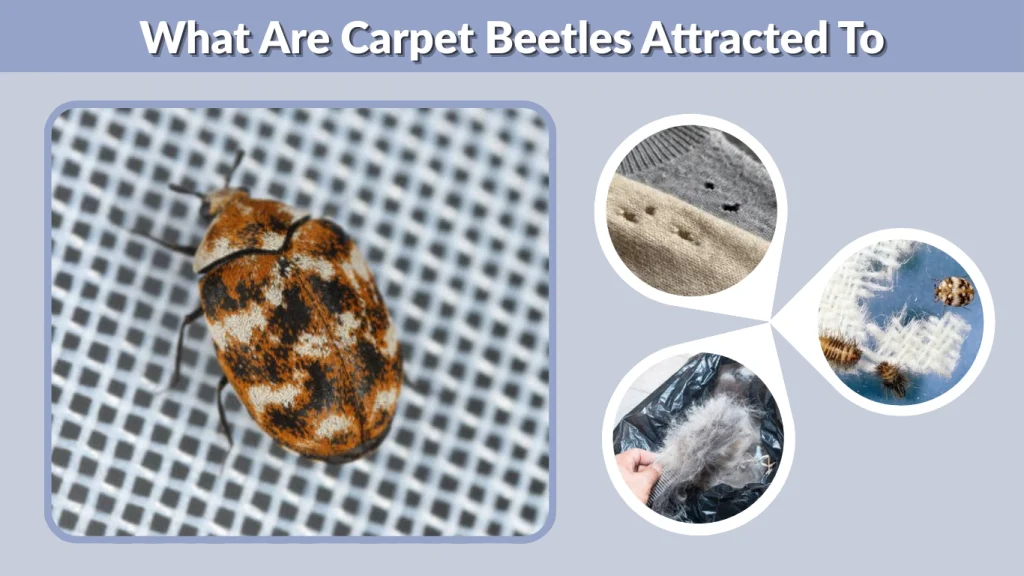
Carpet beetles are attracted to a wide range of organic materials found inside homes. Natural fibers such as wool, silk, cotton, fur, leather, and feathers are among their preferred food sources. They are also drawn to pet hair, human hair, lint, crumbs, and accumulations of dead insects.
Dark, undisturbed spaces are especially appealing. Closets, storage boxes, under beds, beneath furniture, inside vents, and along carpet edges provide shelter and continuous access to food. Warmth and moderate moisture further support larval development, making poorly ventilated rooms and long-term storage areas ideal nesting locations.
What Are Black Carpet Beetles Attracted To
Black carpet beetles are especially attracted to animal-based materials. Their larvae prefer items such as wool clothing, fur coats, feather pillows, leather goods, taxidermy, pet bedding, and carpets that contain natural fibers. These materials provide the proteins and keratin larvae need for growth.
Indoors, black carpet beetles are most often found in closets, wardrobes, basements, attics, and storage rooms where fabrics remain undisturbed for long periods. Upholstered furniture, air vents, and spaces beneath heavy furniture also provide ideal nesting zones. Poor cleaning routines, accumulated pet hair, and stored fabrics significantly increase the likelihood that black carpet beetles will settle and reproduce inside a home.
What Are Carpet Beetles and Where Do They Come From
Carpet beetles usually originate outdoors. Adult beetles live on flowers and plants, feeding on pollen and nectar. During warmer months, they are naturally drawn to light and warmth, which leads them indoors through open windows, doors, vents, and small structural gaps.
They can also enter homes by hitchhiking on everyday items. Flowers, indoor plants, second-hand furniture, stored clothing, cardboard boxes, and even firewood can carry beetles, larvae, or eggs inside. In apartments and shared buildings, carpet beetles may spread between units through walls, ceilings, and ventilation systems. Once indoors, they search for dark, protected places close to organic materials to lay eggs and begin infestations.
What Are Carpet Beetles Caused By

Carpet beetle infestations are caused by a combination of entry and available food sources. Simply put, beetles enter a home and stay when they find suitable materials for feeding and reproduction. This often includes natural-fiber fabrics, pet hair, lint buildup, dead insects, and undisturbed storage items.
Storage habits play a major role. Clothes stored without washing, long-kept boxes, unused blankets, and forgotten furniture create ideal breeding environments. Importantly, carpet beetles are not only found in dirty homes. Even clean houses can experience infestations if beetles gain entry and find hidden organic materials in closets, vents, or wall voids.
What Are Carpet Beetles in the House
Finding carpet beetles in the house usually means there is an indoor food source and a nearby nesting area. Adult beetles are often seen on window sills, ceilings, or near lamps because they are attracted to light. However, these locations are rarely where larvae are actually living.
Larvae are usually hidden in closets, drawers, carpets, under furniture, inside upholstered items, basements, or attics. From these hidden areas, larvae spread gradually throughout the home in search of additional food sources. Without proper identification and cleanup, infestations can quietly expand into multiple rooms before being noticed.
What Are the Signs of Carpet Beetles
Visual Signs
Common visual signs include slow-moving brown or black larvae, small adult beetles near windows, and shed larval skins. Shed skins often accumulate in corners, drawers, and storage areas and are one of the clearest early indicators.
Fabric and Material Damage
Damage typically appears as irregular holes, thinning patches, or worn areas in natural-fiber clothing, rugs, blankets, and upholstery. Pet bedding and stored wool items are frequent targets.
Location Clues
Closets, under beds, behind furniture, inside vents, and around baseboards are the most common discovery points. Where signs first appear often reveals the nesting location and original source.
What Time of Day Are Carpet Beetles Most Active
Carpet beetle larvae are most active in dark, quiet conditions. They avoid light and are rarely seen during the day unless disturbed. Their feeding activity mainly occurs in hidden areas such as closets, drawers, and under furniture.
Adult carpet beetles are more visible during daylight hours, especially near windows and light sources. They are often noticed on window sills or walls during warm, sunny days as they attempt to reach outdoor light. Seasonal activity is strongest in spring and early summer, when adults enter homes to reproduce.
FAQs
What are carpet beetles and do they bite?
Carpet beetles do not bite humans or pets. However, the tiny hairs on carpet beetle larvae can cause skin irritation or rash-like reactions in sensitive individuals. These reactions are often mistaken for bites, even though no biting actually occurs.
What are carpet beetles attracted to most?
Carpet beetles are most attracted to natural fibers such as wool, silk, fur, feathers, leather, and cotton. They are also drawn to pet hair, lint, dead insects, and dark, undisturbed areas where these materials accumulate.
What color are carpet beetles and their eggs?
Adult carpet beetles may be black, dark brown, or patterned with white, yellow, and orange. Larvae are brown and fuzzy. Eggs are tiny, oval, and usually white or cream-colored, making them very difficult to see.
What are carpet beetles caused by in homes?
Carpet beetles are caused by beetles entering from outdoors or being carried inside on plants, furniture, boxes, or clothing, then finding organic materials suitable for feeding and breeding.
What are the first signs of carpet beetles?
Early signs include larvae in closets or on carpets, adult beetles near windows, shed larval skins, and small holes or thinning areas in natural-fiber fabrics.
