

Sand fleas are often misunderstood creatures because the term refers to several unrelated animals found in coastal, marine, and sometimes tropical environments. From small beach mole crabs that scurry through the surf to tiny parasitic fleas capable of biting humans, “sand fleas” is a catch-all label that varies by region. Many people encounter them at beaches, in fishing environments, or through travel to tropical areas. Understanding what they are, how they behave, and why they appear is essential for avoiding bites, protecting pets, and using them effectively as fishing bait. This guide explores their types, habitats, bites, ecological roles, and seasonal patterns.
What Are Sand Fleas?
Sand fleas are not one single species. Instead, the term commonly refers to four main groups:
- Beach sand fleas (mole crabs) that live in the surf zone
- Amphipods such as sand hoppers and beach fleas
- Biting midges or “no-see-ums,” often mistaken for sand fleas
- Parasitic sand fleas (jigger fleas) that burrow into human skin
Because the name is used so broadly, confusion is common. Beachgoers in Florida might refer to mole crabs as sand fleas, while travelers to the Caribbean think of the parasitic jigger flea. In fishing communities, especially along the U.S. coasts, “sand flea” typically refers to the mole crab used as bait. Their size, behavior, and danger vary dramatically depending on which type is being described.
Identification

Physical Appearance
- Small to medium size depending on species (1 mm to 1.5 in)
- Tan, grey, or translucent bodies for beach camouflage
- Oval, smooth shell-like shape in mole crabs
- Segmented, shrimp-like bodies in amphipods
- Fast burrowing or hopping movement patterns
- Antennae or legs adapted for digging or filtering
- “Jumbo” versions appear larger and thicker for fishing use
Types of Sand Fleas
- Beach Mole Crabs (Emerita spp.): These are the most common non-biting “sand fleas” seen at beaches.
- Sand Hoppers and Amphipods: Small crustaceans that jump and scatter along the shoreline.
- Parasitic Jigger Fleas (Tunga penetrans): Tiny insects that burrow into human skin.
- Deep-Ocean Amphipods: Sometimes called sand fleas in fisheries, especially in the Bering Sea.
Knowing which creature you’re dealing with is key to identifying risk, behavior, and purpose.
Habitat and Range

Where Sand Fleas Live
Most non-biting sand fleas live in coastal environments. Mole crabs burrow in shifting wet sand at the water’s edge, moving with the tide to feed on plankton. Amphipods hide under seaweed, driftwood, or debris and prefer damp, shaded areas. Ocean sand fleas inhabit deeper waters and appear on fishing equipment. Parasitic sand fleas thrive in dry, sandy soils in tropical regions rather than beaches.
Regions Where Sand Fleas Are Found
Sand fleas appear in many regions, including:
- Florida’s Atlantic and Gulf Coast beaches
- Texas and the Gulf of Mexico
- Eastern U.S. shorelines
- Caribbean islands and parts of Central and South America
- Northern waters like the Bering Sea
Beach mole crabs dominate U.S. shores, while parasitic jigger fleas are far more common in tropical rural areas. Fishing shows like Deadliest Catch highlight deep-ocean amphipods, sometimes found clinging to crab pots.
Behavior and Purpose
What Sand Fleas Do in Ecosystems
Sand fleas play an essential role in coastal ecosystems. Mole crabs filter plankton and organic material from the surf, contributing to nutrient cycling. Amphipods help break down decaying plant matter. Many species serve as a crucial food source for fish, seabirds, and marine mammals. Even parasitic types have ecological roles, though they pose risks to animals and humans.
What Sand Fleas Are Attracted To
Their attraction factors vary by species:
- Moisture: Most sand flea species seek damp environments.
- Movement: Mole crabs respond to wave motion.
- Vibrations: Amphipods are startled by foot traffic.
- Human Scent: Parasitic sand fleas seek hosts, especially feet, ankles, and uncovered skin.
Understanding these factors helps reduce exposure and prevent bites.
Seasonality and Activity
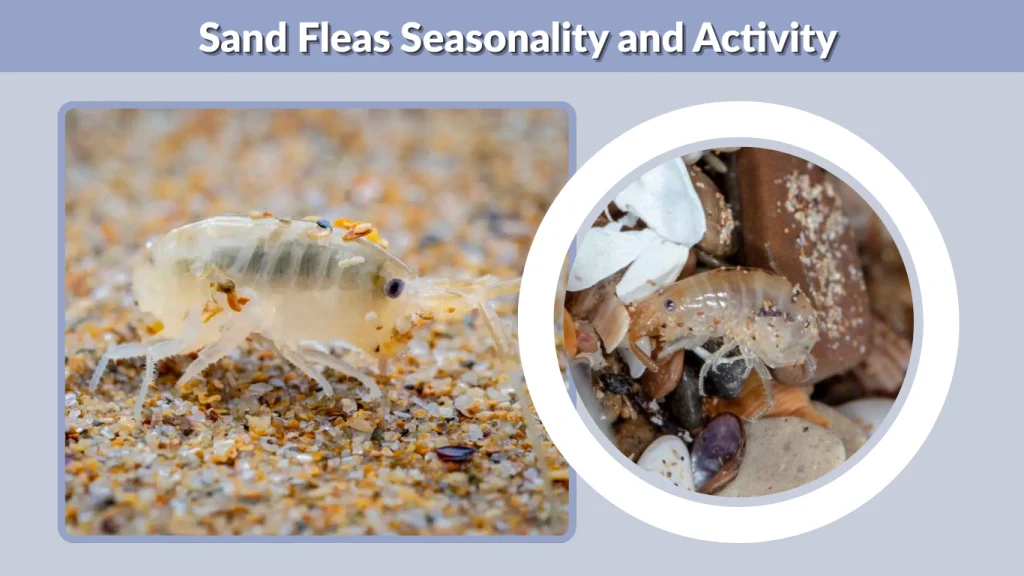
What Months Sand Fleas Are Bad
Sand flea activity peaks in warm weather. In many coastal areas, they are most active from late spring through early fall. Florida experiences nearly year-round activity due to its warm climate. Texas typically sees the worst sand flea presence from May through September. Cooler temperatures reduce their movements and reproduction.
Environmental Factors That Increase Activity
Their presence intensifies when:
- Water temperatures rise
- Humidity is high
- Tides are active
- Storm disturbances churn up the surf
Because mole crabs feed in the surf zone, they are most visible and catchable during incoming tides.
Sand Flea Bites

What Are Sand Flea Bites?
Most sand fleas do not bite—especially beach mole crabs and amphipods. However, parasitic jigger fleas and biting midges often mistaken for sand fleas do bite humans. People frequently blame harmless sand fleas for itchiness actually caused by no-see-ums.
Symptoms of Sand Flea Bites
Symptoms depend on the species:
- Small itchy red bumps
- Clusters of bites on ankles or lower legs
- Swelling or a rash
- Painful lesions if caused by jigger fleas
What Sand Flea Bites Look Like
Sand flea bites typically appear as clusters of small, raised red bumps that resemble mosquito bites but often occur in groups rather than single marks. On the beach, most “sand flea bites” are actually caused by biting midges—tiny insects that leave intensely itchy welts. Parasitic jigger fleas create a distinct appearance: a small white or black spot in the center of a swollen lesion, indicating where the flea has burrowed beneath the skin.
Treatment for Sand Flea Bites
Mild sand flea bites usually respond to basic home care. Gently washing the skin with soap and water prevents infection. Oils such as tea tree, coconut, and lavender are often used to soothe irritation and reduce inflammation. Anti-itch creams or antihistamines can help relieve swelling. Bites from parasitic sand fleas require more urgent attention; the embedded flea must be carefully removed, and the area disinfected to prevent complications.
Parasitic Sand Fleas
What They Are
Parasitic sand fleas, known as Tunga penetrans, are extremely small insects found mostly in tropical regions. Unlike beach sand fleas, they are true fleas capable of attaching to and burrowing beneath human skin. Females embed themselves in soft tissues—usually feet or ankles—causing a painful condition known as tungiasis. They remain in the skin for days or weeks, feeding and laying eggs before eventually dying within the tissue.
Symptoms and Risks
The symptoms of jigger flea bites include painful swelling, itching, and circular lesions marked by a black dot. Untreated infestations can lead to infection, ulceration, and in severe cases, difficulty walking. These fleas thrive in warm, dry sand and are common in areas with poor sanitation or unprotected foot travel. Their health risks make them far more dangerous than the harmless mole crabs commonly mistaken for sand fleas on U.S. beaches.
Sand Fleas on Dogs & Humans
Dogs can also be affected by Tunga penetrans, especially around their paws, since they spend more time close to sandy ground. Humans become infested by walking barefoot or sitting on contaminated soil. Wearing shoes, practicing good hygiene, and avoiding known infestation zones significantly reduce risk. While not found in U.S. beaches, these fleas are common in parts of the Caribbean, Africa, and South America.
Beach and Ocean Sand Fleas
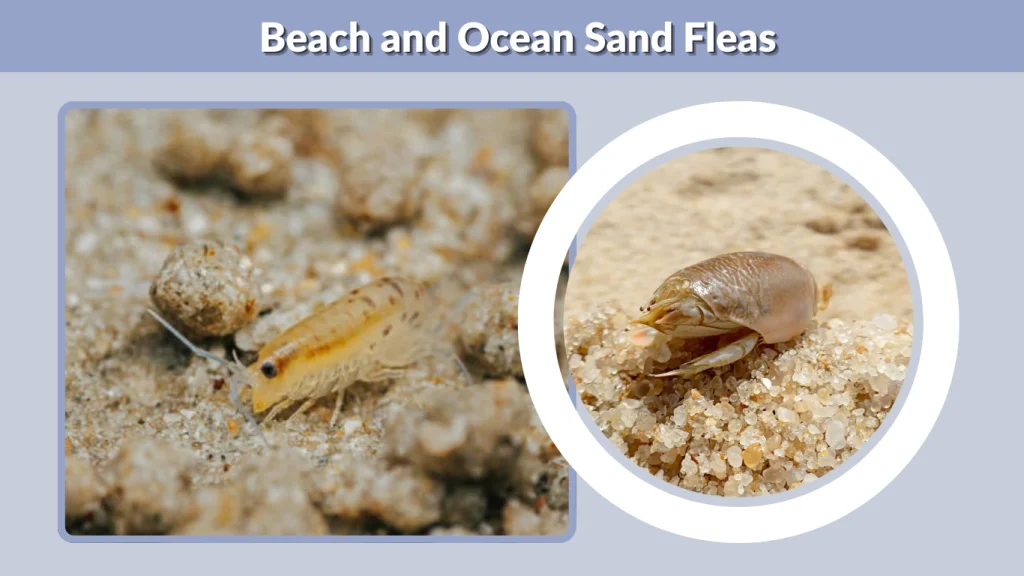
Non-Biting Beach Sand Fleas
Most beachgoers encounter sand fleas in the form of mole crabs, which are completely harmless. They burrow backward into the sand with the incoming waves, using their feathery antennae to filter plankton. Their presence indicates a healthy shoreline, as they are sensitive to pollution and erosion. Because of their abundance, they are often scooped up by hand or with rakes by anglers searching for bait.
Ocean Sand Fleas and Deep-Sea Species
In colder waters, such as those near Alaska or the Bering Sea, larger amphipods may attach to fishing equipment. These creatures, sometimes described as “giant sand fleas,” feed on organic material and decaying matter. Although their size and appearance can be surprising, they do not pose a threat to humans. Fishermen encounter them during crabbing operations, and their nickname originates from their resemblance to oversized beach fleas.
Sand Fleas on Deadliest Catch
Viewers of Deadliest Catch often notice swarms of small crustaceans on crab pots as they are hauled up from the seafloor. These are deep-sea amphipods drawn to the bait and debris inside the pots. They are unrelated to parasitic sand fleas or beach mole crabs, but their skittering movement and clustered behavior lead many to call them “sand fleas.” Their presence is common and expected in cold-water commercial fishing.
Fishing Uses & Purpose
What Sand Fleas Are Used For
Sand fleas, especially mole crabs, are prized by fishermen as one of the best natural baits for surf fishing. Their soft bodies and natural scent make them irresistible to many coastal fish species. They can be used live, frozen, or salted, and their movement in the water helps attract predators.
What Fish Sand Fleas Are Good Bait For
Sand fleas are especially effective for catching:
- Pompano
- Red drum
- Whiting
- Flounder
- Sheepshead
Because they are a natural part of the coastal food chain, many fish instinctively feed on them, making them more reliable than artificial lures in many environments.
Sand Fleas in Crab Fishing
In crab fishing, sand fleas are not typically used intentionally as bait but often appear as scavengers on bait bags. Their presence on pots or traps is normal, especially when organic material is abundant. Larger amphipods in colder waters are sometimes called sand fleas by fishermen, though they are biologically distinct.
Comparison Table
| Feature | Beach Sand Fleas (Mole Crabs) | Parasitic Sand Fleas | Amphipod “Sand Fleas” |
| Bite Humans? | No | Yes | Rarely |
| Size | 0.5–1.5 in | 1 mm | 0.1–2 in |
| Habitat | Surf zone | Tropical soil | Beaches/oceans |
| Purpose | Bait, ecosystem role | Parasitic | Detritus feeders |
Additional Topics
Jumbo & Giant Sand Fleas
“Jumbo” sand fleas refer to the largest mole crabs collected by fishermen. These are ideal for catching large pompano. In deeper waters, “giant sand fleas” may refer to oversized amphipods several inches long, though they are not true sand fleas in the traditional sense.
Sand Fleas in Pop Culture
The term “sand flea” is also used in U.S. Marine Corps training at Parris Island, where recruits call drill instructors “sand fleas” due to their intensity and constant presence. This nickname has no biological connection but is widely recognized.
FAQs
What are sand fleas?
Sand fleas are a broad group of creatures including mole crabs, amphipods, and parasitic jigger fleas, depending on region. Most are harmless.
Do sand fleas bite?
Beach sand fleas do not bite, but biting midges and parasitic fleas often get mistaken for them.
What do sand flea bites look like?
They appear as small red bumps, often in clusters. Parasitic bites may show a central black spot.
What are sand fleas used for?
They are excellent natural bait for surf fishing, especially for pompano and red drum.
When are sand fleas worst during the year?
They peak in warm months—late spring through early fall—depending on region.
