
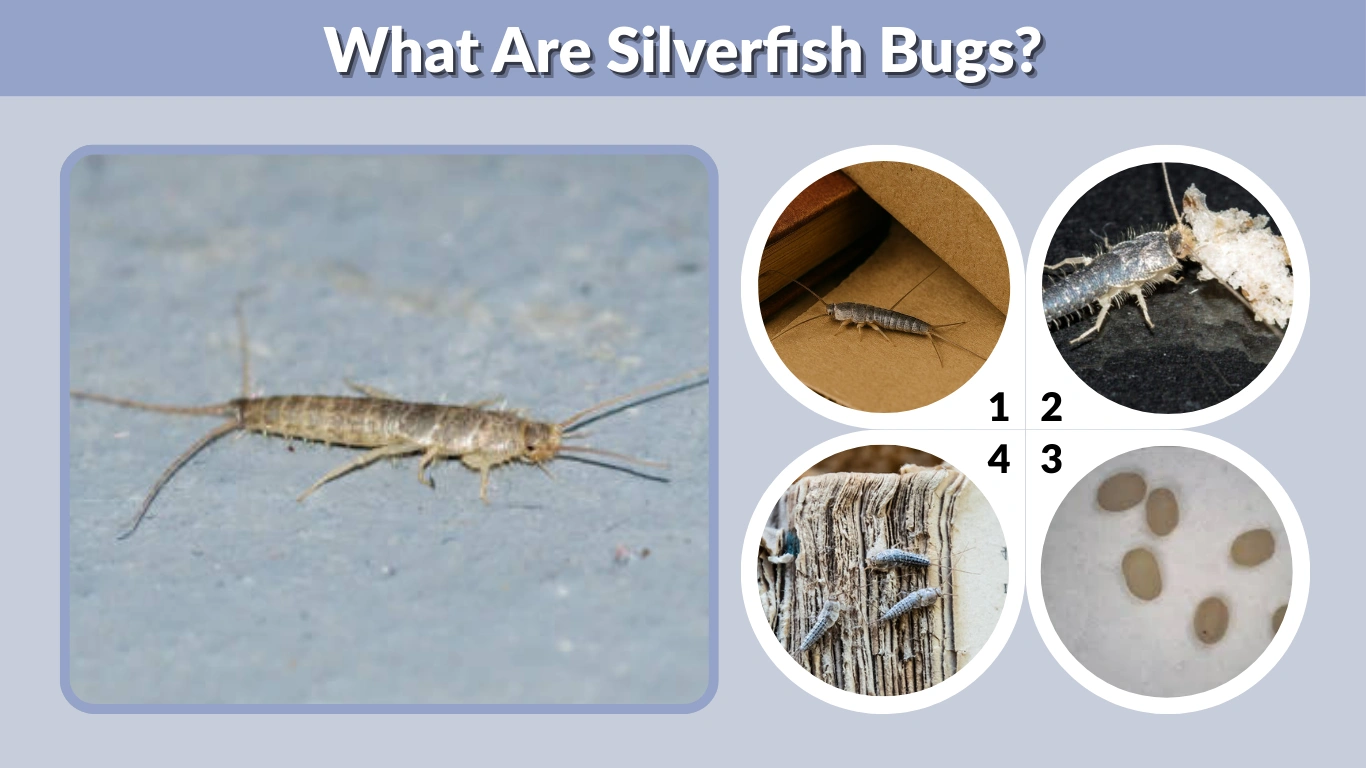
Silverfish bugs are small, wingless household insects best known for their shiny, metallic appearance and fast, fish-like movement. They are most often seen at night when they leave hiding places in bathrooms, kitchens, basements, and storage rooms. Although silverfish do not bite people or spread known diseases, they can damage books, paper, wallpaper, clothing, and stored materials. Because many insects look similar at first glance, correct identification is important. This step-by-step guide will help you clearly recognize silverfish and understand where and why they appear.
Quick Overview of Silverfish Bugs
Silverfish are primitive insects that have existed for millions of years. They are called “silverfish” because of their silvery scales and the way they move, which resembles a swimming fish. Unlike flies or beetles, silverfish have no wings and rely on speed and hiding to survive. They prefer dark, humid, undisturbed places and usually come out only when it is quiet and lights are off. Most homeowners first notice them when one suddenly runs across a wall, floor, or sink late at night.
Step 1: Confirm the Basic Look and Size
The first step in identifying a silverfish is observing its overall shape, size, and movement.
Common body shape and movement
Silverfish have long, narrow, flattened bodies that taper from the head toward the tail. Their movement is quick and wriggling, often described as “fish-like.” When disturbed, they do not fly or jump but rapidly run and slip into cracks, drains, or under objects.
Typical size range
Most adult silverfish measure between ½ inch and ¾ inch long, though some may be slightly smaller or larger. Young silverfish (nymphs) look almost identical to adults, just smaller and paler, which often confuses people who expect insects to change shape as they grow.
Step 2: Check Key Identification Features
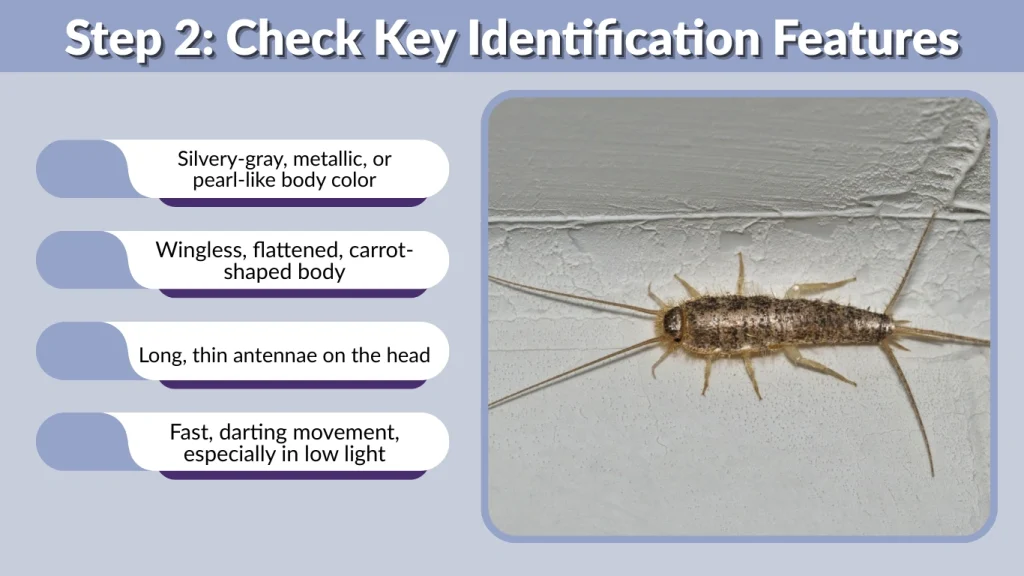
The easiest way to confirm a silverfish is by looking for a combination of unique physical traits.
- Silvery-gray, metallic, or pearl-like body color
- Wingless, flattened, carrot-shaped body
- Long, thin antennae on the head
- Three tail-like bristles at the back (two on the sides, one in the middle)
- Fast, darting movement, especially in low light
These three tail filaments are one of the clearest identification signs. Very few household insects have this exact feature.
Step 3: Identify Common Indoor Places They Hide
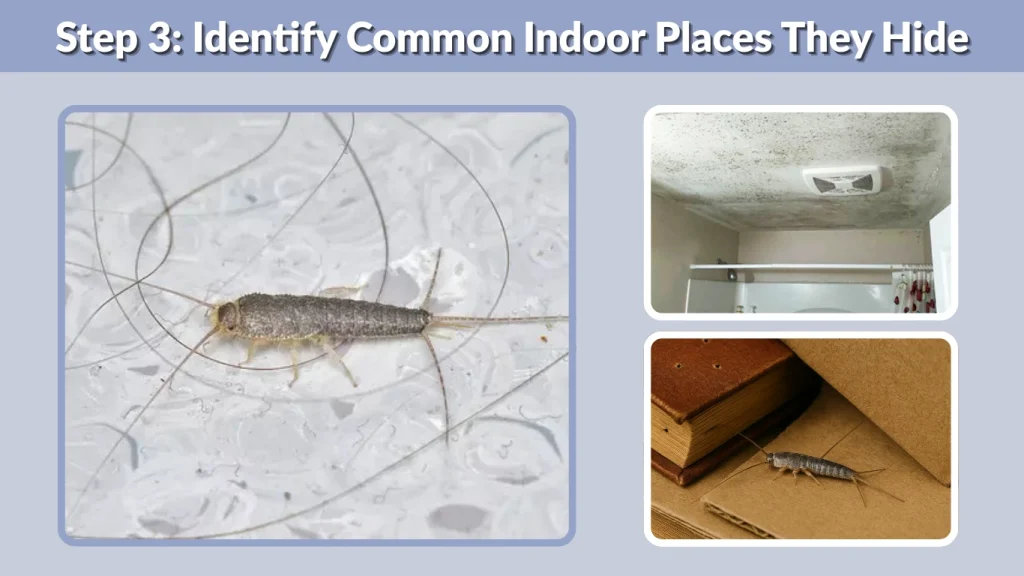
Silverfish rarely stay in open areas. Finding where they hide can help confirm their presence.
High-humidity hiding spots
Silverfish need moisture to survive. Bathrooms, kitchens, laundry rooms, basements, crawl spaces, and areas around leaking pipes are their favorite locations. They are often found under sinks, behind toilets, near floor drains, and around water heaters.
Low-disturbance hiding spots
Besides moisture, silverfish look for dark and undisturbed shelter. Common hiding places include cardboard boxes, book stacks, closets, storage bins, wall cracks, baseboards, and behind appliances. Homes with a lot of stored paper, old books, or cluttered storage areas provide ideal protection for them.
Step 4: Look for Signs of Silverfish Activity
You may not always see silverfish directly, but they often leave behind clues.
Surface damage patterns
Silverfish feed on starches, sugars, and binding agents. Over time, they may create irregular holes, yellow stains, or rough edges on paper, books, wallpaper, photographs, and cardboard. Old documents and book bindings are especially attractive because of the glue used in them.
Fabric and pantry clues
Silverfish may damage cotton, linen, silk, and rayon, especially if the fabric is stored and slightly damp. In rare cases, they can be found near dry foods like flour or cereal, not because they prefer the food itself, but because of the starch content and quiet storage environment.
Step 5: Understand Their Life Cycle for Better Identification
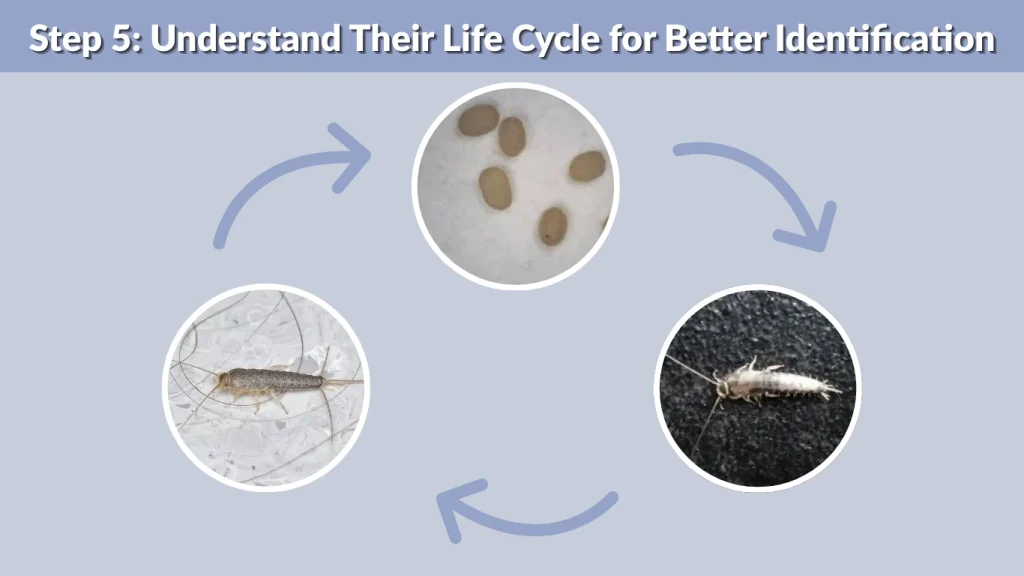
Knowing how silverfish grow helps prevent misidentification.
Egg stage
Female silverfish lay small, oval eggs in hidden cracks, behind baseboards, inside books, or near damp areas. The eggs are tiny and difficult to see without close inspection. This is why infestations often go unnoticed until adults are spotted.
Nymph stage
When eggs hatch, the young silverfish look like miniature adults. They are pale, slow-moving, and gradually darken as they molt. Unlike many insects, silverfish do not go through a dramatic metamorphosis. This makes identification easier once you know what to look for.
Adult stage and lifespan
Silverfish can live several years indoors under good conditions. Adults continue molting throughout their lives, which is unusual among insects. Their long lifespan means a small, unnoticed population can slowly grow if moisture and food remain available.
Step 6: Silverfish vs Similar Bugs in Homes
Many homeowners confuse silverfish with other small household insects. Careful comparison helps avoid wrong treatment.
- Silverfish vs firebrat: Firebrats look similar but are usually darker, with mottled brown coloring. They prefer much hotter areas, such as near ovens, boilers, and heating pipes, while silverfish stay in cooler, damp rooms.
- Silverfish vs earwig: Earwigs have visible pincers on the back and a broader body. Silverfish have no pincers, only three thin tail bristles.
- Silverfish vs cockroach nymph: Baby cockroaches are oval-shaped, lack the three tail filaments, and move differently. They are often found near food and grease rather than paper and books.
- Silverfish vs carpet beetle larvae: Carpet beetle larvae are fuzzy or hairy and crawl slowly. Silverfish are smooth, shiny, and fast.
- Silverfish vs booklice: Booklice are very tiny, pale, and soft-bodied, while silverfish are larger with a metallic sheen and clearly visible tail bristles.
Step 7: Why Silverfish Appear in Clean Homes Too
Seeing silverfish does not mean a home is dirty. Silverfish are attracted mainly to moisture, shelter, and food sources that exist even in well-kept houses. Humid bathrooms, condensation around pipes, poorly ventilated basements, and stored paper products are enough to support them. Apartments and shared buildings also make spread easier because silverfish can move through wall gaps, plumbing lines, and storage areas. Bringing in cardboard boxes, old books, or stored items from garages can introduce them as well.
Step 8: What Silverfish Eat Indoors

Favorite food sources
Silverfish feed on carbohydrates and proteins found in everyday household materials. Their common foods include book glue, wallpaper paste, paper, cardboard, cotton, linen, silk, dead insects, and skin flakes. They do not need fresh food scraps like cockroaches, which is why they often live unnoticed.
Why books and storage get targeted
Books, files, and stored papers provide both food and shelter. The starch-based glue in bindings and boxes is especially attractive. Dark, undisturbed shelves and storage rooms also protect silverfish from light and predators, allowing populations to survive for long periods.
Step 9: Step-by-Step Home Inspection Checklist
A simple inspection can confirm whether silverfish are present and where they are most active.
- Check under sinks, behind toilets, and around washing machines for moisture
- Inspect basements, storage rooms, and closets for dampness and paper clutter
- Look behind refrigerators, stoves, and water heaters
- Examine bookcases, old magazines, files, and cardboard boxes
- Check baseboards, cracks, and pipe entry points
- Place sticky insect traps at night to monitor activity areas
Finding silverfish in more than one location often means moisture or hiding spaces are available throughout the home.
Step 10: Are Silverfish Dangerous to Humans?
Silverfish do not bite people, do not sting, and are not known to spread major diseases. They are considered nuisance pests rather than dangerous ones. The main problems they cause are damage to personal items and contamination of stored materials. Their shed skins and droppings may worsen allergies in sensitive individuals, but serious health risks are rare.
Step 11: When Silverfish Become an Infestation
Warning signs of a bigger issue
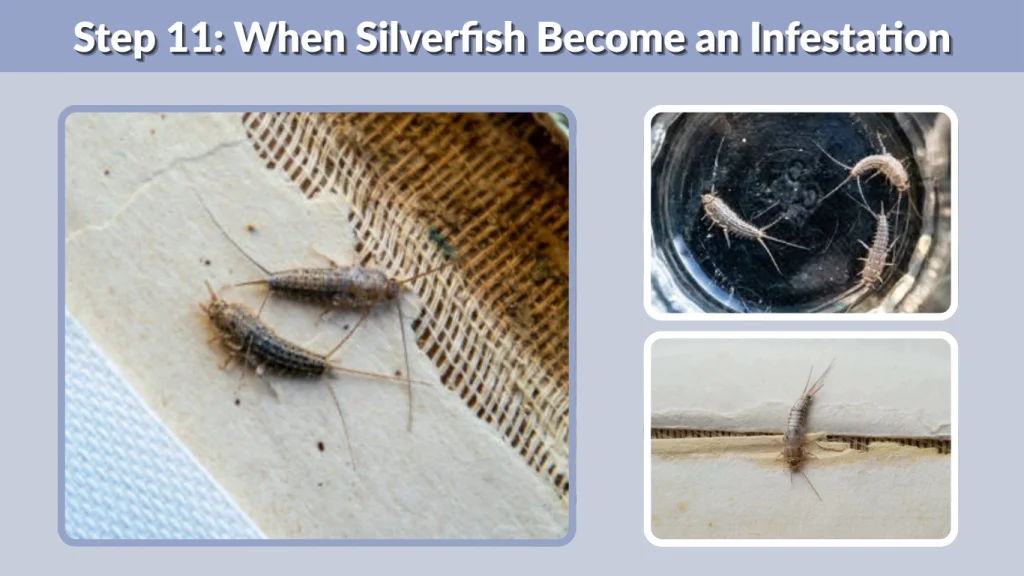
Occasional sightings usually mean a small population. Seeing silverfish frequently, finding them in several rooms, or catching many on traps suggests an infestation. Damage to books, wallpaper, or fabrics is another warning sign.
Moisture problems that signal risk
Long-term humidity, plumbing leaks, condensation on walls, and poor airflow create ideal conditions. Without fixing moisture problems, silverfish numbers often return even after treatment.
Step 12: How to Reduce Silverfish Fast
Moisture control (most important)
Lowering humidity is the most effective step. Use exhaust fans, dehumidifiers, and fix leaking pipes. Dry environments make survival and egg development difficult for silverfish.
Cleaning and storage upgrades
Vacuum cracks, shelves, and baseboards regularly. Remove paper clutter, store books and documents in sealed plastic containers, and replace cardboard boxes with airtight bins. Wash and dry stored fabrics before long-term storage.
Step 13: Treatment Options That Actually Work
Non-chemical methods
Sticky traps help reduce numbers and show activity areas. Regular vacuuming of cracks and storage spaces removes insects and eggs. Decluttering and drying rooms often bring noticeable improvement.
Low-risk insect control choices
Silica-based dusts and boric acid can be applied carefully in cracks and wall voids. These dry out silverfish and reduce populations when used correctly and safely.
Professional pest control
For large or persistent infestations, professional treatment may be needed. Pest control services focus on moisture reduction, crack treatment, and long-term prevention plans.
Step 14: Prevention Tips for Long-Term Control
Seal wall cracks, caulk around pipes, improve ventilation, and routinely check humid areas. Store books, photos, and fabrics properly and monitor with traps in problem rooms. Preventing moisture buildup and reducing hiding spaces are the most reliable ways to keep silverfish from returning.
FAQs
What do silverfish bugs look like in real life?
Silverfish are small, wingless insects with a silvery or gray shine and a body that tapers toward the tail. They have long antennae and three tail-like bristles at the back. Many people describe their movement as fish-like because they wiggle quickly across surfaces.
Where do silverfish usually hide during the day?
Silverfish avoid light and prefer dark, quiet spots. Common hiding places include under sinks, behind toilets, in basements, inside cardboard boxes, and within cracks along baseboards. Any place with humidity, paper, or stored items can become a comfortable shelter for them.
How can I tell silverfish apart from baby cockroaches?
Silverfish have a tapered body, a shiny scale-like appearance, and three distinct tail bristles. Baby cockroaches are more oval and don’t have the three tail filaments. Roach nymphs also tend to move differently and may be found closer to food sources and grease.
Why am I seeing silverfish in a clean home?
Silverfish are mainly attracted to moisture, warmth, and hiding spaces—not just dirt. Even clean homes can have humid bathrooms, leaky pipes, or stored paper and cardboard that provide food. If humidity stays high, silverfish can survive and reproduce without obvious mess.
What is the fastest way to get rid of silverfish?
The quickest improvement usually comes from lowering humidity and removing hiding places. Fix leaks, use a dehumidifier or strong ventilation, and reduce paper clutter and cardboard storage. Sticky traps help confirm active areas, and targeted crack-and-crevice treatment can reduce numbers faster.
