
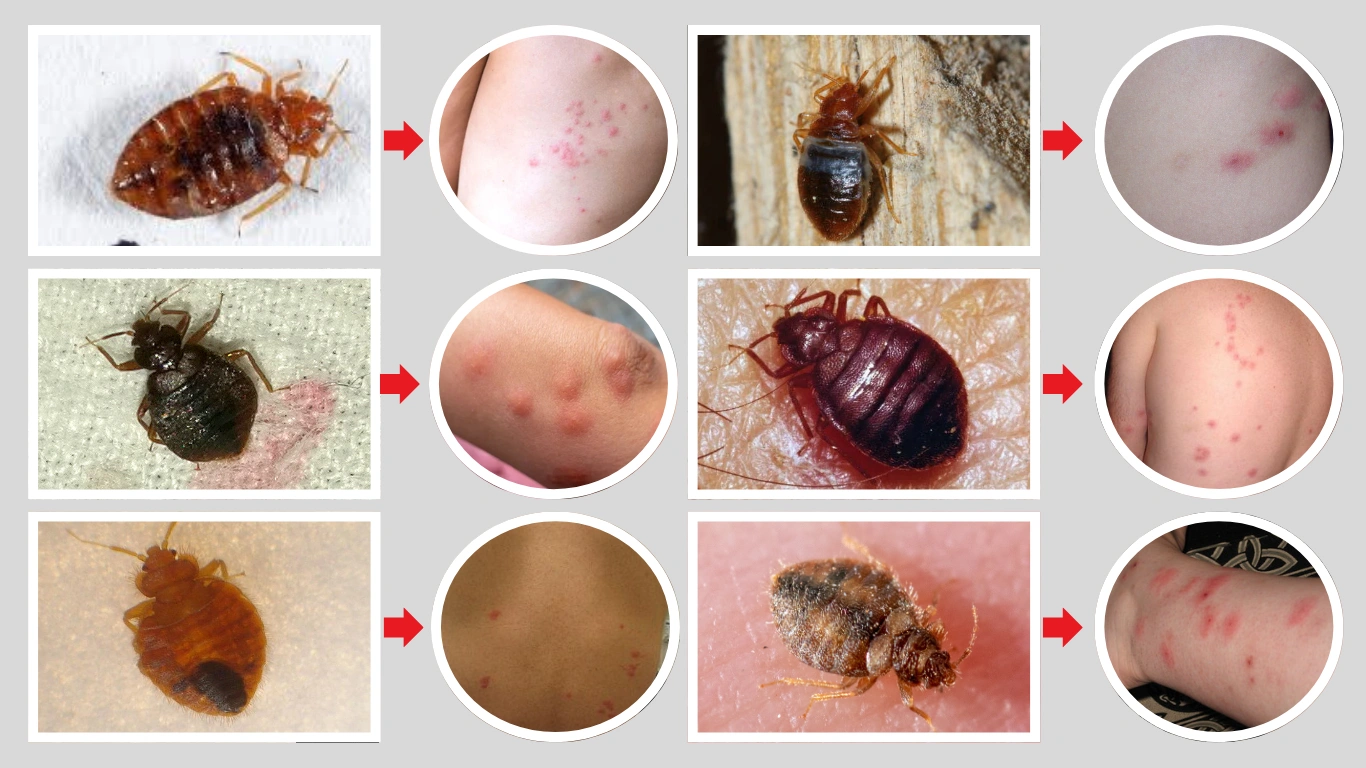
Not all bed bug bites look the same. While most people associate bed bug bites with itchy red bumps, the shape, pattern, and severity can vary depending on the species. From the common household bed bug to rare bat-associated types, this guide explains what their bites actually look like. Whether you’re dealing with an infestation or just curious, here’s how to visually identify bites from 12 different bed bug species.
Sure! Here’s the detailed version of the first four bed bug species using H2 and H3 structure, with each section focused on bite appearance only:
1. What Do Common Bed Bug (Cimex lectularius) Bites Look Like?

The bites of the common bed bug usually appear as small, red, and itchy bumps, often in a straight line or cluster of three to five—a pattern famously called “breakfast, lunch, and dinner.” These bites have a reddish center, sometimes with a tiny puncture mark.
They are most commonly found on exposed skin, such as the arms, neck, face, and shoulders. In sensitive individuals, the surrounding skin may swell slightly, become irritated, or develop a rash. Scratching the bites can worsen inflammation and lead to secondary infections.
2. What Do Tropical Bed Bug (Cimex hemipterus) Bites Look Like?

Tropical bed bug bites tend to be larger, redder, and more swollen compared to common bed bug bites. These bites may appear in zig-zag or random cluster patterns and often cause more intense itching, especially in hot, humid environments where the species thrives.
The welts typically show up on arms, legs, chest, and back—areas exposed while sleeping. In some cases, bites may blister or become inflamed. People with sensitive skin may notice more aggressive skin reactions, including hives or prolonged redness.
3. What Do Leptocimex boueti Bites Look Like?

Bites from Leptocimex boueti, a bat-associated bed bug, are generally scattered and irregular, lacking the clear linear patterns seen with human-adapted bed bugs. The bite marks usually appear as flat, reddish welts and are less likely to swell or form grouped patterns.
Commonly found in West Africa and parts of South America, these bugs bite humans when bats are not available. Bites often appear on the neck, arms, or upper body, especially in homes or buildings near bat colonies.
4. What Do Bat Bug (Cimex adjunctus) Bites Look Like?
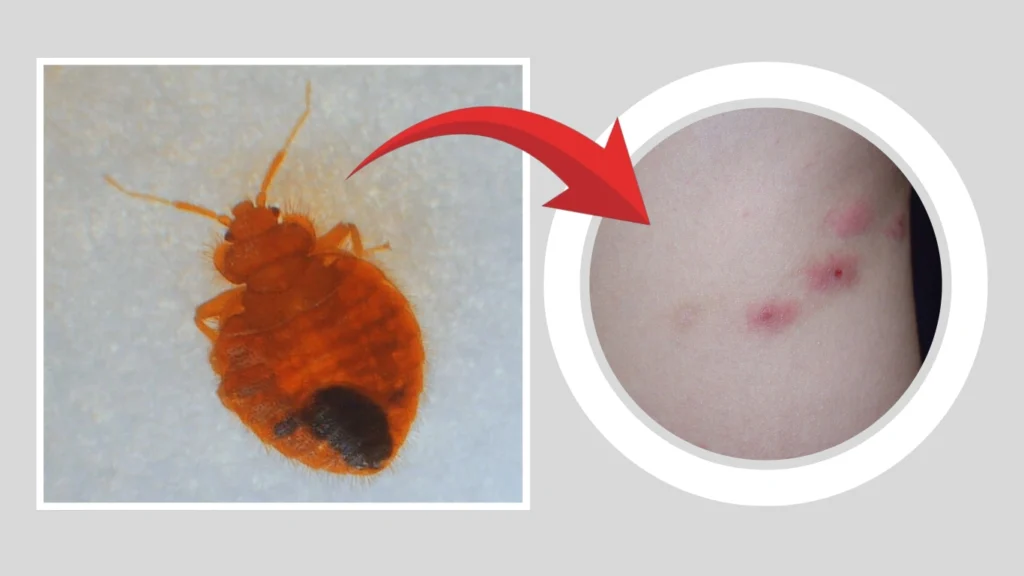
The bat bug, closely related to common bed bugs, produces bites that appear as small, red, itchy bumps, usually single or loosely grouped. These bites do not follow a strict pattern and may look like mosquito or flea bites.
They are most often found on the upper torso, arms, and neck, particularly in homes where bat colonies were recently removed. Bites are less frequent and milder, as bat bugs prefer feeding on bats rather than humans.
5. What Do Cimex pipistrelli Bites Look Like?

Bites from the European bat bug (Cimex pipistrelli) are often mild, scattered, and randomly placed on the skin. They appear as small, red, itchy spots without a consistent shape or alignment.
Since this species prefers bats as hosts, human bites usually occur when bats are removed or disturbed. The bites can resemble minor rashes and usually show up on arms, neck, or face. In most cases, swelling is minimal, but itching may persist for a few days.
6. What Do Haematosiphon inodora Bites Look Like?

The Mexican chicken bug (Haematosiphon inodora) delivers larger, more painful bites compared to most other species. These bites usually appear as inflamed, red welts, sometimes with a central raised area.
They are commonly found on legs, arms, and neck, especially in farm or rural settings where poultry are present. The bite site may be sensitive to the touch, and in some people, it may blister or become irritated due to the bug’s strong feeding behavior.
7. What Do Oeciacus vicarius Bites Look Like?
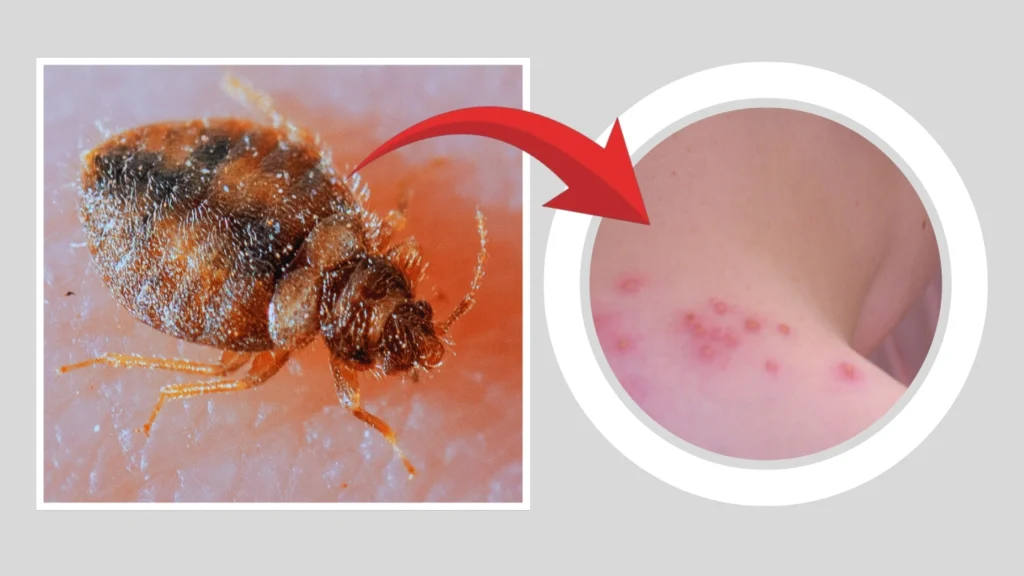
The swallow bug (Oeciacus vicarius) produces small, red bumps that may look like mosquito bites but are often located on the neck, face, and shoulders. The bites are mildly itchy and may show slight swelling.
Unlike typical bed bugs, these bites tend to appear during or shortly after swallow nesting season. They do not follow a distinct pattern, and most people may confuse them with bites from outdoor insects.
8. What Do Cimex pilosellus Bites Look Like?

Bites from the Western bat bug (Cimex pilosellus) appear as isolated red bumps with slight swelling. They are typically sparse and random, not forming the usual cluster or line pattern seen with common bed bugs.
Bites are most often found on shoulders, upper arms, and neck and are usually mild. Because this species is less adapted to human feeding, the bites often go unnoticed or are mistaken for skin irritation from other sources.
9. What Do Cimexopsis nyctalis Bites Look Like?
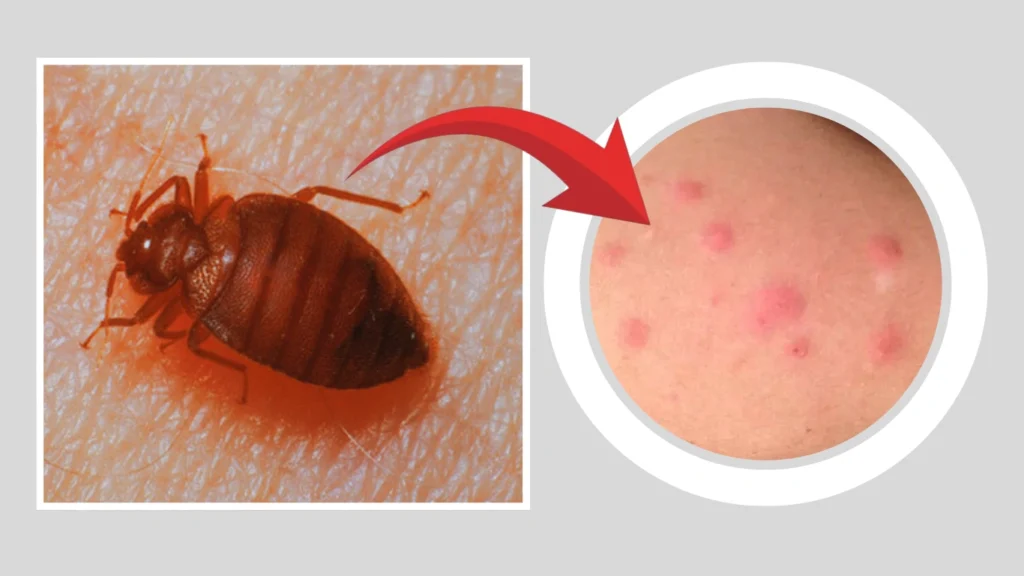
Bites from Cimexopsis nyctalis, a cave-dwelling bat bug, are typically small, round, and reddish. They appear randomly on exposed skin and do not follow any specific pattern like clusters or lines.
The bite marks are usually very mild and may be overlooked, especially by individuals who do not react strongly to insect bites. These bites most often appear on the face, neck, or hands, especially in environments where bat activity is present.
10. What Do Stricticimex parvus Bites Look Like?

The bites of Stricticimex parvus, a bat bug species found in Asia, present as flat red patches or small welts. They tend to be widely spaced and irregular, with mild to moderate itching.
You’ll often notice these marks on arms, shoulders, and neck. In sensitive individuals, the skin around the bite may become dry or irritated. Unlike common bed bugs, this species does not feed in predictable clusters or rows.
11. What Do Paracimex setosus Bites Look Like?
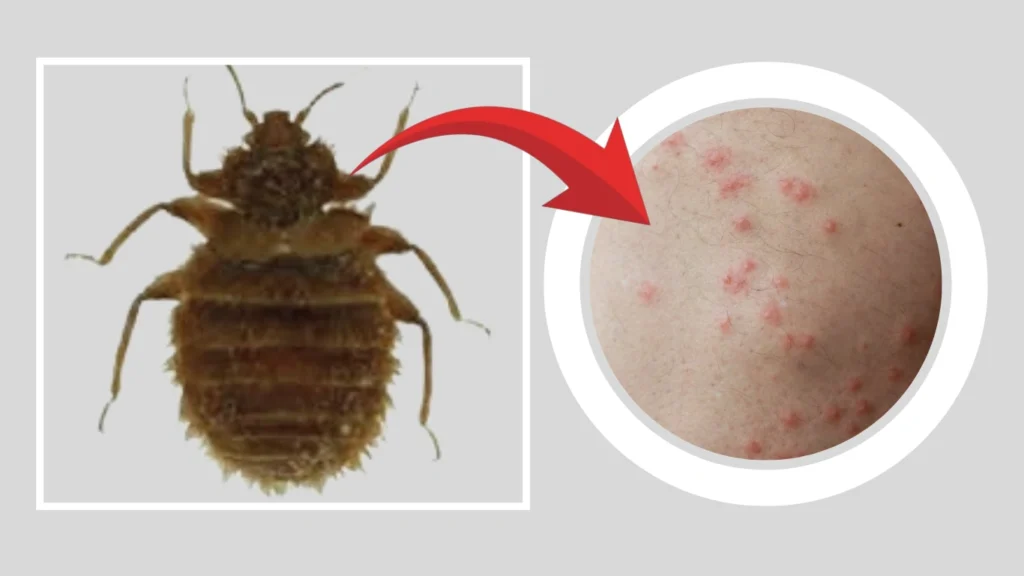
Bites from Paracimex setosus appear as slightly swollen red dots, sometimes with a tiny puncture mark in the center. These bites are scattered across the skin and tend to occur sporadically, not in consistent groupings.
Most commonly, bites show up on arms, neck, or upper chest, especially after bat disturbance in older buildings. The itching is usually mild to moderate, and the redness may fade within a day or two.
12. What Do Cimex antennatus Bites Look Like?

Cimex antennatus bites are often small, red, and slightly raised, sometimes with a central dot. The bites are sparse and subtle, making them harder to recognize, especially in early infestations.
They tend to occur on the face, arms, or shoulders, particularly after bats leave a roosting area. While usually painless, the bites may become itchy later, especially in individuals with sensitive skin.
Summary:
Bed bug bites can vary in appearance depending on the species, but most appear as small, red, itchy bumps on exposed skin. The common bed bug (Cimex lectularius) typically leaves clustered or linear bites, while other species like bat bugs or swallow bugs cause more scattered and irregular marks. Bites may appear on the face, neck, arms, or legs and range from mild to moderately swollen. Some species, like the Mexican chicken bug, can leave larger, more painful welts, especially in farm environments. Recognizing bite shape, size, and distribution can help identify the exact species involved and guide treatment or pest control steps.
